2,682 related texts · 19 related myths · Page 1 of 56
There is nothing more beloved than the Mincha prayer. The afternoon offering, the one between the morning and the evening, is the prayer that comes at the moment when the day is st...
"Hear the word of the Lord, O house of Jacob" (Jeremiah 2:4). Not the word of Jeremiah. Not the word of the priesthood. The word of the Lord, direct, unmediated, demanding attentio...
"But Zion said, 'The Lord has forsaken me, the Lord has forgotten me'" (Isaiah 49:14). And God answers, not with proof of presence but with a reminder of what "remembering" actuall...
The principle that a dream follows its interpretation is not an abstraction. The Talmud in Berakhot 55b demonstrates it through the life of Joseph. And through a hard rule about ti...
Two years. That is how long Joseph sat in an Egyptian prison after correctly predicting the fate of Pharaoh's cupbearer, who had promised to remember him and then promptly forgot. ...
The familiar telling remembers Joseph, the dreamer, the interpreter of dreams, the one who rose to power in Egypt. But what about his personal life? Did he ever find love amidst al...
In what lies in the other ark it is written (Exodus 20) "I am the L–rd your G–d," and of Joseph it is written (Genesis 50:19) "Am I in the place of G–d?" In what lies in this ark i...
There is a quiet engineering decision tucked inside Joseph's plan that the Torah narrates in a single breath but the Targum lingers on. Targum Pseudo-Jonathan on (Genesis 41:35) de...
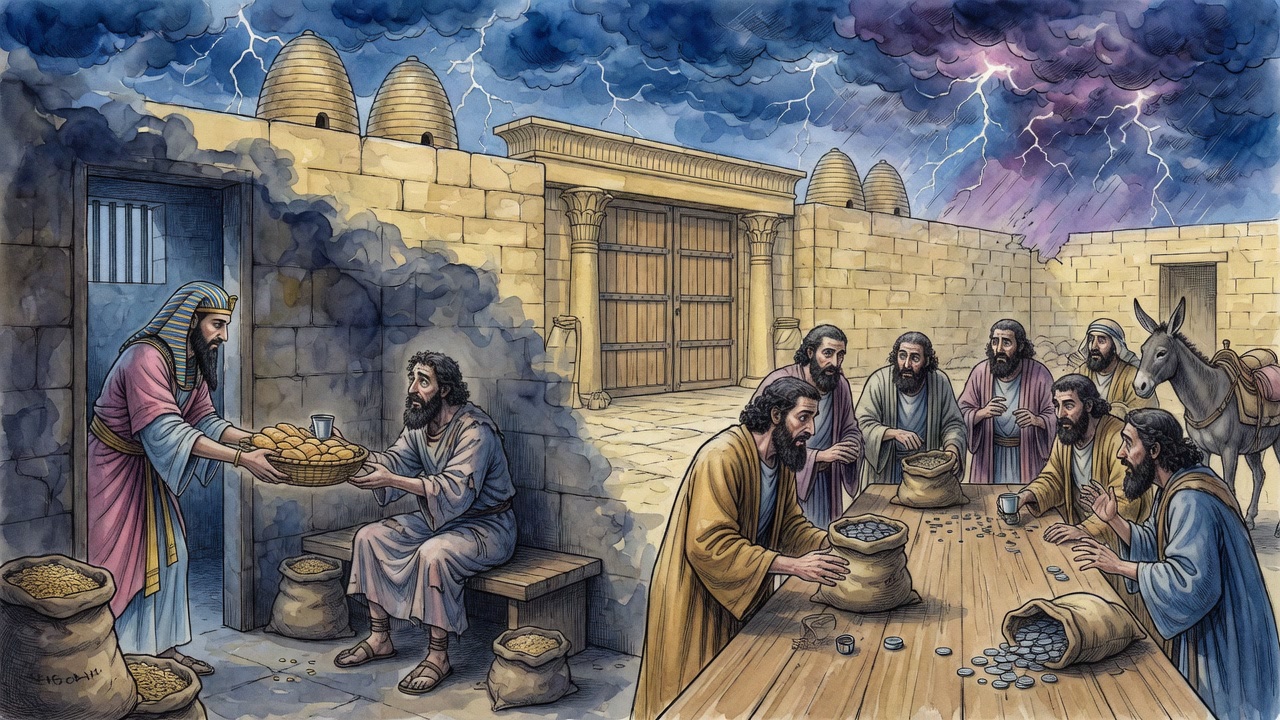
Joseph escalates the pressure with a legal framing. Targum Pseudo-Jonathan on (Genesis 42:16) preserves the formula: send one to fetch your youngest brother while the rest remain b...
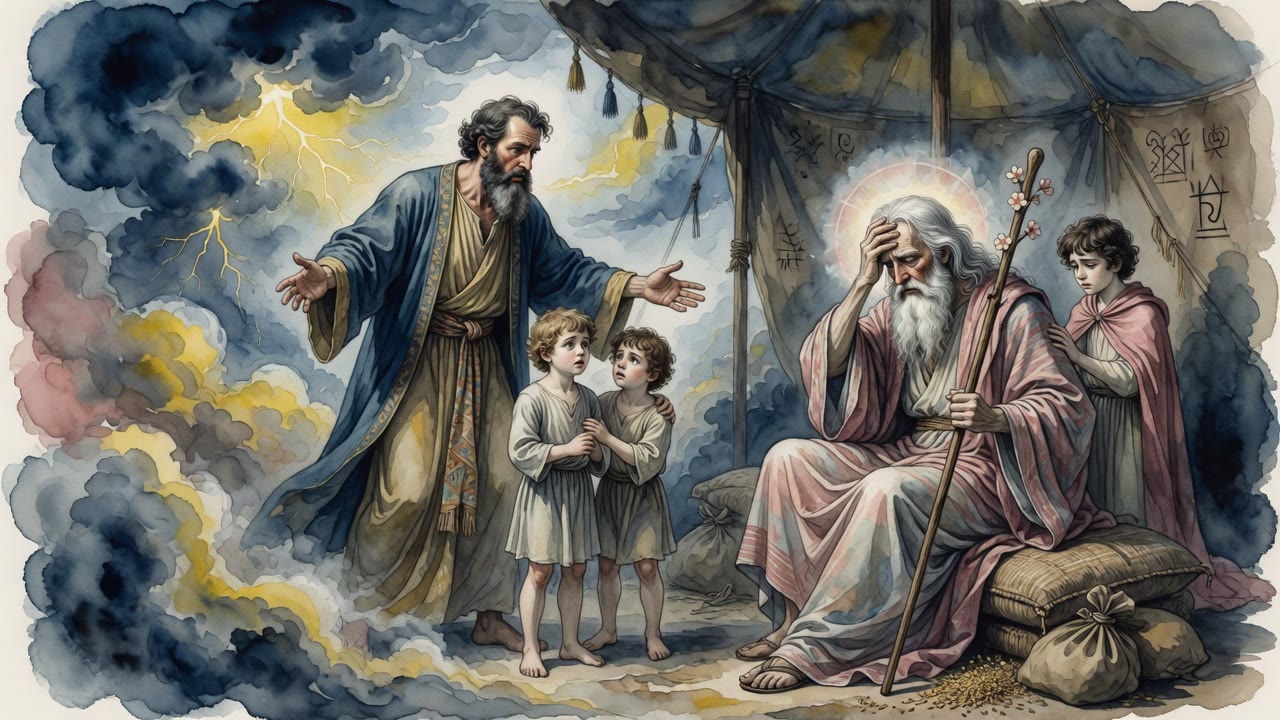
Jacob said: "My way is hidden from the Lord, and my justice has passed away from my God" (Isaiah 40:27). This was Israel speaking, the whole nation's complaint condensed into one v...
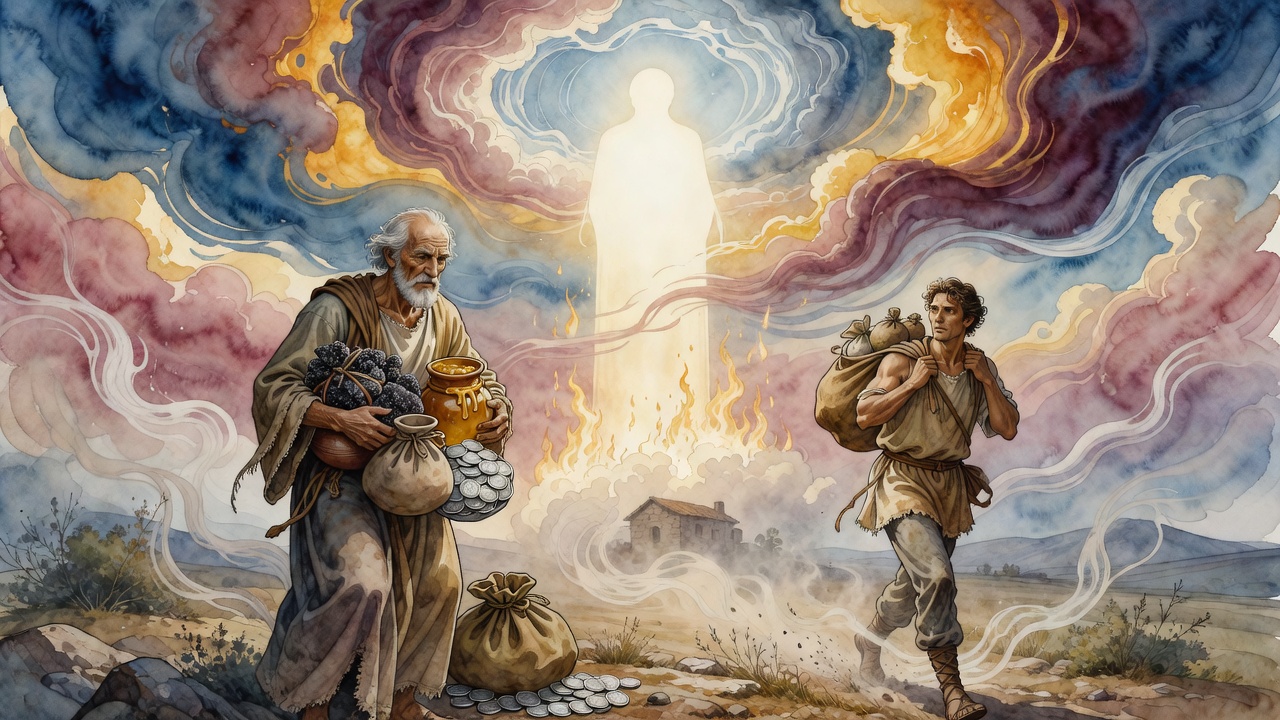
The seed itself failed. That is the detail Targum Pseudo-Jonathan on (Genesis 41:55) adds to the Torah's account: the famine in Egypt was not merely the absence of rain but the ref...
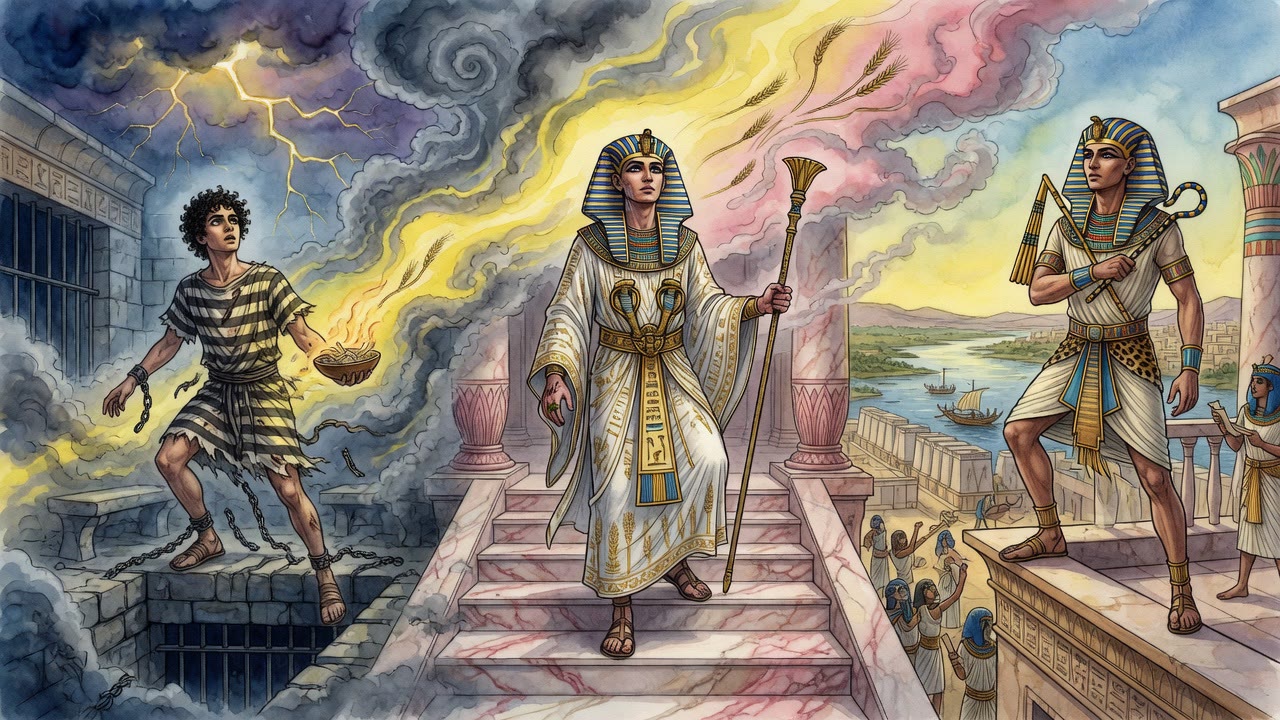
Power draws enemies. Joseph rose from a prison cell to the second throne of Egypt in a single day (Genesis 41:40), and the men he displaced never forgave him. Targum Pseudo-Jonatha...
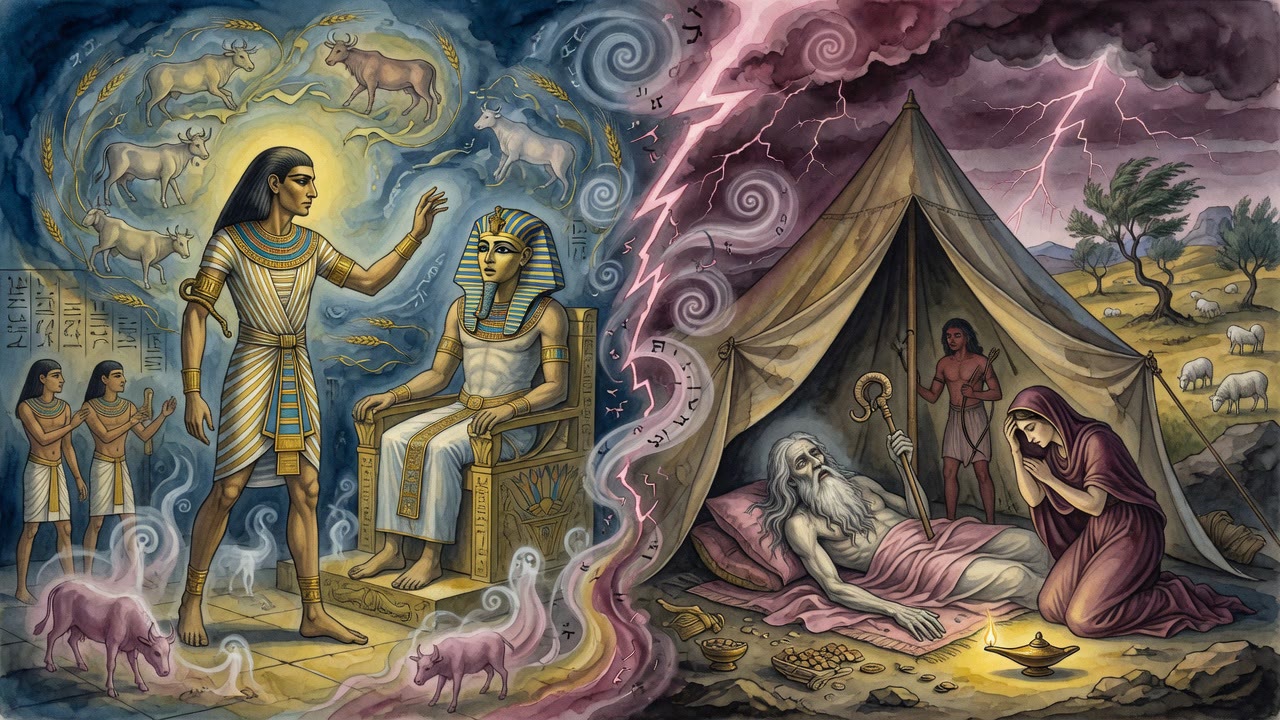
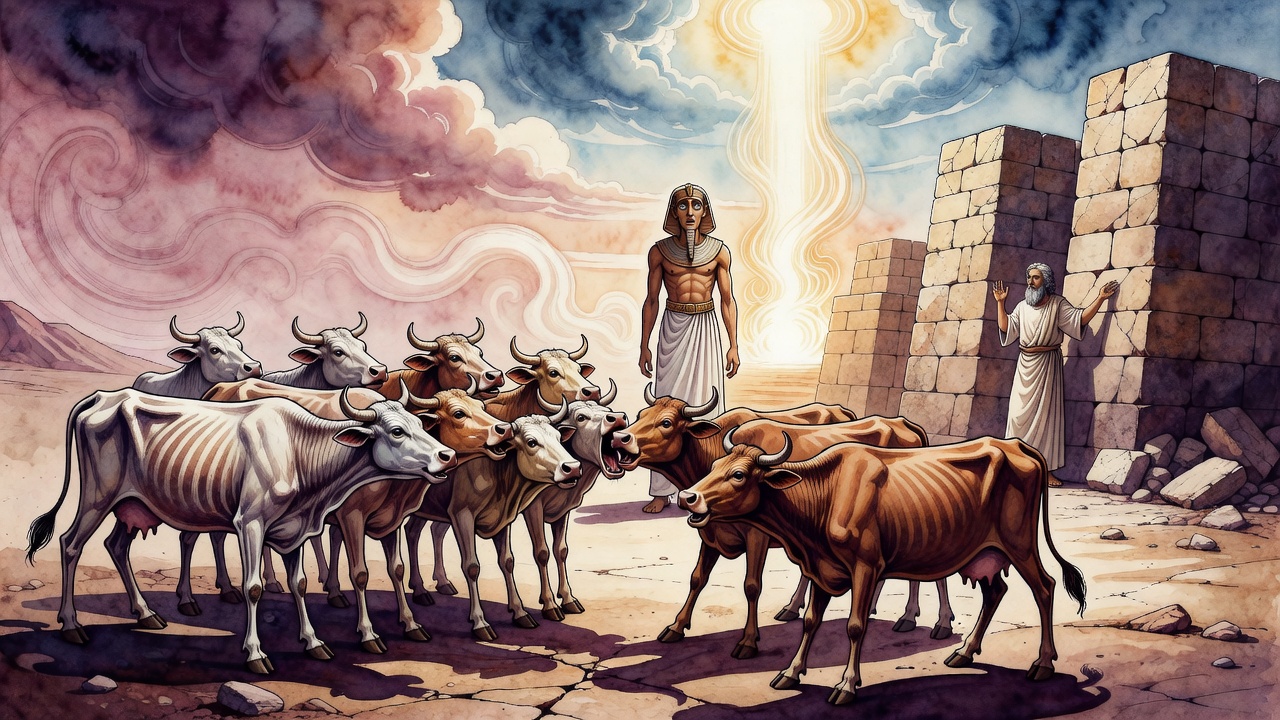
When Joseph stood before Pharaoh, he did not hedge. The seven wasted cattle and the seven thin ears scorched by the east wind were not two dreams but one, doubled for emphasis. Tar...
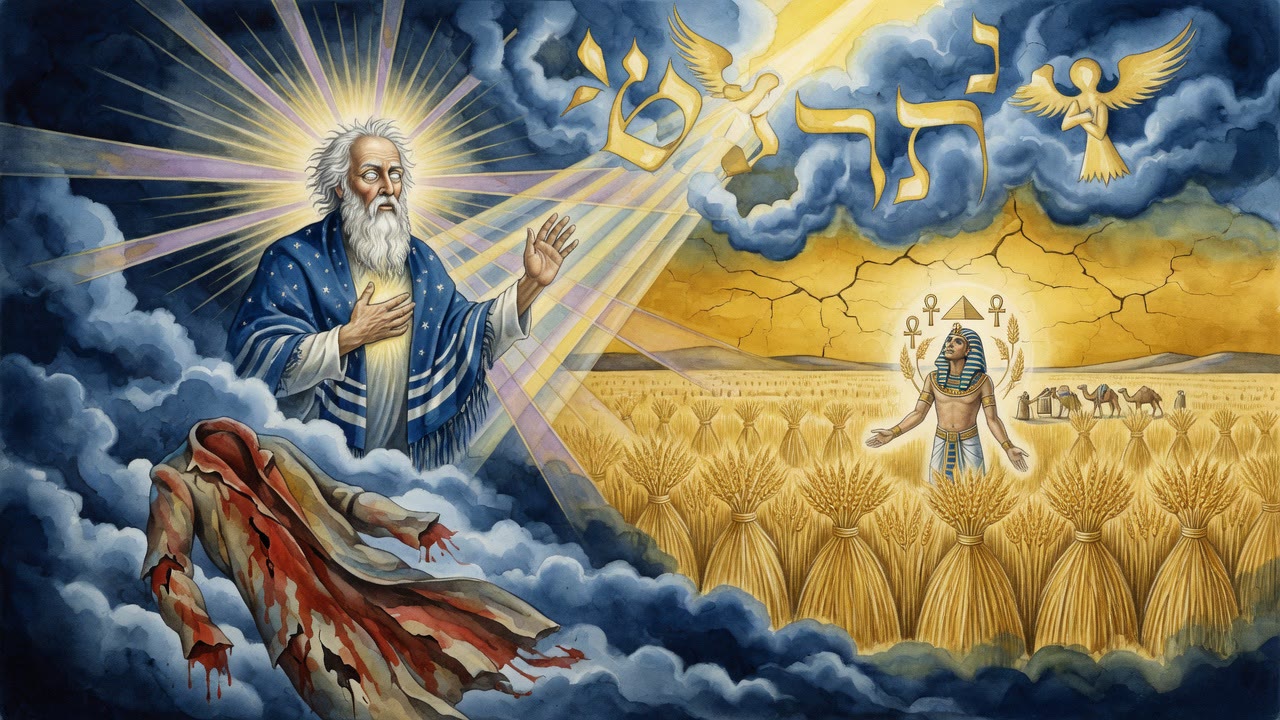
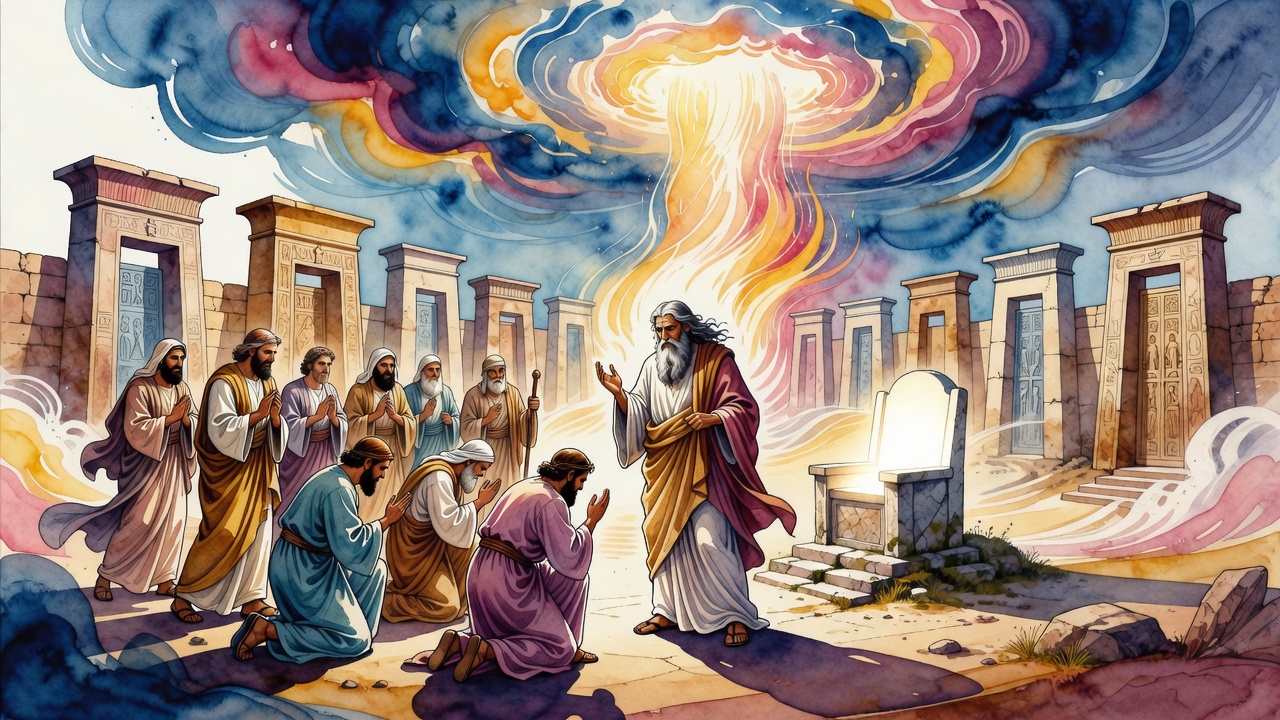
The instant they bowed, he remembered. Targum Pseudo-Jonathan on (Genesis 42:9) reports it without fanfare: "Joseph remembered the dreams he had dreamed of them." The sheaves and t...
Ten brothers stood before him, and Joseph picked Simeon. Targum Pseudo-Jonathan on (Genesis 42:24) preserves the reason the Torah leaves quiet: Simeon "had counselled them to kill ...
(Job 5:19) promises: "From six woes He shall save you, and in the seventh, evil shall not reach you." The midrash asks which six woes. And Solomon in Proverbs provides the list: "S...
A small city, few people, a great king who comes and builds fortifications, (Ecclesiastes 9:14) describes something small being threatened by something enormous. The rabbis identif...
The meal is over. The brothers have eaten, drunk, been seated by their mothers' names, watched Benjamin receive five portions. They expect to go home with grain and a story. Joseph...
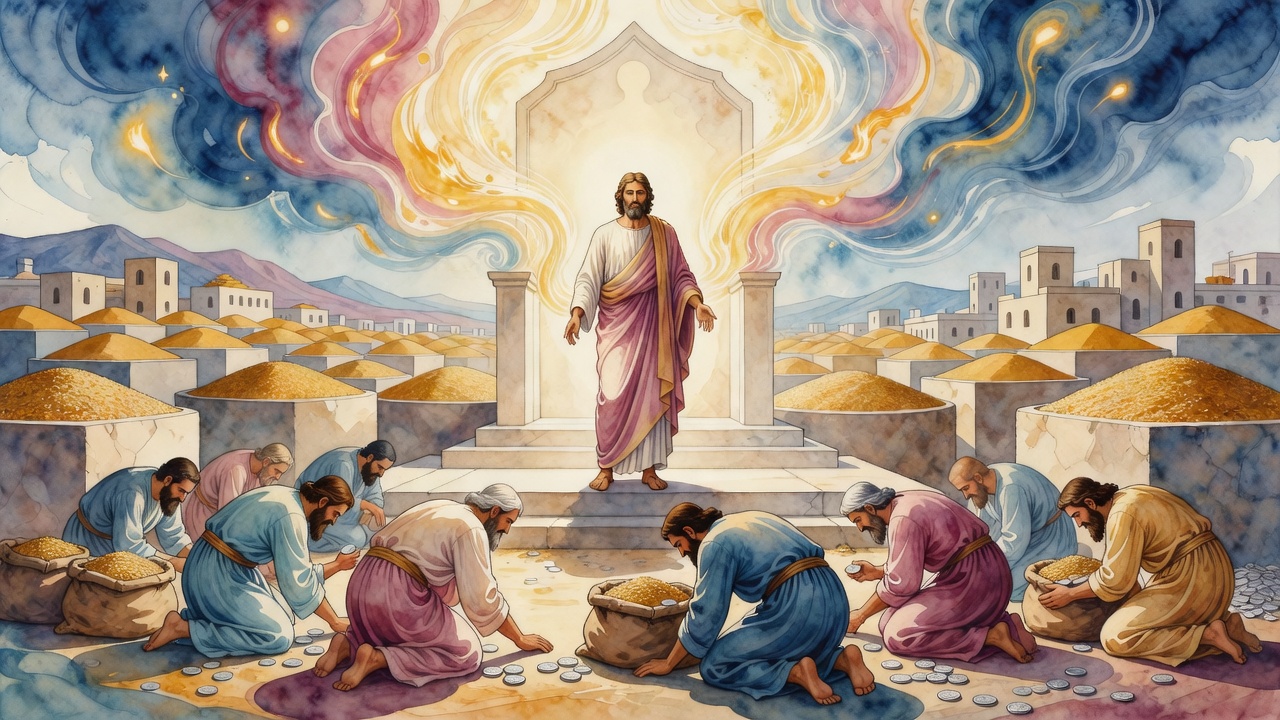
The moment the famine deepened, Joseph opened the storehouses. Targum Pseudo-Jonathan on (Genesis 41:56) records the mechanics: "Joseph opened all the treasures and sold to the Miz...
Book of Jubilees turns to Joseph Interprets Dreams in Pharaoh's Dungeon. Jubilees 40, and its take on the Joseph story. You remember Joseph. Sold into slavery by his brothers, he r...
The story of Joseph, as told in the Book of Jubilees, gives us a glimpse. The familiar version gives us the broad strokes: sold into slavery by his jealous brothers, falsely accuse...
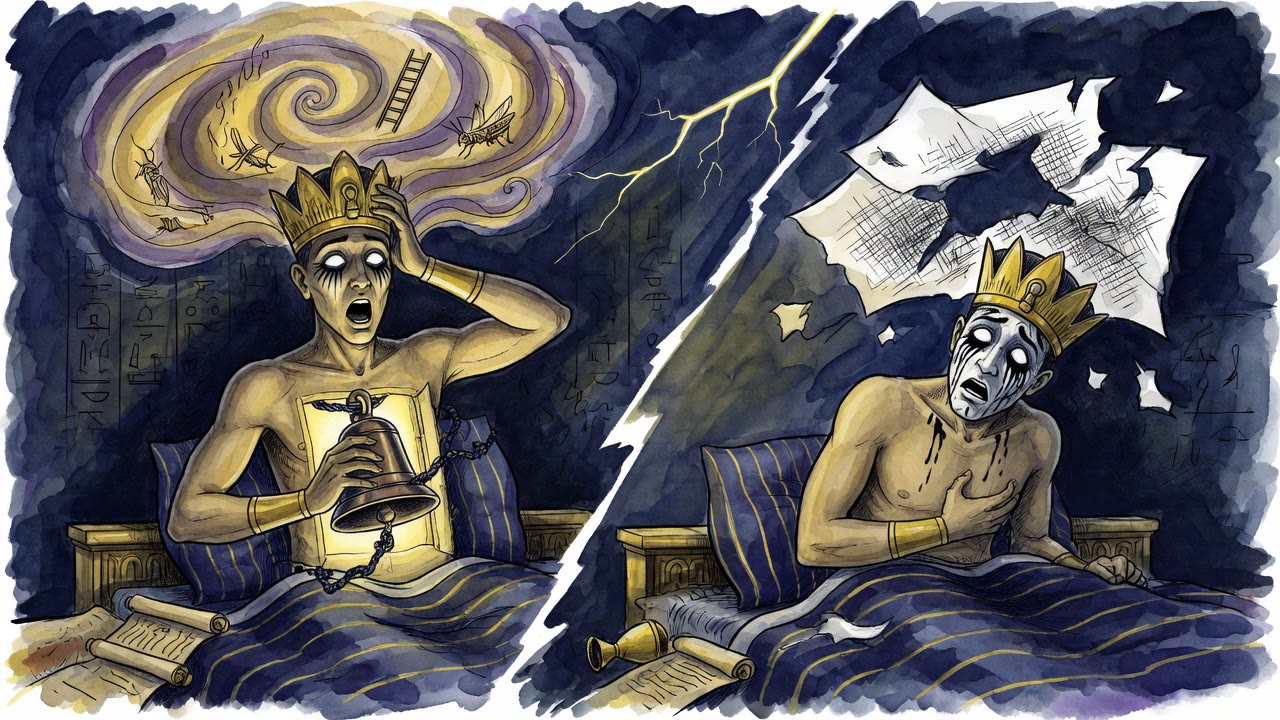
That’s where we find Pharaoh in the Joseph story. For two long years, Pharaoh was plagued by recurring dreams. Night after night, they visited him, only to vanish with the morning ...
Pharaoh watched something impossible in his dream. Seven gaunt cows swallowed seven fat ones whole, and when it was done, the thin cows looked exactly as wretched as before. No bul...
The words are almost shocking in their starkness. After seven years of surplus, Targum Pseudo-Jonathan on (Genesis 41:30) warns that the coming famine will "make all the plenty tha...
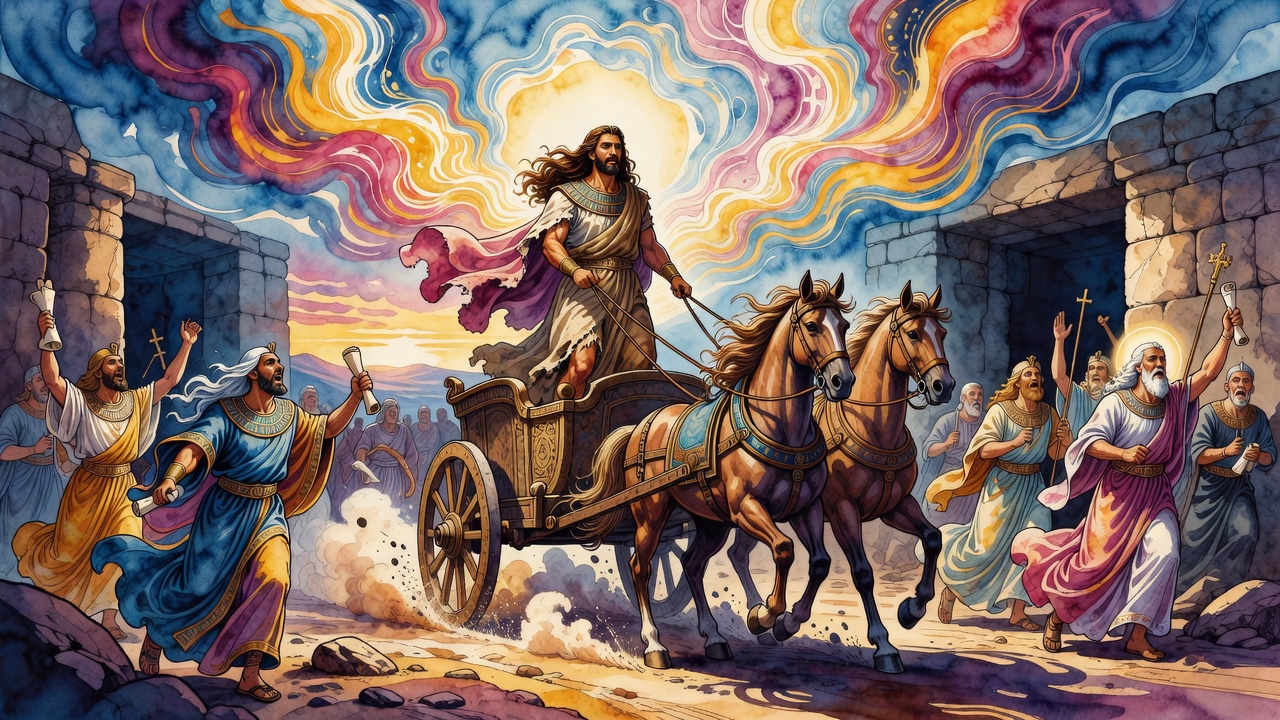
The runners went ahead of the second chariot and sang. Targum Pseudo-Jonathan on (Genesis 41:43) preserves the words of that ancient coronation chant: "This is the Father of the ki...
The verse is simple, but the timing is everything. Targum Pseudo-Jonathan on (Genesis 41:50) reports that Joseph fathered two sons "before the year of famine arose," born to Asenat...
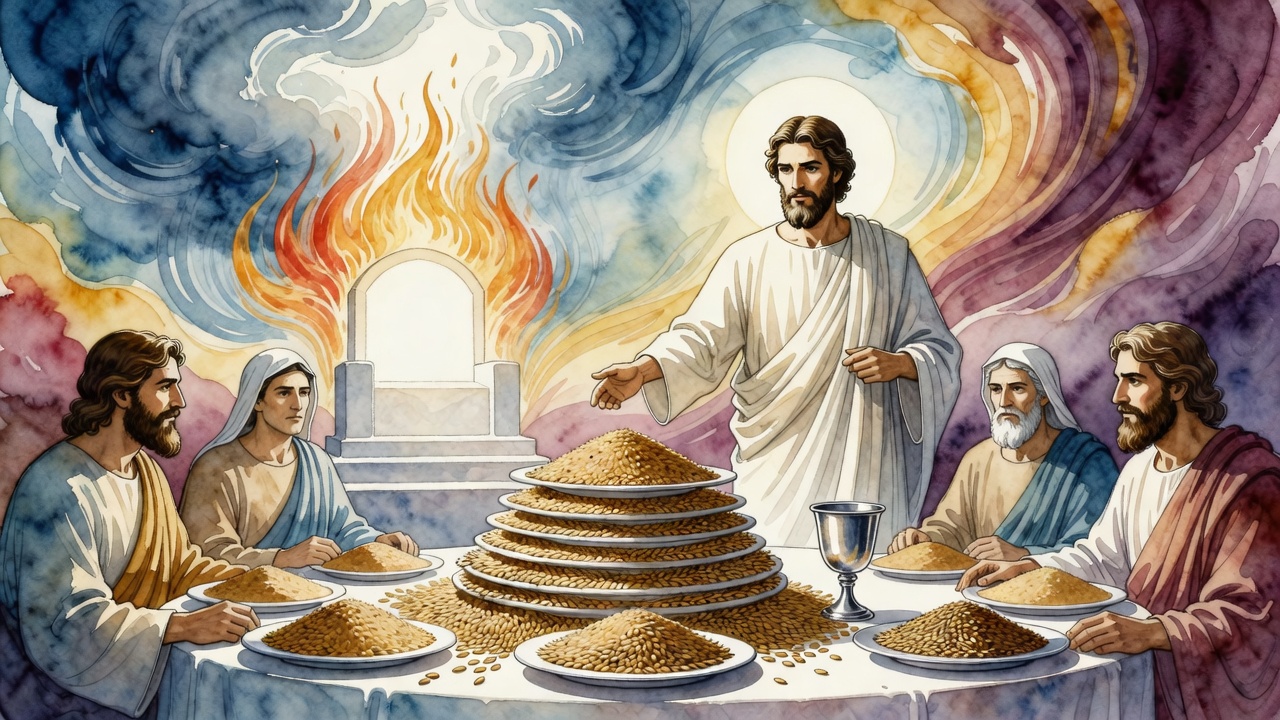
The seating at Joseph's feast is arranged with a precision that should be impossible. The brothers stare at the place cards and cannot account for what they see. "They sat around h...
This particular story plunges us into the land of the Philistines. Imagine the scene: A night filled with inexplicable terror. A "great crying" echoes across the land as people wit...
They're opposites. Always battling it out. But in one of the most dramatic stories in the Torah, the Exodus from Egypt, we see them working together in a truly terrifying way. I'm ...
Sometimes, digging into the past brings up unexpected things... and uncomfortable questions. Against Apion isn't exactly light bedtime reading. It's a polemic, a fiery defense of J...
Midrash Tehillim turns to Dreams of Joseph of Egyptians. Egyptians and Israelites, neighbors forced to coexist, approach the same well. They draw water together, but a miracle. Or ...
Midrash Tehillim, a collection of rabbinic interpretations of the Book of Psalms, uses a vivid analogy to explore exactly that feeling, focusing on the Exodus from Egypt. It hangs ...
It wasn't just about Pharaoh's decree to throw baby boys into the Nile. It was also about something seemingly mundane: bricks. to a fascinating interpretation from the Yalkut Shimo...
Shemot Rabbah, a classic midrashic (rabbinic interpretive commentary) compilation – a collection of interpretations and expansions on the Book of Exodus (Shemot in Hebrew) – gives ...
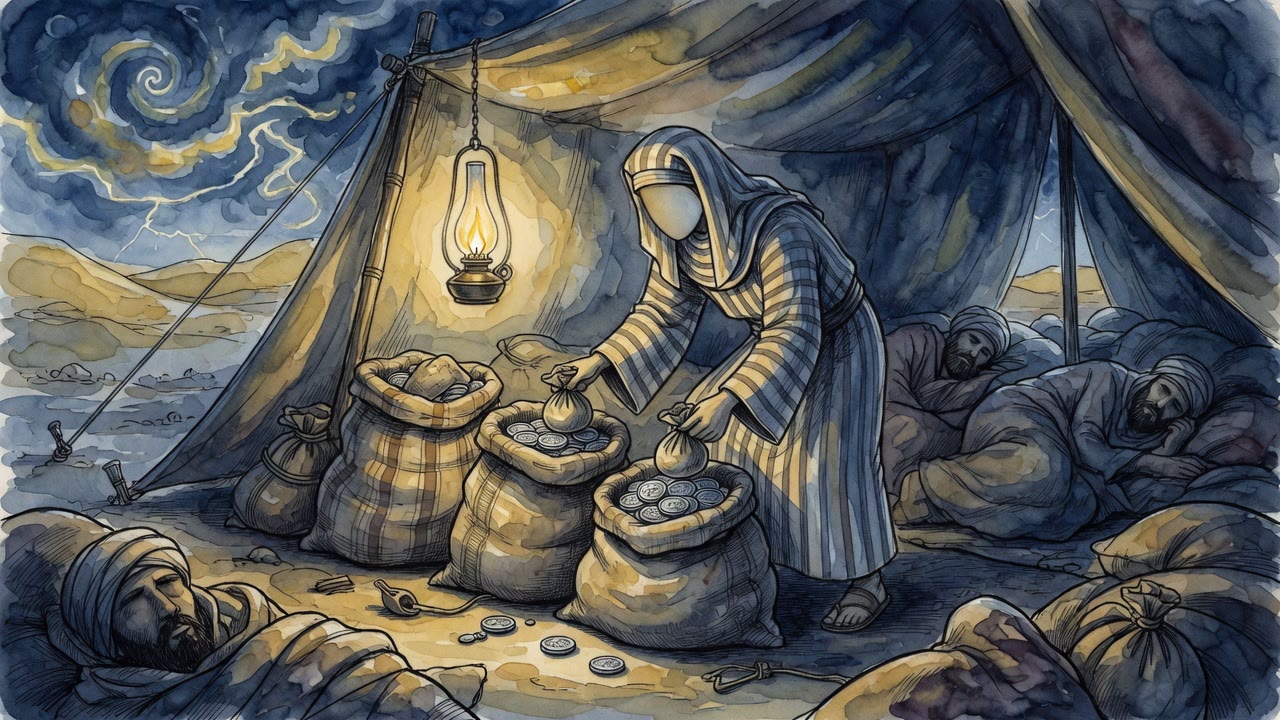
After the test, the quiet kindness. Targum Pseudo-Jonathan on (Genesis 42:25) describes Joseph's instructions: fill their vehicles with grain, return each man's money to his sack, ...
Simeon, second son of Jacob and Leah, was dying in his hundred and twentieth year. Joseph his brother had already passed. When his sons came to visit, Simeon strengthened himself, ...
The Targum gives us the theological architecture of Pharaoh's sleepless morning. In the morning his spirit was troubled, and he sent and called all the magicians of Mizraim and all...
When the dream was decoded, Joseph did not stop at interpretation. He handed Pharaoh a policy. Targum Pseudo-Jonathan on (Genesis 41:34), the Aramaic paraphrase of the Torah that t...
The Torah says Joseph stored grain in cities. Targum Pseudo-Jonathan on (Genesis 41:36) adds a detail that changes the picture entirely: the provision was laid up "as in a cavern i...
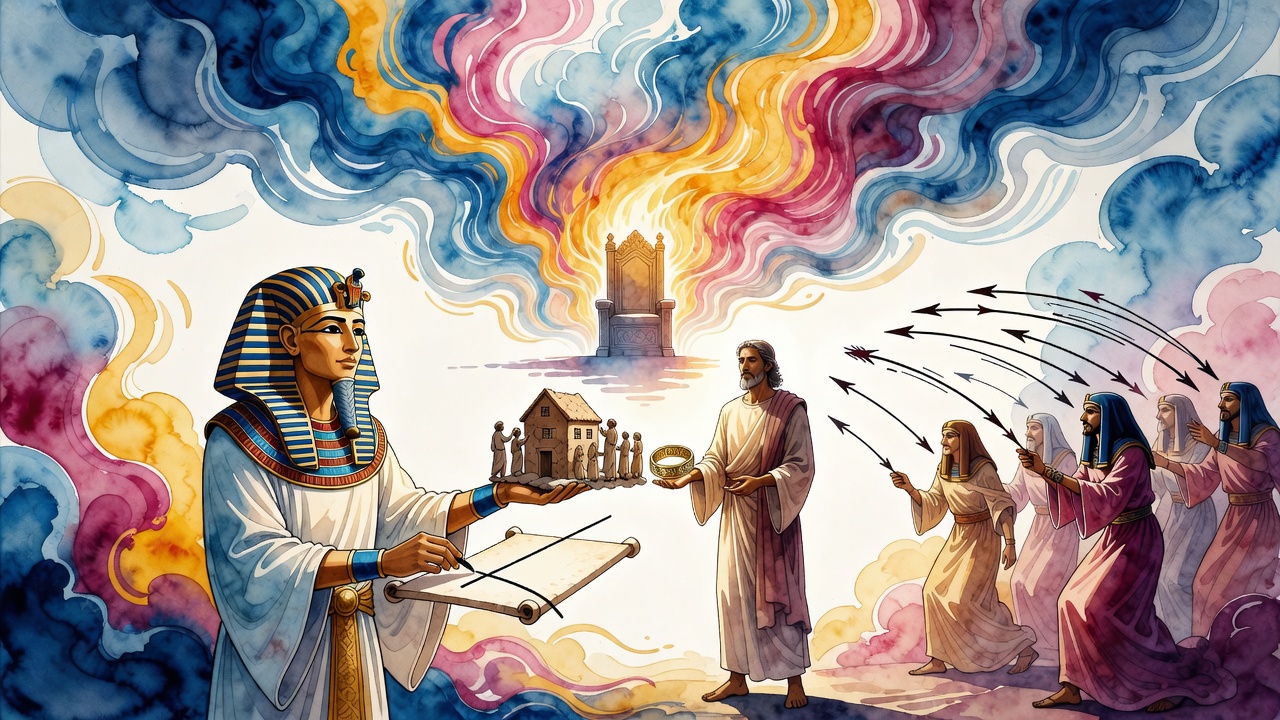
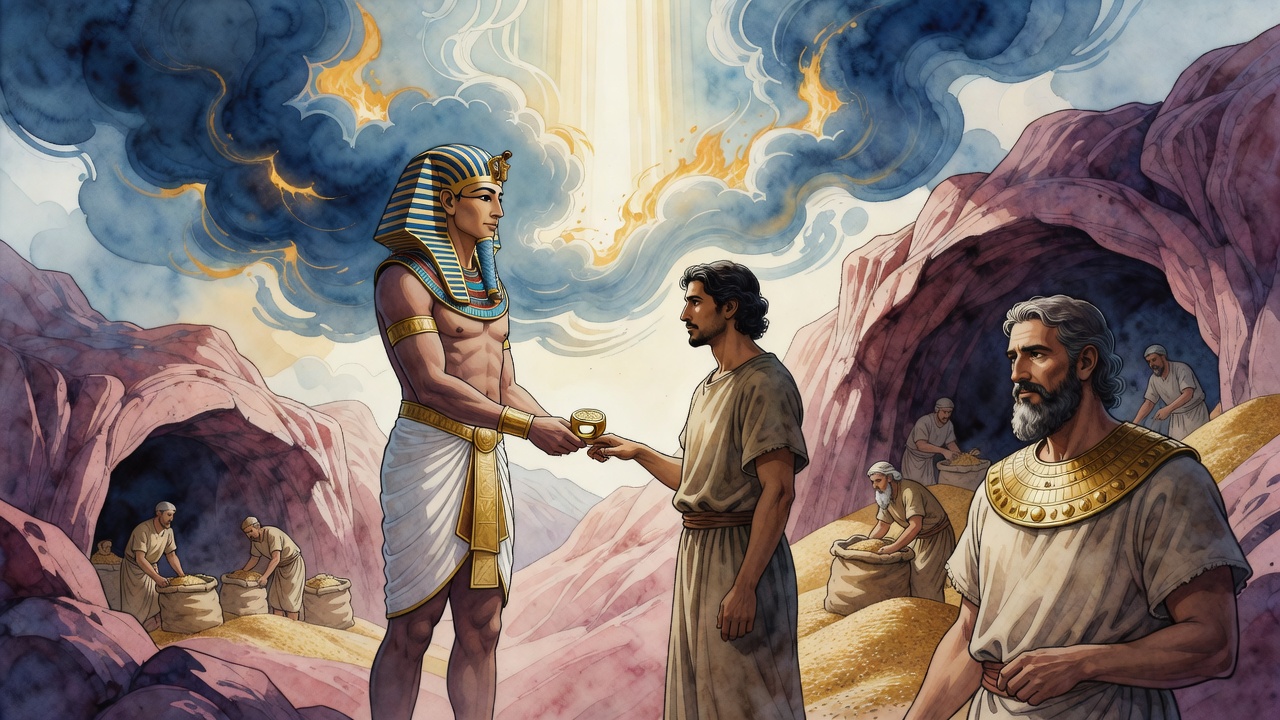
Pharaoh handed over almost everything. House, people, signet, authority. But one line held back: "only in the throne of the kingdom will I be greater than thou." Targum Pseudo-Jona...
The Torah says Pharaoh gave Joseph a wife named Asenath, daughter of Potiphera, priest of On. Targum Pseudo-Jonathan on (Genesis 41:45) stops the reader short with a different clai...
Book of Jubilees turns to Egypt — Joseph's Vision. Remember Joseph? The favored son, sold into slavery in Egypt? He rises to power, interprets Pharaoh's dreams, and foresees a deva...
The familiar story is this: Joseph, sold into slavery by his jealous brothers, ends up in Egypt. He rises through the ranks, but then gets thrown in jail after being falsely accuse...
That’s kind of what happened in Egypt, according to the legends surrounding Joseph, the dreamer who rose to power. Remember Joseph? Sold into slavery by his brothers, he ended up i...
The Targum supplies the theological punchline the Torah leaves whispered. Because Joseph had withdrawn from the mercy that is above, and had put his confidence in the chief butler,...
Targum Pseudo-Jonathan on Genesis turns to Judah Approaches the Throne — A Prince of Pharaoh's Judgment. "Judah came near to him and said, In imploring my lord, let thy servant, I ...
Shechem son of Hamor once assembled a troupe of girls with tambourines to play outside the tent of Dinah, and when she "went out to see them" (Genesis 34:1), he carried her off. Fr...
The Targum preserves one of the great theological statements in Genesis. And Joseph answered Pharoh, saying, (It is) without me; it is not man who interprets dreams: but from befor...