Pharaoh Dreamed a Lamb That Outweighed Egypt
Pharaoh woke with Egypt still rising on the wrong side of a scale. By morning he wanted a law that would drown Hebrew boys.
Table of Contents
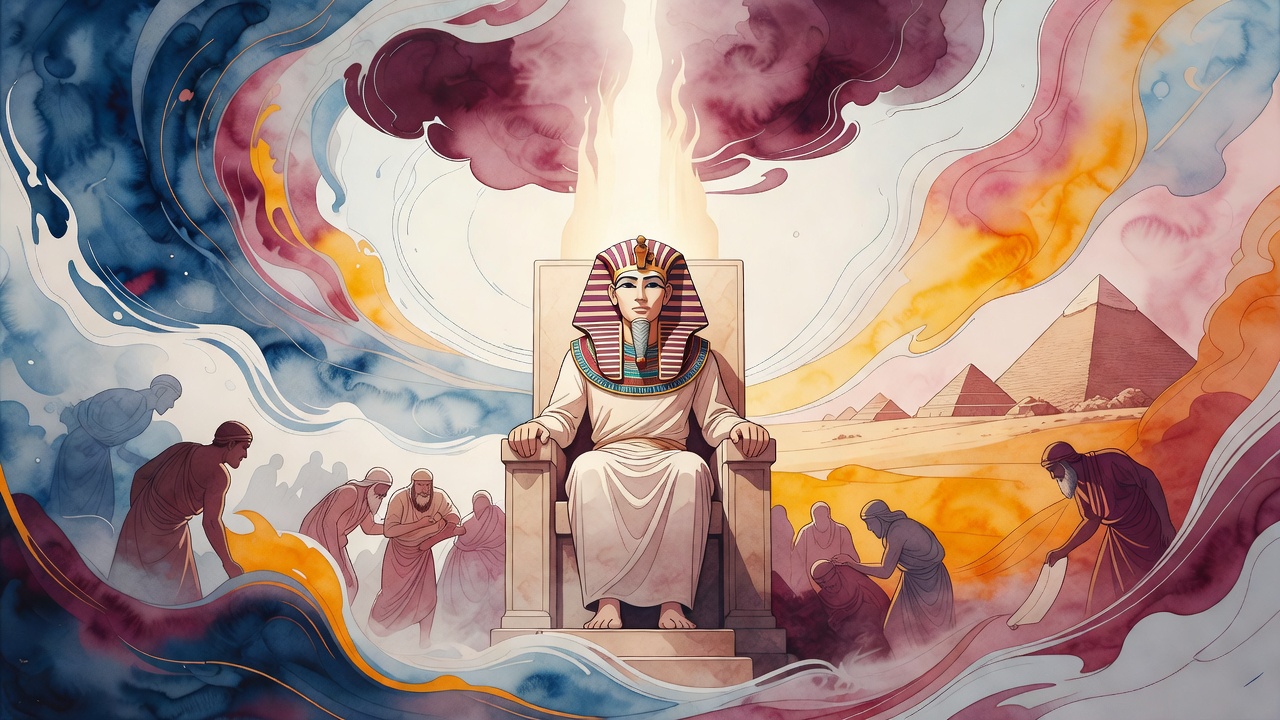
Pharaoh woke before dawn with the taste of metal in his mouth.
 Click for full size
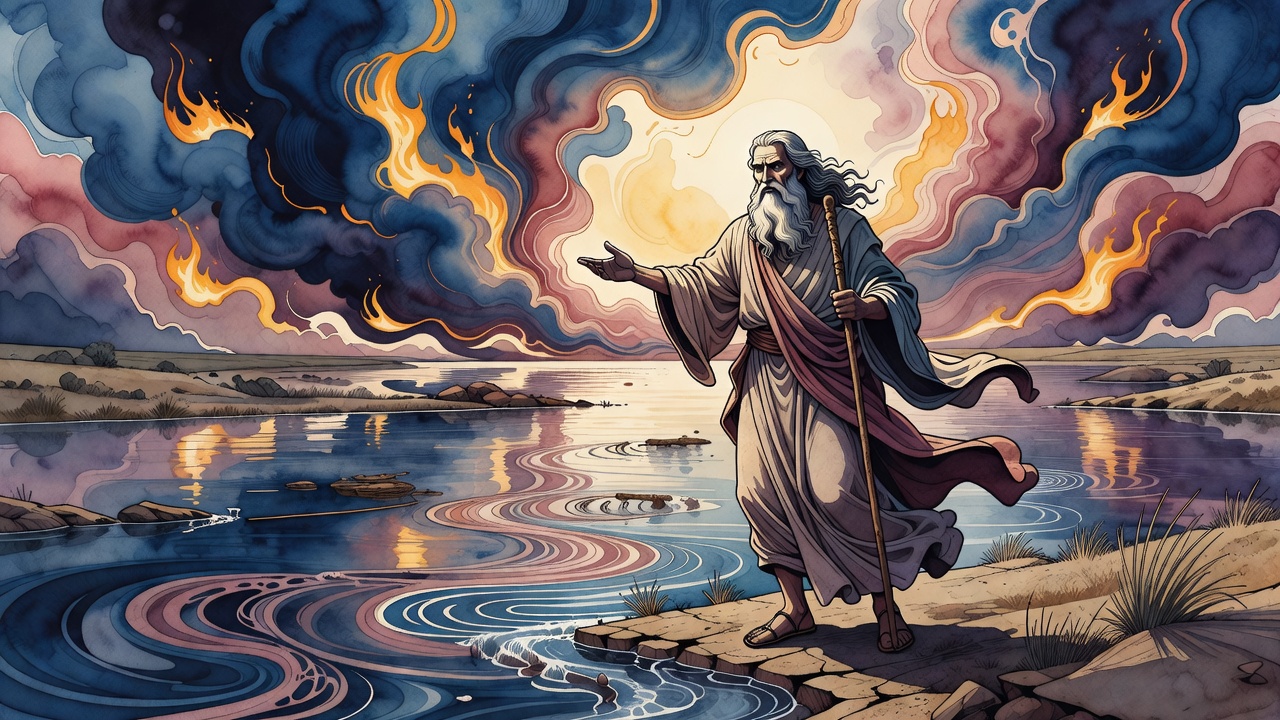
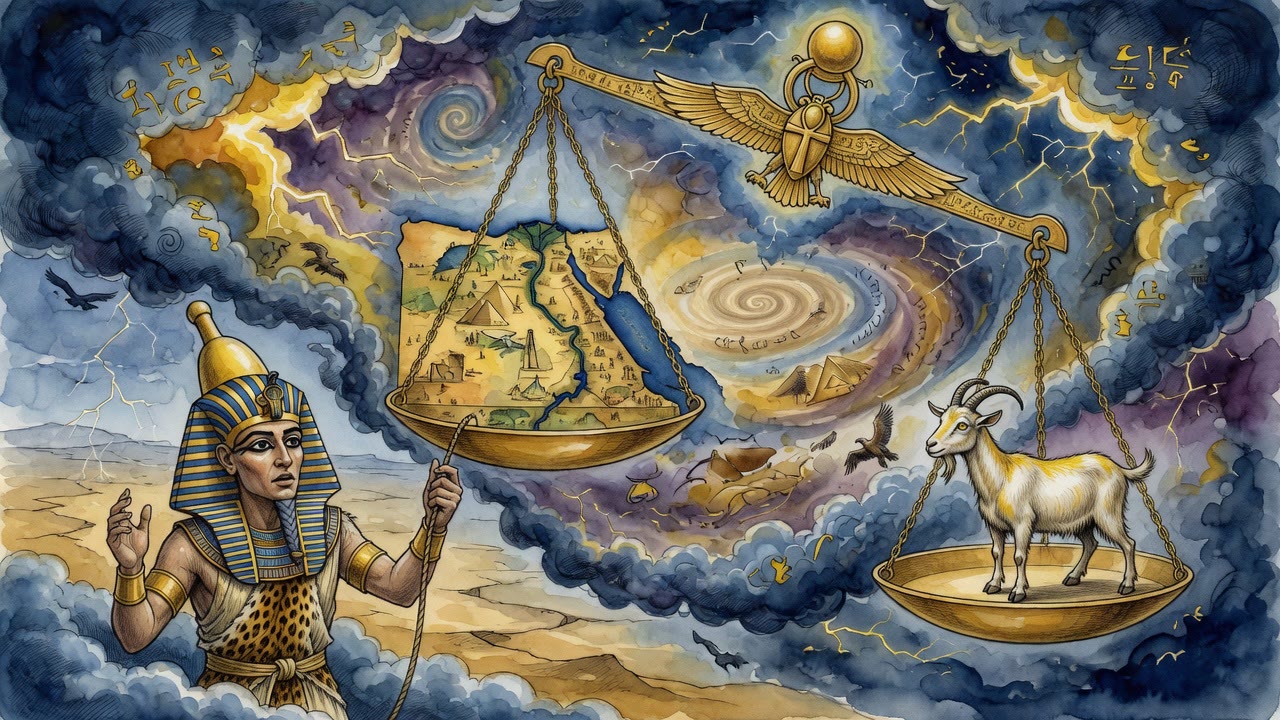
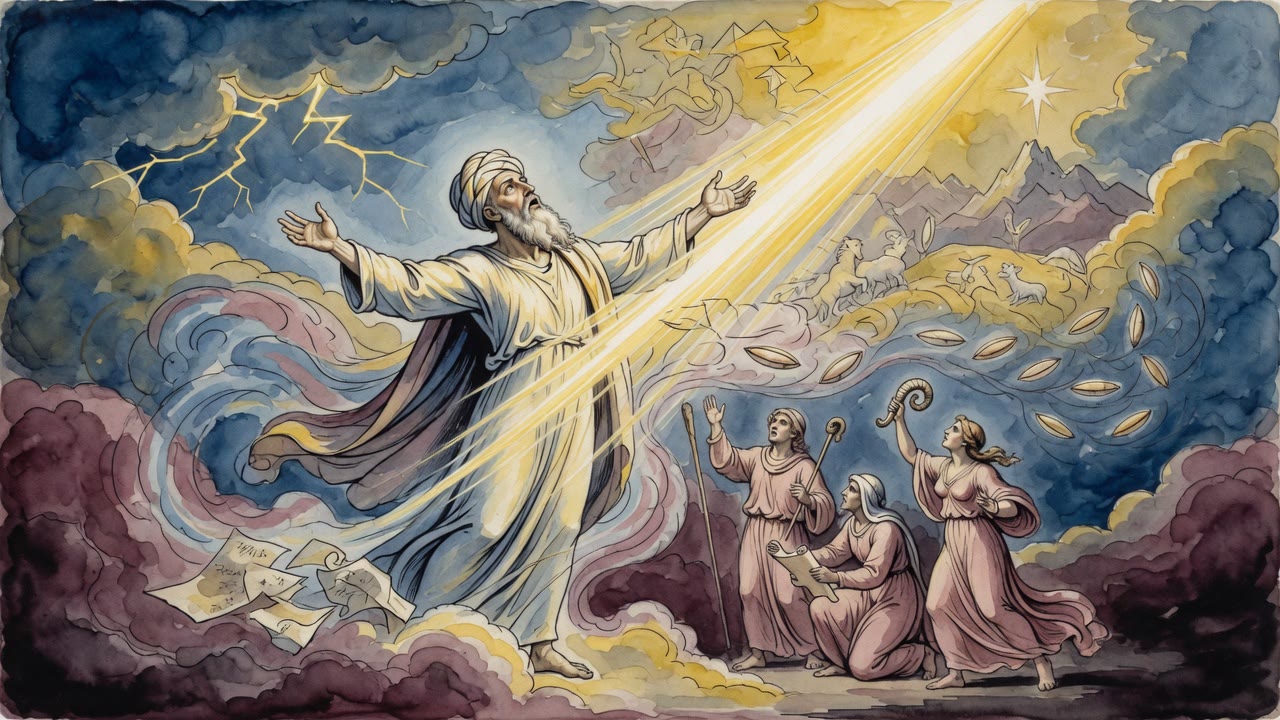
In the dream, an old man had stood before him with a merchant's scale. Into one pan he gathered Egypt: elders, officers, nobles, the whole glittering weight of a kingdom that had forgotten Joseph and grown fat on Hebrew labor. Then the old man placed a lamb, newborn and soft, into the other pan.
The lamb dropped.
All Egypt lifted into the air.
The Lamb Bent the Scales
Pharaoh called his court while the palace lamps still smoked. Magicians came wrapped in linen. Astrologers came clutching their tablets. Advisors came with careful faces, because kings who wake afraid do not like to hear that their fear is reasonable.
One advisor said the thing no one else wanted to say. A child would be born among the Hebrews. One child. Not an army, not a revolt, not a plague of rebels with knives under their cloaks. A baby would outweigh Egypt and bring the kingdom down.
The counsel that followed was clean and monstrous. Write it into law. Do not hunt the child after he grows. Do not wait until he learns his own name. Kill the boys at birth. Let the danger drown before it can cry out.
A single lamb had outweighed the scale, and Pharaoh answered by making every Hebrew cradle a place of terror.
The Wages Became Chains
Fear did not arrive wearing chains. It arrived smiling, with wages in its hand.
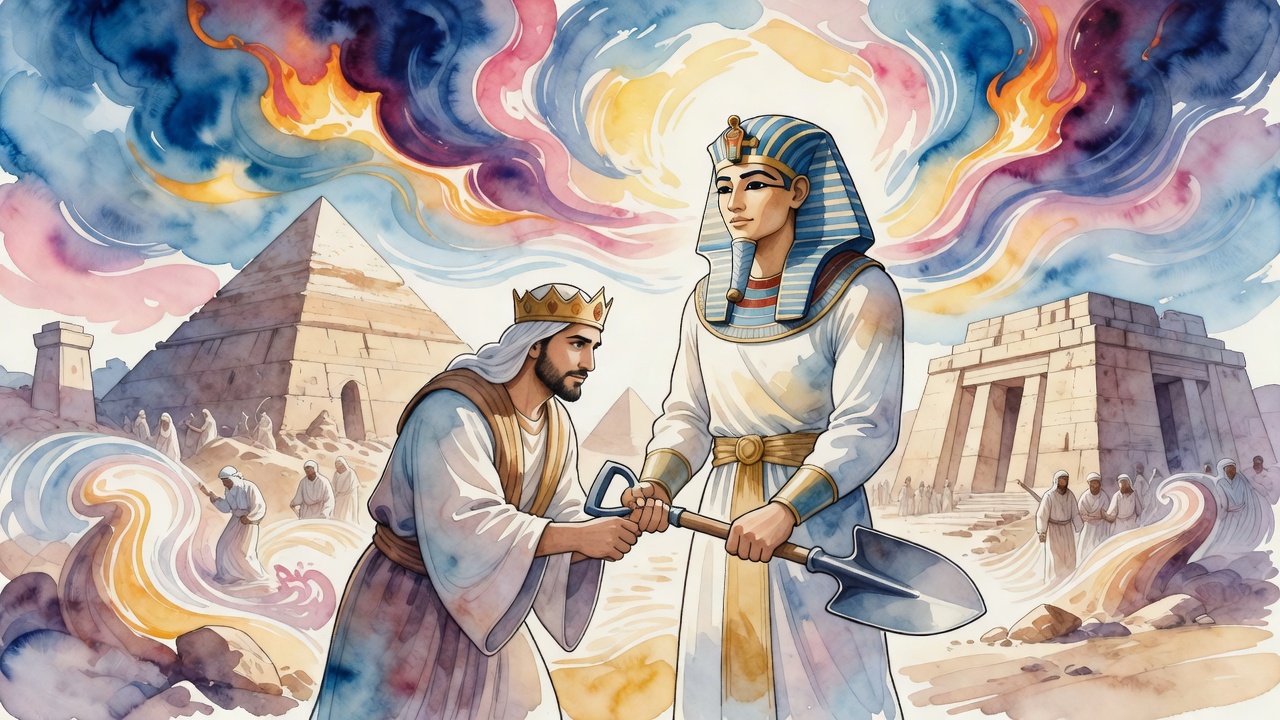
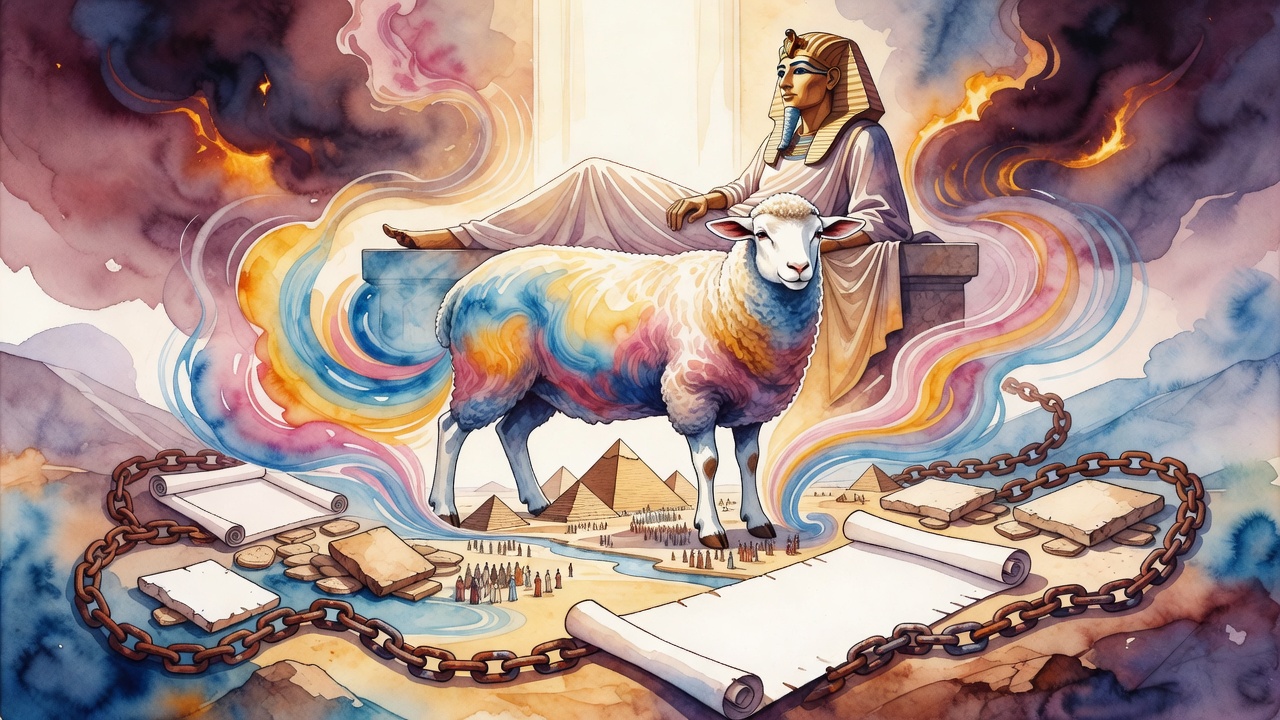
Pharaoh did not begin by saying slavery. He announced work. Egyptians and Israelites would build together. For a month the Hebrews labored beside their neighbors and were paid day by day. Men returned home exhausted but not yet broken. The work looked civic. The bricks looked like duty. The pay made the trap feel honest.
Then the Egyptians began to step back. One vanished from the row. Then another. Overseers appeared where companions had stood. The wages stopped. The quotas stayed. When a Hebrew man refused unpaid labor, the lash answered him. When he bent again to the clay, Pharaoh learned the shape of a people caught between hunger and blows.
The kingdom that feared one unborn child had found a way to turn thousands of living men into tools.
The Tribe That Took No Coin
One tribe would not enter the trap.
The Levites did not take Pharaoh's first coin. They did not join the paid crews while the bargain still smelled sweet. When the wages dried up and the taskmasters closed their fists, the Levites were already outside the snare.
That refusal did not free the nation. It did not soften Pharaoh. It did not stop the mud pits from swallowing backs and knees and breath. It preserved a line of people who had not been trained by Pharaoh's wage into Pharaoh's chain. Somewhere inside that refusal, the future servants of the sanctuary kept a little room untouched by Egypt.
Pharaoh wanted every Hebrew life measured by brick counts. The Levites answered by refusing the first measurement.
The River Became a Decree
The dream did not leave Pharaoh. It returned whenever a Hebrew woman carried water, whenever a midwife entered a dark house, whenever the sound of an infant rose from Goshen.
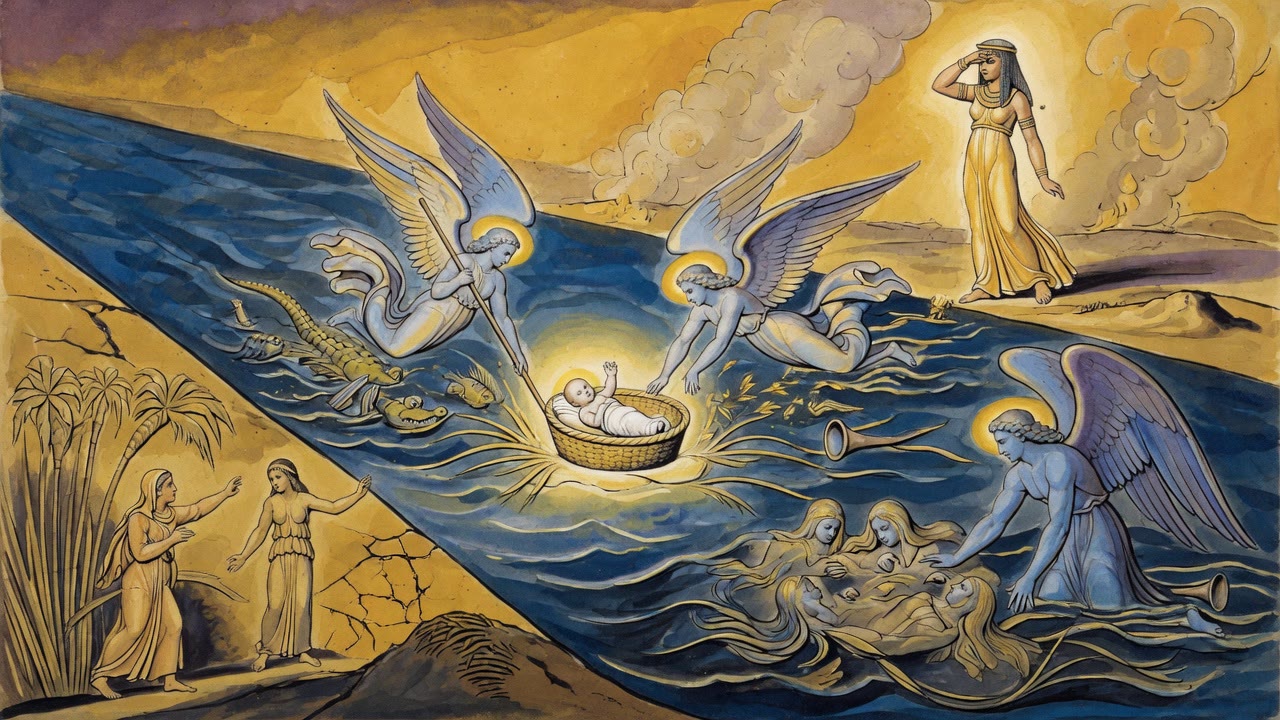
So the decree sharpened. Every Hebrew boy must be cast into the Nile. For seven months they threw the children in, month after month of baskets hidden, doors watched, mothers listening for soldiers' sandals in the street. The river that watered Egypt became a mouth.
Then Yocheved gave birth.
The child was hidden for three months. After that, concealment itself became a danger. His mother built a little ark, covered it with pitch, and set him among the reeds on the water Pharaoh had chosen for death. By night she came and nursed him. By day Miriam watched from the bank, driving the birds off the basket. Pharaoh had ordered the Nile to erase the lamb. The Nile carried the lamb toward Pharaoh's own house.
The Basket at the Palace Gate
The court had named the danger before the child had a name. That was Pharaoh's cleverness and his failure. He understood that history can turn on one infant. He understood enough to be afraid, and not enough to stop.
Egypt looked heavy because Egypt had palaces, chariots, scribes, storage cities, and a river Pharaoh thought he could command. The lamb looked weightless because it had no army and no throne. Heaven does not weigh the way empires weigh. A child can tip a kingdom. A mother can outlast a decree. A basket can become an ark.
The scale in the dark had told the truth. Pharaoh made the river an executioner, and the river brought the boy home to the house that had ordered him drowned.
← All myths