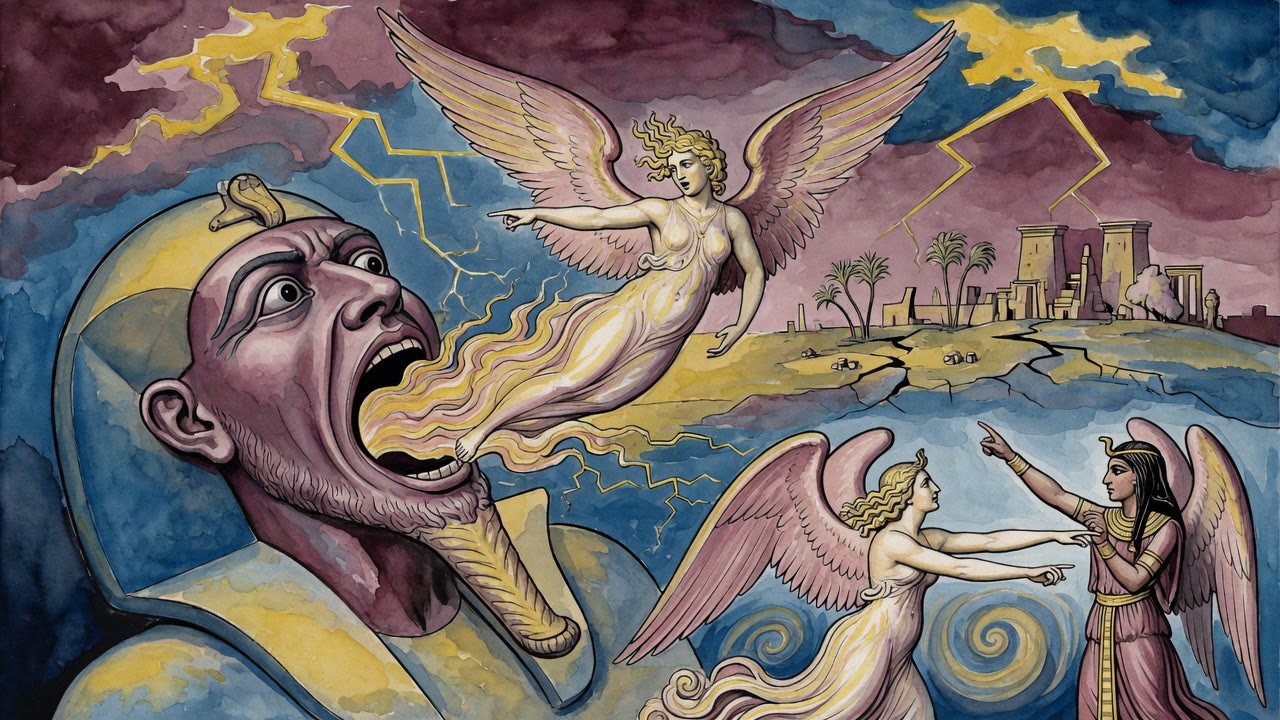
Baby Moses Floated While Angels Cleared the Nile
Scorching heat drove Pharaoh's daughter into the river, Gabriel buried the handmaids, and Miriam brought Moses back to his mother.
Table of Contents
 Click for full size
The Basket in the Water
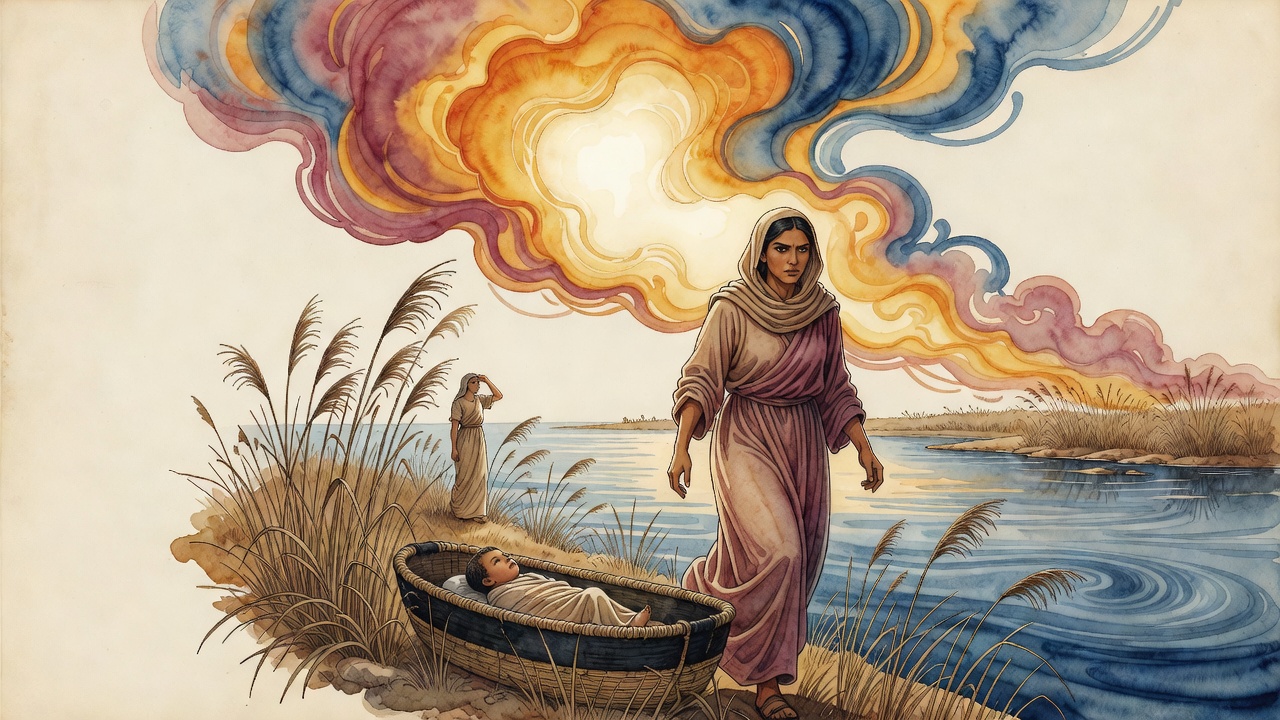
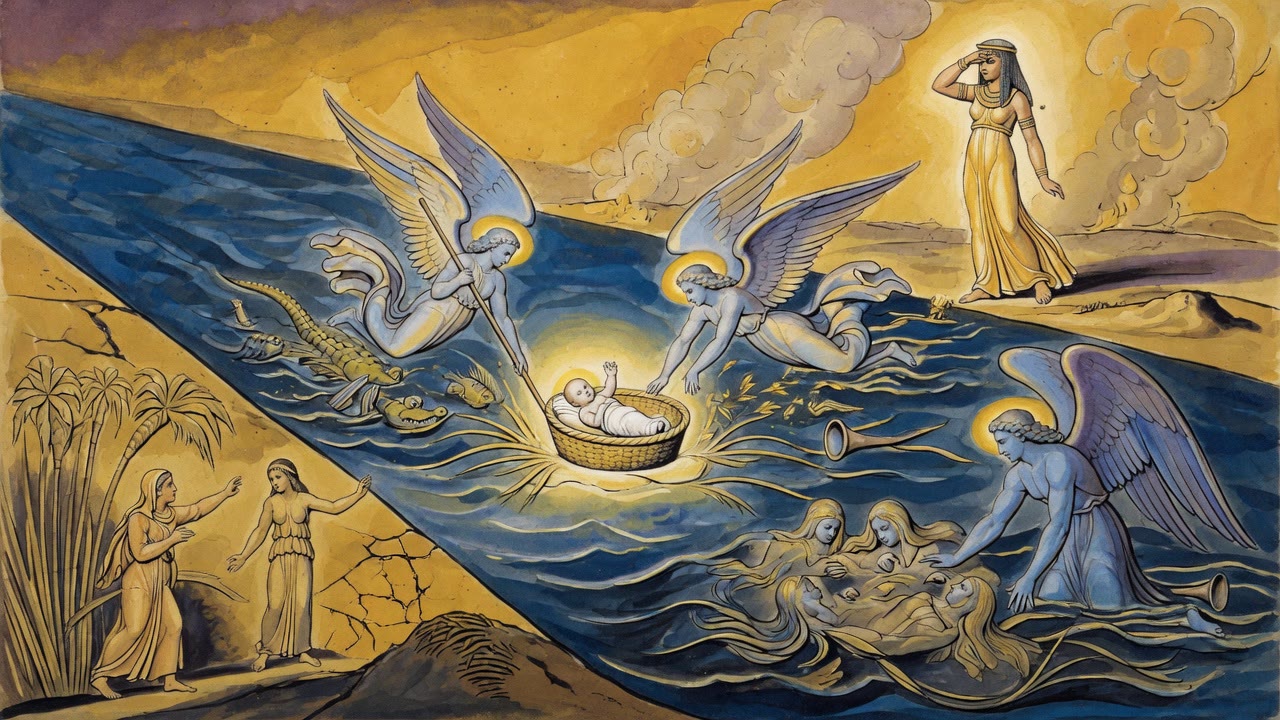
Jochebed built the smallest ark in the Torah with a mother's hands and a fugitive's caution. She sealed it with pitch. She placed it among the reeds where the Nile bent toward shelter. Then she turned away, because she could not watch and still breathe.
The Book of Jubilees, a Second Temple Jewish retelling of Genesis and Exodus dated to around the second century BCE, makes the danger last a full seven days. Moses lies among the river reeds by day. Miriam stands watch nearby, keeping the birds off with her presence. At night Jochebed comes back through the dark to nurse him. Seven days of this. Seven days of tides and birds and soldiers who might follow any sound. Then Pharaoh's daughter appeared at the water's edge, and the arrangement that had kept Moses alive for a week gave way to something larger.
Heat Drove the Princess Into the River
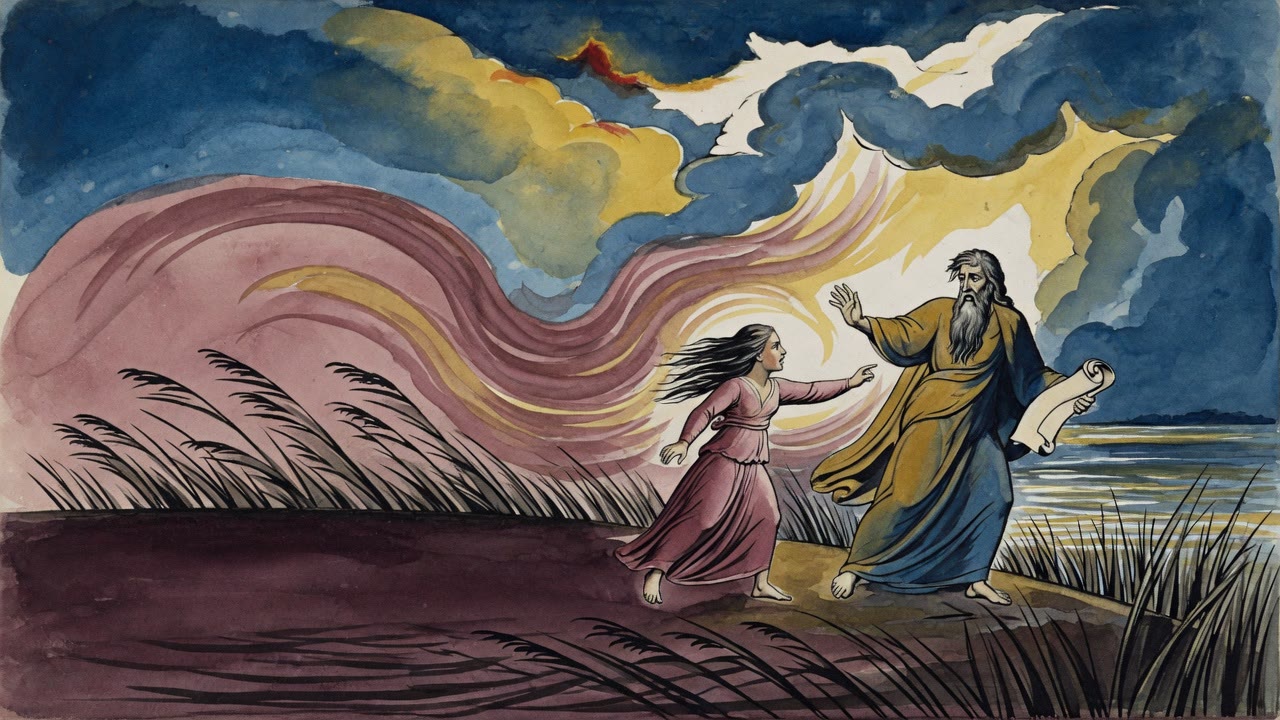
Louis Ginzberg's Legends of the Jews, his early twentieth-century anthology drawn from rabbinic and midrashic sources spanning a thousand years, opens the heavens around the same riverbank. In his account, God sent scorching heat across Egypt that day, so fierce that Pharaoh's daughter came down to the Nile not for pleasure but for relief. Her handmaids came with her. When she sent them to fetch the basket floating in the reeds, the angel Gabriel appeared and buried them in the sand. Not killed, but gone, removed from the scene. The princess had to wade in alone to reach the child.
The basket resisted her. It was sealed and would not open in her hands. A second angel appeared and struck it open. She looked inside and saw a boy weeping, and the Shekhinah, the divine presence, descended on her in that moment. She knew the child was Hebrew. She said so aloud. And then she decided to keep him anyway.
Miriam's Offer and the Mother Who Got Her Son Back
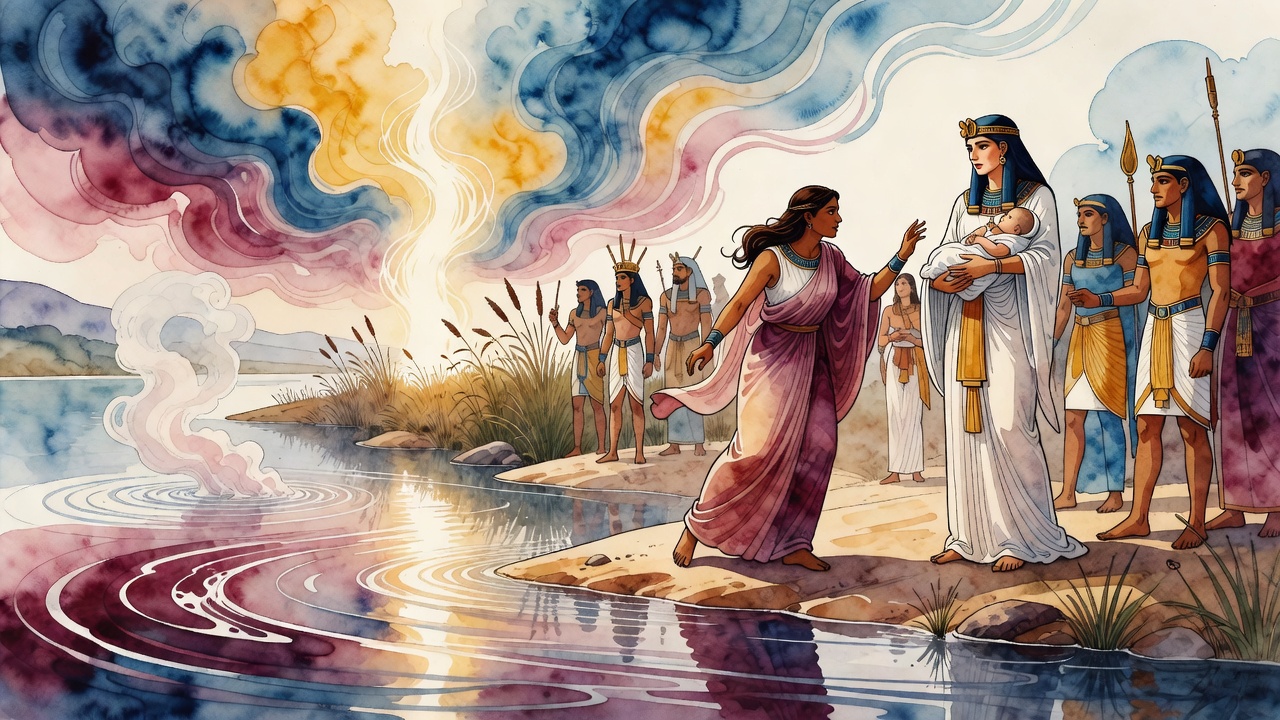
Miriam had been watching from a position close enough to move the moment she was needed. She approached Pharaoh's daughter and offered what seemed like practical help: she knew a Hebrew nurse who could feed the child. The princess agreed. Miriam went to find Jochebed and brought her back to the palace.
Jochebed stood before Pharaoh's daughter and was offered her own child to nurse, for wages, under royal protection. The Torah does not record what she felt at that moment. The midrashic tradition, collected in Ginzberg, fills in what the text elides: Jochebed nursed Moses for twenty-four months before he was old enough to be brought to the palace, where Pharaoh's daughter adopted him and gave him the name Moses, meaning drawn from the water.
The Plagues Began Early
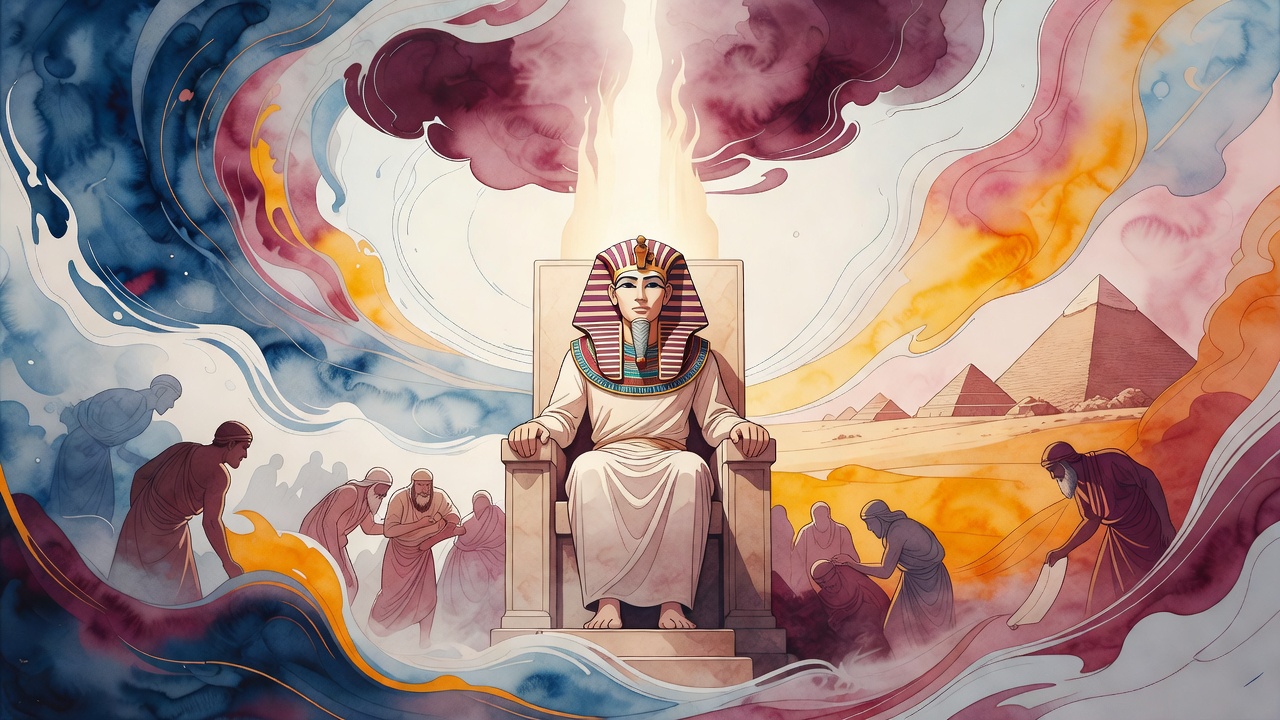
Ginzberg's synthesis draws on a midrashic tradition that does not stop at the riverbank. The same sources that describe the scorching heat and the angel burying the handmaids also record that plagues struck Egypt during those first months of Moses's life. Tzaraat, a condition of skin and surfaces, spread through Pharaoh's household. The court physicians prescribed bathing in the blood of Hebrew infants, and Pharaoh ordered more children killed.
The infant Moses was already in the palace. He was already being carried by the daughter of the man who had ordered his death. The tradition reads this as a pattern: the mechanism of Israel's destruction repeatedly became the mechanism of its rescue. The river that Pharaoh used to kill Hebrew boys carried the future redeemer to safety. The palace of enslavement became his education.
Why Moses Is Called the Man of God
Psalm 90 is headed a Prayer of Moses, the Man of God. The Midrash asks why he earned that title, and the answer it gives returns to the Nile: God Himself stood over the basket. The same Psalm that calls Moses the Man of God is the prayer attributed to him in old age, when he could look back at the full arc. What the Midrash sees in the Nile scene is not only rescue but appointment. The child in the basket was already being watched by the one who would later give him the mission he refused three times before accepting.
← All myths