63 myths · Page 1 of 3
Each story names the sources it was written from.
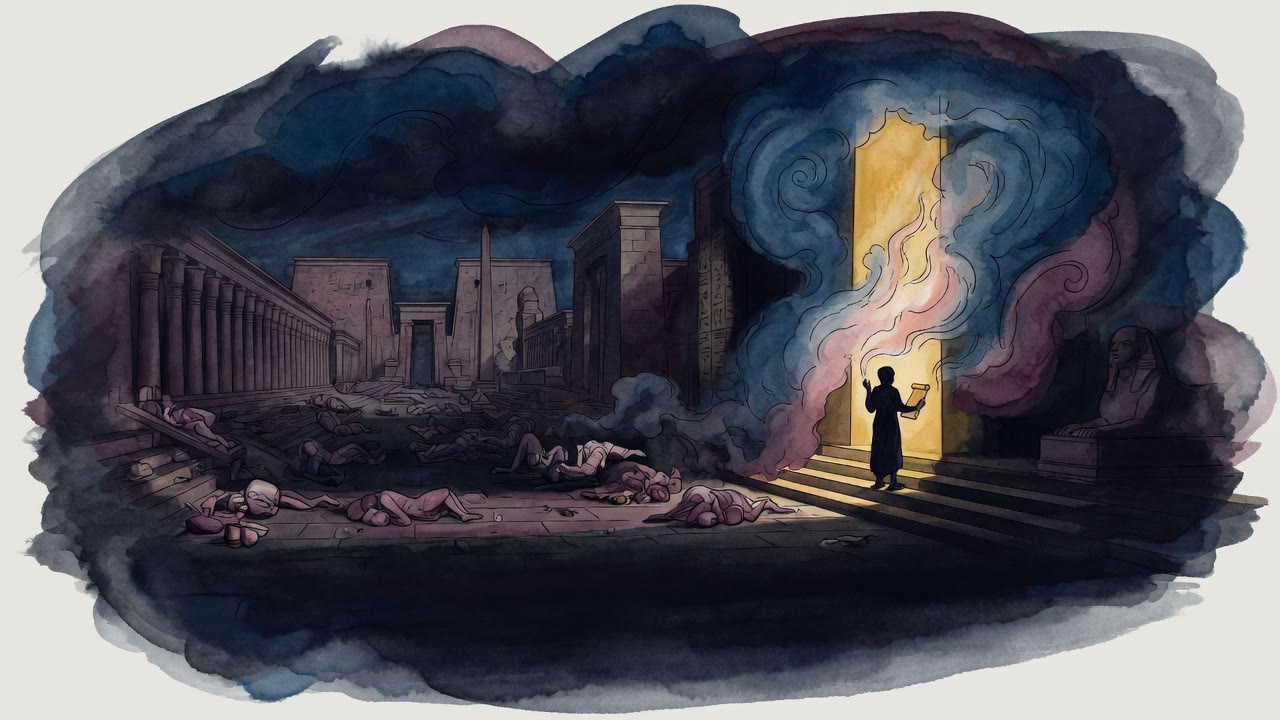
Not everyone wanted to leave Egypt. The midrash says four-fifths of Israel died during the plague of darkness, hidden so Egypt would not rejoice.
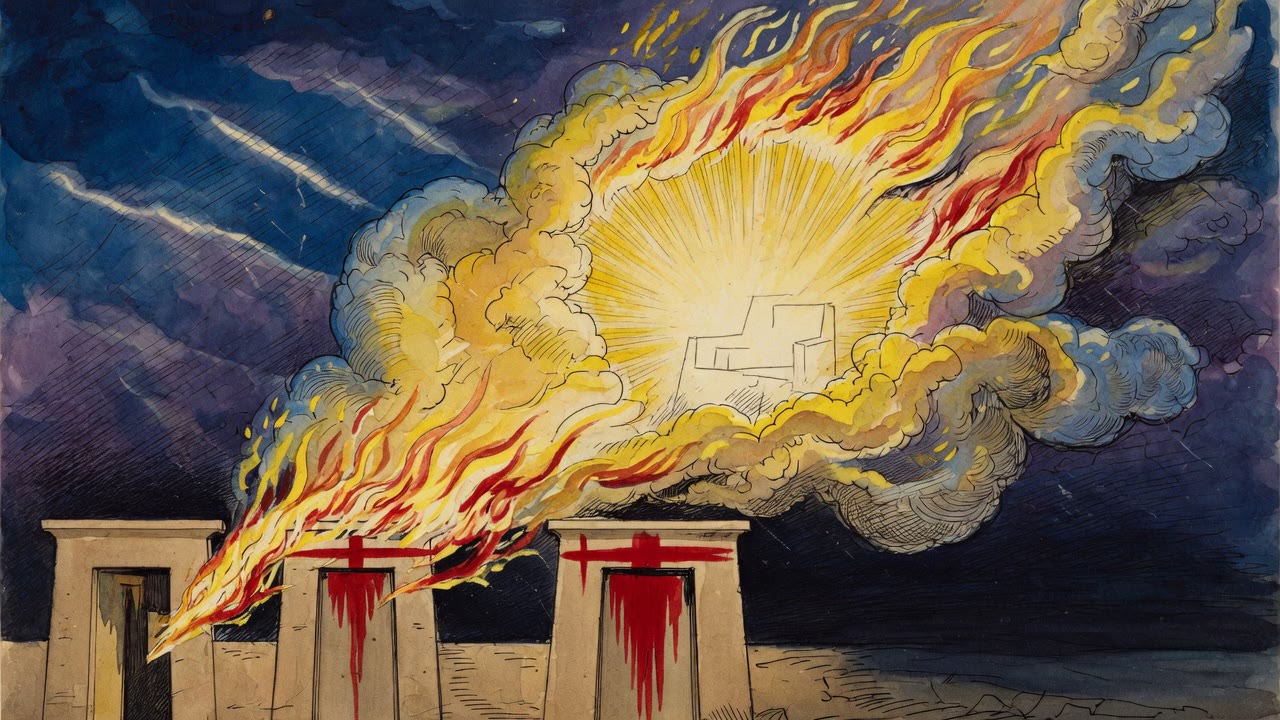
An Egyptian carried his firstborn to a Hebrew house and begged the family to keep him for the night. At dawn the boy lay dead between their sons.
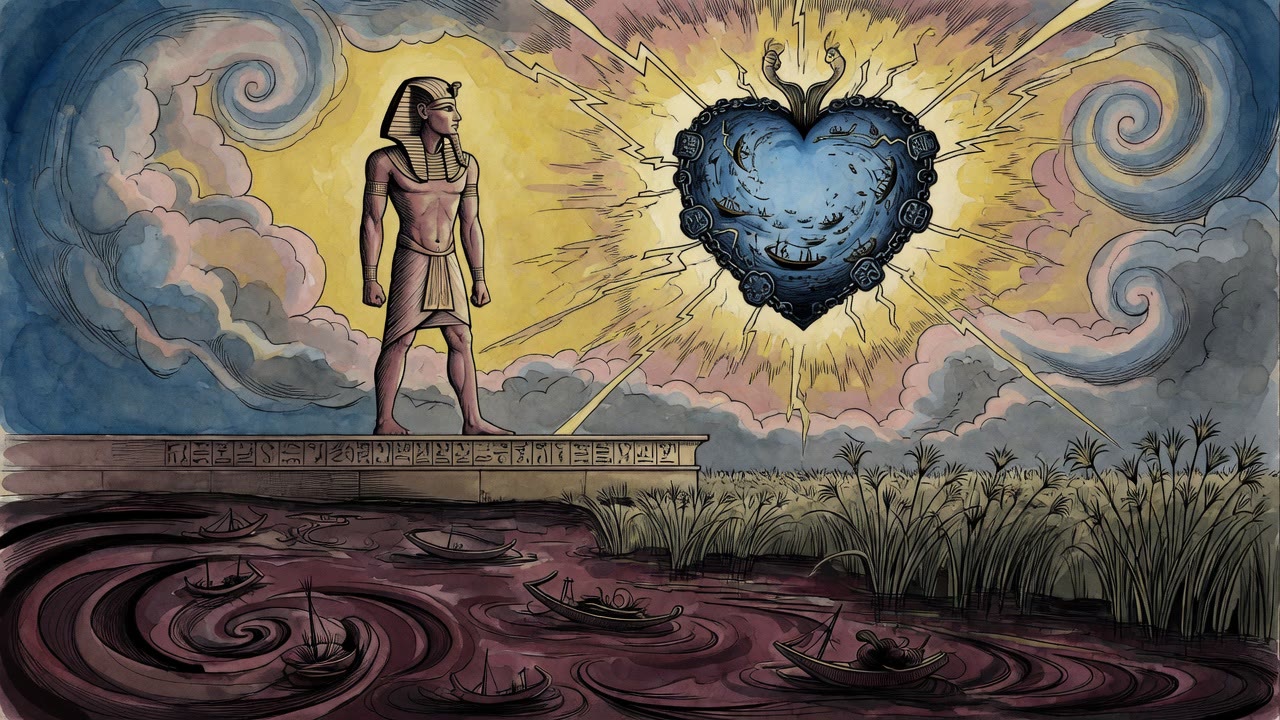
Pharaoh threw Israel's sons in the Nile. So a hardened heart became the sentence that kept him standing until his own firstborn died.
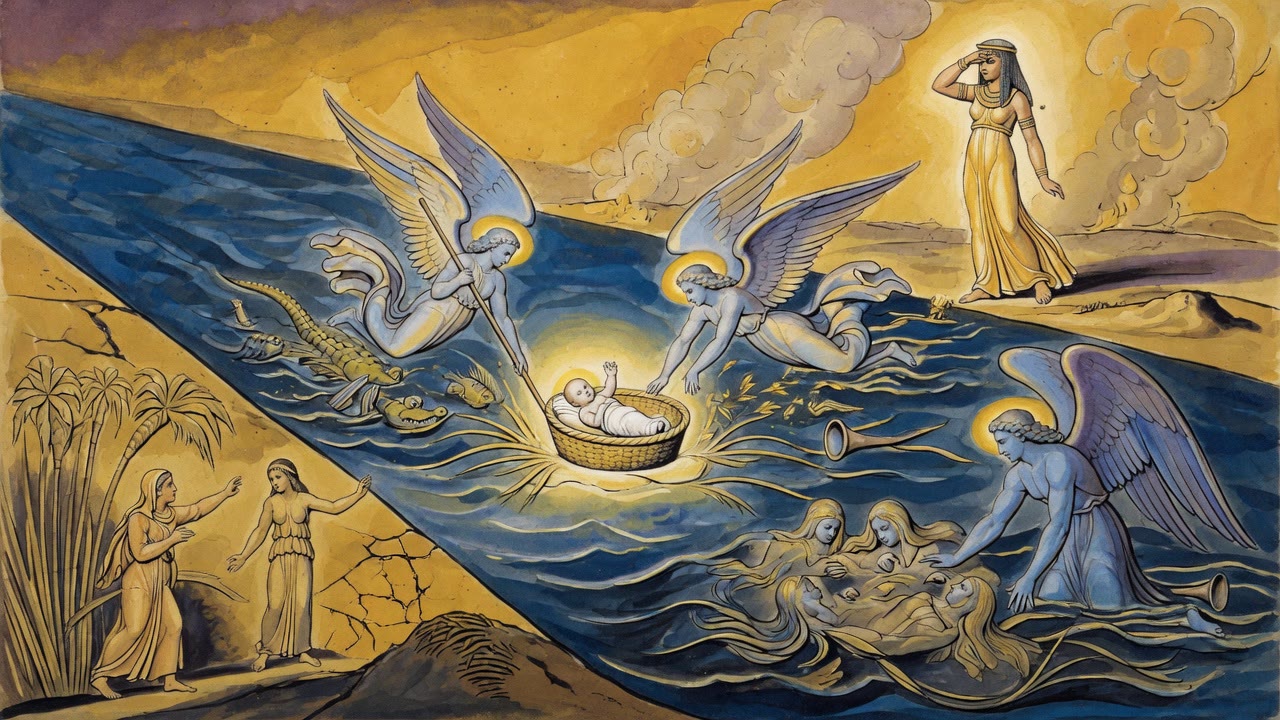
Scorching heat drove Pharaoh's daughter into the river, Gabriel buried the handmaids, and Miriam brought Moses back to his mother.
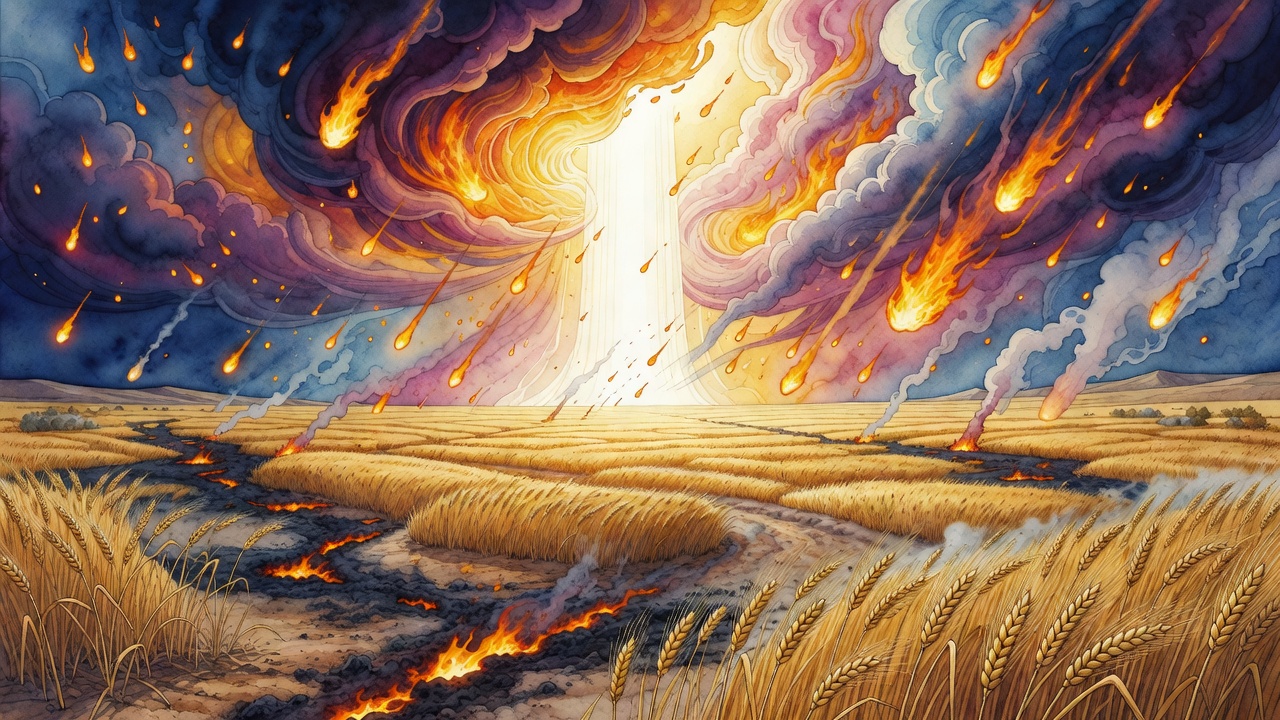
A wick of fire burned inside each hailstone. Egyptians cut meat from fallen cattle, and birds tore it from their hands on the road home.
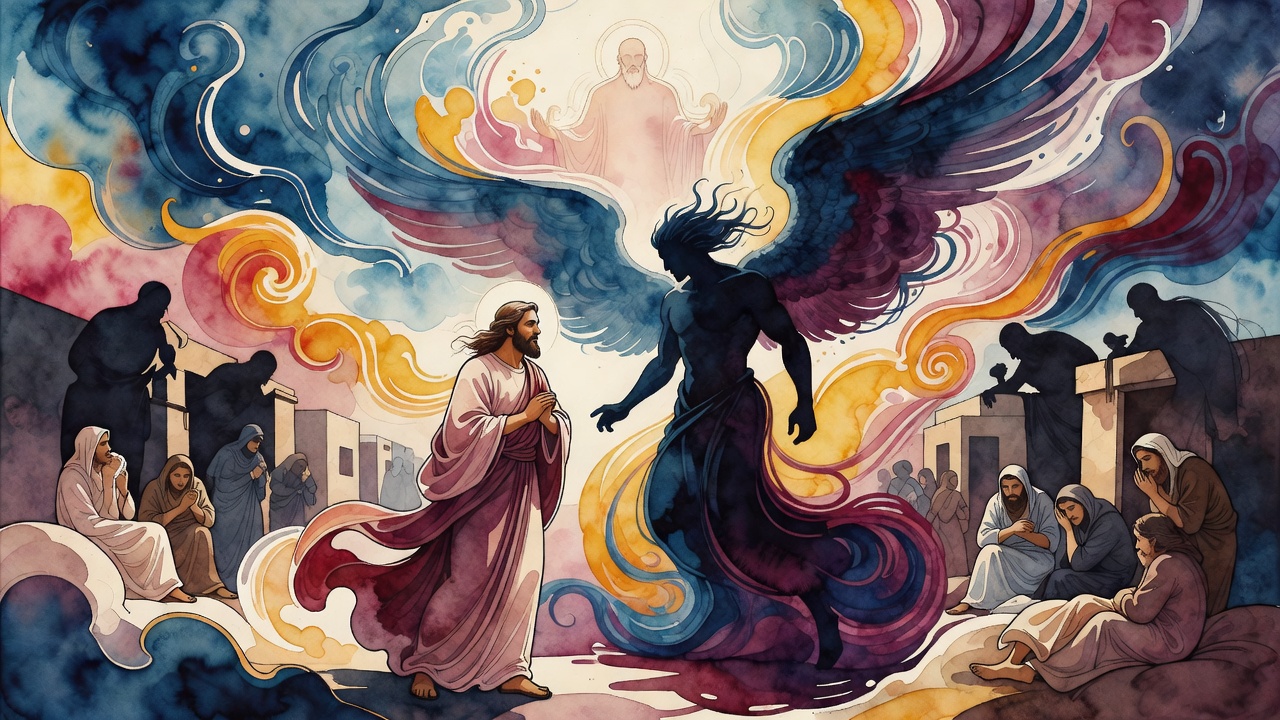
Egyptian parents hid their firstborn sons in Hebrew houses on the last night. By morning the Israelites woke beside the children's bodies.
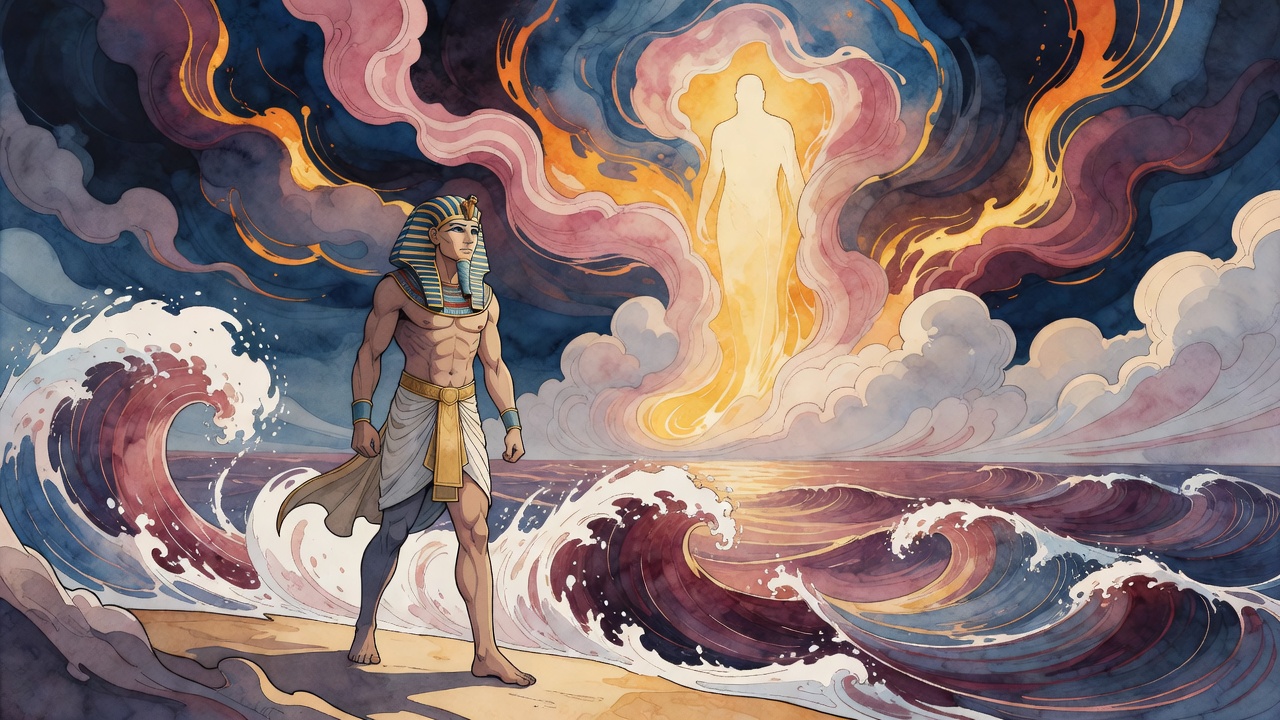
Mothers ran with lamps into rooms that had gone quiet. The king who signed the Nile decree still had breath in his chest.
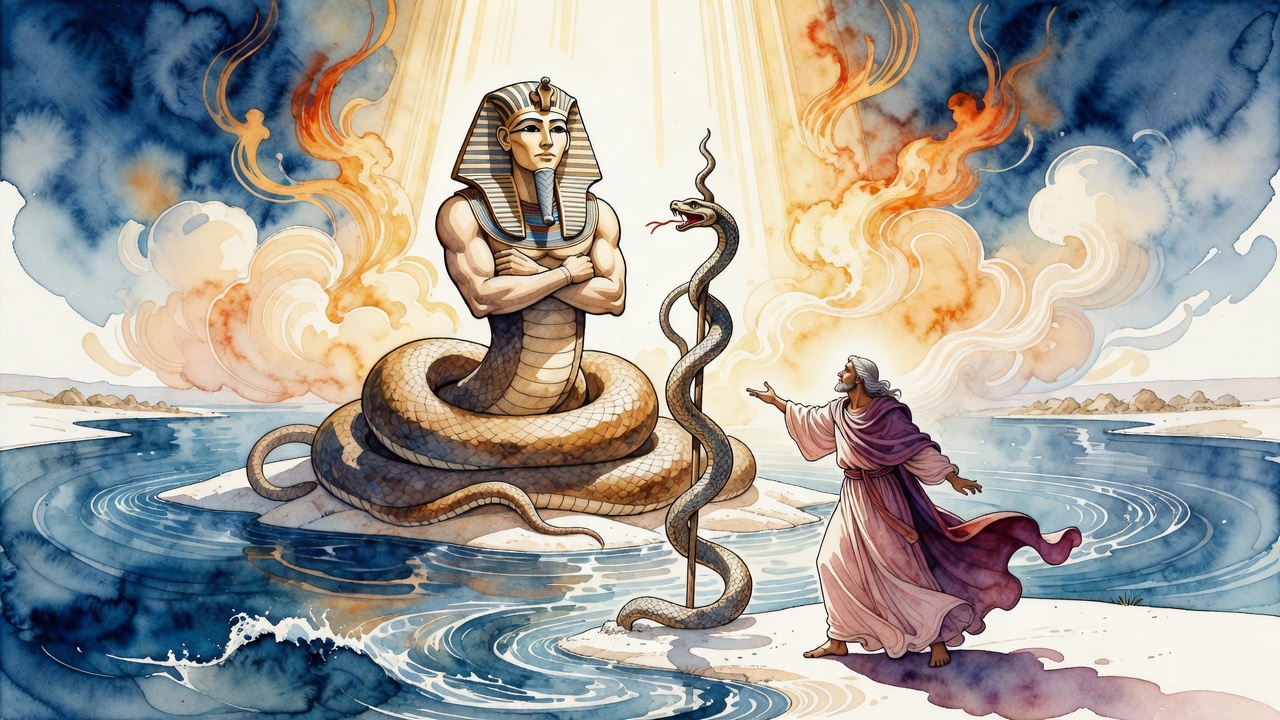
Every morning Pharaoh stood at the riverbank and said the Nile was his, that he had made it. Aaron's snake ate the magicians' snakes, then went back to wood.
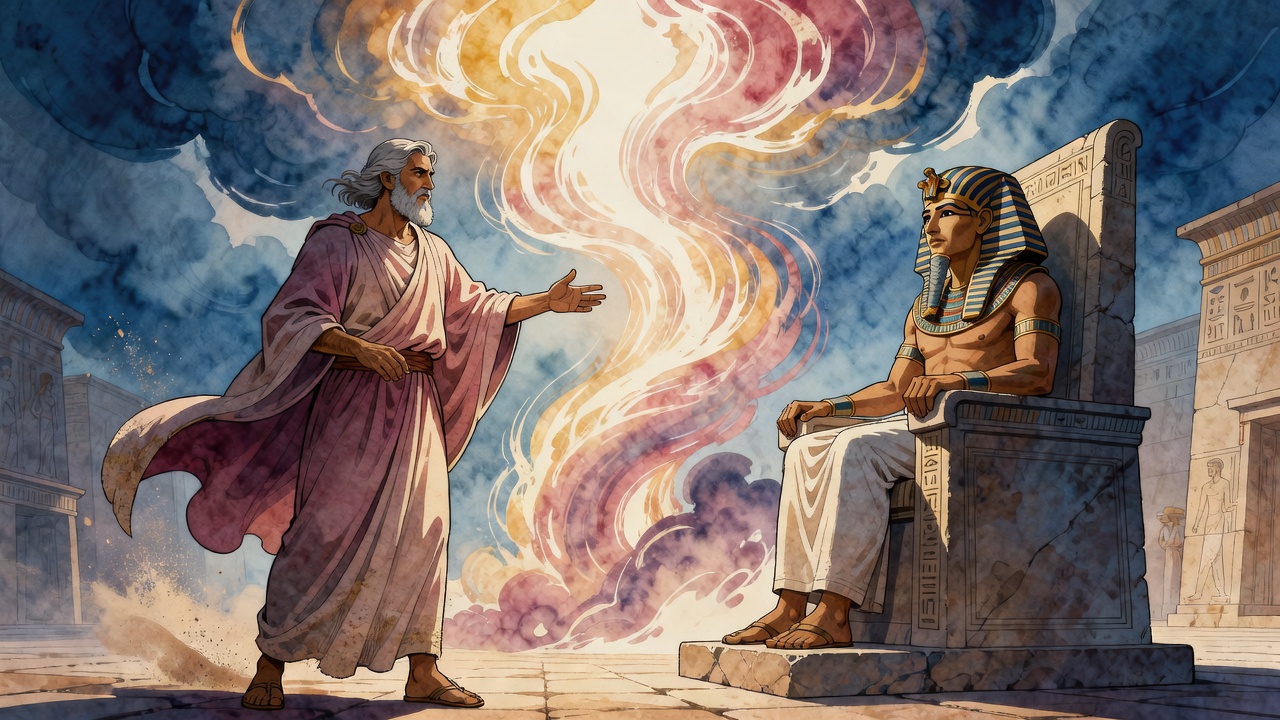
Moses warned Pharaoh before each plague. Ten warnings, ten refusals. Jubilees says the plagues were not punishment alone but a debt paid to Abraham.
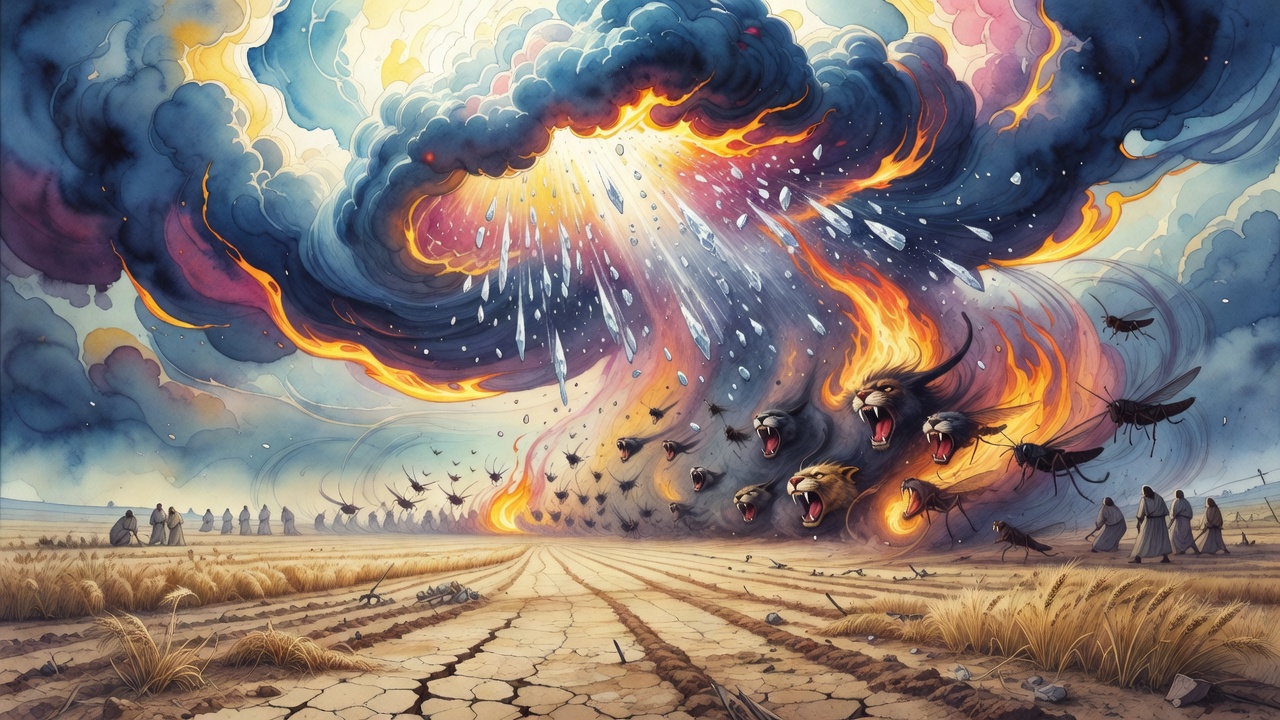
Israel had planted Egypt's orchards for years. Moses scratched a line on the palace wall. When the sun hit it, the hail came.
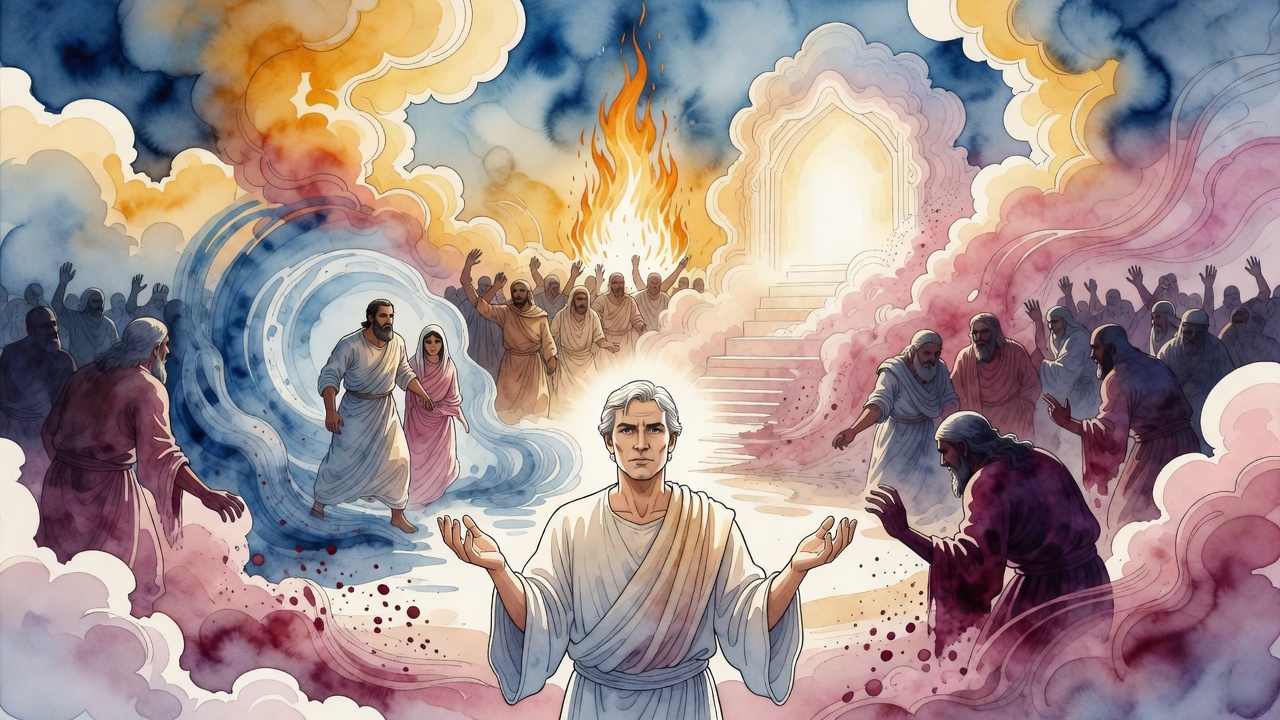
A plague was killing thousands. Zimri stood in the open with a Midianite woman. Every tribal leader was compromised. Only one man had clean hands.
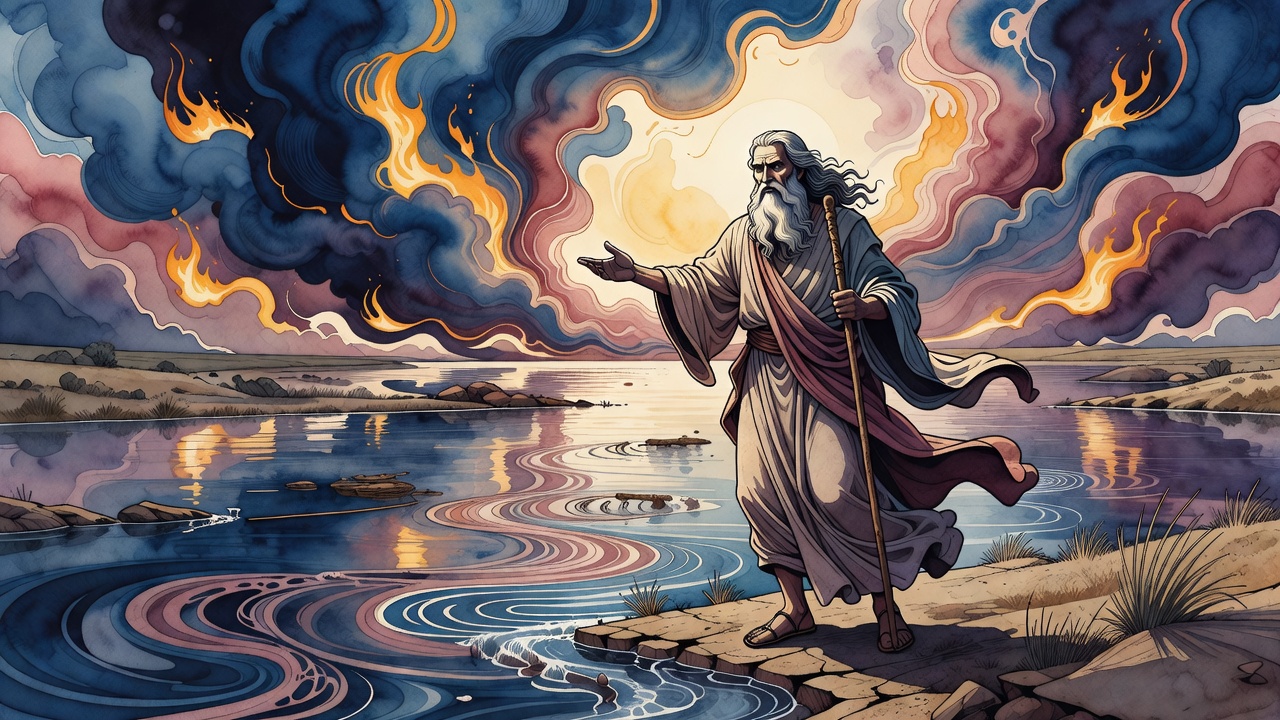
The Nile had carried his basket for seven days. When God sent blood and frogs, Moses would not raise the rod. Aaron struck the water instead.
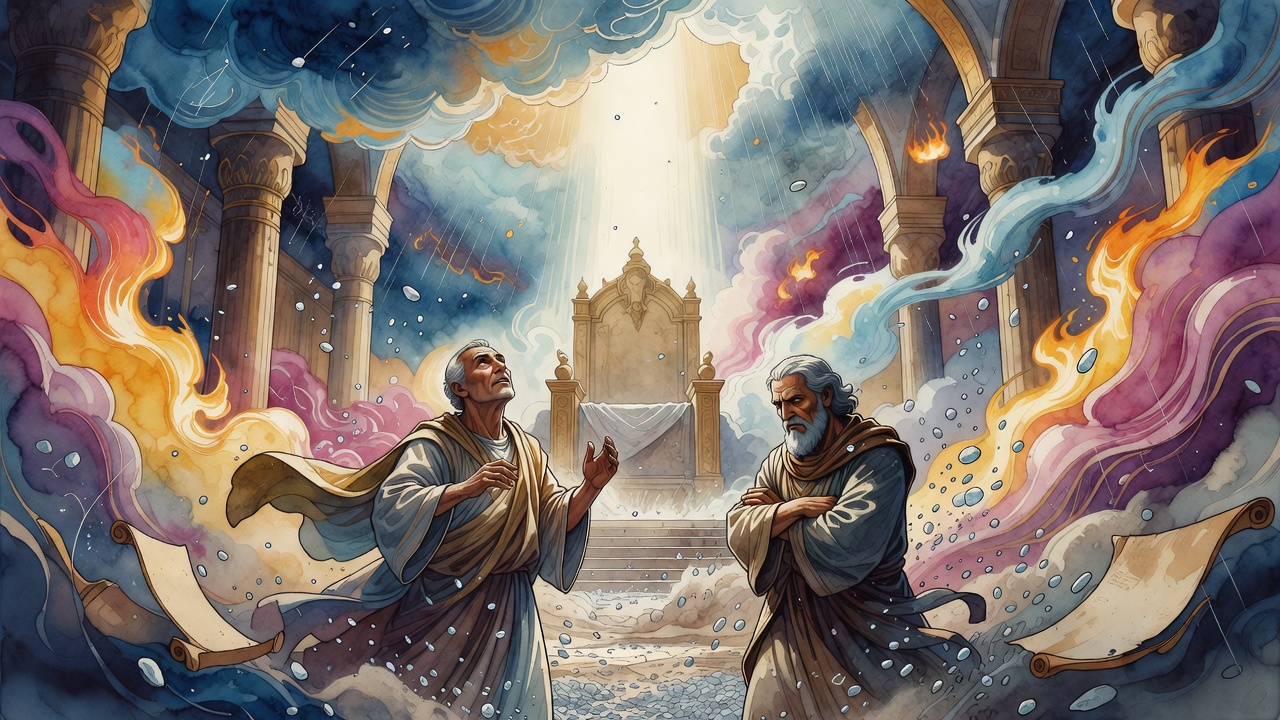
Two famous non-Israelite figures stood in Pharaoh's palace when hail struck Egypt. One believed the warning. One did not.
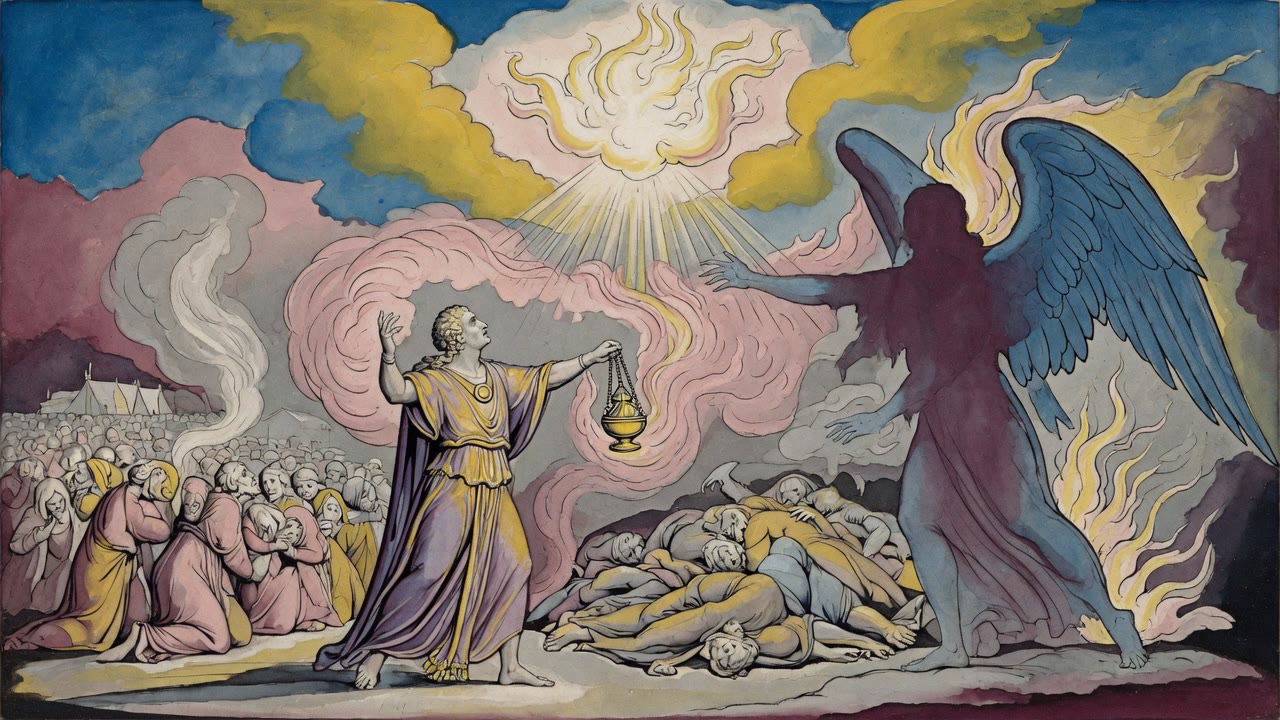
Korah was already under the ground. By morning Israel blamed Moses, and Aaron ran into the plague with altar fire and incense.
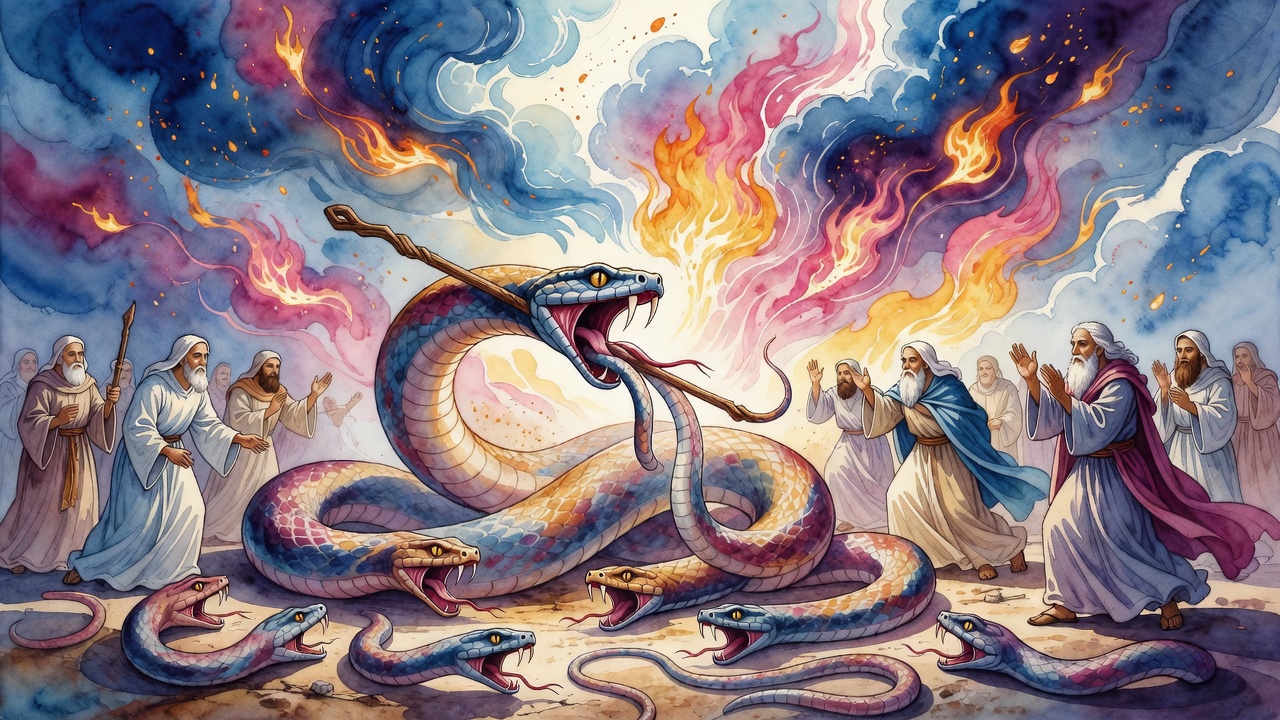
When Aaron's staff swallowed the staffs of Pharaoh's magicians, the rabbis said the real miracle was not the serpents. It was dead wood consuming dead wood.
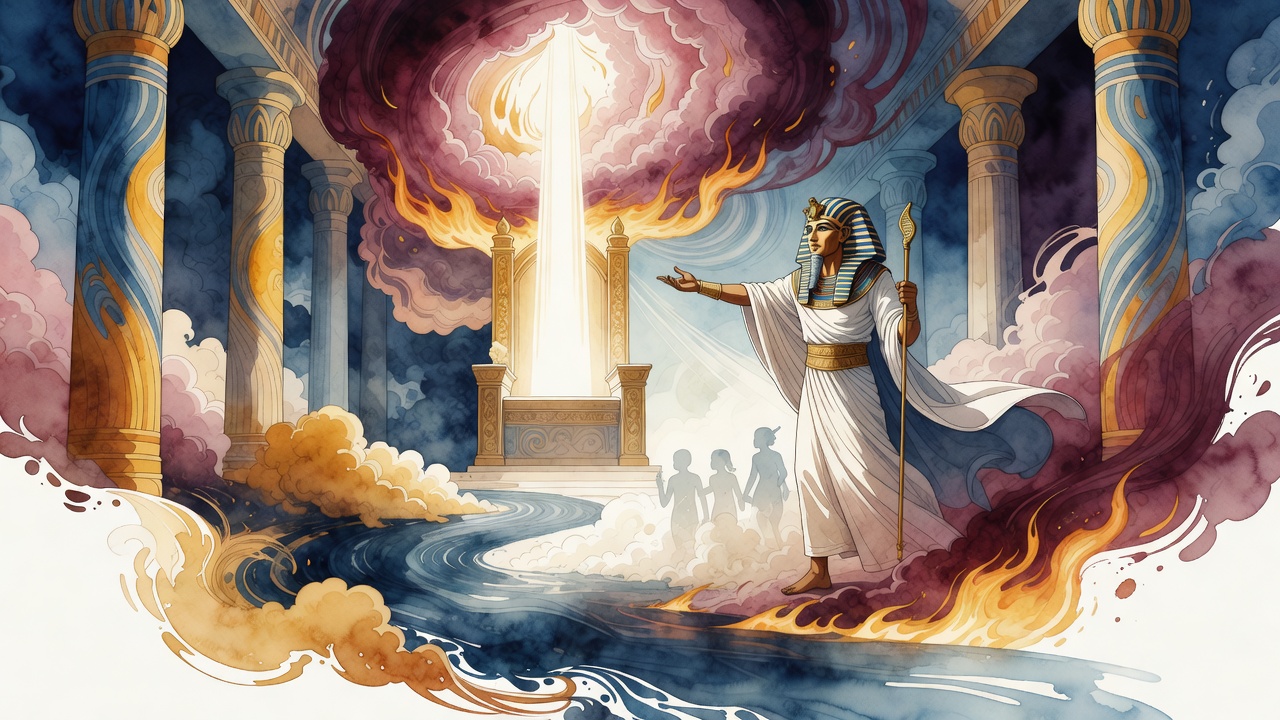
Pharaoh told Egypt he was a god who felt no human needs. Every morning he went down to the Nile alone to keep it up. One morning Moses was standing there.
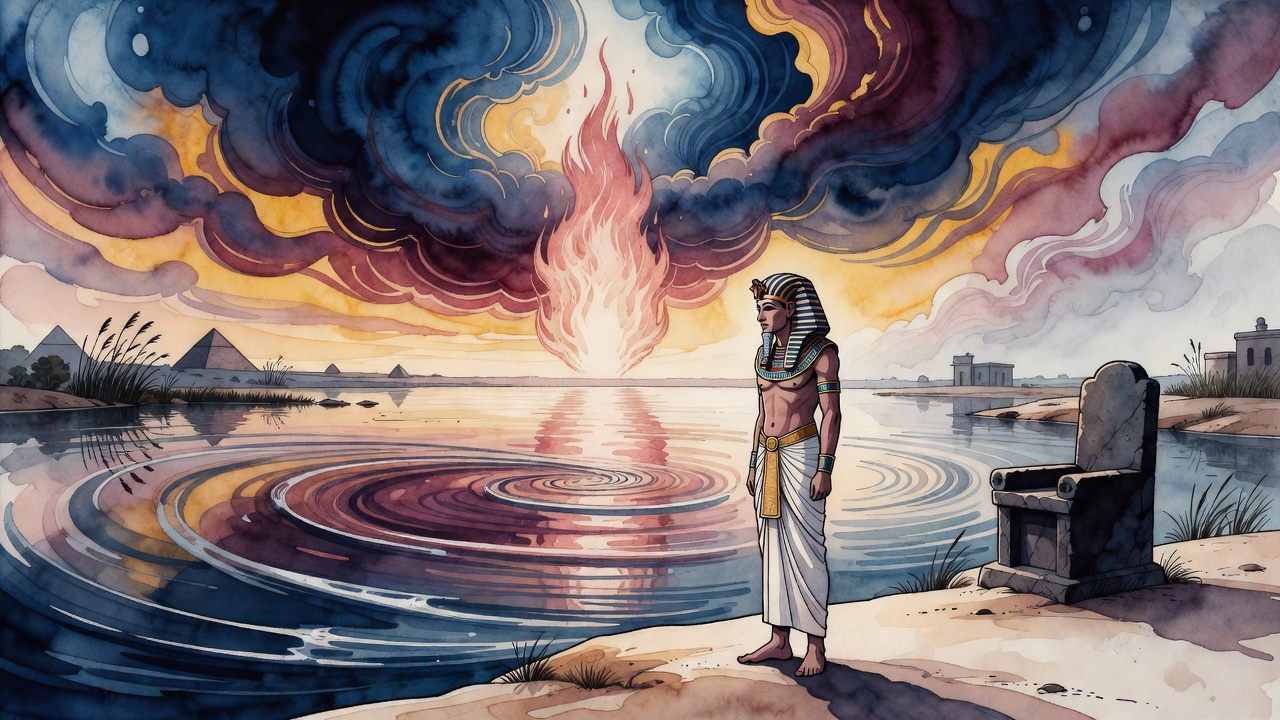
Before the court woke, Pharaoh walked to the Nile alone. A god, he told Egypt, does not need a bathroom at dawn.
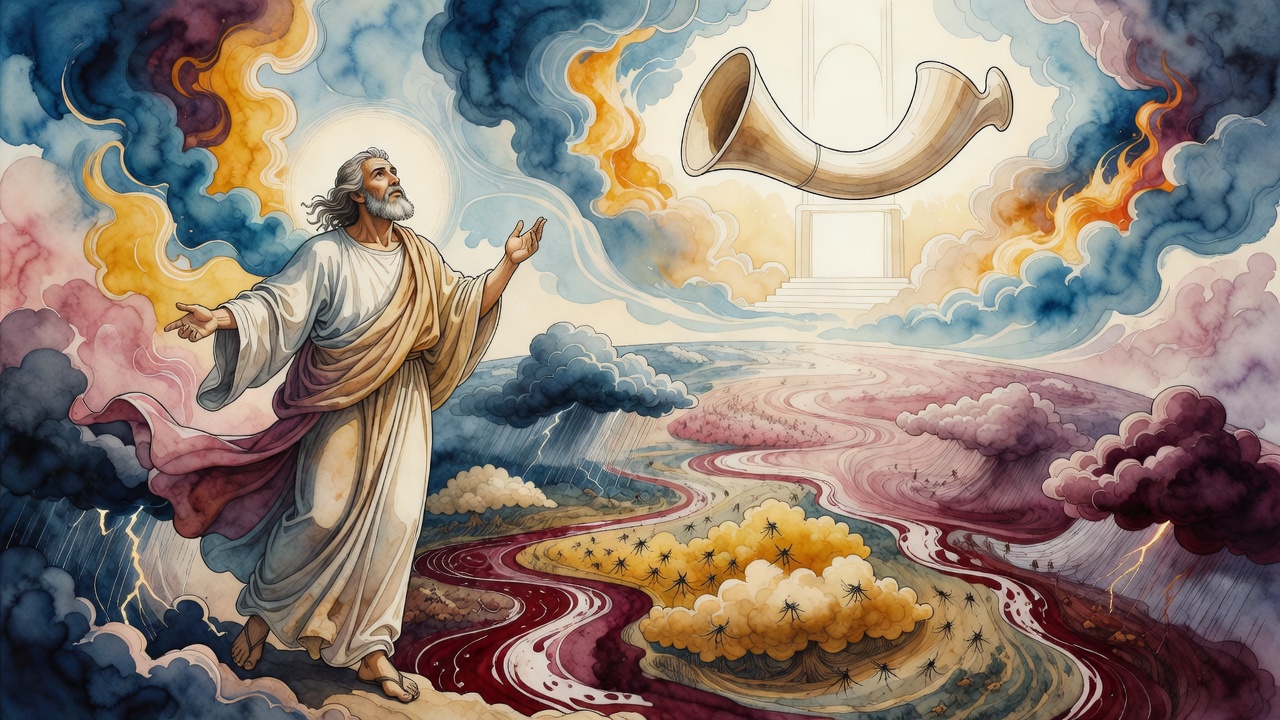
Lifted above the earth in vision, Abraham asks how long suffering will last and watches the age unwind in plagues, measures, and a heavenly trumpet.
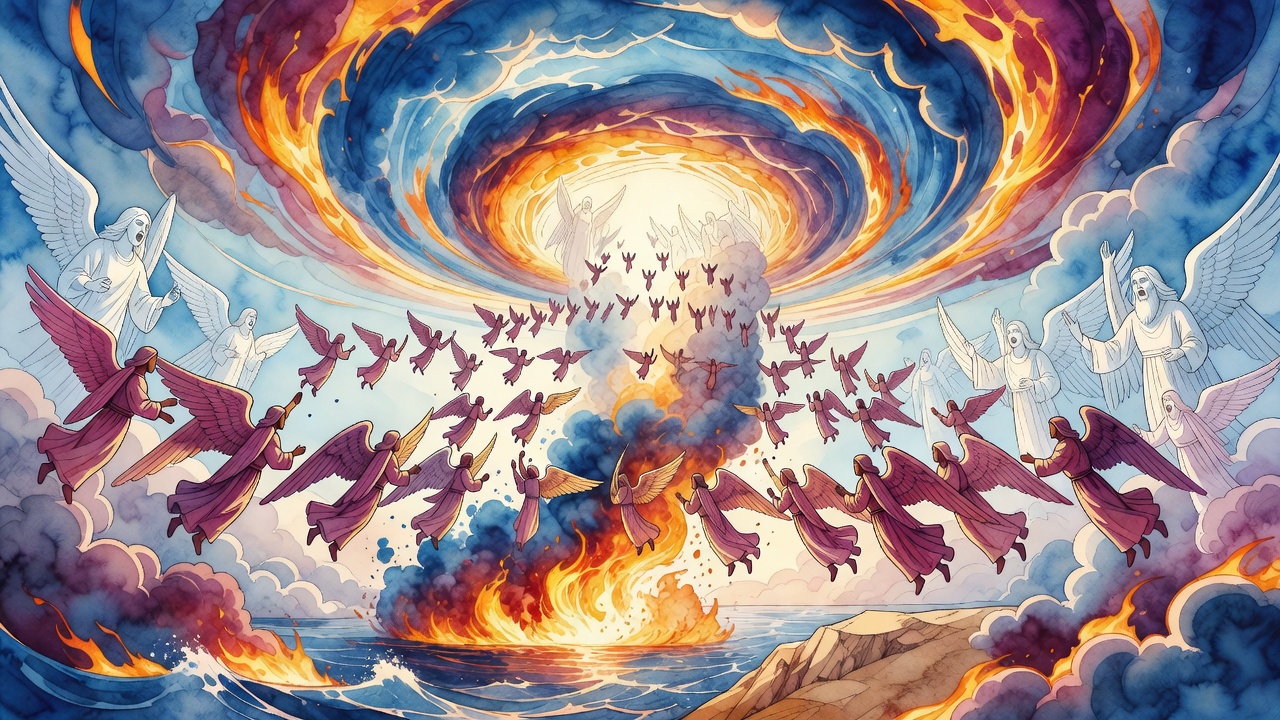
Nine hundred million destroying angels descended with God over Egypt. The morning host was already singing when God looked down and threw fire at the sea.
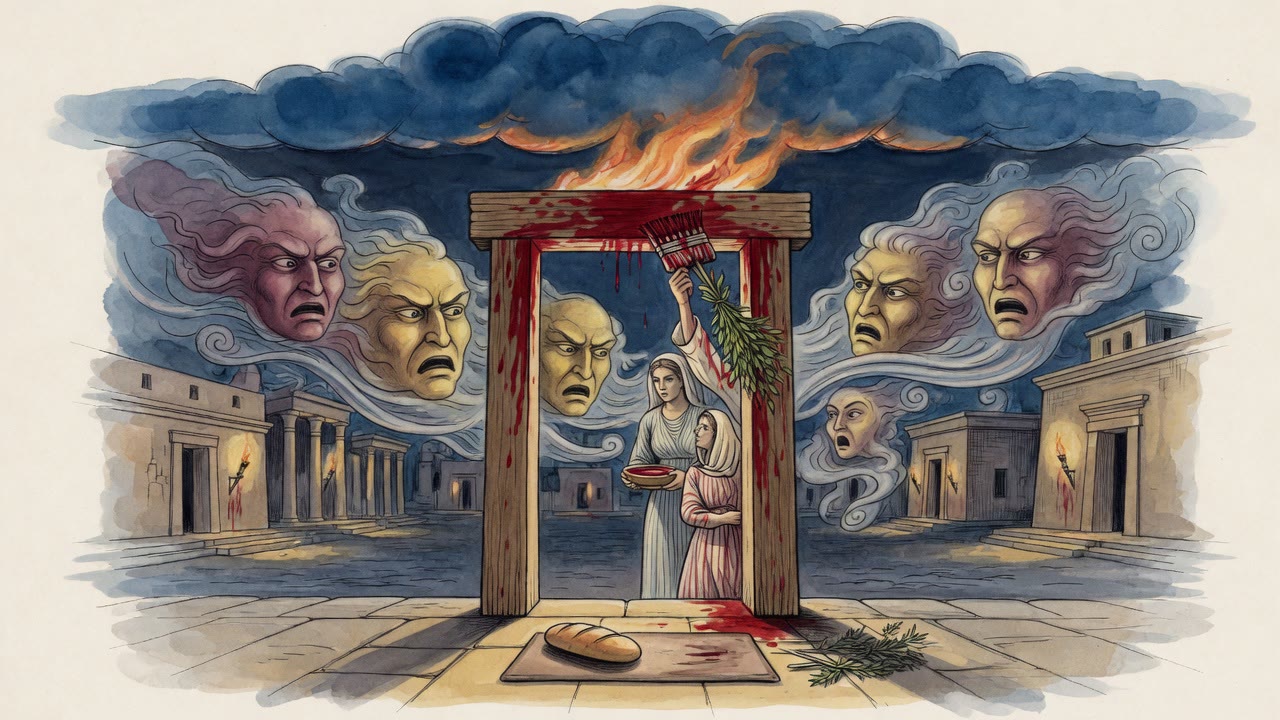
Moses held two fistfuls of soot in one palm and threw them at the sky. Boils covered Egypt. That night a plant no one prized marked the doors.
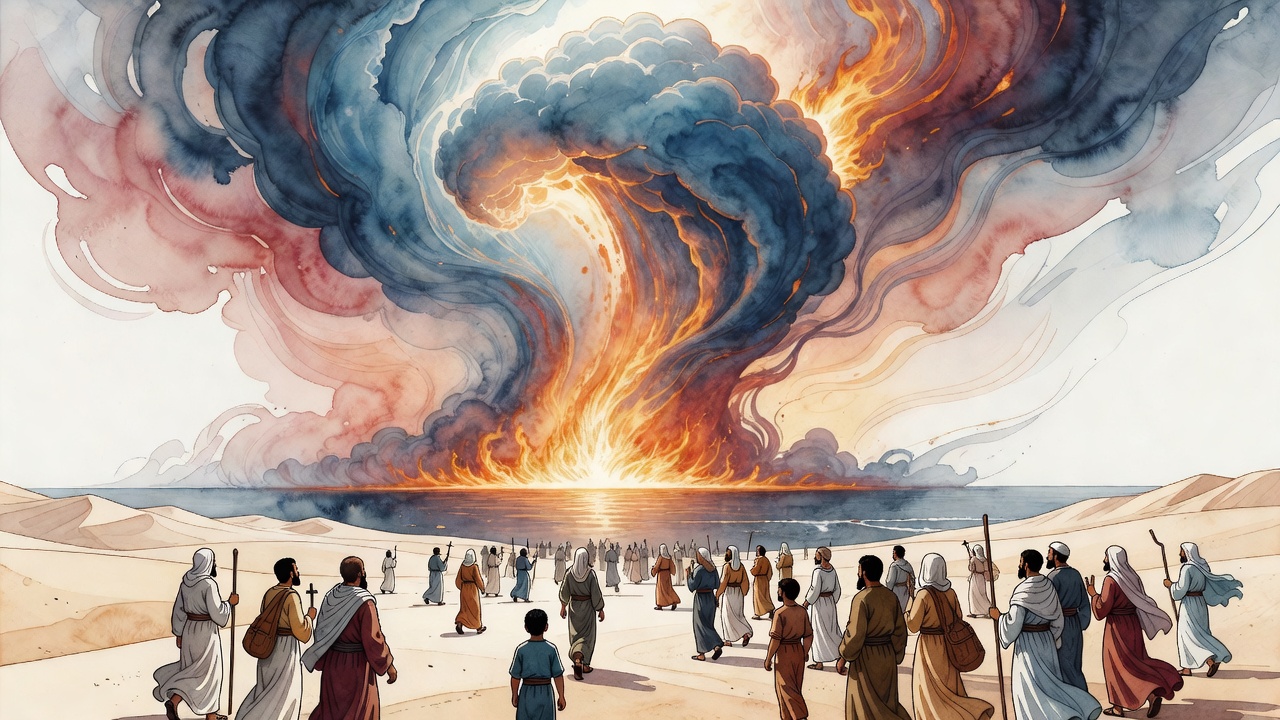
Moses told the people to stand firm and watch. God was telling Moses something else: stop crying out to Me and get them moving toward the water.
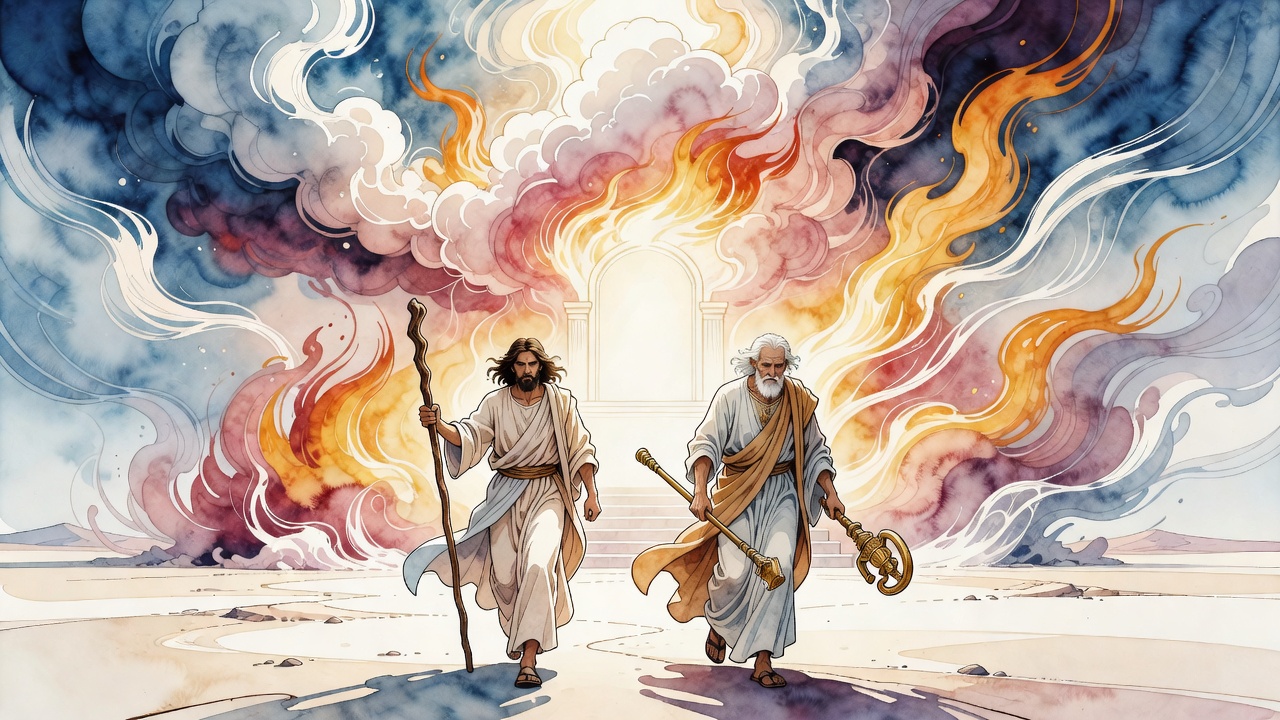
Moses the younger walked in front of Aaron the elder. A shepherd's staff outranked a scepter. God spent the Exodus tearing up every rule of rank.
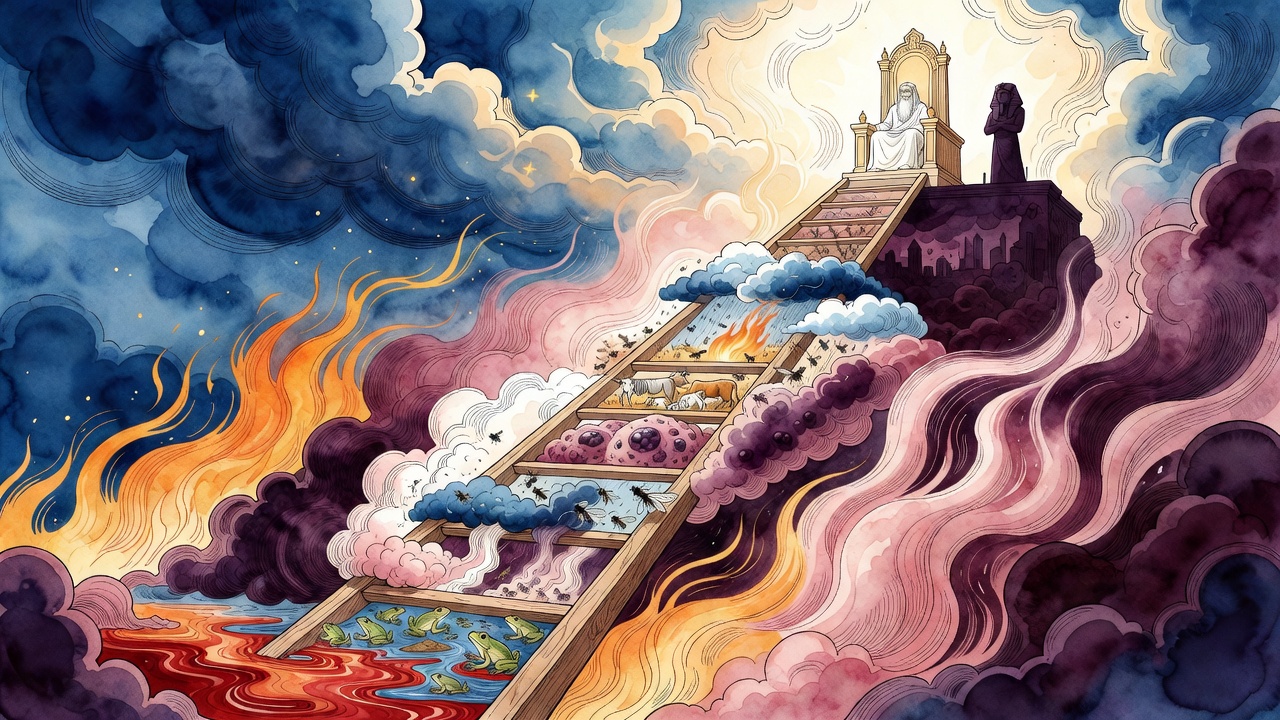
Judah stood in an Egyptian throne room and reminded the man on the chair what happened to the last Pharaoh who kept a woman of this family.
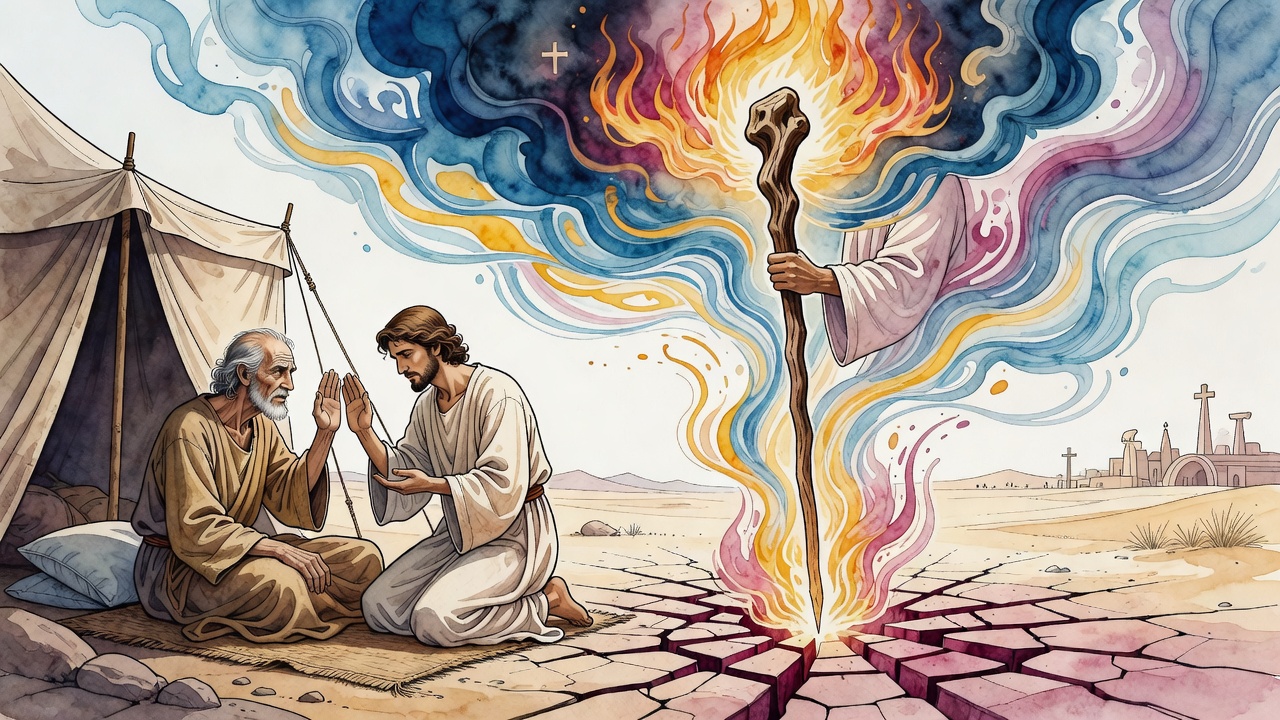
Jacob made Joseph swear by Abraham's covenant before he died. Centuries later, that oath was already burning inside the staff that struck Egypt ten times.
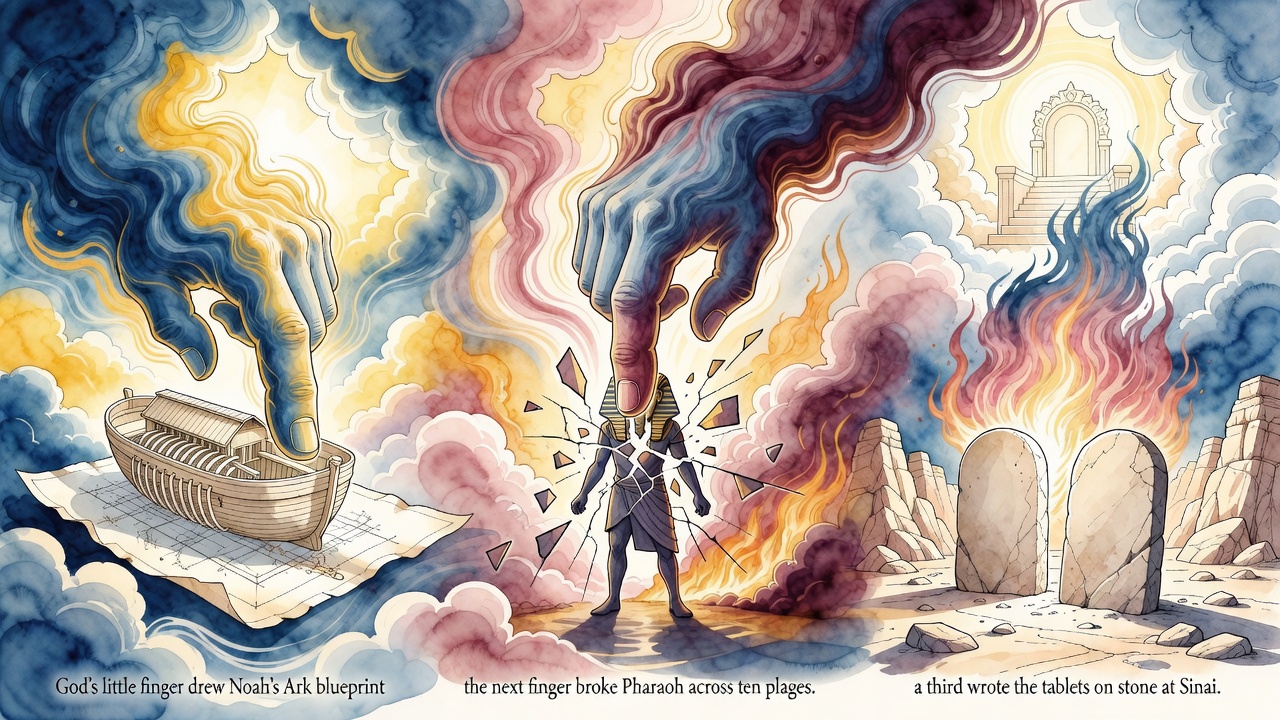
Noah copied cubits off a finger drawn in the air. When the lice came, Pharaoh's magicians named that same hand and could not match it.
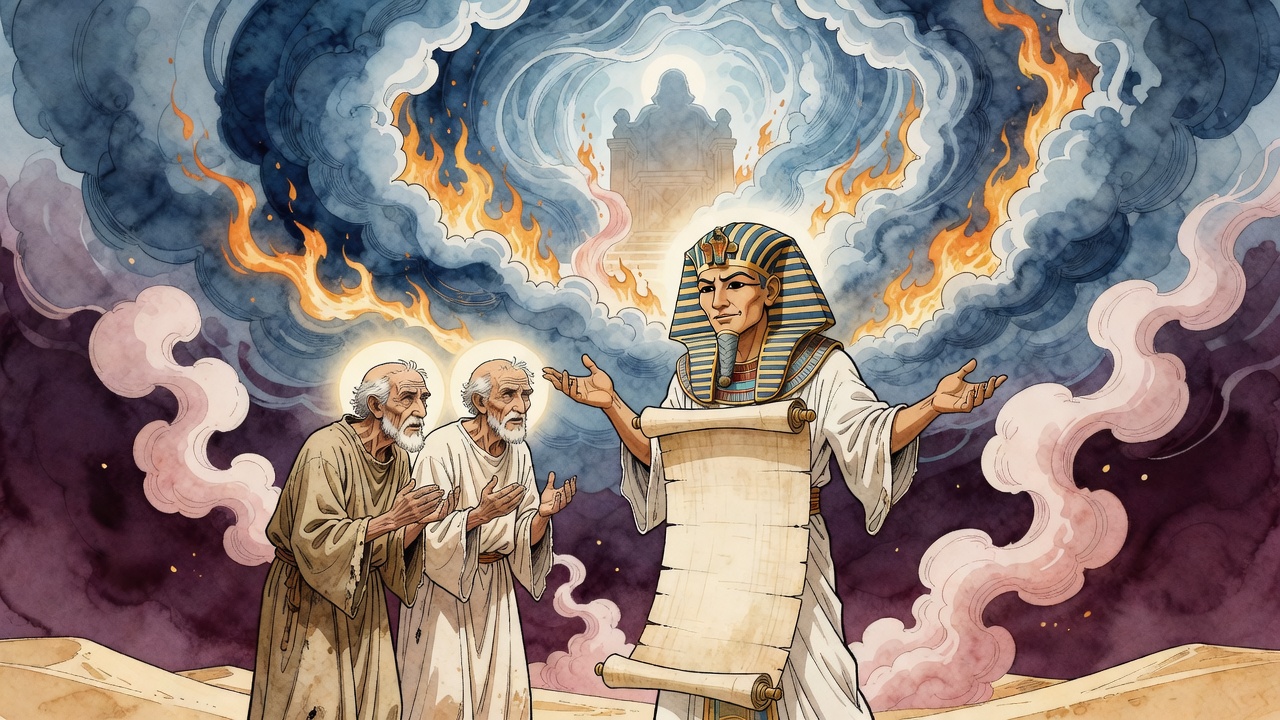
Pharaoh sneers at two old Hebrew men and their God. From that moment he is keeping a calendar he cannot read and will not survive.
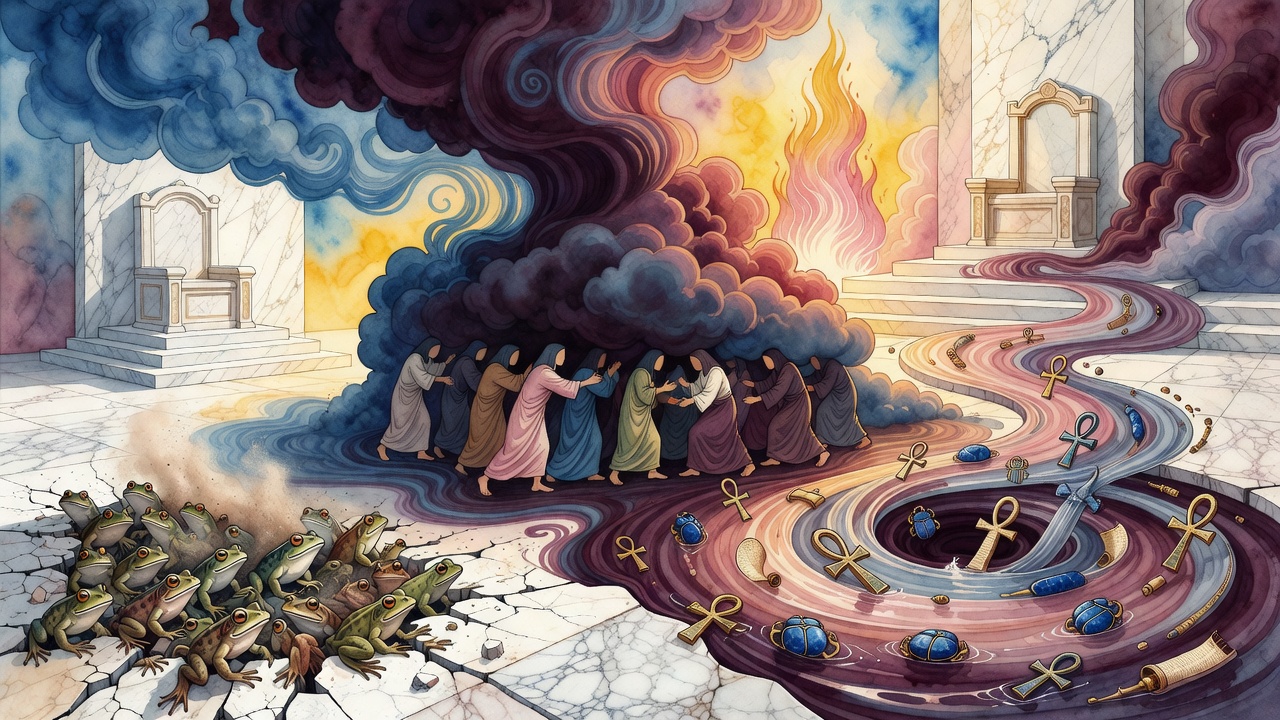
One frog whistled, and the marble floors split. Pharaoh watched a scratch on his palace wall until the hail came down and cut the trees.
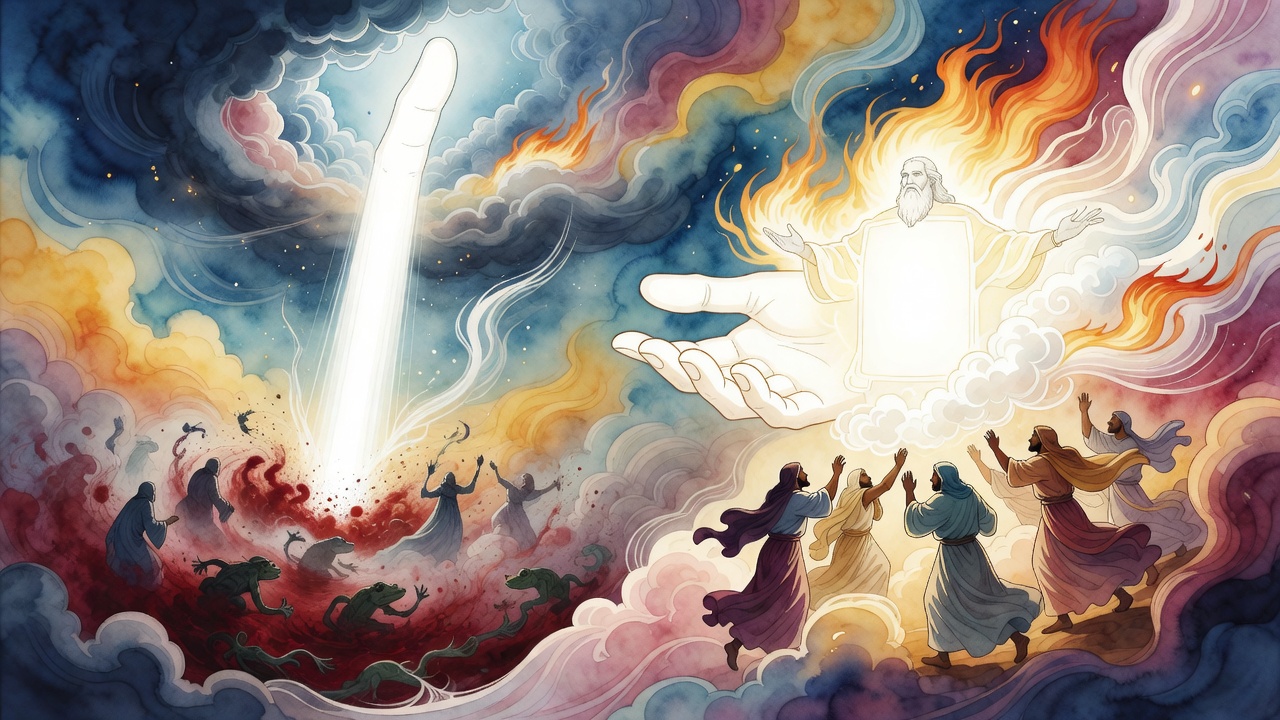
Egypt's sorcerers could copy blood and frogs but failed at lice. From that single admitted finger the rabbis traced the whole open hand of Israel's rescue.
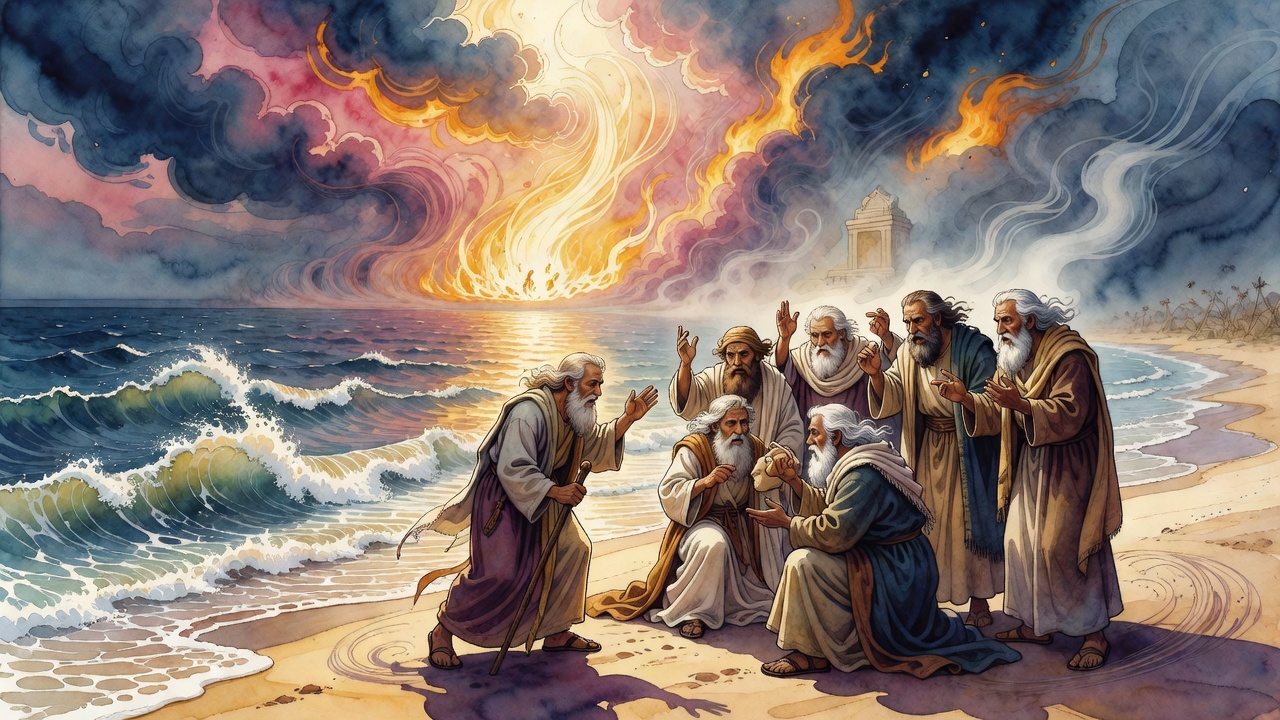
Ten plagues struck Egypt. Then the rabbis did the arithmetic on the sea and the number kept climbing, fifty, two hundred, two hundred and fifty.
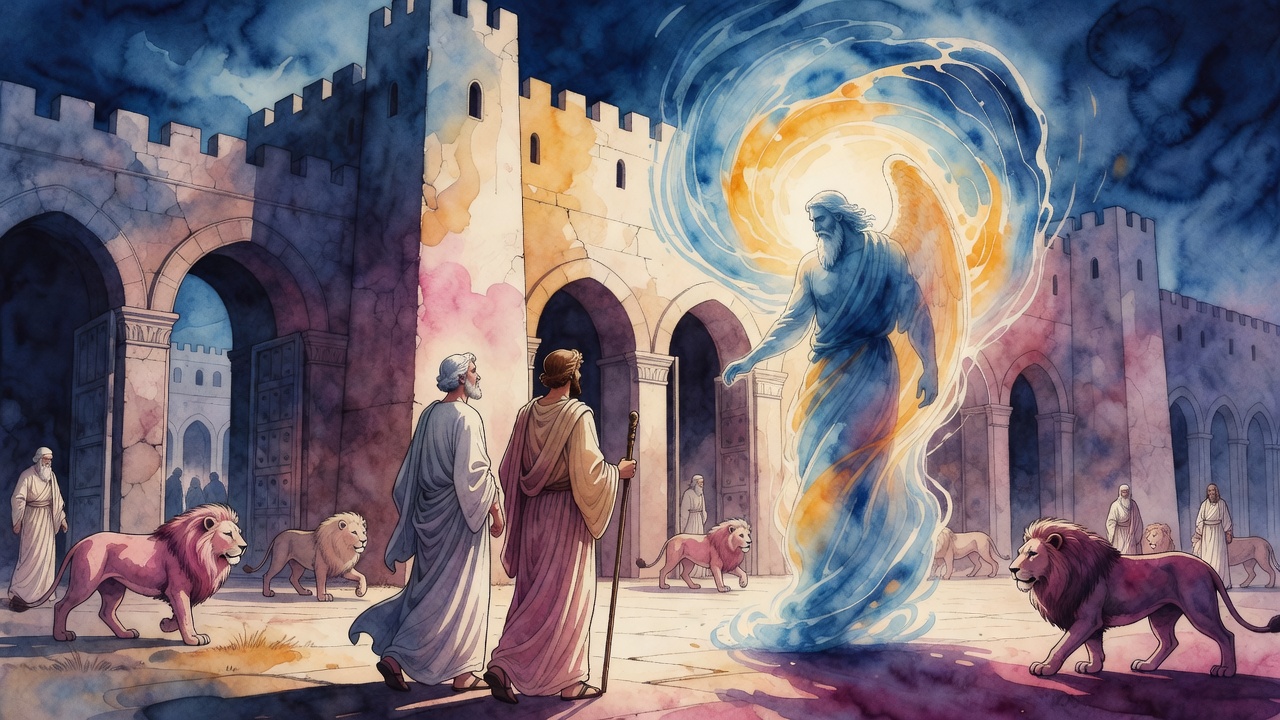
The elders slipped away one by one until only two brothers faced a fortress of four hundred gates and lions, and an angel walked them in.
