Pharaoh Said He Created Himself and Moses Caught Him at the River
Pharaoh told Egypt he was a god who felt no human needs. Every morning he went down to the Nile alone to keep it up. One morning Moses was standing there.
Table of Contents
 Click for full size
Moses Caught Him at the River
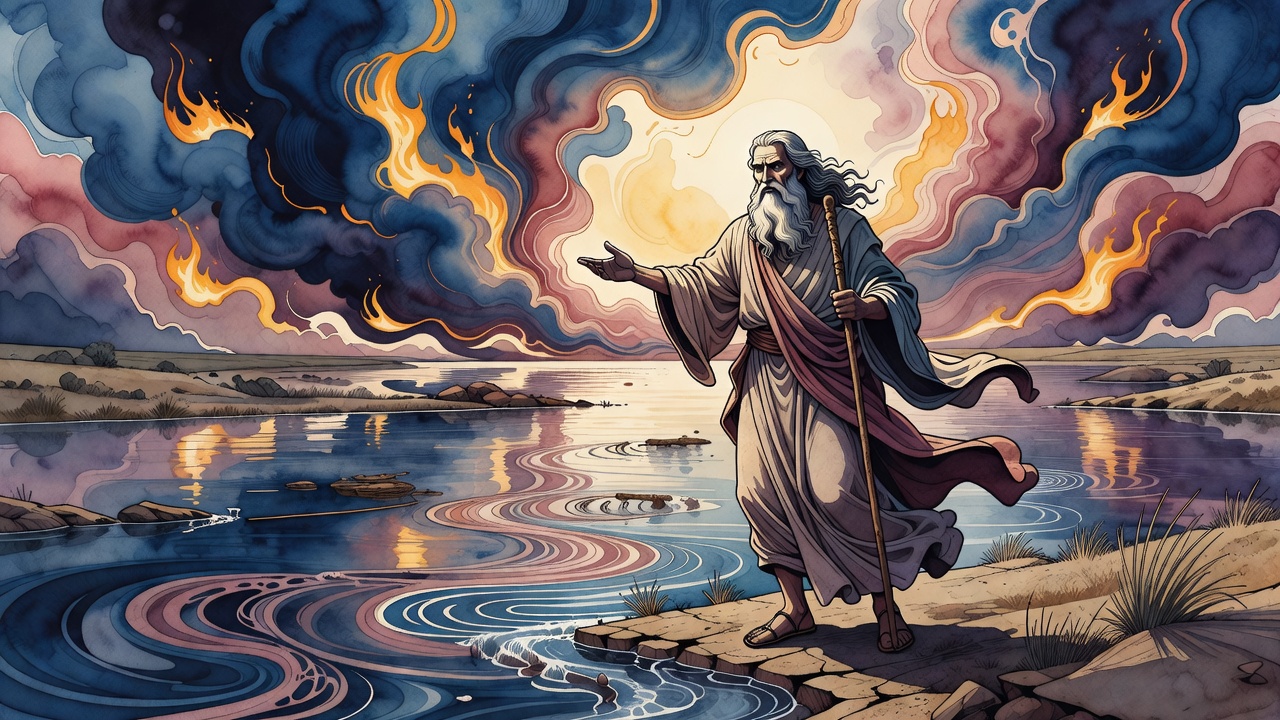
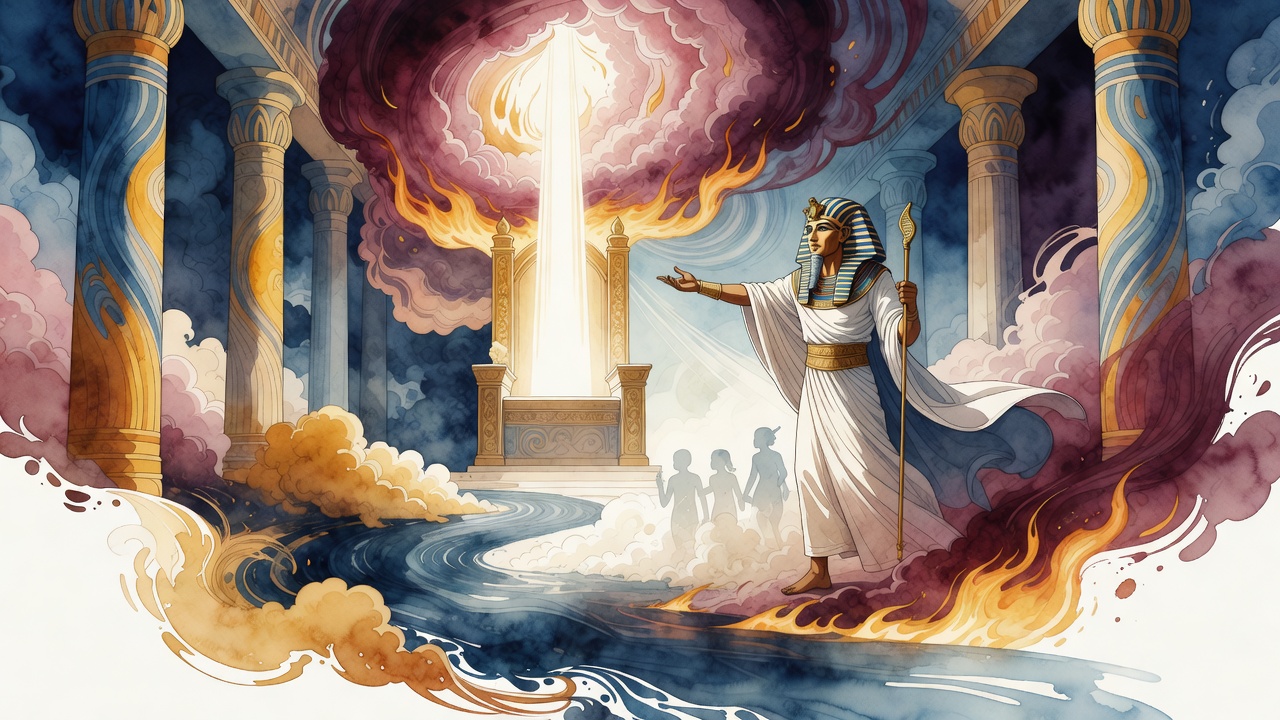
Pharaoh went down to the water every morning before anyone else was about. He had told Egypt he was a god, and a god has no bowels and no bladder, so the arrangement was that he relieved himself at the river's edge alone and unobserved and came back up the bank looking untroubled by anything.
One morning Moses was standing on the bank waiting for him.
"Is there a god who has human needs?"
Pharaoh did not bluster. He answered like a man caught by a colleague. "I am no god. I only pretend to be one in front of the Egyptians, who are such idiots you should call them asses rather than human beings."
Moses told him what would happen to the water he was standing next to if he did not let Israel go, and left him there.
The Archive With No Entry
It had started in the throne room, with Aaron beside him.
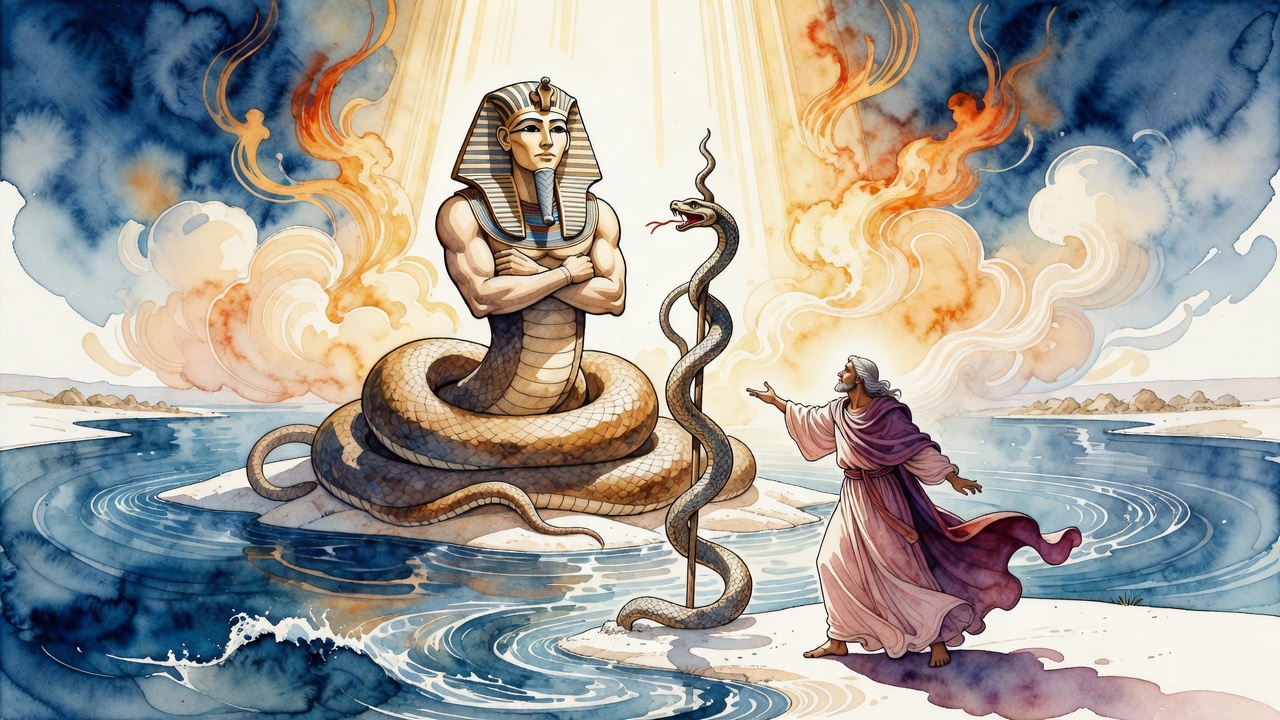
"The God of the Hebrews has met with us. Let us go three days' journey into the wilderness and sacrifice to the Lord our God, or he will fall on us with pestilence or with the sword."
Pharaoh asked the questions a king asks about another king. "What is the name of your God? What does his strength consist of? How many countries does he hold, how many provinces, how many cities? In how many campaigns was he victorious? How many lands did he subject, how many cities did he capture? When he goes to war, how many warriors and riders and chariots and charioteers does he lead out?"
"His strength fills the whole world. His voice hews out flames of fire and his words break mountains in pieces. Heaven is his throne and the earth is his footstool. His bow is fire, his arrows are flames, his spears are torches, his shield is cloud and his sword is lightning. He made the mountains and the valleys. He forms the child in its mother's womb. He feeds and sustains the whole world, from the horns of the wild ox down to the eggs of vermin. Every day he makes men die, and every day he calls men into life."
"I have no need of him," Pharaoh said. "I created myself. And if you tell me he sends the dew and the rain, I have the Nile. Its source is under the tree of life. Ground soaked by that water grows fruit so heavy it takes two donkeys to carry one, and it has three hundred separate tastes in it."
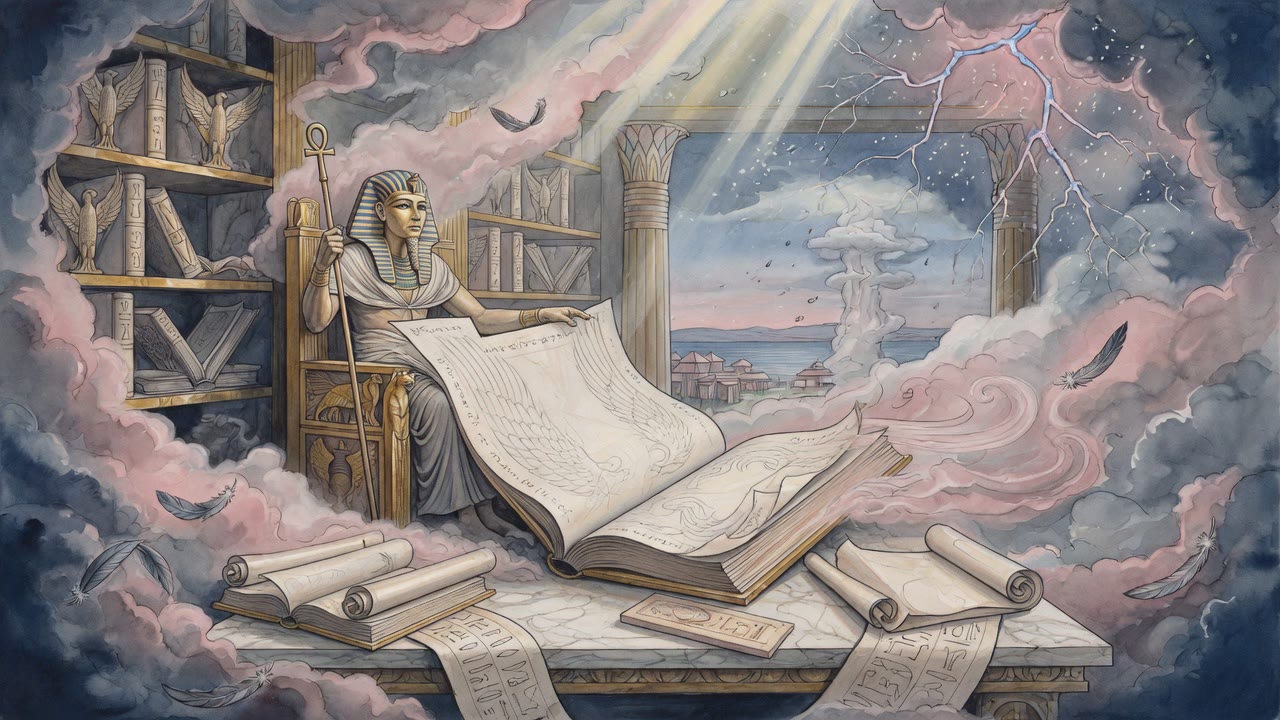
Then he sent to the archives for the chronicles of his kingdom, where the names of the gods of every nation were kept, and he read out loud from the roll, running his finger down it in front of them. The gods of Moab. The gods of Ammon. The gods of Zidon. "Your God is not written here."
"You fool," they said. "You are hunting for the Living in the graves of the dead. Those names are dumb idols. Ours is the God of life and the King of eternal life."
Three Weeks of Warning at a Time
The whole business took a year, first plague to last, because twelve months is the term set for expiating sins. The flood ran a year. Job suffered a year.
A man who means to hurt an enemy waits until the enemy is not looking. Every plague here was announced in public, and the warning was repeated for three weeks, though the plague itself lasted one.
Beat the idols and the priests start shaking. God went for the Nile first, the river Egypt worshipped, and it was Aaron who stretched out the rod over the water and not Moses, because the water that had kept a baby afloat in a basket was not going to be struck by that baby's hand. When the dust of the ground turned to lice, Aaron struck it for the same reason, since the earth had hidden the Egyptian Moses killed and would not be repaid that way.
Water went to blood in the rivers and in wooden buckets and in stone jars. An Egyptian spat and it left his mouth as blood. Blood ran down the faces of the idols. Two men could dip from one trough and the Israelite would carry water home while the Egyptian carried a pail of blood, so Egypt started buying, and Israel got rich on it.
The Frogs That Asked the Marble to Move
One frog came up out of the river and croaked, and kept croaking until the whole country was under them.
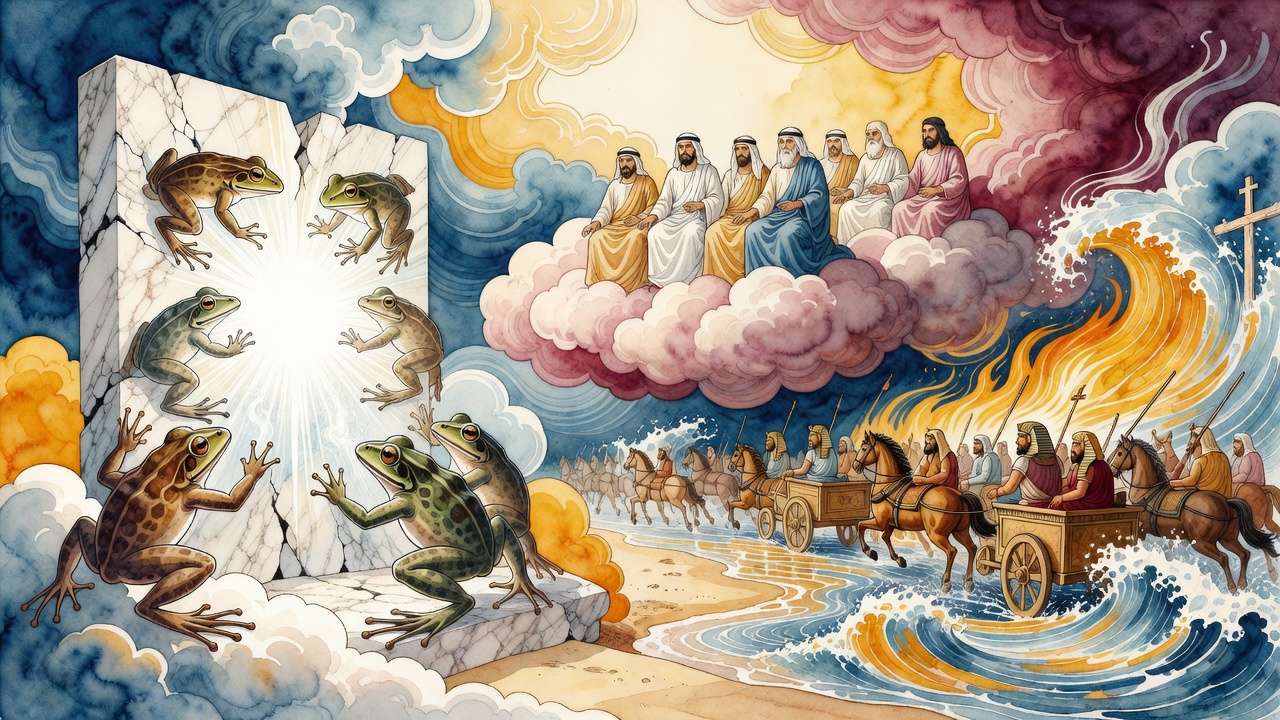
They went through metal. They came up against the marble of the great houses and called out to it, "Make way, that I may do the will of my Creator," and the stone split open and let them in. They found the bake ovens standing red hot and threw themselves into the fire and ate the bread out of them. When the plague lifted and every frog in Egypt died at once, so fast that none of them could get back to water, the ones in the ovens were kept alive, and the fire had not touched them. The Egyptians raked the rest into heaps, four heaps to a man, and the whole land stank.
The frogs never crossed the border. They stopped in a line, and the line settled an old argument between Egypt and Ethiopia about where one country ended.
Then came the lice, and the magicians could not copy it. Demons cannot make anything smaller than a grain of barley. The men who had matched the first two plagues stood in front of the king and said, "This is the finger of God," and never tried again.
Where Is Moses, Where Does He Live
Before the last plague Moses walked through Egypt and told the firstborn what was coming at midnight. They went to their fathers. Their fathers told them to take it to Pharaoh, since Pharaoh was a firstborn himself. They went, and Pharaoh sent his servants out to beat them for it, and every one of those sons drew his sword and killed his own father in the street.
At midnight they died anyway, all of them, including the king's son.
Pharaoh got out of bed and went through the streets asking for directions. "Where is Moses? Where is Moses? Where does he live?" Israelite children walked him in circles, laughing, pointing at doorways. He found the house and knocked, and a voice through the wood asked who he was calling for.
"I am Pharaoh. I beg you, come out and pray for us. There is no man left in Egypt who is not dead."
"I cannot come out. Did you not say to me that I would never see your face again?"
"I said that before the firstborn died."
Moses made him stand in the street and say it out loud. Children of Israel, you are free men, you are your own masters. Say it again. And again. Three times, and the third time it carried across the whole country, four hundred parasangs of it, a king shouting other men's freedom into the dark at the top of his voice.
Inside the houses nobody came out, because they had been told not to. They were eating lamb and singing.
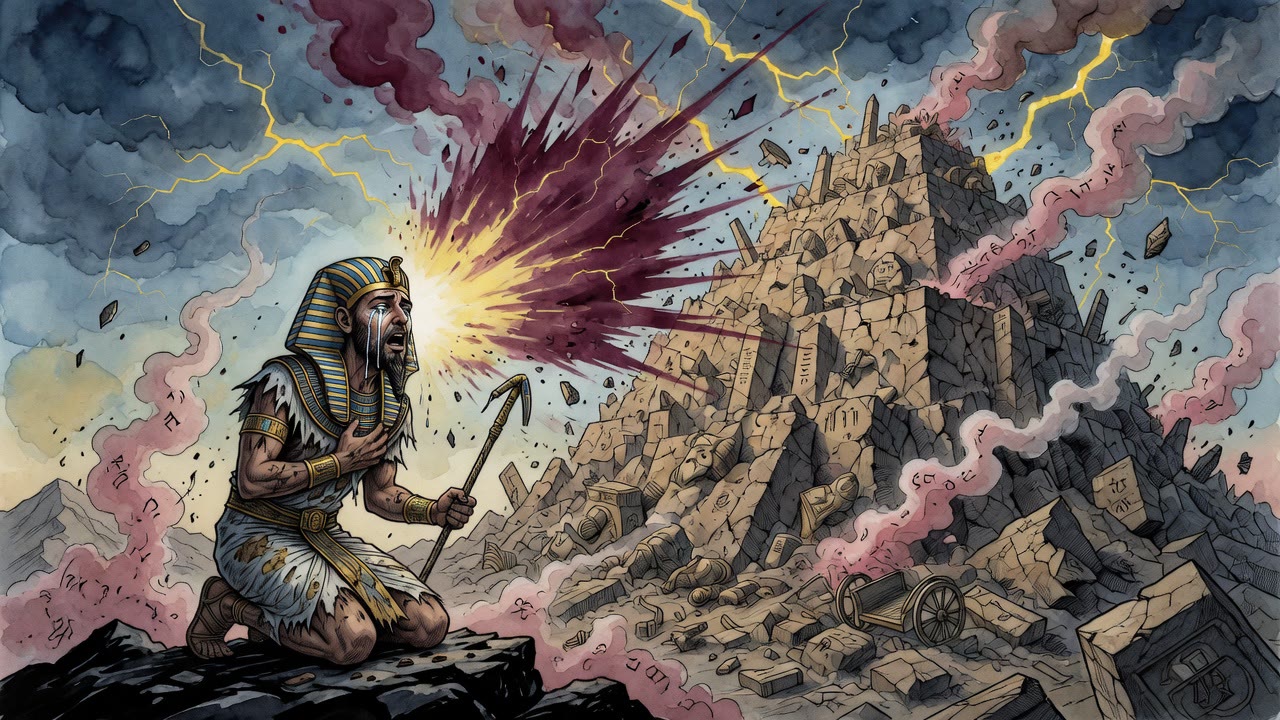
By then the gods of Egypt were already finished. The stone ones had been broken into small pieces, the wooden ones had rotted where they stood and gone to heaps of dust, and the silver and brass and iron and lead had run off their platforms into sheets on the floor. What was left of them burned when fire came down on the sea after the drowning.
Pharaoh kept Moses at the door most of that night. When Moses finally asked why he would not go home, the man who had created himself said, "Because I am a firstborn, and I am afraid that I will die."
← All myths