Moses Would Not Strike the Nile Because It Had Saved His Life
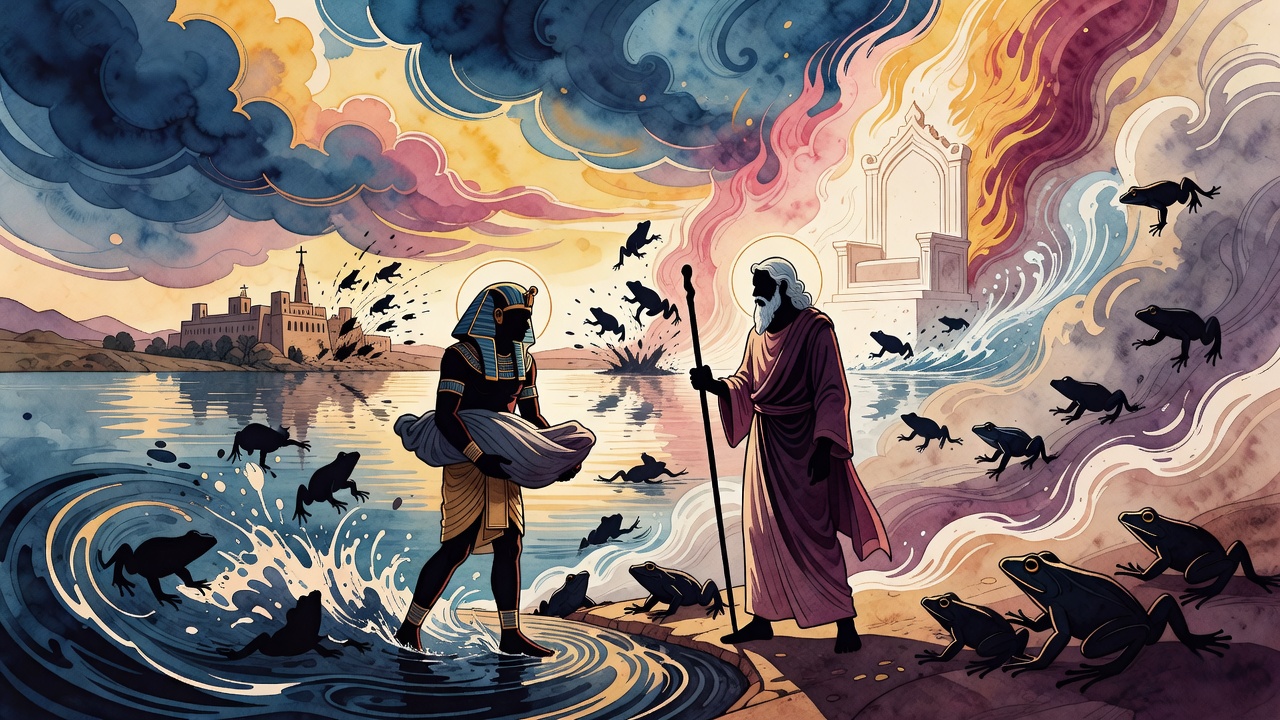
The Nile had carried his basket for seven days. When God sent blood and frogs, Moses would not raise the rod. Aaron struck the water instead.
Table of Contents
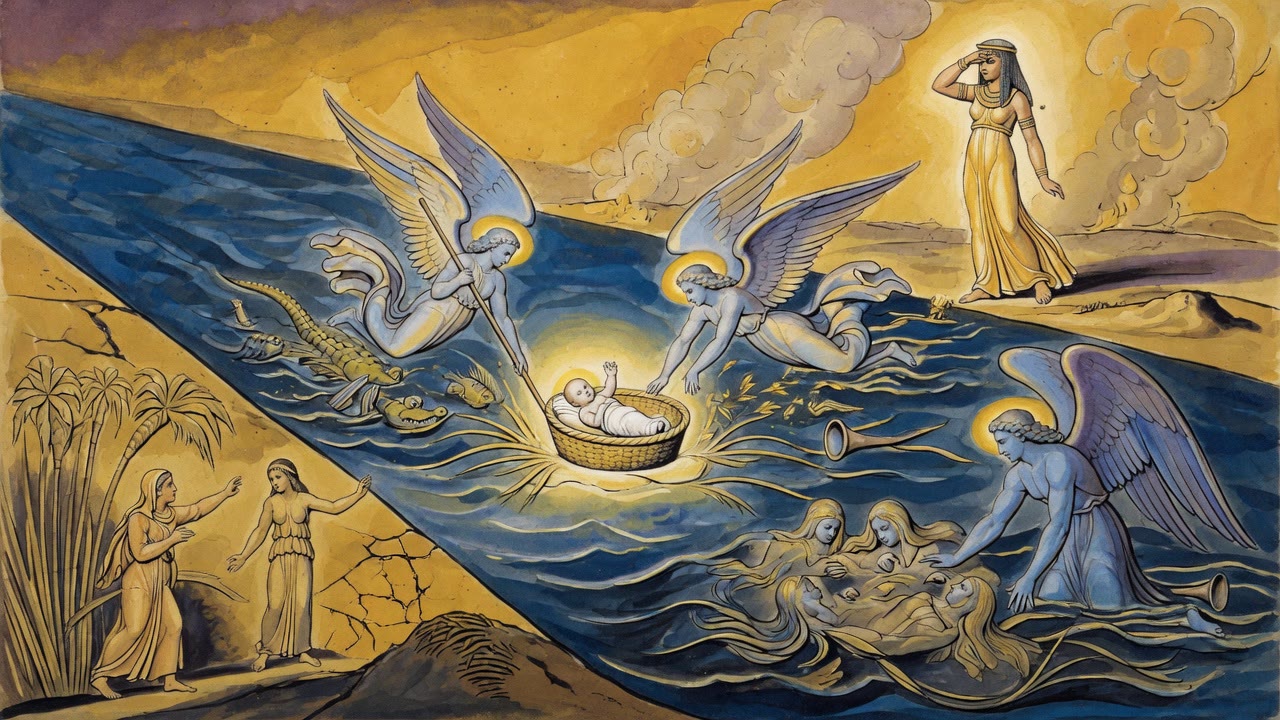
Pharaoh's decree ran for seven months before Moses was born. For seven months the Nile received the bodies of Hebrew boys. Then Jochebed hid her son for three more months at home. When she could hide him no longer, she built a small ark of papyrus sealed with pitch and set it among the reeds.
 Click for full size
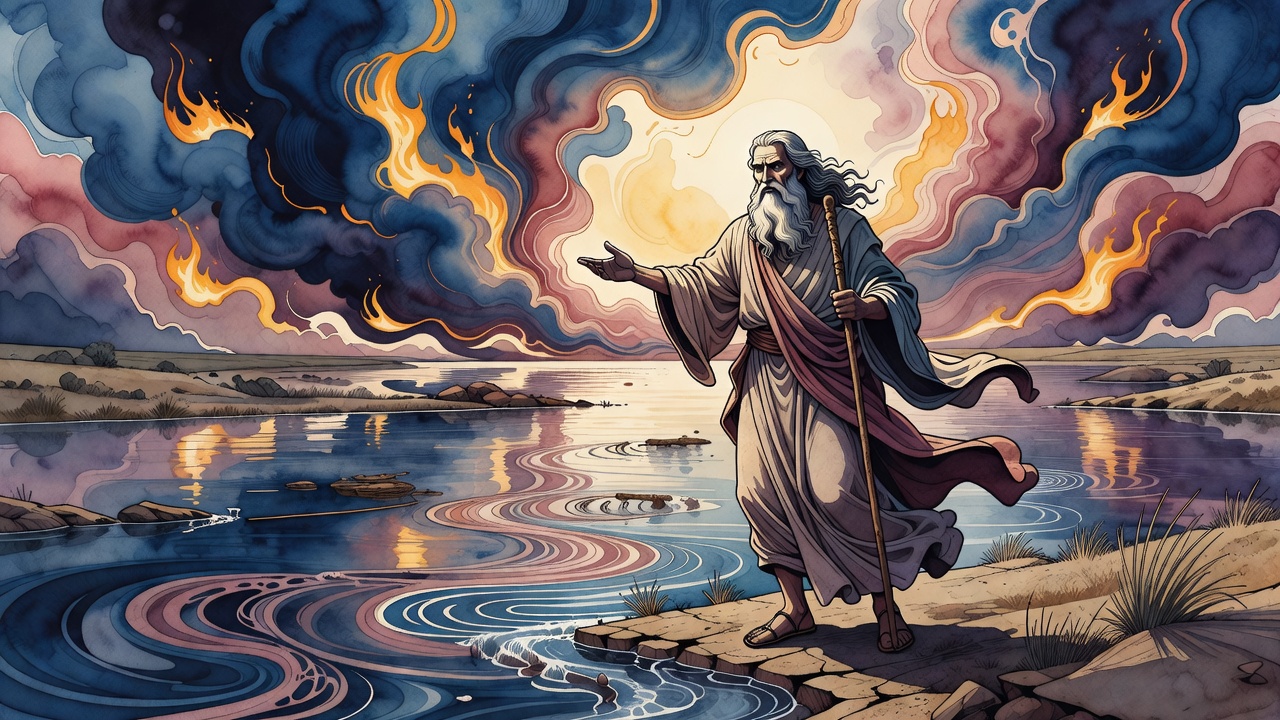
For seven days the basket sat by the bank. Miriam kept watch by day, driving birds off the child. Jochebed came at night to nurse him. On the seventh day Pharaoh's daughter found him, and the water gave him up.
The Rod Stayed in Aaron's Hand
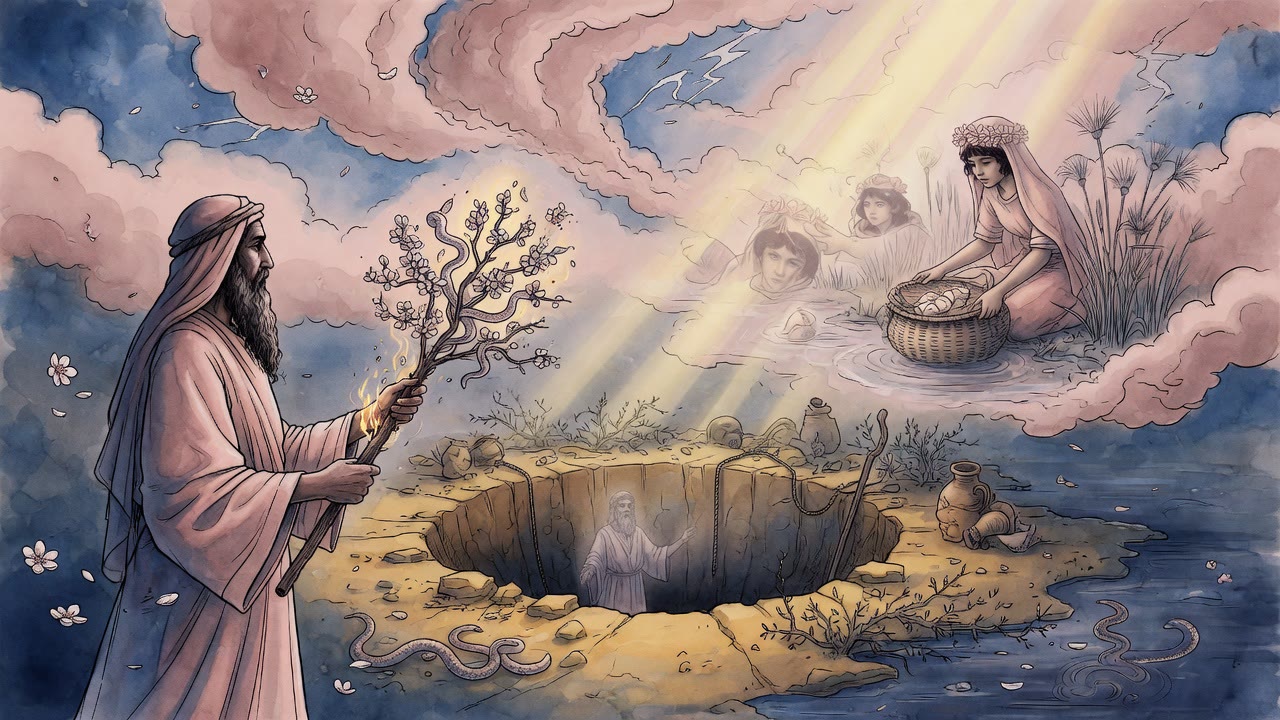
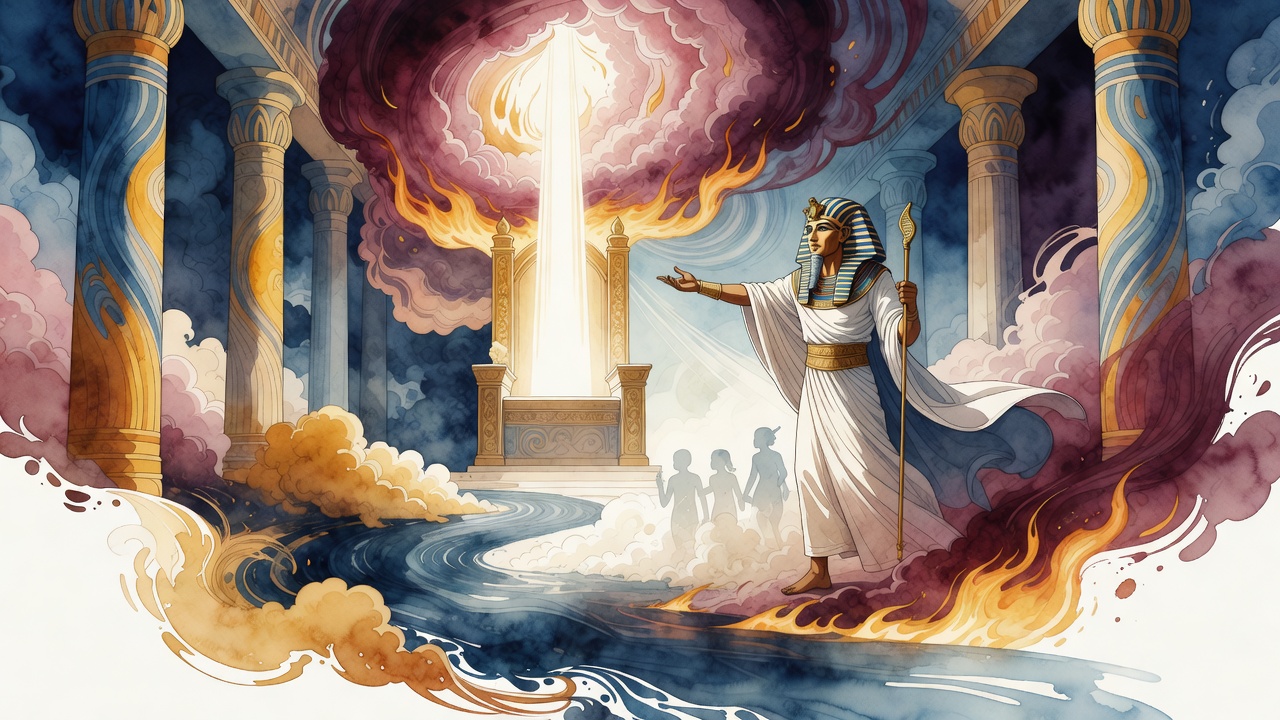
Years later God ordered the Nile struck to bring blood. Aaron raised the rod. Not Moses. Moses had found safety through that river when his mother laid him in it. He would not repay that shelter with a blow.
The same logic held for frogs, which came from the water. Aaron lifted his hand over the rivers, the trenches, and the canals. Frogs came up and covered the land. Moses stood back. The current that had floated a basket past crocodiles and into a princess's arms would not now take a strike from the boy it had carried.
He carried a private accounting of debts, including debts owed to water that has no intention and reeds that have no conscience. Still the basket had floated. Still the child had lived. He would not erase that record, not even to free a people, not even when God had already decided the plague.
Dust That Had Hidden a Body
The third plague rose from the ground. God said, Speak unto Aaron, lift up thy rod and smite the dust of the earth, and it shall become venomous insects in all the land of Egypt. It would not be by Moses that the ground was struck. The dust had already done him a kindness.
Years before, Moses had slain an Egyptian taskmaster and hidden him in the sand (Exodus 2:12). The ground received the body. The dust shielded him from discovery long enough for him to flee to Midian. Now he would not smite the thing that had sheltered him. Aaron struck the dust. Lice came up. Moses kept the debt. He refused to strike the Nile, and he refused to strike the dust that had hidden a body. He owed a debt even to inanimate things.
What had saved him, he would not punish. The principle is that specific. Blood, frogs, lice. Three plagues tied to his own rescue, moved through his brother's arm instead of his.
The Plagues Moses Did Strike
Moses was not idle. He brought every plague the earth and sky perform. Hail of fire and ice together. Locusts on the east wind. Darkness he spread with his hand. The firstborn death at midnight. On all their idols God took vengeance and burned them with fire. Cattle died. Boils broke. Nothing about the ten plagues was improvised. Each one answered a category of crime.
Moses moving aside for three of them did not slow the plan. It was already accounted for. Only the three connected to his rescue moved through Aaron. The restraint was Moses's. The outcome was already fixed. He would not let liberation wipe the record of what had been given to him.
The Staff That Already Knew Its Work
The rod used in all these plagues was the same rod pulled from Reuel's garden in Midian, inscribed with the name of God and the names of the ten plagues before any of them had occurred. It had passed through nine hands before Moses held it. It had been waiting in a garden for the man who would carry it.
When Moses lifted it over the sea, or toward the sky, or against the stone at Horeb, the rod was not becoming something new. It was finishing work written into it before he was born. Holding back for three plagues did not make the staff less ready. It made Moses keep faith with a river and a patch of dust.
Aaron's arm rose over water and ground. Moses's arm rose over hail, locusts, darkness, sea. A man who tracks what he owes a river will also remember what he owes a people. The Nile had carried his basket. He would not strike it. The water that gave him up still held that yes.
← All myths