God's Little Finger Drew the Ark and His Hand Freed the Slaves
Noah copied cubits off a finger drawn in the air. When the lice came, Pharaoh's magicians named that same hand and could not match it.
Table of Contents
 Click for full size
Noah Copied Cubits Off the Air
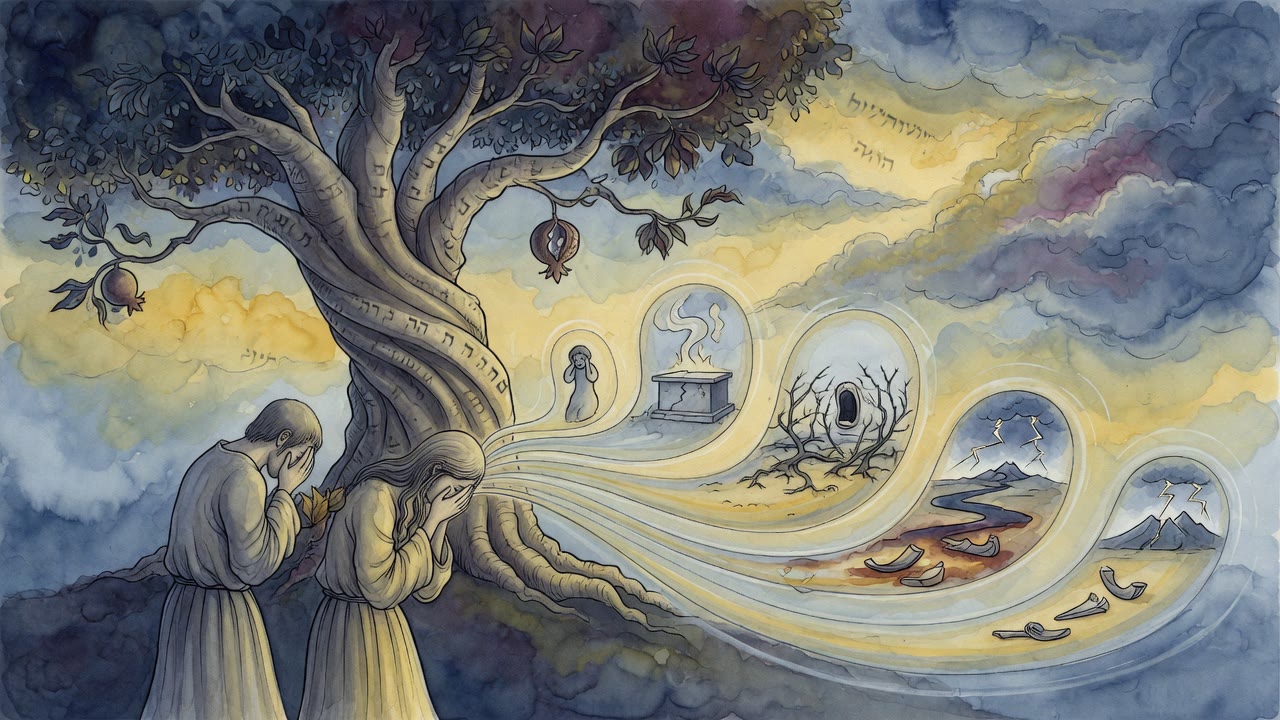
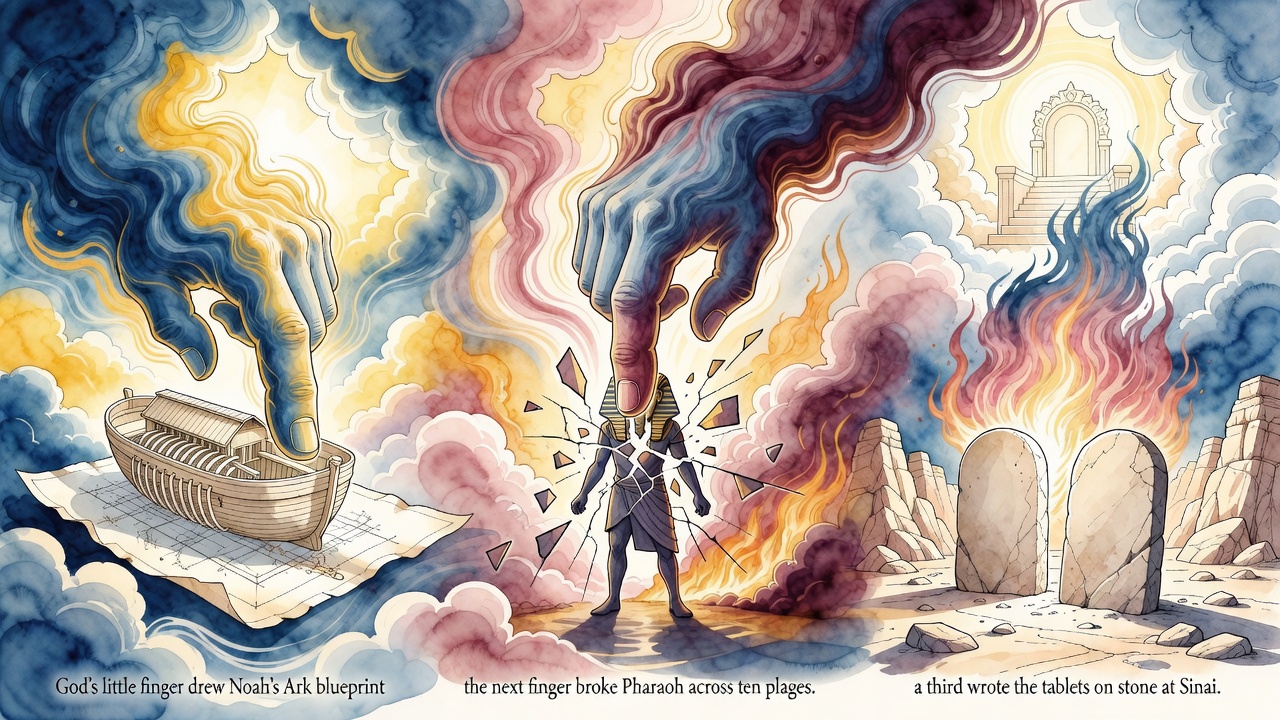
When God told Noah how to build the ark, He said, "This is how you shall make it," and the word this was a gesture. The little finger of the right hand traced the plan in the air. Noah squinted and copied length, width, three decks, a window, pitch inside and out. He went back to the empty air to check a measurement his neighbors could not see.
They laughed. The sky over him looked like any other sky. He was an old man building a ship on dry ground because a small finger had drawn him a picture. That finger drew the plan, then built the vessel that carried every future through the water.
The Magicians Named It Too Late
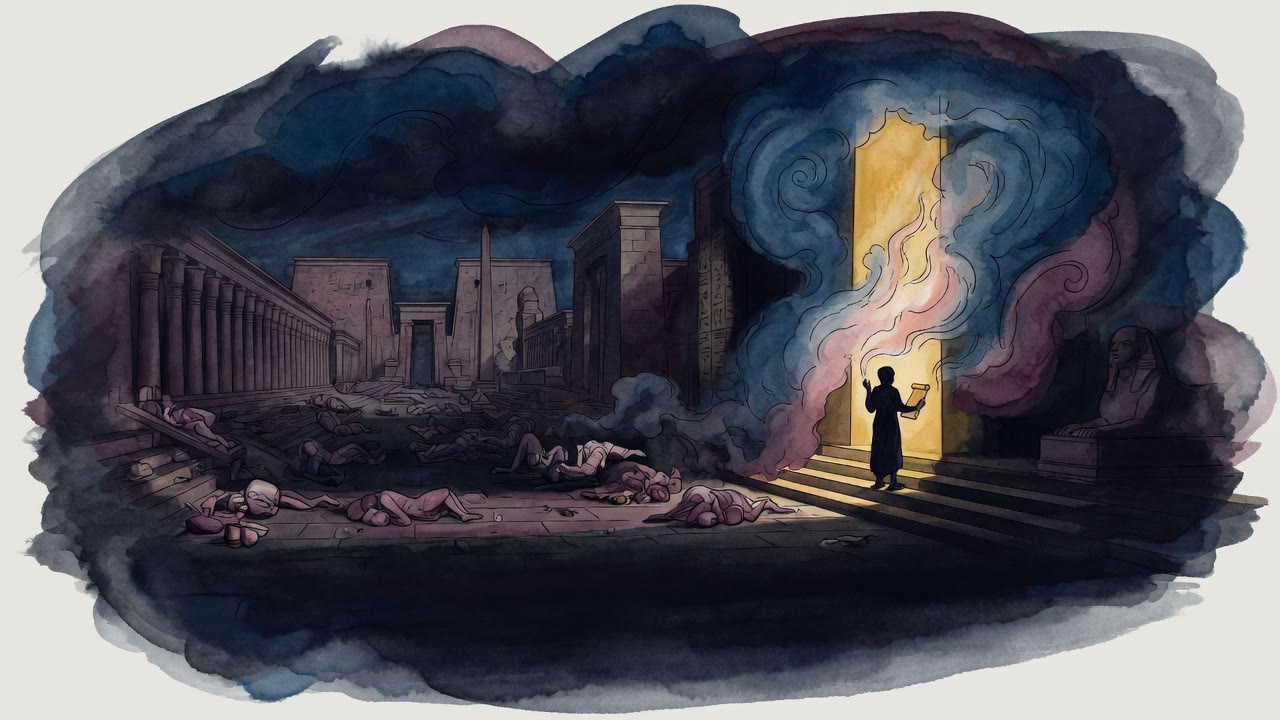
Long after, the lice came down on Egypt. Pharaoh's magicians had matched the blood. They had matched the frogs, which only meant more frogs, a match that helped no one. They set out their tools for the lice and produced nothing. Not one louse from all that dust.
They went in to Pharaoh and said three words.
"This is the finger of God." (Exodus 8:19)
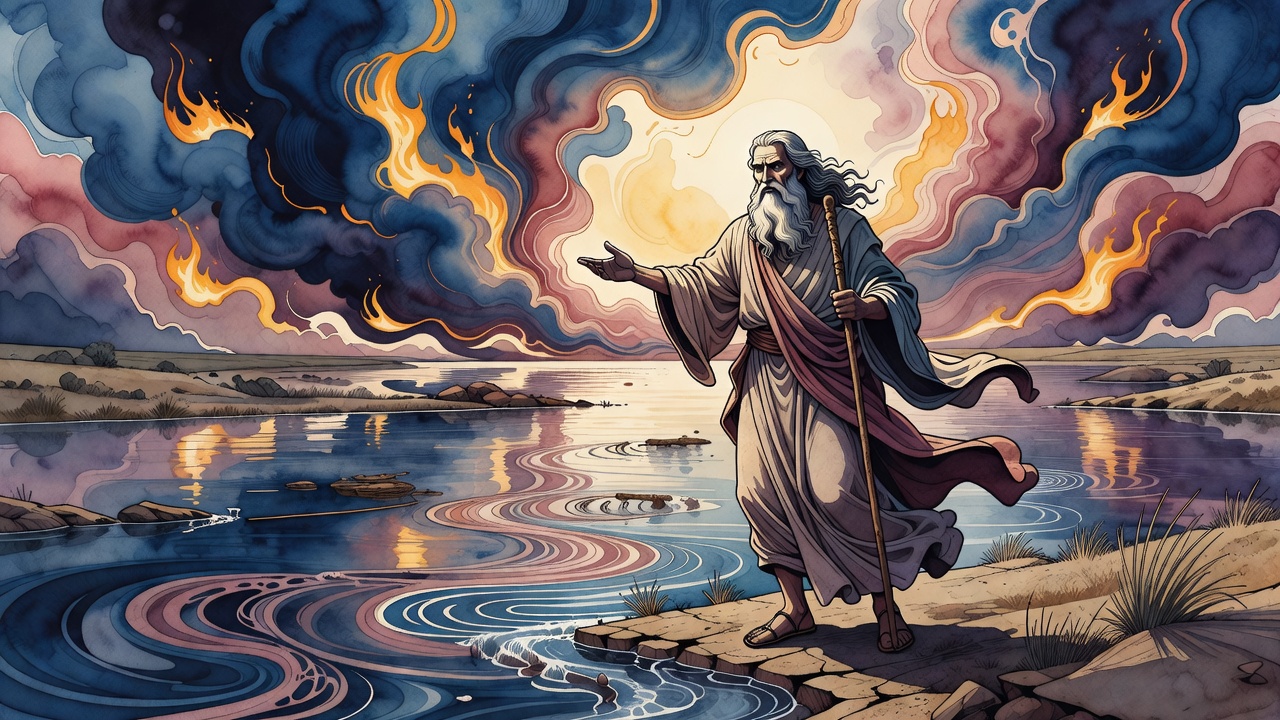
They were pointing at the same right hand. The little finger had drawn the ark. The next finger had brought ten plagues on Egypt. One finger. Ten plagues. Bricks without straw, children drowned in the river, four hundred years of bondage, answered by a single digit of the hand that had given Noah his cubits.
The magicians had the name right. They had it too late to save Pharaoh anything.
The Princess Reached the Basket
Pharaoh's daughter came down to bathe in the Nile and saw a basket in the reeds. She stretched for it. The basket sat too far. Her arm went past what an arm can do. It lengthened until her hand closed on the handle and brought the basket in.
A boy was crying inside. She knew he was a Hebrew infant, hidden from her father's decree. She named him Moses, drawn from the water, and raised him as her son.
The hand that had drawn cubits in the air, the hand that had moved through Egypt with ten plagues, stretched a princess's arm across a few extra cubits of river. A small rescue. A large one. Same work.
The Finger Wrote on Stone
After the plagues, after the sea, after the wilderness, Moses climbed Sinai. He came down with two tablets. They were written with the finger of God (Exodus 31:18; Deuteronomy 9:10), not dictated and not copied by a prophet with a good memory.
The little finger had built the ark. Another finger had broken Egypt and freed the slaves. This finger cut the words into stone so no one could call the law a suggestion. Then the work stopped. Shabbat sat at the end of that hand the way it sat at the end of the days of creation. What the finger had made would have to stand without being drawn again in the air.
← All myths