Job and Balaam Were Both in Pharaoh's Court When the Hail Fell
Two famous non-Israelite figures stood in Pharaoh's palace when hail struck Egypt. One believed the warning. One did not.
Table of Contents
 Click for full size
The Warning Before the Storm
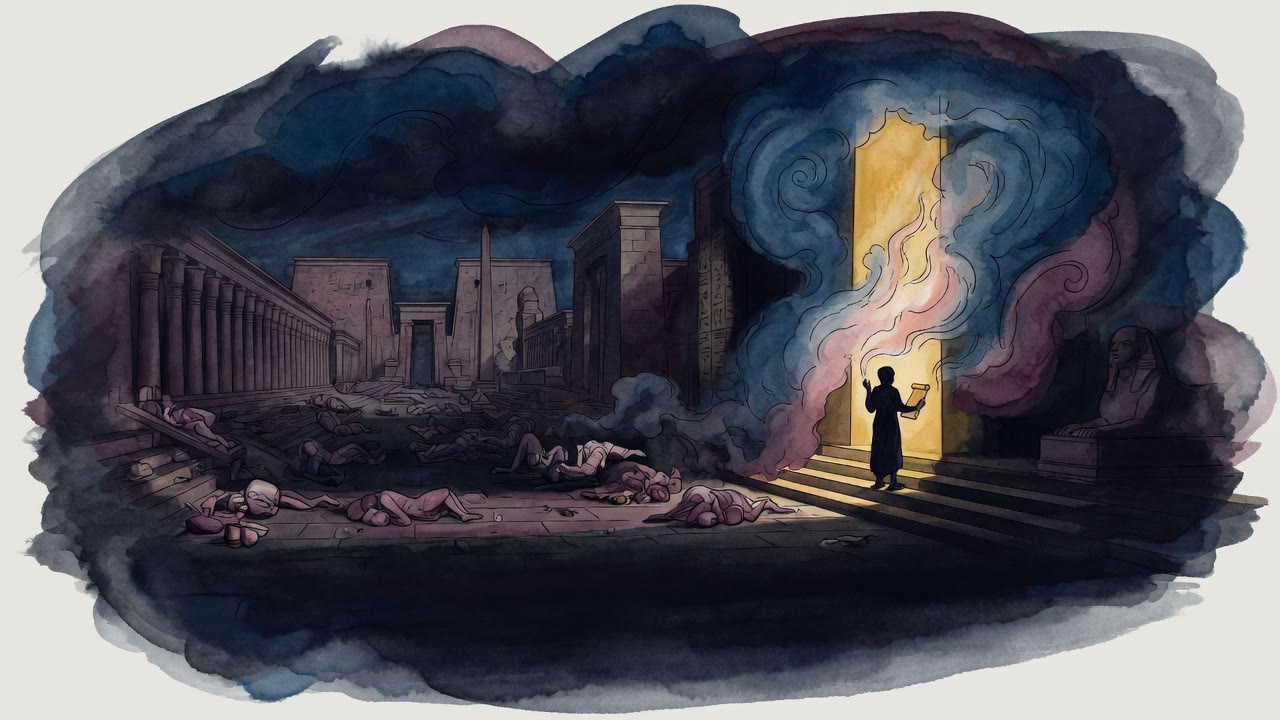
The hail plague came with an offer. Before the first stone fell, God sent word through Moses: bring your servants and your livestock inside. Anyone who fears the divine word will be protected. Anyone who dismisses it will watch everything perish in the field. The Hebrew Bible records that some of Pharaoh's servants feared the word of the Lord and brought their households in, while others did not (Exodus 9:20-21). It leaves both groups anonymous.
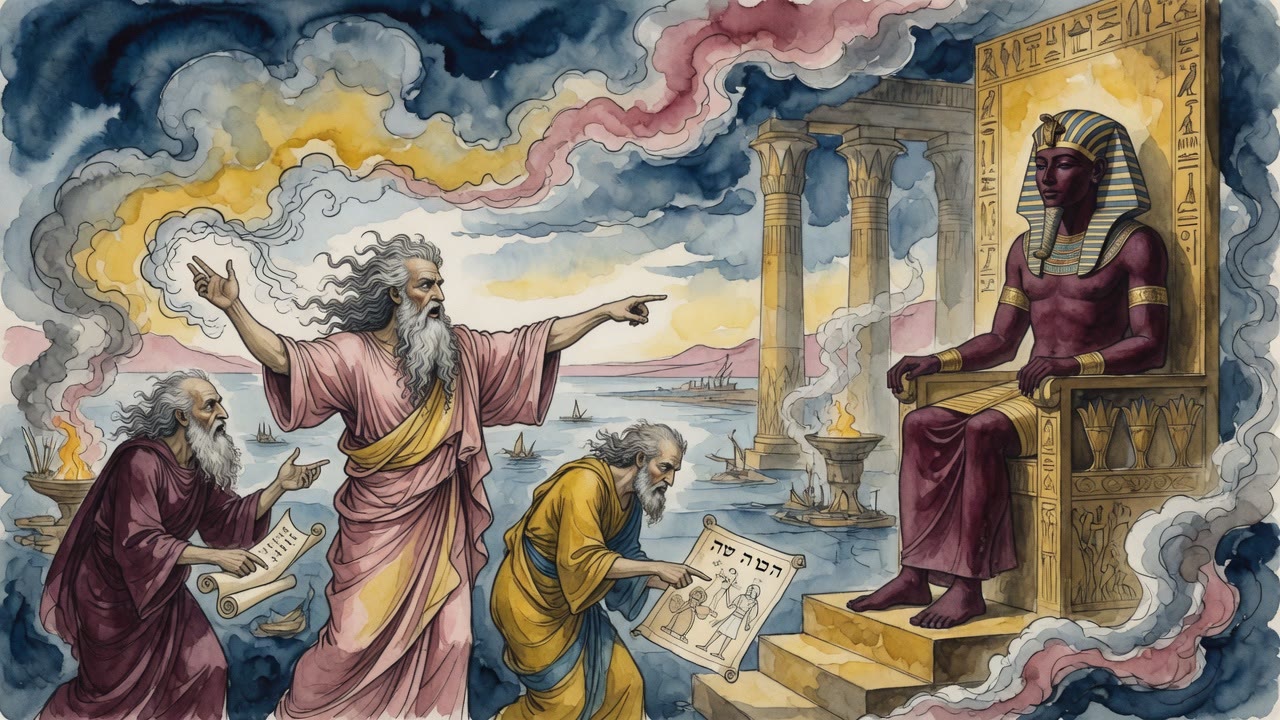
Targum Jonathan on Exodus 9, the Aramaic paraphrase of the Torah shaped in Palestine between the second and seventh centuries CE, gives the anonymous servants names. The servant who believed the warning and gathered his people and animals inside was Job. The servant who dismissed it and left everything in the field was Balaam.
Three Advisors and Three Different Choices
The identification is not isolated. The Targum draws on a sustained rabbinic tradition holding that Pharaoh employed three counselors when he decided what to do about the Hebrew population: Job, Balaam, and Jethro. Each faced the same question about the same people, and each made a different choice.
Jethro fled. He would not participate in the deliberation to enslave or destroy the Hebrews, so he left the court entirely. His departure cost him influence but not integrity, and the tradition rewards him later when his daughter becomes Moses's wife and he himself becomes the wilderness judge who advises Moses on delegation.
Job stayed and stayed silent. When Pharaoh proposed enslaving the Hebrews, Job did not recommend it and did not oppose it. He held the kind of silence that passes for neutrality but functions as permission. The tradition is precise about what this cost him: the suffering described in the book that bears his name is read, in this framework, as the wages of that silence.
Balaam spoke. He recommended the persecution. He gave Pharaoh theological cover and strategic advice for the program of oppression. The talking donkey, the failed curses, the death in battle against Midian, all of it becomes, in this reading, the consequence of counsel given in Pharaoh's court before the ten plagues began.
Job in Pharaoh's Court
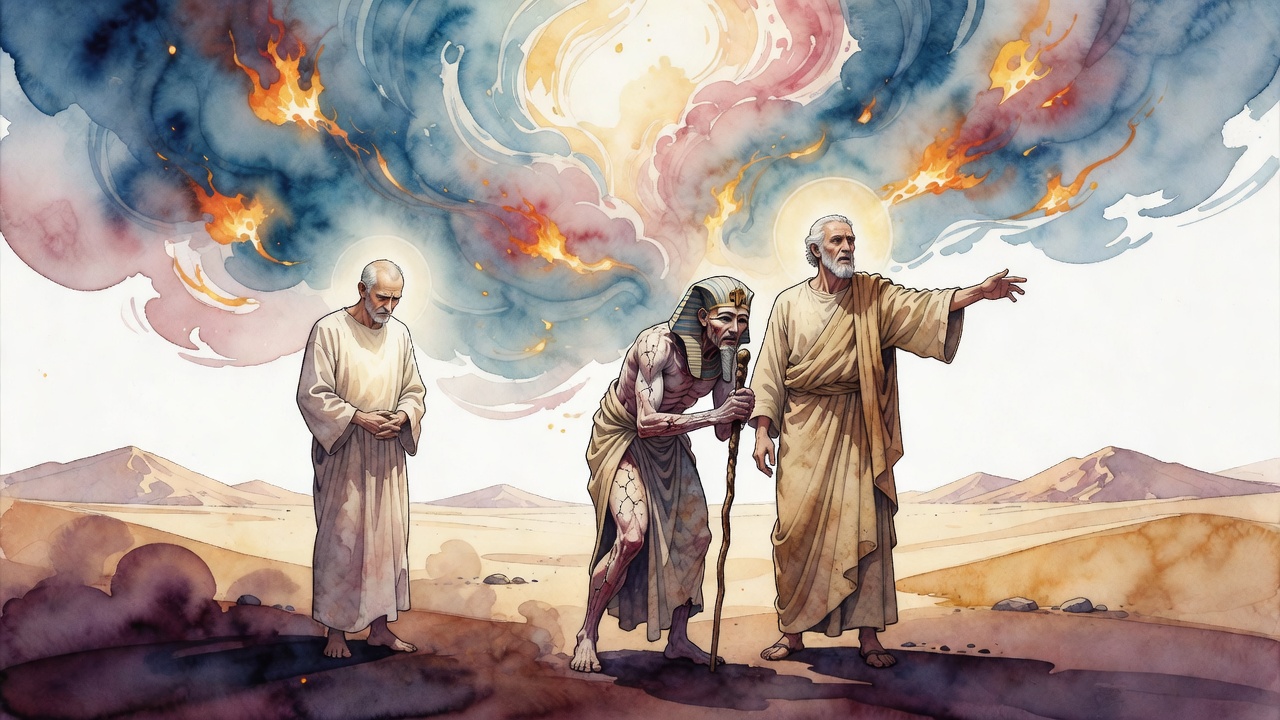
The placement of Job in Pharaoh's court changes both figures. Job is the Hebrew Bible's paradigmatic sufferer, the righteous man tested past the point anyone expects him to endure. The tradition has always struggled with what he did to deserve such catastrophe. Placing him in the counsel chamber where Israel's oppression was debated provides an answer that most readers find uncomfortable: Job's suffering is not arbitrary cosmic testing but delayed justice for a silence he could have broken.
It also changes what the hail scene means. Job believed the warning about the hail. He feared the divine word even after standing silently while Pharaoh plotted against Israel. The tradition does not use this to absolve him. It uses it to demonstrate that he always knew the difference between right and wrong. His silence in the court was not ignorance. It was a calculation, and the calculation was wrong.
Balaam Among the Dead
Balaam's trajectory in the rabbinic tradition is the opposite of Jethro's. The Book of Jasher records how he became an itinerant advisor after fleeing one battle, attaching himself to various kings and lending his reputation as a prophet to whoever hired him. Ginzberg's Legends of the Jews, drawing on Talmudic and midrashic sources compiled across many centuries, follows Balaam from Pharaoh's court to the armies of Midian, where he dies in battle at the hands of Phinehas. The Shekhinah (God's indwelling presence) fled from Moses when Pharaoh's daughter touched him, but it descended on Phinehas when he acted. The contrast is deliberate.
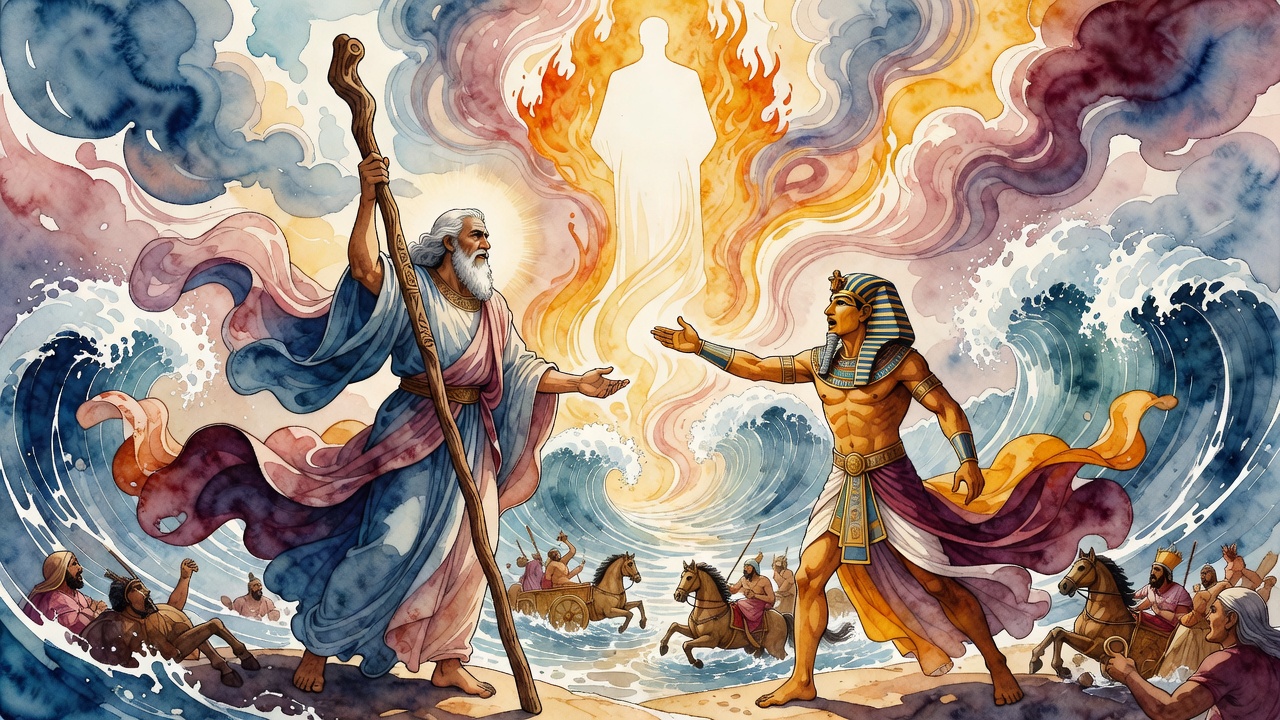
By the time the hail falls in Exodus 9, Balaam and Job have already made their fundamental choices in Pharaoh's court. The storm is not their first test. It is only the most visible confirmation of what was already settled. Job brings his people inside. Balaam leaves his in the field. The hailstones are the last word in a conversation that started years earlier when a king asked his advisors what to do about a people who were multiplying too fast.
← All myths