The Angels Rose Up to Strike Moses, So God Hid Him in the Rock
Seraphim cover their faces before the throne. Moses asked to see the glory itself. The court of angels stood ready to kill him.
Table of Contents
 Click for full size
The Voice That Killed the Nations
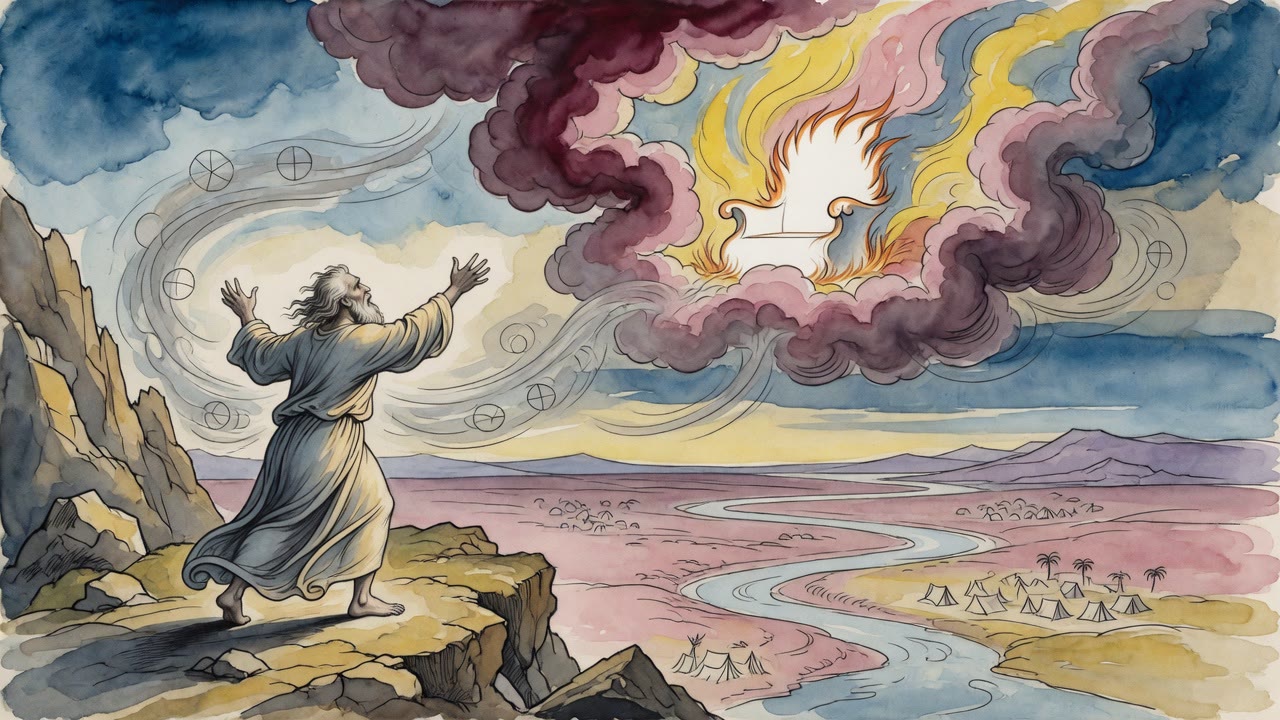
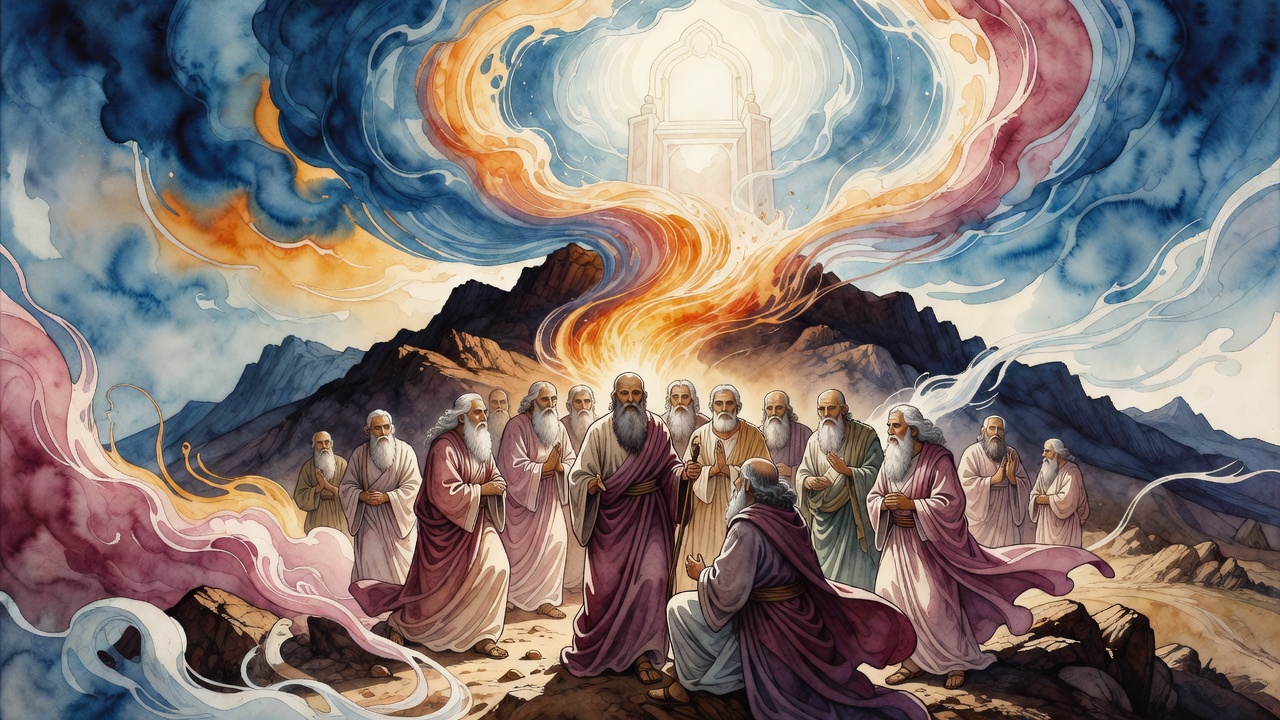
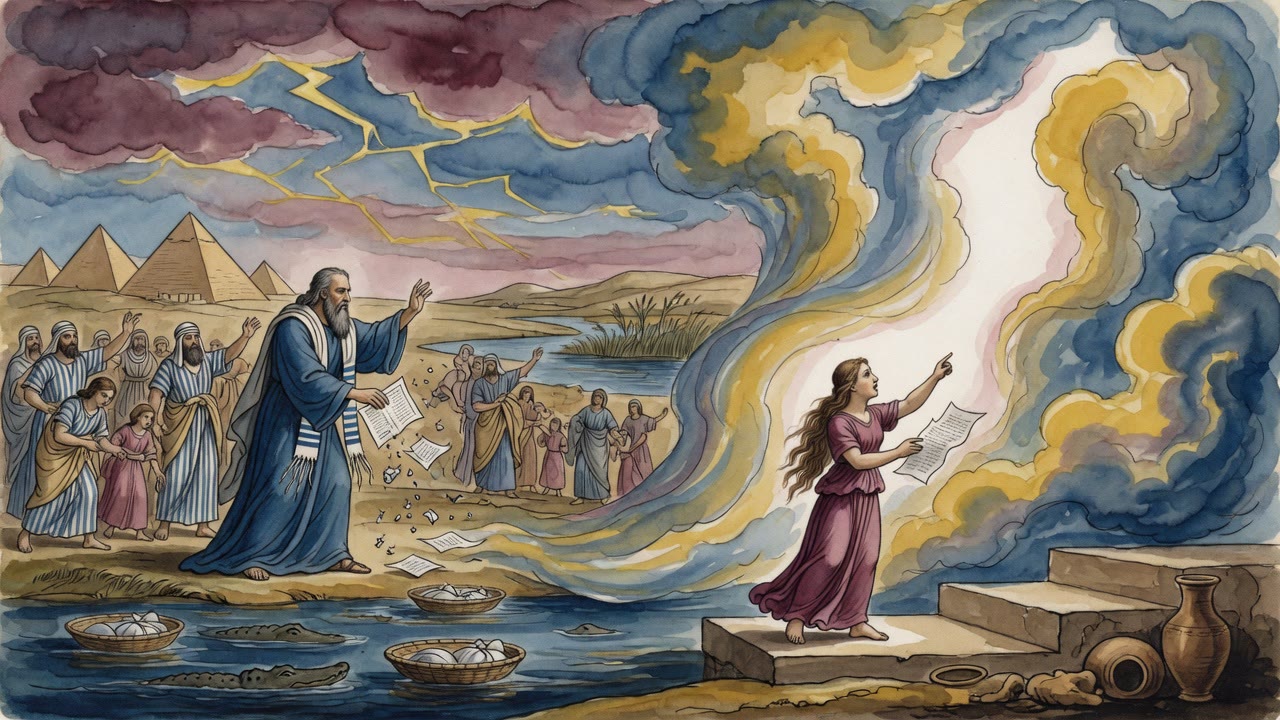
When God spoke at Sinai, the sound went out across the world. Every nation heard it, and the souls of the people who heard it left their bodies on the spot. Mountains shook. Angels fled to their stations. The dead in their graves stirred. Only Israel, standing at the foot of the mountain with the smoke and fire directly above them, survived the hearing.
Has a people ever heard the voice of God speaking out of fire and lived? (Deuteronomy 4:33). Israel had. Even Israel could not take the full undivided voice. God split it into seven voices, and the seven voices into seventy languages, before human ears could carry the sound without being destroyed by it.
That was the voice speaking the commandments down toward the camp. Then Moses asked for something more.
Moses Asked to See the Glory
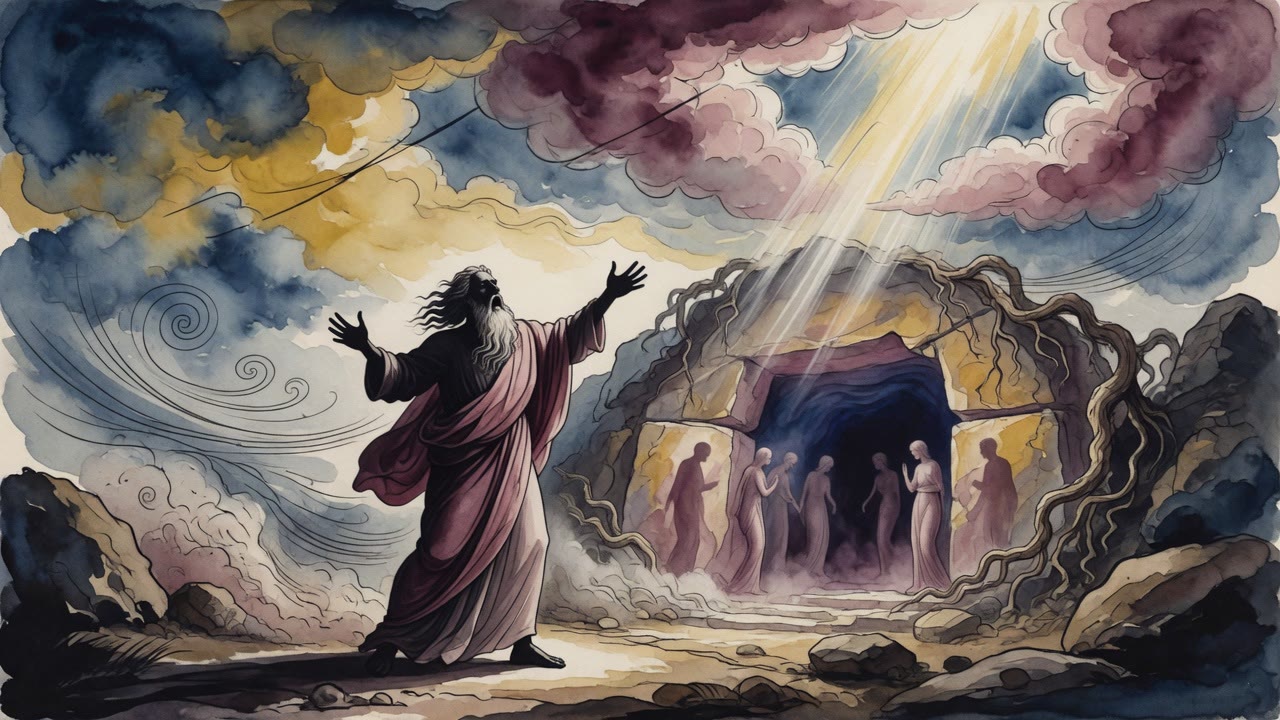
Moses had been inside the cloud. He had stood in the cleft of the rock while the Presence passed. He had seen the back of what was moving away. He had heard the voice that killed the other nations. None of it was enough. He asked to see the glory itself. Not the cloud. Not the voice. The thing behind both.
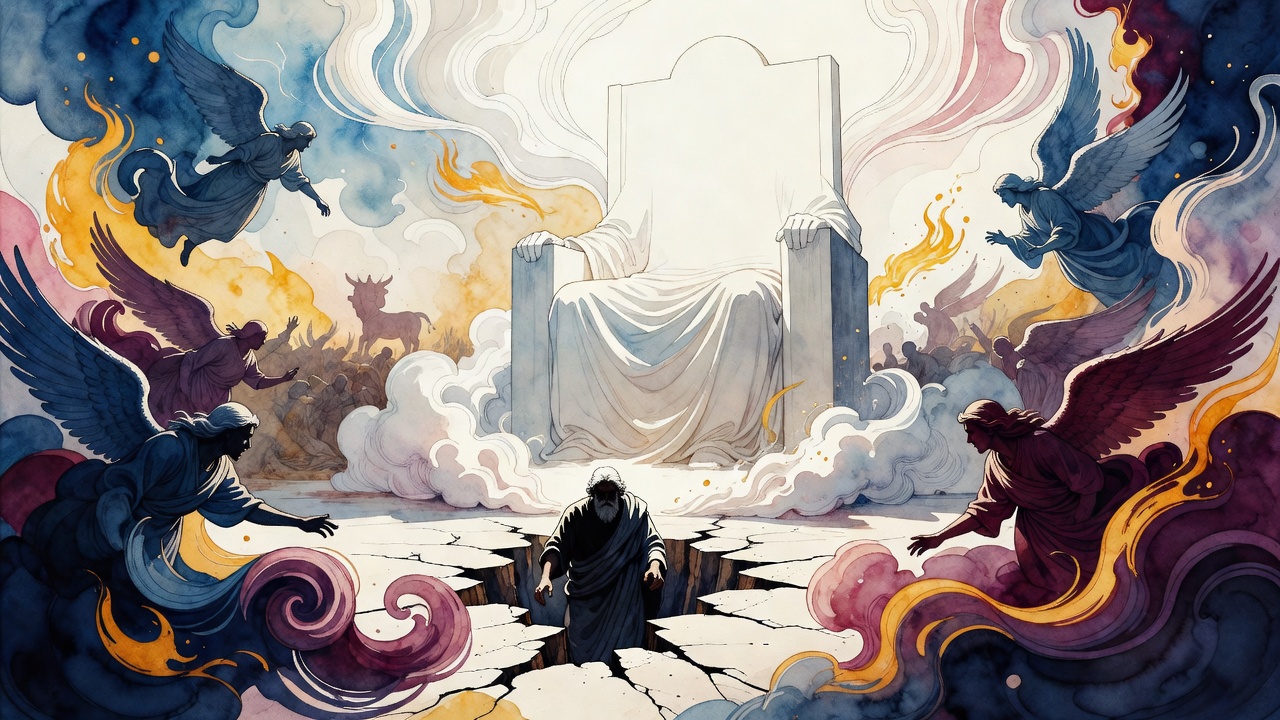
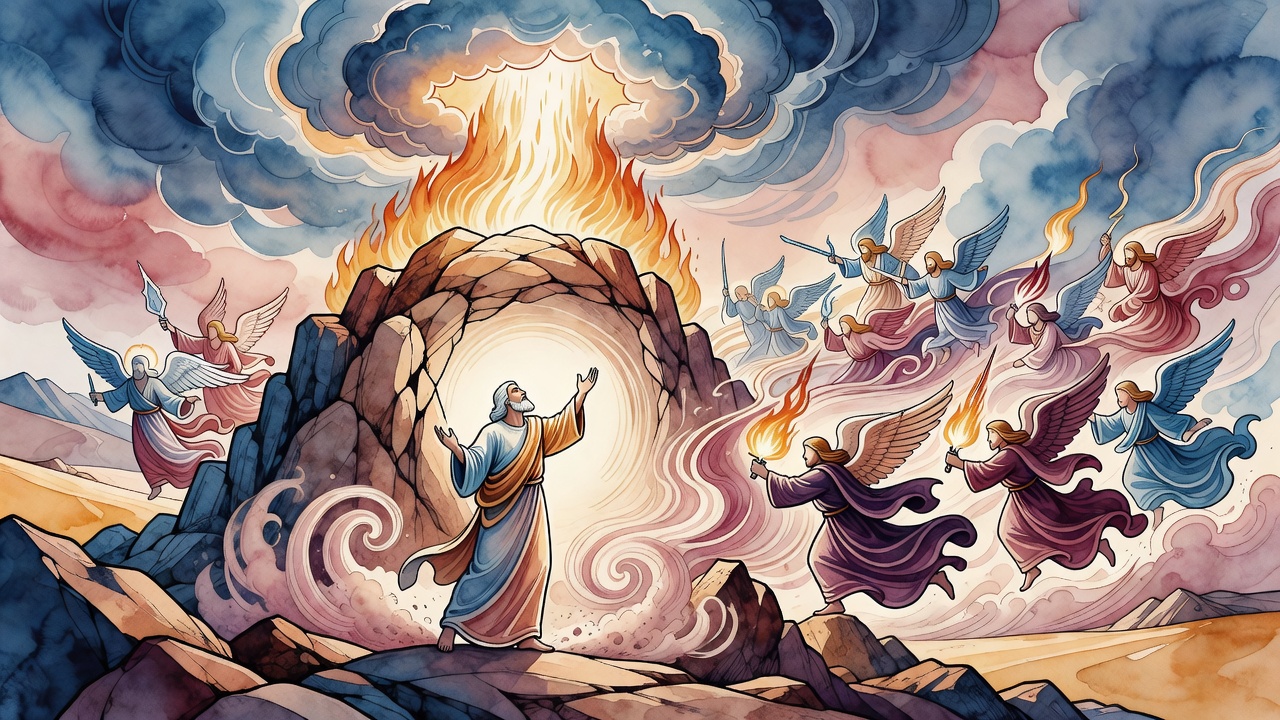
The angels heard the request and their patience ended. They served before the Presence day and night without ever seeing what Moses was asking to see. The seraphim covered their faces with two wings when they stood before the throne. The chayot hid their faces in the fire. The whole court lived under a rule: the full glory is not to be looked at. Proximity is its own blindness. The most devoted servants of God had never seen what a man born of woman was now asking to see.
They rose. They rose in wrath and in readiness to strike him down.
God Hid Him in the Rock
God moved faster. He placed Moses in a cleft of the rock and covered the opening with His hand until the full weight of the Presence had passed through. The angels were still in the air, still coming. The hand was already over the gap.
Moses stood in the dark of that cleft with stone at his back and a palm over his face, and the Presence went by so close the rock hummed. He did not see what was passing. He felt the heat of it through the hand that hid him. Then God lifted His hand, and Moses saw the back of what had just left. The radiance of the Presence as it walked away from him.
The angels were still there. The moment passed. Moses was still standing.
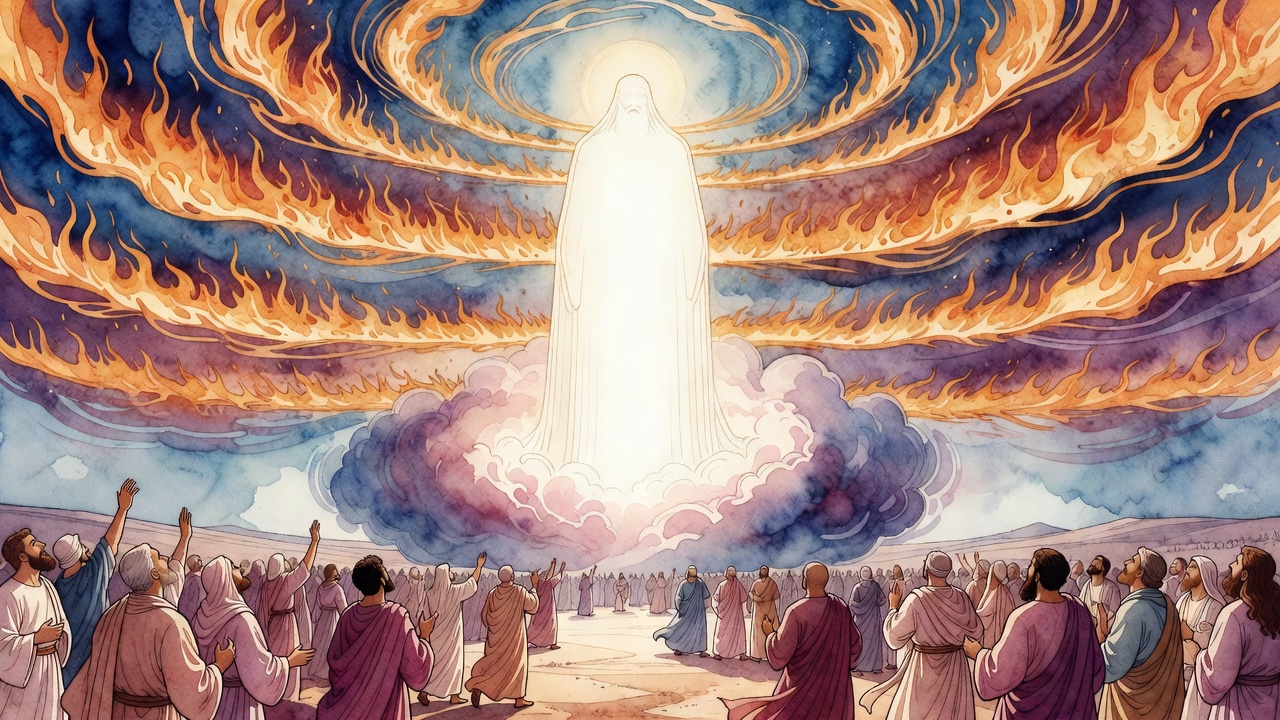
What he saw from the rock was not darkness. Not nothing. Light pouring back from the departure of something so bright that even its going was more than the angels could endure. Moses saw the trailing edge of divinity and came down from the mountain with his face shining so brightly that the people could not look at him. He had to veil it.
The Footstool Received the Law
Heaven is My throne and earth is My footstool. When Moses came down from Sinai carrying the law, he was bringing something from the region of the throne to the region of the footstool. He was closing the gap that sin had opened between the place where the Presence sat and the place where people lived.
The angels who had risen to kill him at the start of the ascent had to watch a man, a mortal who had been hidden in a rock while they stood exposed, carry the teaching down the mountain and give it to the people who had survived the voice. The footstool received what the throne had given. Moses stood between the two and lived, shielded by the same hand that had written what he was carrying.
He walked into the camp with the veil in his fist, and the people turned their faces away until he covered the shine. The angels went back to covering theirs. The rock on the mountain kept the shape of a cleft. The law was in his arms, on the earth, on the footstool, and he was still alive to set it down.
← All myths