The Night Jacob's Soul Climbed Into Heaven and Came Back
Most picture Jacob wrestling a man by a river. One early medieval tradition lifts the fight out of the mud entirely and moves it into the palaces of heaven.
Table of Contents
 Click for full size
The Body by the River and the Soul Above It
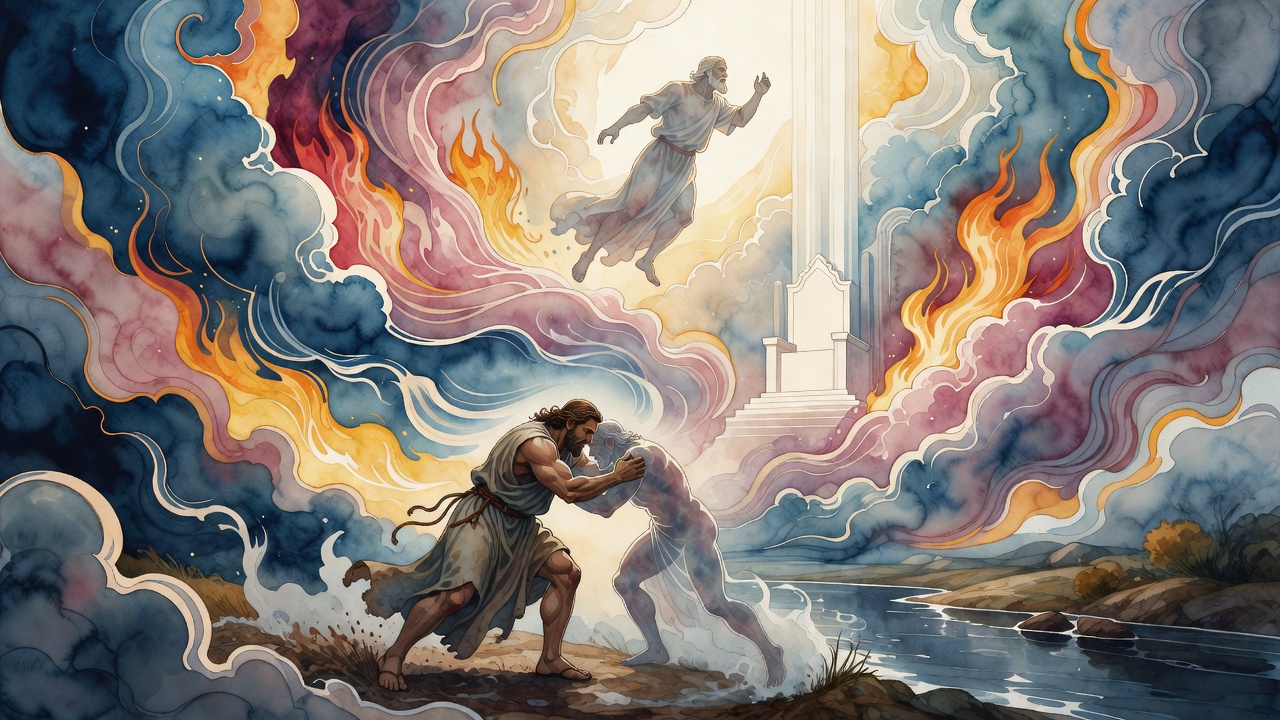
The body was at the ford of the Yabbok, lying on the bank where Jacob had set it down to sleep before dawn. Esau and four hundred armed men were on the other side of the night, and the man who had spent twenty years building himself a life in Laban's house had reduced everything he owned to two camps on either side of a river and a prayer that at least one of them would survive.
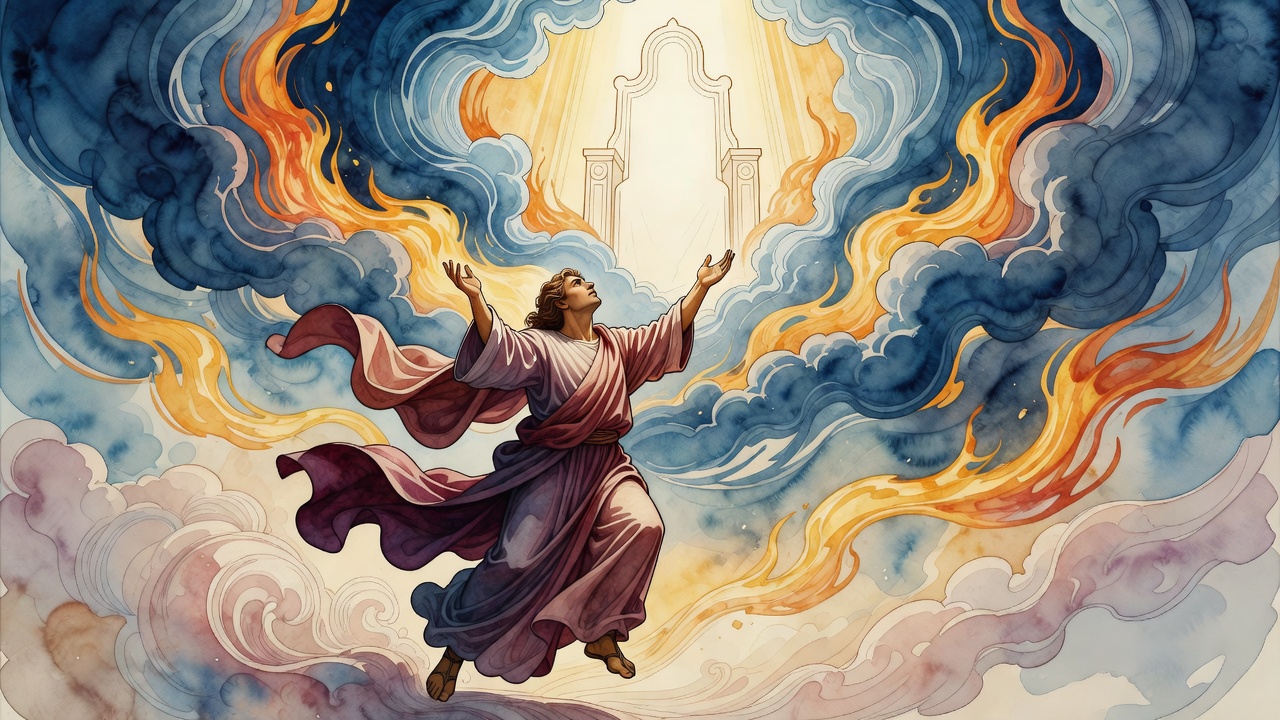
While the body lay there, the soul went up.
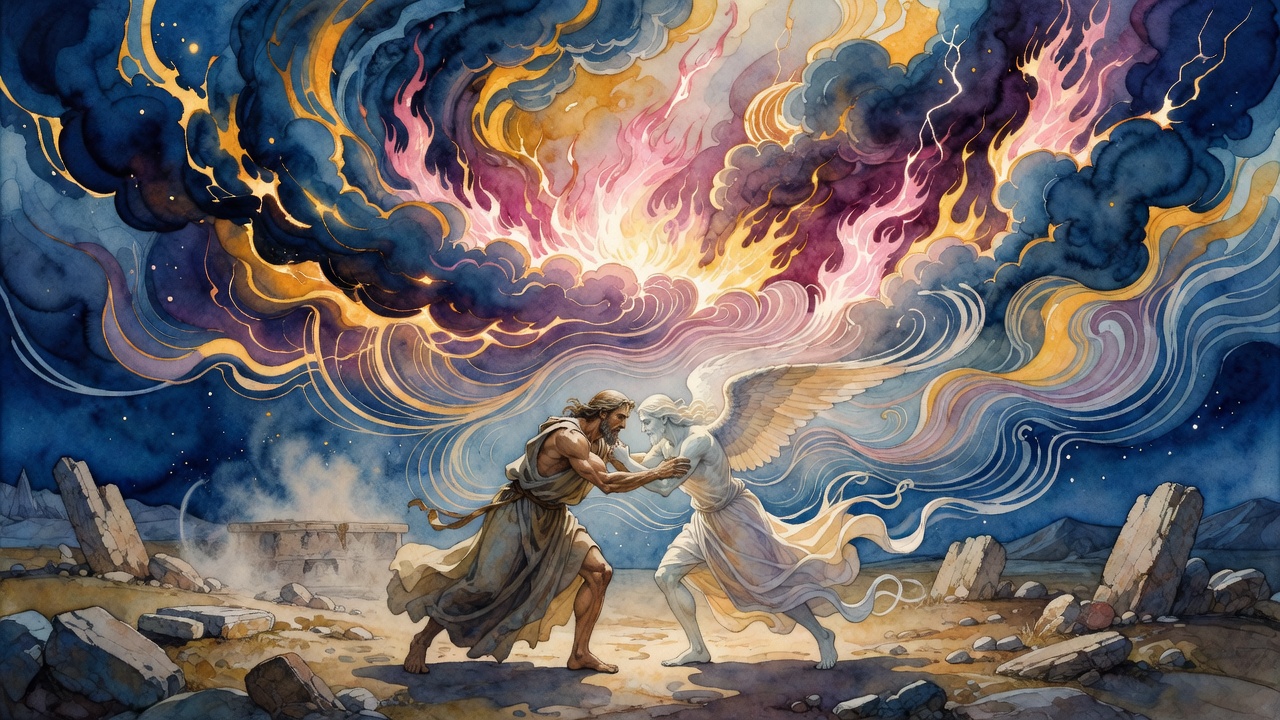
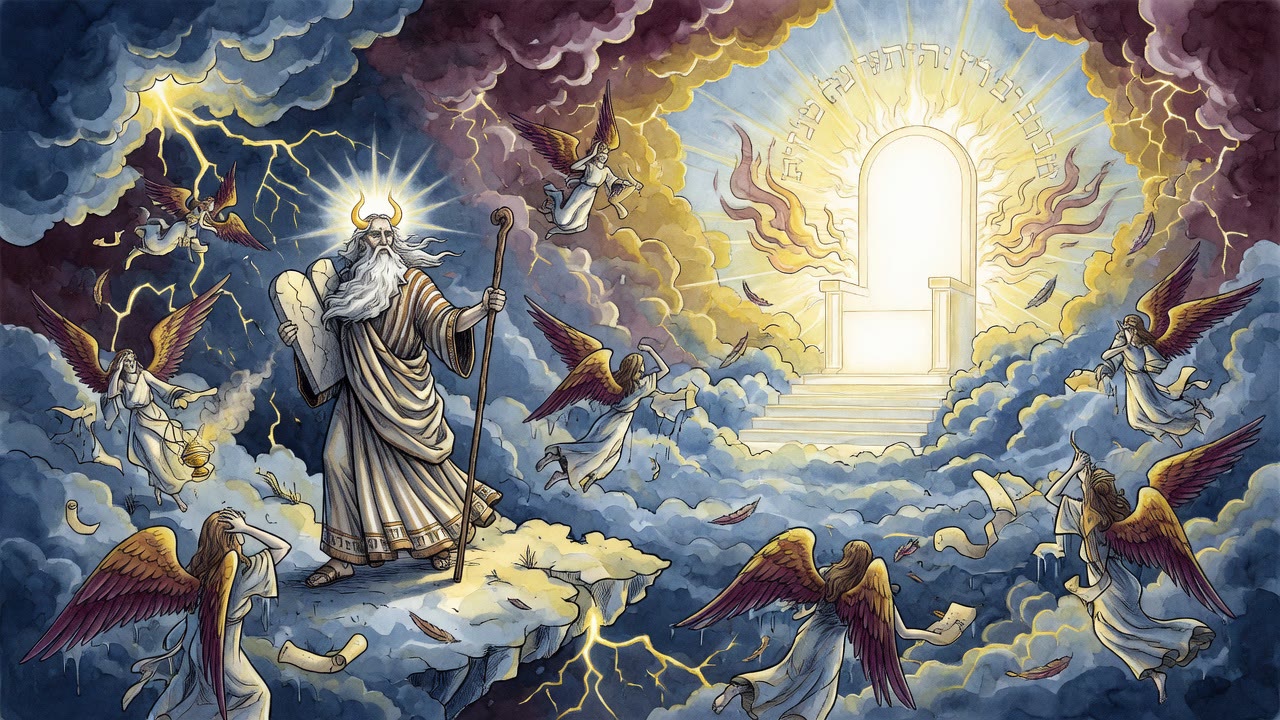
An early medieval midrash preserved only because the seventeenth-century anthologist Reuven Hoshke gathered it into his Yalkut Re'uveni lifts the entire wrestling match off the earth. This is the tradition called Midrash Avkir, surviving in fragments, and what it says is precise: the struggle at the Yabbok was not between Jacob and a man. It was between Jacob's soul and Michael, the heavenly priest, in the courts above.
Why the Ladder Still Worked
This tradition hangs on the ladder at Bethel. Since the night Jacob dreamed of that staircase running from the dust of his pillow to the gate of heaven, the tradition maintained that his soul kept the route. He had seen the ladder. He knew the way. And on particular nights, under particular pressures, the route opened for him.
Michael is the guardian of Israel, in this tradition as in many others, the angel who came to announce Isaac's birth, who leads the morning songs of the ministering angels, who holds the great altar of heaven where the souls of the righteous are offered as a sweet savor before God. He is not a stranger. He is the one who has been present at every critical moment in Abraham's line. So when the soul of Jacob arrived in the upper world and found Michael waiting, the meeting was between two figures who had been on the same side for three generations.
But the wrestling happened anyway. Because the tradition knew that a man does not receive the name Israel, the one who struggles with God, without actually struggling. The fight was real. The soul of Jacob pressed against the guardian of Israel and would not let go, and neither would the angel, and the night passed in the upper courts while the body lay cooling on the riverbank below.
How Moses Survived the Same Journey
The midrash linked Jacob's ascent to Moses, and specifically to the question of how a human being survives arrival in the divine presence. The normal answer is that one does not. God told Moses directly: no man can see My face and live (Exodus 33:20). The tradition preserved in Yalkut Re'uveni and the Midrash Avkir fragments reads this rule carefully and notes its exception: the face. You cannot see the face and live. But a soul that has already been admitted to the heavenly courts on a previous journey carries something like a prior clearance, an established pattern of survival that the upper world has already tested and approved.
Moses survived by being hidden in the cleft of the rock while the divine presence passed. Jacob survived by having already been there. The ladder was not a one-time dream. It was an established route, and a soul that had traveled it returned with the mark of the passage on it. This is why Jacob woke from the wrestling with a limp. The body carries the trace of what happened to the soul.
The Giant Image and Enoch's Transformation
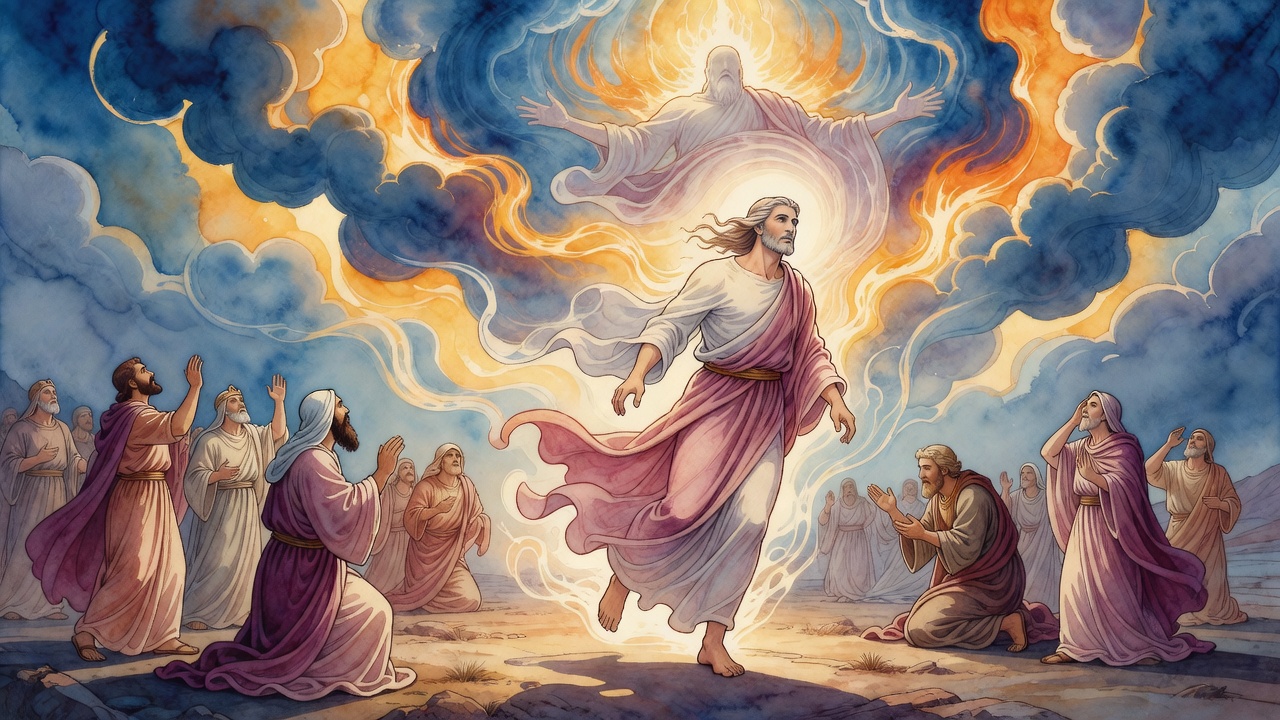
There is a third piece of this tradition that the midrash positioned alongside Jacob's ascent. When Jacob's soul arrived in the upper world, he found something waiting that he had not expected. His own image was carved into the throne of glory. The tradition, developed across the merkavah and hekhalot literature (early mystical texts of the divine chariot and its palaces), held that the face of the perfect human being, the one the tradition designated as the central pattern of what human beings were meant to be, was engraved in the divine chariot. Jacob had been told since birth that he was that image. But he had never seen himself from that angle.
The image in the throne was the same image that Enoch carried up with him when God took him, the man who walked with God and was not, because God had taken him and made him Metatron, the prince of the divine face, the highest of the created beings who stand before the throne. Jacob's soul climbed into heaven and found a company that included a man from his own ancestry who had been transformed into something that could stand where no human being was supposed to stand. And the soul of Jacob, which had come up through the ladder route and wrestled the guardian of Israel to a draw, went back down into its body at dawn and left the body limping on the bank of the Yabbok.
← All myths