Parshat Ki Tisa6 min read

Moses Begged the Dead of Hebron to Stand and Save Israel

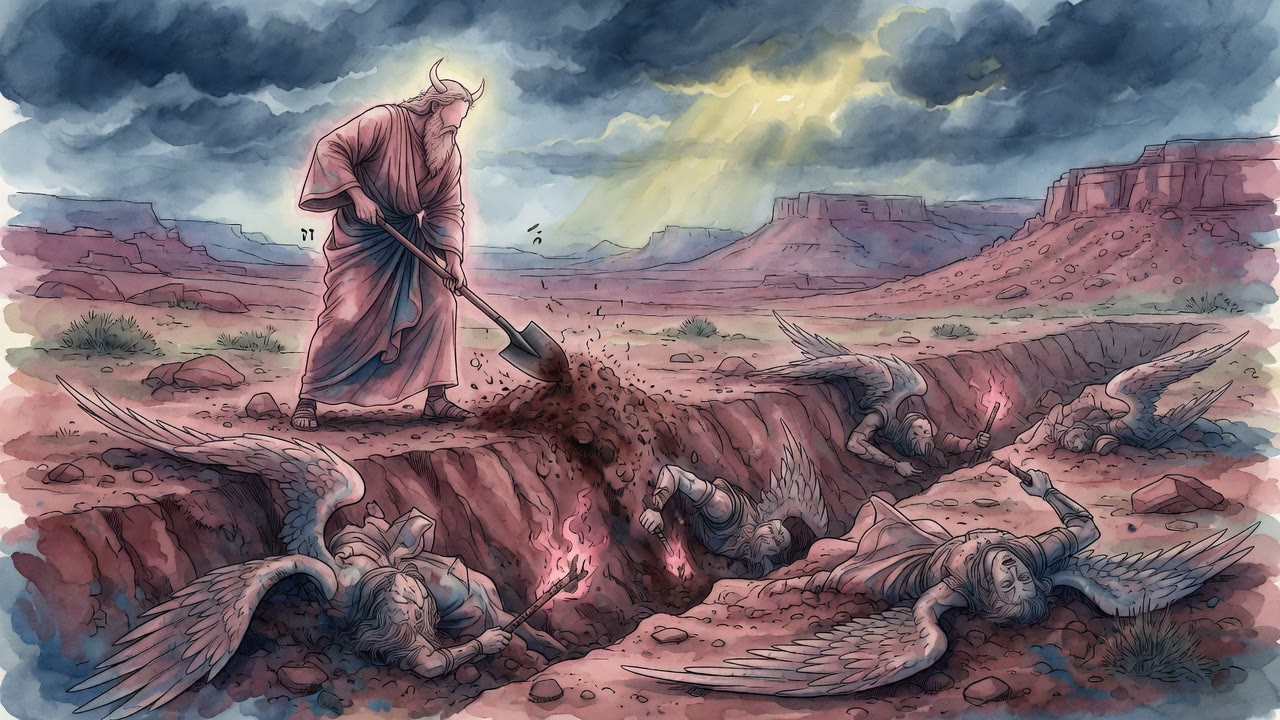
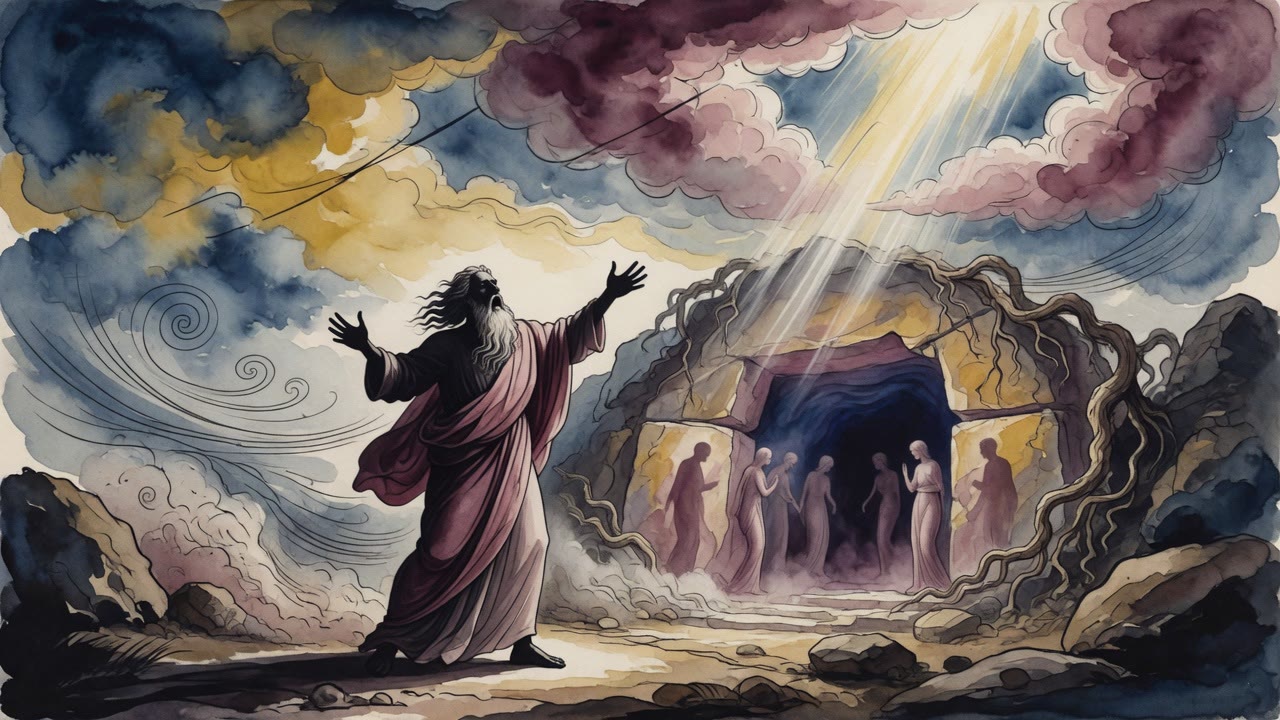
Five angels of wrath were already moving toward Israel. Moses ran to the cave at Hebron and begged the buried patriarchs to stand and intercede.

Curated by Arthur · Told by Maggid ·
Table of Contents
  1. Moses Runs South to the Cave at Hebron
  2. He Calls the Patriarchs by the Covenant
  3. This Was Not the First Time the Dead Got Up for Israel
  4. Why It Had to Be the Dead

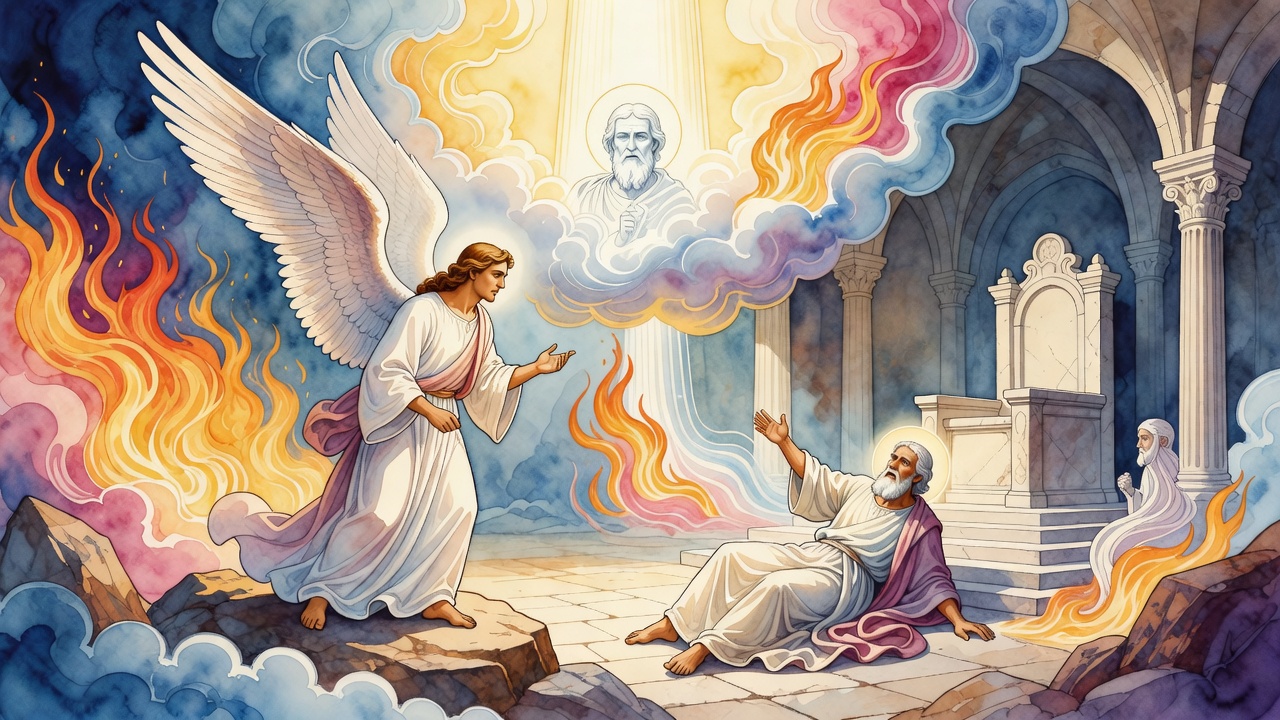
Five of them came down at once, and the air went thin where they passed. Wrath walked first. Behind him came Anger, then Temper, then Destruction, and last Glow of Anger, who left a heat in the ground like a road still burning under the sun. They were not the kind of messengers who arrive with good news and folded wings. They had been sent to wipe a people off the earth, and they were already on the road.
Down at the foot of the mountain, Moses understood what was coming. The people had made a calf of gold and danced before it, and now the decree had teeth and feet and was walking toward Israel from the heights. He had minutes. He could feel it the way a man feels a wall of water before he sees it. There was no time to climb back up and argue point by point, no time to lay out a case.

Moses Runs South to the Cave at Hebron

So he ran. Not up, but south, toward Hebron, toward a field with a cave in it that had been bought with four hundred shekels of silver from Ephron the Hittite (Genesis 23:16). The Cave of Machpelah. The ground where the founders of the covenant had been laid down one after another and left to their rest.

His sandals tore on the stones. The decree was somewhere behind him or beside him or ahead of him, he could not tell which, only that it was faster than grief and would not tire. He reached the mouth of the cave with his chest heaving and the dark of it breathing cool against his face.

Inside lay six of them. Abraham, who had been promised this whole land and then made to count out silver for a single burial plot, and who had not complained. Sarah beside him. Isaac, who had dug for water and fought the herdsmen for every well. Rebecca. Jacob, who had wrestled and limped and buried his own beloved on a road. Leah. The whole foundation of the people, packed into the rock and silent.

He Calls the Patriarchs by the Covenant

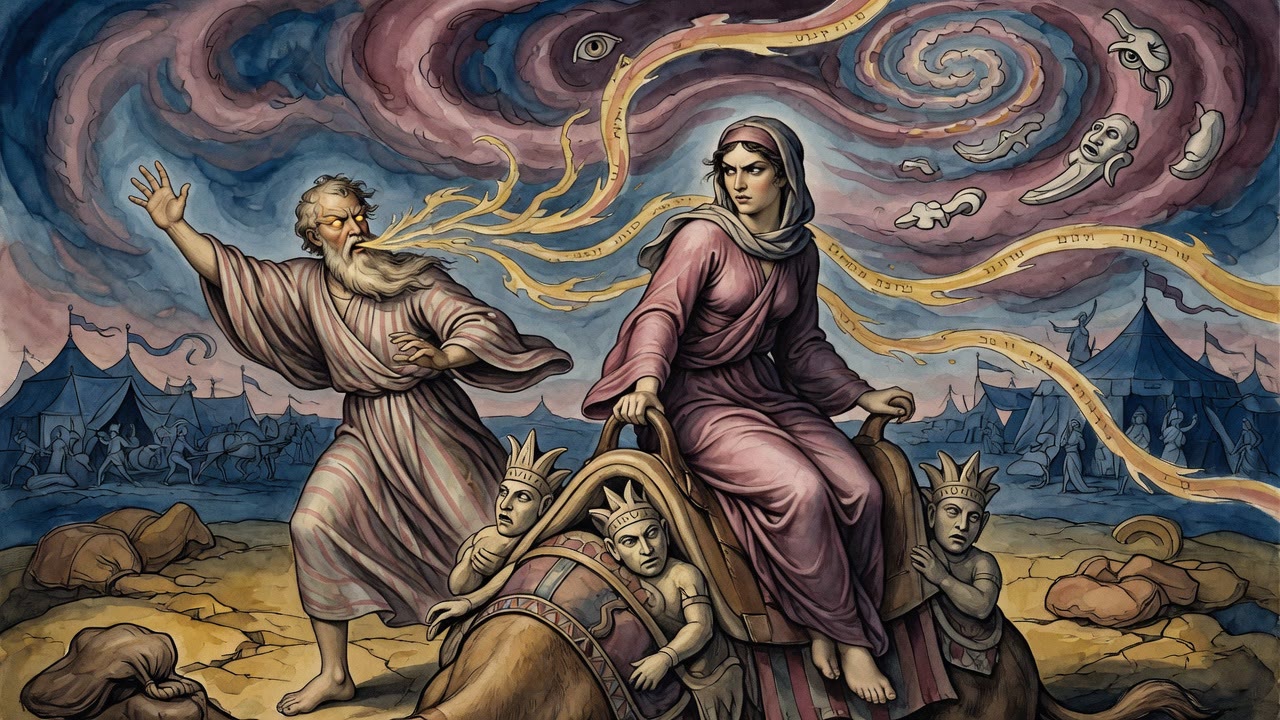
Moses stood over the dark and said the only thing that could be said. "If you are of the children of the world to come, stand up before me in this hour. Behold, your children are given over like sheep to the slaughter."

It was not a prayer. It was a summons, and it carried the weight of every promise that had ever been made over that ground. He was not asking the dead to be comforted. He was asking them to rise and stand in front of the angels with their own merit as the body that would take the blow. The covenant was theirs first. If anyone had standing to interrupt a sentence of destruction, it was the ones who had been told the land would belong to their children, who had heard it spoken and had died still holding the deed to nothing but a cave.

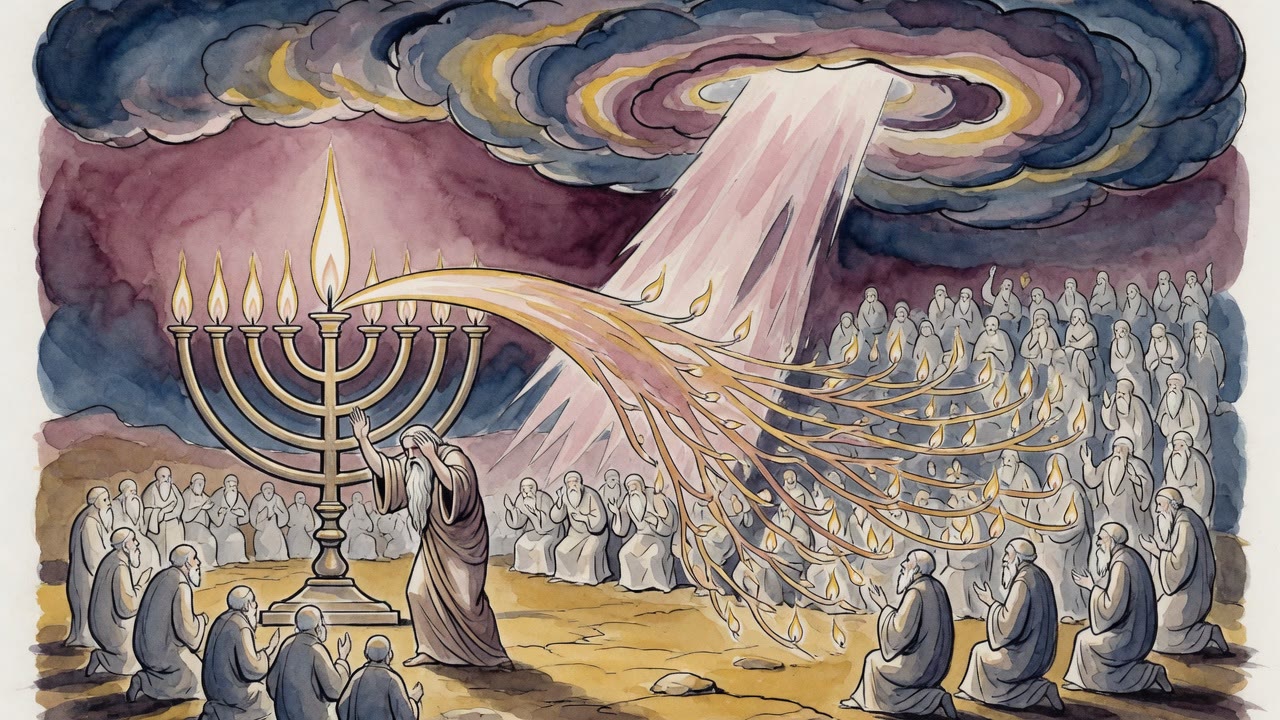
And the dark moved. According to the old telling, they rose.

This Was Not the First Time the Dead Got Up for Israel

There was a precedent for this, a memory Moses himself carried. Years before, when the people were pinned with their backs to the water and the chariots of Egypt grinding toward them across the sand, the graves had opened then too. The three fathers and the mothers were brought up out of their rest to stand at the edge of the sea and watch it break in two. Abraham, Isaac, Jacob, and the matriarchs Sarah, Rebecca, Leah, Rachel, Bilhah, and Zilpah, all of them standing on the shore while the water heaped itself into walls.

And what walls. The sea had not merely parted to bare a strip of mud. It had stacked itself into the air, so high that the nations of the earth could see it from their own countries, a sign written across the sky so no one could pretend they had missed it. Children walking through cried, and their mothers reached into the standing water and pulled out fruit, apples handed down out of a wall of sea. The dead had been called up to witness that, to see the promise made good with their own restored eyes.

Moses knew the buried could be made to stand. He had seen it at the water. Now he was asking it again, at the cave, with a worse clock running.

Why It Had to Be the Dead

There was a reason it could only be these particular sleepers and not some fresh argument from Moses himself. The fathers had a record that even God spoke of with something close to longing. He had appeared to Abraham, Isaac, and Jacob as El Shaddai, God Almighty, and they had taken every hard thing without a word of complaint. Abraham buried Sarah on land he had been promised and had to purchase anyway. Isaac was promised the same land and had to scrap with shepherds over a drink of water. None of them said, where is what You swore to me. They simply went on trusting.

"Their like cannot be found any more," God Himself had said of them once, mourning a kind of faith that seemed to have gone into the ground with them. That was exactly the merit Moses came to wake. Not power. Not cleverness. The unbroken trust of people who had been given a promise and then handed only a grave, and had kept faith anyway. He stood in the mouth of Machpelah and called that trust up by name, and set it like a body between his children and the five who were coming to end them.


← All myths
From the tradition

Sources

4 sources

The texts this telling draws on, in full. Open a card to read inline, or expand it for a wider, quieter read.

Pirkei DeRabbi Eliezer 45:12Pirkei DeRabbi Eliezer

Pirkei DeRabbi Eliezer turns to Abraham, Moses and the Angels.

The story opens with a terrifying decree: God, in his anger, sends not one, but five angels to destroy Israel. These aren't your fluffy, winged messengers of good tidings. A veritable apocalyptic task force.

Moses, ever the devoted leader, hears of this impending doom. What does he do? He doesn't panic. He doesn't bargain with God directly (at least, not initially). Instead, he undertakes a truly remarkable act of intercession. He journeys to the Cave of Machpelah in Hebron. This isn’t just any cave; it's the burial place of the patriarchs and matriarchs: Abraham, Isaac, Jacob, Sarah, Rebecca, and Leah. Moses goes to the ultimate source of ancestral merit. He calls upon the very foundations of the Jewish people, those who made the covenant with God possible. And he does so with a desperate plea: "If ye be of the children of the world to come, stand ye before me in this hour, for behold your children are given over like sheep to the slaughter."

"If ye be of the children of the world to come…" What a poignant phrase! Moses isn't just asking for help; he's appealing to their eternal connection, their vested interest in the survival of their descendants. It’s a powerful reminder that the actions of past generations ripple through time, impacting the present and the future.

And they respond! Abraham, Isaac, and Jacob, our founding fathers, stand before him, ready to lend their spiritual weight to the situation. Talk about a powerful image!

Now, with the patriarchs at his side, Moses turns to God. He reminds God of the very promise made to these forefathers: "Sovereign of all the worlds! Didst Thou not swear to these (forefathers) thus to increase their seed like the stars of the heaven…" He quotes (Exodus 32:13), reminding God of his own oath: "Remember Abraham, Isaac, and Israel, thy servants, to whom thou swarest by thine own self, and saidst unto them, I will multiply your seed as the stars of heaven."

Moses isn't being disrespectful. He's making a legal argument, a covenantal claim. He's saying, "God, you made a promise. Your very word is on the line here. Remember your commitment to these patriarchs, to the future of their descendants."

What happens next? Well, that's a story for another time (and another chapter of Pirkei DeRabbi Eliezer!). But this initial scene is so rich with meaning. It speaks to the power of ancestral connection, the importance of remembering our history, and the unwavering faith needed to confront seemingly insurmountable odds.

It also raises a profound question: When faced with overwhelming challenges, where do we turn? Do we, like Moses, seek the wisdom and strength of those who came before us? Do we remember the promises made, the covenants established? Perhaps, in doing so, we can find the strength to face our own "angels of destruction."

Full source
Legends of the Jews 1:38Legends of the Jews

The familiar story is this: Moses, Pharaoh, a desperate escape.. but what details are we missing?

The Talmud (Sotah 12b) recounts a truly picture of that moment, far beyond just dry land appearing in the waves. Imagine this: Whatever the Israelites wanted, the sea provided. A child cries? No problem. Mom just reaches out and grabs an apple, fresh as you please, right from the water. Forget the image of a barren desert crossing – this was a miraculous bounty!

It gets even wilder.

In ancient texts, these weren’t just puddles parting. The waters, we're told, were piled up to a height of sixteen hundred miles! Sixteen hundred miles! Could you even fathom that? The Midrash Rabbah (Exodus 21:10) emphasizes that this wasn't a localized event. The sheer scale of the miracle was meant to be witnessed. All the nations of the earth could see it. It was a divine advertisement, proclaiming God’s power and his favor toward Israel.

And who was in attendance at this spectacular event? Ginzberg, in his Legends of the Jews, paints an extraordinary scene. God, in his infinite mercy, brought the three FathersAbraham, Isaac, and Jacob – and the six MothersSarah, Rebekah, Leah, Rachel, Bilhah, and Zilpah – out of their graves. Yes, you read that right. They were resurrected, brought to the shores of the Red Sea, specifically to witness the wonders being performed for their descendants.

Why?

Perhaps to show them the fruits of their faith. To let them witness, firsthand, the covenant being fulfilled. Imagine Abraham, seeing the promise of countless descendants unfolding before his very eyes. Imagine Sarah, Rebekah, Leah, and Rachel, the matriarchs, witnessing the salvation of their children.

It's a powerful image, isn't it? It adds a whole new layer of depth to the already incredible story of the Exodus. It wasn't just about escape; it was about divine provision, a public display of God's might, and a reunion of sorts, connecting the past, present, and future of the Jewish people. It makes you wonder, what other details are hidden within these ancient texts, waiting to be discovered and brought to life? What other witnesses, seen and unseen, are present in our own moments of challenge and triumph?

Full source
Legends of the Jews 4:258Legends of the Jews

The guy who parted the Red Sea, received the Ten Commandments. But even Moses had his moments of doubt. There’s this fascinating passage in Legends of the Jews by Louis Ginzberg, that shines a light on just such a moment.

God is calling Moses to account. Not in an angry way, but more like a… divine teaching moment. According to this passage, God essentially says, "Hey, Moses, where's the faith?"

“O for the departed," God laments, "their like cannot be found any more!" God reminds Moses how He appeared to Abraham, Isaac, and Jacob as El Shaddai, "God Almighty." But, God says, they didn't know Him as Adonai, "God All-Merciful" – the way He revealed Himself to Moses. And even though the Patriarchs experienced hardships, they never questioned God's actions. God promised Abraham the land of Canaan. But when Sarah died, Abraham had to buy a burial plot! As Ginzberg points out, he didn't complain. God promised Isaac the land, but Isaac had to fight for water with the herdsmen of Gerar. And Jacob? Promised the land he lay on, yet he had to purchase a small piece of ground just to pitch his tent. None of them demanded to know God’s Name or question His plans.

Moses? God says that the moment He wanted to send Moses to Egypt, Moses asked to know His Name. And after God revealed it, Moses even dared to say, "You told me You are called Compassionate and Gracious, Longsuffering and Merciful, but as soon as I pronounced this Name before Pharaoh, misfortune descended upon the people of Israel!"

Ouch.

So, what’s going on here? It’s not that God is angry at Moses, but rather teaching him about the long game. God wants to fulfill His covenant with the Patriarchs. He wants to give their descendants – the people of Israel – the Promised Land. And He wants to do it, in part, as a reward for the unquestioning faith of the Patriarchs. And also, almost surprisingly, as a reward to the people of Israel for enduring suffering without losing faith. Even though, as Ginzberg notes, the people "do not deserve to possess [the land] for other reasons.”

As we find in Midrash Rabbah, God swore an oath to Moses. It was meant to banish all fear from the mind of Moses. However, it also allowed God to act in accordance with His attribute of justice. Which, according to this passage, might delay the redemption of Israel for a time, because of their sins.

It’s a complex idea, isn’t it? That sometimes, even when we're striving to do right, there are delays, there are setbacks. Sometimes, the reward comes not because we perfectly deserve it, but because of the faith we maintain through the hardship.

This little episode with Moses reminds us that faith isn't about blind obedience or instant gratification. It's about trusting in the bigger picture, even when we can't see it. It's about persevering, even when we feel like questioning everything. And perhaps, most importantly, it’s about recognizing that even our moments of doubt can be part of a larger, divinely orchestrated plan.

So, the next time you're feeling like Moses – like you're doing everything right, but things are still going wrong – remember this story. Remember the faith of the Patriarchs. And remember that even in the midst of hardship, there's always the promise of redemption on the horizon.

Full source
Shemot Rabbah 3:16Shemot Rabbah

Something that makes you think, "Surely, there's someone better suited for this!" Well, you're not alone. Even Moses, the great lawgiver himself, had a moment of reluctance. to a fascinating passage from Shemot Rabbah, a collection of rabbinic interpretations on the Book of Exodus. We pick up the story right after God has commanded Moses to go to Pharaoh and demand the release of the Israelites from slavery. But Moses hesitates. In (Exodus 4:13), he pleads, "Please Lord, send by means of whom You send." But what did he really mean by that?

Rabbi Ḥiyya the Great offers a powerful interpretation. He suggests that Moses was essentially saying, "Master of the universe, are You asking me, of all people, to deliver the children of Abraham, who recognized You as the Lord of all creation? Send someone else, someone You usually send for tasks like this!"

It's almost like Moses is arguing with God! He continues, according to Rabbi Ḥiyya, pointing out the apparent disparity in divine attention. "Who is dearer to a person, their nephew or their grandson? Surely the grandson! When You wanted to rescue Lot, Abraham’s nephew, You sent angels. Now, for Abraham’s descendants, six hundred thousand strong, You're sending me? Just send the angels You usually send!"

Moses even brings up the story of Hagar, the Egyptian handmaid. "For Hagar, You sent five angels! But for six hundred thousand descendants of Sarah, it's me You're choosing to send?" It sounds like Moses felt utterly inadequate for the task.

But was Moses simply refusing to go? The Rabbis offer another perspective. Perhaps, they suggest, Moses was acting out of deference to his brother, Aaron. Moses might have been thinking, "Aaron has already been prophesying to the Israelites in Egypt for eighty years. I don't want to step on his toes or upset him."

This idea finds support in (Ezekiel 20:5), which says, "I made Myself known to them in the land of Egypt." And where do we learn that Aaron was already prophesying in Egypt? Well, (1 (Samuel 2:27-2)8) hints at it: "A man of God came to Eli, and said to him: So said the Lord: Didn’t I reveal Myself to the house of your father when they were in Egypt, subject to Pharaoh's house? Did I not choose him from all the tribes of Israel to be My priest?" The implication is that Aaron was chosen way back in Egypt.

So, Moses might have been thinking, "Will I now encroach upon my brother and upset him?" That, they suggest, might be the real reason for his reluctance.

Whatever the reason, Moses's hesitation didn't sit well with God. The passage concludes with the stark statement: "the wrath of the Lord was enflamed against Moses" (Exodus 4:14).

This little peek into Shemot Rabbah offers so much to consider. It shows us a human side of Moses, confronting doubt and responsibility. It reminds us that even the greatest leaders can feel overwhelmed by the tasks before them. And perhaps most importantly, it highlights the importance of considering others, even when faced with a divine command. It makes you wonder, doesn't it: When have you felt like Moses, hesitant to step into a role, feeling like someone else would be better suited? And what did you do?

Full source