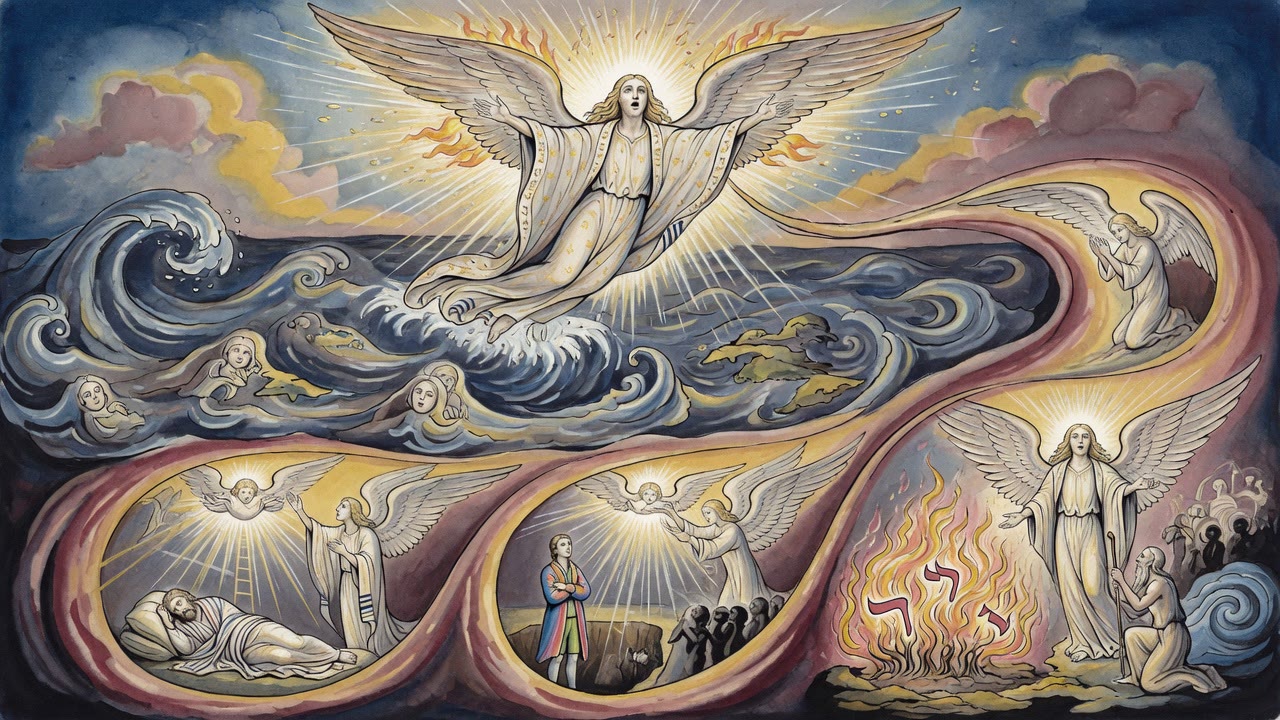
Abraham Was the Center Beam God Set Under History
God kept Abraham unmade until Adam had already broken. At Sinai, Moses spent those unused trials on five angels of destruction.
Table of Contents
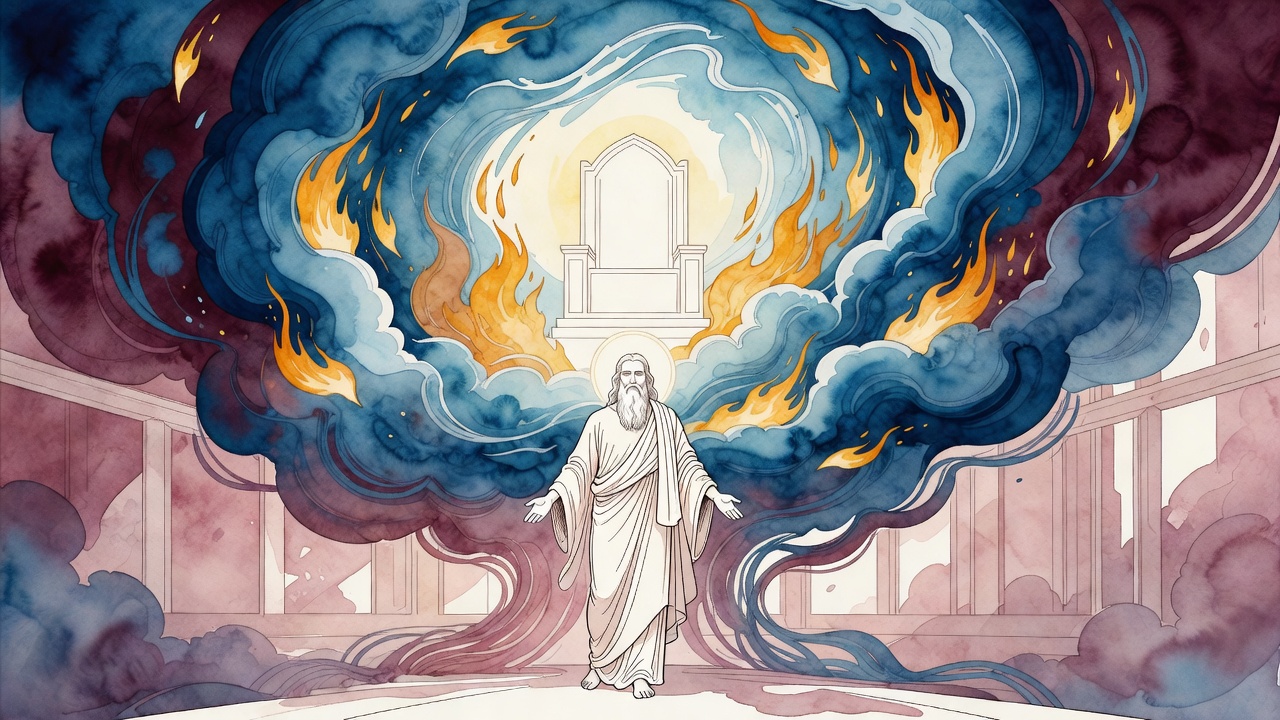 Click for full size
God Held Abraham Back
God had Abraham ready before He had Adam, and He held him back on purpose.
"If I put him first," God said, "and he breaks, there is nobody walking behind him to repair what he broke."
So Adam went first. Adam broke. Abraham was kept for later, unmade on purpose, a repair sitting in reserve while the first man walked out of the garden with a curse on the ground.
The Builder Walked the Beam to the Middle
A builder carries one enormous beam into an unfinished hall. He does not set it at the door, where it holds up a doorway and nothing else. He does not set it at the far wall, where the length of the roof sags behind him. He walks it to the center and drops it there, because from the center it takes the weight in front of it and the weight behind it at the same time.
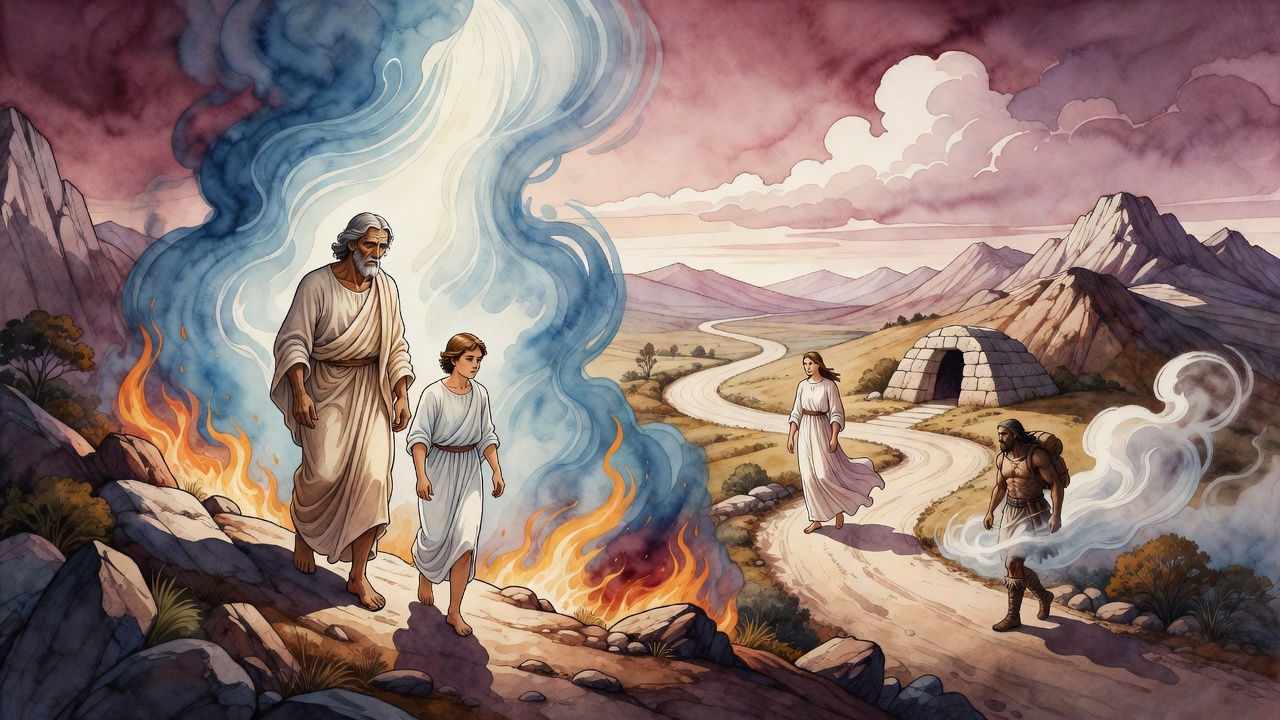
Abraham went into the twentieth generation. Ten from Adam to Noah. Ten from Noah to him. Then the rest of the world coming down the other side. He did not know he was a beam. He knew he was a man in Haran being told to leave, and after that a man walking up a mountain with a knife and his son.
He was tested ten times. He never once asked to be paid for any of it. That bill sat untouched.
Five Angels Came Down the Mountain
Twenty generations after the beam was set, the roof gave way.
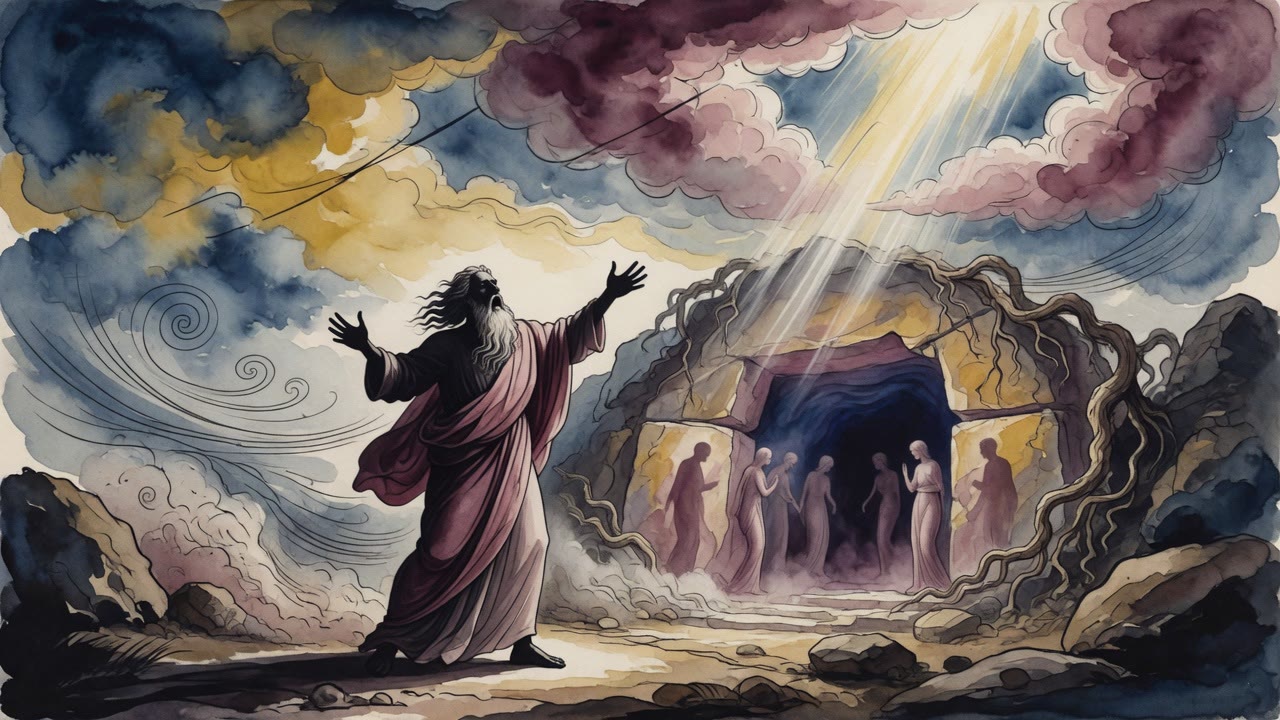
Moses was on the mountain. Israel was at the bottom of it. By the time he came down there was a calf of gold in the camp, and people dancing in front of it forty days after they had heard God speak out of the fire.
"Leave Me alone," God said, "and I will destroy them."
It was not a shout thrown in temper. They had been given ten commandments and had smashed the first two of them inside six weeks, in public, with the mountain still smoking. The account was open.
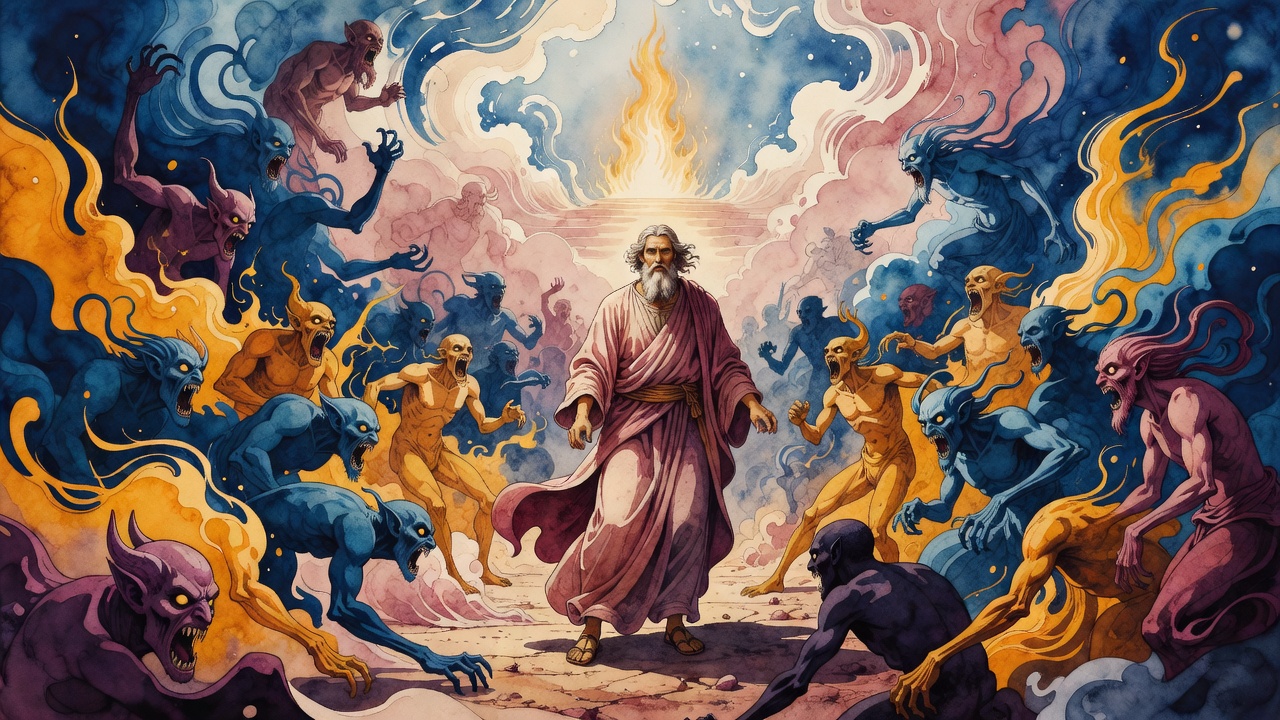
Five angels of destruction came out to do the work. Wrath. Fury. Anger. Destruction. Annihilation. Moses named the two that got closest. Wrath and fury. Those were the ones he was afraid of.
Moses Split the Pack
He did the arithmetic standing there, with the camp still dancing and the five already on their way.
"Master of the universe," he said. "You take one and I will take one. You take wrath. I will turn back fury."
"If I overcome one and you overcome one," God said, "what will you do about the other three?"
Moses could hold one. God would hold one. Three were still coming across the camp.
"The three fathers will overcome those three," Moses said.
That is why he did not beg. He named them. Remember Abraham. Remember Isaac. Remember Israel.
Ten Trials Paid for Ten Words
"Why are You angry at Israel?" Moses asked.
"Because they broke the ten I gave them."
"Then they have something to pay with," Moses said. "You tested Abraham ten times. Let ten be exchanged for ten."
The trade only worked because the money was still on deposit. Abraham had walked into a furnace. He had left his father's country. He had taken a knife up a mountain and come down again, and he had never presented the bill. Neither had Isaac on the altar. Neither had Jacob holding an angel until sunrise. Men who collect in full leave their children nothing to draw on. These three had left the whole sum sitting there for twenty generations, waiting for a morning exactly like this one.
The Lord reconsidered the harm He had said He would do.
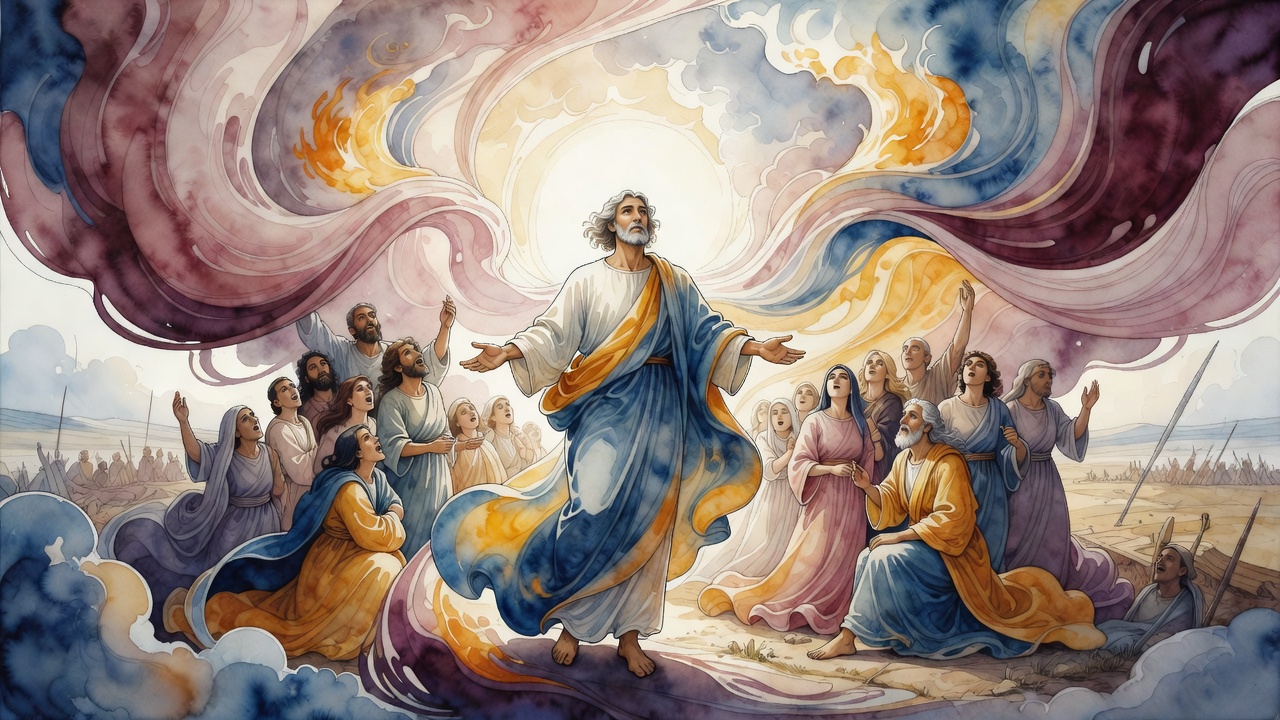
Nobody in the camp saw the trade. They saw Moses come down a second time, and the calf ground to powder, and the tablets cut again. The beam took the load. The hall stayed standing. The generations in front of Abraham had been carried by him. The generations behind him went on being carried, not because they had earned it, but because a man twenty generations back had been set at the center and had never asked to be paid.
← All myths