46 myths
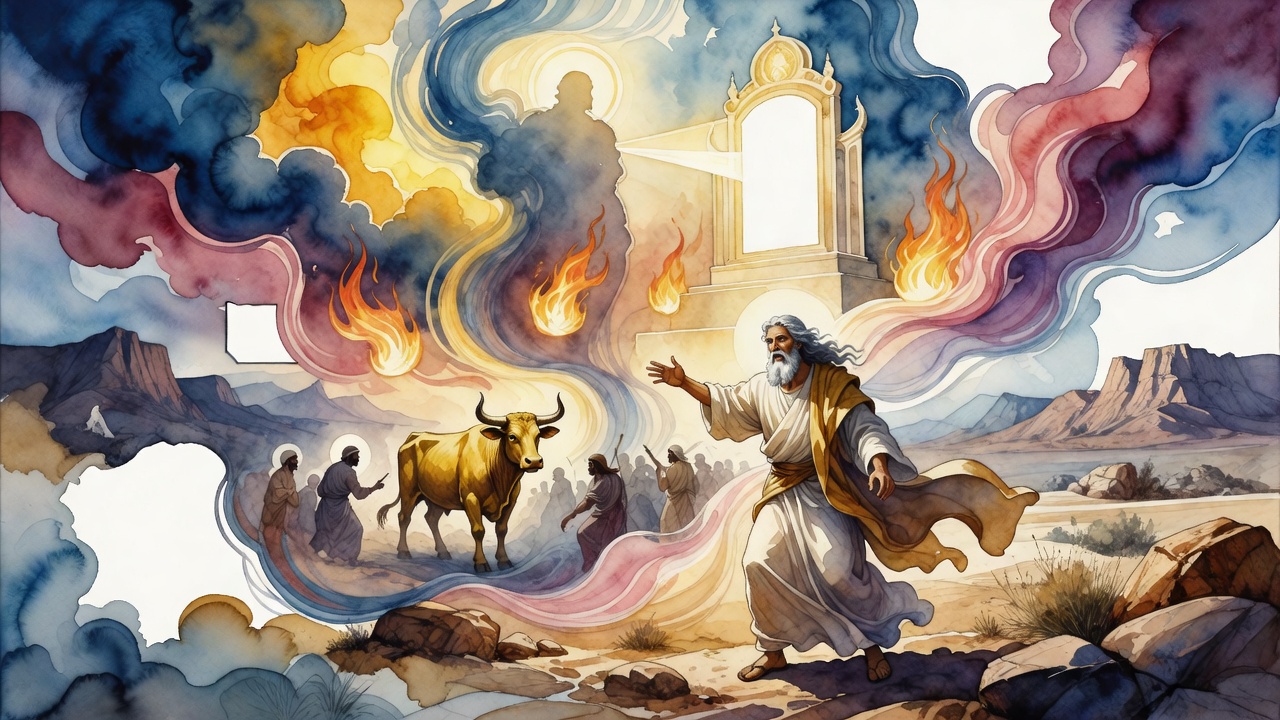
At the calf, Moses seizes a grammar loophole at Sinai. God said Elohekha, singular. Israel stole the ox from the chariot and paid fivefold in the wilderness.
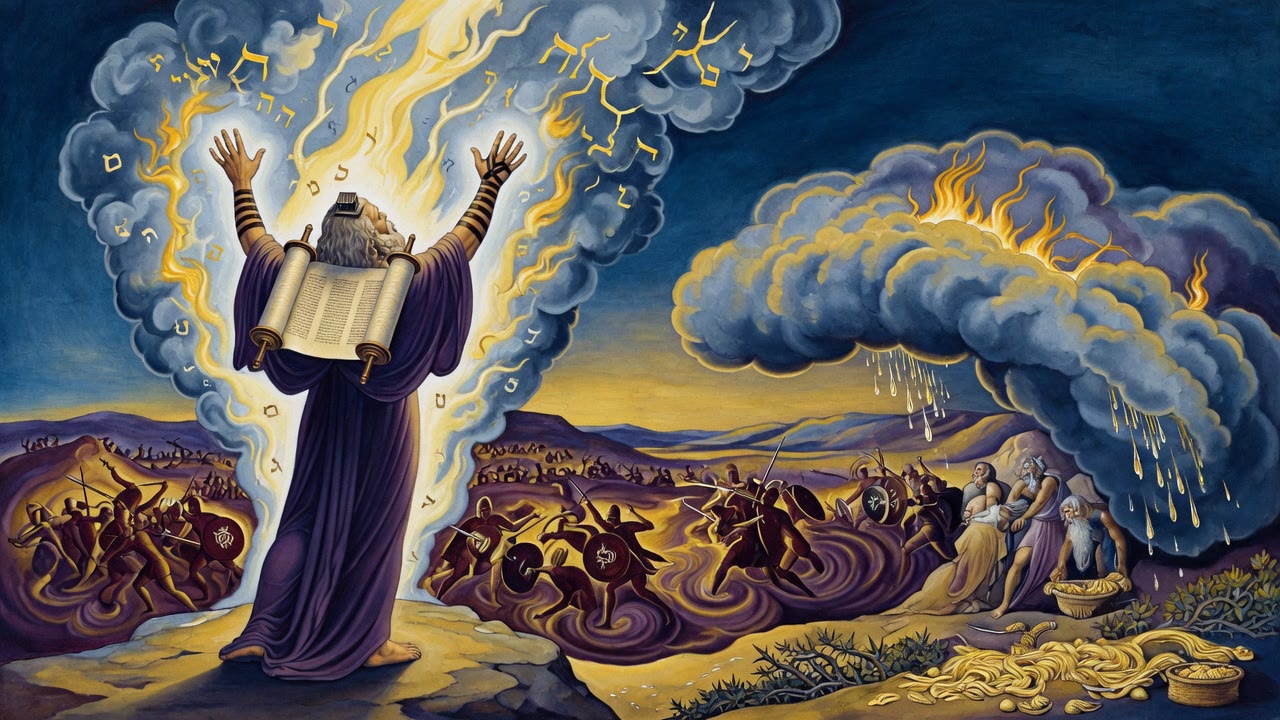
Moses comes down blazing and does not know it. Glory clings from the cave, from the gap between hands on the tablets, and from leftover ink on the pen.
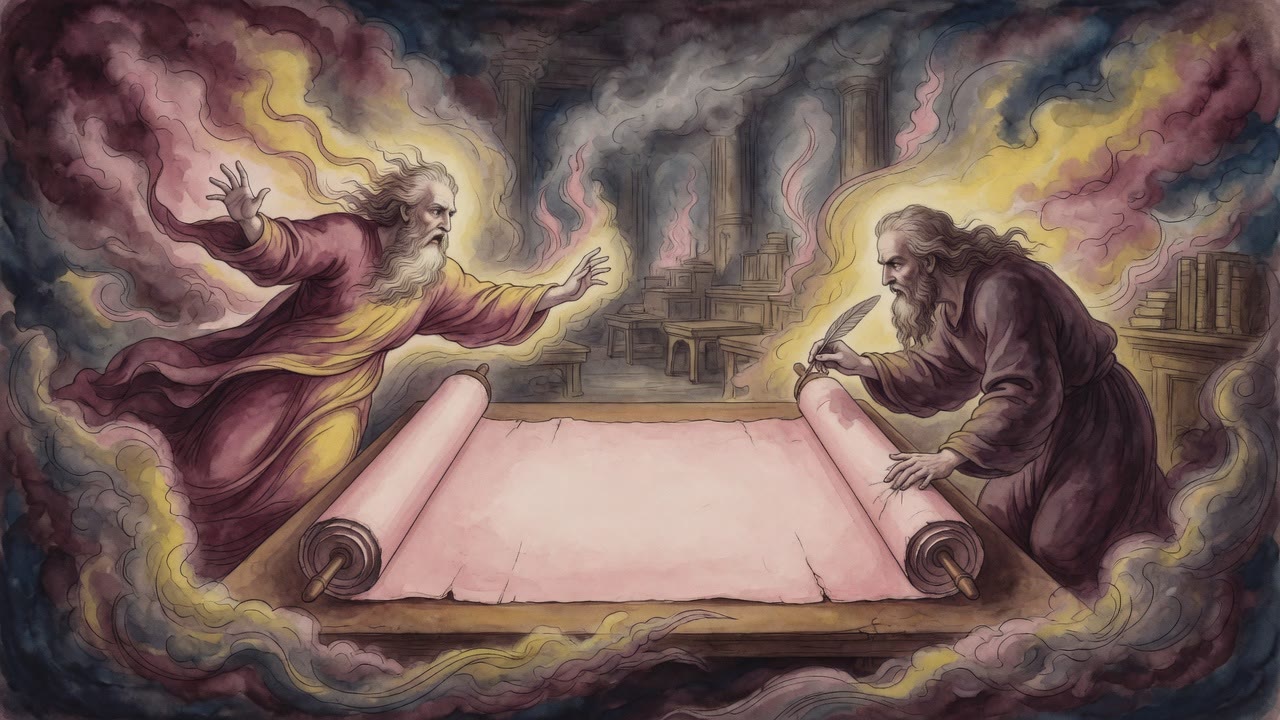
Pappus read Adam as an angel and the calf as a star. Akiva would not let either verse climb off the ground where the sin happened.
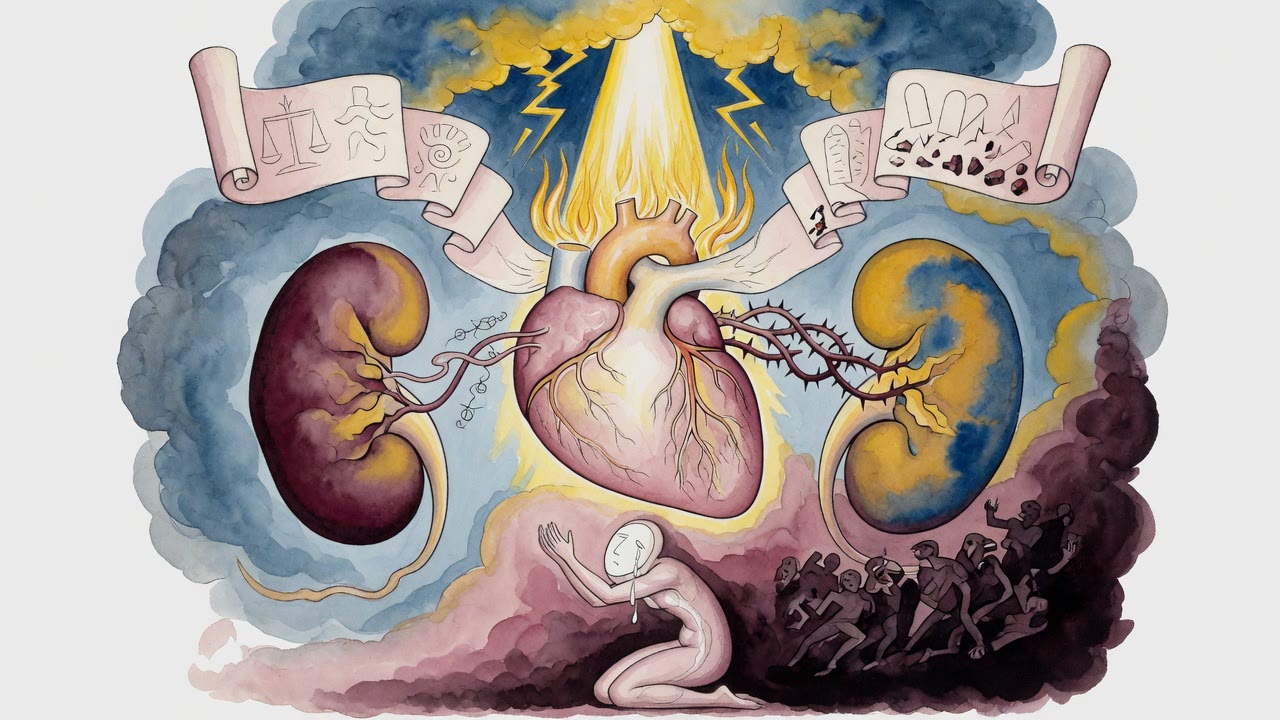
At Sinai the angel of death lost his claim on Israel. Forty days later the calf rose and the second half of the verse gave his sword back.
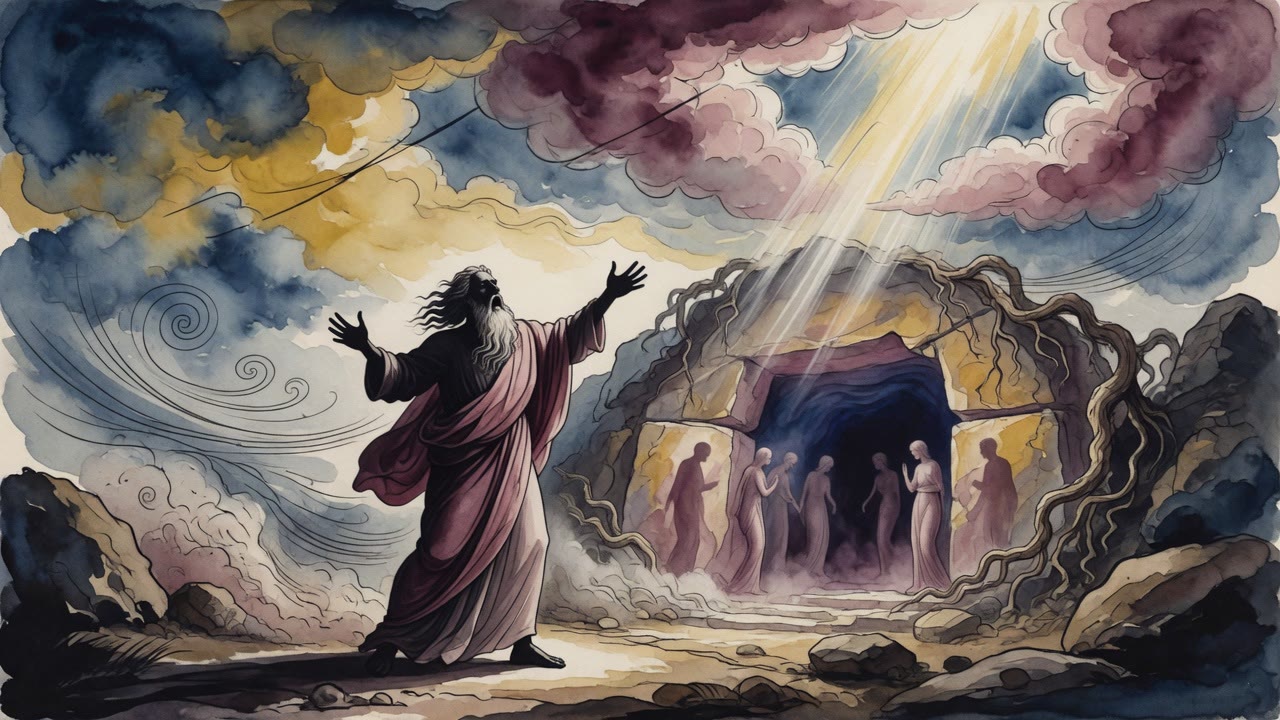
Five angels of wrath were already moving toward Israel. Moses ran to the cave at Hebron and begged the buried patriarchs to stand and intercede.
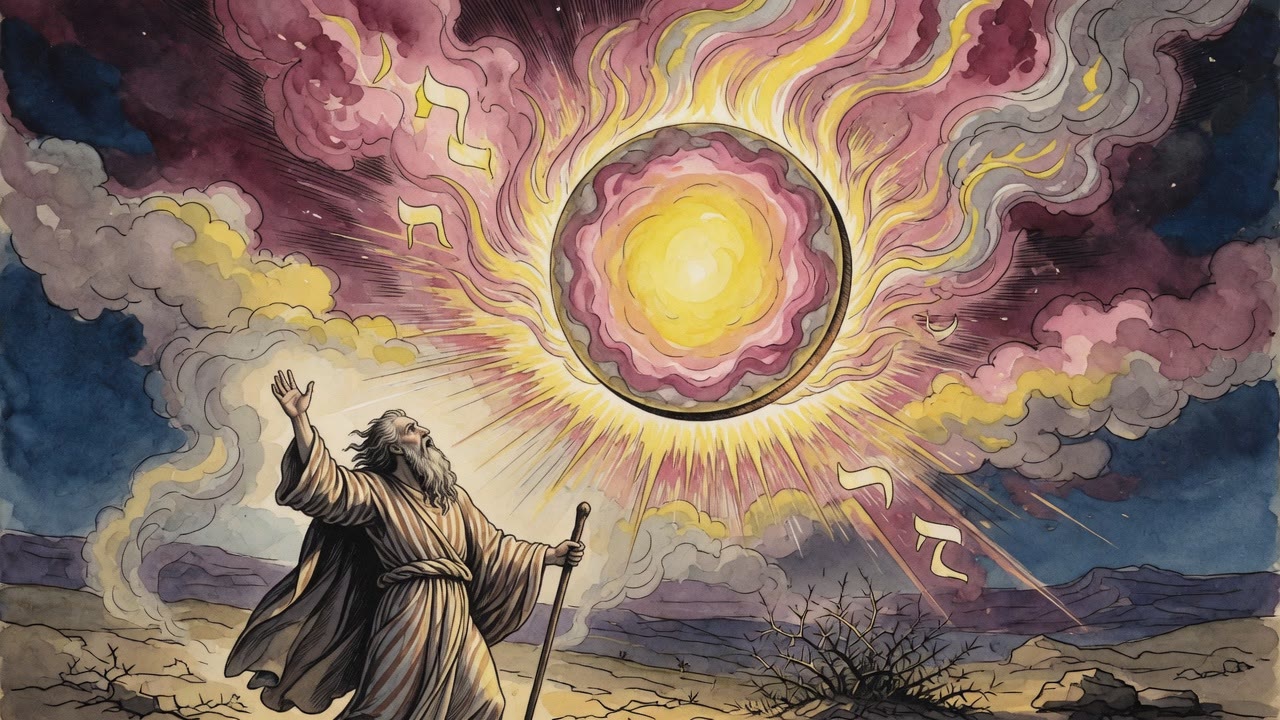
Israel had already done the sums. Fifty shekels for a seducer, thirty for a goring ox, a hundred for slander. Not one of those, God said, is the price here.
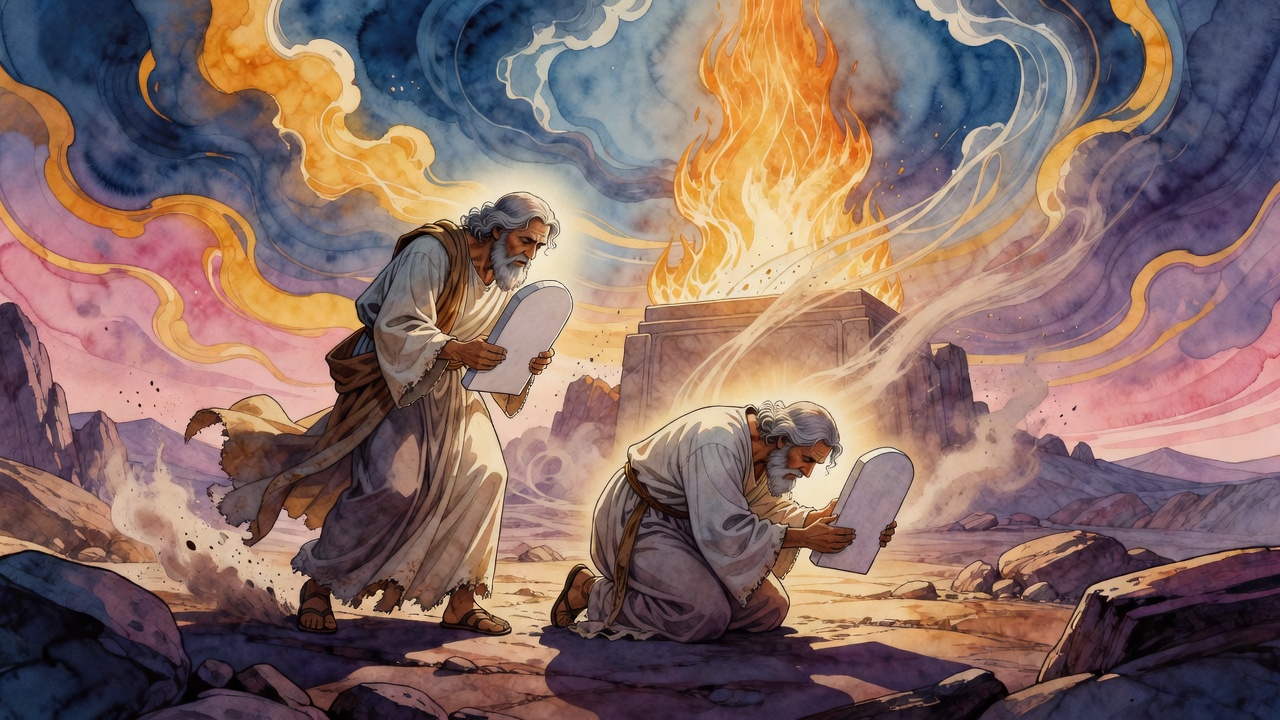
The quill stopped at Let us make. Below the mountain a calf had gone quiet. Moses shook, then asked whose people these were.
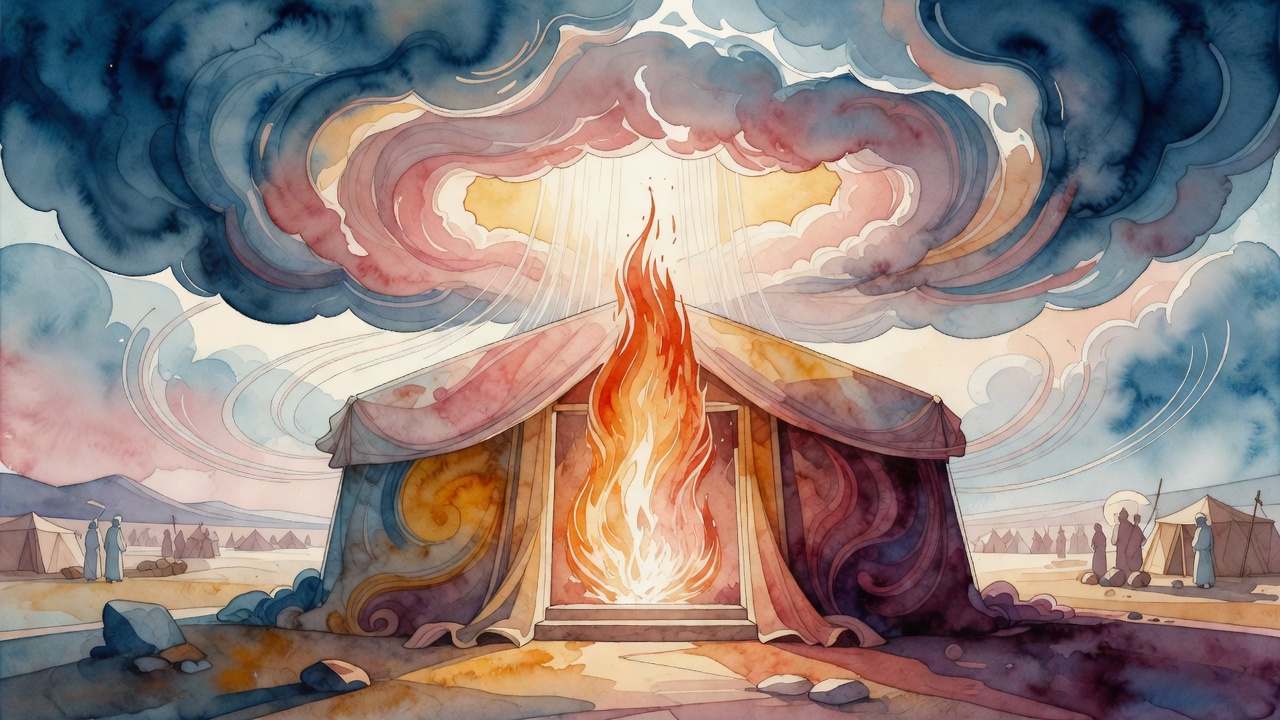
On the tenth of Tishrei the pardon was still a private sentence. The nations had watched the calf. Moses wanted something they could point at.
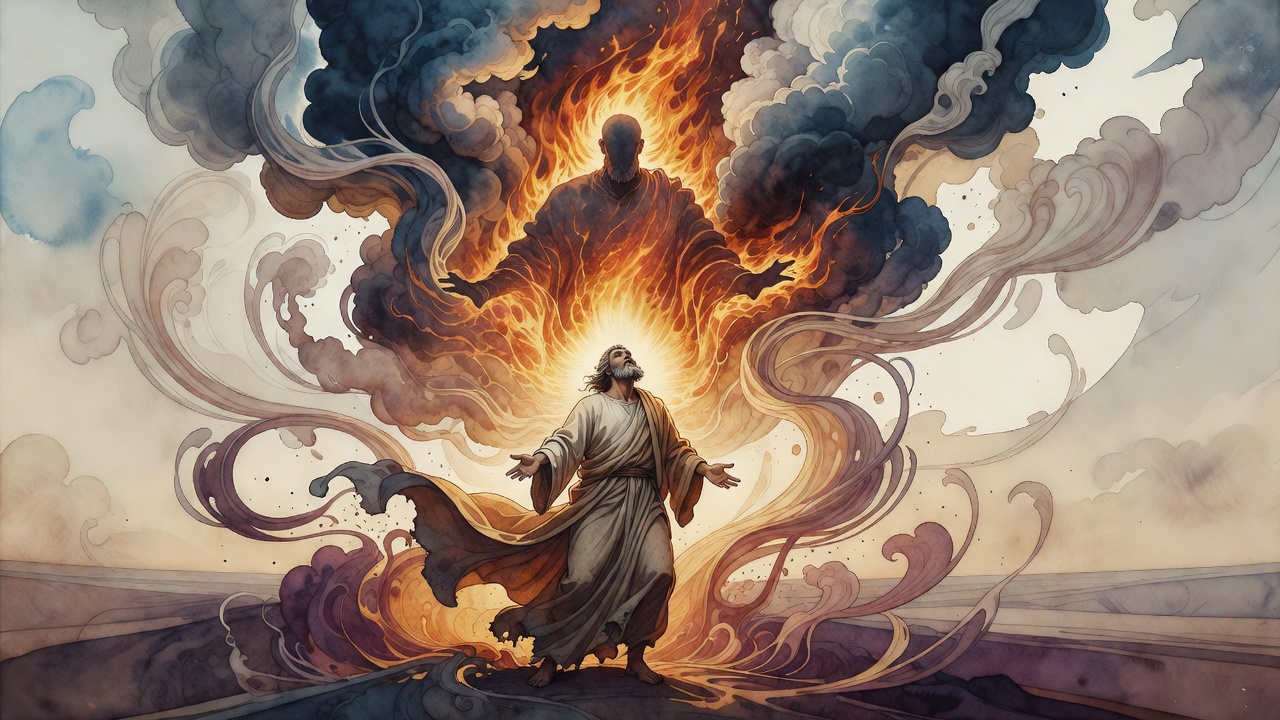
After the golden calf, God said He would send an angel instead of coming Himself. The people heard it, took off their ornaments, and never put them back on.
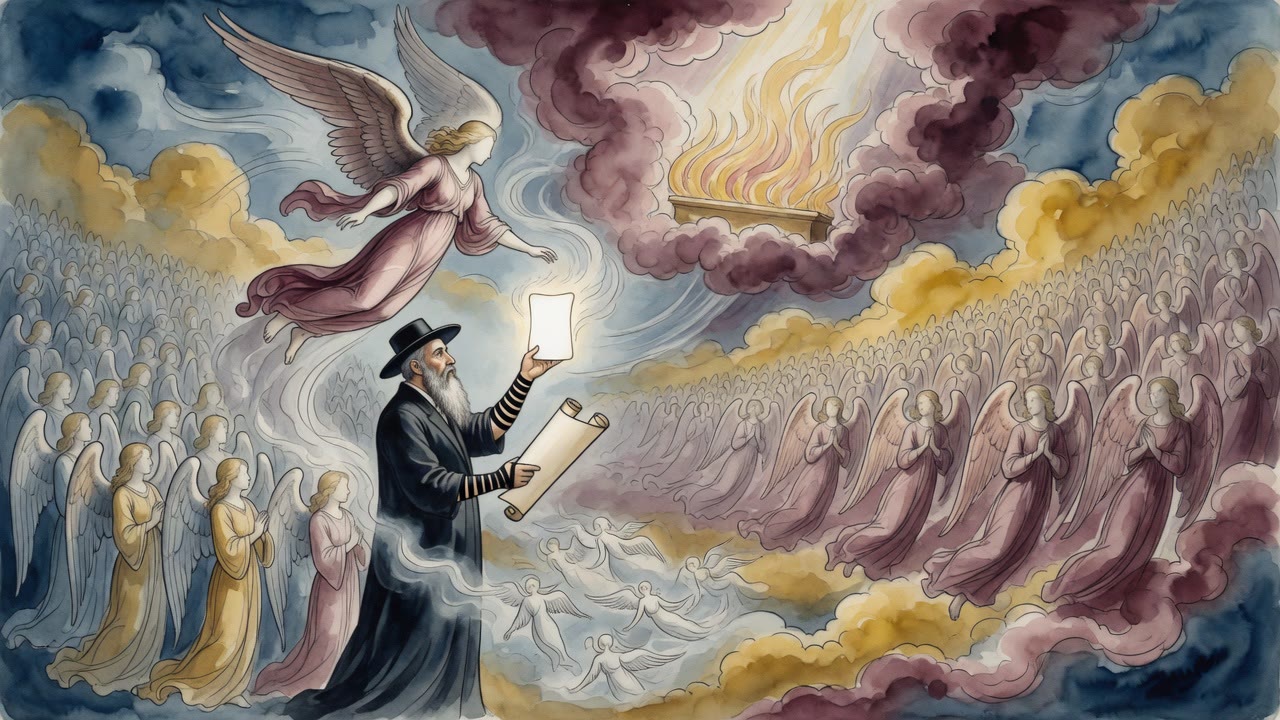
An archangel calls Moses up, the tablets are cut from the throne's sapphire floor, and the glory he glimpses is the knot of God's tefillin, prayer straps.
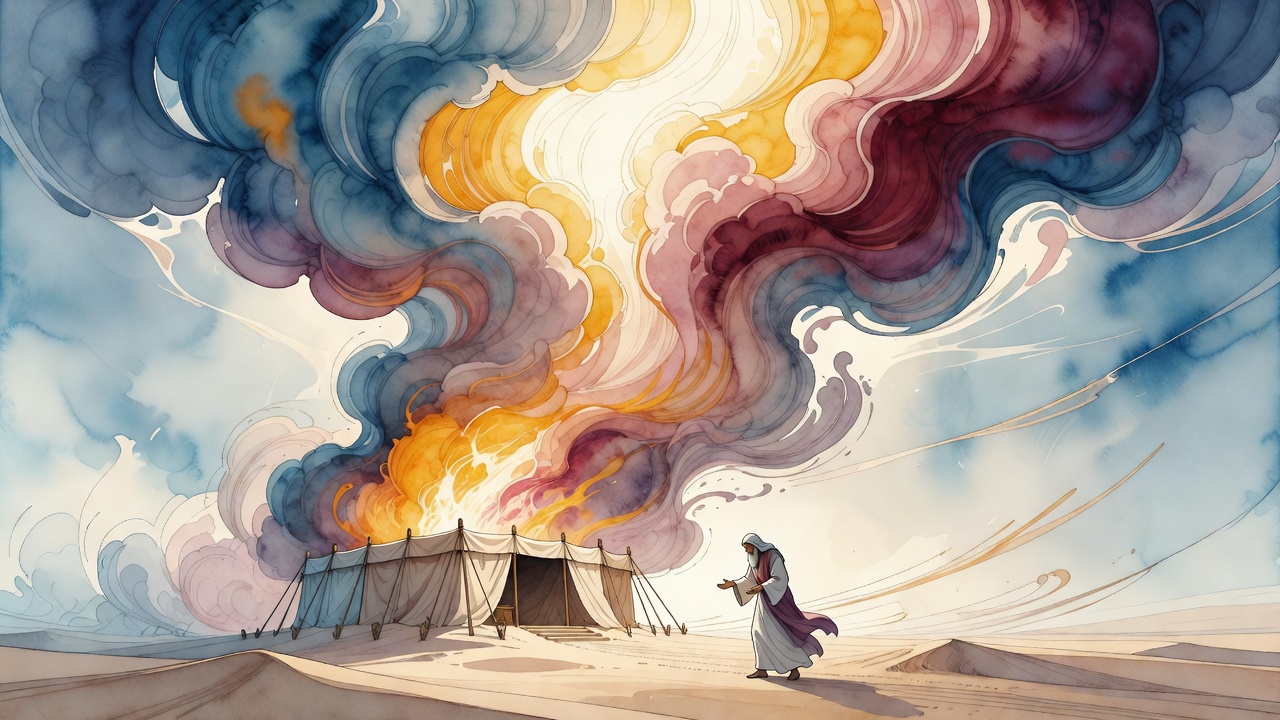
Moses prayed for forgiveness after the Golden Calf but asked too narrowly. The Tabernacle smoke was how the nations knew the husband had returned.
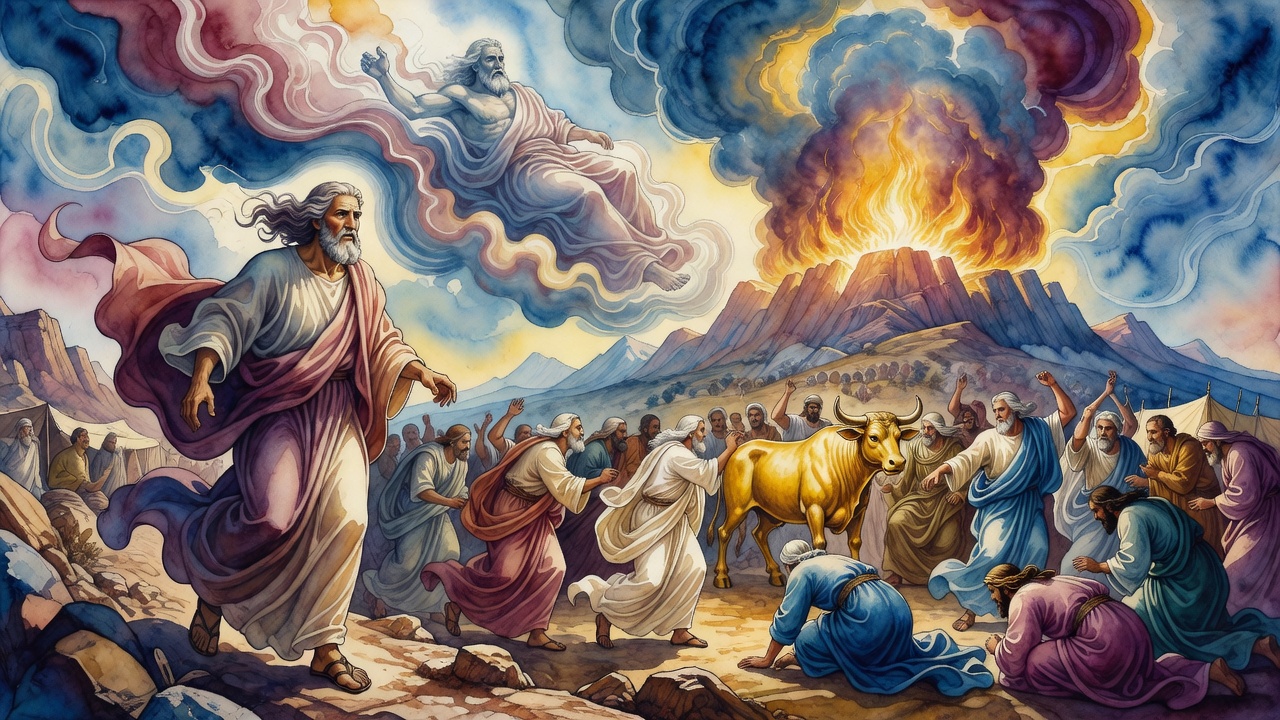
Joshua called it war. Moses listened longer and heard merriment. Then he came around the ridge and saw the calf, and the Accuser dancing in front of it.
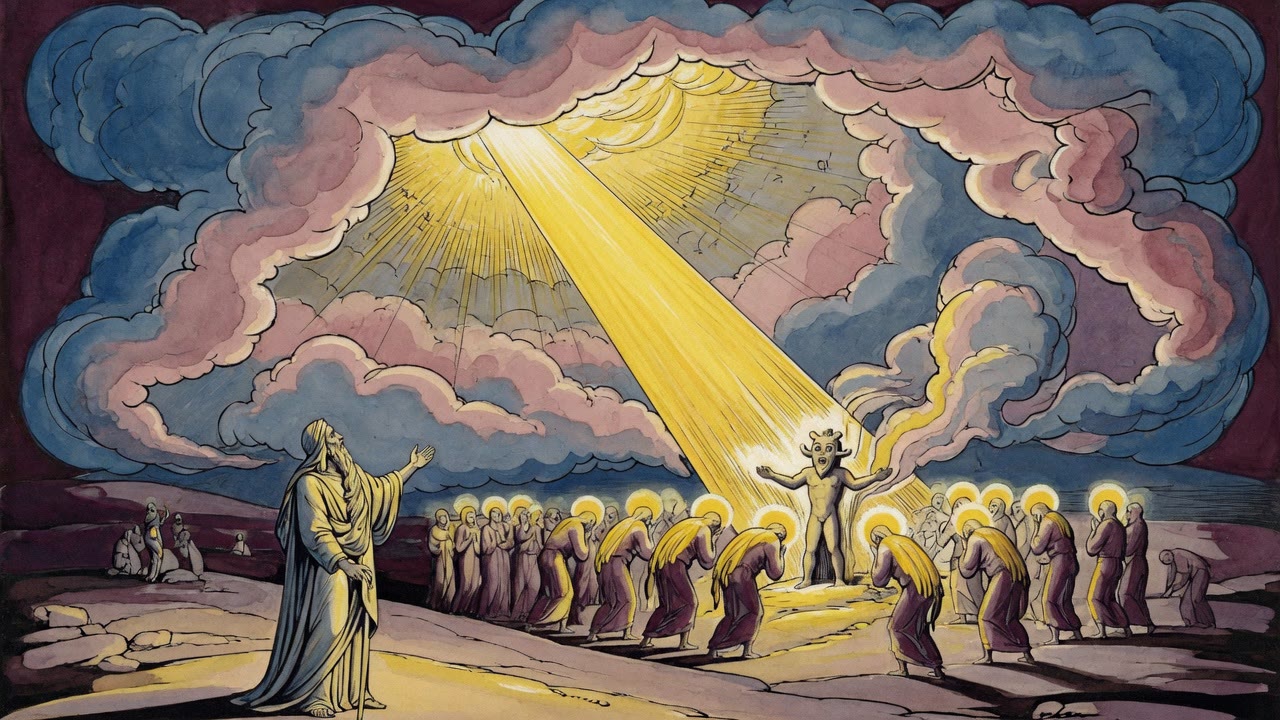
Moses drove Jethro's sheep forty days to reach Horeb. The empty desert already held the manna, the well, and the clouds of glory.
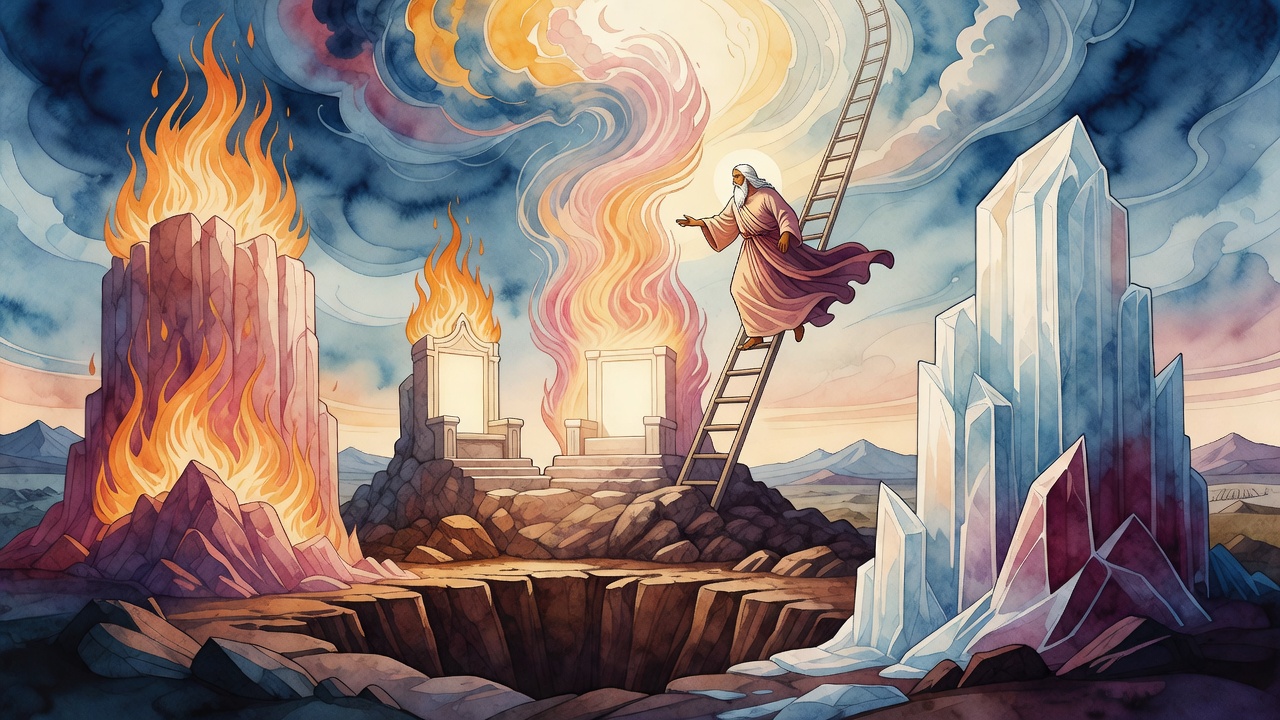
God walled three directions and left the north open, stacking fire and ice beside the pit, while one man climbed past the sky to argue.
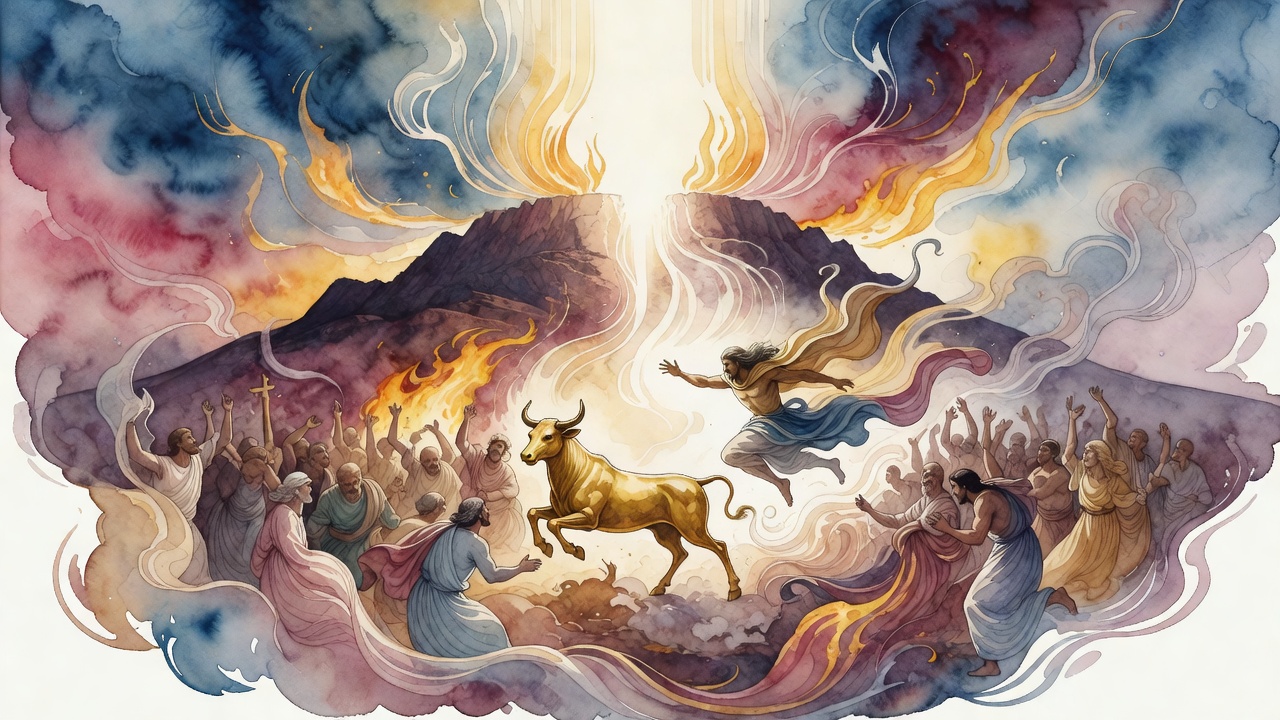
A bier hung in the air at noon, and the face on it was Moses. The camp pointed up and asked Aaron for a god they could carry.
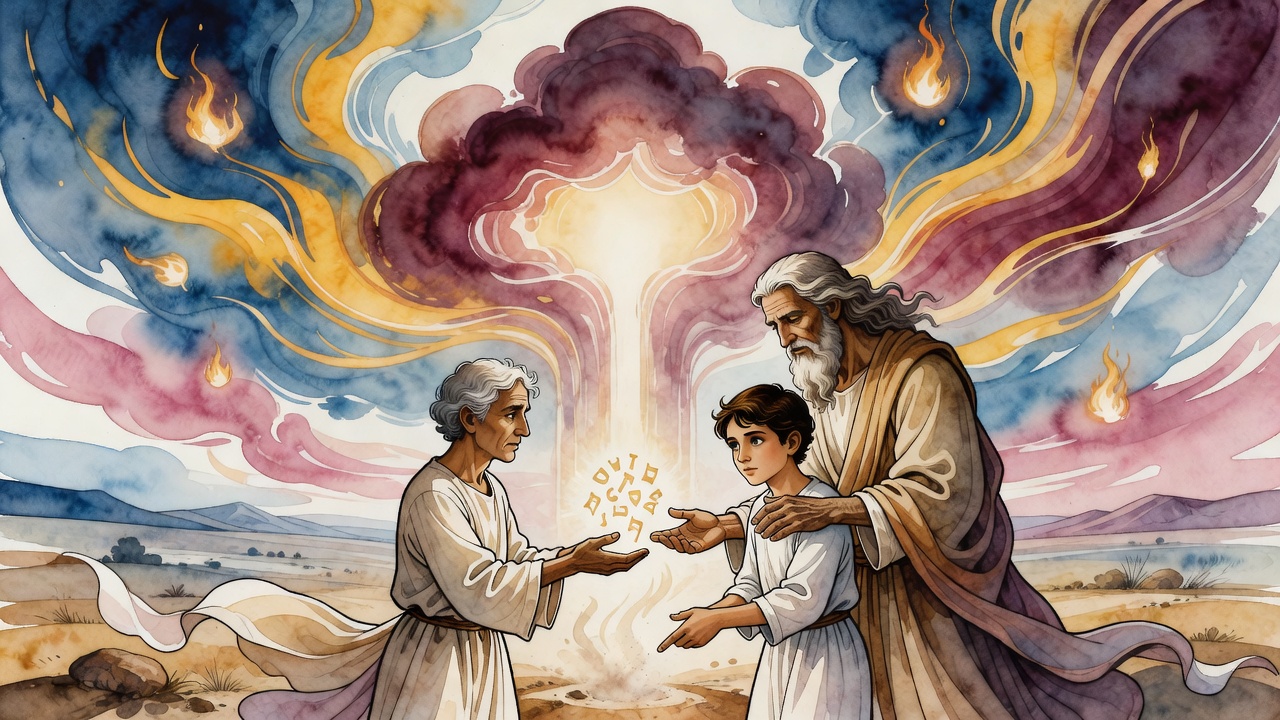
A martyr's grandson is handed the letters that made the world and told to raise God's house, then corrects Moses on where the building begins.
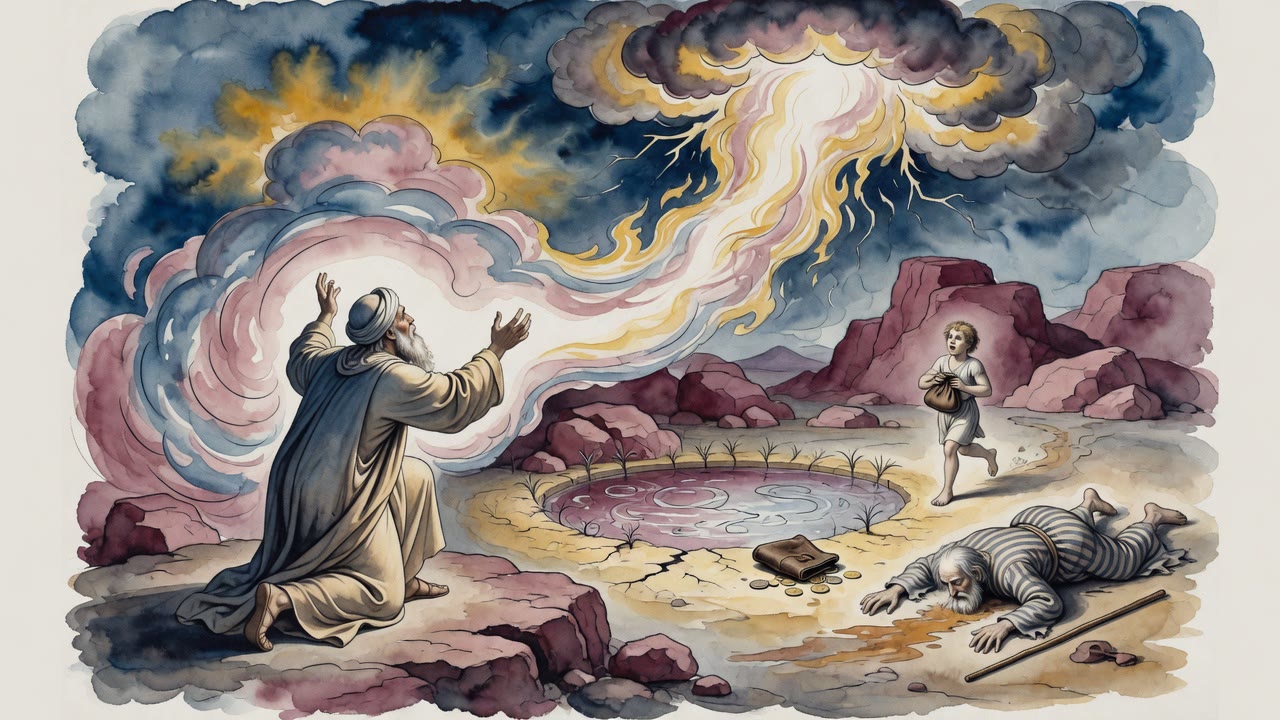
On Sinai Moses begged to see the law behind the world, and God led him to a spring where one lost purse left a boy rich and an old man dead.
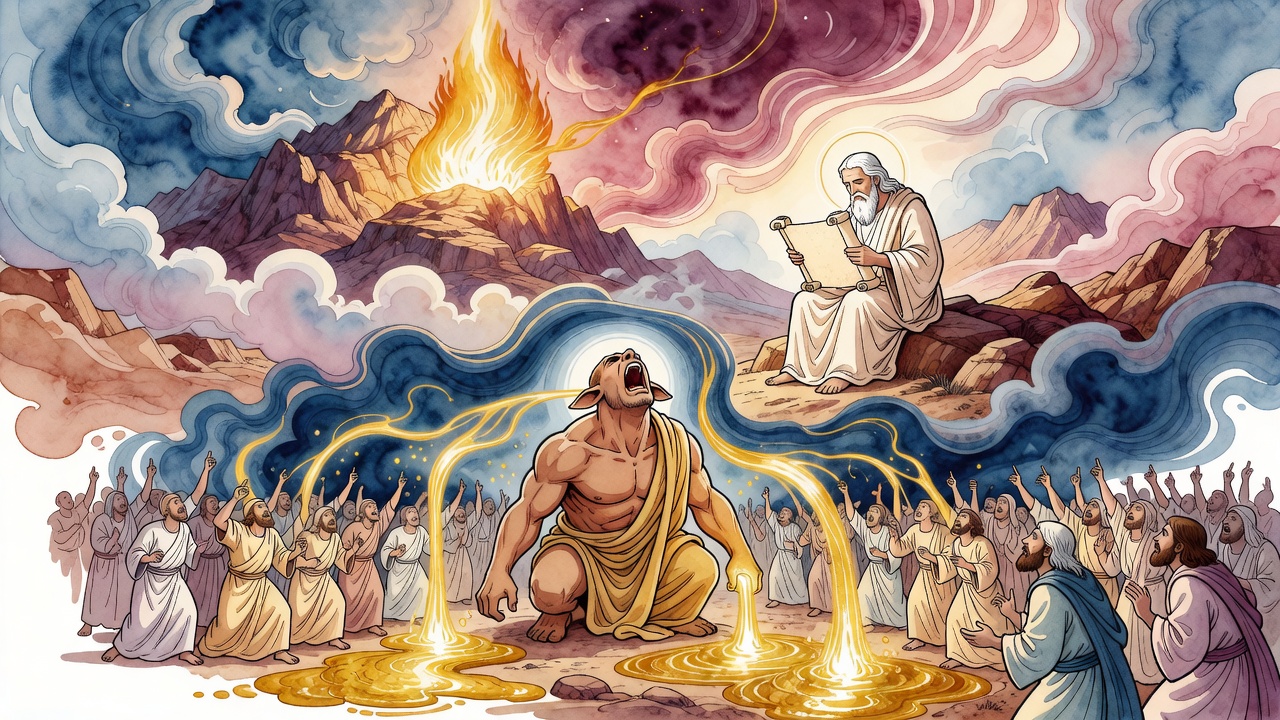
While Moses learns the blueprint of a holy life on Sinai, Samael lows like an ox in the camp below and turns Israel's fear into gold.
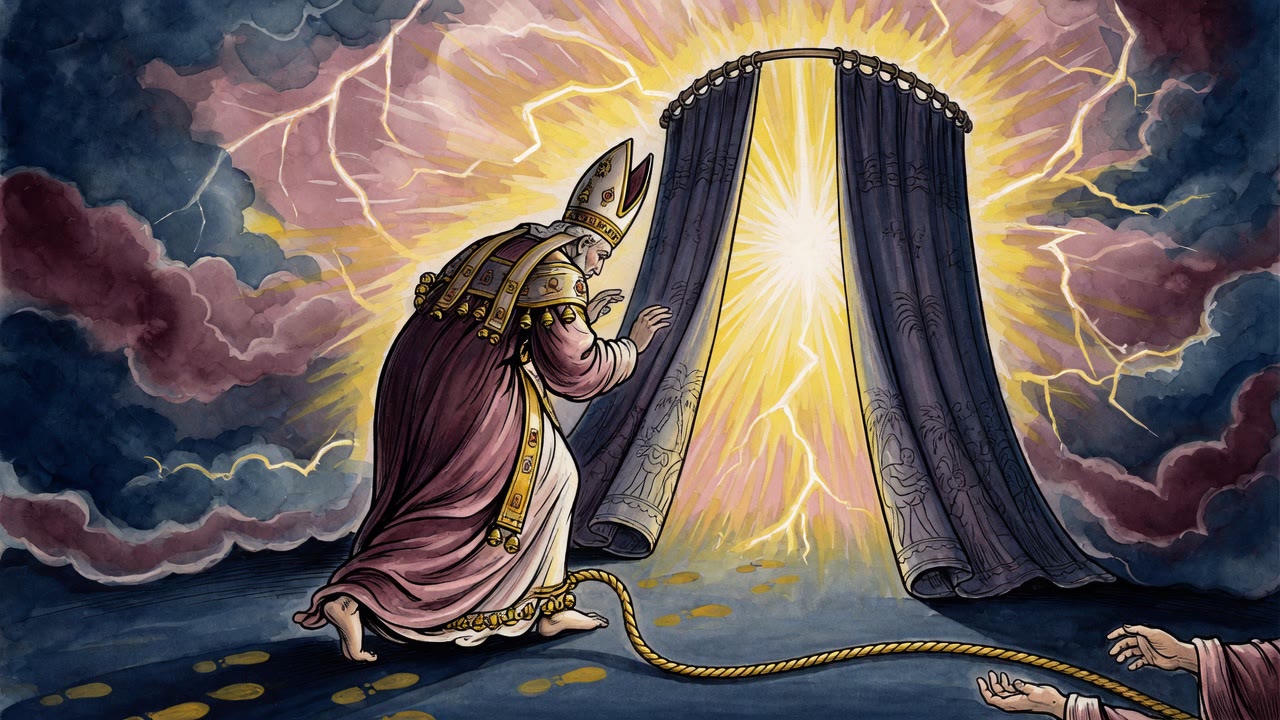
Men broke their own earrings. Aaron cast a plate bearing the Name. A living calf stepped from the flames, and Yom Kippur was born in the repair.
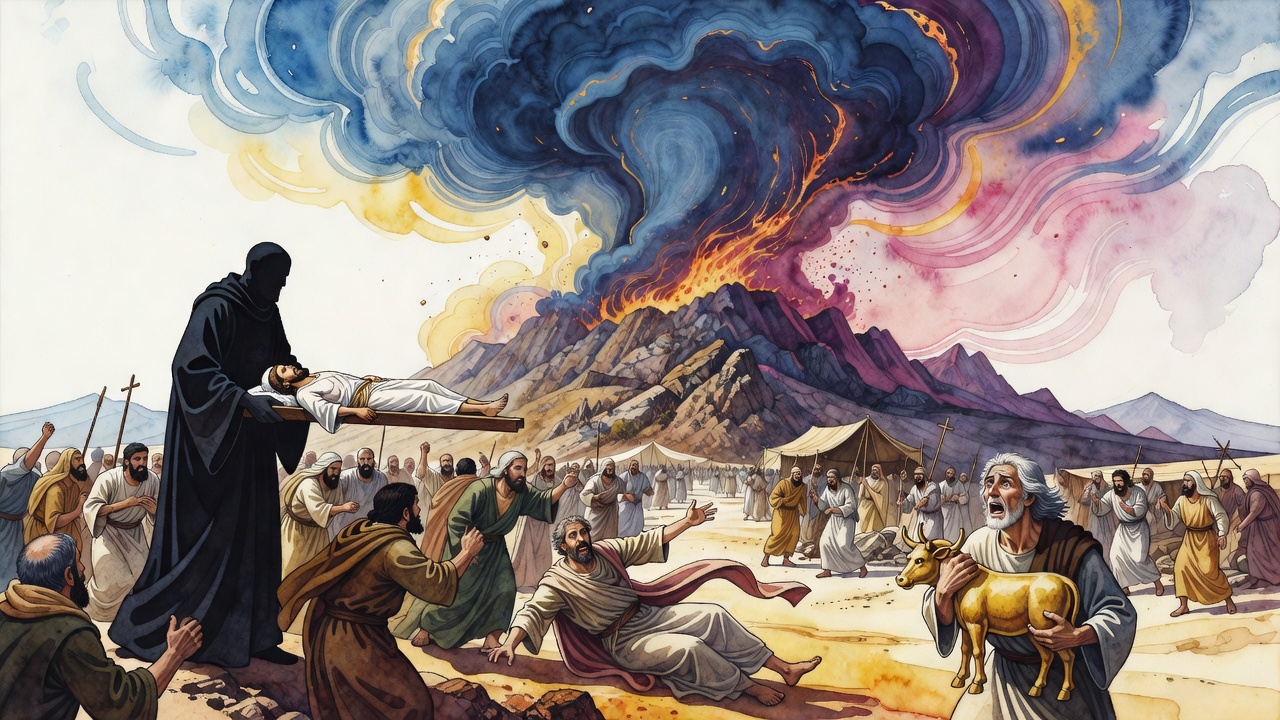
At the sixth hour of the fortieth day, Ha-Satan (the Accuser) painted Moses dead on the mountain. Hur rebuked the mob and fell, and Aaron faced gold with.
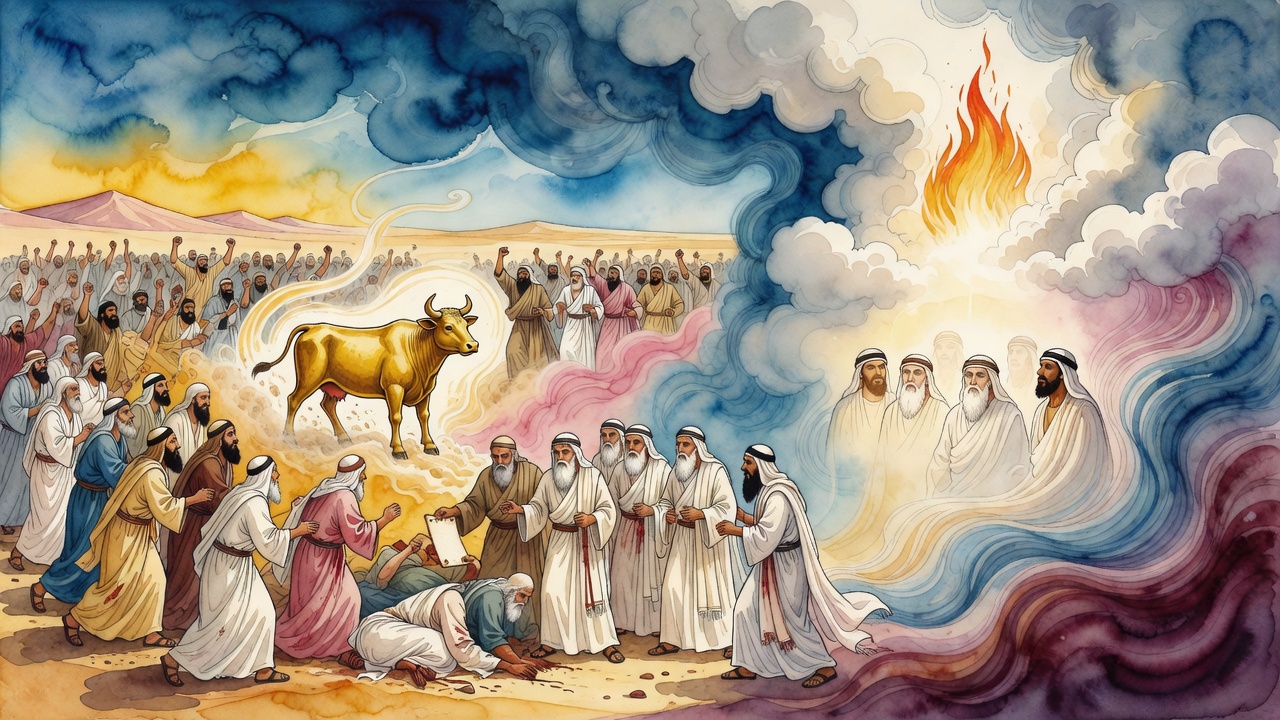
The crowd made the metal bull move and bellow, then told the judges to call it God. The judges said no, and the crowd killed them for it.
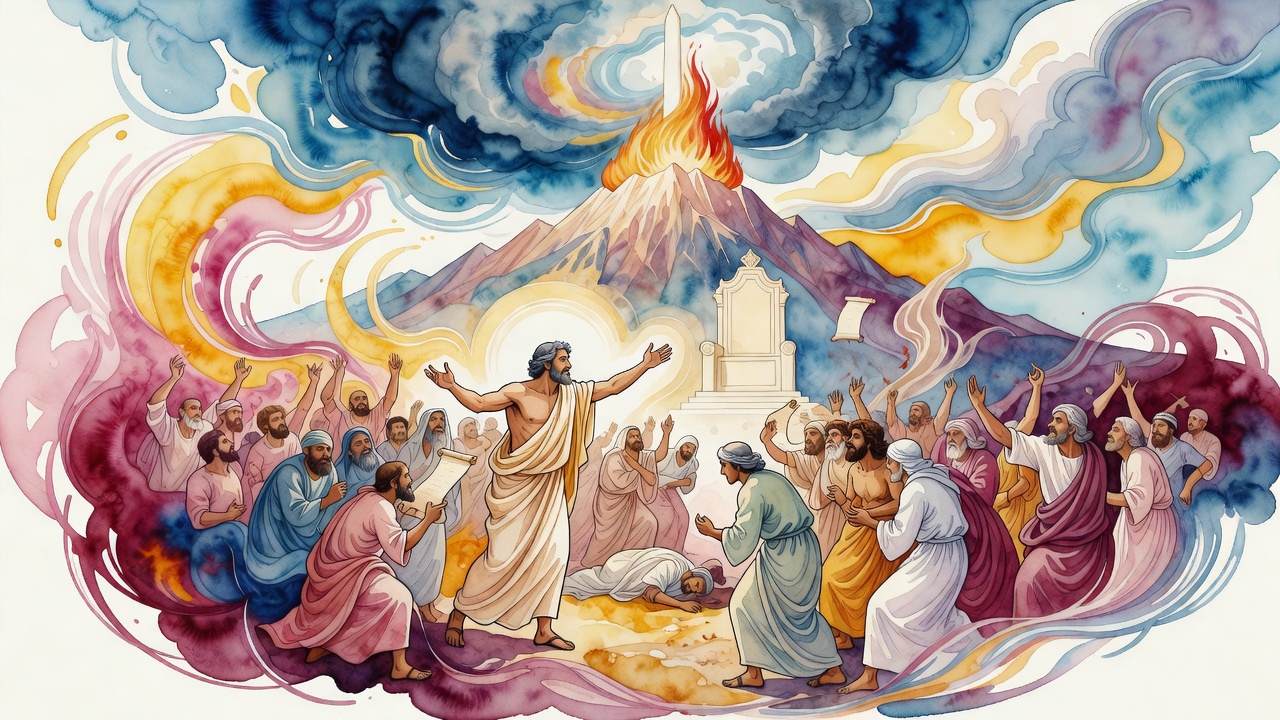
While Moses received Torah above, Hur rebuked the restless camp and was slain. Aaron faced a people who had already killed the man who said no.
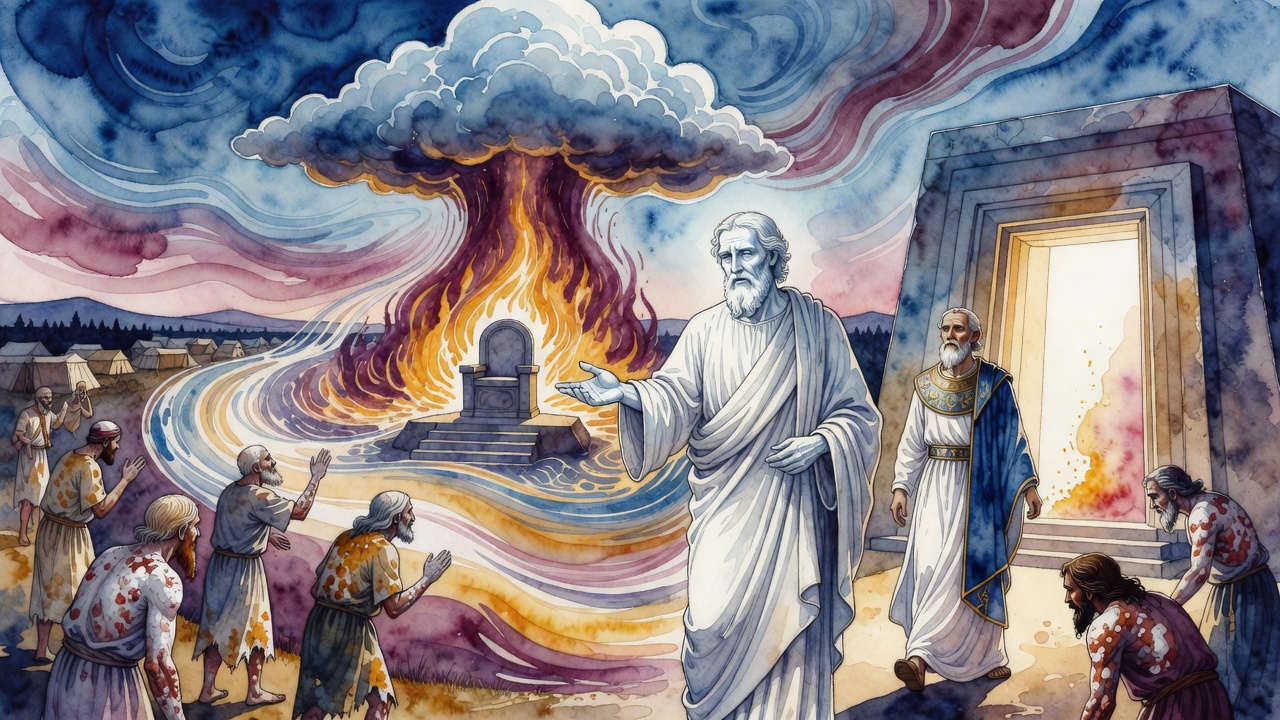
The dancers woke with white skin. They were walked to the edge of the camp, farther than ordinary uncleanness ever sent a body.
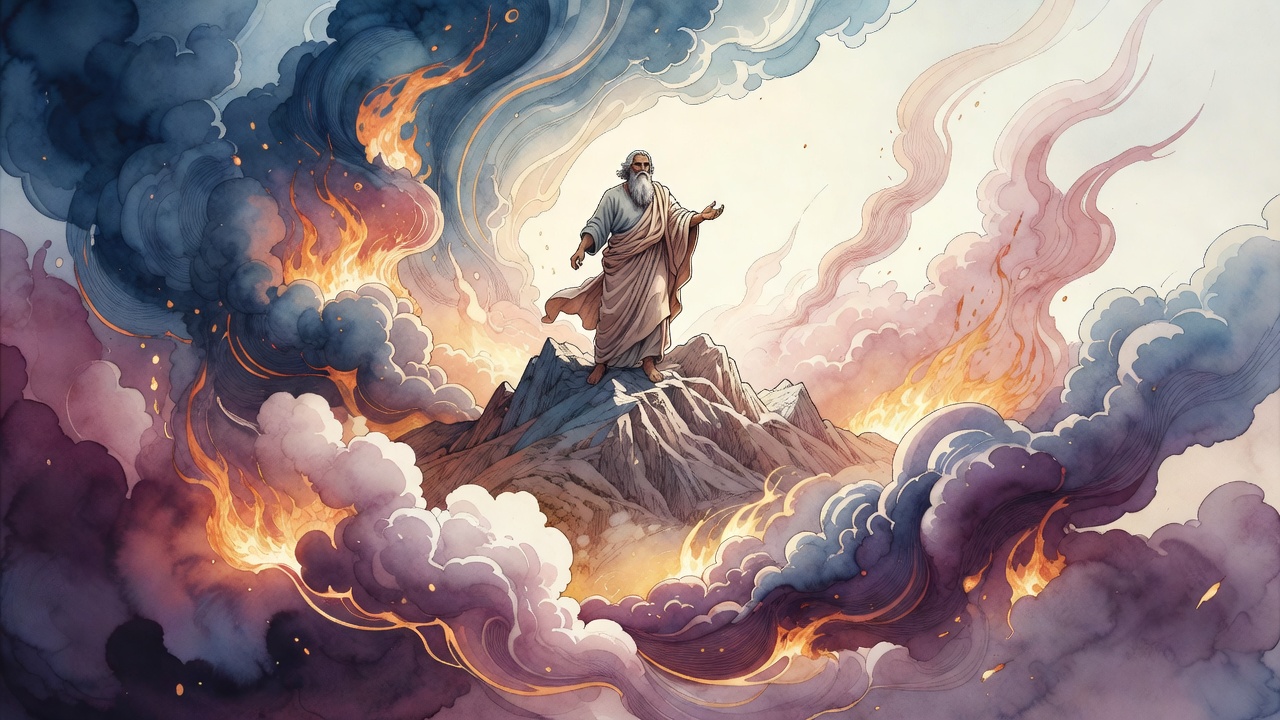
On the mountain forty days, Moses knew day by Written Law and night by Oral Law. After one hundred twenty days he brought pardon down on Yom Kippur.
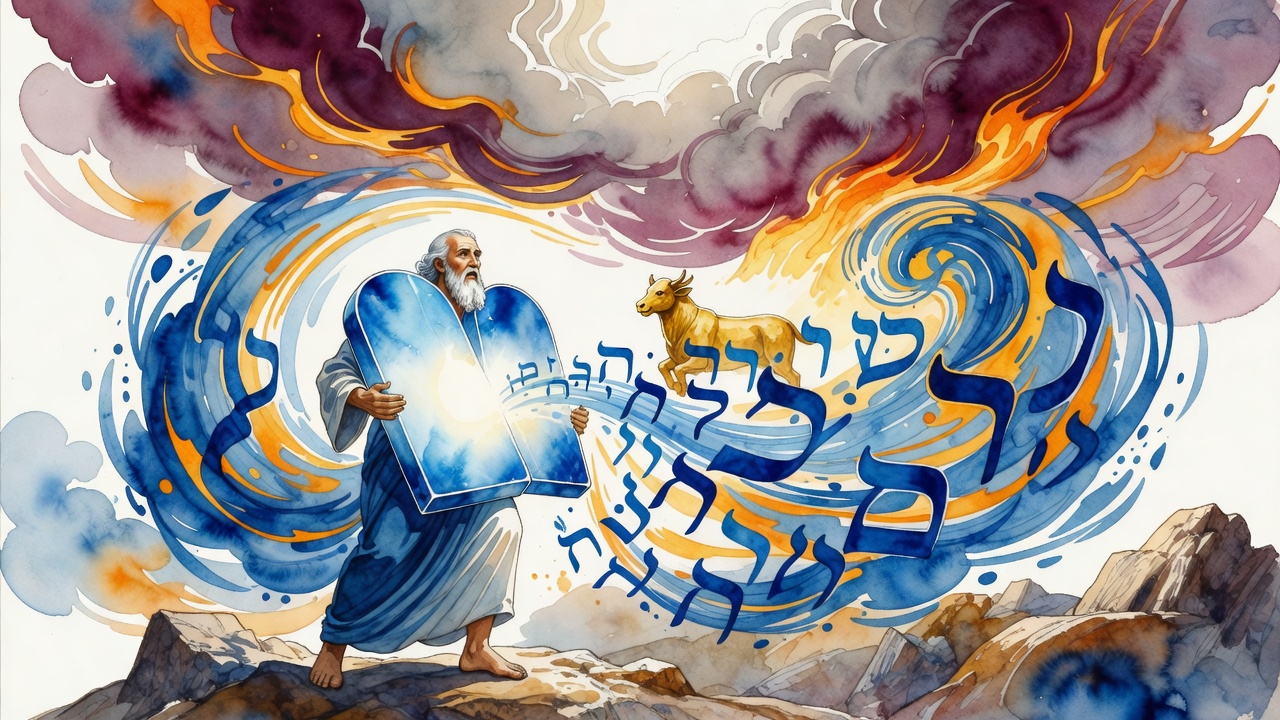
The tablets weighed as much as forty measures of wheat, and Moses carried them down easily. At the camp they turned to dead weight in his hands.
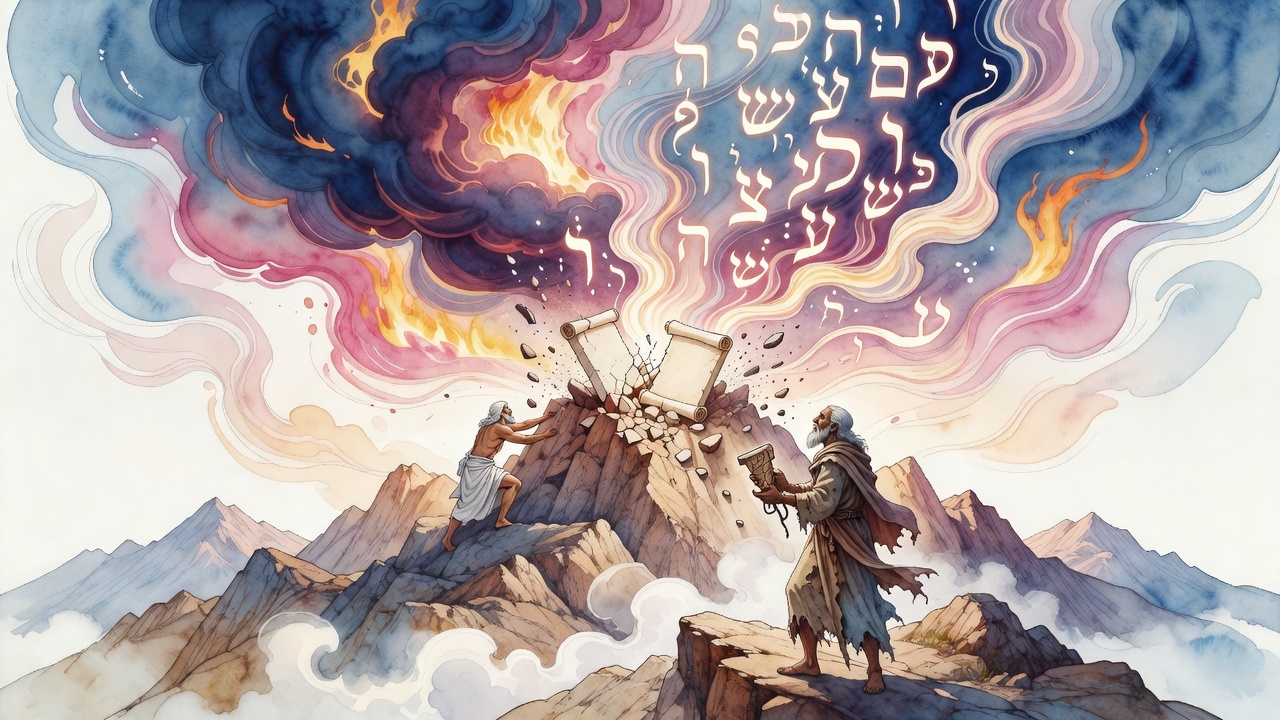
Moses asked how a defiled priest gets clean and heard nothing. Years later God handed him ashes and called it a statute.
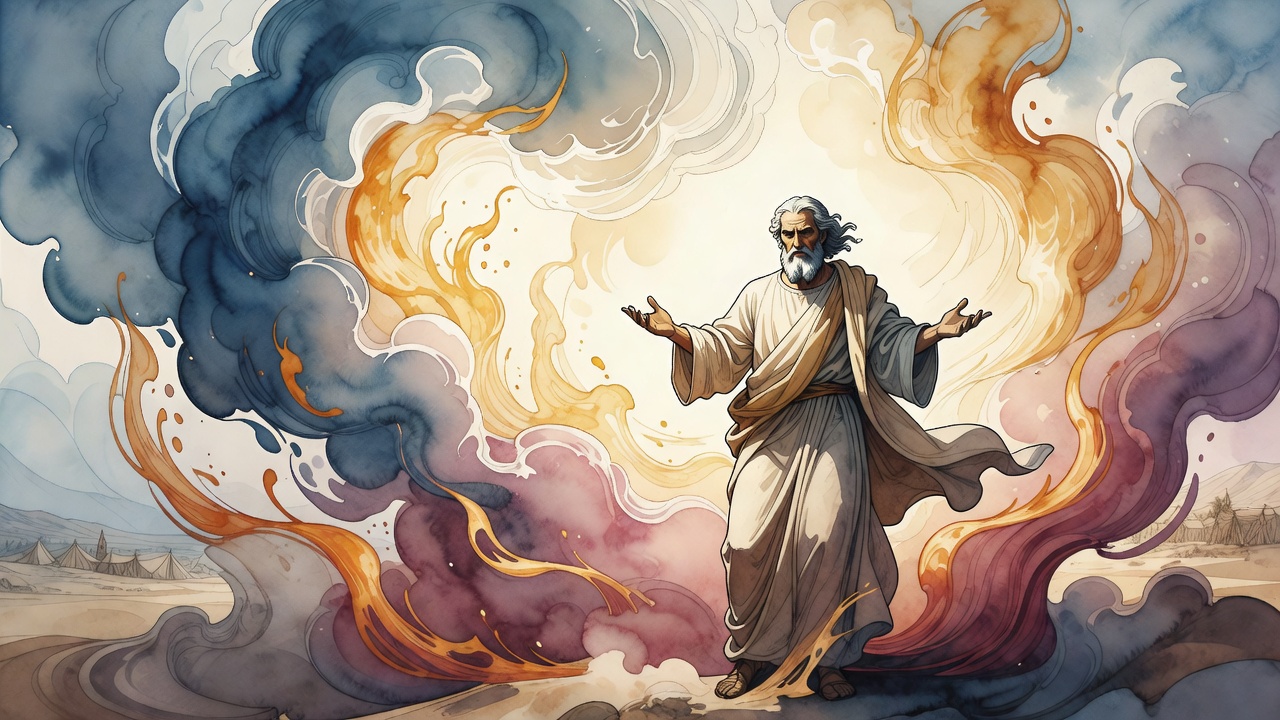
After the calf, Israel gave up ornaments the sages call weapons marked with God's Name. Moses argued for the people by naming three fathers who were dead.
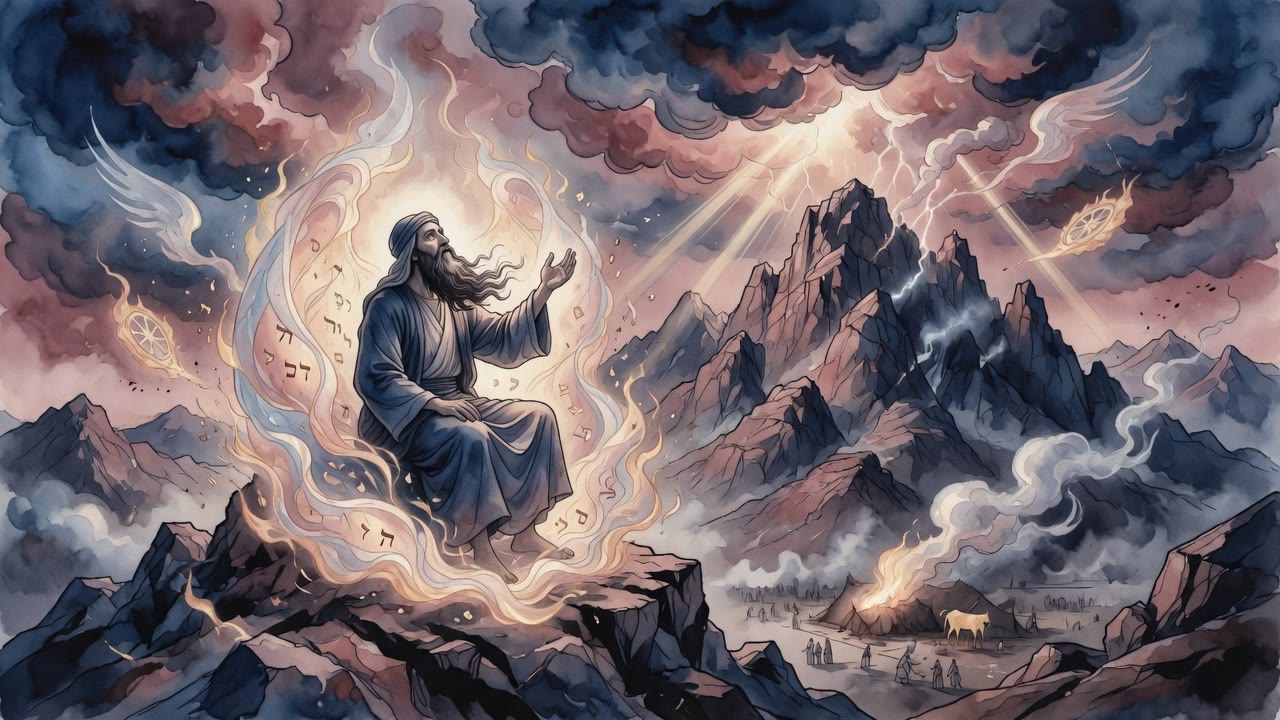
On Sinai Moses ate no bread. The Shekhinah, the Divine Presence, fed him while letters fled the first tablets and he carved the second set.
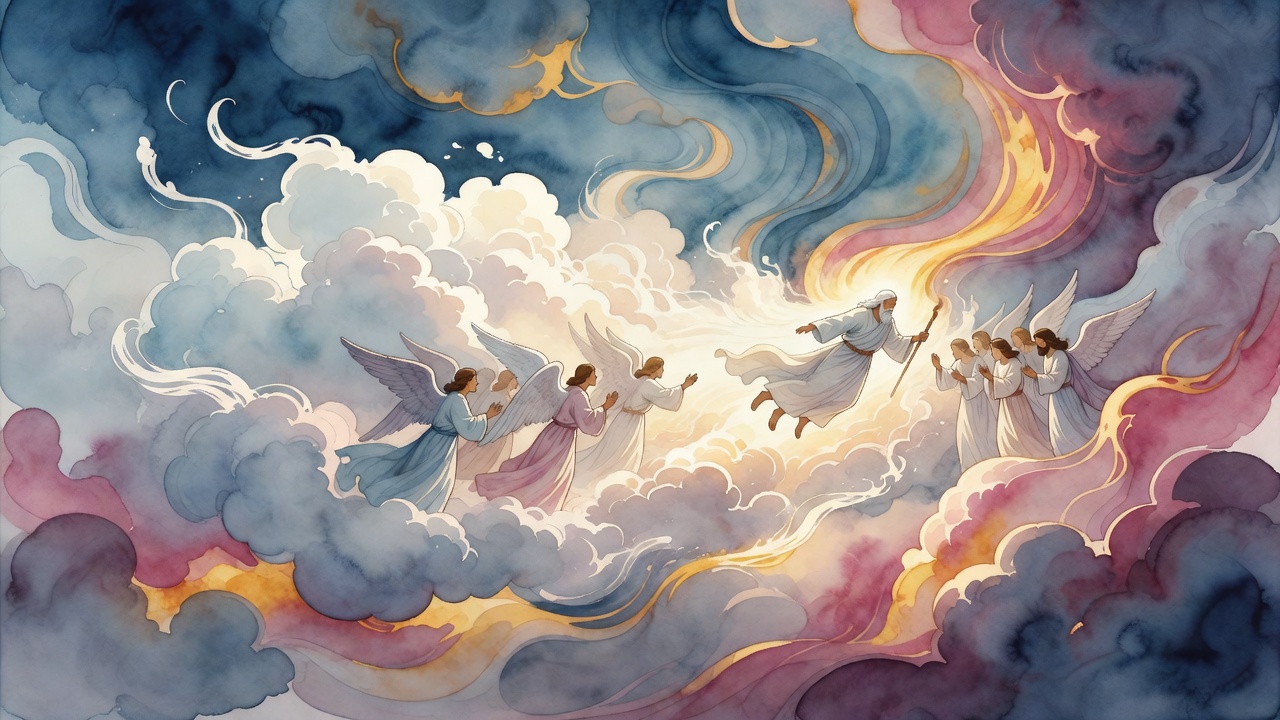
Seraphim stopped at the outer dark. Moses went in like a fish through water. Inside, God taught him the words that would keep Israel alive.
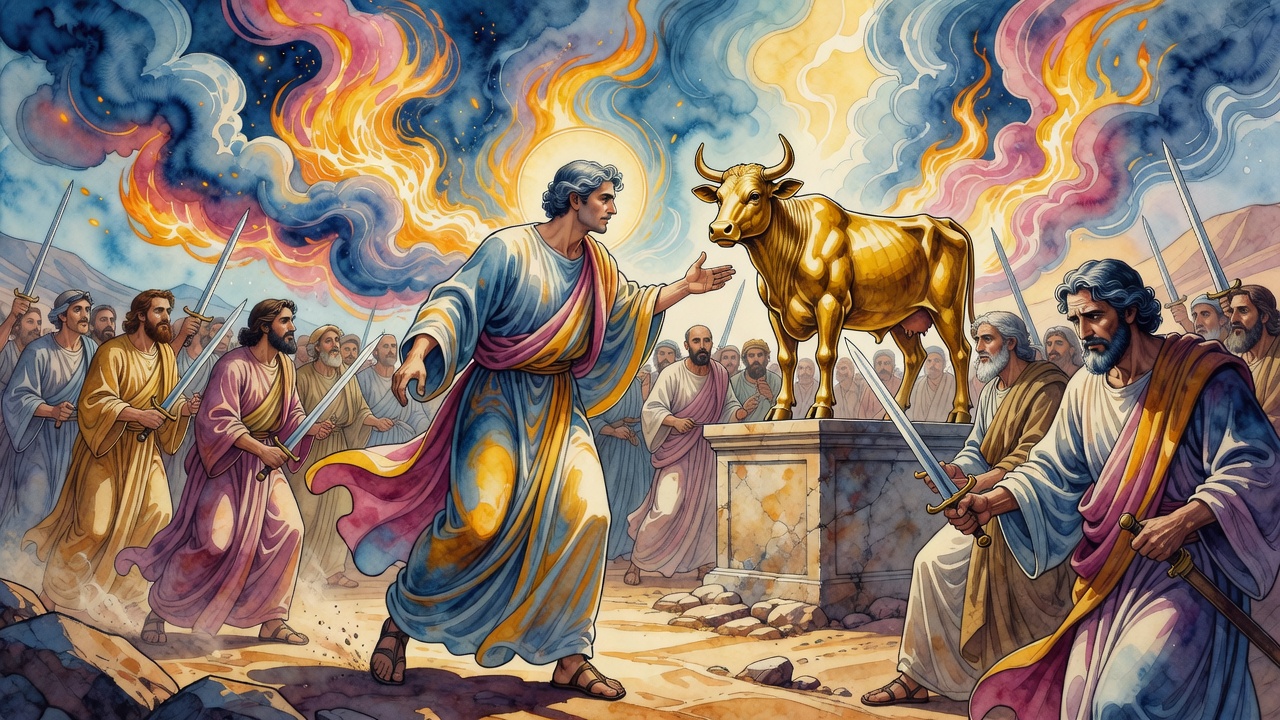
Aaron takes the gold before the people can. Better one tutor cut than a nation bleed. Moses sees guilt written, and Levites draw swords.
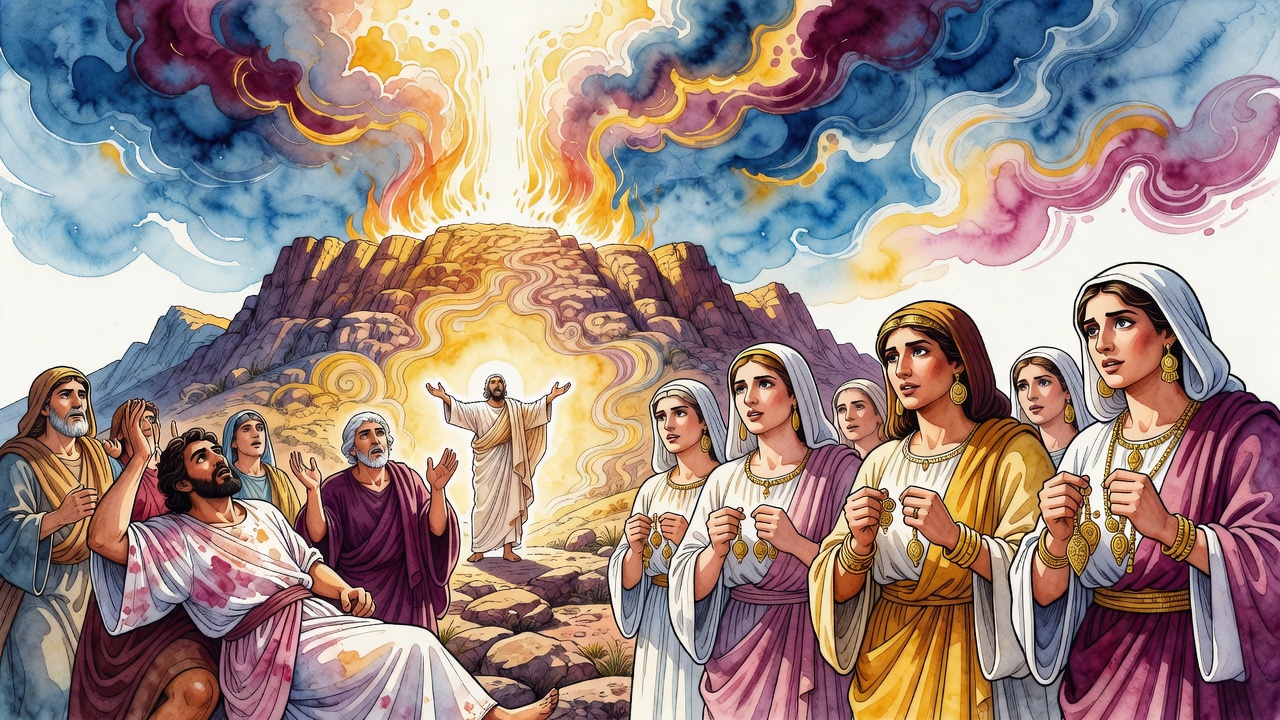
The men came home with a fever in their eyes and open hands. The wives kept their earrings on. So the men tore the rings from their own ears instead.
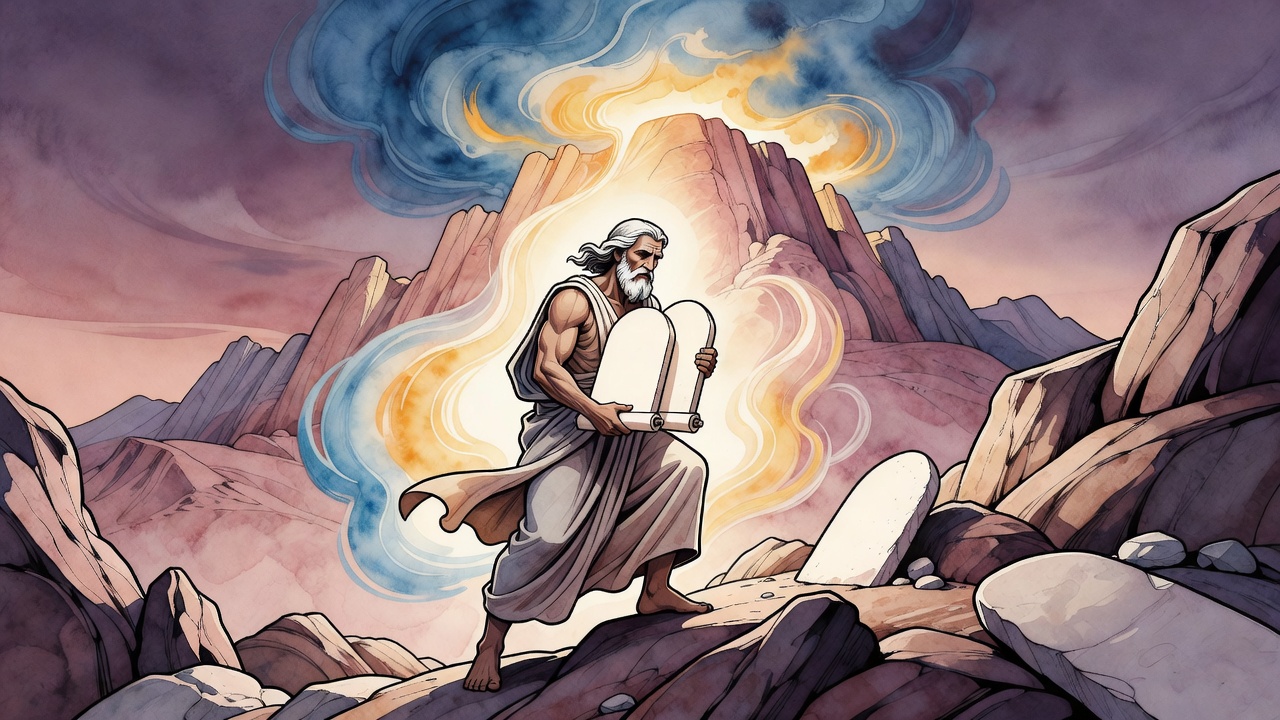
The first tablets had been cut by heaven. Moses hewed the next pair himself, then climbed Sinai before dawn with the stones in his hands.
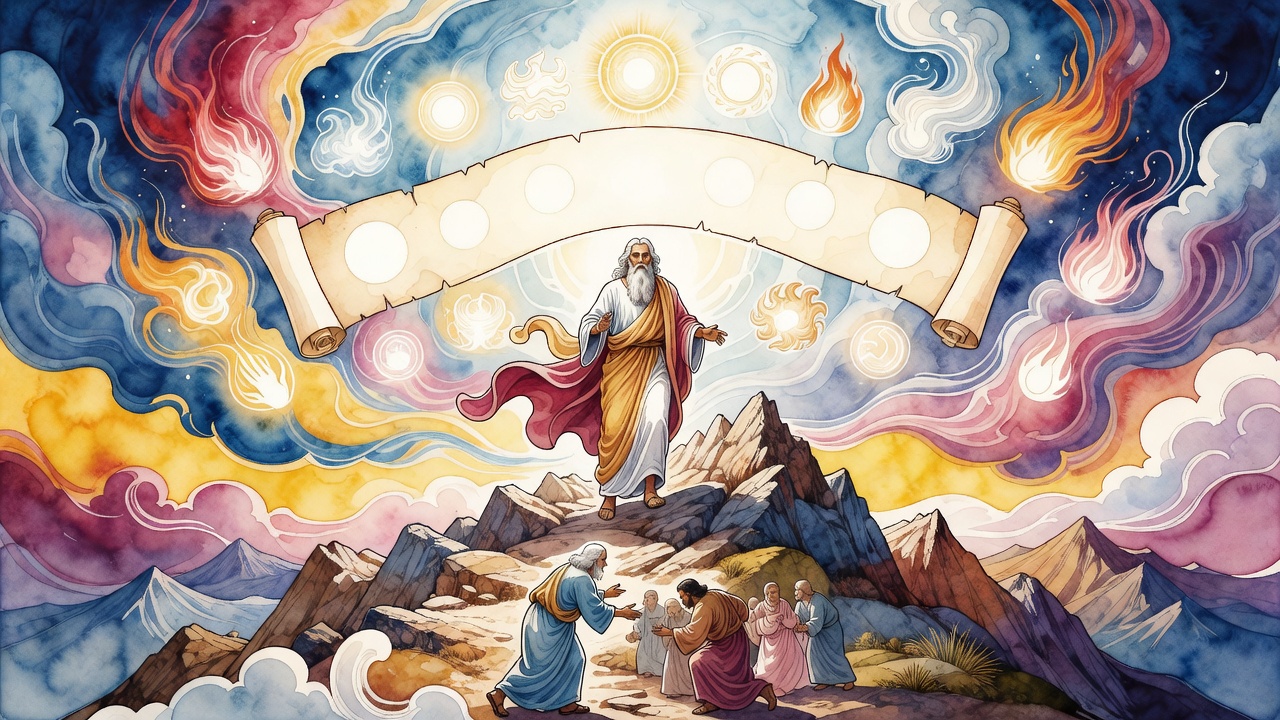
A king struck his wife, and her father demanded to know why. The king sent back five sealed letters. The fifth one named what she had done.
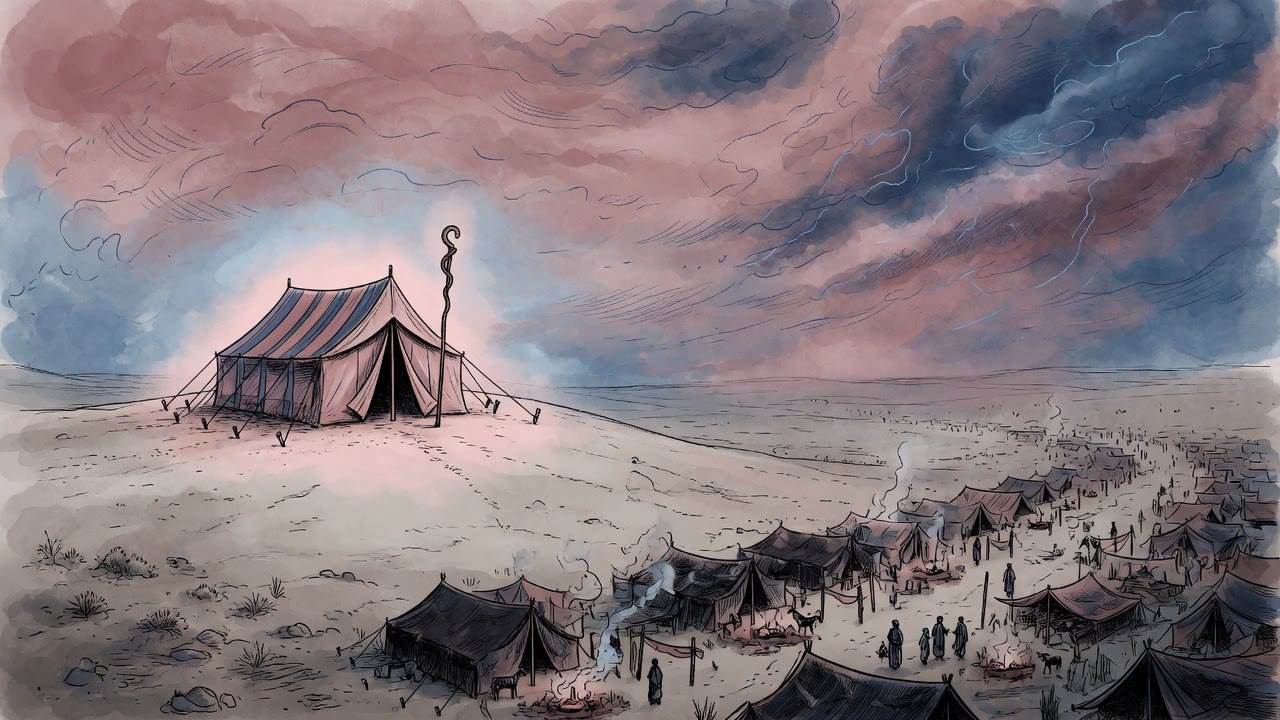
The gold of the calf still stank in the dust. Moses dragged his tent past the last row of Israel and did not look back.
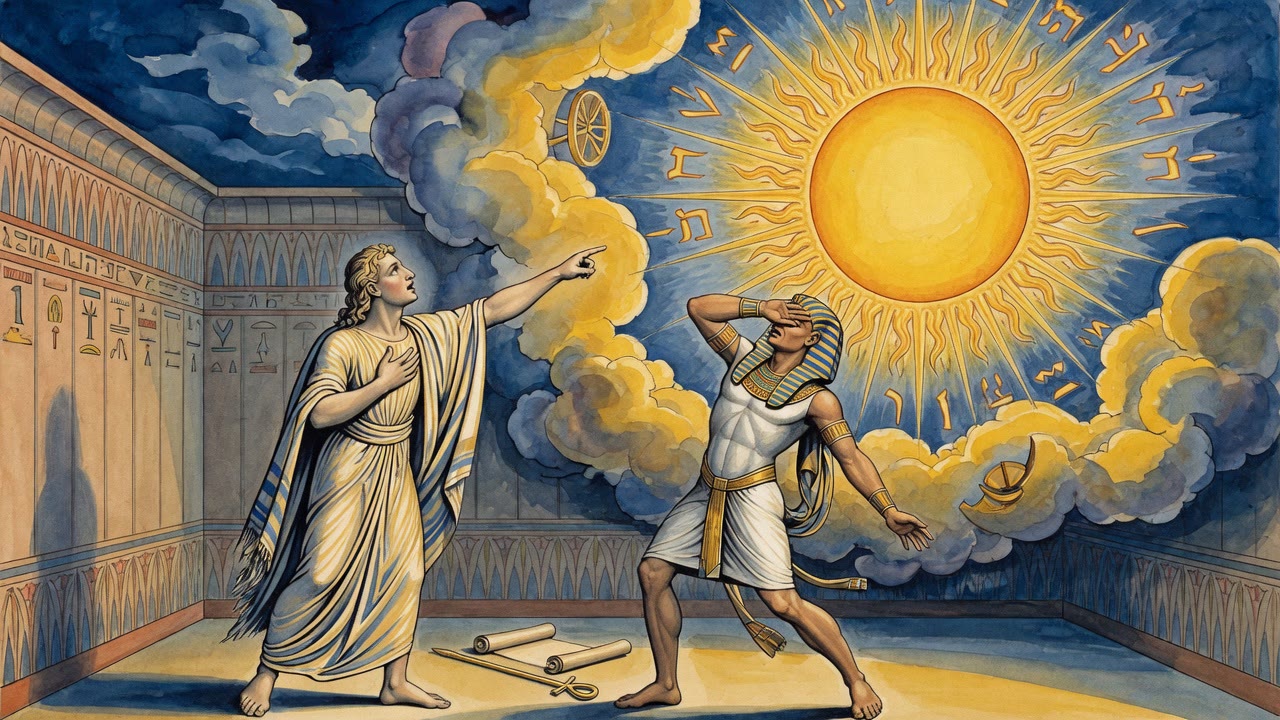
The calf was still cold metal behind him. Moses would not march the people on a rumor of protection. He asked Heaven for a name.
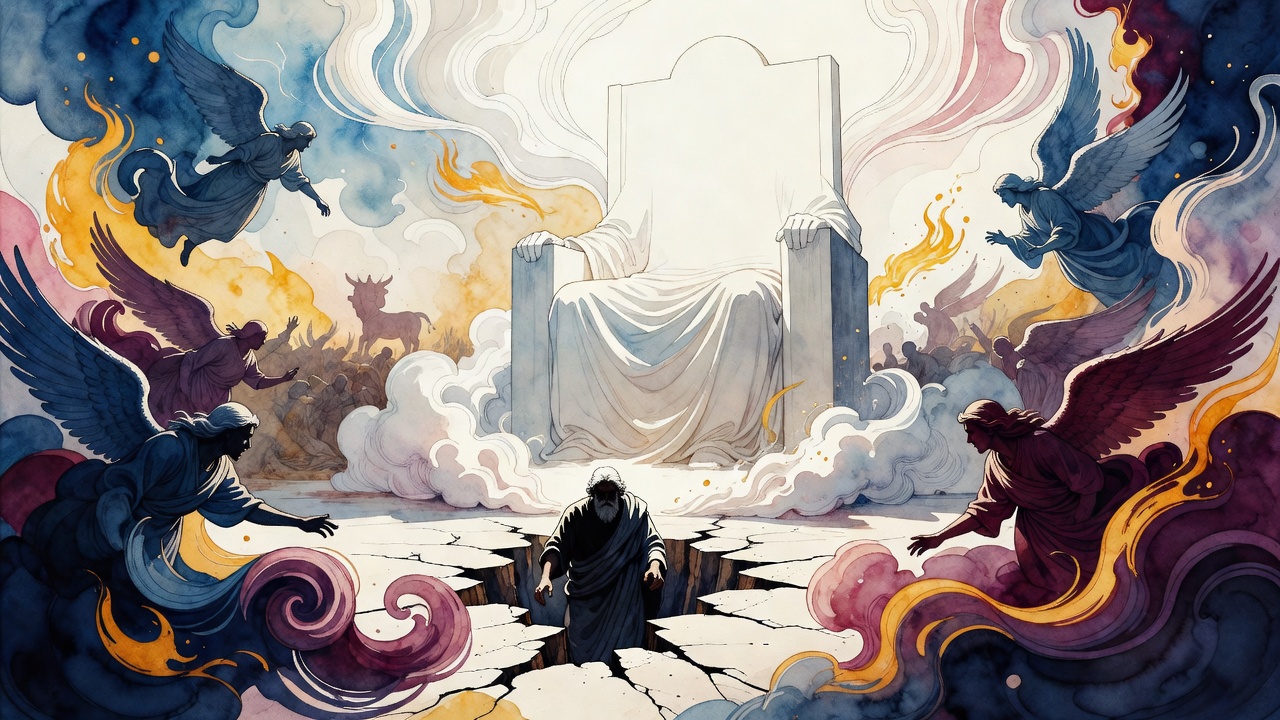
Night poured into his eyes on the mountain. Angels moved to kill him. He seized the Throne, and a cloud closed over his back.
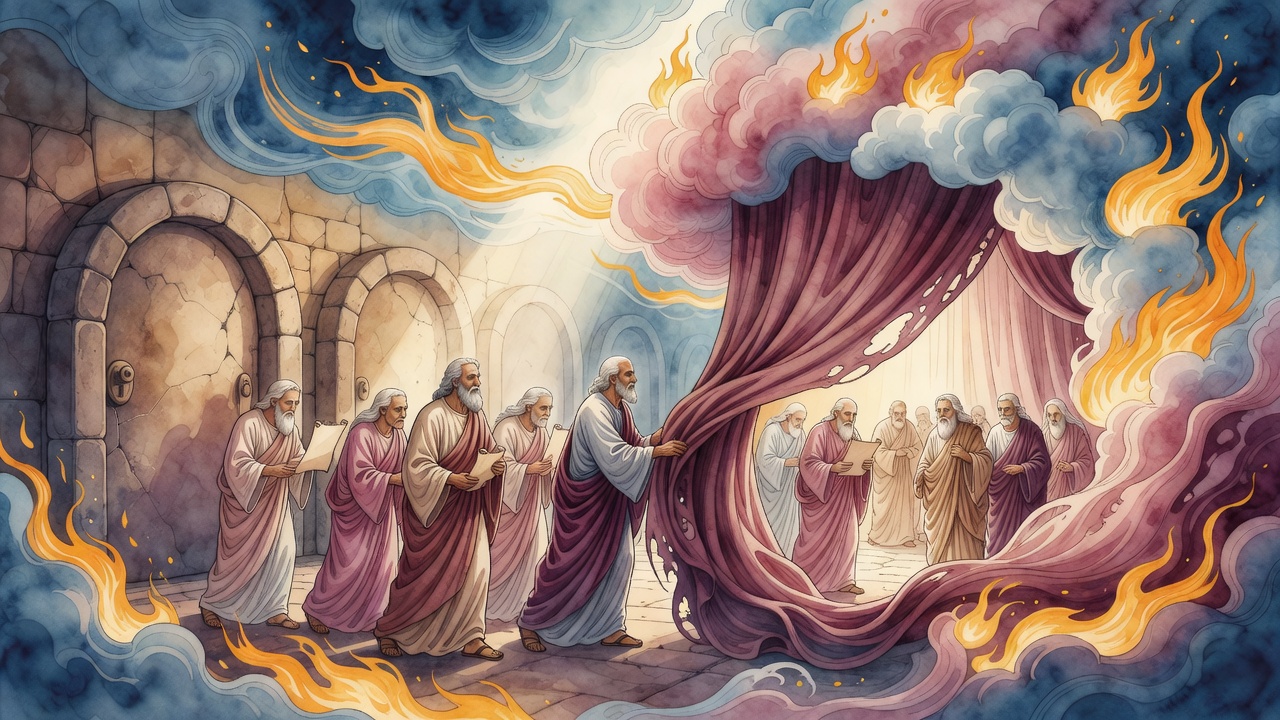
God leads Moses past the sealed vaults where the reward of the righteous waits, then draws the same curtain back for sages at the hour of death.
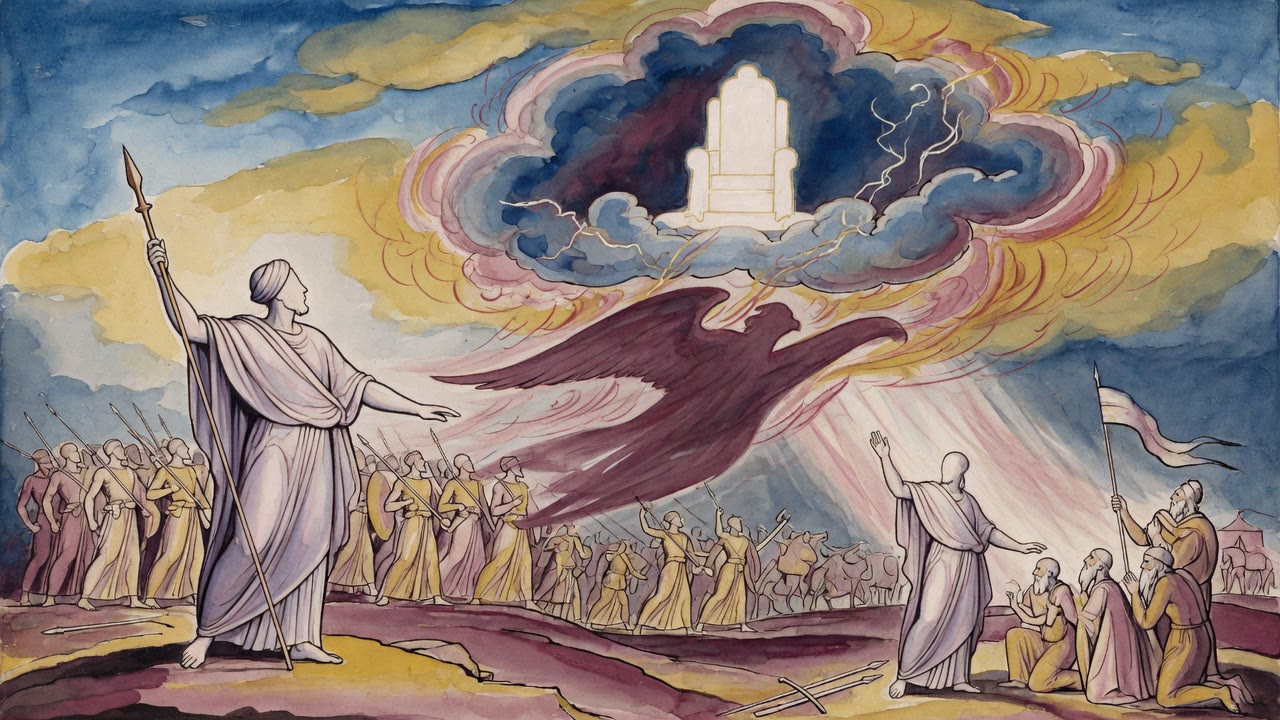
Forty days in the cloud left the skin of Moses radiating fire, and he walked down Sinai glowing, never guessing why Aaron and the elders shrank back.
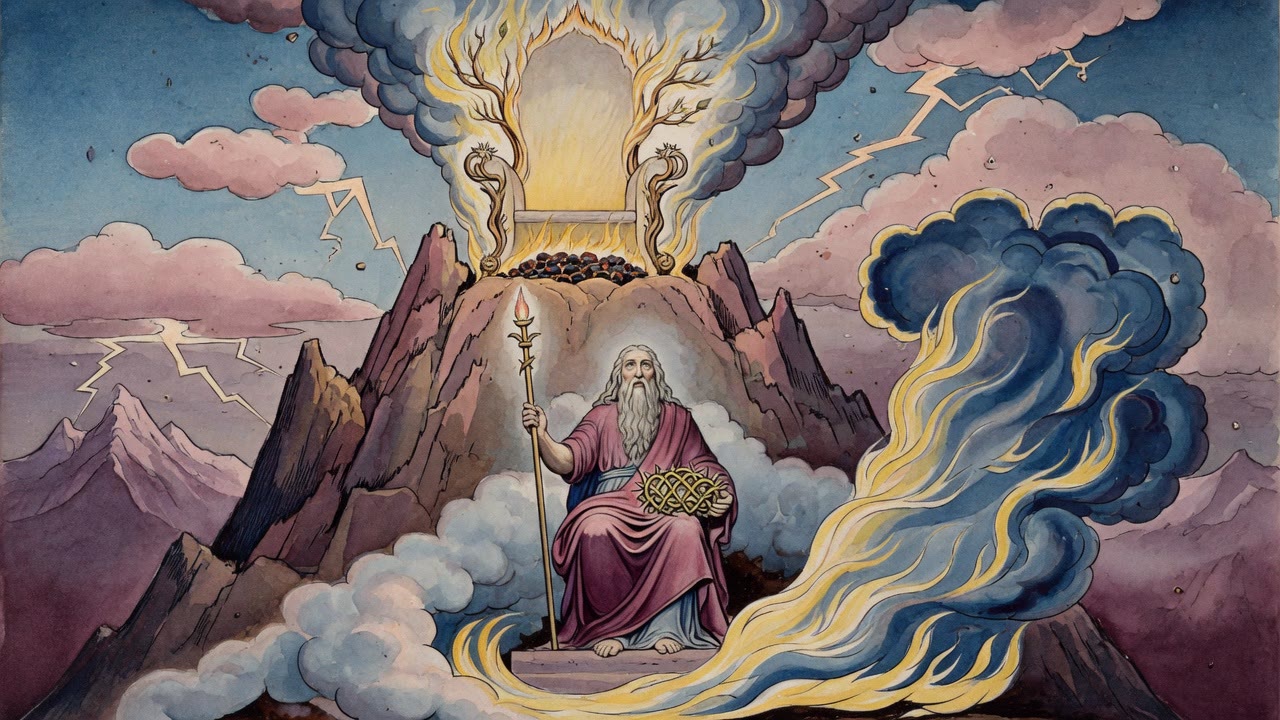
Emboldened after Sinai, Moses begged to see God's glory, so God hid him in the rock and stretched His own Word over the stone as it swept past.
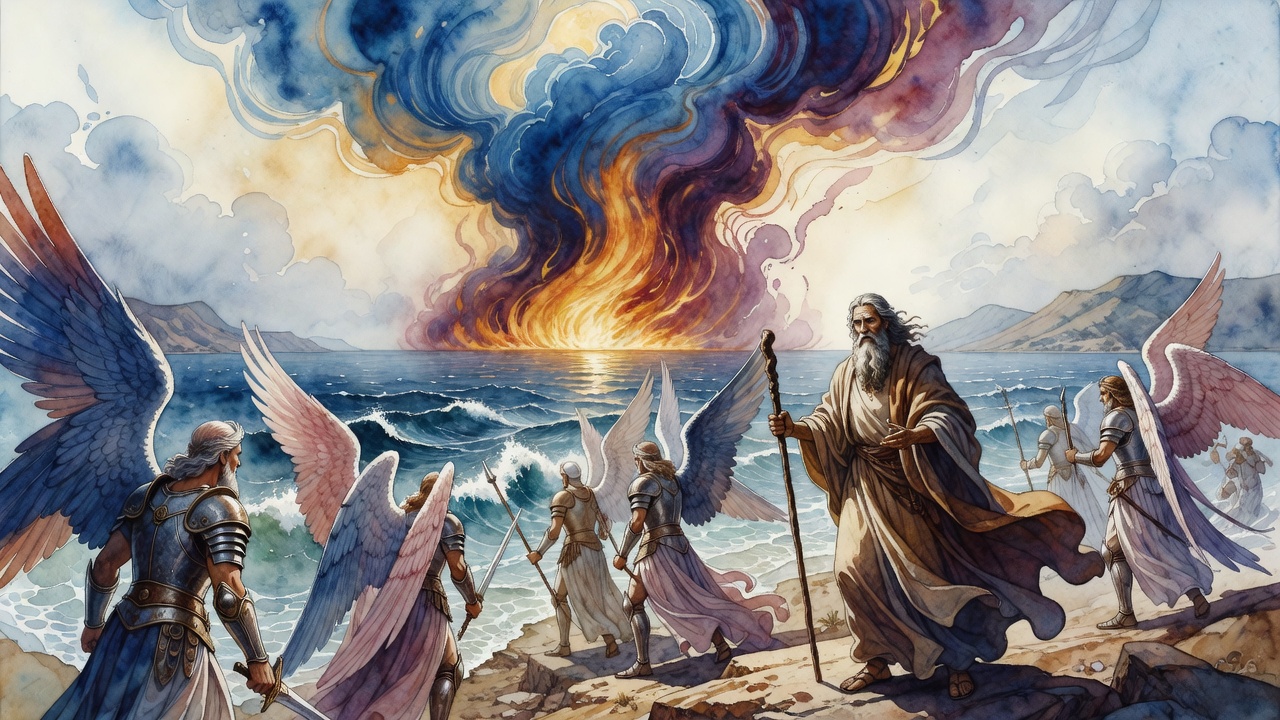
Armed angels came down to the Sea and God sent them home. Moses remembered that, and would not take one as escort into Canaan.
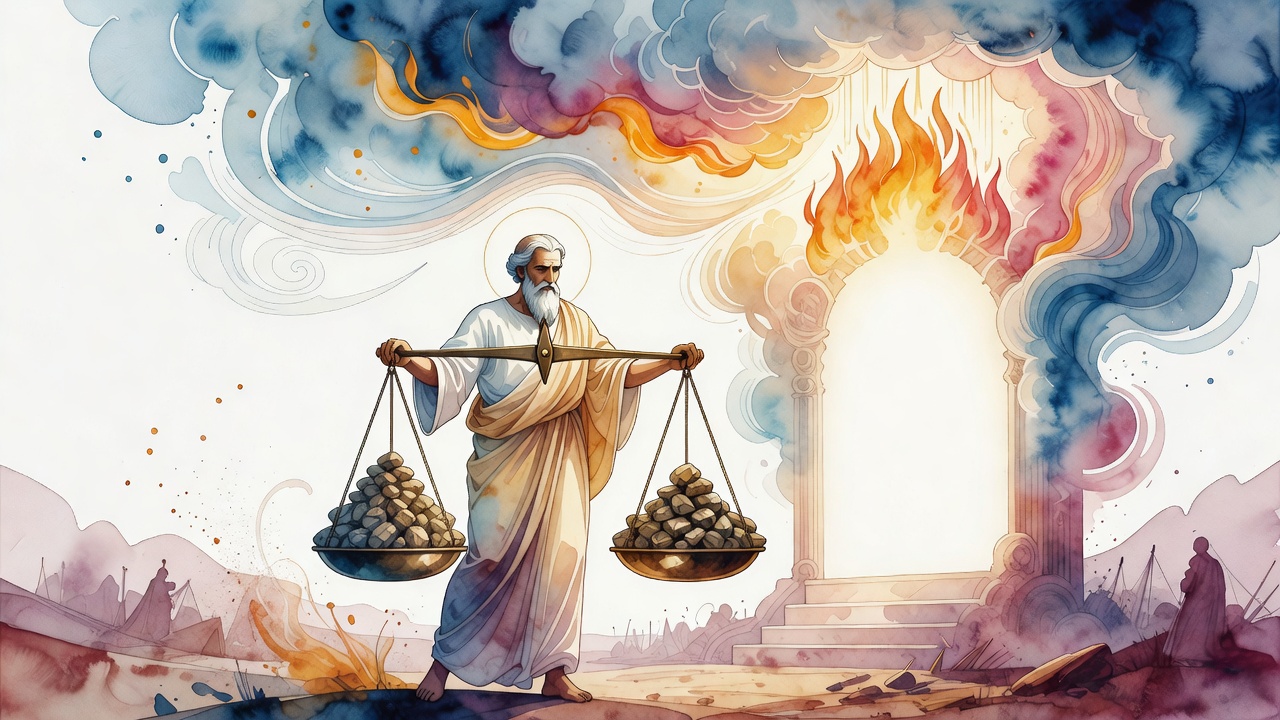
Moses weighed talent, hundred, fifty, thirty for the soul's ransom. God asked a half-shekel, light enough to lift every head that lost its crown.
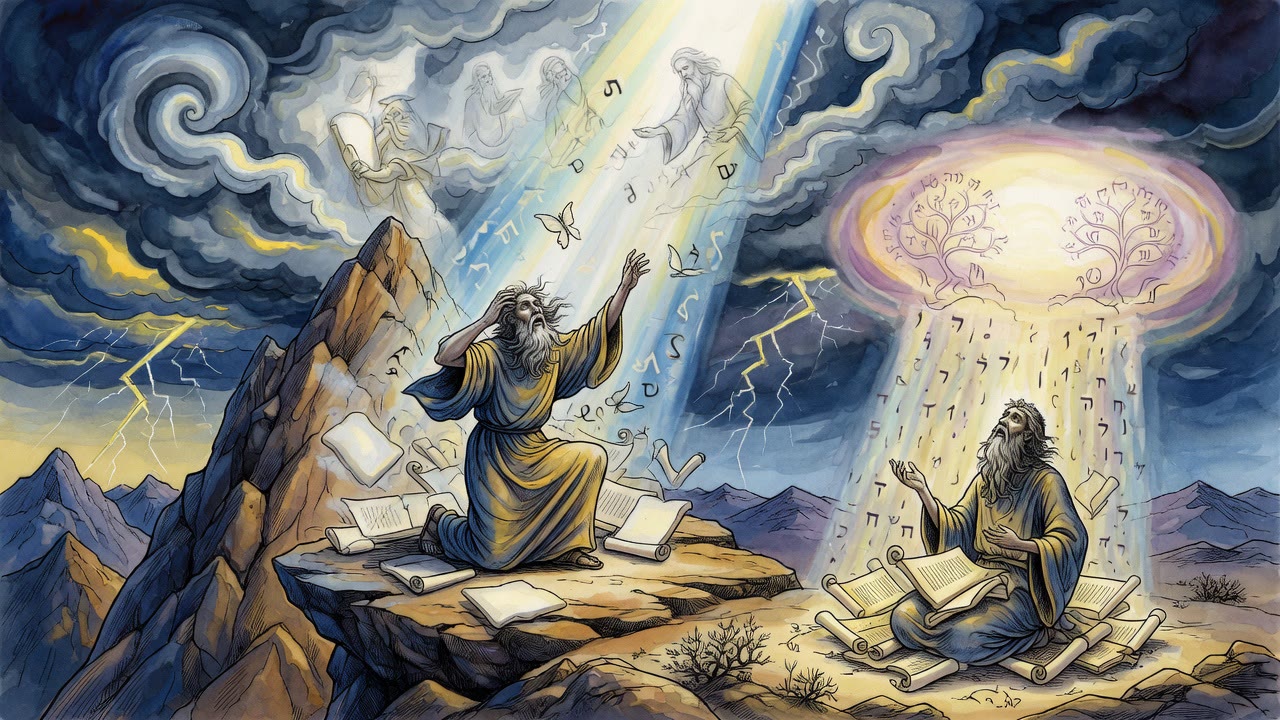
For forty days Moses learned Torah and forgot it. God poured it into him as a gift, and Ha-Satan (the Accuser) hunted the treasure across earth, sea, and death.
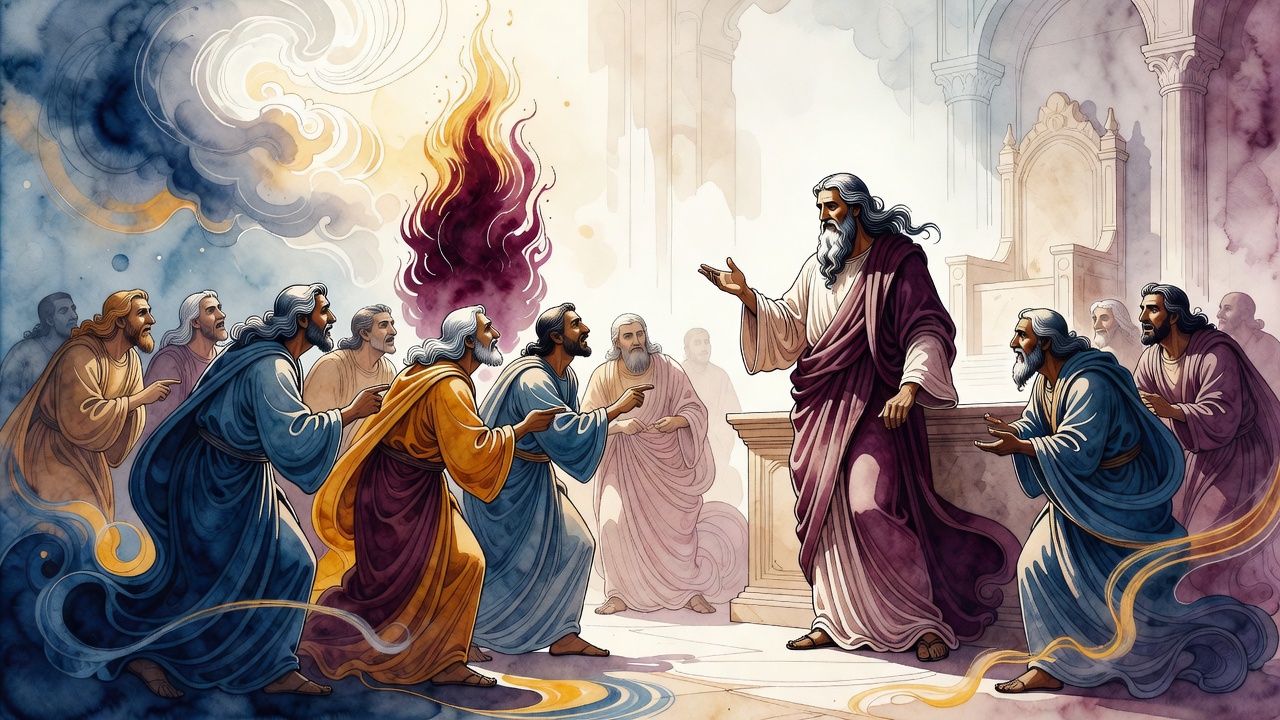
A king called one laborer out of the field for a walk. The others stayed at work all day. At evening the man lined up for wages, having worked two hours.
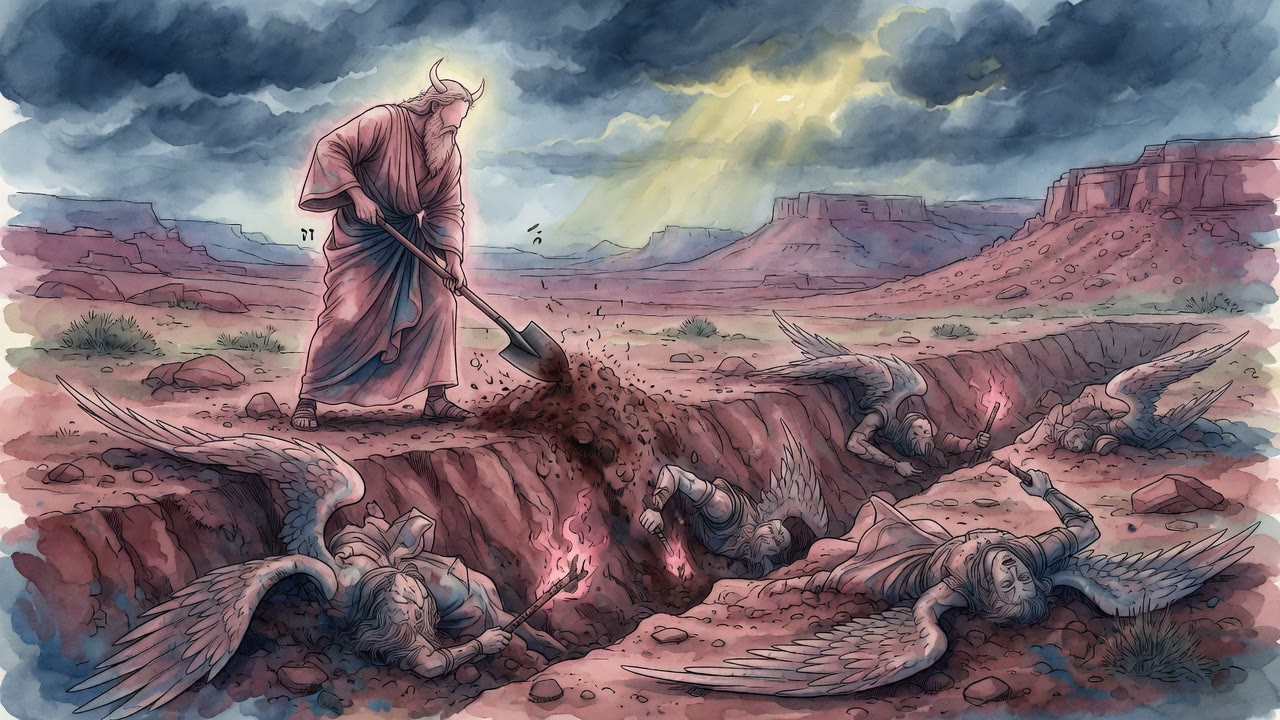
Israel danced around the calf, and heaven sent five named angels to wipe out the nation. One man ran ahead of the executioners.
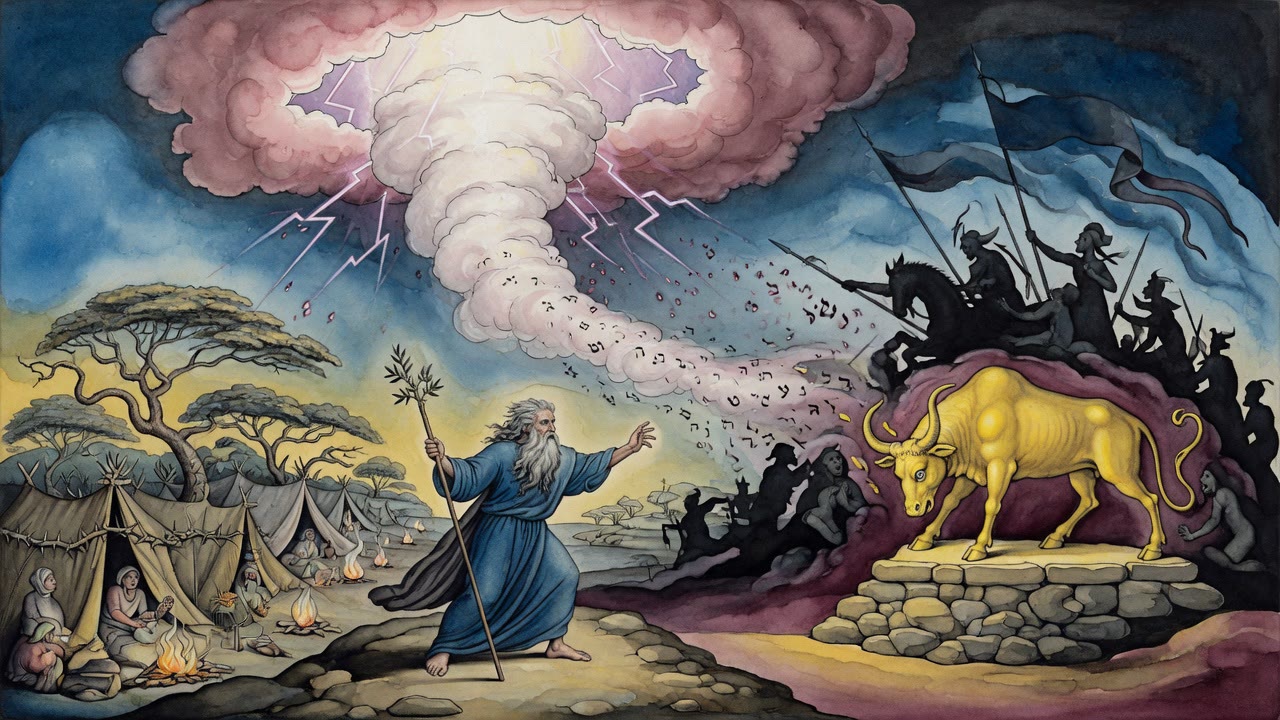
Moses argued the words at Sinai were spoken to him alone, not to them. God kept answering. Moses ended standing like a man thirty days in a sickbed.
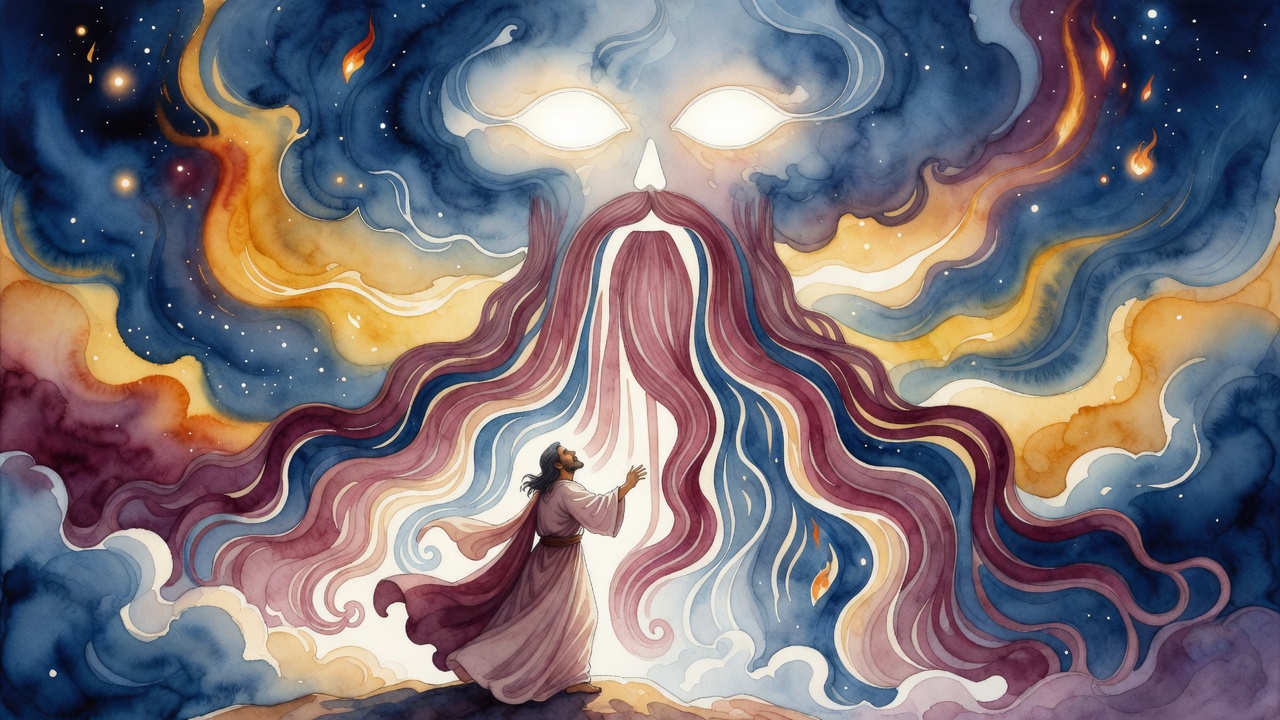
Pulled past every world, a seer stands before the divine face and reads mercy in its skull, unsleeping eyes, patient breath, and thirteen-streamed beard.
