Moses Heard the Golden Calf Before He Saw It
Joshua called it war. Moses listened longer and heard merriment. Then he came around the ridge and saw the calf, and the Accuser dancing in front of it.
Table of Contents
 Click for full size
They Saw a Body in the Air
The mountain was still burning when the camp started counting.
One day since Moses had climbed into the cloud. Five. Ten. The smoke did not thin. No figure came down the path to say he was alive. Watches and meals and arguments all turned around one empty stretch of rock.
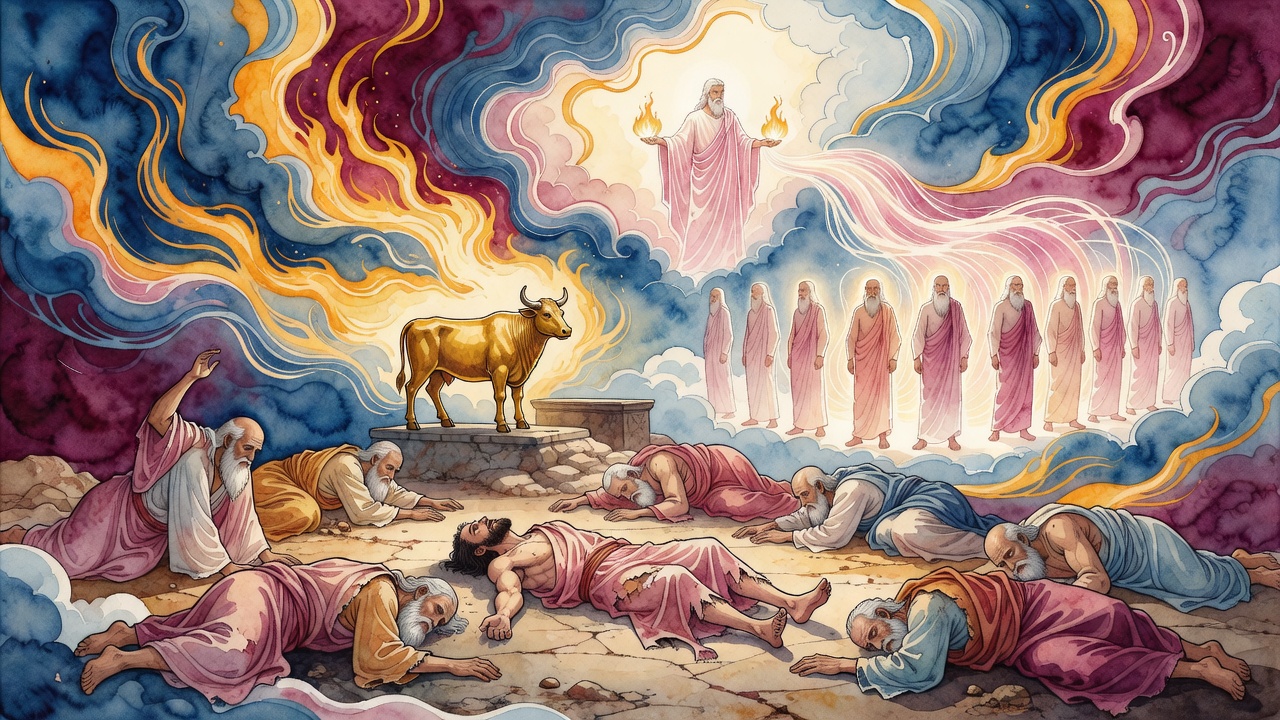
By day forty they had a story they could live with. Moses had been consumed in the flaming fire before God on the mountain. Not delayed. Dead. Eaten by the same fire that had refused to let anyone else climb close.
Satana, the Accuser, gave the story a picture. He showed them Moses's body being carried through the upper air. People pointed. Children asked who was being carried. They looked up and believed what they saw. Then they went to Aaron.
Aaron Asked for the Women's Gold
Aaron tried to slow them. "Whoever has gold," he said, "bring the earrings of your wives and your sons and your daughters." He counted on mothers holding back, on a delay long enough for a living man to appear on the ridge.
The people stripped their own ears. Earrings hit the pile faster than he had wanted. He received the gold and threw it into the furnace. The heat took it. He had meant to stall. The stall collapsed in a heap of metal.
The Calf Walked Out of the Fire
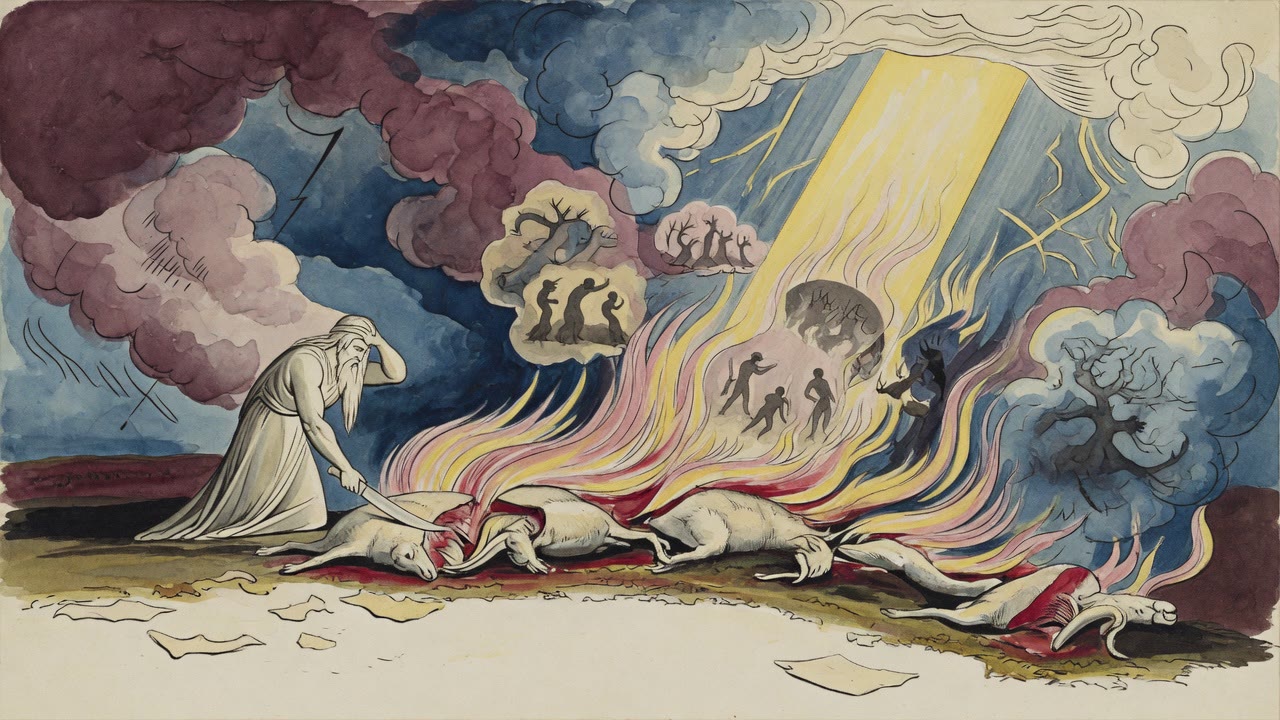
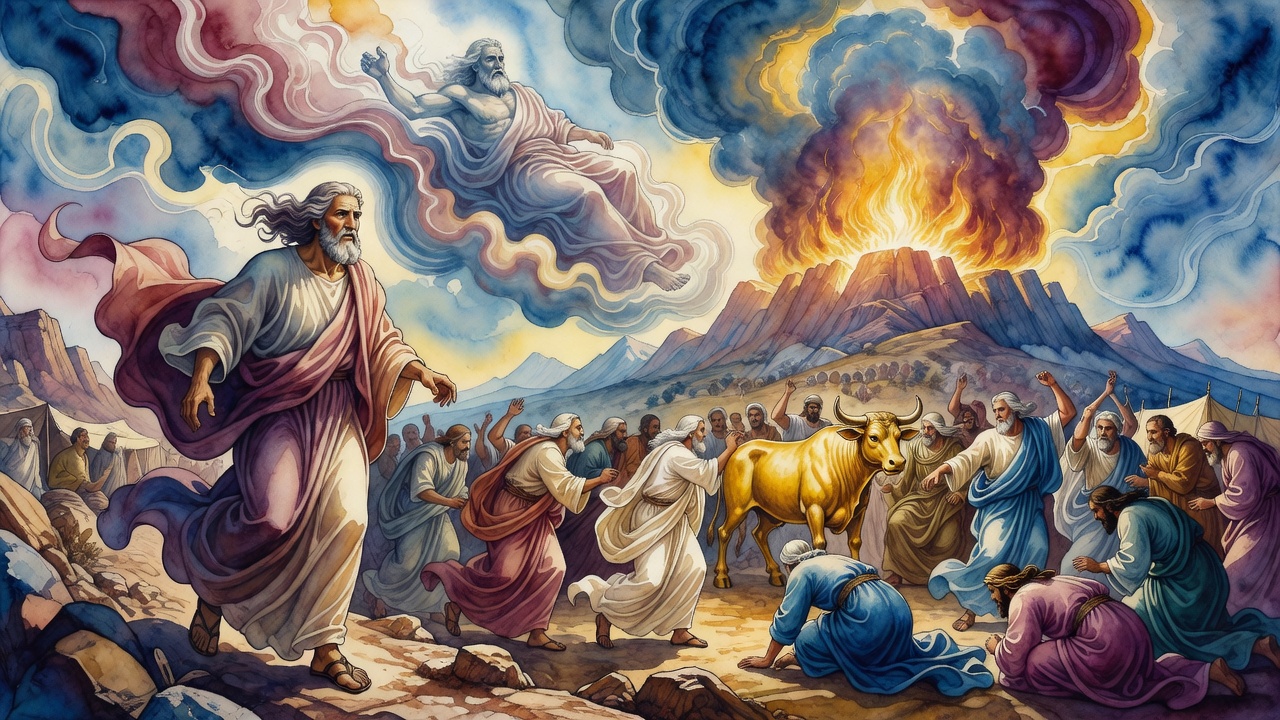
Satana entered the fire. The calf came out already formed, not shaped by a craftsman's hands. The gold had a face. It had a mouth. It stood as if it had been waiting inside the furnace for someone to feed it earrings.
The people looked at it and said, "These are your gods, Israel, who brought you up from the land of Egypt."
They danced. They bowed. They put instruments in their hands. Satana danced among them, leaping before the people, as if the panic had grown a body of its own and wanted a song.
Joshua Heard War
Moses was already coming down. Joshua had waited partway up, below the cloud, closer to the noise than Moses was. When Moses reached him, Joshua caught his arm.
"There is a sound of war in the camp," Joshua said.
Moses listened longer. The noise rose and broke and rose again. "It is not the voice of the strong who are winning," he said, "and not the voice of the weak who are being beaten. It is the voice of people making merry before a strange service."
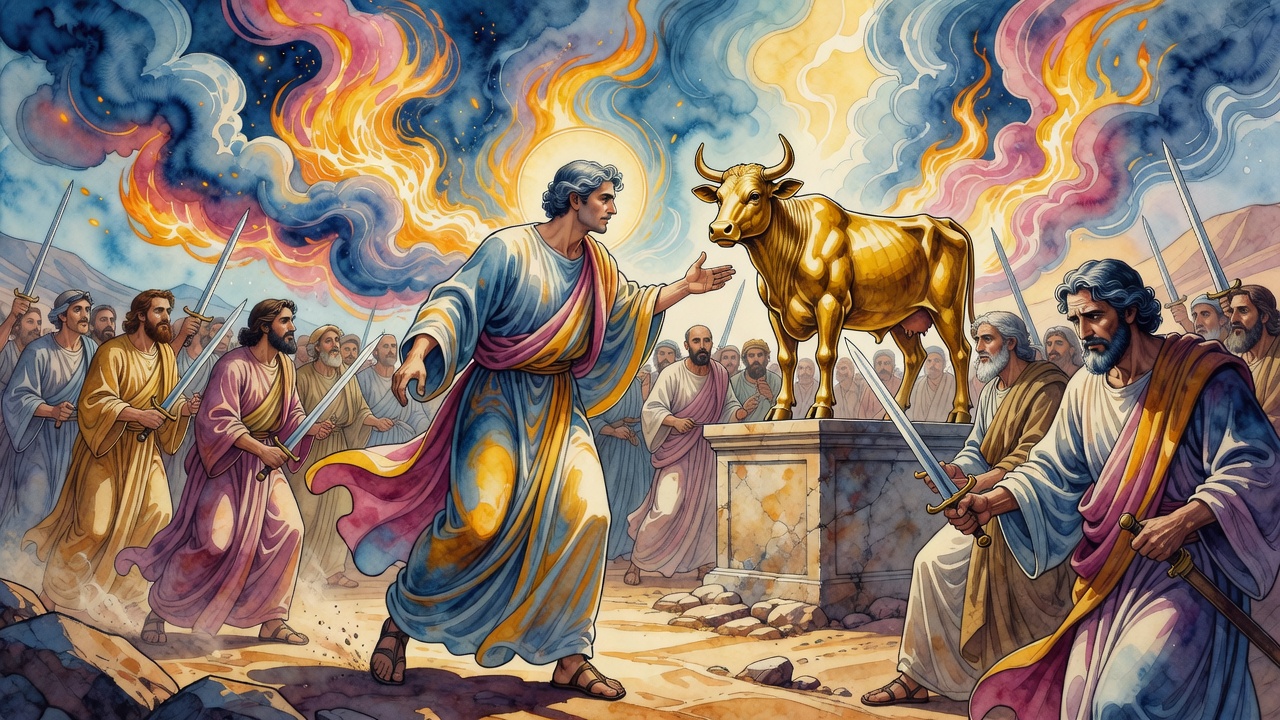
He came around the last ridge and saw the calf, and the music in the hands of the dancers, and Satana leaping in front of them.
The Letters Left the Stone
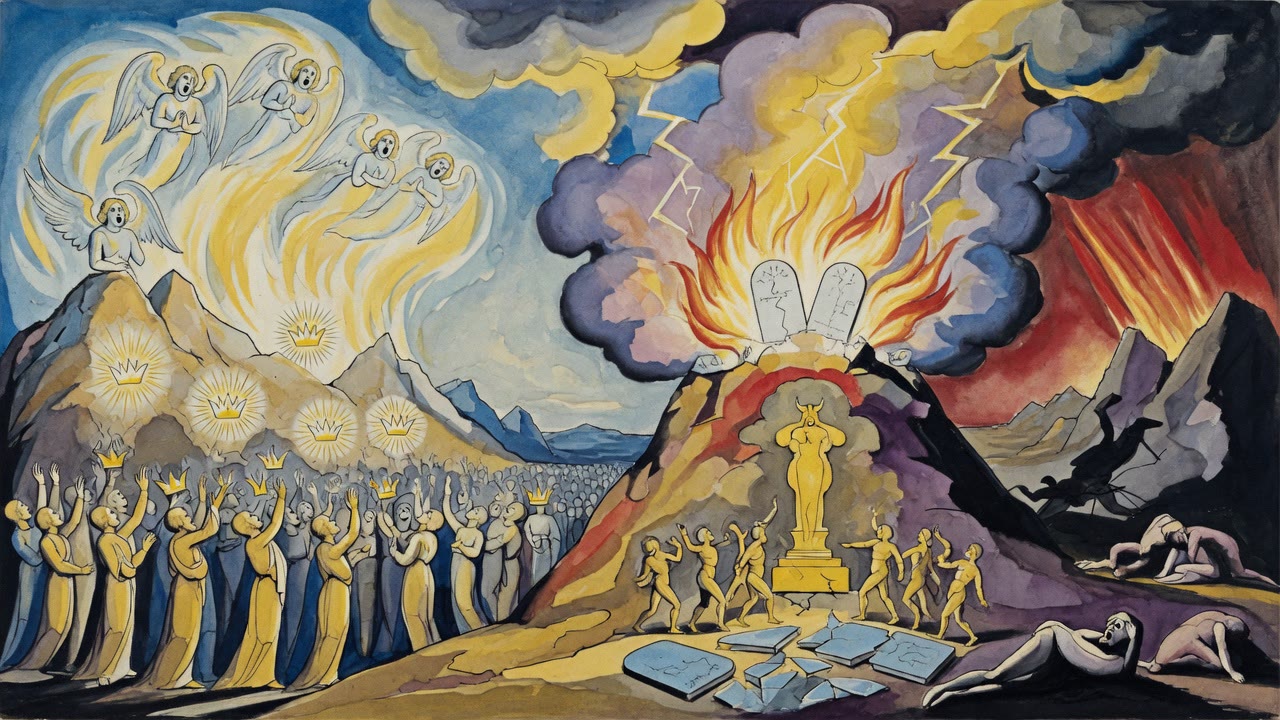
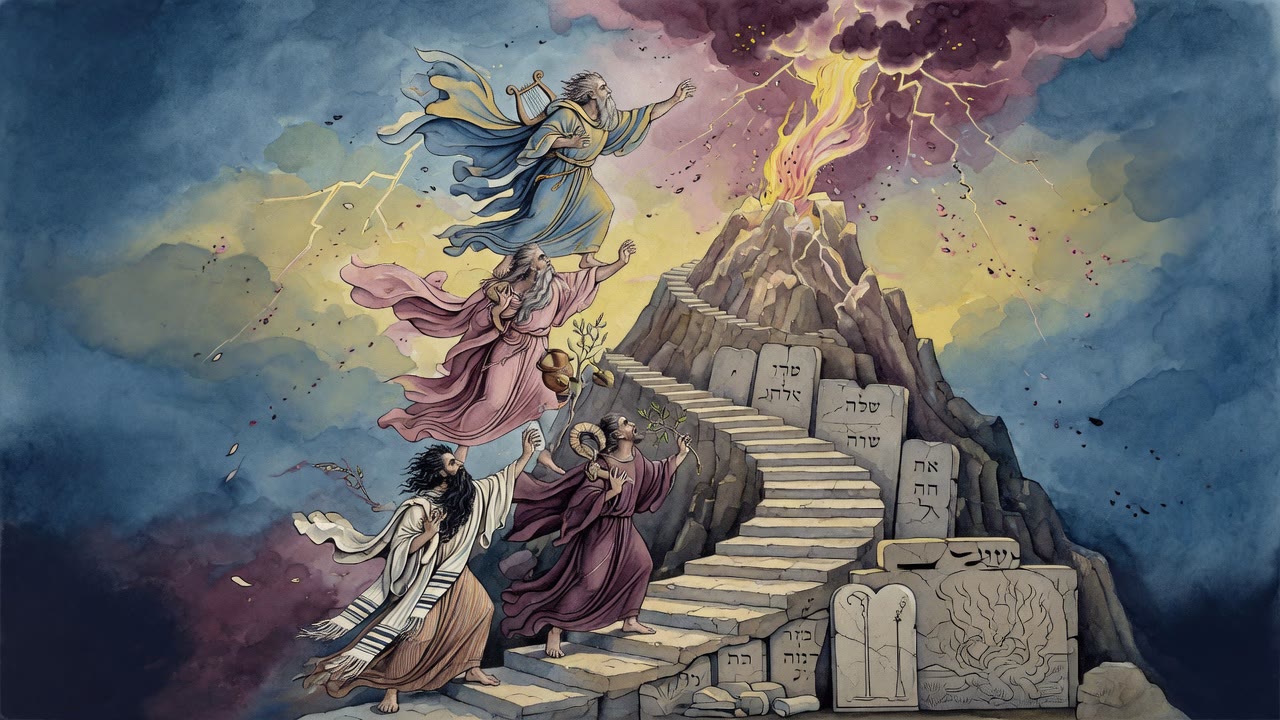
He had been carrying the tablets down from the mountain. Wrath kindled in him all at once. He cast them from his hands and broke them at the foot of the mountain.
The holy writing did not shatter with the stone. The letters flew, carried away into the air of the heavens, the same air that had held the false corpse. Moses stood in the fragments and cried out against a people who had heard, forty days earlier, that they were not to make an image, and had made one anyway.
"Woe upon the people," he said, "who heard at Sinai from the mouth of the Holy One, You shall not make for yourself an image, and at the end of forty days make a useless molten calf."
The Gold Came Out on Their Nostrils
He burned the calf. He bruised it to powder. He cast the powder on the face of the stream and made the sons of Israel drink.
Whoever had given a trinket of gold to that thing, the sign of it came forth upon his nostrils. A man wiped his face and the mark stayed. A woman bent to the water and rose with the calf on her skin. The camp could see, on a face, who had bought the thing and who had only stood near the noise.
Moses had the fragments at his feet, the stream running with dust, and the sound of that merriment still in his ears. The gold they had offered as a stand-in for God's presence now marked the people who had offered it.
← All myths