The Torah Letters Flew Out of Fire and Stone
Wet wool sat over his heart so the fire would burn slowly. His students asked what he saw. The parchment burned. The letters rose.
Table of Contents
The parchment burned. The letters did not.
 Click for full size
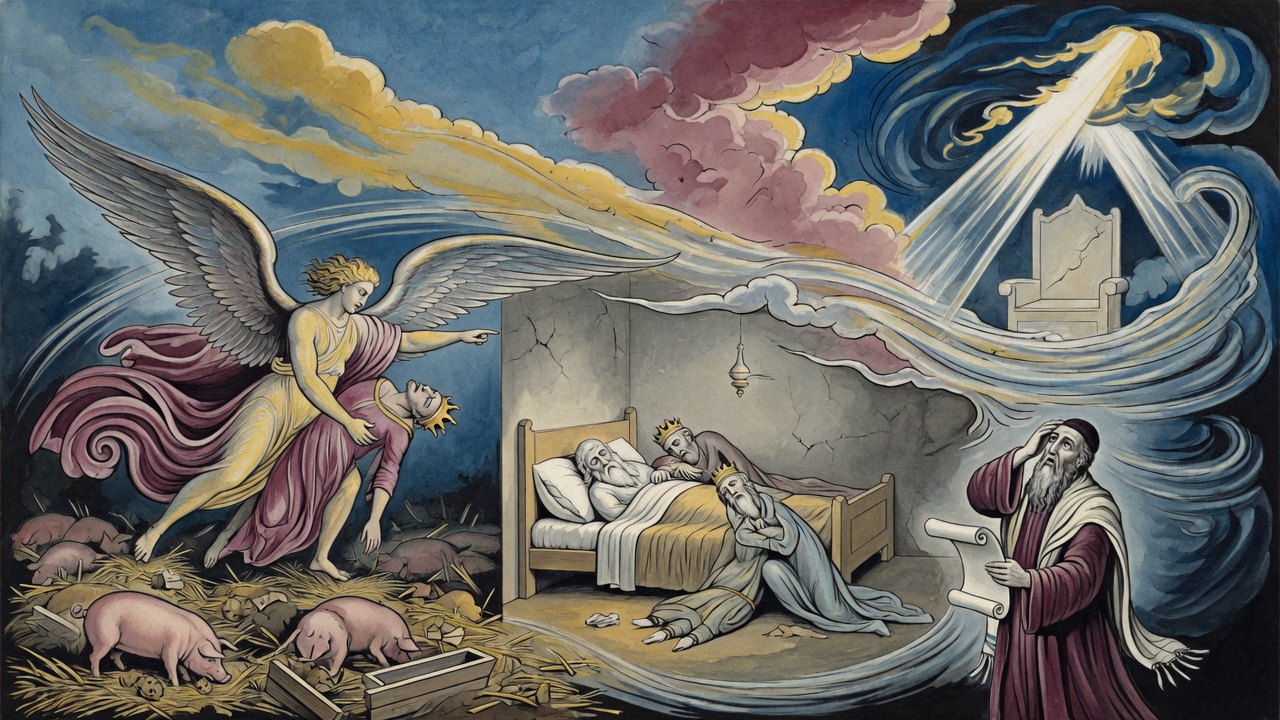
Rabbi Chanina ben Teradyon said so from inside the fire. The Romans had tied the Torah scroll around him, the same scroll he had been teaching from, and piled wet green wood at his feet so the burning would be slow. They had laid tufts of soaked wool over his heart. His students stood close enough to hear him and too far to pull him out.
"Rabbi, what do you see?" they cried.
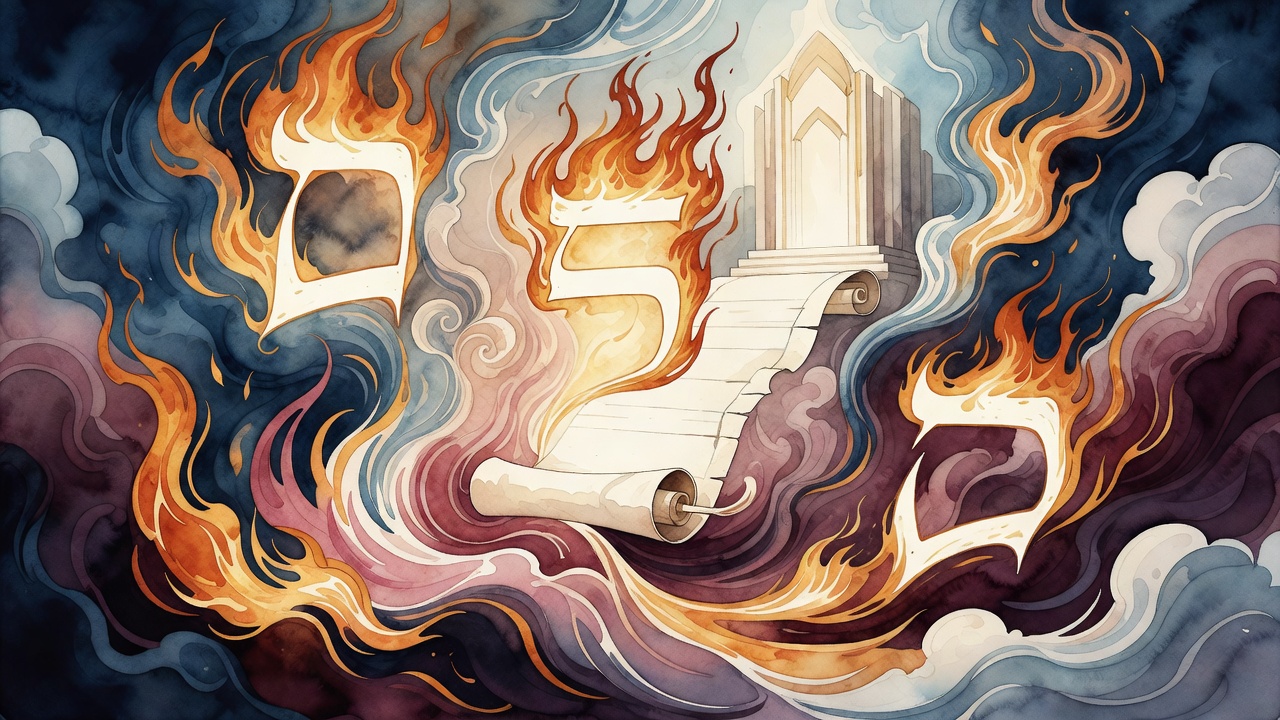
He told them. "The parchment is burning, but the letters are flying upward."
His Family Quoted Justice Verse by Verse
The sentence had come in three parts. When they told him he would die by fire for teaching Torah in public, he quoted, "The Rock, His work is perfect, all His ways are justice" (Deuteronomy 32:4). His wife asked what they had decreed for her. Death by the sword. She said, "A God of faithfulness and without iniquity, just and right is He." His daughter was condemned to a house of shame. She said, "Great in counsel and mighty in work, whose eyes are open upon all the ways of the sons of men."
Three sentences. Three bodies. Each one found a verse and put it in the court's mouth as if the court were only repeating what heaven had already ruled. His daughter cried when they brought him out to the wood, cried for him and for the Law burning with him.
He said, "Is it not better that I should be burned in a fire that can be blown out than in the fire that cannot?" She said she was crying for the Torah too. He answered her from the heat. "The Law is fire, and fire never consumes fire. The parchment may burn, but the words will float on the air."
The Executioner Raised the Flame
The man who kept the fire watched the wool and the slow wood and the students and the letters, if he could see them. He stepped close.
If he pulled the wet tufts off the heart and built the flame up, the suffering would shorten. He asked for a price. "If I raise the flame," he said, "will you bring me to the world to come?"
Chanina swore that he would. The executioner pulled the wool away and fed the fire until it took the body fast. Then he climbed into it himself.
A voice from heaven said both of them, the teacher and the man who had held the torch, had entered the world to come. Rome had set the charge, the wood, the wool, the public place. It had not kept the letters, and it had not kept the executioner.
The Letters Had Left Stone Before
They had done this once already, on a mountain, in a pair of tablets.
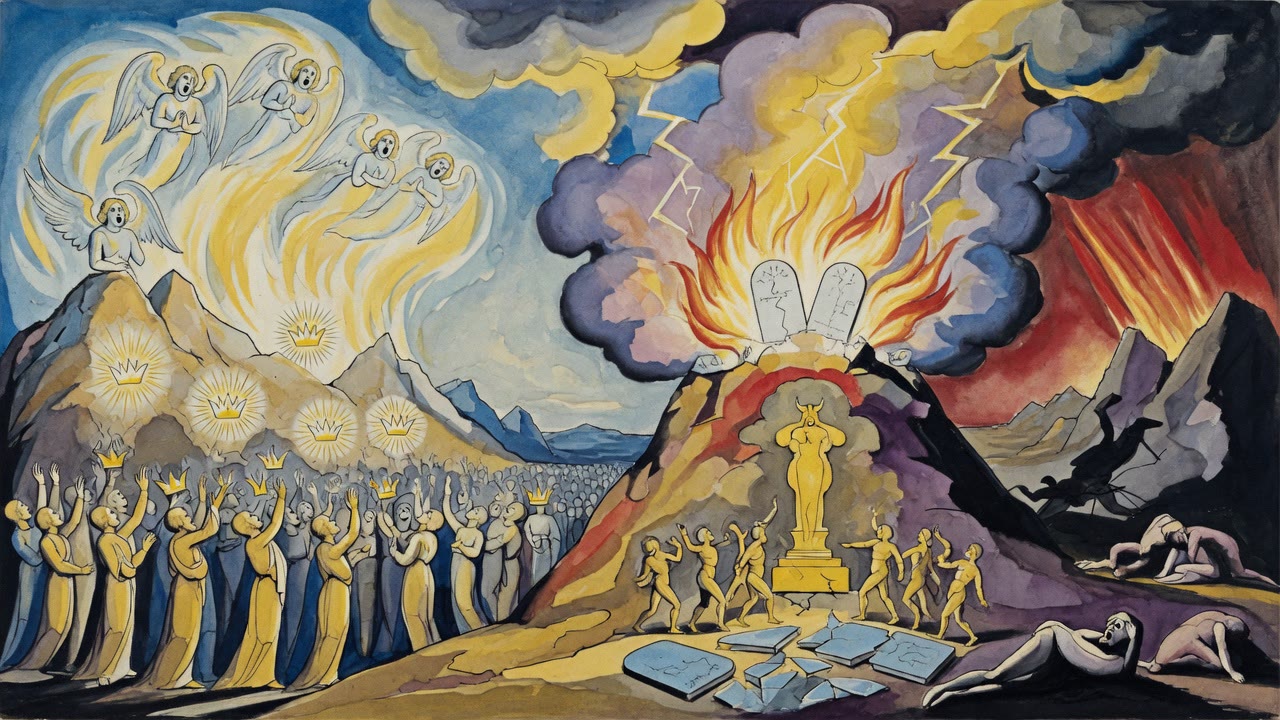
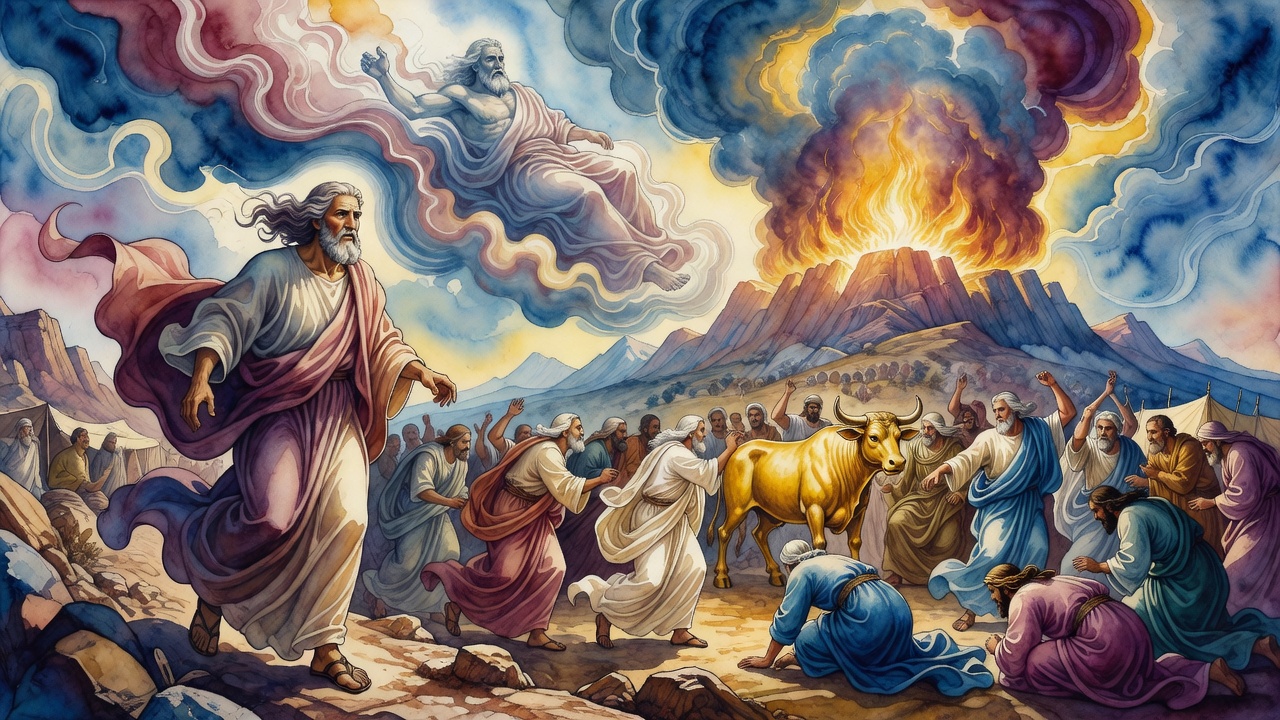
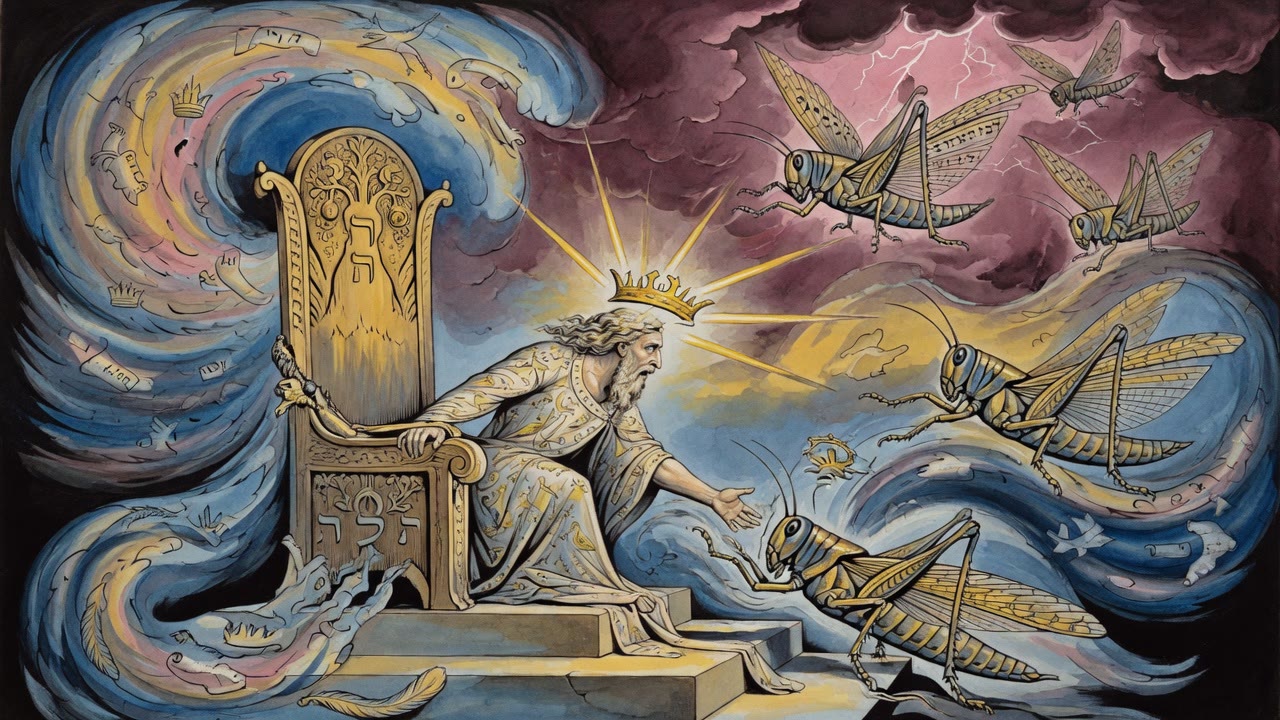
Moses came down from Sinai carrying the writing and drew near the camp. He saw the calf. He saw instruments of music in the hands of the people who were dancing and bowing to it. He saw the Accuser, Satana, dancing and leaping in front of them. His wrath kindled all at once. He threw the tablets from his hands and broke them at the foot of the mountain (Exodus 32:19).
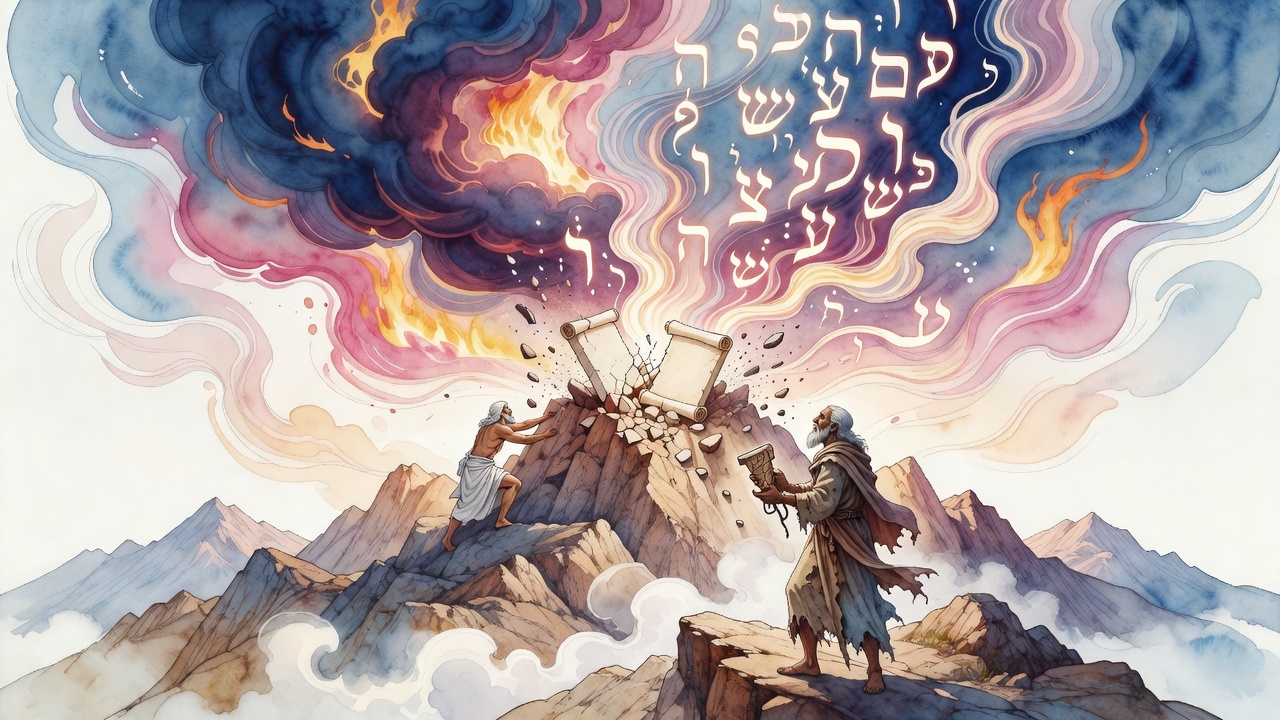
The holy writing that was on them flew and was carried away into the air of the heavens. The stone shattered. The letters did not stay to die with it. Moses cried, "Woe upon the people who heard at Sinai from the mouth of the Holy One, Thou shalt not make to thyself an image, and at the end of forty days make a useless molten calf."
The air took the writing. The camp kept the calf. The container lost.
Two Empty Containers
Chanina's last work as a teacher was to name what his students were watching. Parchment going. Letters leaving. The same flight Moses had forced when he broke the tablets rather than carry holy writing into a dance around gold.
The scroll around Chanina blackened and fell. The tablets at Sinai had already lain in pieces. In both hours the letters were elsewhere, in the air, not available to the fire or to the calf or to the men who thought a body and a stone were the whole of the Law.
His daughter had been right to cry for him. She had been wrong to think the Torah was burning with him. It was already gone upward, the way it had gone upward from Moses' hands.
← All myths