God Coaxed Moses Back and Guarded the Glory No Eye Sees
All Israel lined the path when Moses walked to the Tent. Then God told him to go back to the camp, and he said no.
Table of Contents
Moses was told to go back to the camp. He said no.
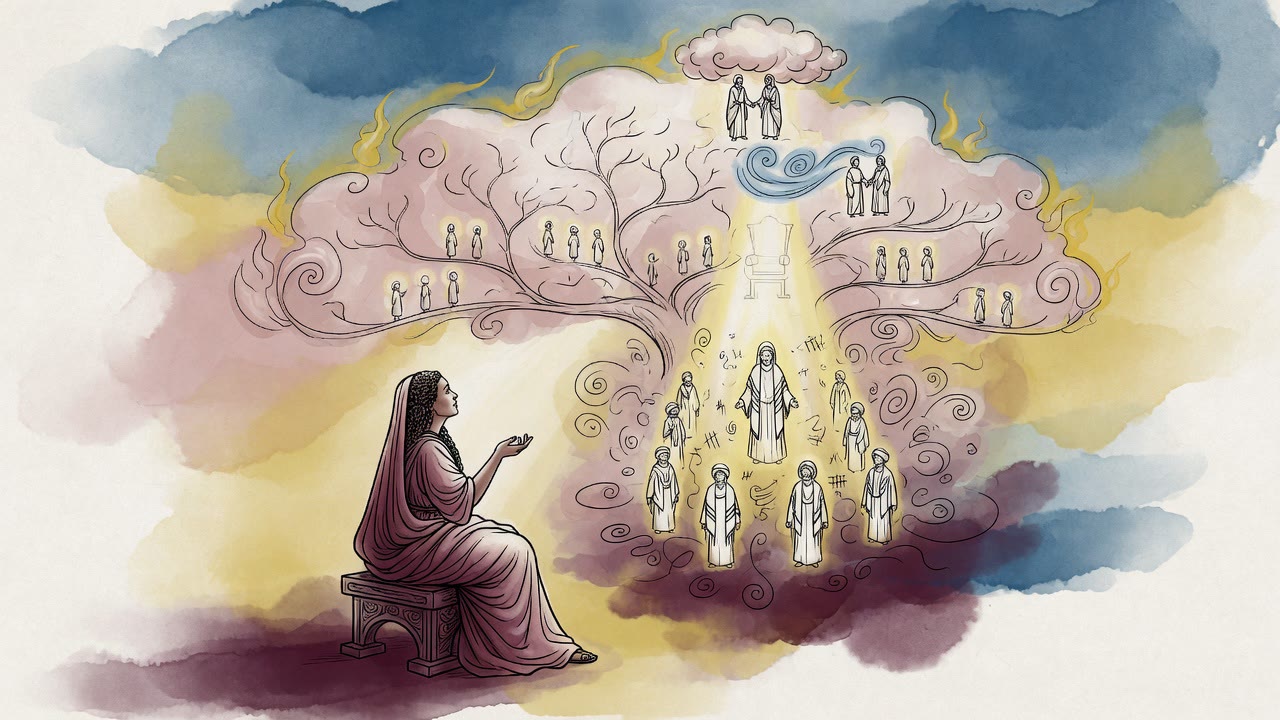 Click for full size
Not delay. Not a man still finishing his business. A flat refusal, aimed upward at the One who had every right to dismiss him. God had given the command. Moses had heard it. He was not leaving.
The Camp Lined the Path
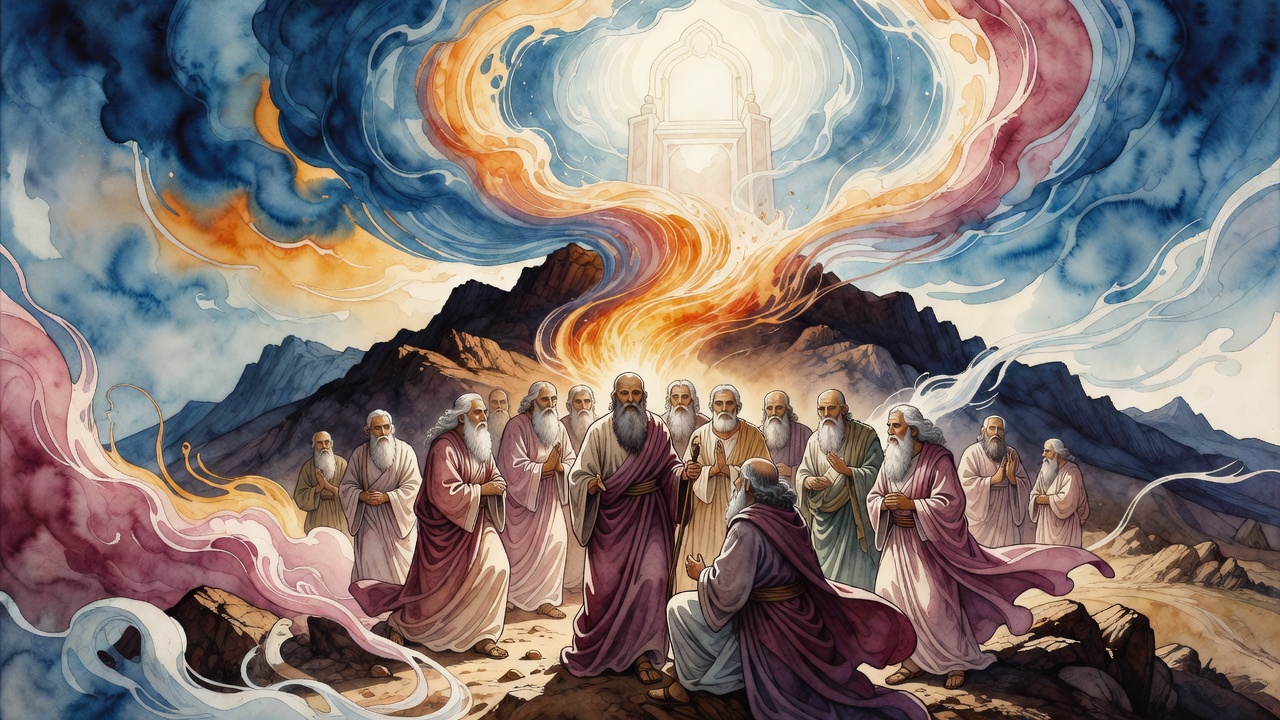
Whenever Moses walked out toward the Tent, all Israel lined the sides to honor him. "Blessed is she who bore him," they whispered. "What does God see in him?" When he entered and the pillar of cloud came down, they knew the Shechinah (שכינה), God's presence, had drawn near to speak with him. Face to face, as a man speaks with his friend (Exodus 33:11).
People pressed each other to watch him pass. The cloud stood at the entrance. The camp rose where it stood, because something had come down to speak with one man. Not with them. Not with Aaron or the elders. With Moses alone.
The Orphan Already in the Palace
God said, "Moses, go back to the camp." Moses answered, "I will not return."
So God told him a parable. A noblewoman quarreled with her husband the king and stormed out of the palace. Inside the palace she had been raising a little orphan girl. The king sent word: come home. She refused. He tried again. She refused again. Then he played the one card that could reach her. "Know this," he said. "The orphan girl is being installed in the palace in your place."
God used the same argument. "By your life, Joshua already stands in the Tent of Meeting." Come back, not for Me. Come back for them. They cannot grow without you leading them.
The leverage landed. The threat was not a whip. It was a student already standing where he stood.
If Your Presence Does Not Go
Moses pushed back. "Master of the Universe, was it not for Your honor that I burned against them? You Yourself say, Bring up this people. You cannot abandon them."
God answered, "I have sent an angel before you."
Moses would not be handed to a messenger. "If Your Presence does not go, do not bring us up from here" (Exodus 33:15). Then he asked for the last thing. "Show me Your ways."
God had taught him every cure but one, the remedy for the plague that cannot be cured. Moses asked for that last secret. This once, God told it to him.
The Glory Even Angels Do Not See
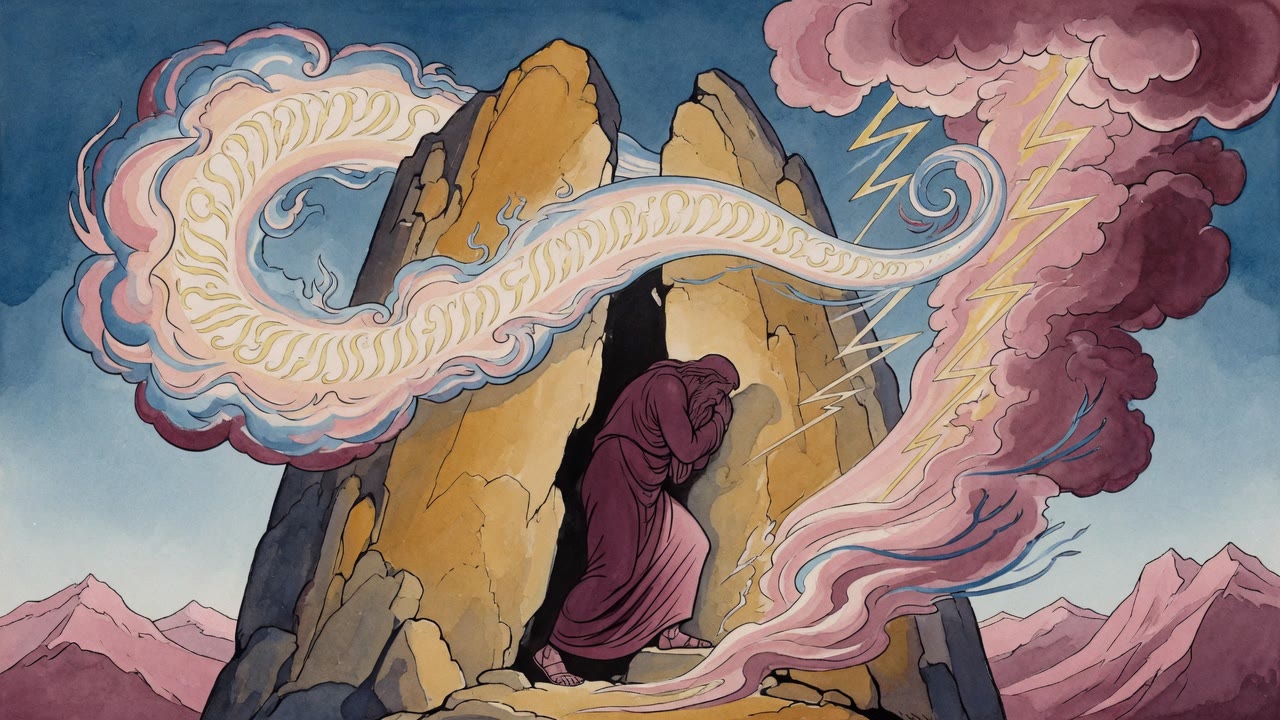
Moses asked to see the glory in full. The answer was a gift and a refusal. "No person shall see Me and live" (Exodus 33:20). Then God arranged a crevice in the rock and a sheltering hand. When My glory passes, I will take My hand away and you will see My back. Not My face.
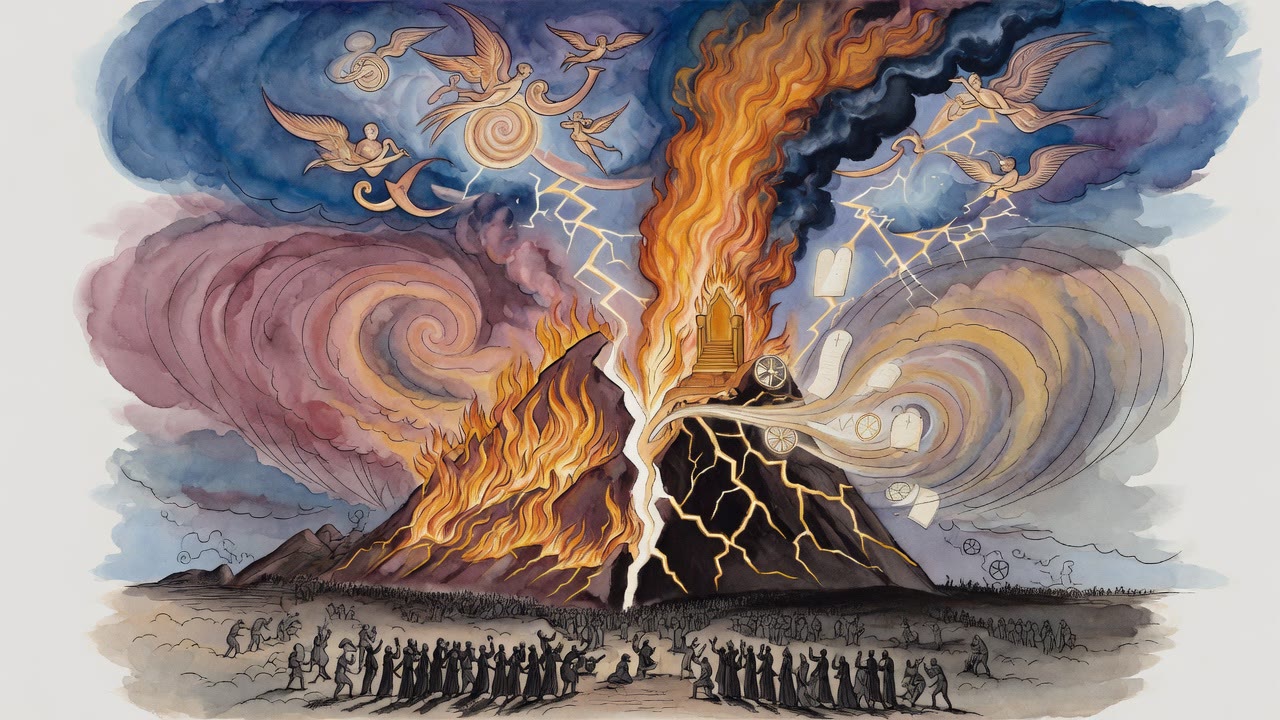
What Moses was shown from behind was not shown even to the highest angels. Not the Ofanim. Not the Seraphim. Not the Hayot who carry the throne. When the Holy One passes, they cover their faces and their feet and are still. They have never seen what Moses glimpsed from the cleft, because the Presence speaks to them as it moves, and they do not look up until it has passed.
Rabbi Akiva said even the holy creatures do not see the glory. Ben Azzai climbed one rung more: even the angels, who never taste death, never see it either. The vision sat beyond all of them. Moses received it from behind, in stone.
The Speech That Waited Thirty-Eight Years
Everything God said in that intimacy was spoken for Israel's sake. Go out, He said, and carry these words to the people. The thirteen attributes of mercy, the self-declaration, the covenant language: all of it was meant to be carried down the mountain into the camp.
For thirty-eight years in the wilderness, while the generation condemned to die was dying off, the direct word to Moses fell quiet. Only when that generation had passed did the speech resume. When Israel was estranged, the conversation stopped, because the conversation had always existed for Israel's sake.
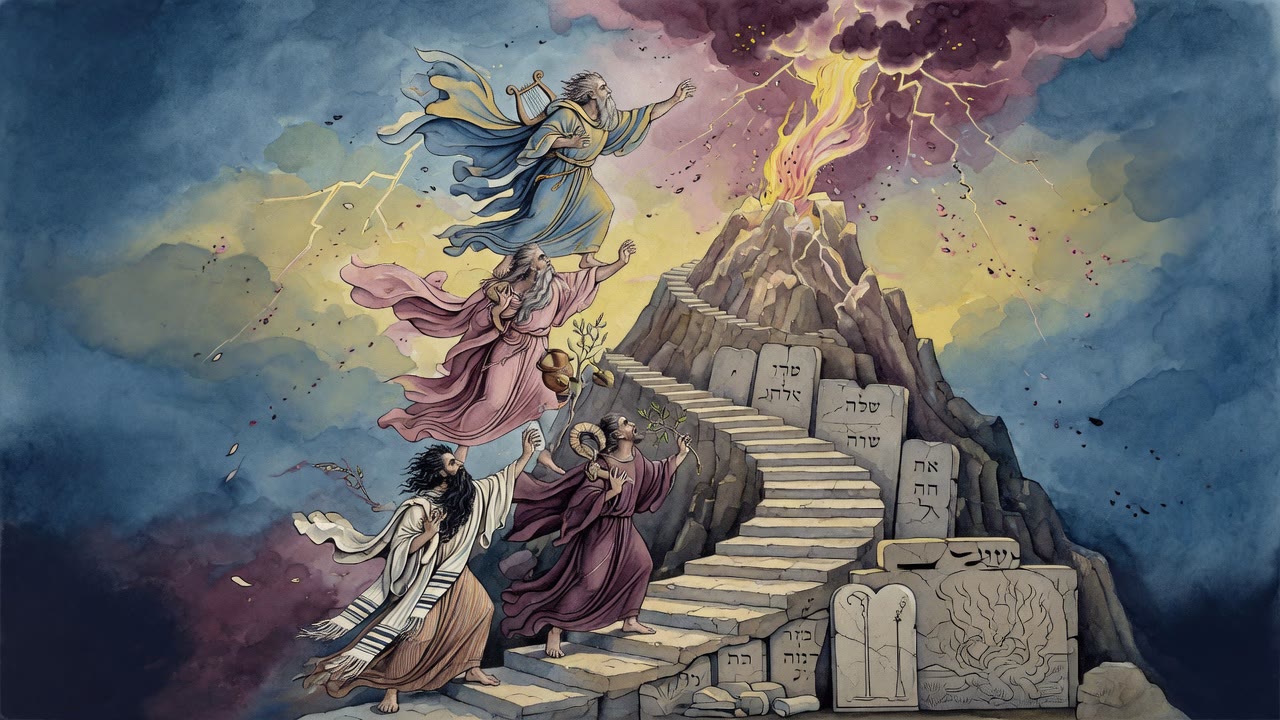
When God came to give the Torah, He spoke the Readings, the Mishnah, the aggadah, and the Talmud. "Go and teach it to the children of Israel." Moses said, write it down for Your children. God refused the whole gift in ink. The nations would rule and take a written book, and Israel would look like every other people. So Moses said, write the Readings. Keep the Mishnah and the Talmud in the mouth. The distinction would live where a soldier could not seize it.
Moses had refused to leave because he could not bear to break the connection. God drew him back by pointing to Joshua already in the Tent, and to the people below. The glory he glimpsed from behind was not a private reward. It was a deposit Israel would have to live on for a very long time.
← All myths