After the Angel Michael Summoned Moses, Sapphire Tablets Came From God's Throne
An archangel calls Moses up, the tablets are cut from the throne's sapphire floor, and the glory he glimpses is the knot of God's tefillin, prayer straps.
Table of Contents
 Click for full size
The Archangel Who Issued the Summons
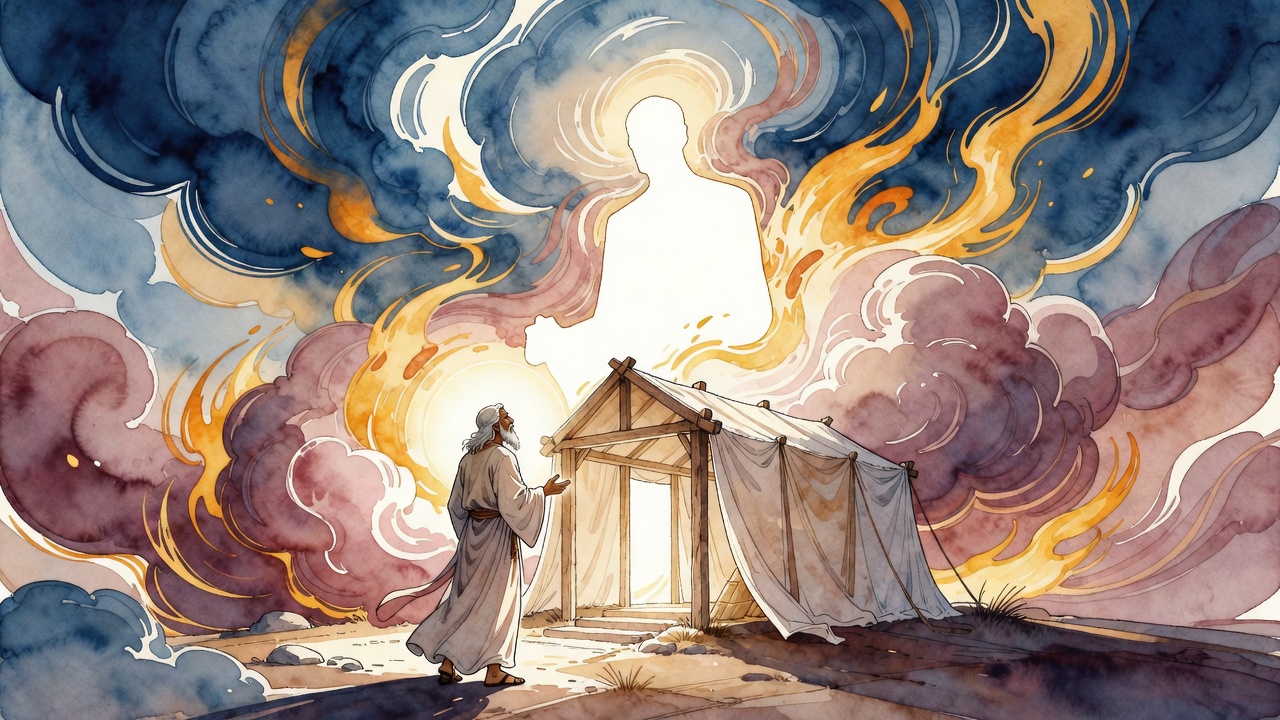
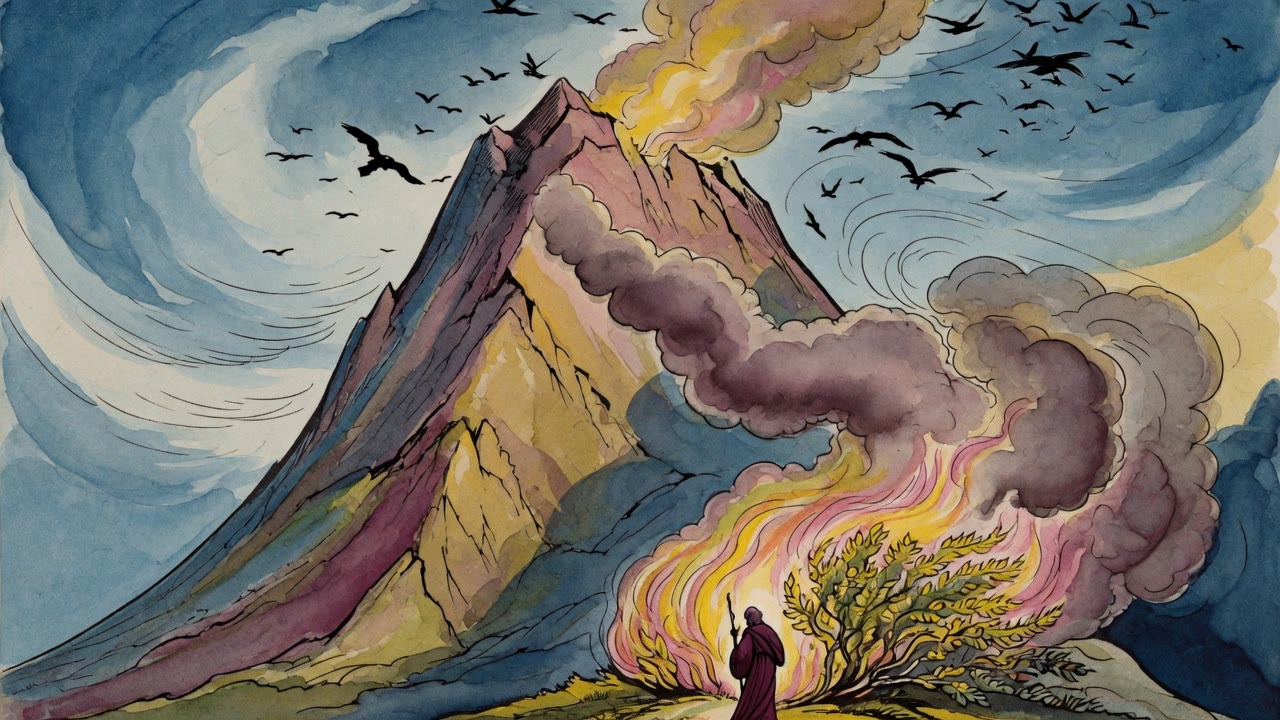
The Hebrew says simply: and to Moses He said, come up to the Lord. No intermediary is named. The command arrives as if God spoke directly. Targum Pseudo-Jonathan names the intermediary. Michael, the Prince of Wisdom, said to Moses on the seventh day of the month: come up before the Lord.
Michael as Sar Hokhma, Prince of Wisdom, carries Israel's case in the heavenly court and serves as the archangel closest to the throne in the angelological traditions the Targum draws on. The Targum is not replacing the divine address with a lesser one. It is specifying the channel through which it arrived. The invitation to the covenant ceremony came through the highest available messenger, named, dated to a specific day of the month, addressed to a specific group: Moses, Aaron, Nadab, Abihu, and seventy elders. The names were called in order. The day was fixed on the calendar. The list was closed before the ascent began. The precision is deliberate. Heaven organized the Sinai meeting as a formal occasion, summoned by the one voice in the court that stood nearest the seat of glory.
The Tablets From the Throne's Floor
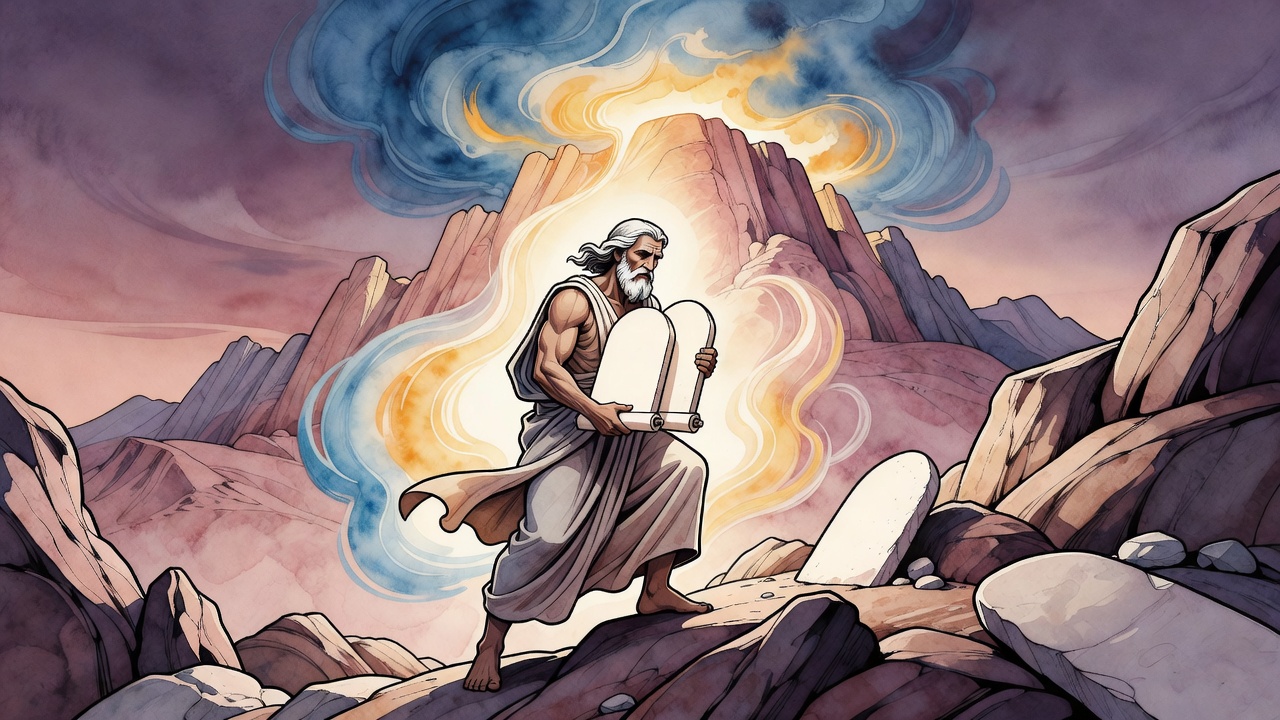
When Moses came down from Sinai the second time, he was carrying something that had not been quarried from any mountain. Targum Pseudo-Jonathan specifies: the two tablets of testimony were tablets of sapphire-stone from the throne of glory, weighing forty sein, inscribed by the finger of the Lord.
The sapphire connection was not invented by the Targum. Exodus 24:10 had already described the pavement beneath God's feet when the elders of Israel saw the foundation of heaven as a work of sapphire-stone, clear as the sky itself. The tablets, in this reading, were carved from that pavement. The commandments were written on the floor of the divine throne room and carried down to earth by one human being. The stone was blue and clear, the color of the sky seen from above, and the letters stood cut into its face by no chisel but the finger of God. Their weight, forty sein, was enormous, too heavy for an ordinary person to lift, let alone bear down a mountain. Moses carried them because he had been changed by forty days inside the cloud. The man who came down was not the same weight as the man who went up.
The Procession of Ministering Angels
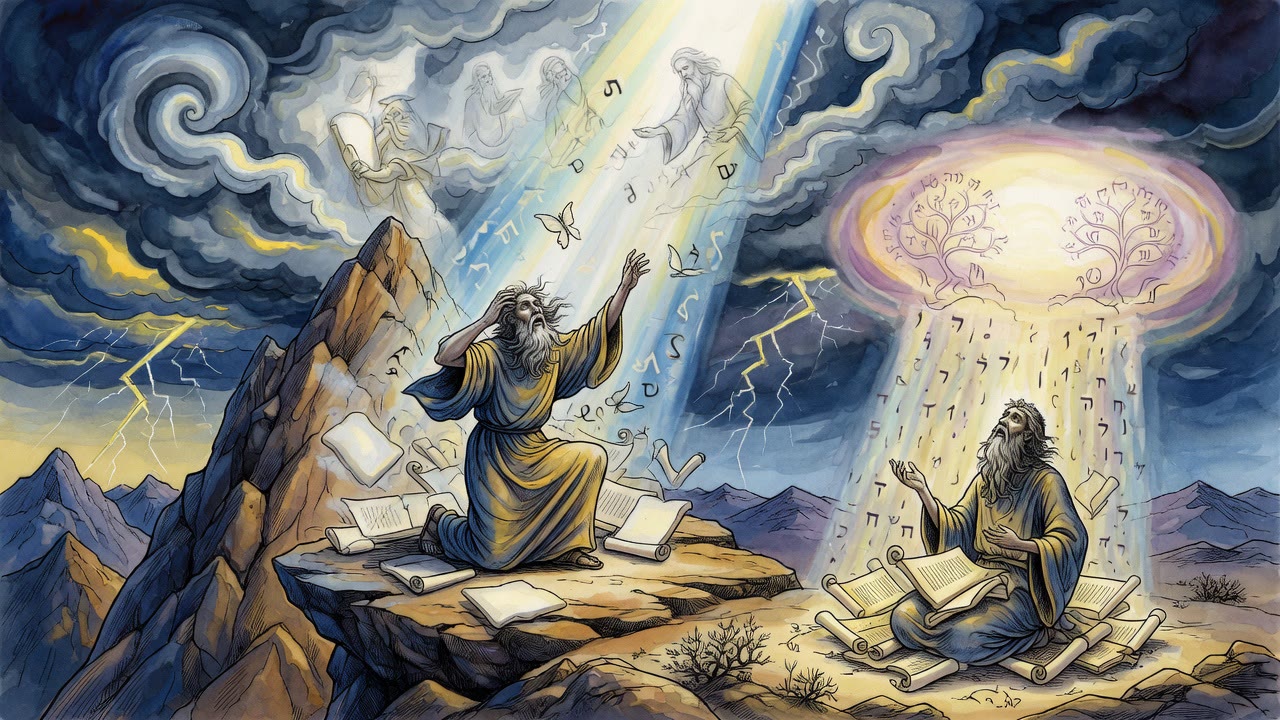
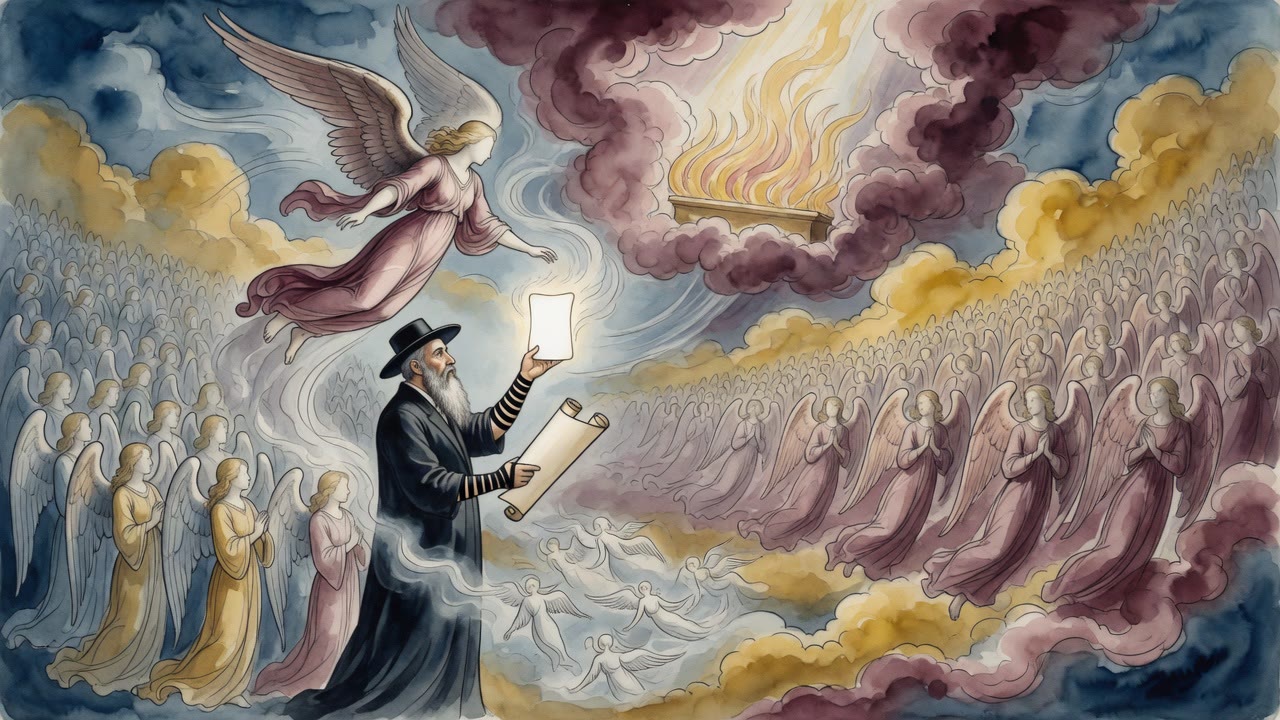
Moses had asked to see the divine glory. The answer was no, not the face, but the back. Targum Pseudo-Jonathan explains what the back consisted of: I will make the host of angels who stand and minister before Me to pass by, and you shall see the handborder of the tefillin (prayer boxes bound on arm and head) of My glorious Shekhinah (the Divine Presence), but the face of the glory of My Shekhinah you cannot be able to see.
Two images arrived in that single verse. First, the back of God was the procession of the ministering angels. Moses stood in the cleft of the rock and watched the heavenly court cross in front of him, rank after rank of the host that stand and minister, passing by in their service. He saw the angelic court in motion, not God Himself. What crossed his vision was the heavenly liturgy walking, the whole standing army of heaven turned into a moving wall that screened the face he was not permitted to see.
The Knot Moses Saw From Behind
Second, and this is the Targum's most stunning detail, Moses saw the knot of God's tefillin (the leather prayer-boxes bound on head and arm). As the procession passed, his eye fell on the handborder, the edge of the strap, the knot bound at the back where the leather is tied. The Talmud in Berakhot 7a develops this further: just as Moses asked to see God and was shown the divine tefillin-knot, so Israel is blessed because the Holy One wears the prayer-straps that bind Him to the people, and the people sees the beauty of that binding from behind. Moses was permitted to see the structure of the divine commitment to Israel, expressed in the image of leather straps bound and knotted, the same act of binding that every Jew performs each morning on their own arm. The knot at the back of God's head answered the knot tied each dawn at the back of a worshipper's. Moses saw, from behind, the matching half of a bond he already wore.
← All myths