The Mountain That Leaned Forward to Greet Moses at the Bush
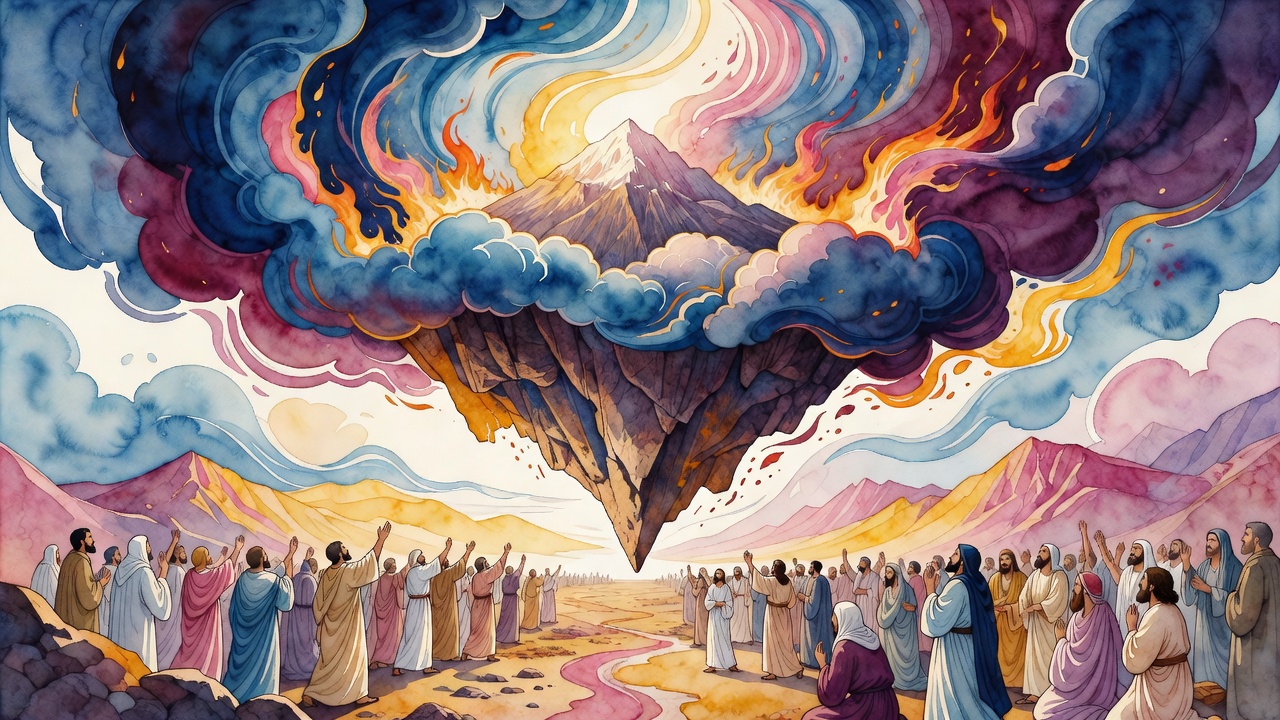
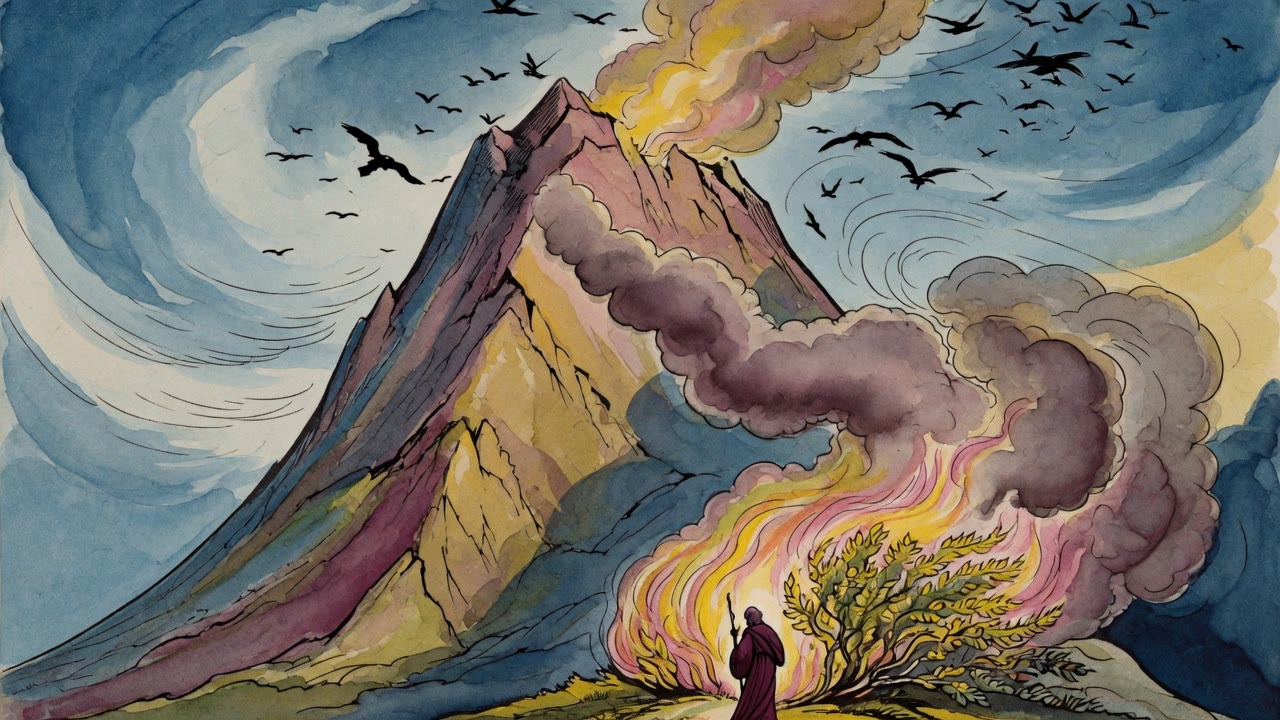
Birds banked away from the peak. The mountain leaned toward Moses like a man at a door, and the bush blossomed while it burned.
Table of Contents
The flock came in over the desert toward the peak, then split apart in the air. Moses shaded his eyes and watched it happen twice more. Starlings rose, neared the mountain, and peeled away as if the sky above the stone had turned solid. Ravens banked. Even the small insects that should have ridden the heat off the rock would not cross above it. He had driven his father-in-law's sheep this far into the wilderness more than once, and never noticed. Now he could not stop noticing. The animals knew something about that mountain, and they were afraid of it.
 Click for full size
He counted the sheep, set them grazing on the low scrub, and walked toward the slope. The closer he came, the heavier the air felt, the way air feels before lightning, thick and waiting. He told himself it was only weather. The birds overhead said otherwise.
The Stone Leaned Toward Him
Then the mountain moved.
It did not shake the way mountains shake. It did not crack or spill rock down its face. The whole mass of it leaned, slow and deliberate, the way a man leans forward in a doorway to greet a guest he has been waiting for. The peak tilted toward Moses. The slope strained in his direction. He stopped walking. A shepherd learns to read fear in animals and to stand still when something larger than himself is deciding what to do.
He took one more step. His sandal touched the base of the slope, and the mountain settled back into place, easy and quiet, like a held breath let go. Whatever it had been straining toward, it had reached. The stone was still again. The silence on that slope was the silence of a thing that had been expecting him by name.
The Fire in the Upper Branches
And then he saw the bush.
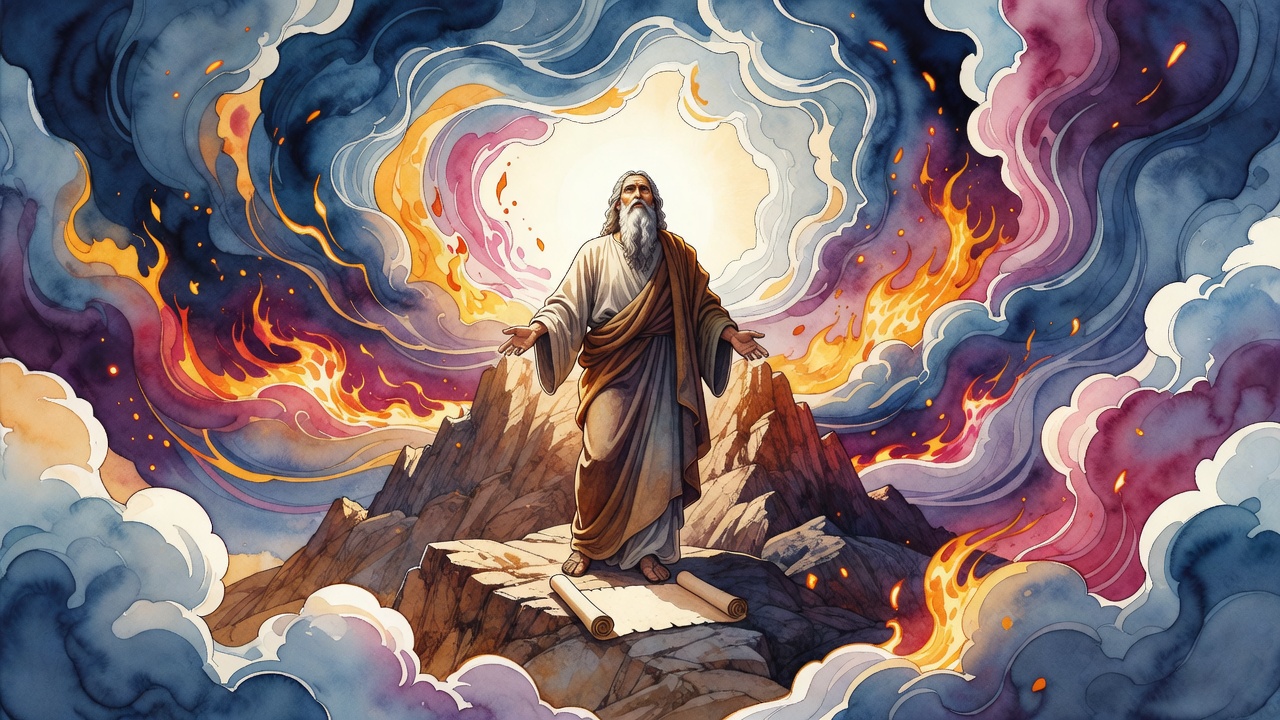
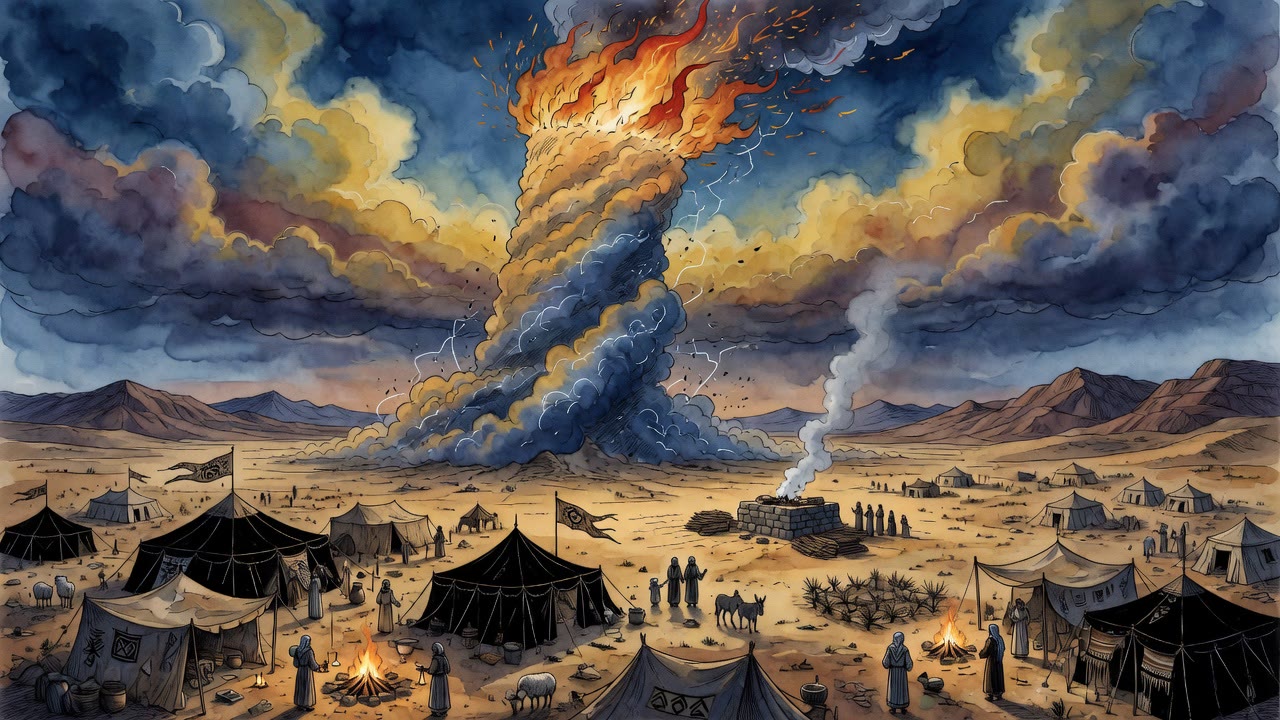
It grew low against the rock, a thornbush like a thousand others he had passed, dry and gray and unremarkable. From its upper branches the fire was leaping. Not creeping up from the roots the way brushfire climbs, but standing in the high branches and reaching upward, bright and steady, throwing no smoke he could smell. He moved toward it the way a man moves toward any fire in dry country, half meaning to beat it out before it spread to the scrub.
He got close enough to feel that there was no heat coming off it the way heat should. And the thornbush was not blackening. The branches that held the flame were not curling, not charring, not falling to ash. They were green. Where the fire touched the wood, the wood put out small blossoms. He stood at the edge of a fire that was making the bush bloom (Exodus 3:2).
A Fire That Would Not Devour
He had seen fire all his life. He had cooked over it, carried it, watched it eat through a season's grazing in an afternoon. Fire took. Fire reduced. That was the one thing about fire a man could trust. This fire gave nothing back to ash. It burned and the bush kept its leaves. It burned and put out flowers. It surrounded the thornbush and refused to consume it, holding the wood the way a hand holds something precious without crushing it.
Three things at once, then, none of which the world had taught him. A flame that made blossoms grow. A flame that did not devour what it clung to. A flame burning in a bush that should already have been a black skeleton on the rock, and was not. He did not have words for what he was looking at. He only knew it was not a thing of this desert, and that it was alive in a way fire is not alive, watching him as much as he was watching it.
His Own Name, Twice
Out of the fire came his name. Not once. Twice, close together, the way you call someone you love and cannot wait for, the way a father calls a child in from the dark. Moses, Moses.
He did not reach the bush on his own daring. A man does not walk up to a thing like that uninvited, not even the man who would stand on that peak more than any other. He answered the only way there was to answer, the word that means here I am and nothing held back, Hineni (Exodus 3:4). Only then did the voice go on. He was carried into what came next on a cloud, lifted off the slope he had climbed as a shepherd, set down in it as something else.
The Mountain Remembered, and the Birds Forgot
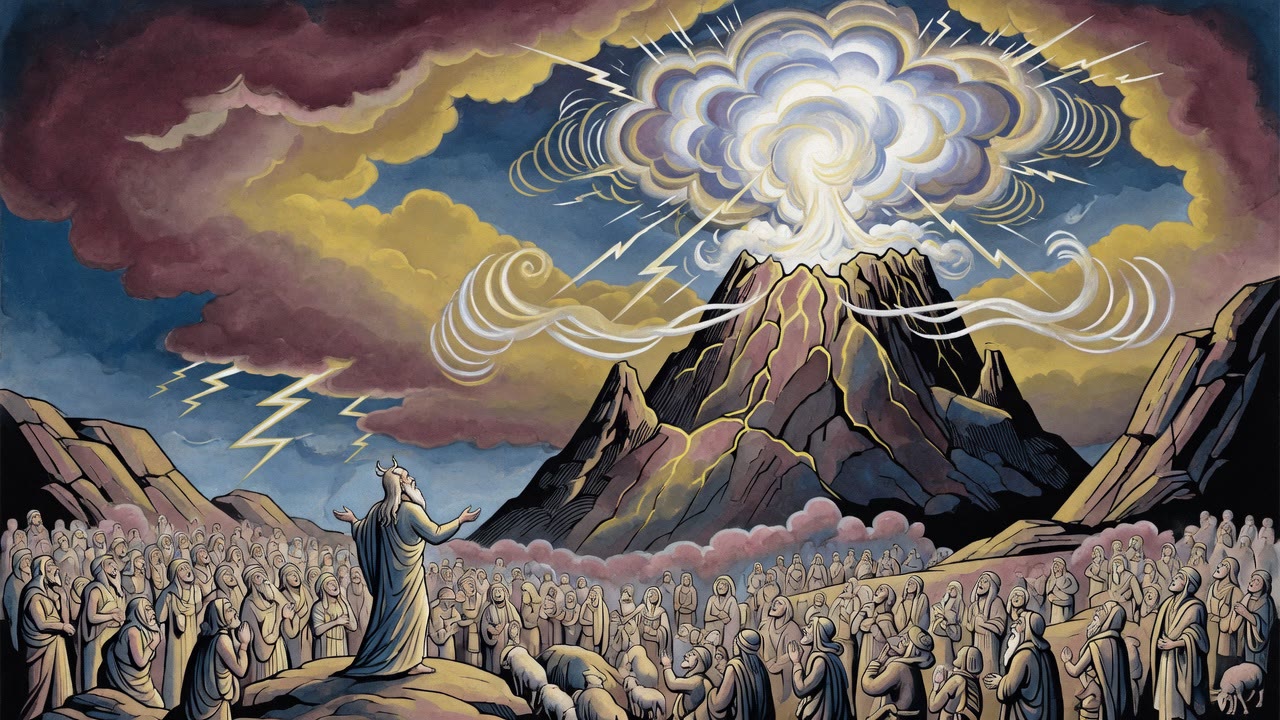
Long after, when Moses had gone where men do not follow, someone went looking for him. He climbed to that same peak, certain that if Moses was anywhere he was on the mountain where the law had been handed down out of the divine right hand. He stood on the stone that had once leaned to greet a shepherd and asked it plainly. Have you seen the son of Amram.
The mountain answered that since the day Moses received the Torah upon it, it had not seen him again. So the seeker turned to the birds, the same winged things that had once refused to cross the peak. Have you seen Moses. And the birds answered that since the day he divided them into clean and unclean, they had not seen him either. The mountain had leaned toward him once and held the memory. The birds had fled him once and kept the fear. Both had known exactly who was coming up the slope, long before Moses did.
← All myths