When Moses Said He Would Call Out the Name, He Was Setting a Rule
Answer the prayer leader out loud in synagogue and you are keeping a rule from Moses' last poem. He calls the name. The people praise it.
Table of Contents
 Click for full size
The Instruction Hidden in the Opening Line
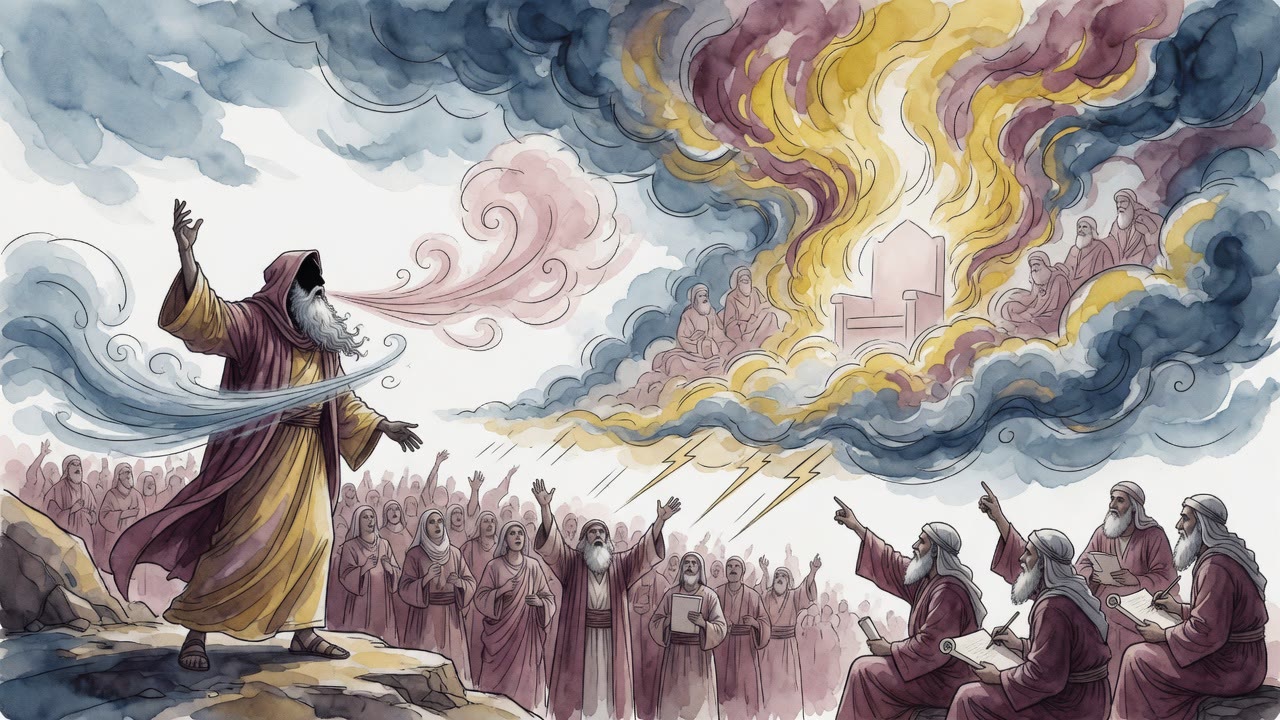
Moses stood before Israel and began his final poem. The first words were: when I call out the name of the Lord, ascribe greatness to our God. The teachers of Roman Palestine read this not as poetic throat-clearing but as a liturgical protocol, and they gave it the weight of scriptural authority.
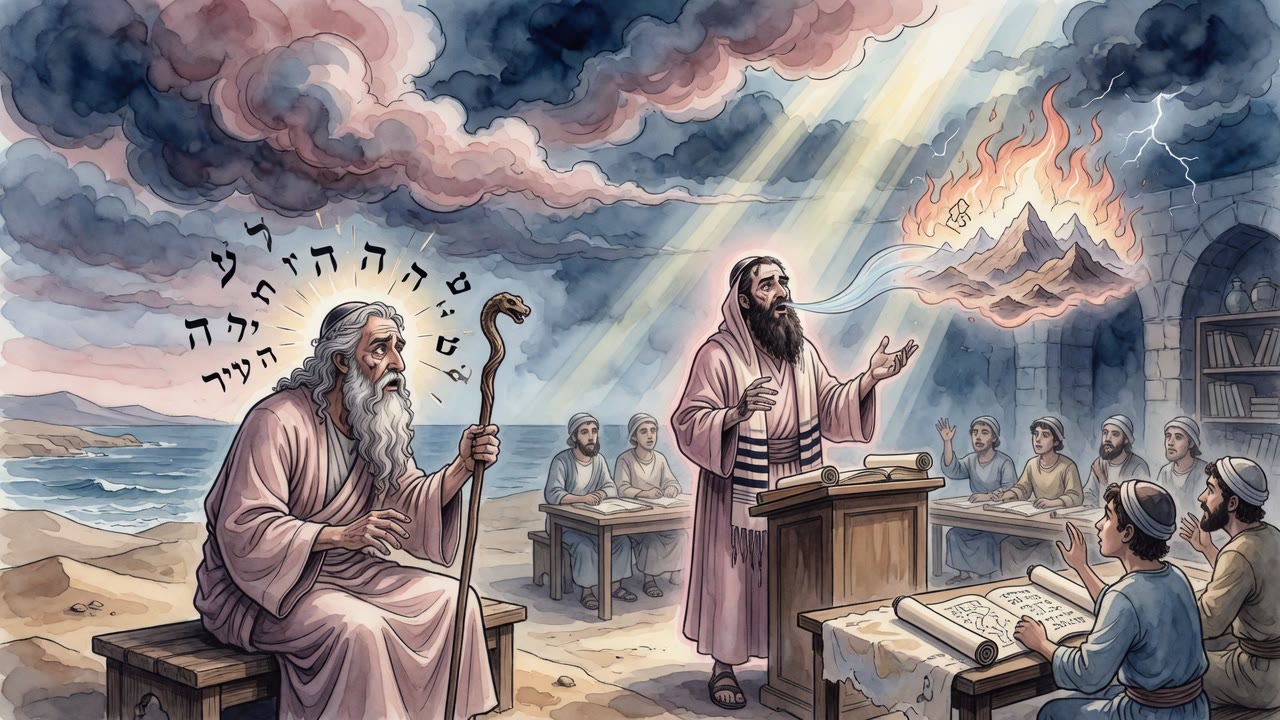
The prayer leader calls. The congregation responds. This sequence, familiar to anyone who has stood in a synagogue and answered Blessed is the Lord who is blessed forever and ever, derives its authority from this verse. Moses announced that he would invoke the divine name, and he instructed Israel to respond with praise. The synagogue practice of congregational response is Moses's instruction carried forward across every generation that has repeated the exchange.
But the Sifrei Devarim was not simply explaining synagogue protocol. It was describing something more. The moment of congregational response is the moment when the divine name is, in a meaningful sense, proclaimed and affirmed. The leader calls. The congregation ascribes. Something happens at that juncture that would not happen if either party were absent or silent.
Why the Name Cannot Be Spoken Alone
The Tetragrammaton, the four-letter divine name that observant Jews do not pronounce, is not a private possession. It belongs to the moment of covenant address between the one who calls and the community that responds. Moses alone calling the name would be incomplete. Israel ascending into praise before Moses calls would also be incomplete. The transaction requires both parties.
This is a theology of covenantal address. The divine name is not an object of private meditation. It is a term in a relationship, spoken in a context, activated by the community's response. When Moses said when I call, he was specifying that calling is one half of an exchange. The other half, ascribe greatness, was assigned to the people. The name becomes fully present in the space between speaker and respondent.
Daniel and the Dawn of Creation
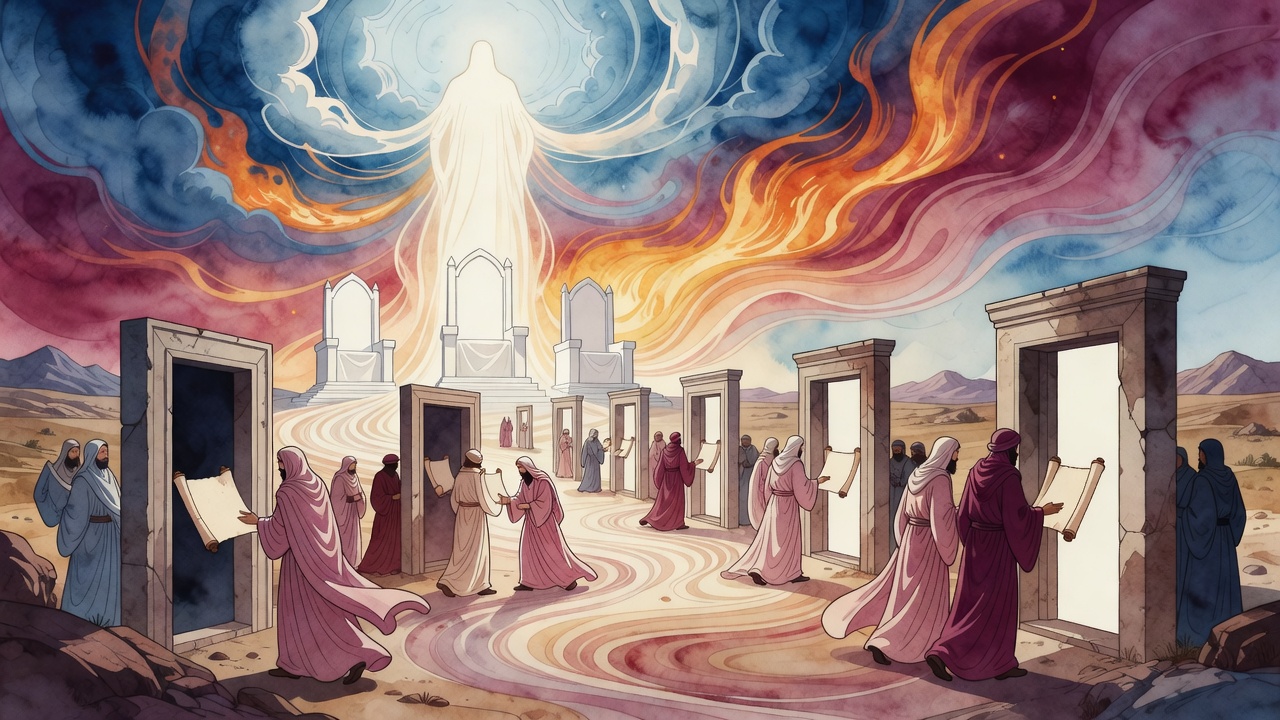
The Sifrei Devarim understood that the divine name carries a special charge when it passes between persons who are joined in covenant. The vision in Daniel 7, where Daniel sees the Ancient of Days seated in fire and ten thousand times ten thousand serving before him, opens with a scene of cosmic liturgy. Judgment is seated. Books are opened. The response comes from the holy ones.
Before creation, before history, before the covenant at Sinai, the pattern was already embedded in the structure of things: the one who calls, the community that ascribes greatness, the Name that becomes present in the exchange between them. Moses was not inventing a practice. He was identifying one that the cosmos had been running since its beginning.
The Cosmic Dance of the Name's Arrangements
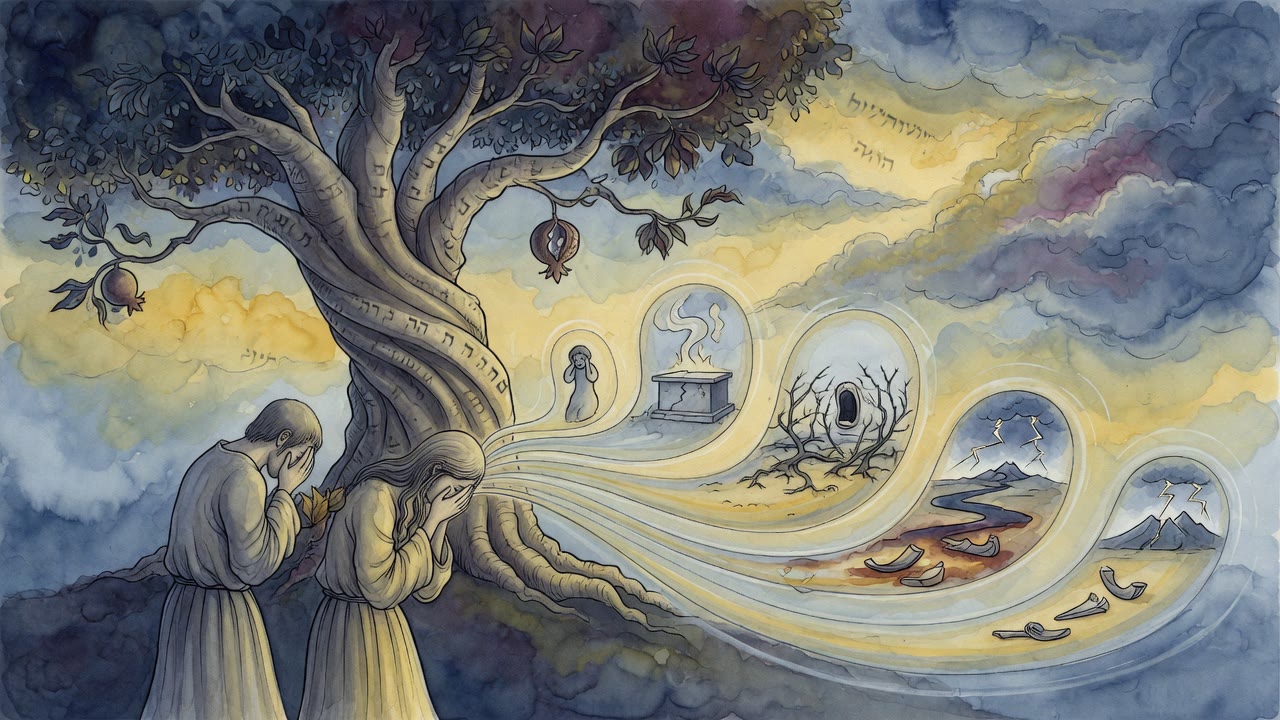
In the kabbalistic tradition, the divine name appears in different arrangements that correspond to different aspects of the divine reality. Two configurations explored in Tikkunei Zohar correspond to wisdom and understanding, to the right and left columns of the divine structure. The first letter and its relationships point toward the verse from Proverbs: the Lord in wisdom established the earth. The energy flows between these configurations in a continual exchange.
What this mystical reading adds to the Sifrei's liturgical one is the suggestion that the exchange between prayer leader and congregation mimics, and perhaps participates in, a divine self-relationship. When Israel responds to the call with praise, it is not only fulfilling a legal obligation derived from Deuteronomy. It is joining a pattern of exchange that runs through the divine name itself.
Moses Did Not Walk Up Uninvited
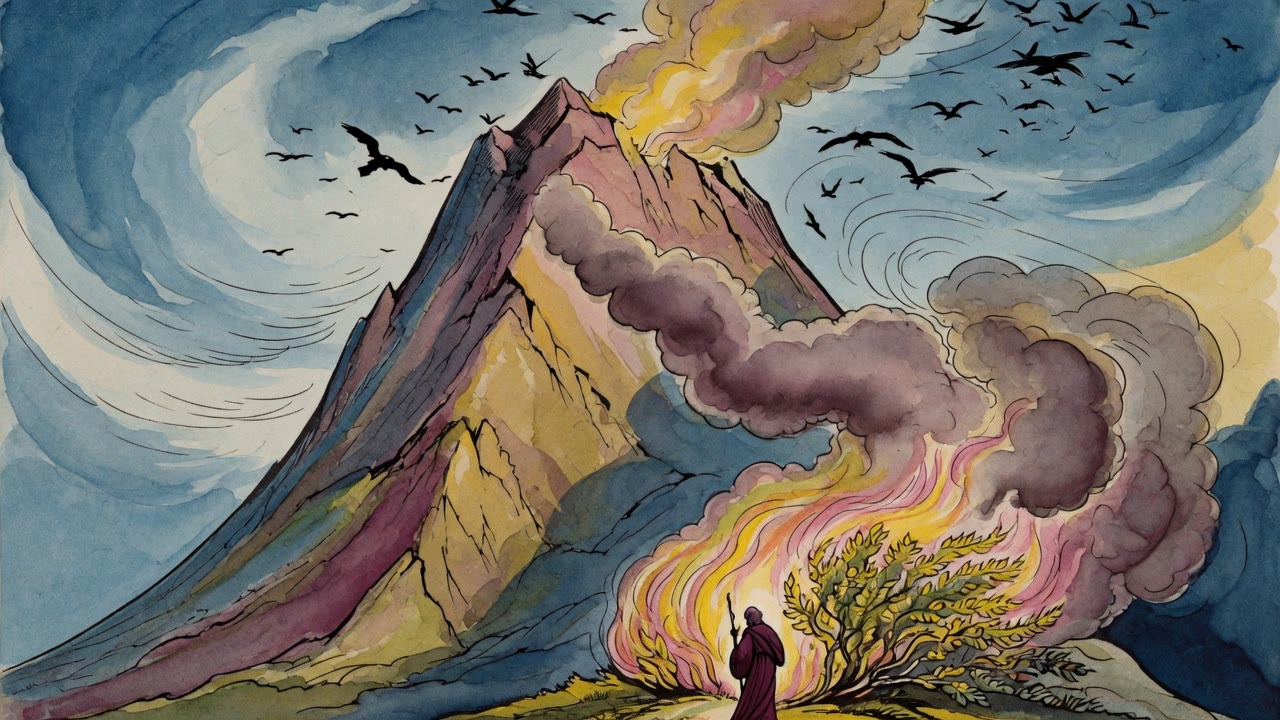
Even Moses needed a divine summons to climb Sinai. He did not presume to approach the mountain on his own initiative. The summons came first, then the ascent. The protocol that Moses is transmitting to Israel in the opening of his final poem is not a rule he invented for convenience. It is the rule by which he himself operated: the divine calls, the human responds with full attention and full praise.
When Moses said I will call and you will ascribe, he was passing on the form of encounter he had lived for forty years. Not merely the content of the Torah but the shape of the relationship in which the Torah was given and received.
← All myths