Abraham Refused to Die Until He Toured the Judgment Hall
Michael sat through the whole meal and could not say why he had come. Abraham washed the visitor's feet and asked to see the gates first.
Table of Contents
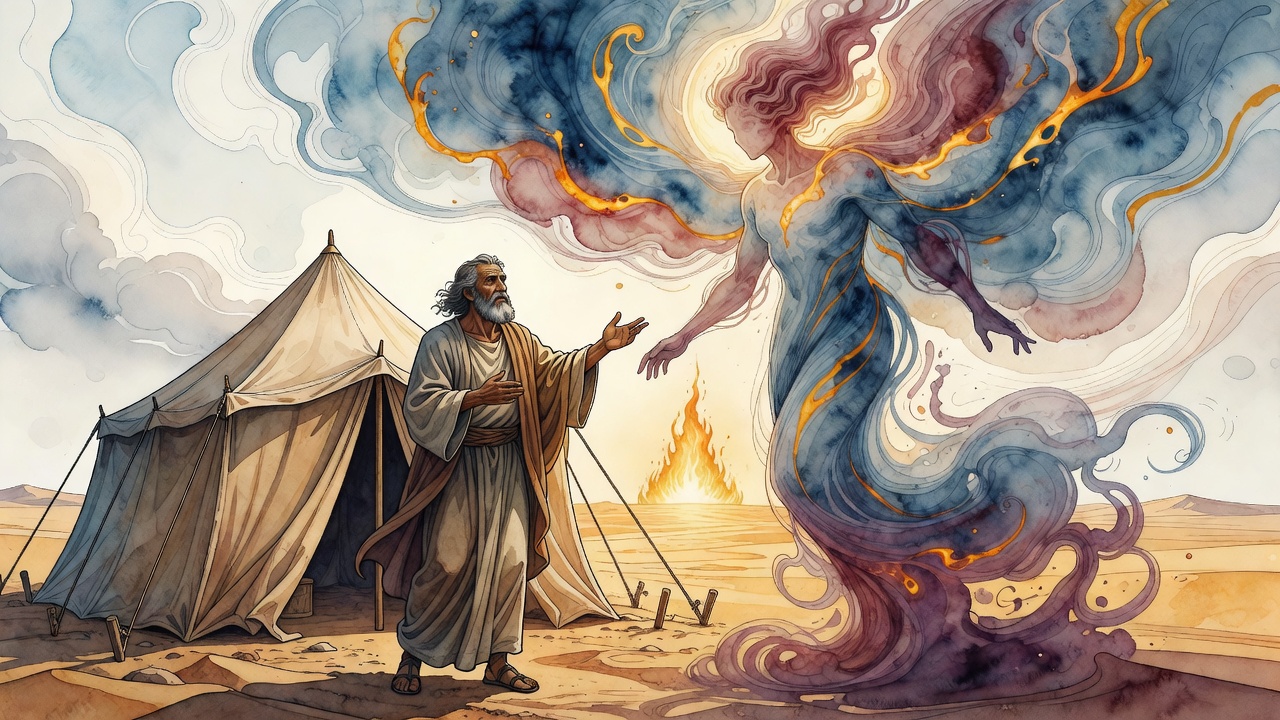
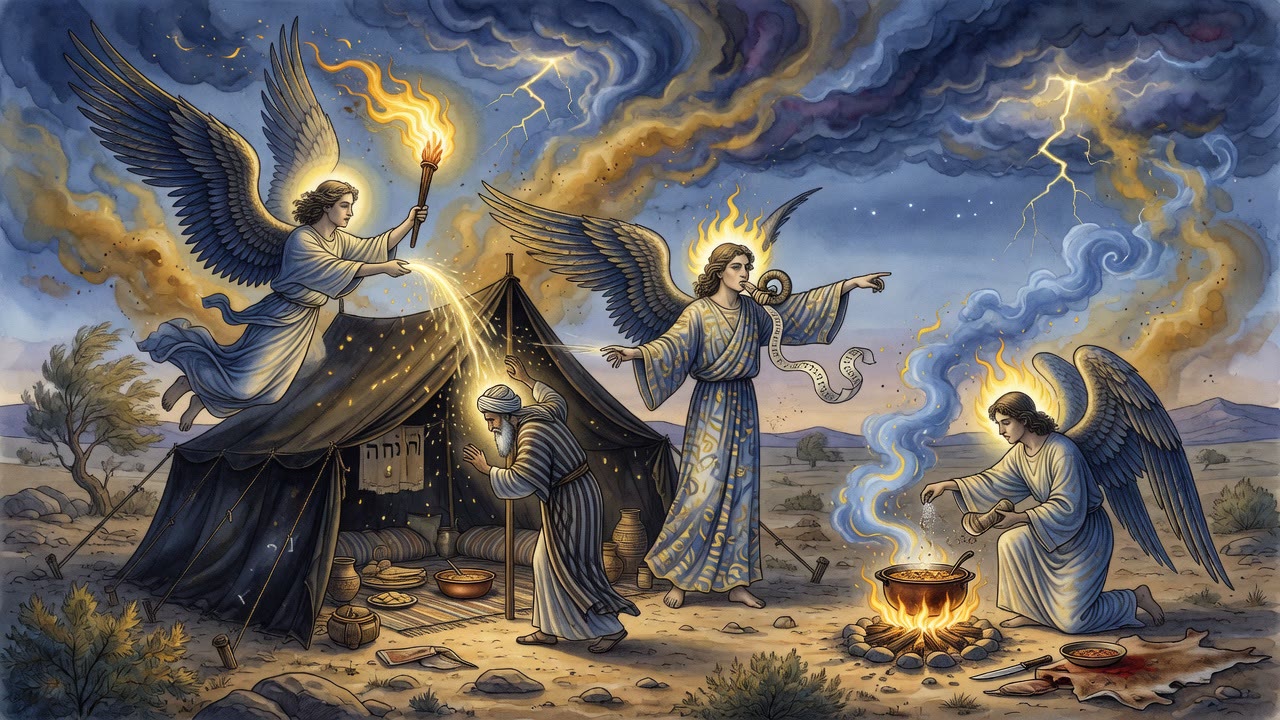
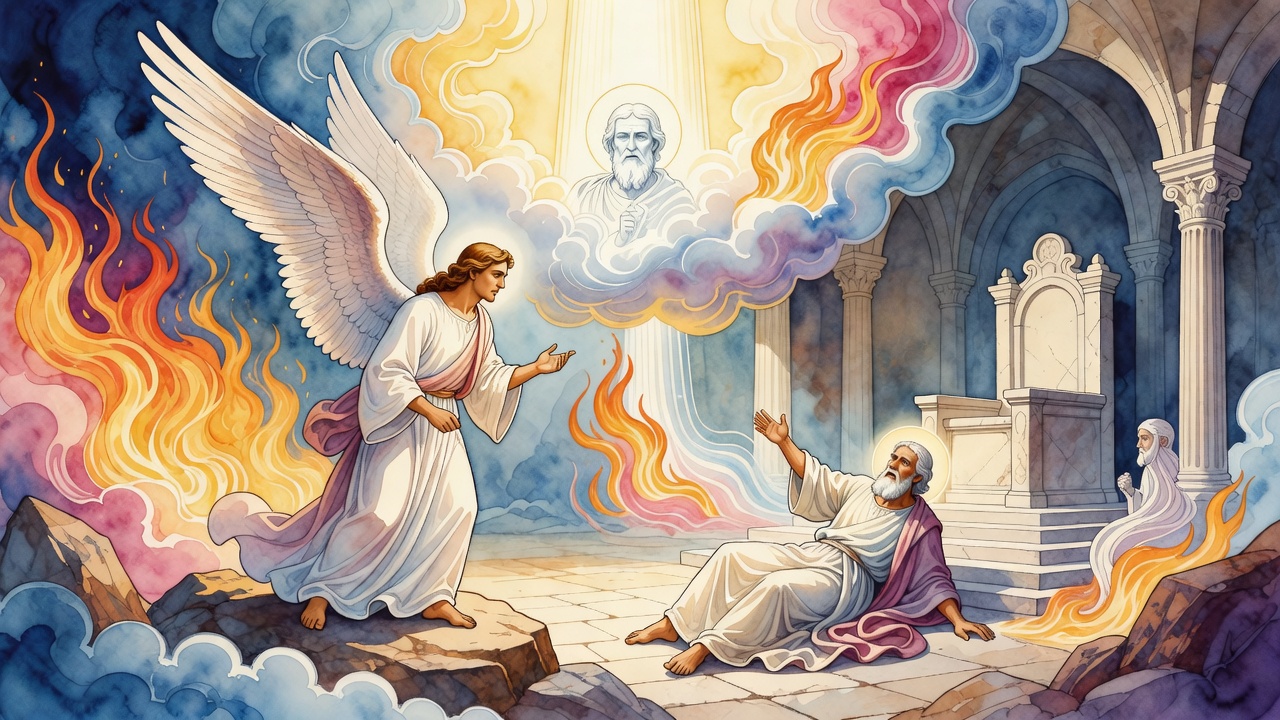
Abraham was one hundred and seventy-five, sitting at the tent mouth in the morning heat at Mamre, when a visitor came in great glory. Abraham killed a calf. He set out bread and oil. He washed the guest's feet. He had no idea he was washing an archangel.
 Click for full size
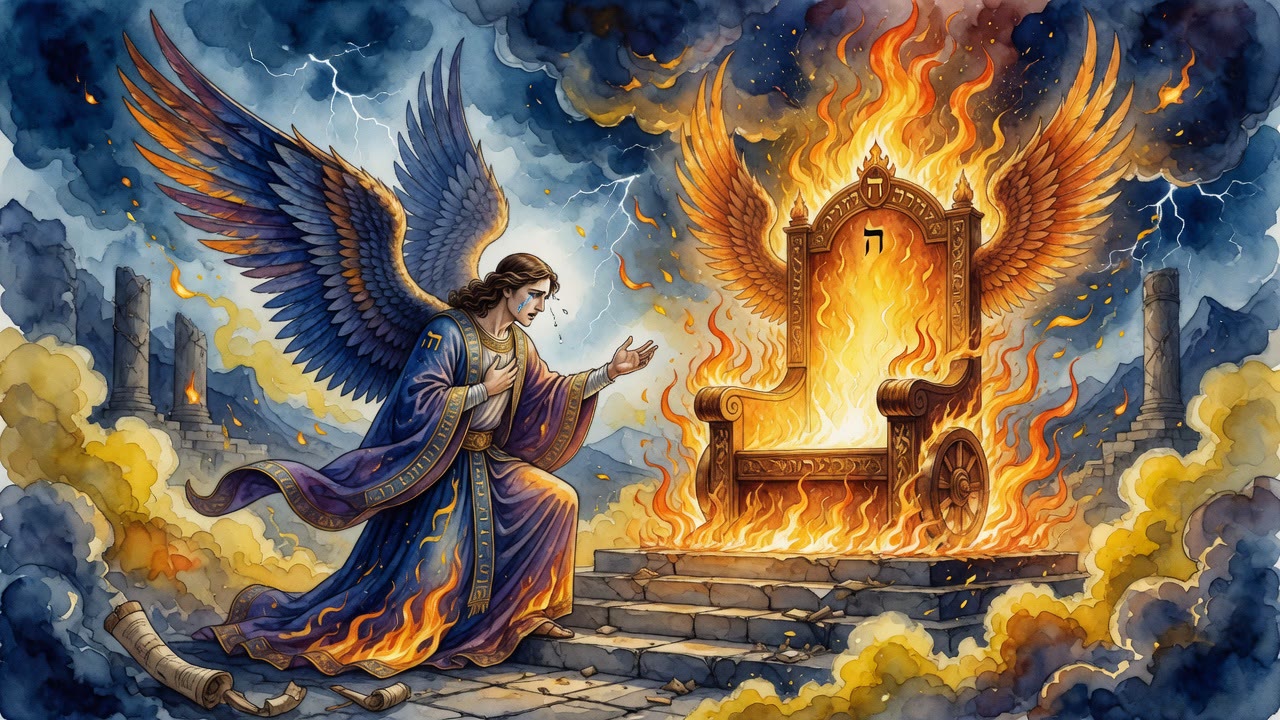
Michael sat through the whole meal and could not do what God had sent him to do. When he returned to heaven he said it plain. The man was too kind. I could not look at him and say the words.
Isaac Named the Sun and the Moon
In the third hour of the night Isaac woke and ran to his parents' room. "Father, open the door so that I may come in." He caught Abraham and wept.
He had seen the sun and the moon above his head. A Light-Man brighter than seven suns came down through an opened heaven, took the sun, and went back up. Isaac begged him to leave the moon. The Light-Man said, "The King on high has sent me to bring them there," and took the moon too. The rays that had lain on Isaac stayed.
Abraham understood at once. "The Lord has sent an angel to take my soul." The sun was the patriarch. The moon was Sarah. Death had already entered the house as a dream in the son's mouth. Abraham still would not go.
Adam Wept at the Wide Gate
God sent Michael back with a retinue and a clearer charge. Tell him his end is near. Abraham's answer was the answer of a man who had once argued God down to ten righteous in Sodom. He would not simply surrender. He wanted to see what he was agreeing to.
Michael set him on a chariot of the cherubim and rode him over the inhabited world. Abraham saw thieves and killers going about their day. He asked God to send fire. Fire came. He asked again. God stopped the vision. If you keep watching, you will empty the earth. You were not made for that seat.
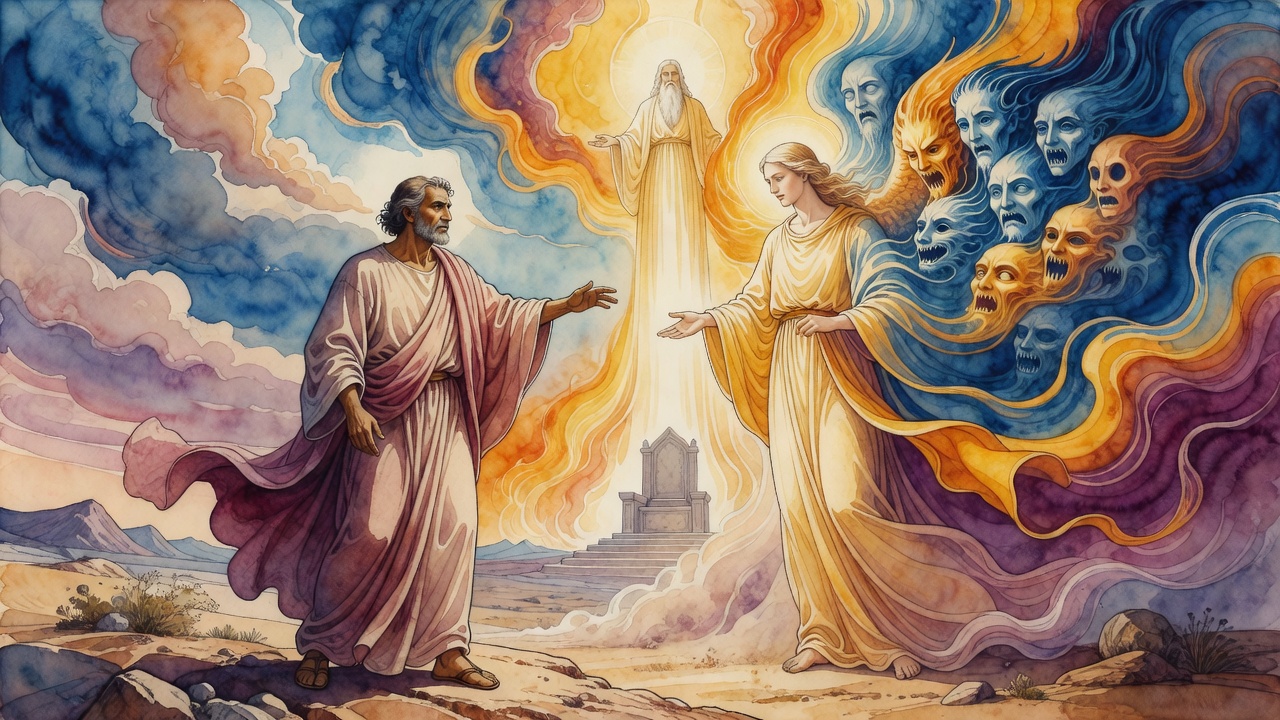
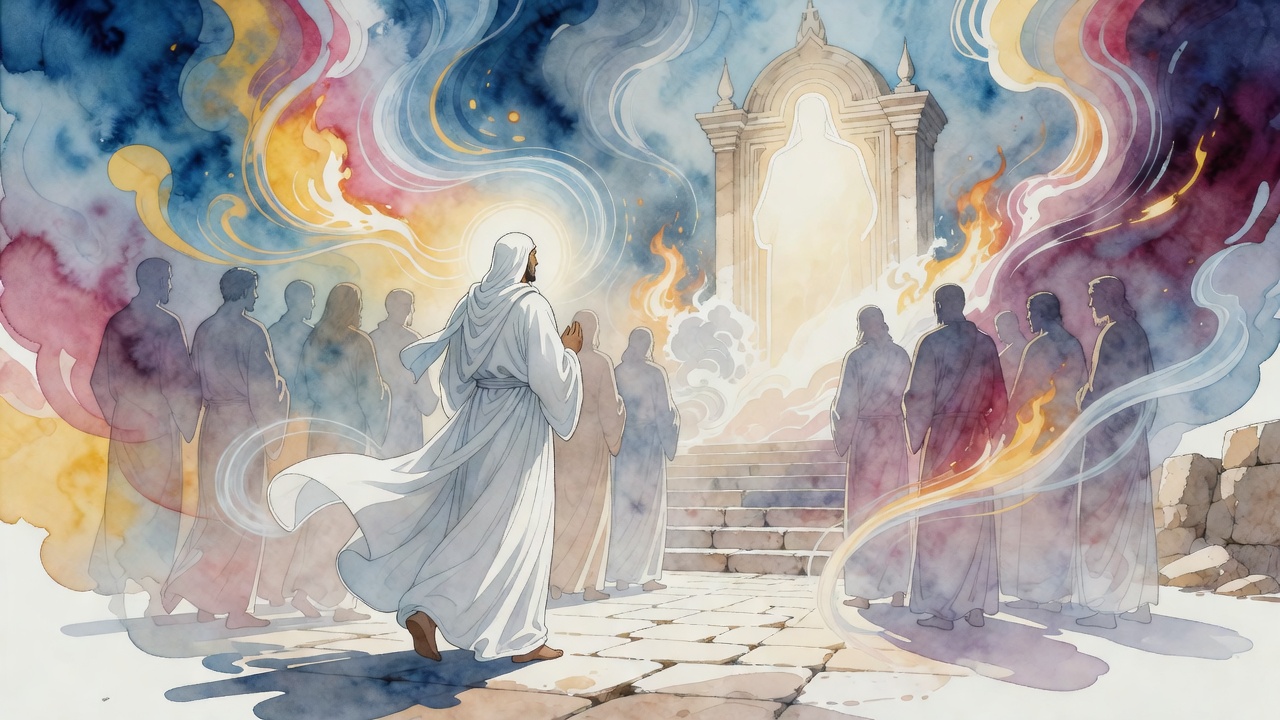
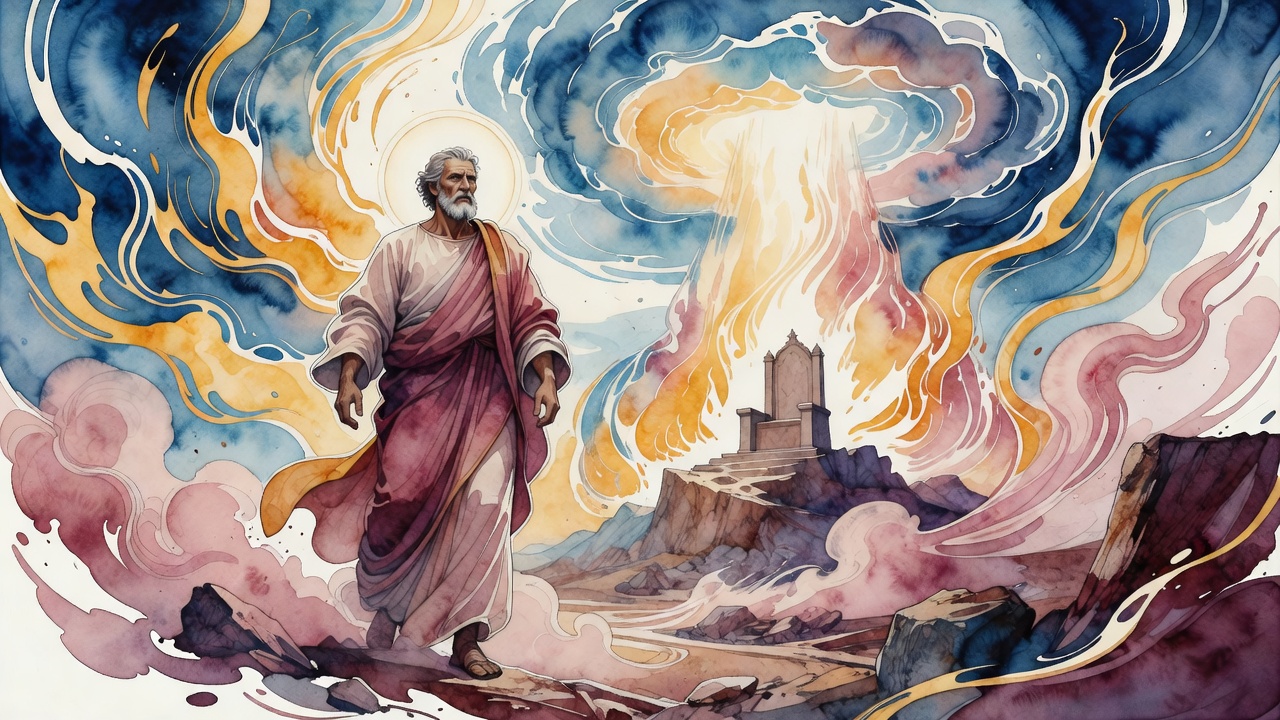
Then Michael brought him into the judgment hall. He toured the gates: one wide, one narrow. Angels herded many through the wide gate and a few through the narrow. Outside sat a figure on a golden throne. Abraham asked who it was. Michael said, "That is Adam." The first man watched his children. When a soul took the narrow road he rejoiced. When a soul was driven through the wide gate he threw himself down and wept.
Abraham saw a soul balanced exactly between merit and sin. He prayed. The scale tipped toward mercy. Even on a tour of death the patriarch was still bargaining for strangers.
Death Put On Seven Heads
He still would not die. He wanted the Angel of Death in true form. The Angel came first in youthful beauty, a sweet odor, nothing of the grave. "Most righteous Abraham, I am the bitter cup of death." Abraham said no. You have the glory of an angel. Show me the ferocity.
The Angel hesitated. You could not bear it. Abraham said the power of God was with him. So the Angel put on the robe of tyranny. Seven fiery heads of dragons. A lion. A horned serpent. A cobra. Faces stacked, each fiercer than the last.
The servants who had come with Abraham collapsed and died on the spot. Fourteen thousand of the household fell from the vision alone. Abraham asked God to restore them. God restored them. Even at the threshold he was negotiating.
"Hide your ferocity," Abraham said then. "Put on the form you had before." The Angel obeyed. Abraham went to his room and lay down. He had seen enough. He had not yet accepted the taking.
The Hair Came Out of the Milk
In the end God came Himself, while Abraham slept, and took the soul the way a man draws a hair from milk. No tear. No knife. No instrument of the Angel of Death. The soul of Abraham gathered in the divine hand and rose.
The body and the soul parted so gently that the distinction between death and sleep nearly dissolved. He had argued the whole question out. He had seen the gates and the first man's weeping. He had looked at Death's seven heads and asked for the servants back. Then he accepted.
On the eve of Yom Kippur, centuries later, nine men sat in the House of Prayer in Hebron and could not start Kol Nidrei. They needed ten. A knock. An old man in a white robe, white beard, white tallit (טלית), a prayer shawl. The gabbai asked his name. "Abraham," he said. They prayed all night and all the next day and no one hungered. When the fast ended the old man left his tallit and vanished. That night he came back in a dream and said the shawl was a gift. Wear it, and you will see the Presence. The gabbai closed his eyes in prayer the next day and saw it, glowing, and afterward the vision returned whenever he shut his eyes.
The patriarch who had refused, then accepted, had not finished arriving.
← All myths