The Torah Told God Not to Make the World and He Made It Anyway
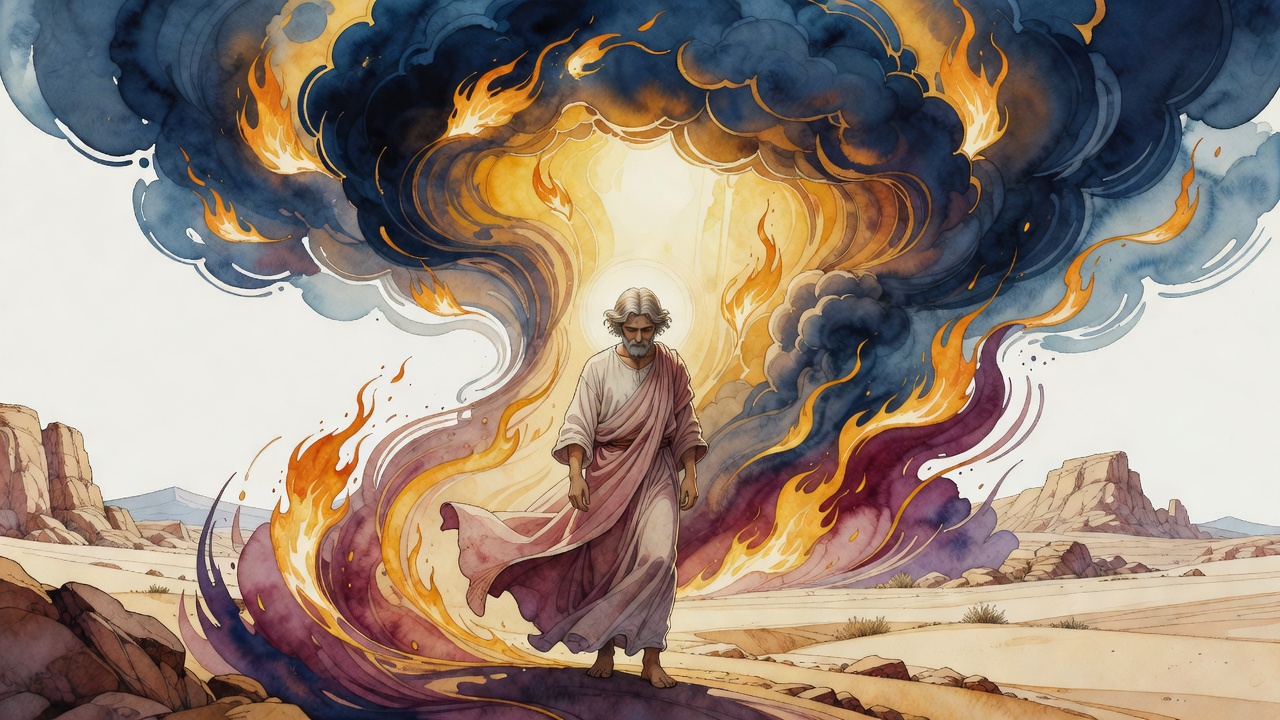
Two thousand years before there was an earth, a voice was already calling out for people to come back. There was nobody yet to come back from anything.
Table of Contents
 Click for full size
Seven Things and Nowhere to Put Them
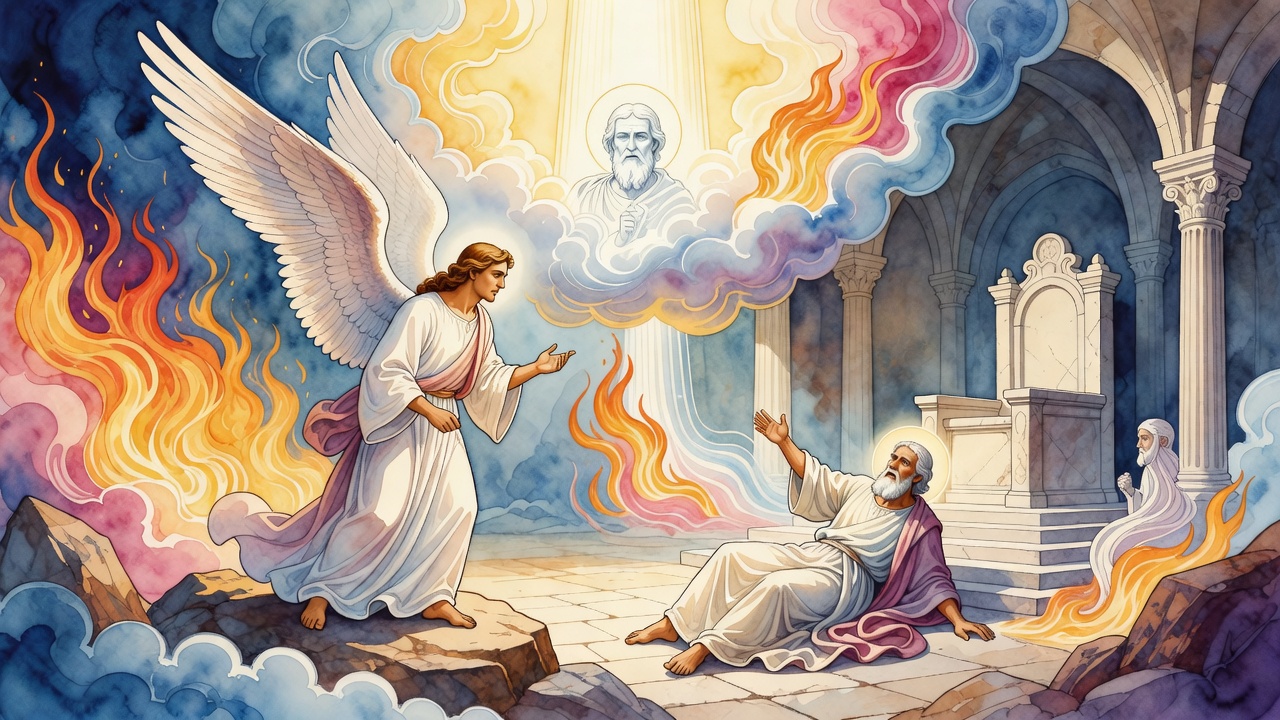
Two thousand years before there was a heaven or an earth, seven things were already finished.
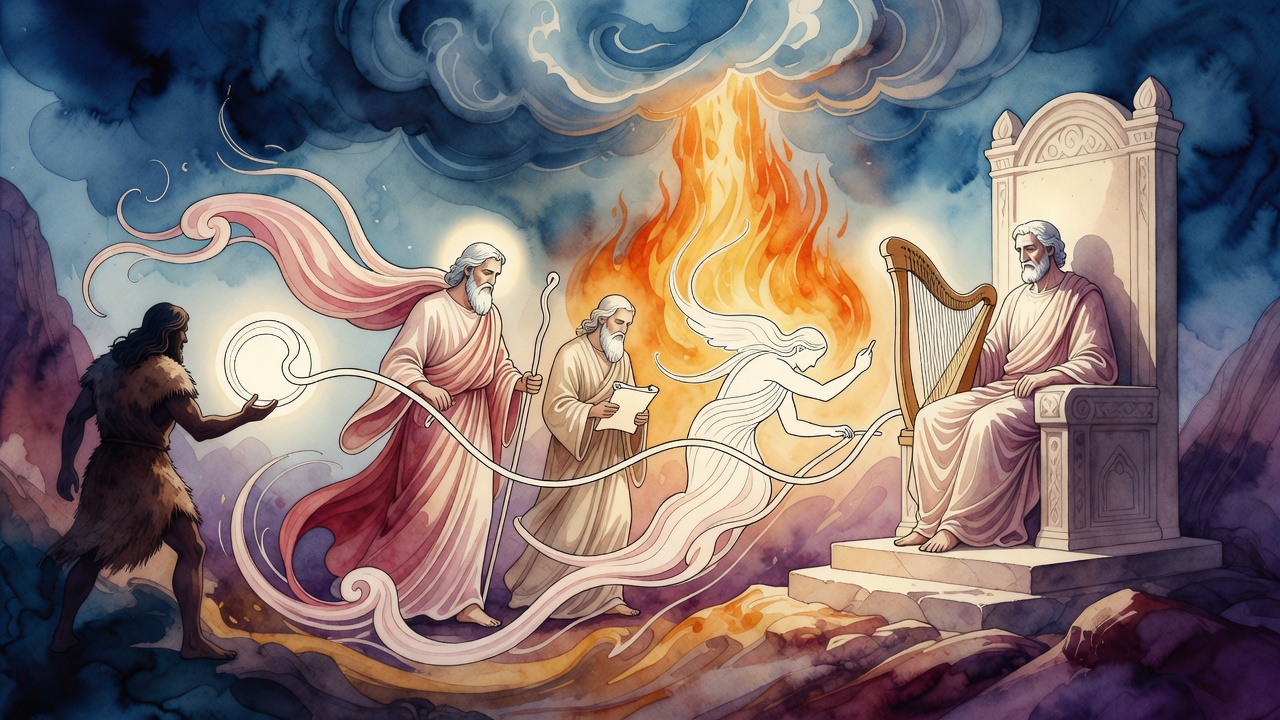
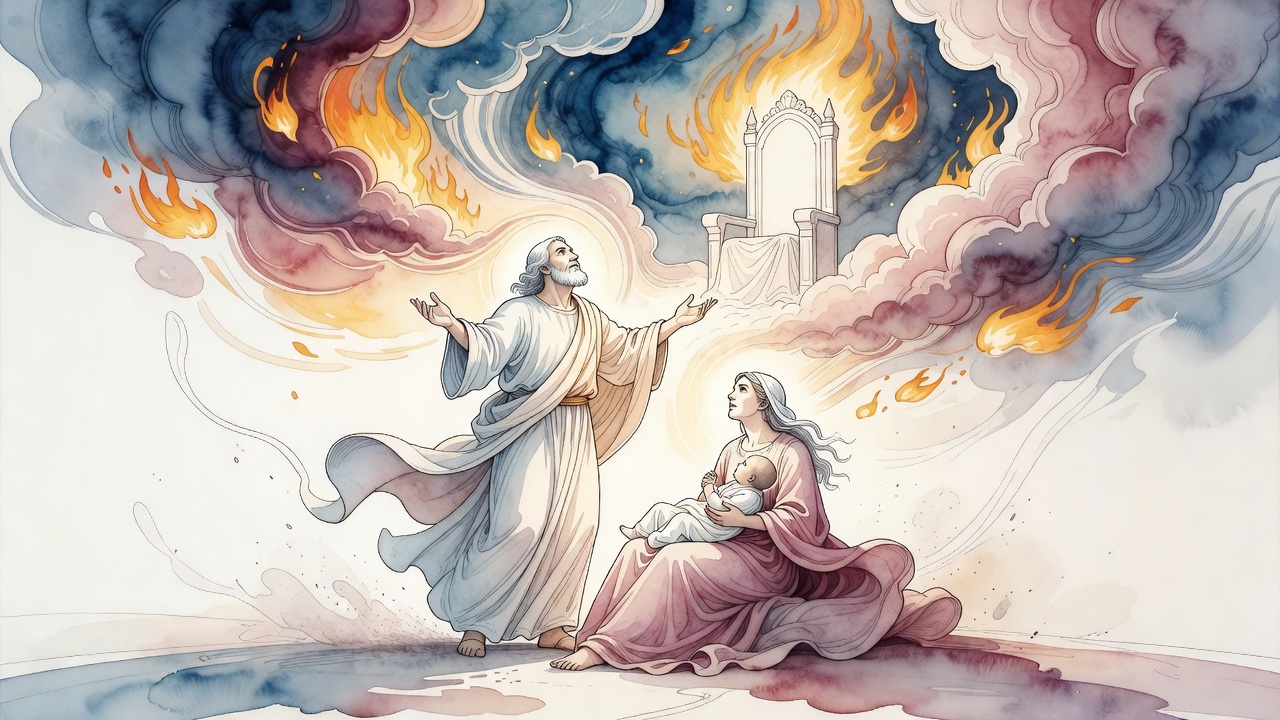
The Torah, written in black fire on white fire, lying open across God's lap. The Throne, standing in the heaven that would one day be spread over the heads of the Hayyot. Paradise on his right hand. Gehenna (the realm of judgment after death) on his left. The sanctuary of heaven directly in front of him, with a jewel set into its altar and the name of the Messiah cut into the jewel.
And a Voice, going out and going out, crying, come back, children of men.
There were no children of men. There was nothing anywhere to come back from and nothing to come back to. The Voice went on calling anyway, into a place with no ears in it, for two thousand years.
The Torah Told Him It Would Not Work
When he decided to build the world he did not build it. He turned to the Torah in his lap and asked her what she thought, and every king on earth since has been shown how to behave by that one gesture, because he did not take a step without asking somebody first.
Her first answer was flattery with an edge on it.
"A king with no army, no courtiers, nobody in attendance, hardly deserves the name of king. There is no one standing near enough to do him honour."
The answer pleased him enormously. Then she told him the rest of it.
She did not think an earthly world was worth making. She had read herself. She knew exactly what was written in her own black fire and she knew what human beings would do with it, which was to ignore all of it, and she said so.
He argued her out of it item by item, and every item was something he had already built and set aside. Repentance was made long ago, he told her, so that a man who wrecks his life has somewhere to go afterward. The service of the Temple will carry the weight of what they do wrong. Paradise is on this side and Gehenna is on that side, and between the two of them the accounts will balance. And there is a Messiah appointed, and when he comes there will be an end of the whole business of sinning.
She let it go. He built the world.
The Ones He Broke First
This was not the first world he had made.
He had made others before it, more than one, and looked at each of them and taken it apart again. None of them pleased him. There is no record of what was in those worlds or what he objected to, only that they were made and unmade before anything in this one existed.
And even this world would not have lasted, because his first plan for it was strict justice and nothing else. He watched what that would do. Justice on its own would have eaten the ground out from under the whole creation inside a generation. So he went back and fastened mercy to it, and set the two of them to rule together, and only then did the thing hold.
Four Times a Year, Something Gets Frightened
Holding it together is a job with a calendar.
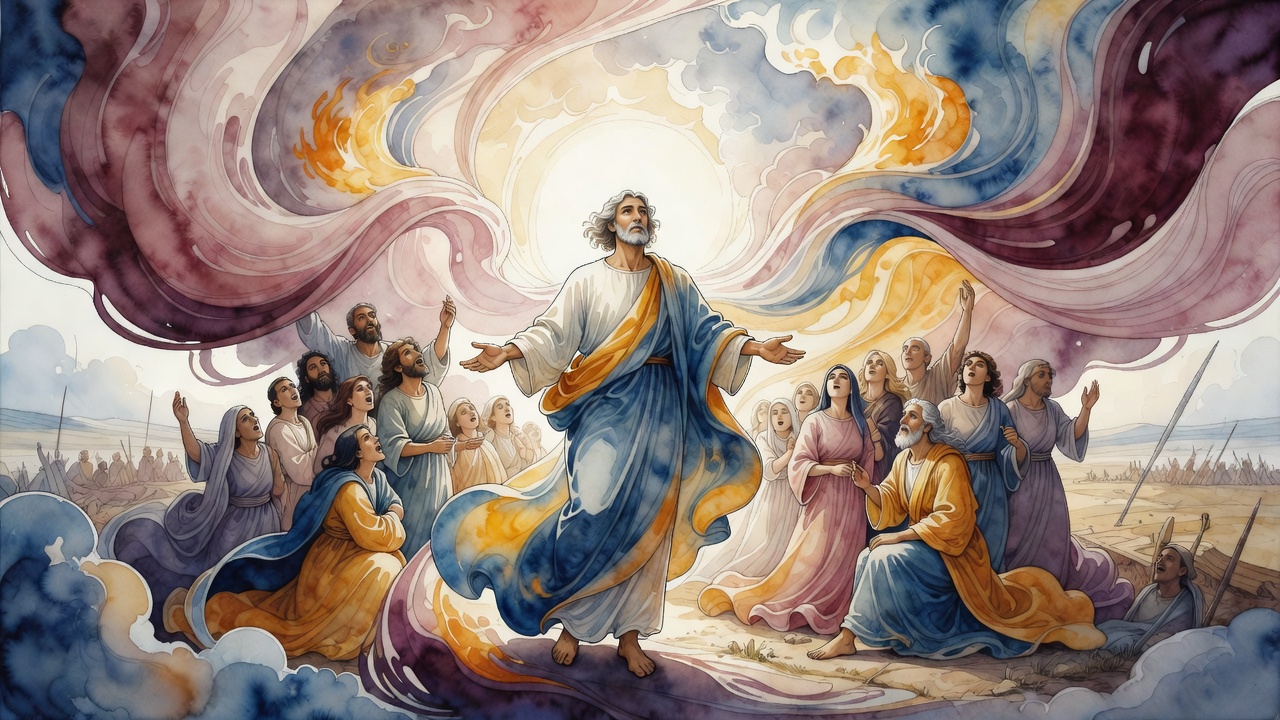
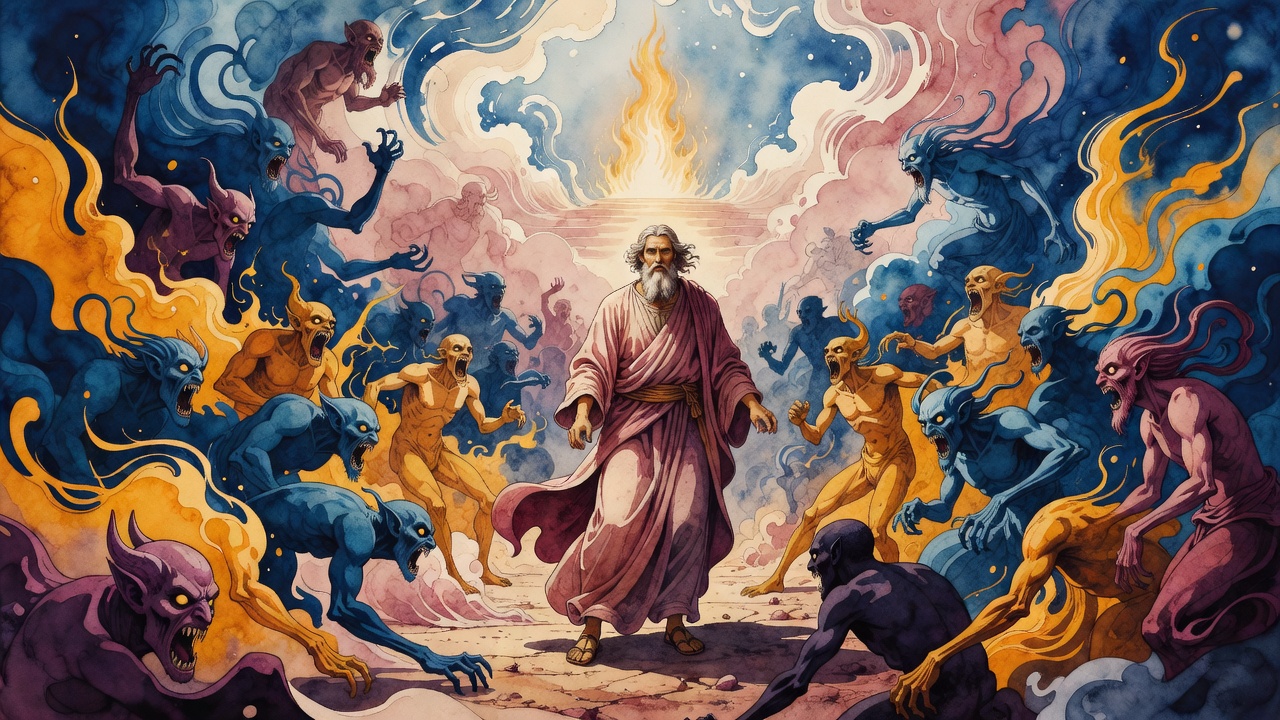
The demons would have made an end of the human race a long time ago if nobody had interfered with them. So in Nisan, at the spring equinox, the seraphim come down into the world of spirits and put such a fear into them that for the next twelve months they do not dare touch a man.
In Tammuz, at the height of summer, Behemoth is at the full of his strength, and he roars. Every animal on the earth hears it. For a year afterward the wild ones go quietly and kill less than their nature tells them to, because they have heard what is out there.
In Tishri the great bird Ziz opens his wings and cries out, and the eagles and the vultures go pale in the air and lose their appetite for tearing smaller birds apart.
In Tebet the sea turns restless, because Leviathan is spouting water, and the big fish feel it and stop eating for a while, and that is the only reason there are any small fish left.
The same arrangement covers Israel. When the angels of the other nations come forward with a list of what Israel has done, Michael and Gabriel stand up as the appointed defenders, and the accusing angels are frightened of those two, and once the angels upstairs are frightened the nations downstairs do not dare carry out what they had planned.
The Angels of Destruction are stationed at the far end of the heavens and are not allowed to move from that spot. The Angels of Mercy stand in a ring around the Throne, close enough to speak.
The Ram That Had Been Waiting Since the First Week
Among the things finished early and left standing was a ram.
It was made on the same day as the earth and the sky, and it was made for one morning, a long way off, on a mountain, in place of a boy. It waited out the whole of that time.
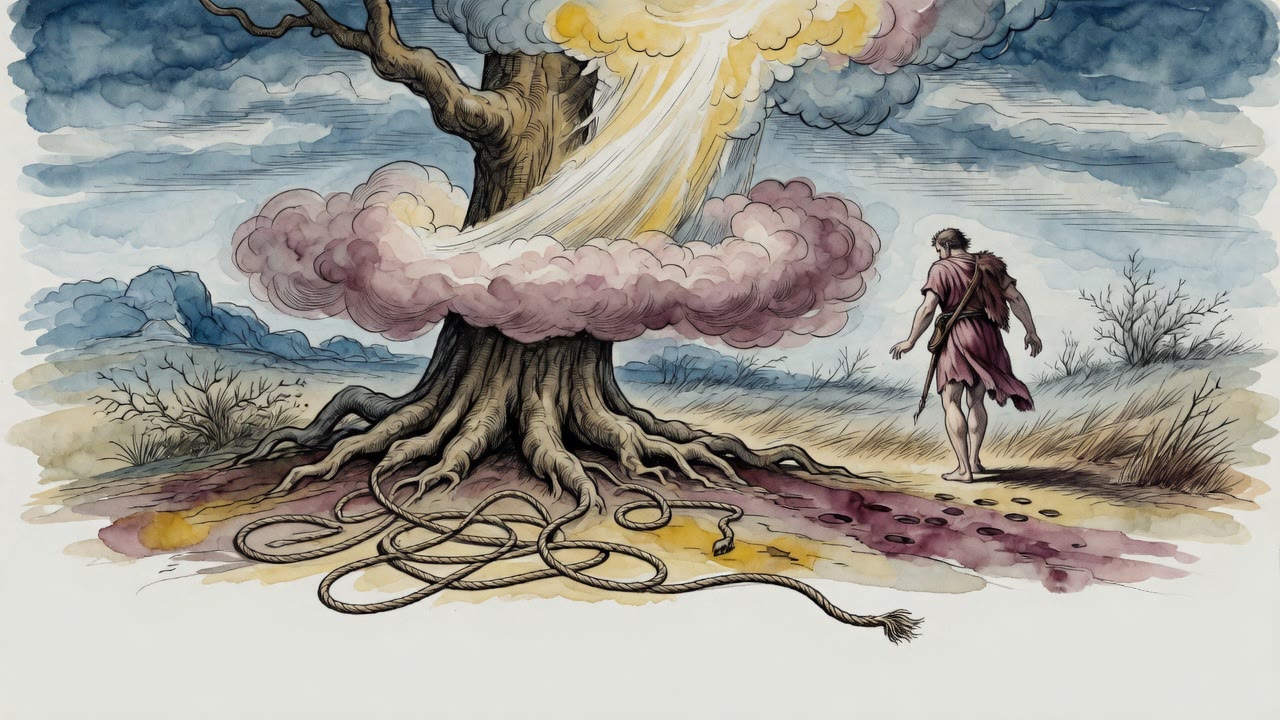
When the morning came it started walking, and Ha-Satan (the Accuser) caught it by the horns and twisted them into a thicket to hold it there, because if the animal was late the knife would not be. He is good at this. Generations later God would send him out hunting with Esau to buy his brother an afternoon, and he did it by untying deer. Esau would run one down, bind its legs, leave it lying and go after the next, and Ha-Satan would come along behind him and let it up. Again. And again. Esau came home in the dark with nothing, and by then Jacob had the blessing.
On the mountain it did not work. Abraham looked up from his son and saw the ram coming, and saw the thing holding it back by the horns, and went and took it, and untied the boy.
← All myths