The Girl Who Out-Decreed Pharaoh and Waited for the Prophet
Amram sent Jochebed away so no more sons would drown. His daughter stood up and prosecuted him in front of the house.
Table of Contents
Amram did the math and sent his wife away. Pharaoh had ordered every Hebrew boy into the Nile, and the river was doing what rivers do with the things thrown into them. Why bring sons into the world to watch them drown?
 Click for full size
Amram Sent His Wife Away
He was the leading man of his generation. When he made a decision, the community made it with him. He looked at the decree and reached the obvious conclusion. He divorced Jochebed.
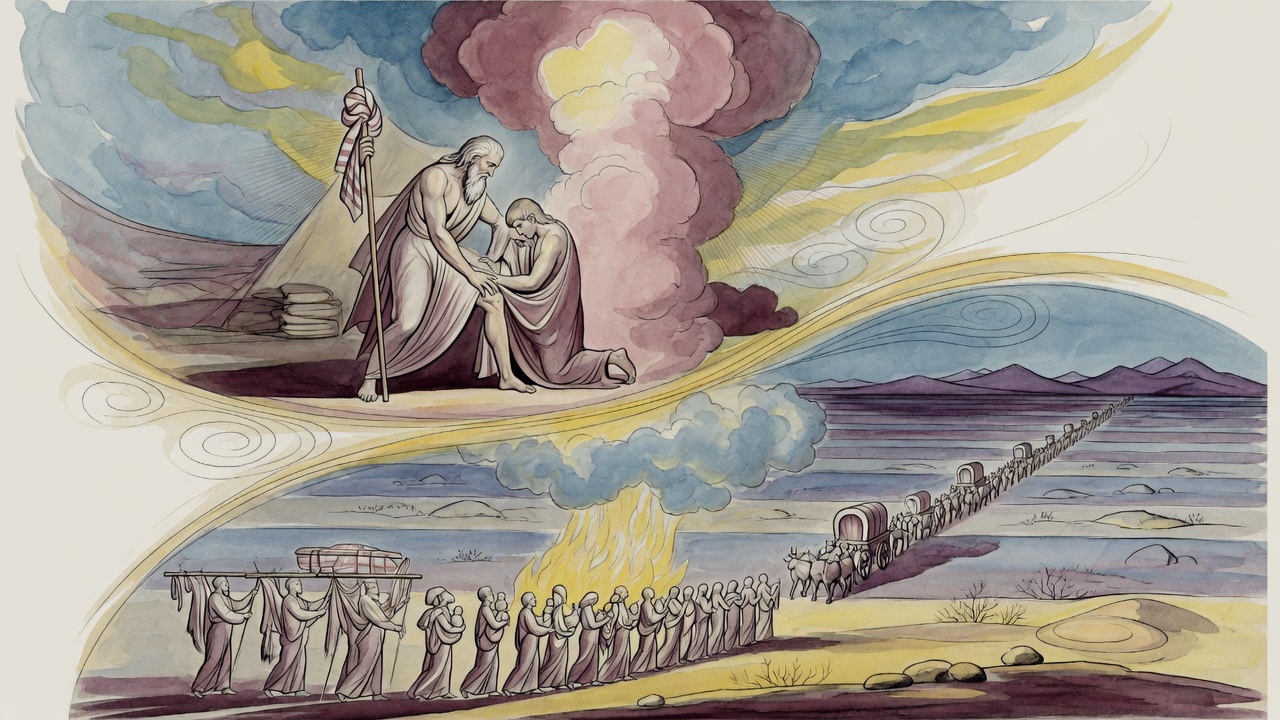
Every Hebrew husband in Egypt sent his wife away the same afternoon. No soldier had raised a sword. The slaves had simply agreed, quietly and rationally, to stop having children. The line of Abraham would end in one generation by consent.
Houses went still. Cradles stayed empty on purpose. Grief wore the face of good sense.
Miriam Prosecuted Her Father
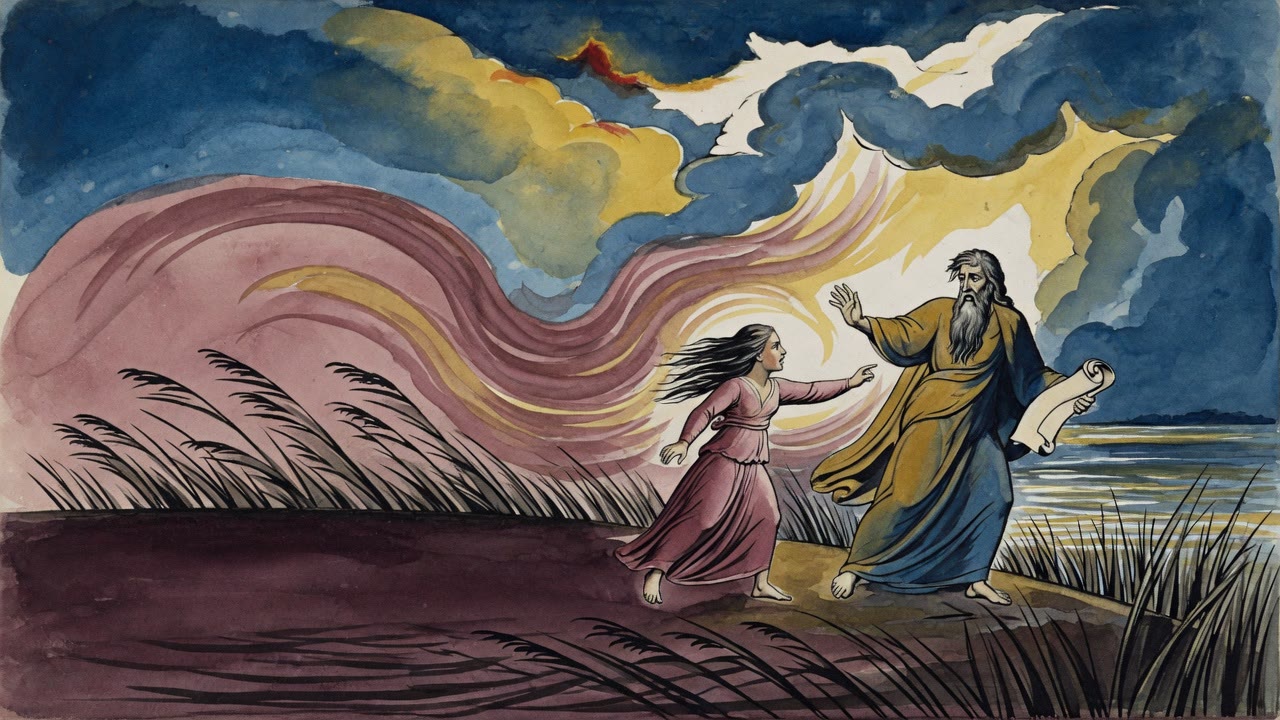
Then Amram's daughter stood up and prosecuted him. She was not pleading. She was not weeping. She was a girl with a legal argument, and she delivered it without softening a word.
"Father, your decree is worse than Pharaoh's. He condemned only the boys. You have condemned the boys and the girls together, because children unborn have no share in this world or the next, and Pharaoh has not gone that far. He attacks this world alone. You attack both worlds at once."
Then the hardest line. "Pharaoh is wicked. Heaven may yet nullify what a wicked man decrees. You are righteous. What you decree will stand. So whose decree is actually more dangerous to Israel?"
Amram heard it and could not answer. He took his wife back. Every husband in Egypt took his wife back that same day. The girl who had spoken carried no office and no standing in the assembly of men who had made the decision. She had only the argument, and the argument was enough.
They Married Again Under a Palanquin
He did not slip Jochebed in through a side door. He took her with the trappings of a wedding. He placed her in a palanquin. Aaron and Miriam danced in front of it, and the ministering angels said, "A happy mother of children."
The verse that should have said he took her back says he took her, as if the first marriage had been erased and this one were new. Miriam had already prophesied in the household. Her mother would bear a son who would save Israel. The remarriage was not only a correction of a decree. It was the door that prophecy had demanded stay open.
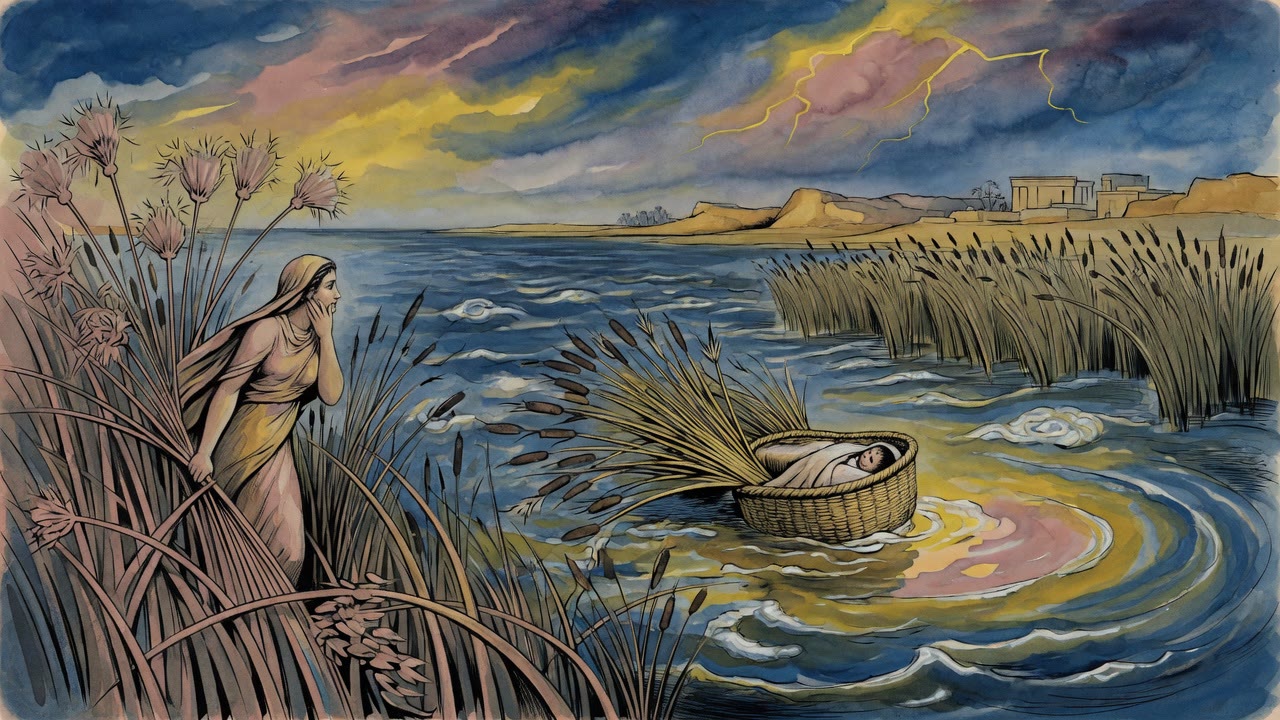
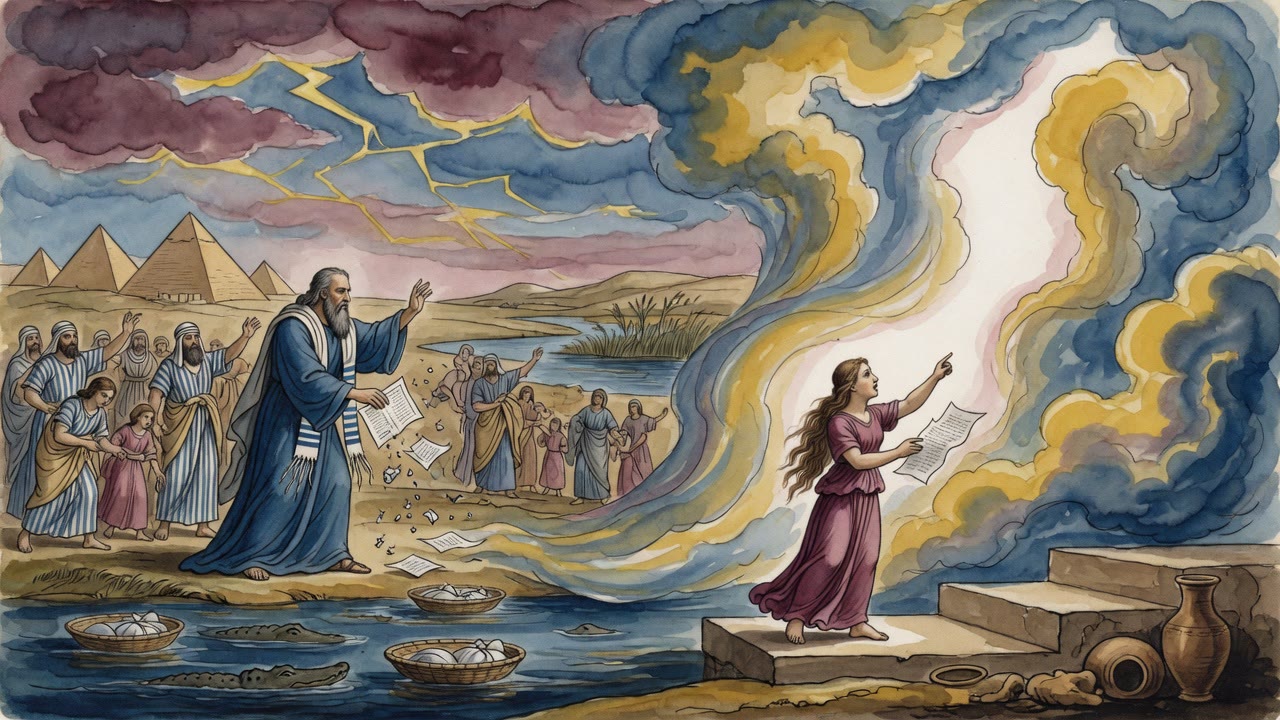
When the boy came, Jochebed put him in a basket and set the basket on the river. Miriam stood at a distance to watch, because she had spoken a future out loud and now the future was tarred reeds in current.
She Stood at the Nile to Know
The Torah says she stood to know what would be done to him (Exodus 2:4). She was not standing to help. She was not standing to snatch the lid. She was standing to know, because a prophet's credit was floating with the child.
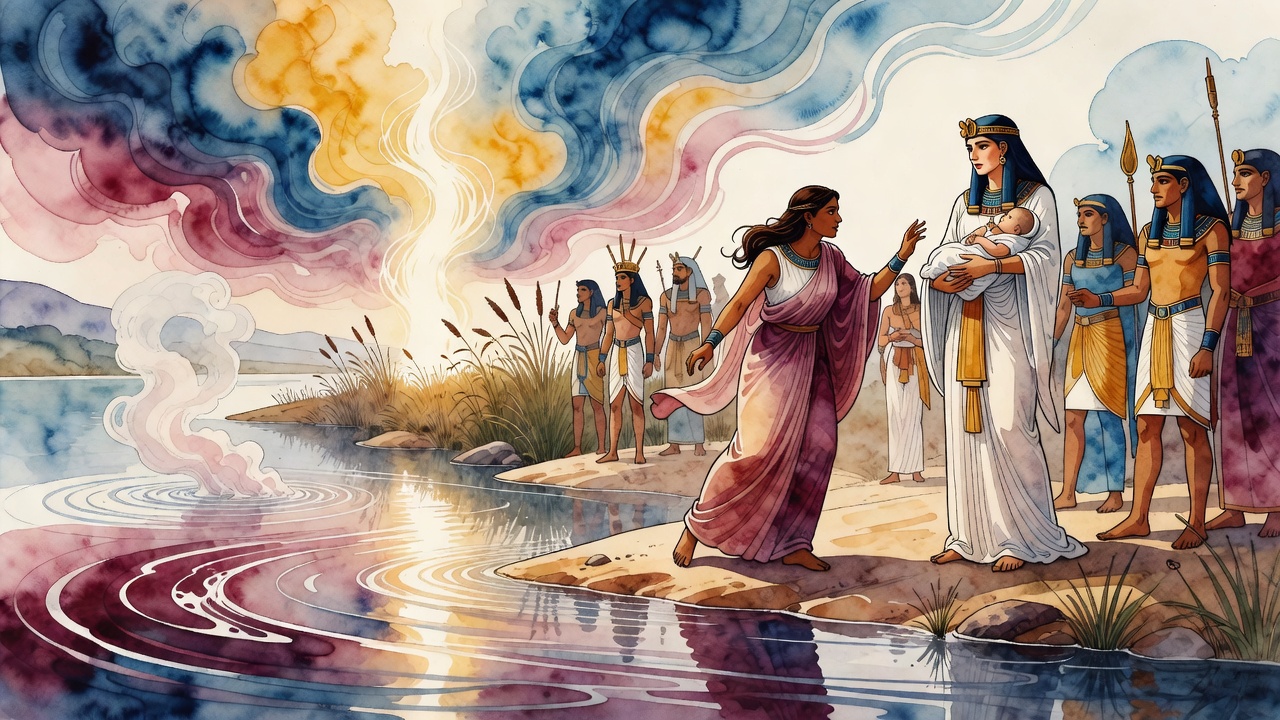
The Shechinah (שכינה), God's presence, came and stood beside her on the bank. Not to comfort her. To watch with her. Two figures at the edge of the Nile, one of them having made a claim about what was coming, one of them having been the source of what was coming, waiting to see what the basket would do.
For the hour she waited, she later received a payment in kind. Six hundred thousand would wait for her when she was shut outside the camp. Heaven does not cheat a creature of its wage. The girl who stood still on the mud would one day stop a nation with a pause of her own.
A Serpent Swallowed Moses to the Hips
Years later that same boy, grown and sent, paced a lodging house on the road to Egypt. Moses went from the bed to the path and back to the bed, turning the years in his mouth. Four hundred years of slavery had been promised. The count was not full. Joseph had said God would surely remember, pakod yifkod, and the missing years were already being cut, but Moses could not make the numbers sit still. If he arrived too early, Israel would not believe him. If he delayed, the bush would have burned for nothing.
God sent the angel Uriel in the form of a serpent. It swallowed Moses from the head down to the mark of circumcision and stopped. His son Gershom was still uncircumcised. Travel had been the excuse. The serpent was not killing him. It was marking the boundary of the delay. This far and no further.
Zipporah saw it and understood at once. She took a flint, cut the boy's foreskin, and touched Moses with it. The serpent opened its mouth and released him. The deliverer of Israel arrived in Egypt already twice carried by women who were not surprised. A girl had talked a nation back into having children, then stood on a bank to see if she had told the truth. A woman with a flint finished what a hesitant prophet would not. The basket had been right. The lodging house almost ended it.
← All myths