Miriam Packed a Tambourine in Egypt Before There Was Anything to Sing
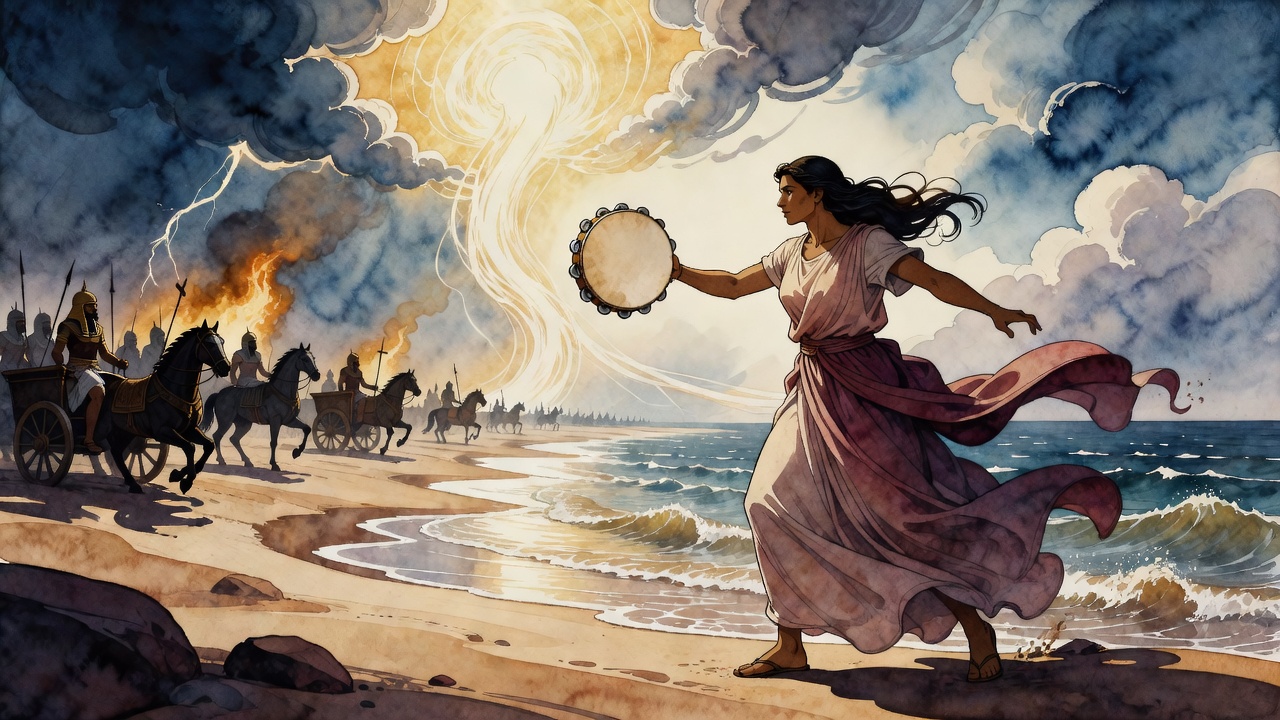
When Miriam led the women at the Red Sea, she had a tambourine ready. She packed it in Egypt while Pharaoh's army lived and the plagues were still running.
Table of Contents
 Click for full size
What It Meant to Pack a Tambourine
The women at the sea had tambourines. That detail sounds small. It is not small at all.
They had packed them in Egypt. Before Pharaoh agreed to release anyone. Before the last plagues had run their course. Before there was any certainty that Israel would survive the night of the tenth plague, let alone reach the other side of a sea with Pharaoh's army drowned behind them. Someone in every household had decided, in the middle of slavery and terror and the grinding uncertainty of a people whose fate was being debated between a Pharaoh and a God, to pack a musical instrument for a celebration she believed was coming.
Ginzberg's Legends of the Jews, synthesizing midrashic traditions about the Exodus, names Miriam as the organizing force behind those tambourines. She had packed hers. She had told the women to pack theirs. She had prepared the instruments for a moment that, from the outside, looked like more catastrophe was still coming. The tenth plague had not yet struck. The sea had not yet appeared before them. The army had not yet followed them. And the women were packing tambourines.
The Women Who Prepared for the Men Who Responded
Moses and the sons of Israel sang first at the sea. Then Miriam and the women answered. The sequence matters. The men had witnessed the miracle and responded to it. They saw the water divide and the army drown and they sang about what they had seen. The women had prepared for the miracle before it happened and then responded to it with instruments they had carried out of slavery on the assumption that the instruments would be needed.
The difference between responding to a miracle you have just witnessed and responding to a miracle you had prepared for in advance is the difference between faith as a reaction and faith as a decision made before the evidence arrives. The tambourines were a decision made in Egypt, in the house of slavery, before the sea was visible on the horizon. They were Miriam's theology made portable and carried into the desert on someone's back.
Why Miriam Could Prepare When Others Could Not
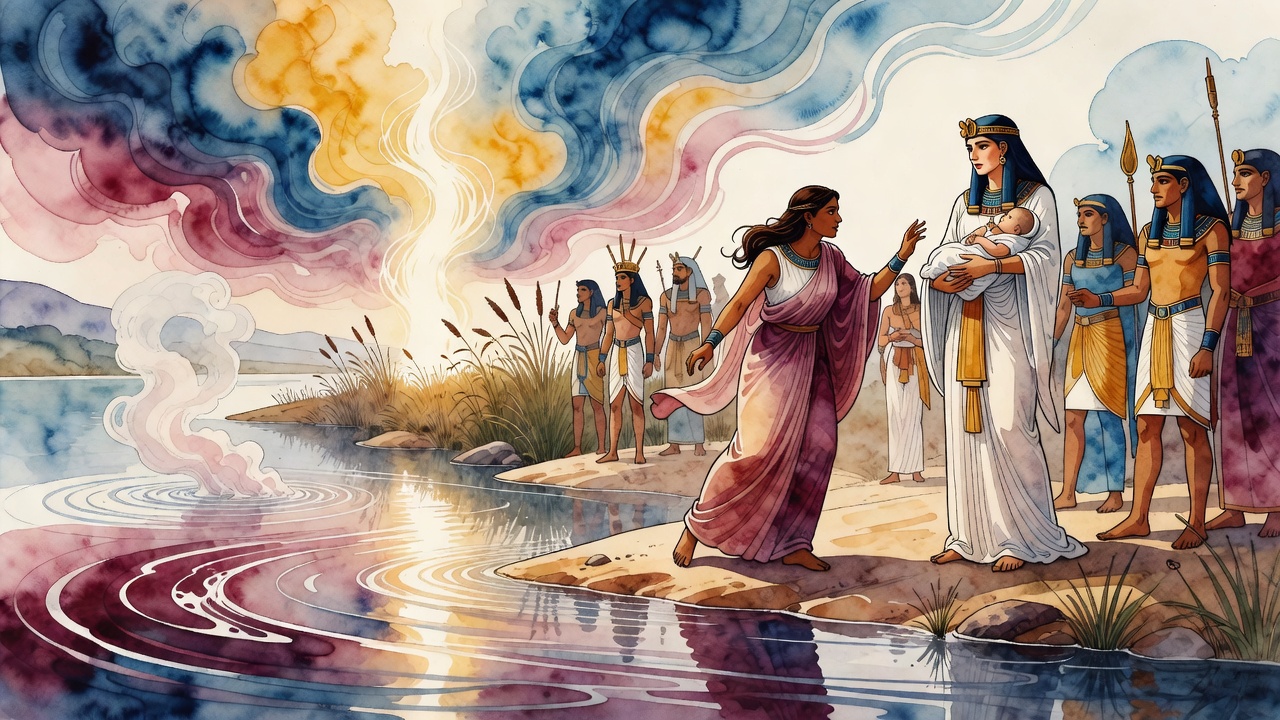
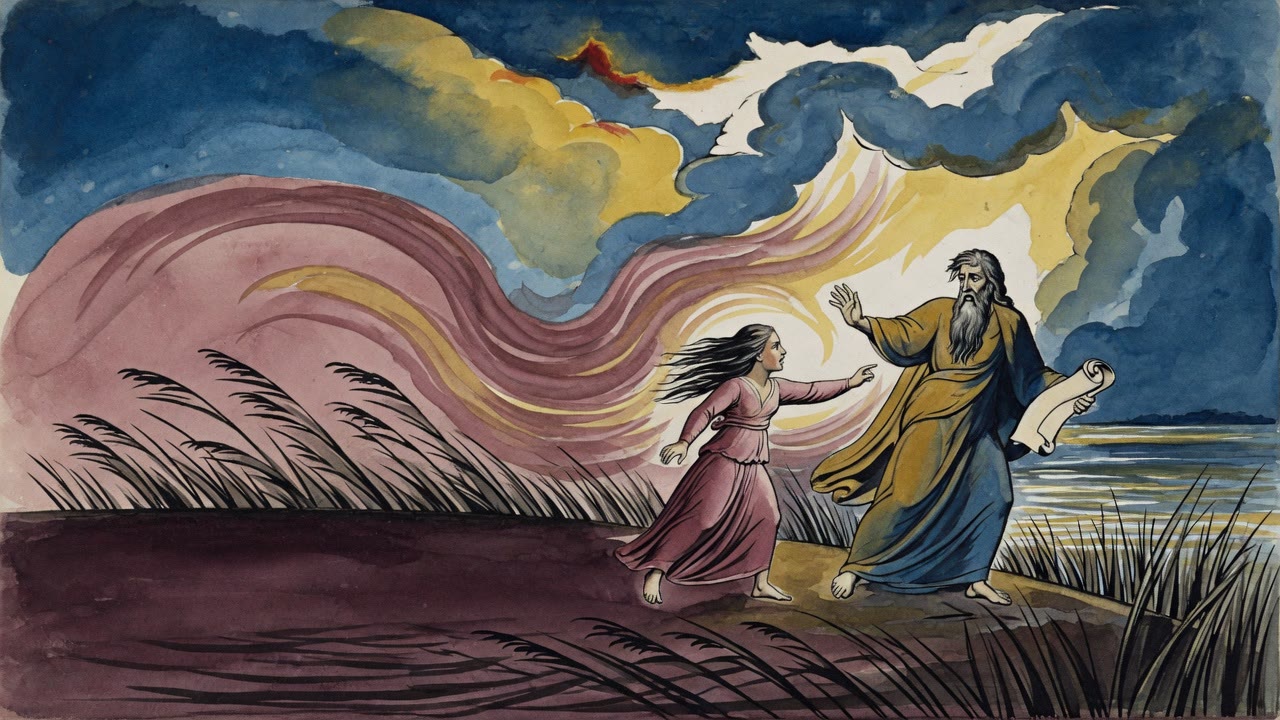
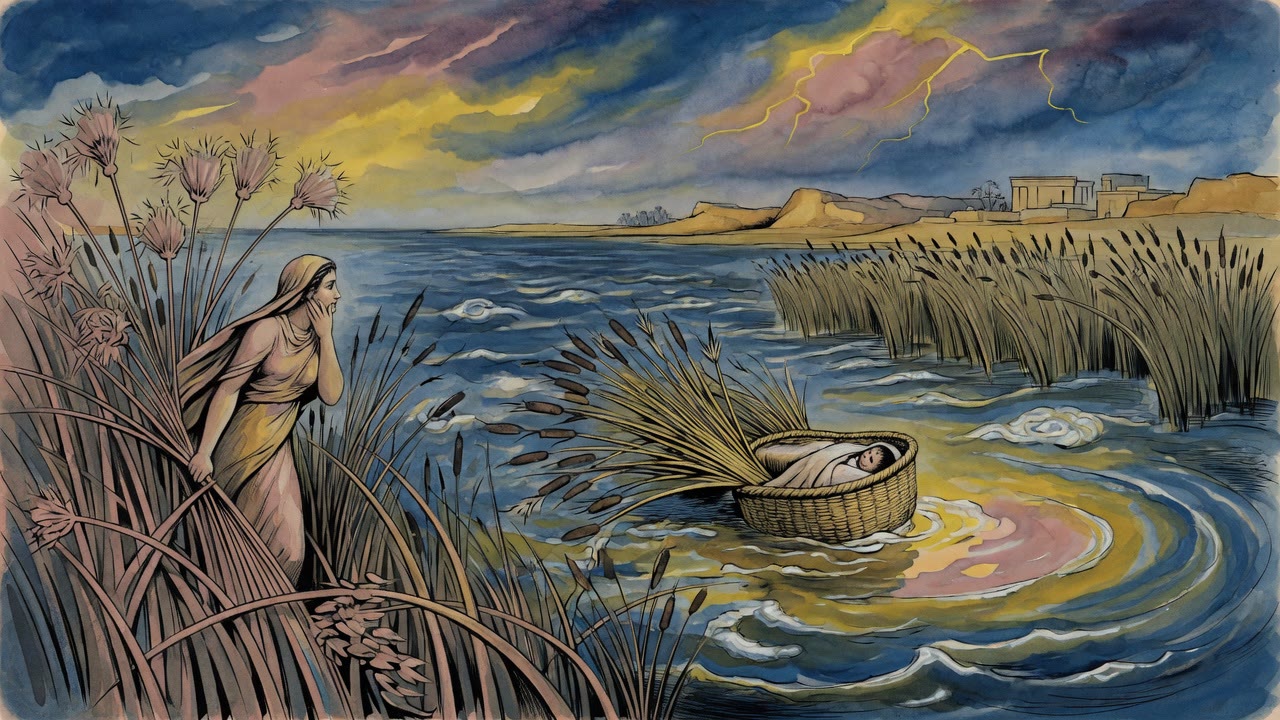
Miriam had been preparing for this her whole life. She had argued her father back to her mother when she was not yet six years old, which required seeing the consequences of his decision further ahead than he could see them. She had stood at the river and watched the baby in the basket and approached Pharaoh's daughter at precisely the right moment to arrange the impossible: Moses nursing from his own mother inside the palace of the man trying to kill him. She had spent decades in the wilderness walking with Israel, carrying water for the community through the merit of a life that had been directed toward this people from the moment she could speak.
When Midrash Tehillim, the collection of rabbinic interpretations on Psalms compiled across the fifth through eleventh centuries CE, considers the song at the sea, it connects it to a tradition from Isaiah: do not remember the former things, behold I am doing a new thing, this people I have formed for myself. God creates new things. The song at the sea was a new thing. But Miriam had known it was coming before it arrived, which is exactly the quality the Midrash is describing when it says God forms a people for himself. He forms them in advance of the event they will need to respond to. The tambourines were the formation made visible.
What Happened to Miriam After the Song
Miriam's story after the sea is complicated. She spoke against Moses' Cushite wife, and the tradition is careful to note that her intention was not malicious. According to Ginzberg's synthesis of the Legends of the Jews, she was concerned that Moses' dedication to prophecy had led him to neglect his marriage. She wanted to correct a situation she believed was harming her brother. She spoke about it to Aaron, not to Moses himself. She spoke privately, not publicly.
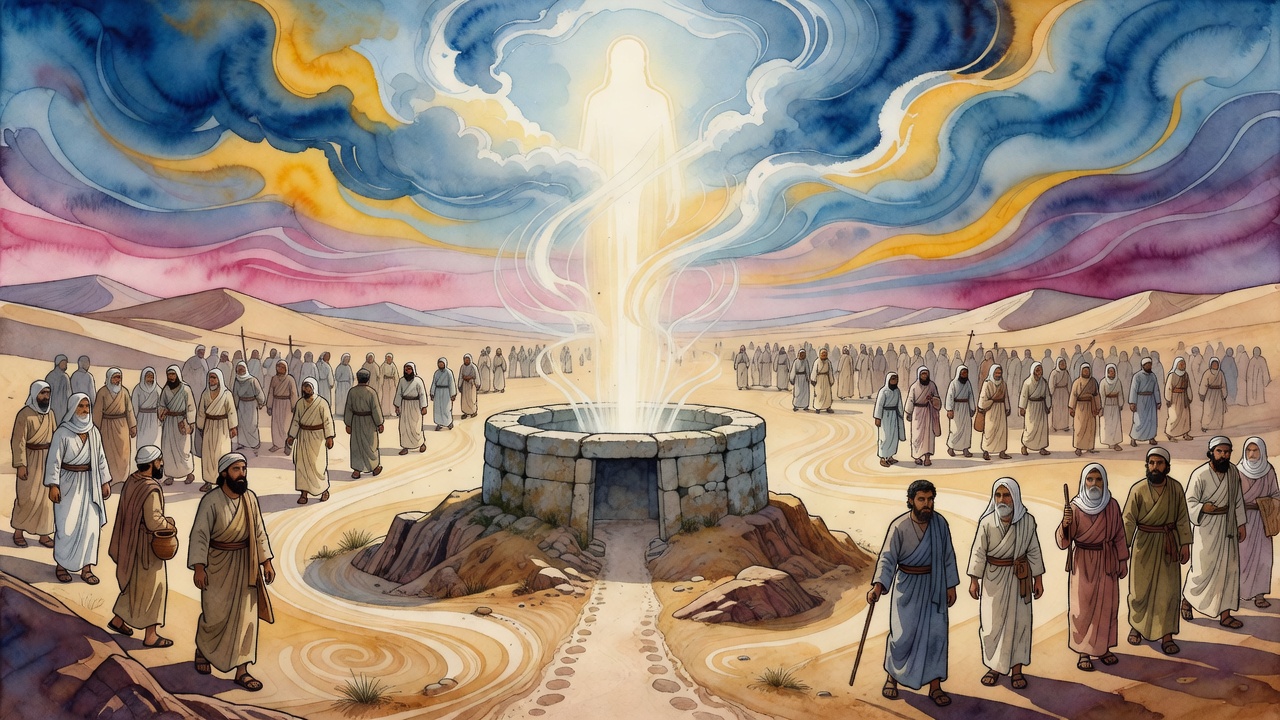
She was struck with tzara'at. Moses cried out: "Please God, heal her now." God imposed seven days of isolation outside the camp. And the entire community, all twelve tribes moving through the wilderness, stopped and waited. They did not continue without her. The Sifrei Bamidbar records this as the measure of what she had done for them. She had once waited for her baby brother in his basket at the river. Now Israel waited for her.
The Song That Prepared Itself in Slavery
The tambourine Miriam packed in Egypt was the summary statement of her character in material form. It was a small drum made for celebration, carried out of a house of slaves, across a desert, to the edge of a sea that had not yet shown any sign of dividing. It assumed that there would be something to celebrate. It assumed that the celebration would require music. It assumed that the women would need to lead the singing rather than simply stand and watch while the men sang.
All three assumptions were correct. Miriam was never wrong about what was coming, from the prediction of Moses' birth when she was five to the instruments packed before the plagues had finished. She saw ahead of the moment consistently, through decades and disasters, and what she carried into the sea crossing was the proof that she had always been watching for this particular shore.
← All myths