Pesach6 min read

Pharaoh's Heart Sealed So Egypt Would Drink the Sentence

Pharaoh threw Israel's sons in the Nile. So a hardened heart became the sentence that kept him standing until his own firstborn died.

Curated by Arthur · Told by Maggid ·
Table of Contents
  1. The Message Moses Was Told to Carry
  2. The Wonder Hidden in Moses' Hand
  3. Five Times Pharaoh Chose
  4. The Hand That Sealed the Door
  5. The Sentence Comes Due

The river took them at night, mostly, when the mothers could not run fast enough along the mud banks. Soldiers waded into the reeds with the infants and let go, and the Nile closed over small Hebrew boys the way it closed over everything, without a ripple that lasted. The order had come from the palace and the order was plain. Every son born to them, into the river (Exodus 1:22). For years the water did its work, and the man on the throne slept well.
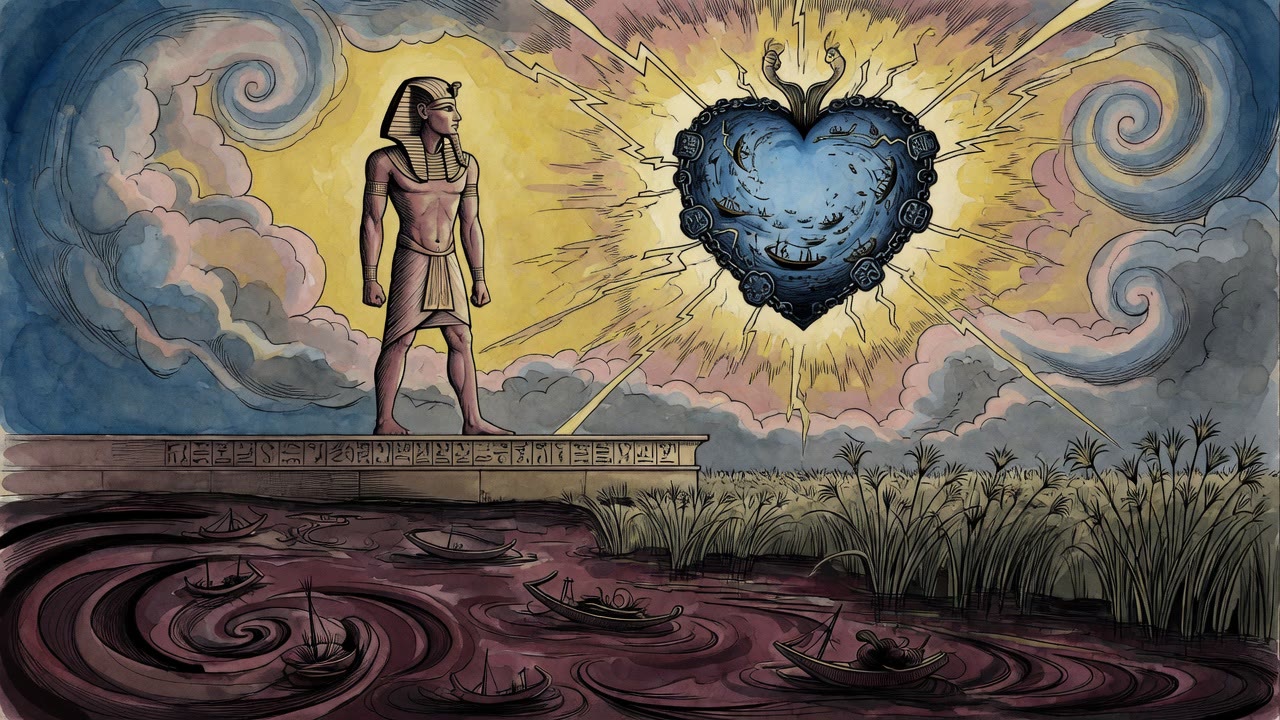
Far above the reckoning of any soldier, a count was being kept.

The Message Moses Was Told to Carry

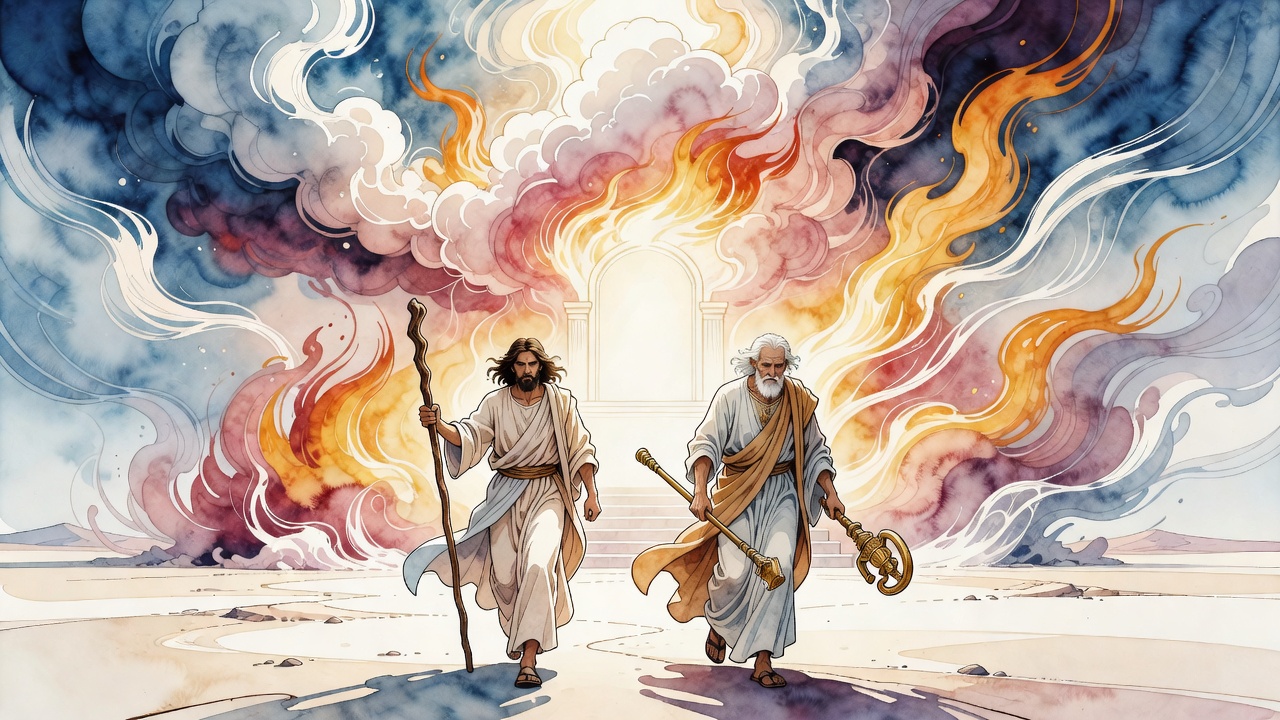
Moses went down to Egypt with words placed in his mouth, and the words were not a plea. They were a claim of ownership. He was to stand before the king and say, "So said the Lord, my son, my firstborn, Israel" (Exodus 4:22). Then the next line, sharper, a knife laid on the table between them. "Let my son go, that he may serve me. And if you refuse to let him go, I will kill your son, your firstborn" (Exodus 4:23).

Hear what is hidden in that. A man had been drowning sons. The sons he drowned belonged, every one, to a father who called Israel his firstborn child. So the sentence was already written before the first plague fell. What this Pharaoh had done to the firstborn of another, that same measure would be poured back into his own house. The threat against his son was not God losing patience. It was an accounting reaching its last page.

The Wonder Hidden in Moses' Hand

Before he left, Moses was told, "See all the wonders that I have placed in your hand and perform them before Pharaoh, but I will harden his heart, and he will not let the people go" (Exodus 4:21). Moses must have turned that over on the road. Which wonders? The serpent, the leprous hand, the water gone to blood? Those signs were meant for his own people, to make Israel believe, and he never did perform them in the throne room at all.

The wonder in his hand was something quieter and heavier. It was the matteh, the staff, but not only the wood. It was the knowledge the staff carried. Moses already knew, before a single frog crawled out of the Nile, that this king would not bend until the night the firstborn died. He had been told the ending. That is why, later, no one needed to brief him on the tenth blow. He had carried it into Egypt the whole time, a sealed verdict in a shepherd's hand.

Five Times Pharaoh Chose

The first plague came, and the second, and Pharaoh hardened his own heart. Blood in the river, frogs in the bedchambers, lice on man and beast, swarms, cattle falling dead in the fields. Each time the king felt the floor tilt under him. Each time he recovered his footing and refused. No hand pressed on him from above. He saw enough to break and chose not to break, again and again, until refusal was no longer a decision he made but the shape his heart had hardened into on its own.

Watch the strange tide inside Egypt as it moved. When the ordinary people began to soften, ready to be rid of these slaves and the ruin they brought, Pharaoh stiffened against them. Then the king himself would waver, and in that same hour his people stiffened. The will to relent kept passing back and forth between throne and street like a fever neither could hold long enough to act on.

The Hand That Sealed the Door

Then came the boils, the sixth plague, sores breaking open on every Egyptian body and on the magicians who could no longer even stand before Moses. And here, only here, the words change. Now the Lord hardened Pharaoh's heart.

It reads like cruelty until you see what it actually was. By now both king and people had at last arrived at the same moment, both ready to let Israel walk out the gate together. And in that moment a hand reached down and strengthened their hearts so the door would not open yet. Not to steal the choice. The choice was long made, drowned sons ago. This was the sealing of a course already chosen, holding Egypt in place so it would drink its judgment to the bottom of the cup, not spill the last and bitterest measure.

Because if the king crumpled now, after the boils, he would walk away from the one debt that mattered. The firstborn of Israel were at the bottom of a river. Justice does not let the guilty rise from the table before the final course is served. The hardened heart was the chain that kept Pharaoh seated.

The Sentence Comes Due

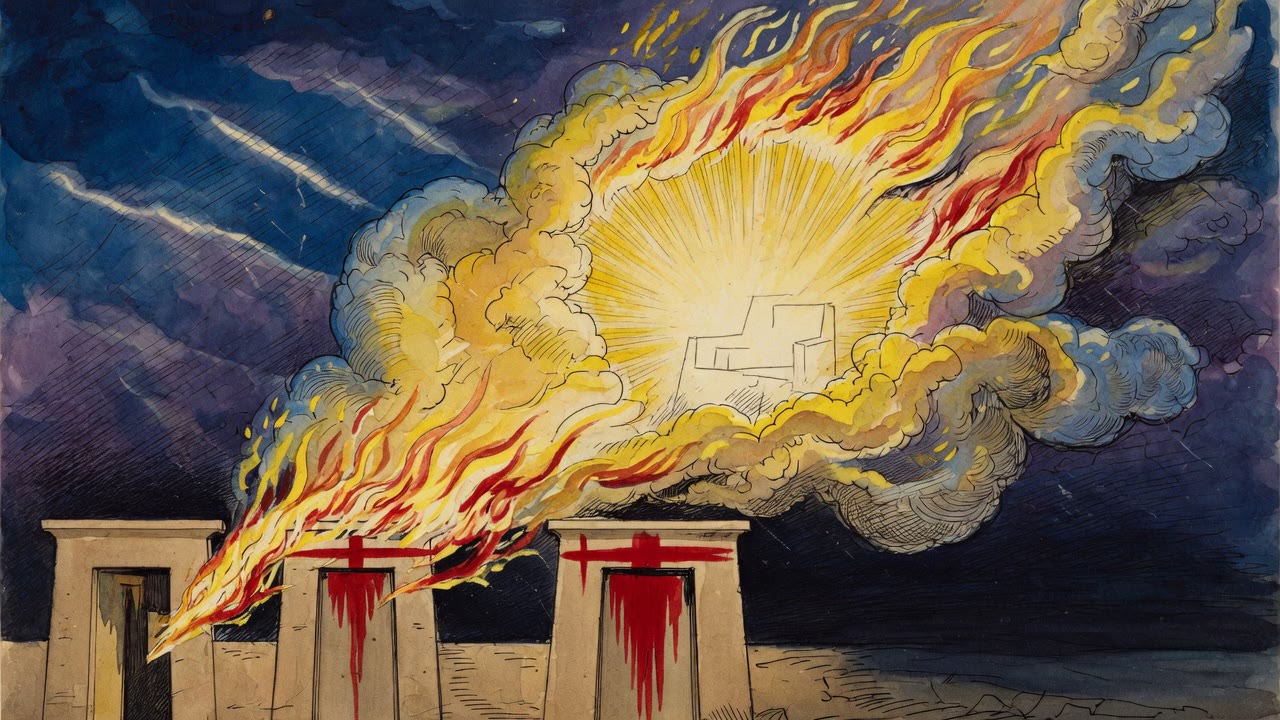
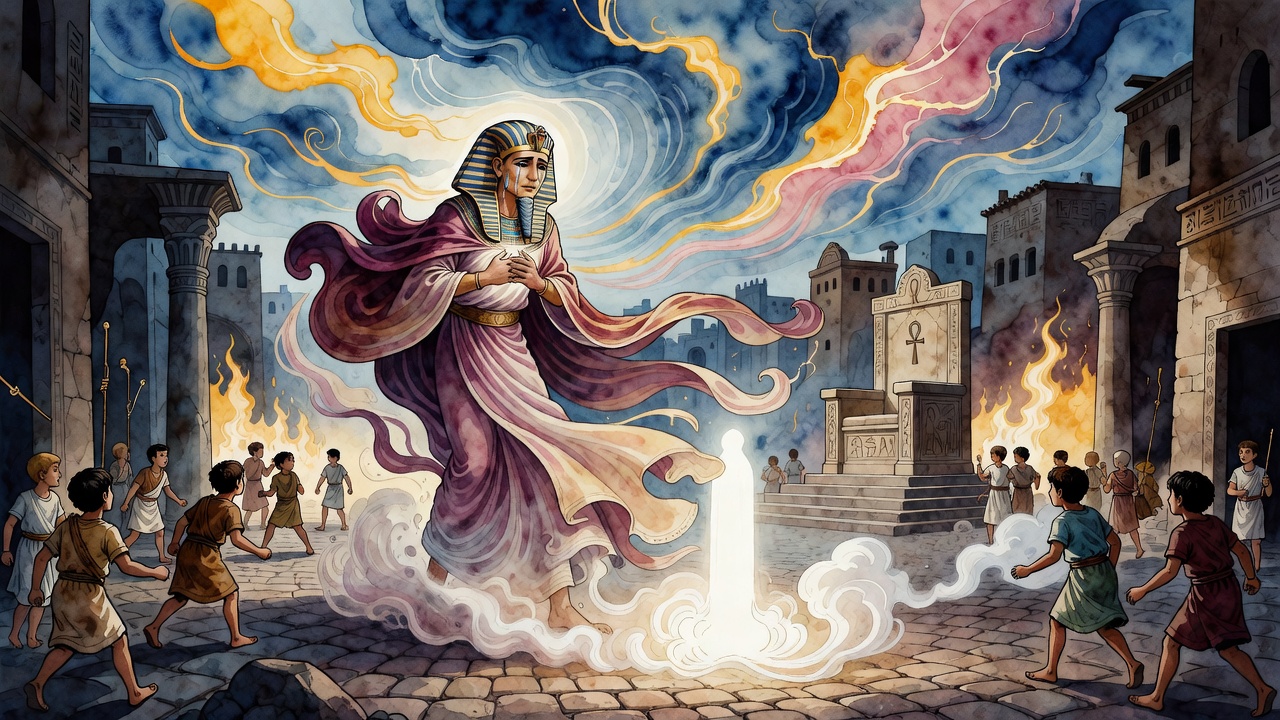
So the plagues ran their full length, and the verdict Moses had carried in from the wilderness came due at midnight. In every Egyptian house a firstborn lay dead, from the son of the king on his throne to the son of the slave girl behind the millstone. The Nile had taken Hebrew sons by the basketful and the palace had not lost a moment's sleep. Now the palace counted its own dead by torchlight.

Pharaoh's heart had been held shut not so he would suffer for nothing, but so the suffering would land exactly where his own hand had aimed it years before. He had set the scale himself. A son for a son. He was simply kept standing long enough to feel it balance.


← All myths
From the tradition

Sources

3 sources

The texts this telling draws on, in full. Open a card to read inline, or expand it for a wider, quieter read.

Mekhilta DeRabbi Shimon Ben Yochai 13:14Mekhilta DeRabbi Shimon Ben Yochai

"And it came to pass when Pharaoh stubbornly refused to let us go" (Exodus 13:15). From where do you say that when the Egyptians grew soft, Pharaoh grew hard? Scripture says, "And I will harden Pharaoh's heart" (Exodus 7:3). When Pharaoh grew soft, the Egyptians grew hard, as it says, "And I will harden the heart of Egypt." When both these and those grew soft, the Omnipresent strengthened their hearts, as it says, "For I have hardened his heart and the heart of his servants" (Exodus 10:1).

"Therefore I sacrifice to the LORD all that opens the womb, the males, and every firstborn of my sons I redeem": what does this teach? From where do you say that if a man marries five virgin wives and they bear him five sons, he is obligated to redeem them all? Scripture says, "And every firstborn of my sons I redeem."

Full source
Shemot Rabbah 5:7Shemot Rabbah

The answer, they suggest, might lie in the seemingly simple phrase, "I will harden his heart."

What does it mean to harden someone's heart? According to Shemot Rabbah, a collection of rabbinic interpretations on the Book of Exodus, this hardening wasn't arbitrary. It was "in order to administer their sentence." In other words, God, in His infinite wisdom, was setting the stage for a final, decisive act of justice.

What was that act? It all goes back to the message Moses was instructed to deliver to Pharaoh: "So said the Lord: My son, My firstborn, Israel" (Exodus 4:22). It sounds straightforward. But the rabbis saw layers of meaning within those words.

The Midrash (rabbinic interpretive commentary) observes that God revealed to Moses that Pharaoh wouldn't release the Israelites until the devastating plague of the firstborn. That's why, according to Shemot Rabbah, the Torah didn't need to explicitly tell Moses about the tenth plague later on. He already knew!

We see this again when God tells Moses, "One more blow I will bring upon Pharaoh and upon Egypt; afterward he will send you forth from here" (Exodus 11:1). Notice something? God doesn't specify what that final blow will be. Yet, Moses, understanding the divine plan, warns Pharaoh about the impending death of the firstborn (Exodus 11:5).

But why this emphasis on "My son, My firstborn, Israel"? The text explains that it’s a reference to their ancestor Jacob, also called Israel, who, as many of us remember, purchased the birthright from Esau so that he would be able to serve God (the story is in (Genesis 25:29-3)4). This is significant because, initially, the firstborn were designated to perform sacrificial rites, to serve God directly.

So, when God says, "Let My son go, and he will serve Me" (Exodus 4:23), it's not just about freeing a nation from slavery. It's about allowing them to fulfill their destiny, to connect with the Divine through worship and service. And the warning to Pharaoh is stark: "If you prevent My firstborn from serving Me, I will prevent your firstborn from serving you, as I will kill them all." A pretty serious threat. The narrative in Shemot Rabbah gives us a deeper understanding of the Exodus story, suggesting that Pharaoh’s stubbornness wasn't just random. It was part of a larger divine plan to show God’s power and ultimately redeem His chosen people. It makes you wonder, doesn’t it, about the hidden layers within other biblical narratives, waiting to be uncovered?

Full source
Shemot Rabbah 5:6Shemot Rabbah

The Torah tells us, "The Lord said to Moses: When you go back to Egypt, see all the wonders that I have placed in your hand and perform them before Pharaoh; but I will harden his heart, and he will not let the people go" (Exodus 4:21).

What exactly were these wonders God placed in Moses' hand? That's the question the ancient rabbis grappled with.

It first appears immediately of the serpent, the leprosy, the turning of water into blood. After all, these are the miracles Moses performed early on. But as Shemot Rabbah, one of the great collections of Midrash (rabbinic interpretive commentary), points out, God instructed Moses to perform those signs specifically for the Israelites, not for Pharaoh. And, interestingly, we don't actually see Moses performing those initial signs before Pharaoh. So, what gives? What's the real wonder God entrusted to Moses?

The answer, according to Shemot Rabbah, is startlingly simple: it's the staff. But not just the physical staff itself, but what it represented. This was no ordinary walking stick. This staff, they suggest, held the power of all ten plagues, etched upon it in a coded message.

Think of it: this humble shepherd's crook, a symbol of leadership and guidance, also contained the potential for unimaginable devastation. How? Through an acronym, a sort of divine shorthand: detzakh adash be’aḥav. Detzakh represents the first three plagues: dam (blood), tzefarde’a (frogs), and kinnim (lice). Adash stands for arov (wild beasts), dever (pestilence), and shekhin (boils). And finally, be’aḥav gives us barad (hail), arbeh (locusts), ḥoshekh (darkness), and bekhorot (the slaying of the firstborn).

So, in this single, seemingly innocuous phrase, the rabbis of the Midrash found the key to understanding the wonder God placed in Moses' hand. God, Shemot Rabbah tells us, was saying: "These are the plagues that I have placed in your hand. Perform them before Pharaoh with this staff."

It's a powerful image, isn't it? Moses, standing before the most powerful man in Egypt, holding in his hand not just a staff, but the coded potential for divine retribution. A reminder that even the simplest objects can be imbued with extraordinary power, and that even the most daunting tasks can be accomplished with faith and the right tools.

What "staff" do we carry with us, perhaps without even realizing its potential? And how can we use it to confront the "Pharaohs" in our own lives, the forces that seek to hold us back from fulfilling our own missions?

Full source