Pharaoh Survived the Plague to Face the Sea
Mothers ran with lamps into rooms that had gone quiet. The king who signed the Nile decree still had breath in his chest.
Table of Contents
 Click for full size
Midnight Broke the Palace
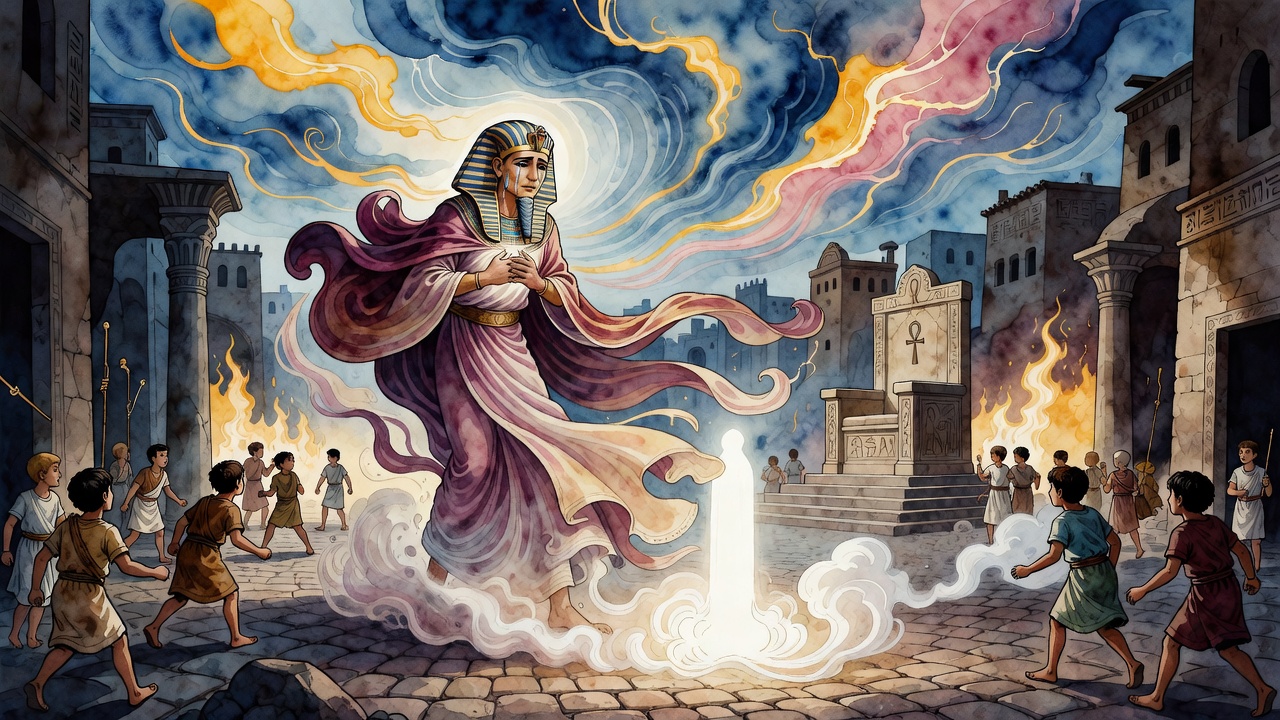
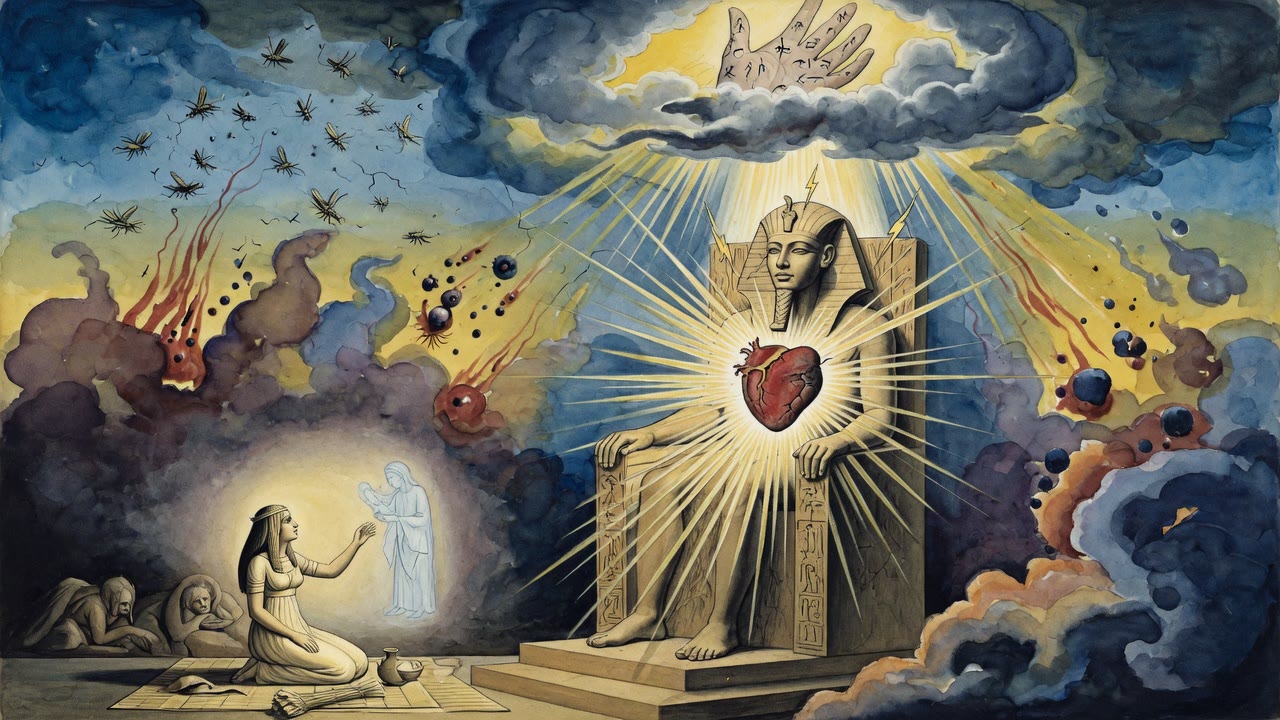
The palace did not sleep. It listened. At midnight, doors burst open, servants ran with oil lamps, and mothers screamed into rooms that had belonged to sons a breath before. Egypt had built itself on command. That night every command snapped in its hand.
The cry moved from street to street faster than any messenger. Firstborn sons lay still in beds, on mats, in guarded rooms, in cells below ground. No house could keep death outside. The poor heard it. The nobles heard it. The captives heard it through stone.
Even the granaries had a sound that night, grain sacks dragged aside as men searched for brothers who had been sleeping there to guard Egypt's wealth. Stable doors hung open. Priests ran from shrines with ash on their hands. The plague did not ask which house had cheered the decree and which had stayed silent. Egypt had become one enormous firstborn room.
The Firstborn King Still Breathed
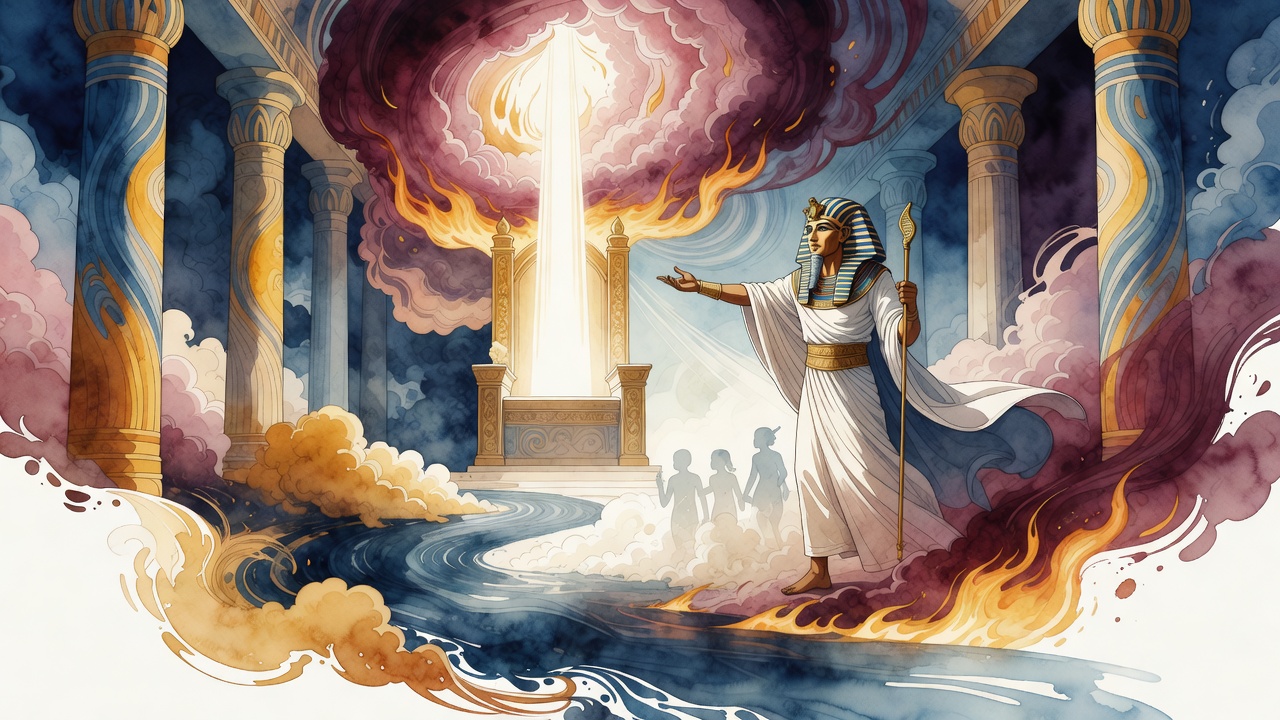
Pharaoh heard it from inside a palace made to swallow sound. His own house had taught Egypt to obey the throne. His own mouth had once turned the Nile into a grave for Hebrew boys. Now Egypt's sons were gone, and the king who had signed the terror into law was still breathing.
He should have been counted with them. The throne in Egypt passed through the firstborn line, father to eldest son, eldest son to throne. The crown itself marked him. If the plague hunted firstborn flesh, it should have found him before dawn.
But God left him standing. For this cause I have preserved you, to show you My might (Exodus 9:16). A dead tyrant becomes a closed door. A living tyrant has to walk through the ruin, hear the servants sob, count the bodies, and know that the hand he resisted has not finished with him. His survival was not rescue. It was custody. Pharaoh staggered into morning with a kingdom of empty cradles. Every breath accused him.
The Idol That Did Not Fall
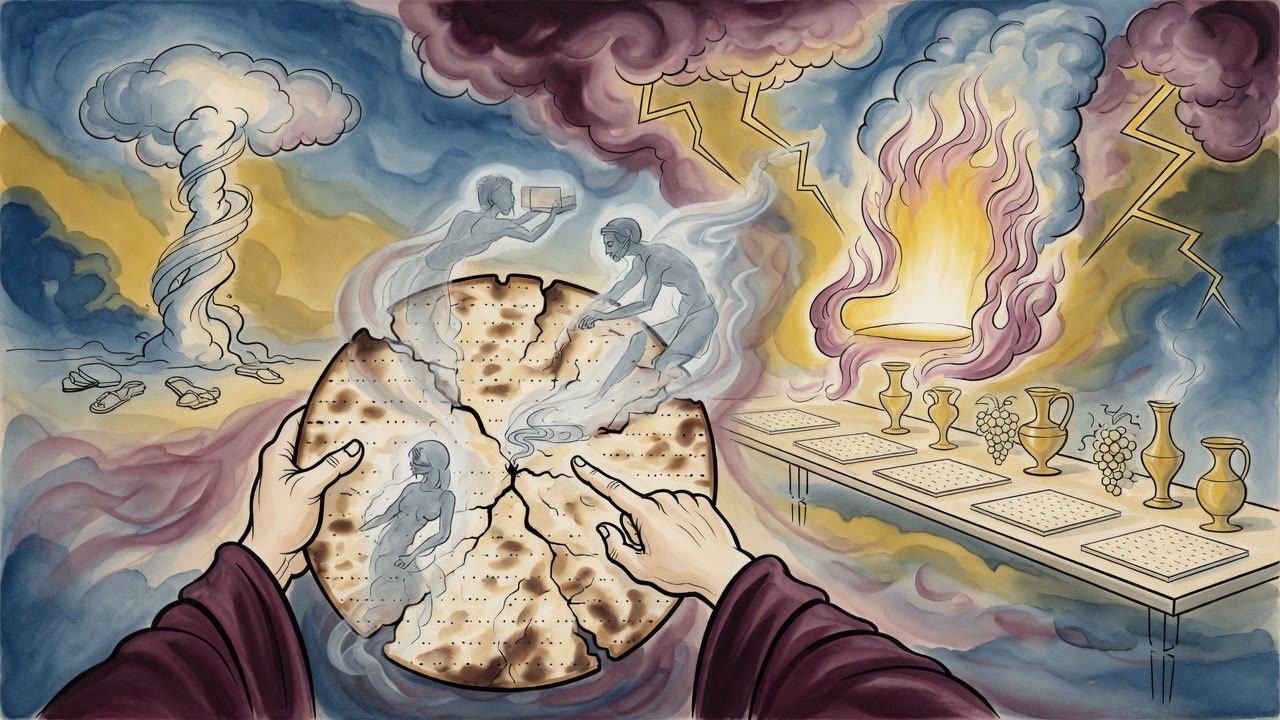
Egypt looked for something that had survived besides the king. It found Ba'al Tzefon still standing near the edge of the wilderness, an idol left upright while the others had fallen. Hope is dangerous when it is handed to desperate men. They stared at the idol and mistook delay for strength.
The border seemed to whisper that Egypt was not finished. The runaway slaves were near water, boxed in by desert and sea. The king's grief hardened into pursuit. Horses were harnessed. Wheels were fixed to axles. Iron flashed in the morning. Men who had just buried sons climbed into chariots because the throne still had a voice, and because one god of Egypt had not gone down with the rest.
The idol had done its work. It gave Egypt enough confidence to chase. God lifts up nations and destroys them. He had lifted that statue so the chase would have a reason, and so the reason would walk itself into the water.
Wheels Rolled Toward the Water
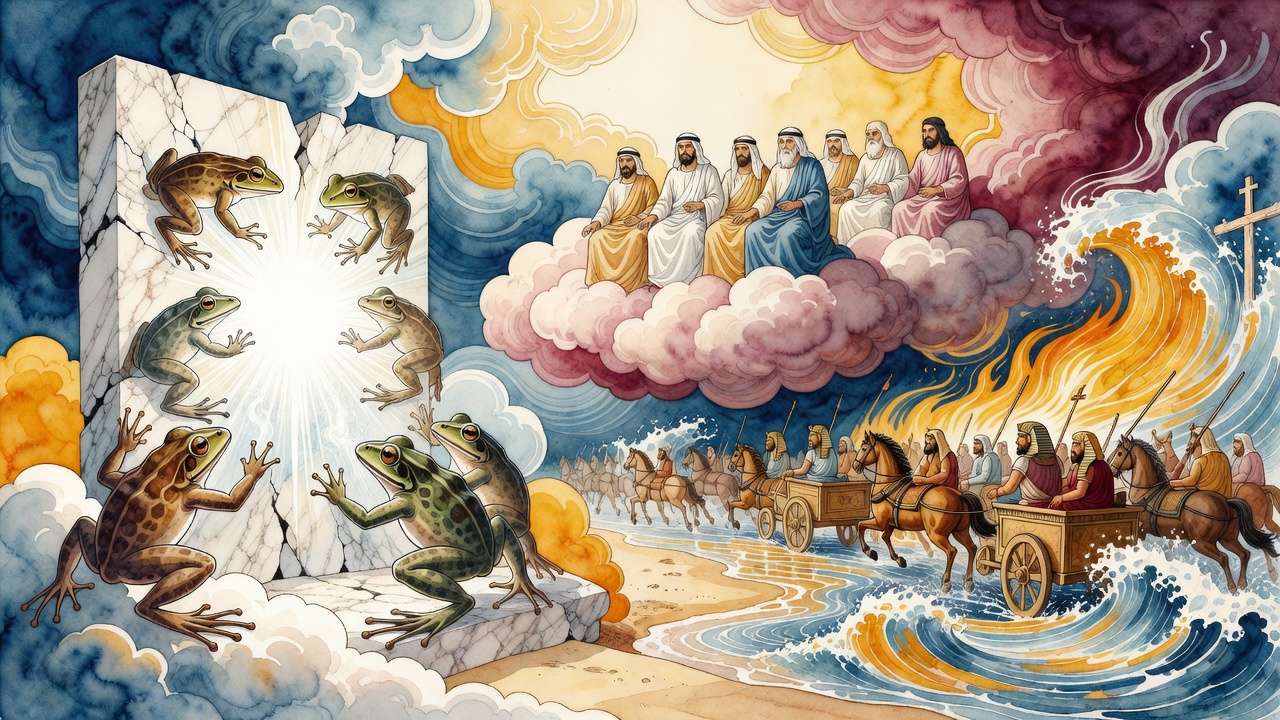
The chariot line rolled toward the sea with the old arrogance of Egypt behind it. These were not farmers with sticks. These were the machines of a kingdom, wood and bronze and trained horses, built to make men scatter.
Israel had no wall, no city, no cavalry waiting in reserve. The people stood between pursuit and water with children pressed against their legs. Behind them came the thunder of wheels. Before them, the sea lifted itself into a path that no army had built.
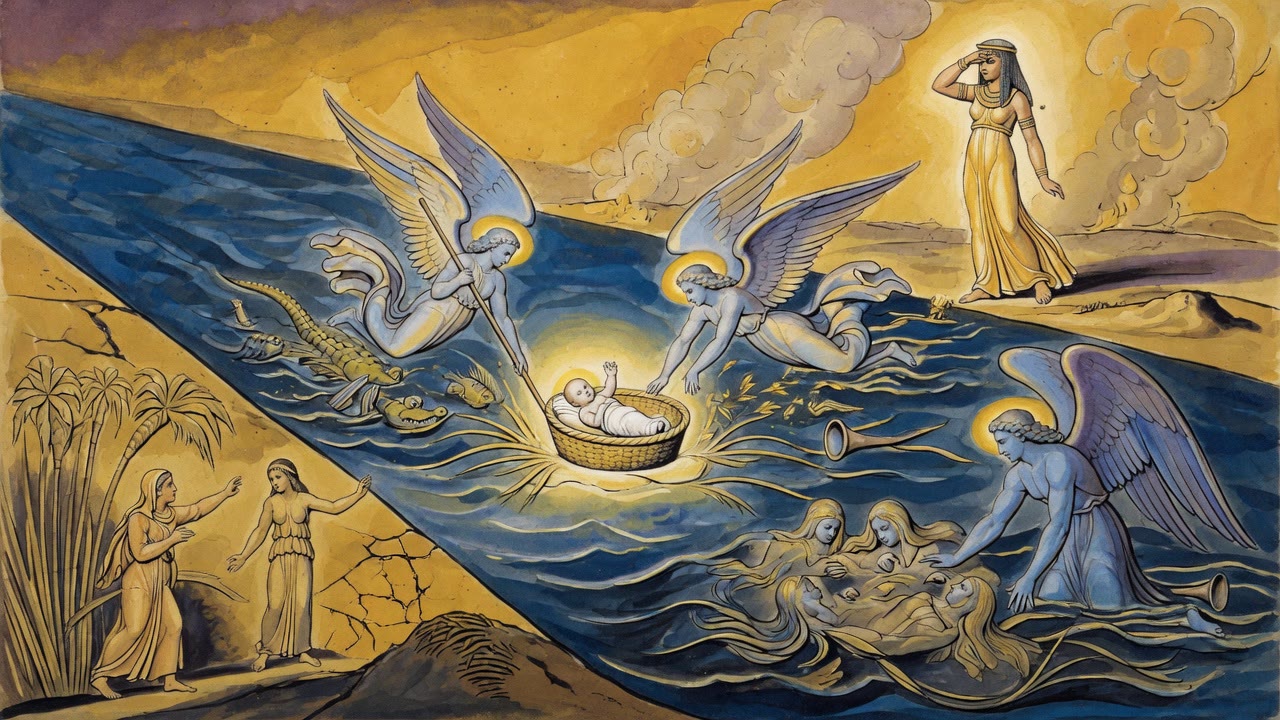
Pharaoh had once chosen water as his weapon. Every son that is born, you shall throw him into the Nile, and the river of Egypt received them. Water had been made to carry terror quietly, one child at a time, while the palace continued to eat and sleep. Now the water waited in public, walls of it standing open like a dare.
The Sea Answered the Nile
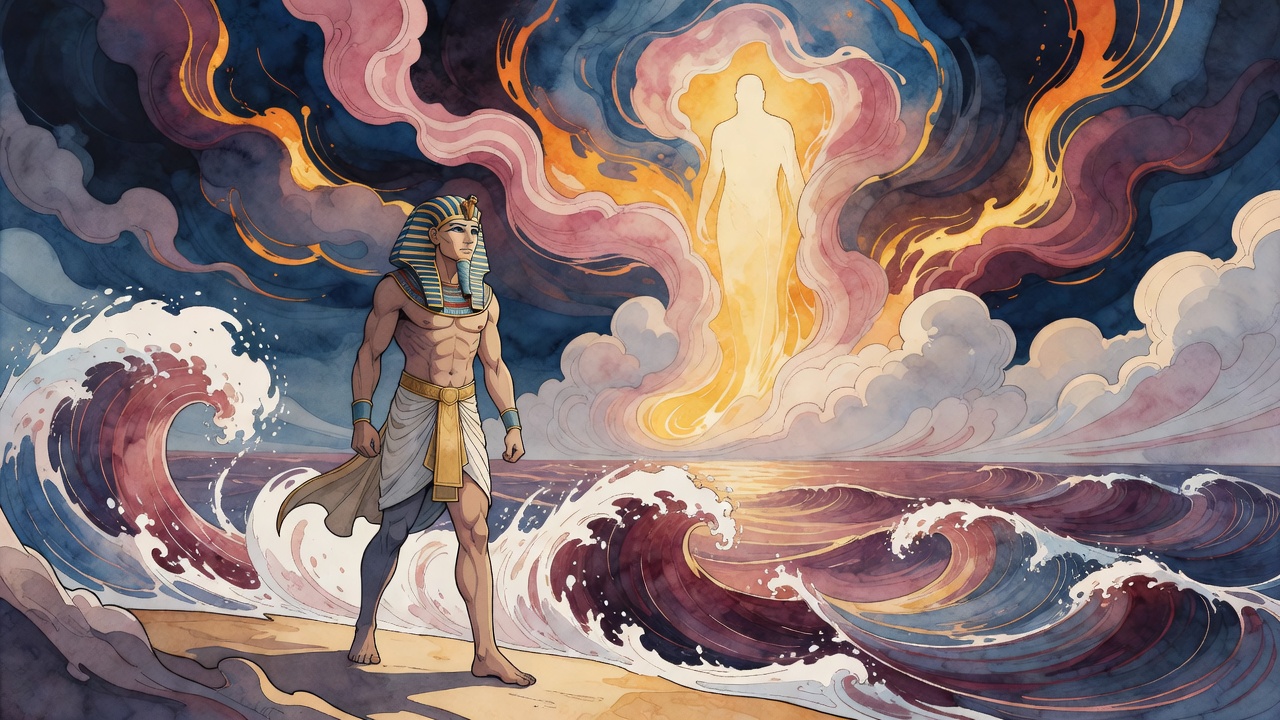
The chariots entered after Israel. Hooves struck the wet floor. Wheels groaned. Men shouted to keep formation, but formation belongs to dry ground. The sea held its walls high until the pursuers were inside the trap they had mistaken for a road.
Then the water returned. It did not argue. It closed over horse and wheel, captain and driver, bronze and pride. The same element Egypt had used against the helpless now rose against Egypt's power. Nile for sea. Infants for chariots. Hidden drowning for public collapse.
On the far shore, Israel breathed. In the water, Egypt's iron pride went down by the path its king had chosen long before. Pharaoh had survived the night of the firstborn long enough for justice to find the weapon he trusted. The firstborn on the throne had been spared at midnight so the sea could have him in the morning.
← All myths