Egypt Marched as One Man and the Sea Opened Anyway
Israel stood with water ahead and chariots behind. Moses kept praying. God told him the sea would not wait on a longer speech.
Table of Contents
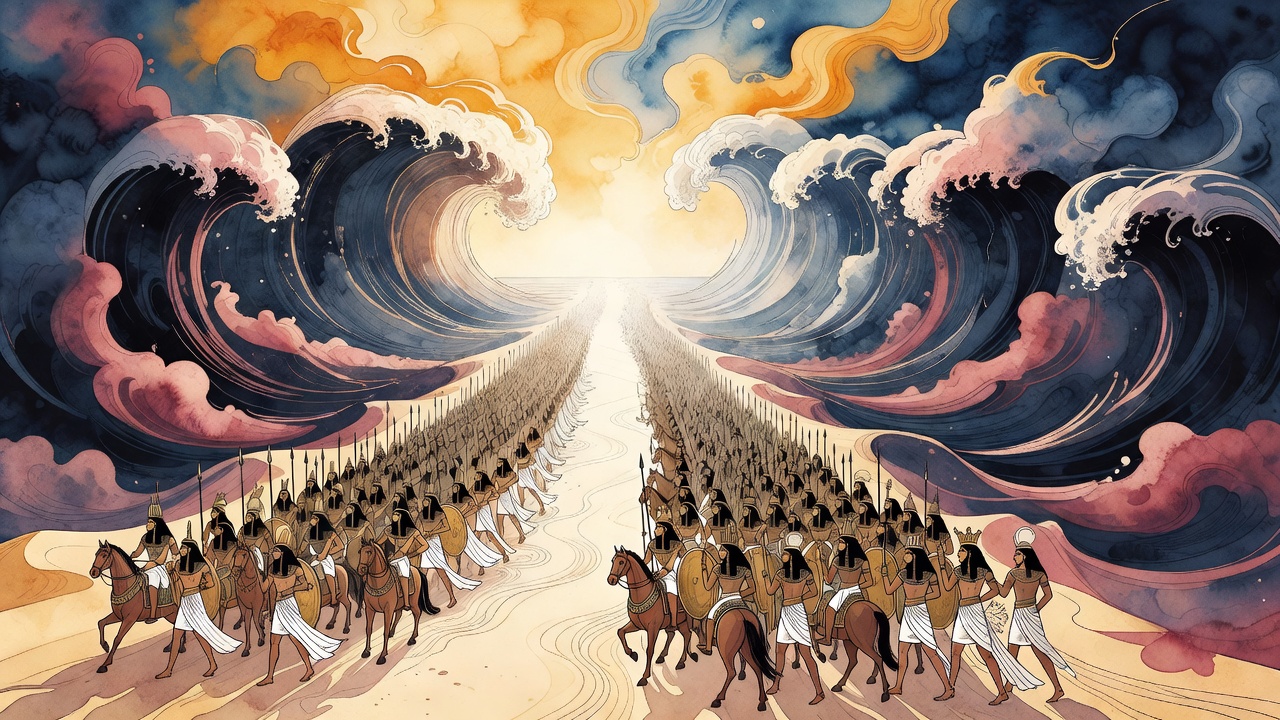
Pharaoh rode at the point of the wedge. Chariots in front, horsemen behind, foot soldiers behind them. From the shore it did not look like many men. It looked like one.
 Click for full size
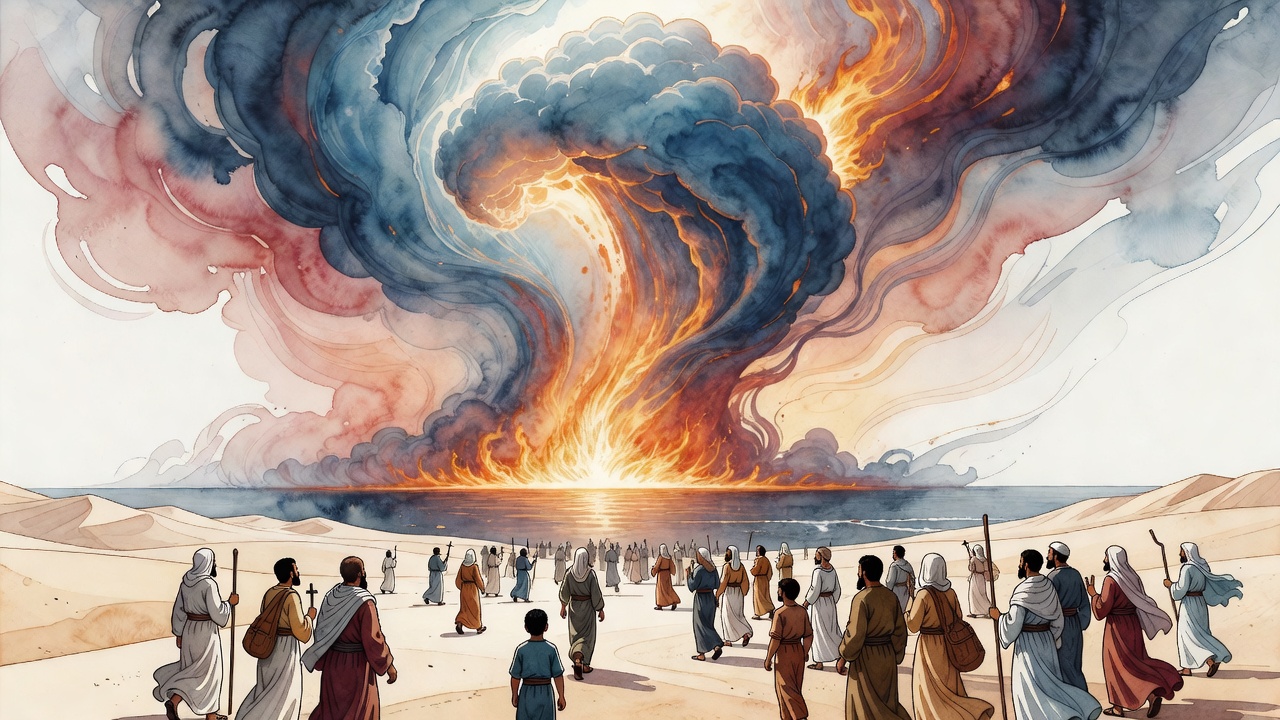
Israel stood between that body and the water. Children packed against legs. The sea did not move. Behind them the dust of Egypt came on in a single line, squadrons locked, as if a thousand throats had agreed to breathe together.
Egypt Came as One Body
"And, behold, Egypt coming after them" (Exodus 14:10). Not the Egyptians. Egypt. One will. One direction. One weight rolling toward the water.
They had formed into perfect squadrons. A man in the rear placed his foot where the man in front had placed his. The nations who later learned to march that way learned it from this shore. Pharaoh had built a wall of living men and pointed it at a people who had no wall at all.
Israel had the sea in front and that wall at their backs. Some of them said what fear says. "Is it because there were no graves in Egypt that you have taken us away to die in the wilderness?" (Exodus 14:11). The complaint was old by a night. The army was new by an hour.
The Prayer That Lasted Too Long
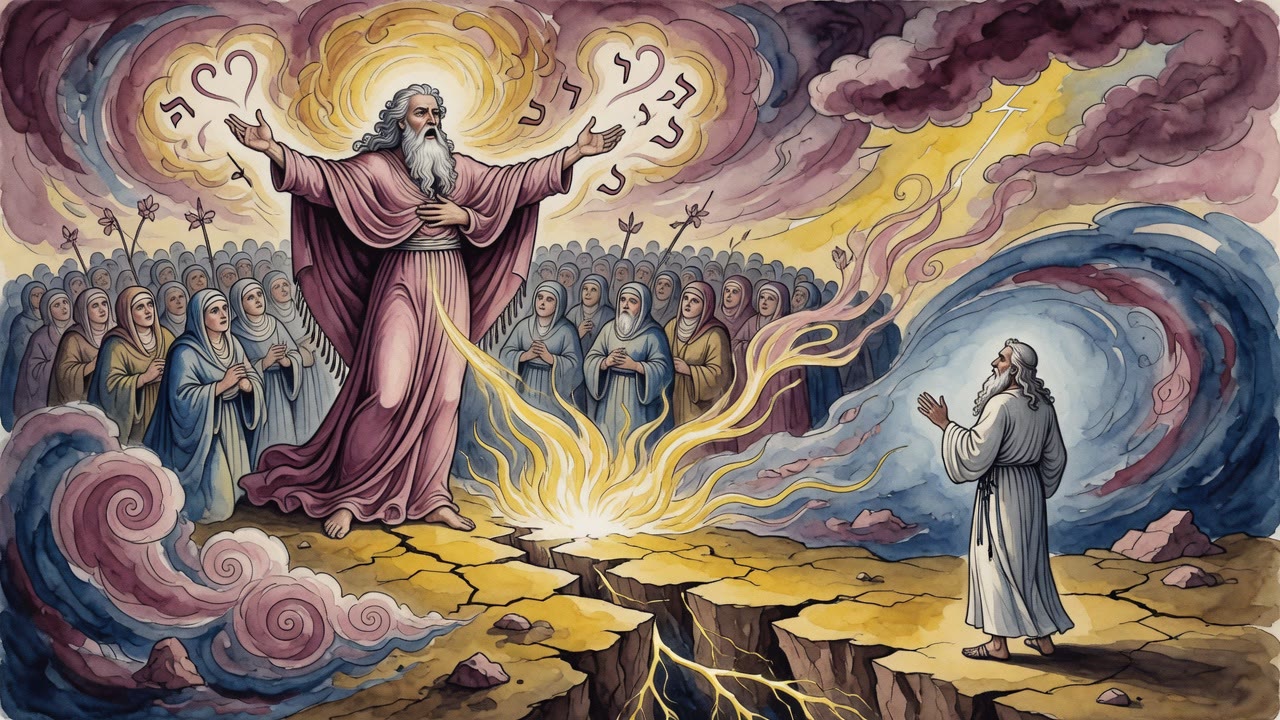
Moses stood and cried out. He had argued with God before. He argued now, with water at his feet and chariots closing the last dry ground.
God did not ask for a longer prayer. "Why are you crying out to Me?" Yesterday Moses had said that since he came to Pharaoh in God's name the people had only been harmed. Now he was standing in the same distress and stretching the words out. The people had doubted in the night. Moses was still pleading in the morning.
A king whose son has angered him may decree a harsh sentence. The tutor runs in to beg. The king looks at him and says, "Are you asking on behalf of my son? I have already reconciled with my son." God had already turned back toward Israel. The prayer was late for the thing it was trying to buy.
"Speak to the children of Israel, that they go forward" (Exodus 14:15). Have them take a matter out of their heart. The sea would not open for a speech that had already been answered.
Set Your Legs Into the Sea
There is a time to lengthen prayer and a time to cut it short. God's children were in distress. The sea blocked them. The enemy was in pursuit. Moses was still standing with his mouth open.
"Israel only needs to set forth," God said. "Let them set their legs from the dry land to the sea, and you will see the miracles I will perform for them." They had already turned back toward the water when Moses told them to, and they had not asked how they were supposed to break the hearts of the children and the women in the camp. That faith, God said, was enough to split the sea.
He spoke of Abraham splitting wood for a burnt offering, the same splitting that would now run through water. He spoke of Jacob spreading west and east. He told Moses the sea was under His authority, and Moses was trustee over it. "Lift thou up thy rod" (Exodus 14:16).
Joseph's Bones at the Waterline
Moses had not come to the shore empty-handed. He had taken the bones of Joseph with him out of Egypt, as Joseph had made the children of Israel swear (Exodus 13:19). The chest sat in the sand while the army closed. Joseph had asked not to be left in the land that had owned him. Moses would not leave him on this side of the water.
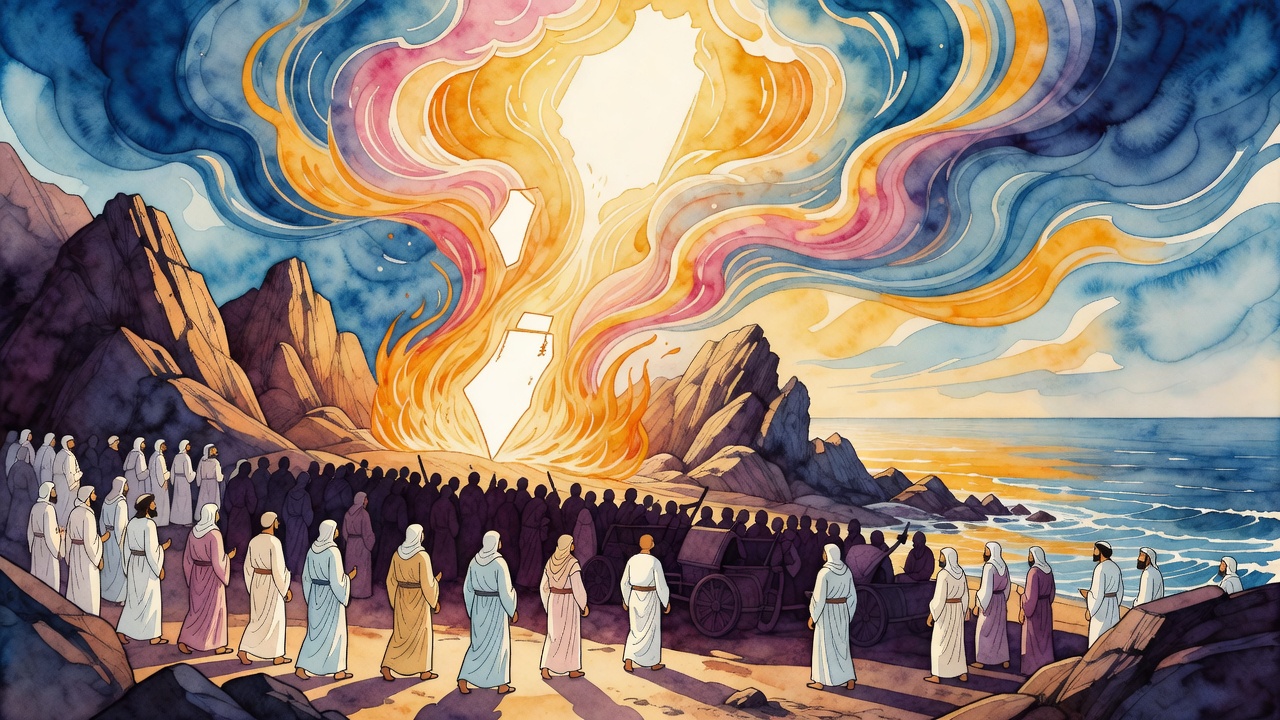
They set their legs into the sea. The water stood up. A road opened that had not been a road an hour before. Israel went through on dry ground, and the bones of Joseph went with them, carried at last toward a grave that was not Egypt.
Pharaoh saw a corridor and thought it was still a chase. He pointed the wedge into the gap. The squadrons held. Egypt entered as it had marched, as one man, into a space that had been opened for someone else.
They Drowned as They Had Marched
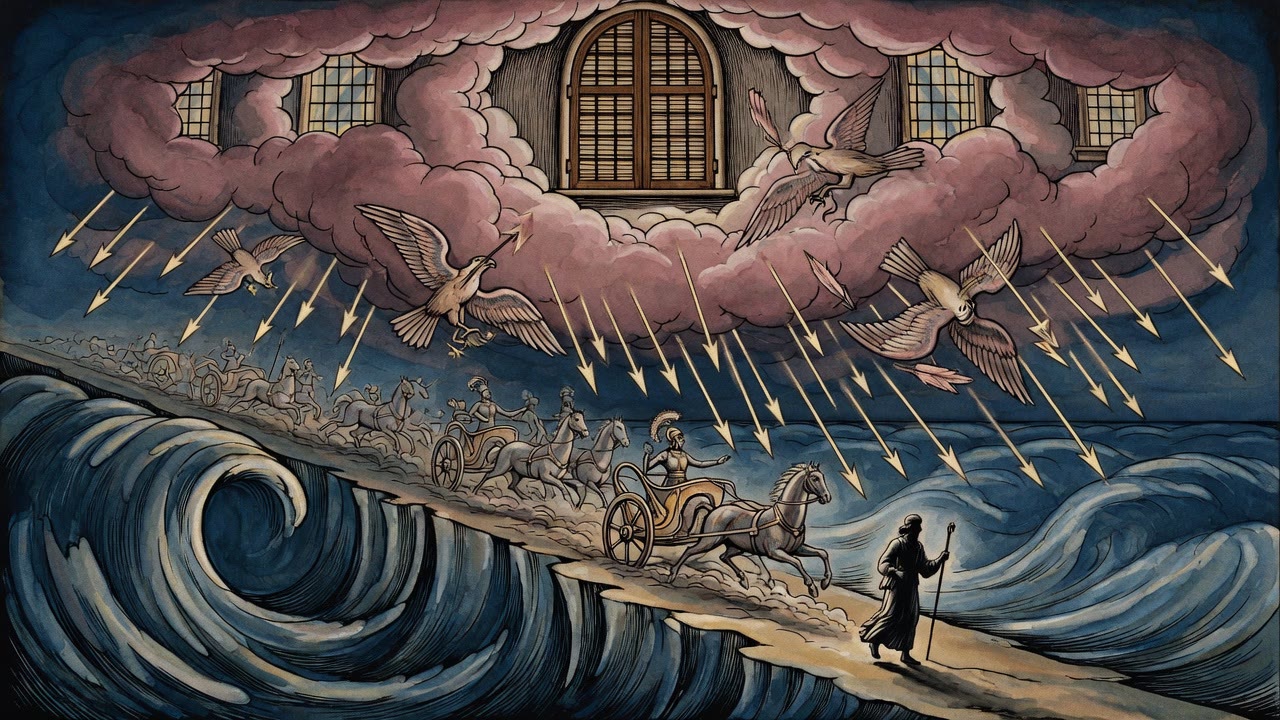
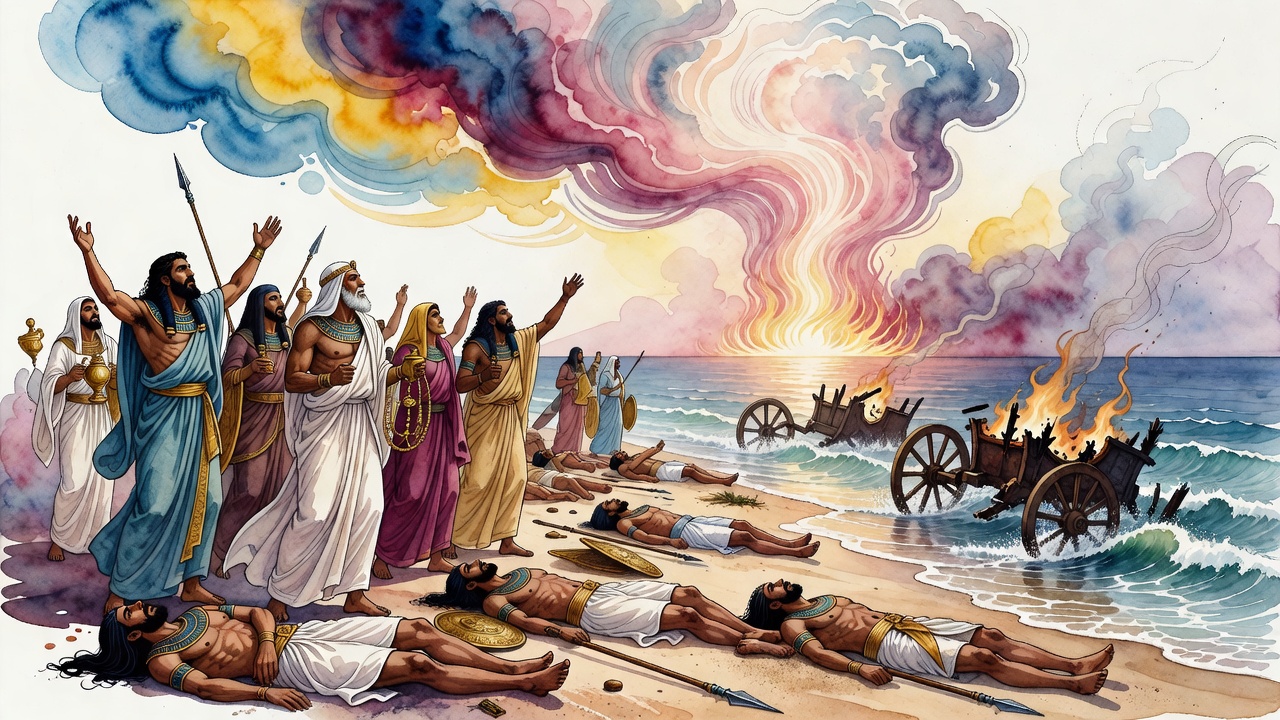
The walls came down. Chariots that had moved as a single body found no more ground. Horsemen, foot soldiers, Pharaoh at the point, the rear that had placed its feet so carefully, all of it went under together. Egypt had come as one. Egypt drowned as one.
In the morning the sea returned to its strength. Israel stood on the far side with salt on their clothes and Joseph's bones still in their keeping. Behind them the most unified army the nations would copy was a wreck on the wet sand. The wall of men was gone. The water was only water again.
← All myths