The Morning Pharaoh's Heart Reversed and Egypt Emptied
Pharaoh's heart reversed when Israel walked out, and the empty brick pits and silent treasuries told him Egypt had reversed with it.
Table of Contents
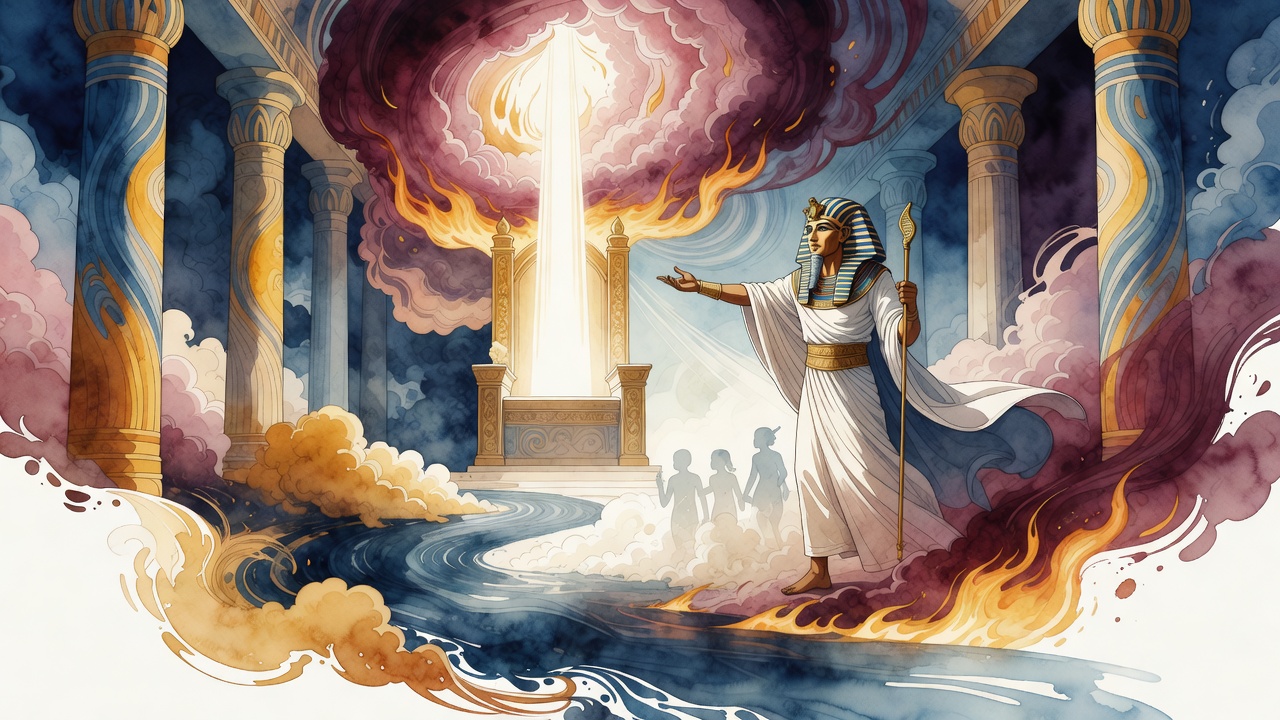
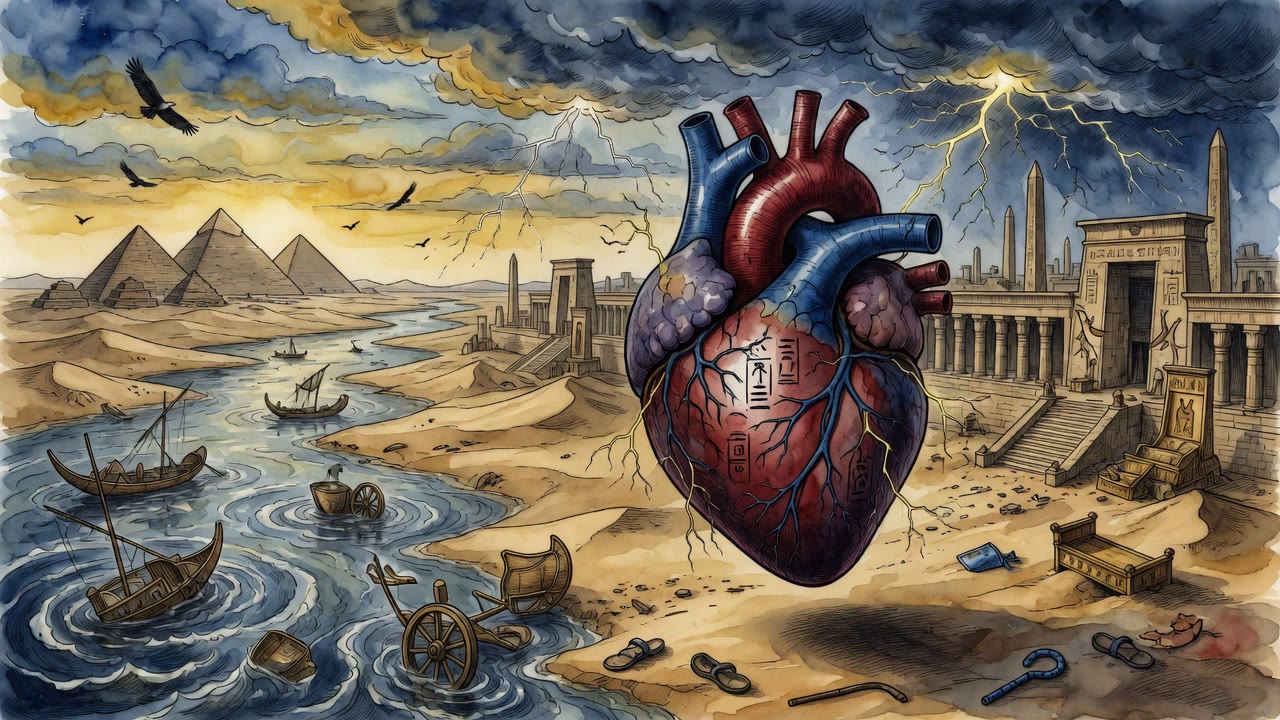
The runner reached the throne room before dawn, still gasping, the dust of the road on his shins. The slaves were gone. All of them. Pharaoh sat very still while the words landed, and then something turned over inside his chest, the way a heavy stone turns when the ground beneath it gives. "And the heart of Pharaoh was reversed" (Exodus 14:5). He felt it as a change of mind. He would tell his captains it was a change of mind. Harness the chariots, he would say, we will go and bring them back. He did not yet understand that the verb had done more to him than rearrange a decision. It had emptied him out.
 Click for full size
The Brick Pits Stand Silent at First Light
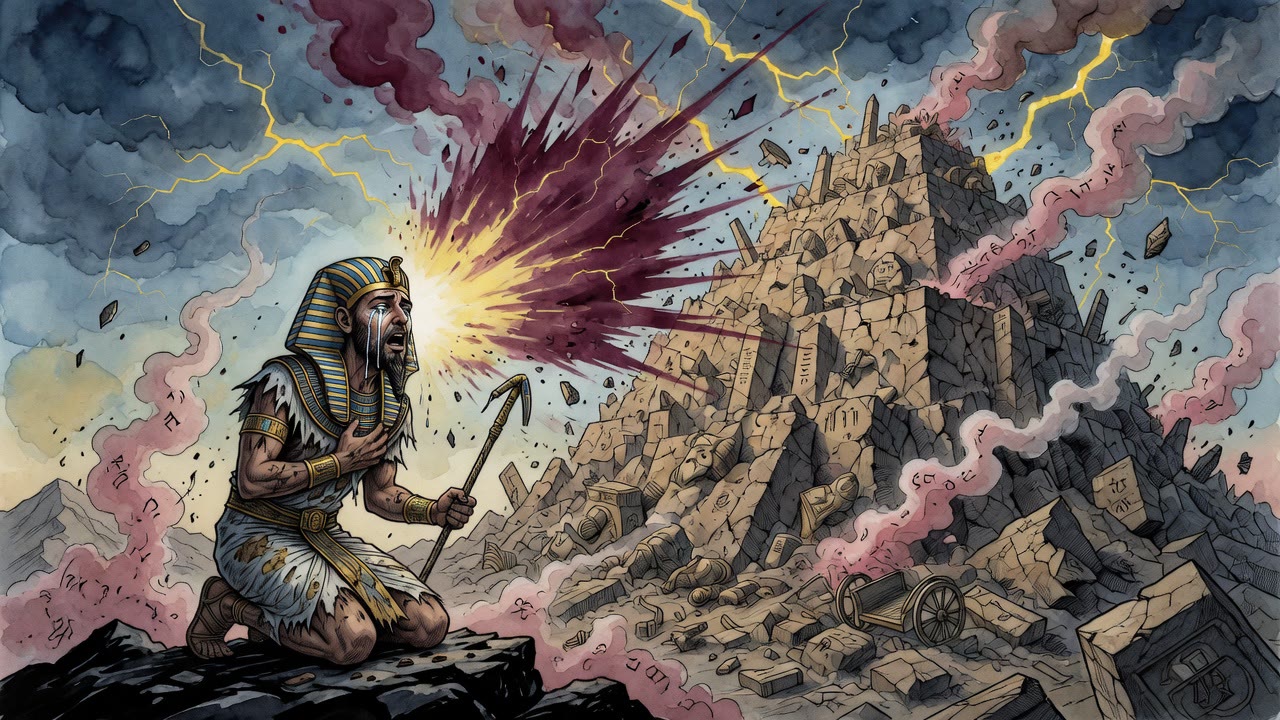
Walk the city with him in the gray hour after the runner leaves. The brick pits east of the palace, where for four hundred years the straw was trodden into clay and the rows of backs bent and rose and bent again, lie still. No water carriers. No overseers cracking the air with their voices. The molds sit half-filled, the clay in them already drying into useless lumps because no hand came to turn it out. The storehouse cities of Pithom and Raamses had been raised brick on brick by those backs, and now the backs were a smudge of departing dust on the eastern horizon, walking toward a sea.
The labor that built Egypt had built itself a road out of Egypt. Pharaoh's heart reversed, and the work reversed with it, and there was no one left who knew how to make the country go.
The Treasuries Have Walked Out the Gate
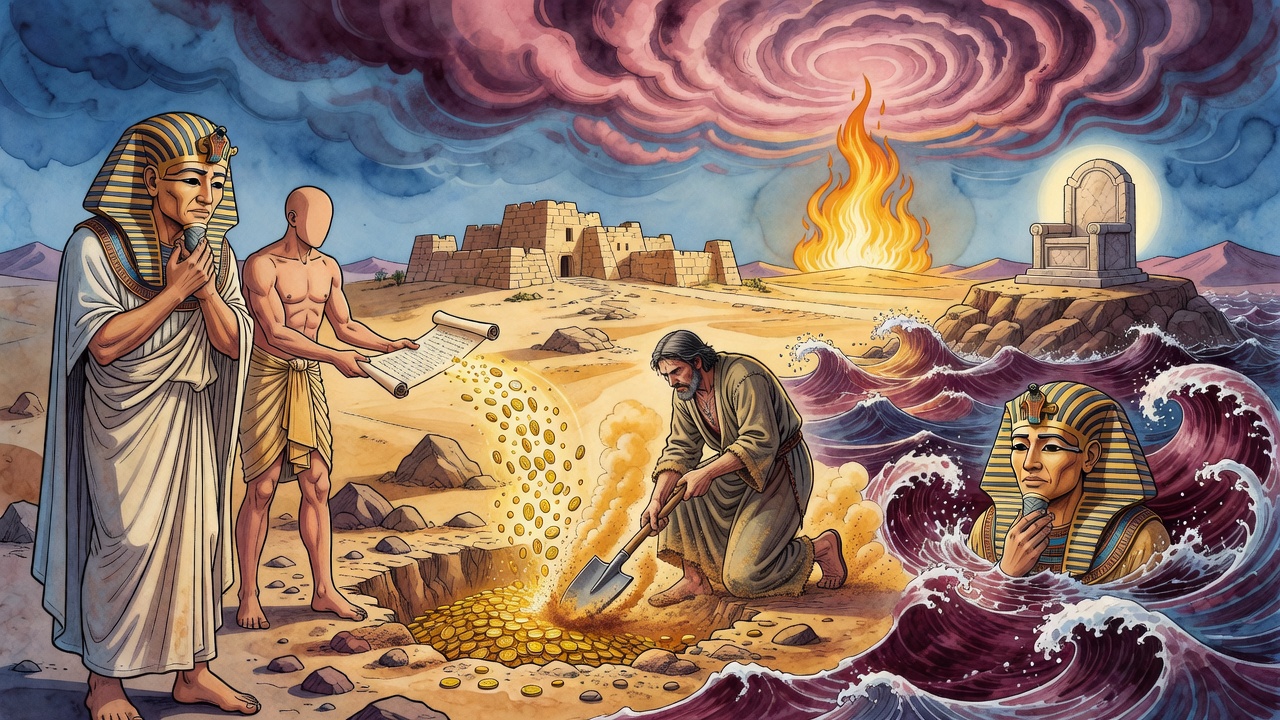
Then the stewards came to him, one after another, with the same accounting. The silver was gone. The gold was gone. On the night the people left they had asked their Egyptian neighbors for jewelry and vessels and garments, and the neighbors, half-mad with grief and fear, had pressed the wealth into their arms to be rid of them. So the treasure of Egypt did not sit in any vault. It rode east on the backs of mules and on the bodies of women, anklet and earring and cup, four centuries of accumulation carried out through the gate in a single night.
Pharaoh had imagined himself the richest king under the sun. The reversal of his heart was the reversal of his coffers. He reached for his wealth to fund the pursuit and closed his hand on air.
A Master, a Servant, and a Rotten Fish
Picture a master who sends his servant to the market with one errand. Go, he says, and bring me back a fish. The servant goes, and through carelessness or bad luck he comes home with a fish already rotten, the stench of it filling the doorway. The master will not let the failure slide. He sets three penalties on the table and lets the man choose only one. Eat the rotten fish, he says. Or take a hundred lashes. Or pay a hundred maneh, a crushing sum of silver.
The servant thinks himself clever. He chooses to eat the fish, the lightest of the three, and lifts it to his mouth, but the rot overwhelms him before he can swallow it down, and he gags and throws it aside. Better the lashes, he says. He bares his back and takes sixty strokes, and at sixty his flesh gives out and he cannot bear the rest, so he begs to stop. Then pay the maneh, says the master. And the servant pays the full hundred. In the end he has eaten the fish and worn the lashes and emptied his purse, all three, because he would not simply accept the one.
Egypt was that servant. Egypt had been given one plain command and had fouled it again and again, refusing the first reckoning and the second, until the day came when she paid every penalty at once. The slaves walked free, that was the first. The wealth walked out behind them, that was the second. And then Pharaoh harnessed his chariots and rode after them into the water, where the third payment waited.
The Chariots Roll Toward the Sea
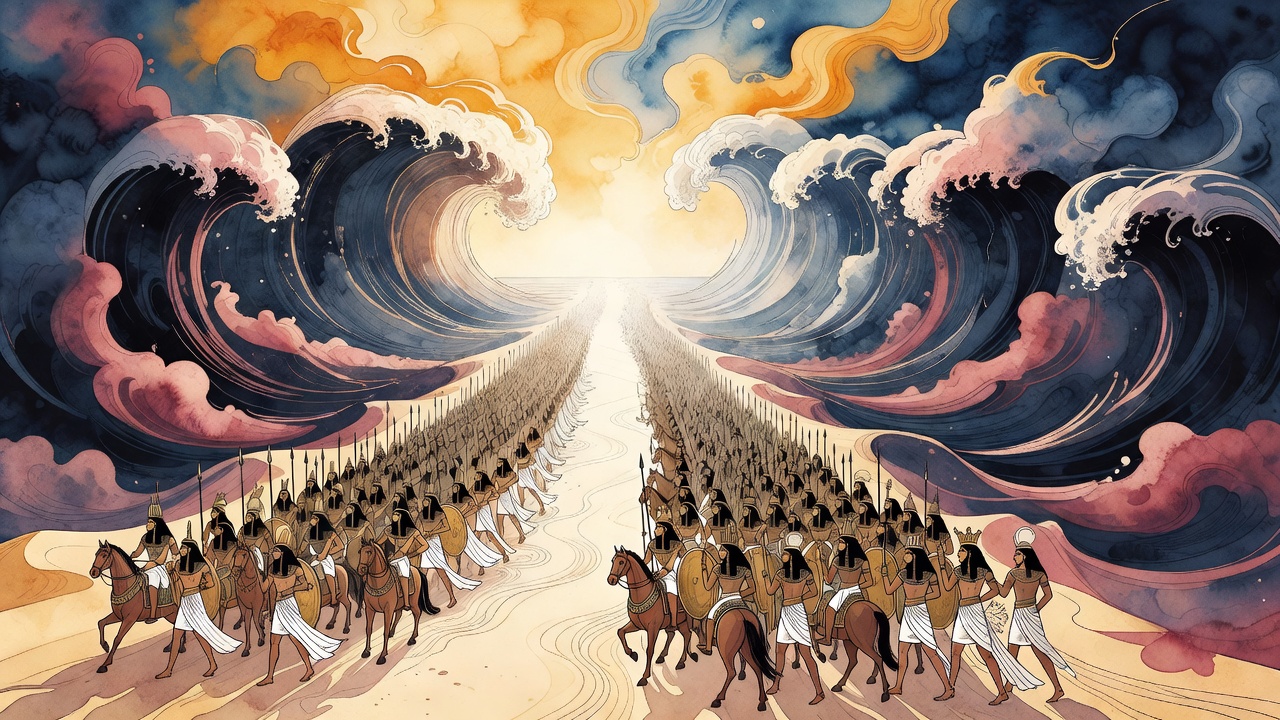
So he chose the pursuit, the way the servant chose the lashes after the fish. The horses were yoked, the wheels turned, the spears glittered in the new sun, and the whole confidence of the greatest empire under heaven rolled eastward on the assumption that no fugitive band could outrun a chariot. That confidence was the last thing Egypt still owned. It had not yet occurred to Pharaoh that the labor was gone and the treasure was gone and only the army remained, that he was wagering his final possession on a single throw.
He drove his men down into the sea after them, and the army that was the last of Egypt's three glories sank with the rest. Now Pharaoh had paid all three. He had lost the work, he had lost the wealth, and he had lost the strength of his arms, and the man who tried to keep everything by chasing it kept nothing.
A Funeral Dirge Sung Over a Beautiful Corpse
Long after, a prophet stood in exile and was given a song to sing over Egypt, and the song was a funeral dirge. "Whom have you surpassed in beauty? Descend and be laid to rest with the uncircumcised!" (Ezekiel 32:19). The nation that had looked down on every people around her was told to climb down into the grave and lie among them, her splendor finished, her beauty faded to the color of the dead. The empire that woke one morning to an empty city had been a corpse from that morning on, and the dirge only said aloud what the silent brick pits had already announced.
The heart that reversed in the throne room was never only a king's regret. It was the moment a civilization turned over and did not turn back, the labor and the silver and the proud chariots all walking out through the same eastern gate, into the same dawn, toward the same water that would close over the last of them.
← All myths