Balaam Read Pharaoh's Dream and Sent a Generation Into the Nile
An old man hung merchants' scales in front of the throne, put every noble in Egypt in one pan and a baby goat in the other, and the goat went down.
Table of Contents
 Click for full size
The Kid That Outweighed Egypt
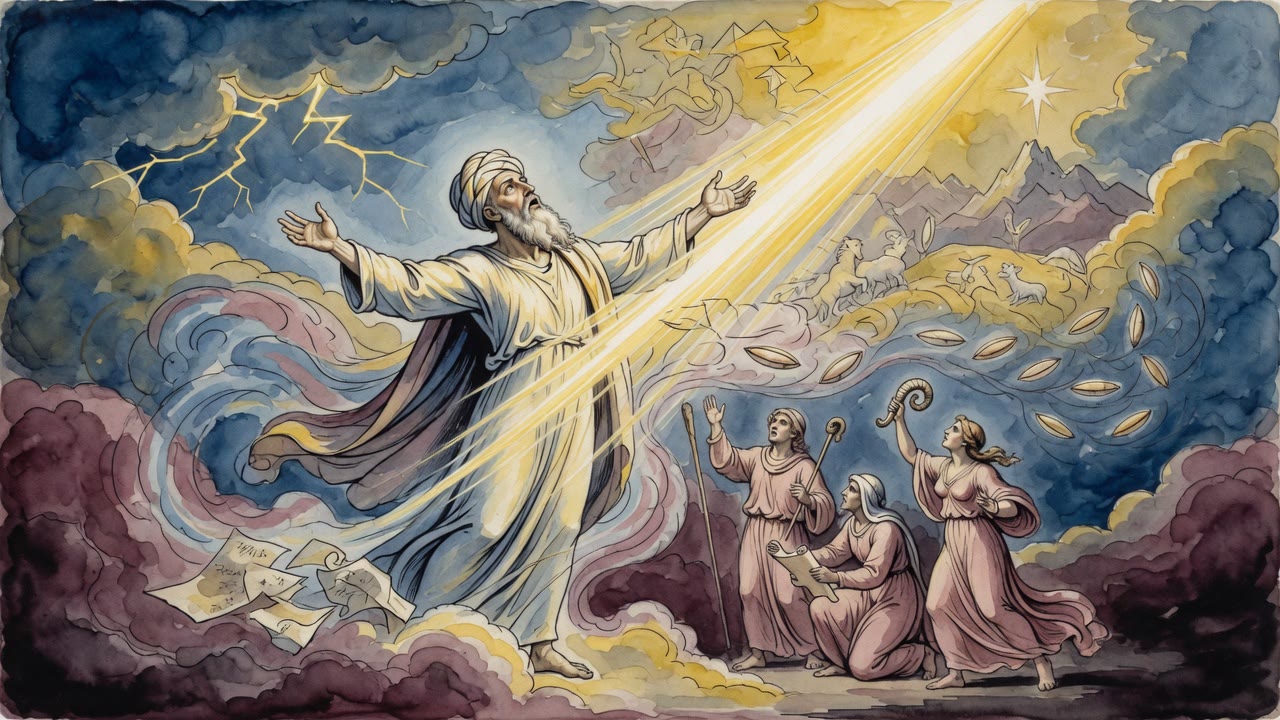
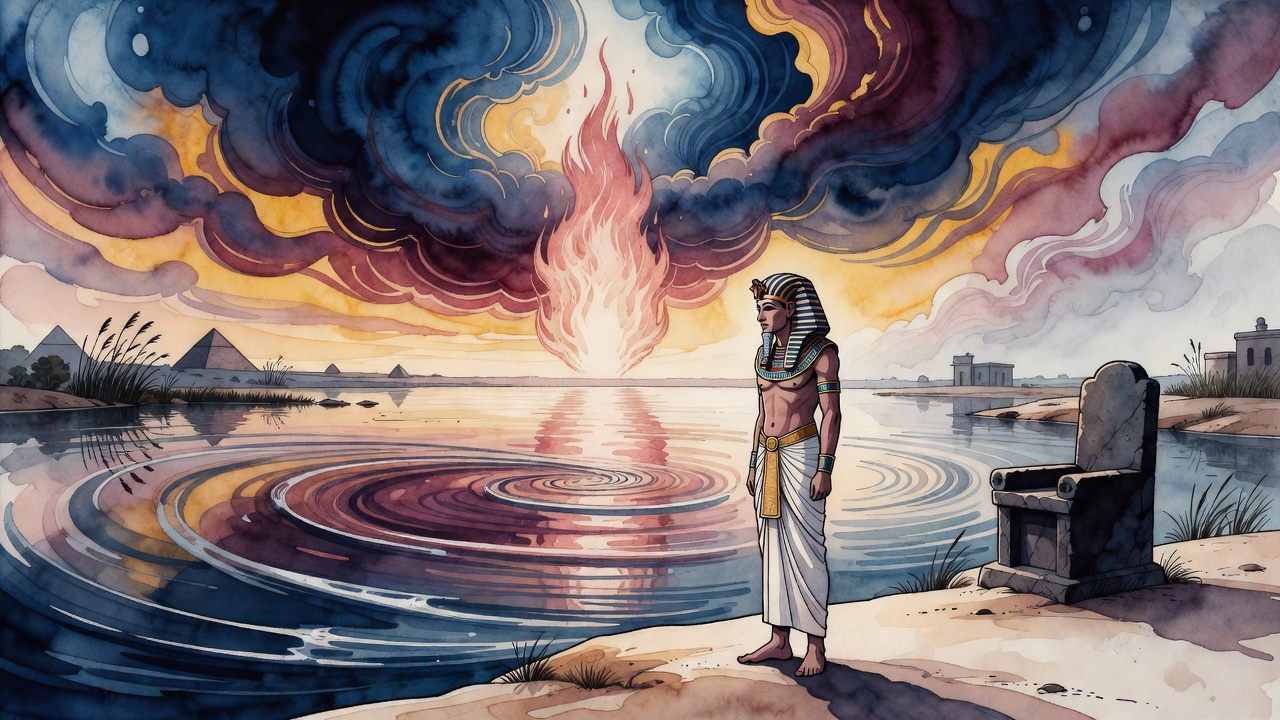
Pharaoh dreamed he was sitting on his throne and an old man was standing in front of him holding a pair of merchants' scales. The old man hung the scales up where the king could see them. Then he gathered every elder in Egypt, every noble, every great man of the kingdom, tied them together in one bundle and laid the bundle in one pan. In the other pan he put a milk kid, a goat still young enough to be nursing.
The goat went down and the whole of Egypt went up.
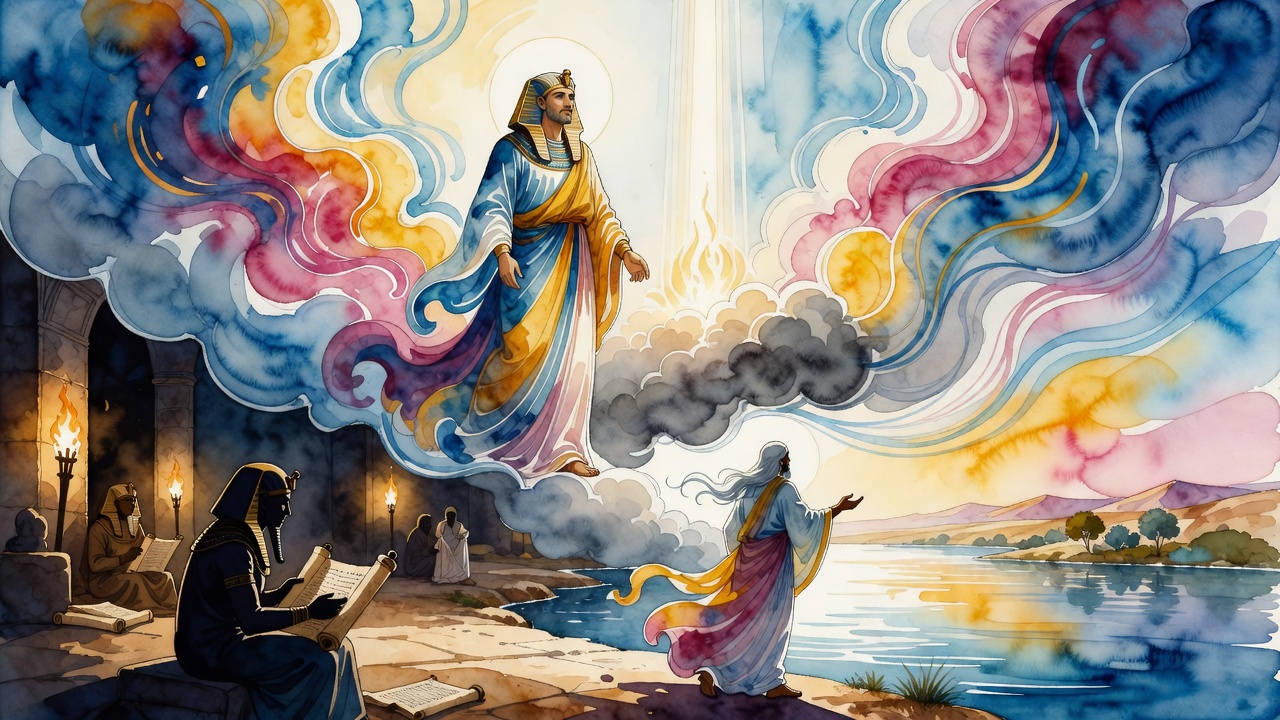
Pharaoh woke, got his servants out of bed before dawn and told them, and they were frightened. Then he called for his wise men.
Balaam son of Beor had not been in Egypt long. He had come out of Chittim after the king there died, and Pharaoh had received him with presents and made him a counselor, and the nobles at court crowded around him because they wanted whatever he knew. Balaam looked at the dream and gave the king the reading straight.
"A son will be born to Israel who will destroy this whole country and bring them out of it with a strong hand. Take counsel now, before it grows."
Three Counselors and One Answer
Pharaoh sent for the other two. Reuel the Midianite and Job of Uz came and sat down in front of him.
Reuel spoke first, and he told the king to leave the Hebrews alone. Look at the record. The Pharaoh before you took Sarah into his house and God struck him and his household until he gave her back. Abimelech of Gerar took her and every womb in his kingdom closed up. He drove Isaac out and the water courses of Gerar dried and the trees stopped bearing until he came and bowed and begged for a prayer. Jacob came out from under Esau and Laban and the kings of Canaan. Joseph kept your own grandfather's country alive through the famine. Nobody has ever laid a hand on these people and walked away from it. If you do not want them here, send them to Canaan, but take your hand off them.
Pharaoh went white with anger. Reuel got up in disgrace and left the room, and left Egypt, and went home to Midian, and he took Joseph's staff with him when he went.
Job said what a man says when he wants to keep his position. "Everyone in the land is in your power. Let the king do what seems good to him."
Then Balaam finished it. "Everything you have tried will fail, and here is why. Fire will not work: their father Abraham came out of the furnace at Ur alive. The sword will not work: Isaac was under the knife and a ram was put in his place. Hard labor will not work: Jacob served Laban at the worst work there is and came out rich. Water is the one thing that has never been tried on them. Order every boy born to them from today to be thrown into the river."
The thing pleased the king and the princes, and the proclamation went out across Egypt and Goshen that day.
The Babies in the Field
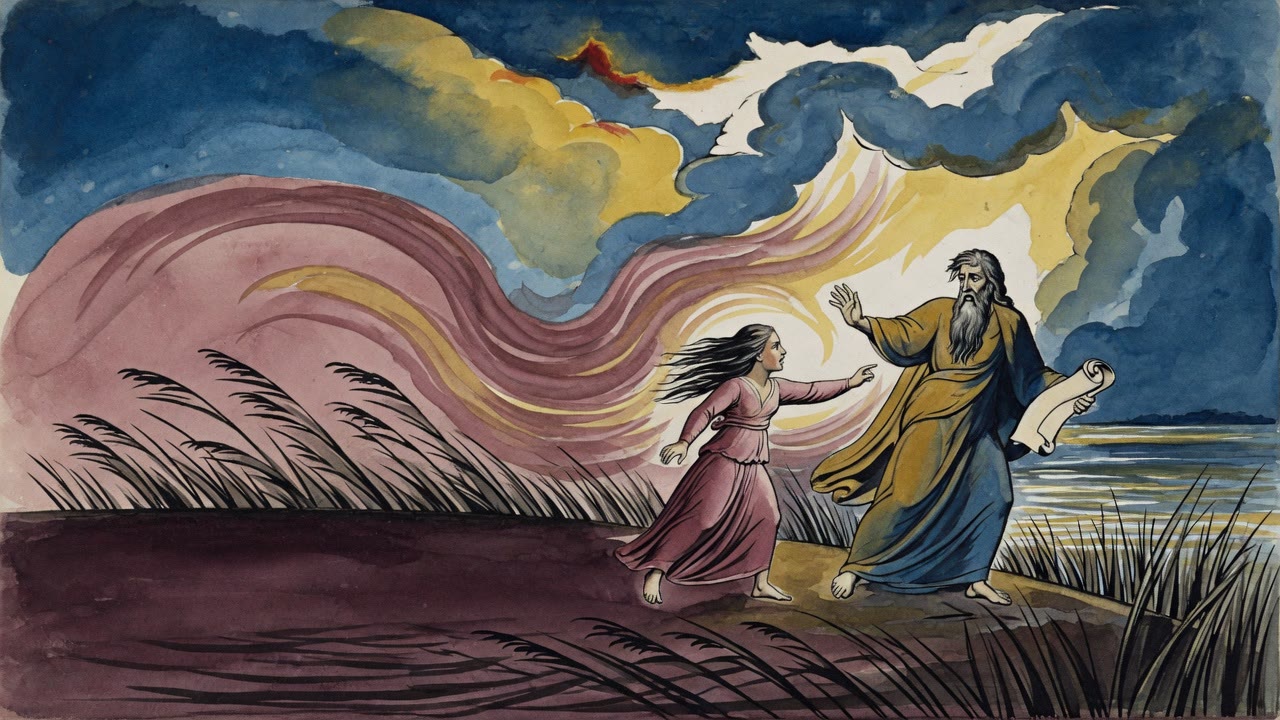
Some of the Hebrew men left their wives. Others stayed. The women who stayed stopped giving birth at home. When a woman's time came she walked out into the open country, delivered the child in a field, left it lying there and went back to the house.
An angel came down to each one. He washed the child, rubbed it with oil, wrapped it, and put two smooth stones into its hands, and the baby sucked milk out of one and honey out of the other. Then its hair grew down to its knees so that it had something to cover itself with. And when the officers came looking, the ground opened and took the children in and held them under until they had grown, and then opened again and let them come up out of the soil like grass, and each one walked off across the fields and found its own father's house.
The Egyptians worked out what was under their feet. They came out with their oxen and their ploughshares and ploughed the fields the way a man ploughs at sowing time, up and down, and could not reach them. The people went on increasing.
So the officers went daily into Goshen instead, and when they found a boy they took him out of his mother's arms and carried him to the Nile. A generation of them went into that water while their sisters were left alone.
The Crown on the Wrong Head
Three years later Pharaoh was at a banquet with Alparanith the queen on his right and his daughter Bathia on his left, and the boy she had pulled out of the water lying against her. Balaam sat at the table with his two sons. The princes of the kingdom filled the rest of it.
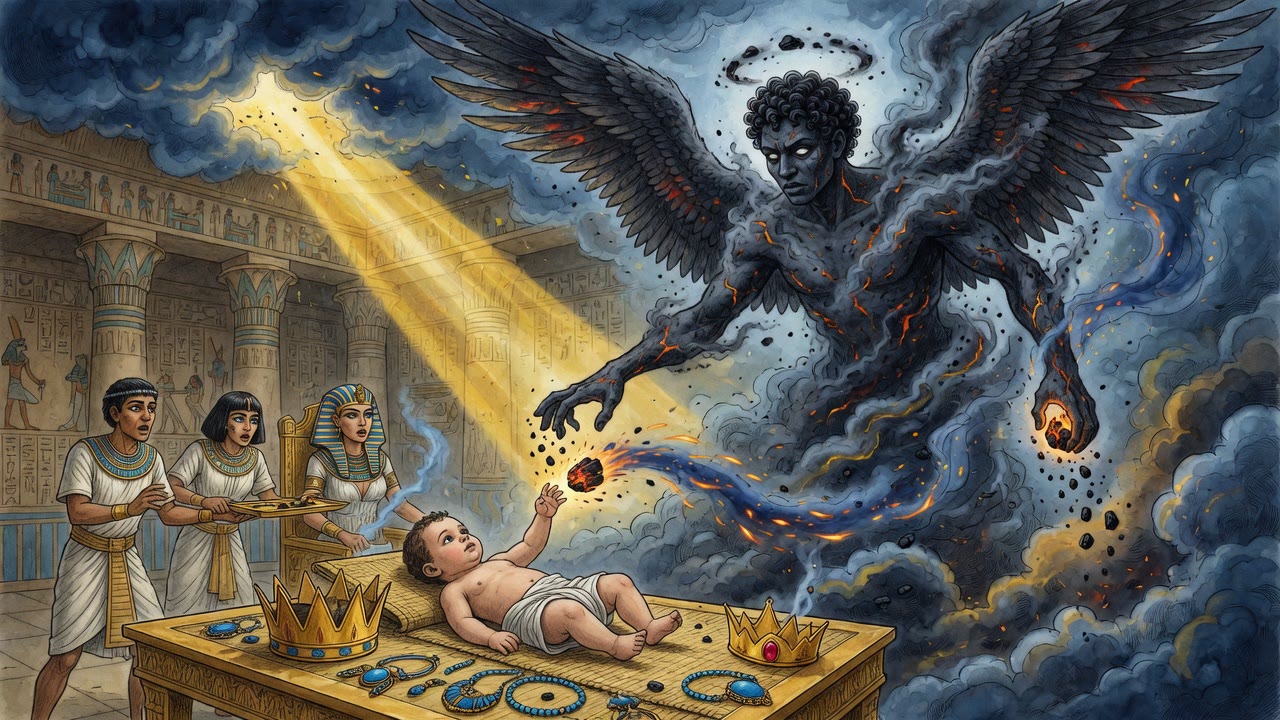
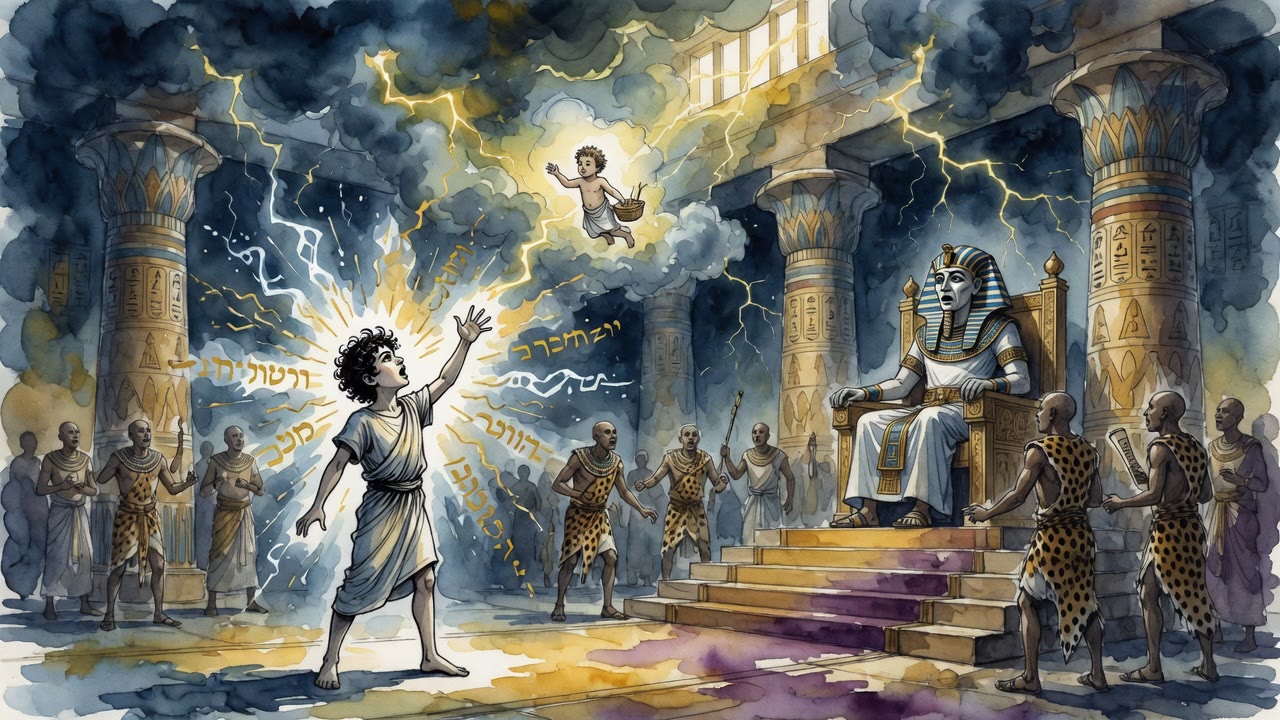
The child reached across, took the crown off the king's head, and put it on his own.
The room stopped. Men turned to the man next to them with nothing to say. Pharaoh looked around the table and asked what the judgment should be.
Balaam stood up. "Remember the dream. This is a Hebrew child with the spirit of God in him and he did not do that by accident. Their whole family works this way. Abraham fooled Nimrod's army and fooled Abimelech and called his wife his sister to trick Egypt. Isaac did the same at Gerar. Jacob took his brother's birthright and his blessing and stripped Laban of his cattle and ran. Their sons sold their own brother into this country and he ended up running it. Now this one has risen up in their place and has chosen the kingdom of Egypt for himself. Spill his blood on the ground while he is small."
Then Balaam asked for the wise men of Egypt to be called in to confirm the sentence, and they came, and an angel of the Lord walked in among them wearing the face of one of them and nobody counted heads.
The angel spoke last. "Set two things in front of the child. An onyx stone and a live coal. If he reaches for the stone he knew what he was doing and he should die. If he reaches for the coal he is a baby."
They brought the onyx and the coal and put the boy down in front of them. His hand went out toward the onyx. The angel took him by the wrist and moved his hand onto the coal, and the coal went dead in his fist, and he lifted it and put it in his mouth. It burned part of his lips and part of his tongue, and it never healed right. He was heavy in the mouth and heavy in the tongue for the rest of his life.
Pharaoh and his princes watched a baby eat fire and agreed among themselves that he had not known what a crown was.
The Day He Went and Asked For
Moses grew up in the palace dressed in purple among the king's own children. Every day he walked down into Goshen, and he watched men working out of breath, and he asked them why the labor was measured out to them like that. They told him everything. The dream. The scales. The river. The counsel Balaam had given, and what Balaam had said at the banquet about spilling his blood.
After that Moses hunted him. He waited for him day after day, and Balaam knew it, and Balaam and his two sons got out of Egypt and ran to the king of Cush.
Then Moses went in to Pharaoh, bowed, and asked for one thing. "Give your servants the children of Israel in Goshen one day to rest from their work."
Pharaoh granted it, and had it proclaimed through Egypt and Goshen: six days you shall labor, and on the seventh day you shall not perform any work, as the king and Moses son of Bathia have commanded.
← All myths