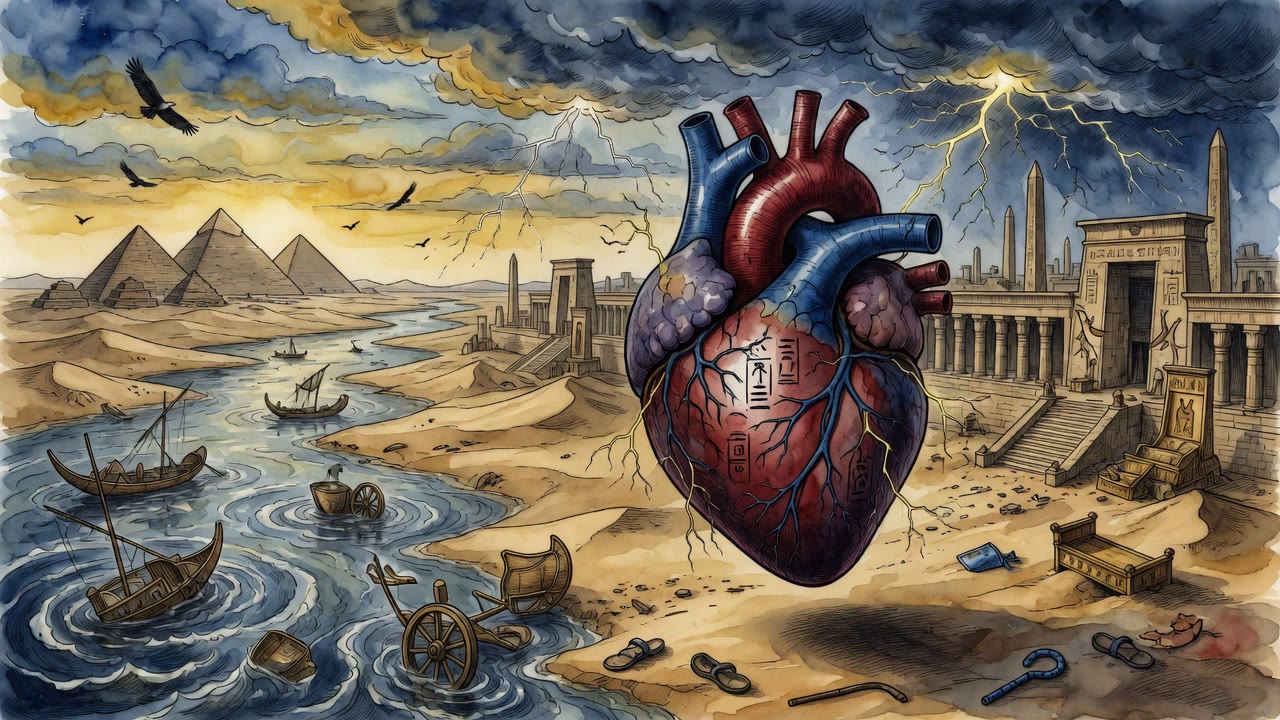
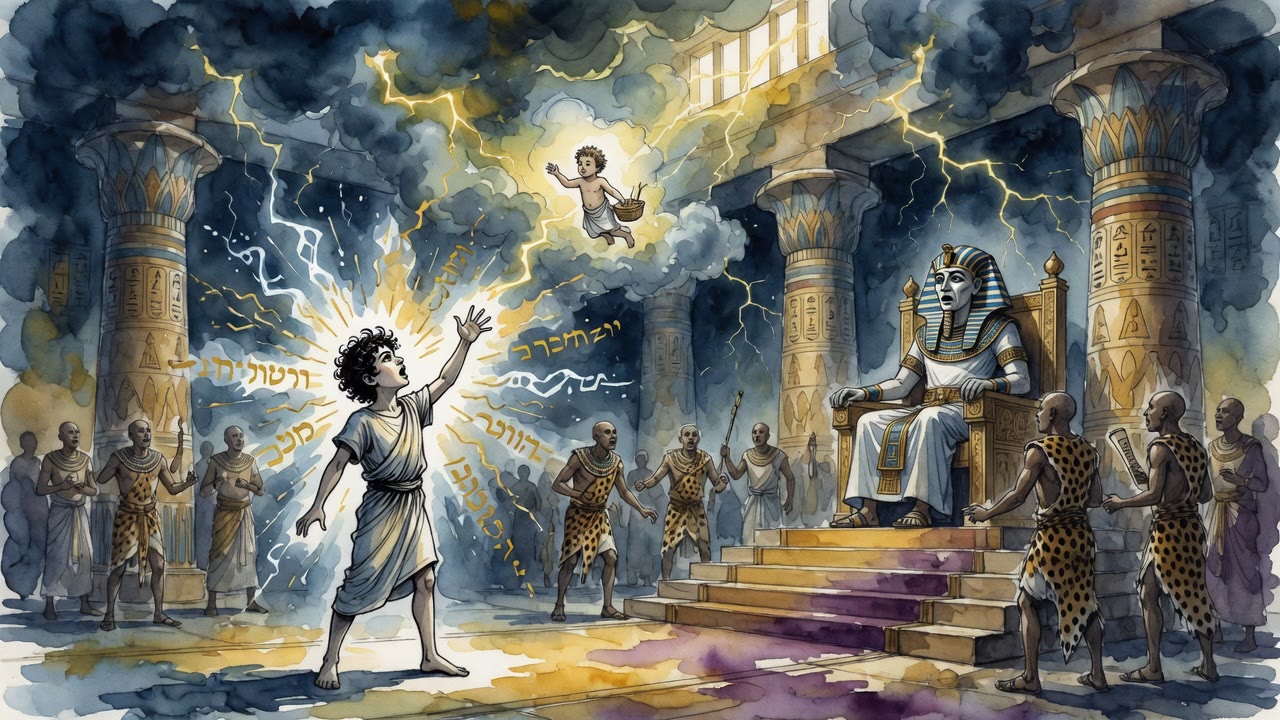
Pharaoh Called Israel Lost and His Own Word Foretold Forty Years of Wandering
Lions paced the dunes so no fugitive could get through. Pharaoh called Israel nevuchim, lost. The word also names Nevo, the mountain where Moses would die.
Table of Contents
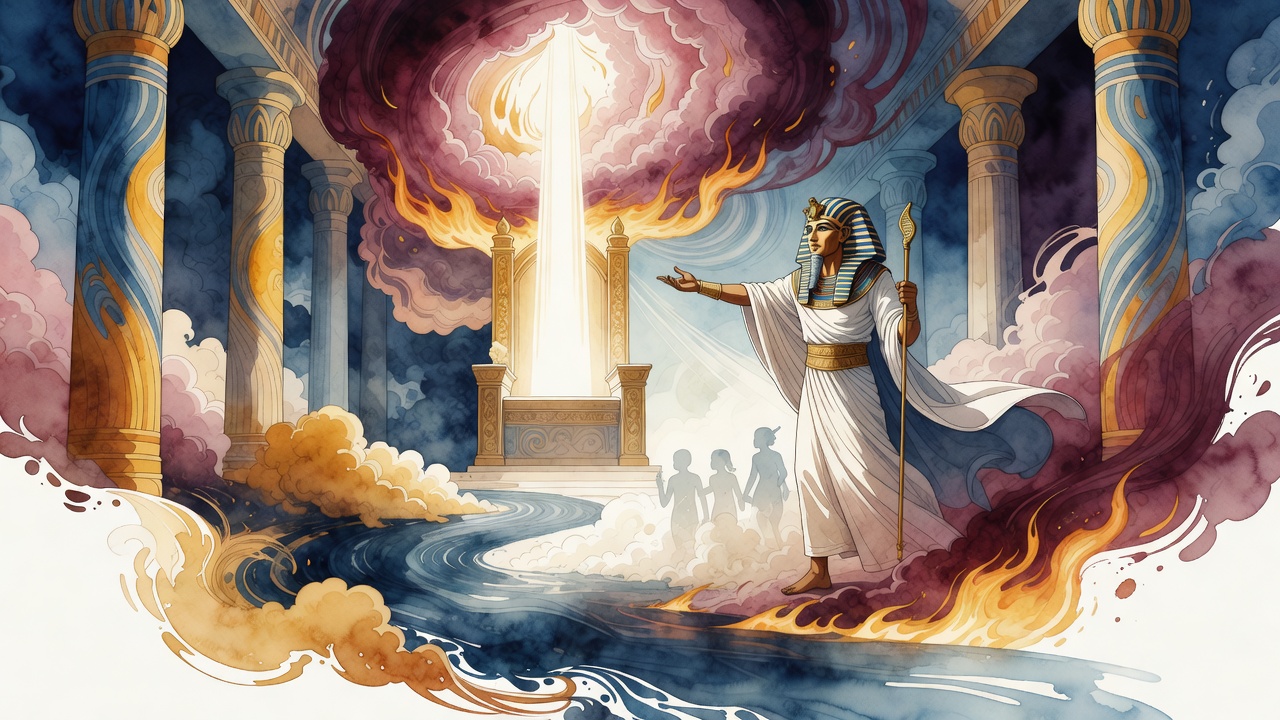
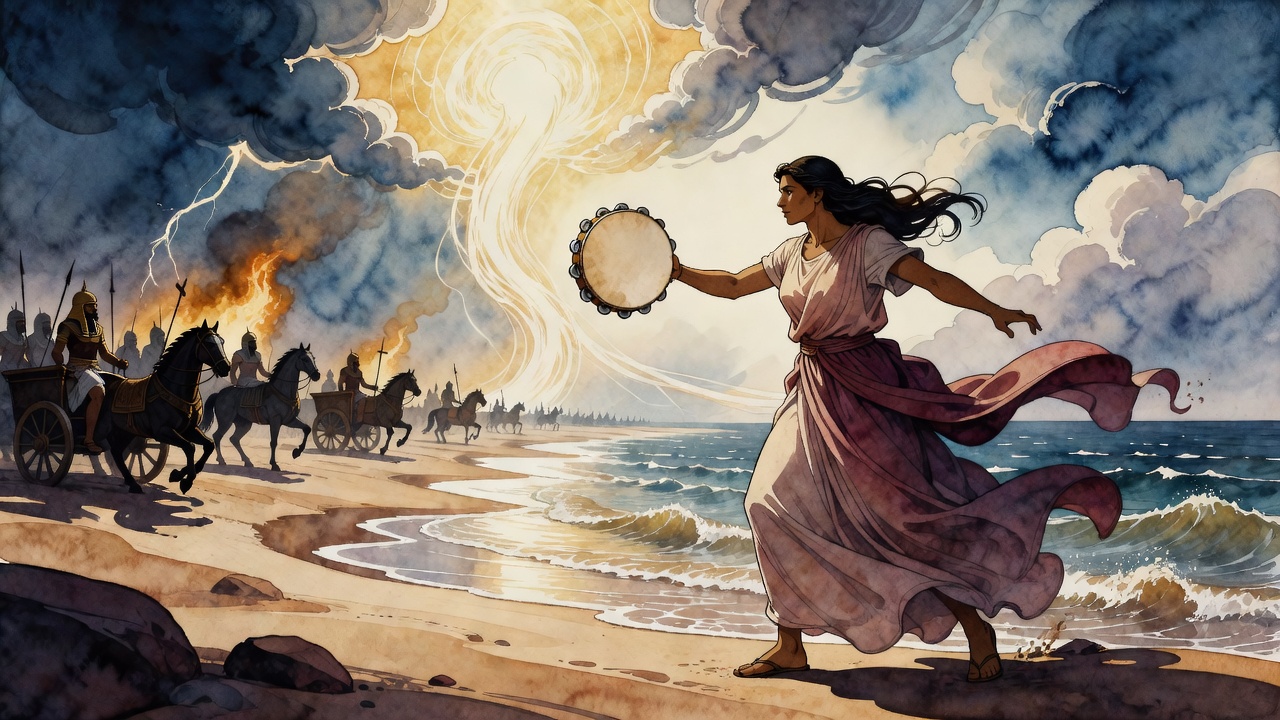
Dust rose off the chariot wheels in a long brown wall, and at the head of it Pharaoh stood in his car with the reins loose in his hand and laughter in his throat. Ahead of him, far across the flats, the slaves had bunched against the water. He could see them as a dark smear pinned between the raging sea and the cliffs, with nowhere to run.
 Click for full size
He lifted his voice so the captains beside him could hear it. He said that the children of Israel were nevuchim in the land, a word that meant confounded, bewildered, lost. The desert had shut around them. Their Moses had marched them into a corner and left them there to stumble in circles, bleating like beasts in a dry year.
He thought he was mocking them. He did not know he was prophesying. Every syllable he threw at the smear of frightened people would land, and land true, and not one of his soldiers heard the second meaning riding underneath the first.
The King Names a Trap He Did Not Set
The word was sharp and it fit the day. Cattle low and wander when the harvest fails and the pasture is burned away (Joel 1:18). A whole city sits stunned and silent when a death-decree goes out and no one can take in what was just said (Esther 3:15). That was Israel now, in Pharaoh's eyes. Disoriented, herded, easy to take.
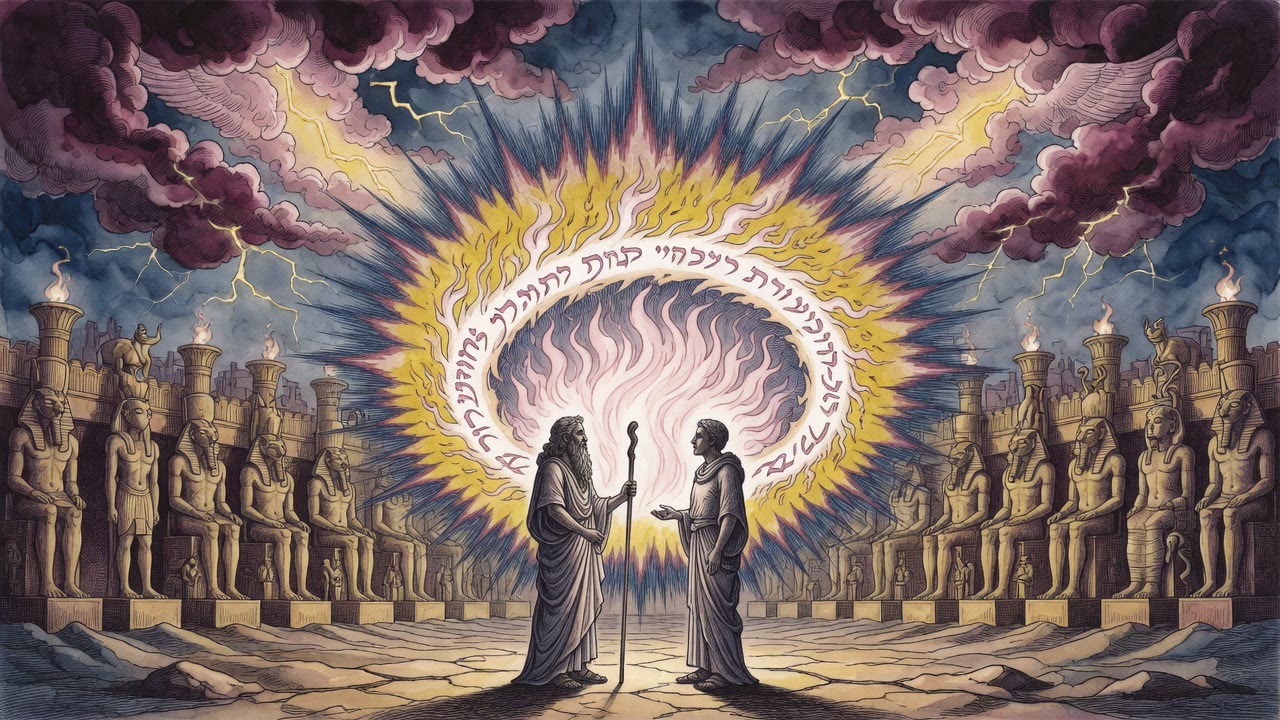
And the trap was real, more real than he knew. When the people first saw the water heaving in front of them, their bodies turned to bolt back into the wilderness, to scatter into the open sand behind. But the sand was not open. Something moved in the dunes. Eyes, low and yellow, paced the ridgelines. Lions had been set across the desert paths, and they would not let a single fugitive through. The same shutting that locked the lions' jaws so they could not wound a man (Daniel 6:22) had been turned the other way here, locking the desert against Israel with teeth.
So they stood with the sea raging before them, the chariots thundering behind, and the wilderness itself snarling on either hand. Pharaoh was right. They were closed in. He simply did not understand what he had said.
The Mountain Hidden in the Word
There was a second thing folded into nevuchim, and it had nothing to do with confusion. It was a name. Nevo. A mountain.
Years from this morning, long after the water had closed over the last Egyptian helmet, an old man would climb a height called Nevo and look out over a land he would never set foot in. Pharaoh, sneering at slaves he thought were aimless, had let slip the name of the peak where their leader would die. He meant they had no leader worth the name. The word in his own mouth answered him: there was a leader, and the word knew where that leader's road ended (Deuteronomy 32:49). The king mocked Moses and pronounced his mountain in the same breath.
The Weeping the King Foretold
The word held a third thing, and this one was a sound before it was anything else. Nevuchim shaded toward weeping, toward the sob a whole people makes in the dark.
Pharaoh could not hear it, but it was coming. There would be a night, far out in that same wilderness, when the entire congregation lifted up their voices and the people wept (Numbers 14:1). They would weep over a land they were too frightened to enter, and the weeping would buy them forty years of wandering and a generation of graves in the sand. The desert that snapped at their heels this morning would become, by their own crying, the desert that swallowed them.
So Pharaoh, in one careless boast, had named three things he never intended. The corner they were caught in. The mountain where their leader would die. The weeping that would cost them a generation. He thought he was reporting on lost slaves. He was reading their next forty years off the back of a single word.
The Heart That Could Not Decide
The strangeness ran the other way too. While Pharaoh's tongue spoke more truth than his mind knew, his heart could not settle on a single thing it wanted.
It was split down the middle, swinging between pursue and let them go. One half of him saw treasure escaping across the sand. The other half remembered the firstborn cold in their beds and the river running with blood, and that half wanted no more of this God at all. He stood in his chariot divided against himself, and the resolve that finally hardened in him to chase, that resolve was strengthened from outside (Exodus 14:4), pressed into a man already leaning toward the water and his own ruin.
The One Who Started It Drowns First
There is an order to how this ends, and it was set long before the sea.
The man who first gave the command, "every son born to Israel, into the Nile you shall throw him" (Exodus 1:22), would be the first to go under. He had opened the drowning. He would be drowned first, and his host after him. It is the way punishment falls. The hand that begins a thing is the hand reached for first, the way the generation of the flood and the men crowding a doomed doorway were each cut down beginning with whoever struck the first blow.
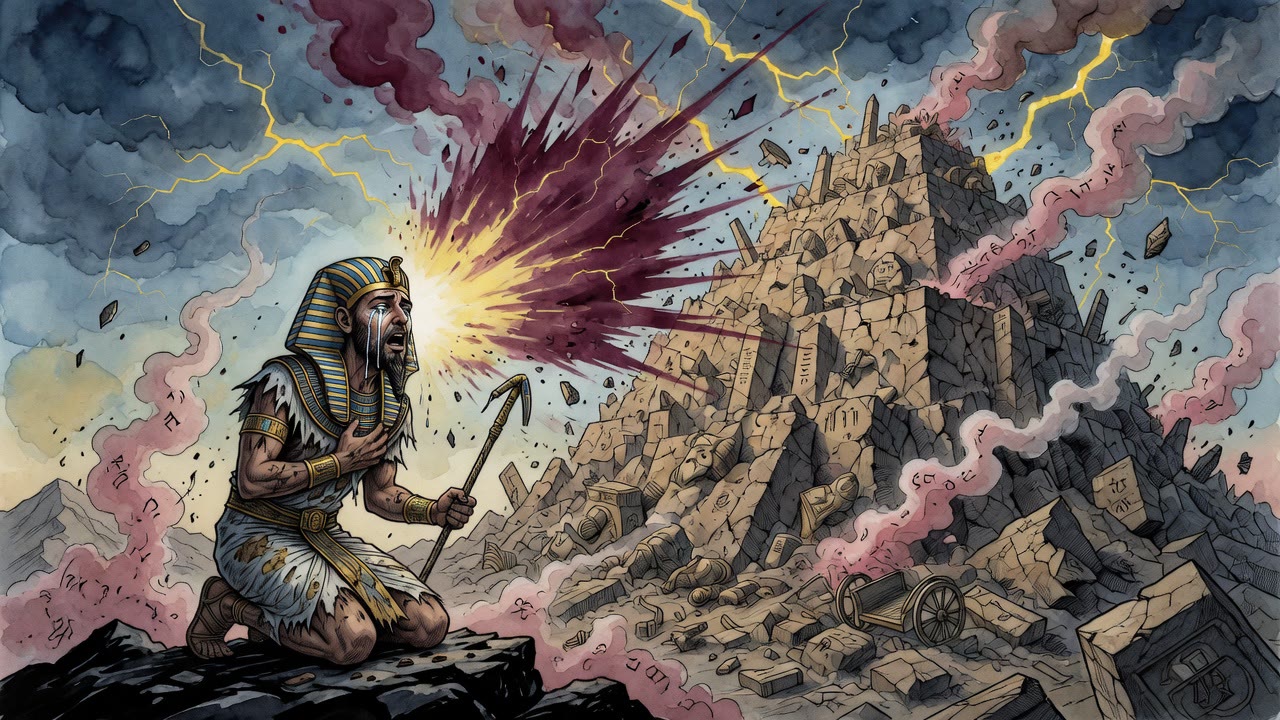
The chariots rolled down into the seabed between two standing walls of water. Pharaoh went in at the head of his army, laughter long gone now, into the gap his own decree had dug for him. The water that he had once filled with Israelite infants closed over his head. Every word he had flung across the flats came true that day, the corner, the mountain, the weeping, and last of all the drowning he had started himself, and had aimed, without knowing it, straight back at his own mouth.
← All myths