Balaam Weaponized a Dream Against the Hebrews
Before Moses was born, Balaam turned Pharaoh's nightmare into policy, changing fear of one child into a decree against a people.
Table of Contents
 Click for full size
The Nightmare Was Small Enough to Hold in One Hand
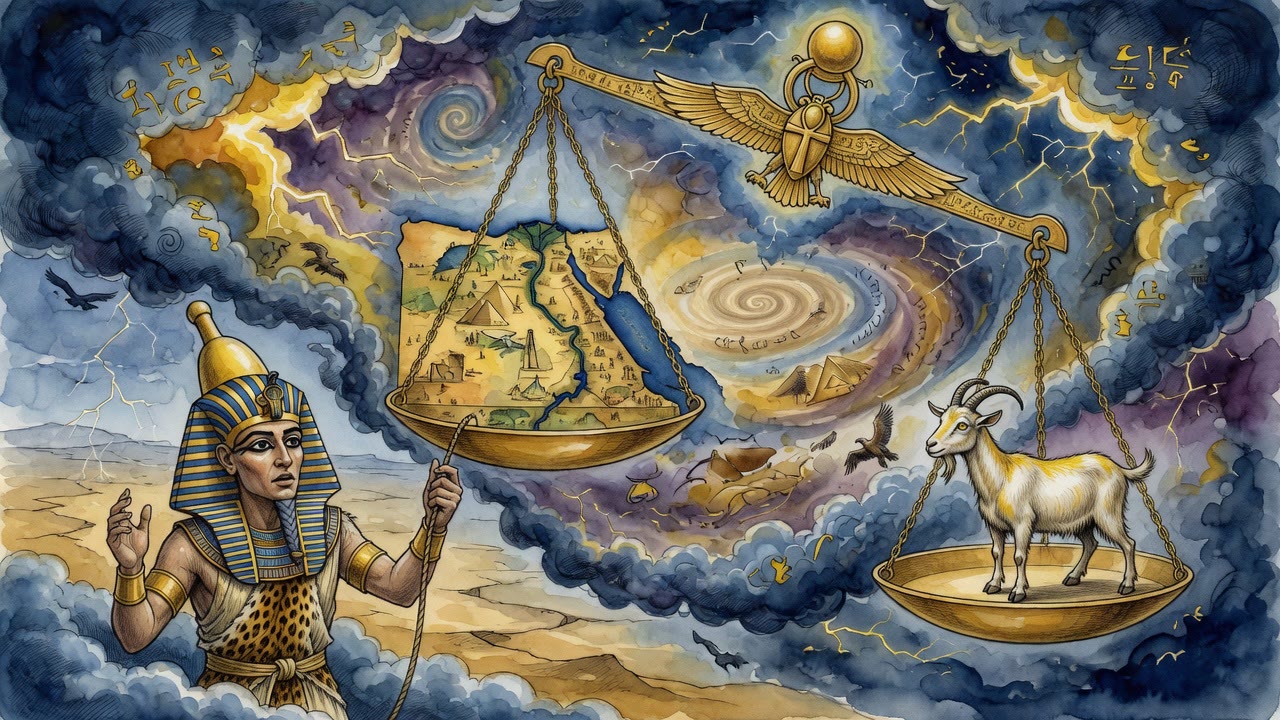
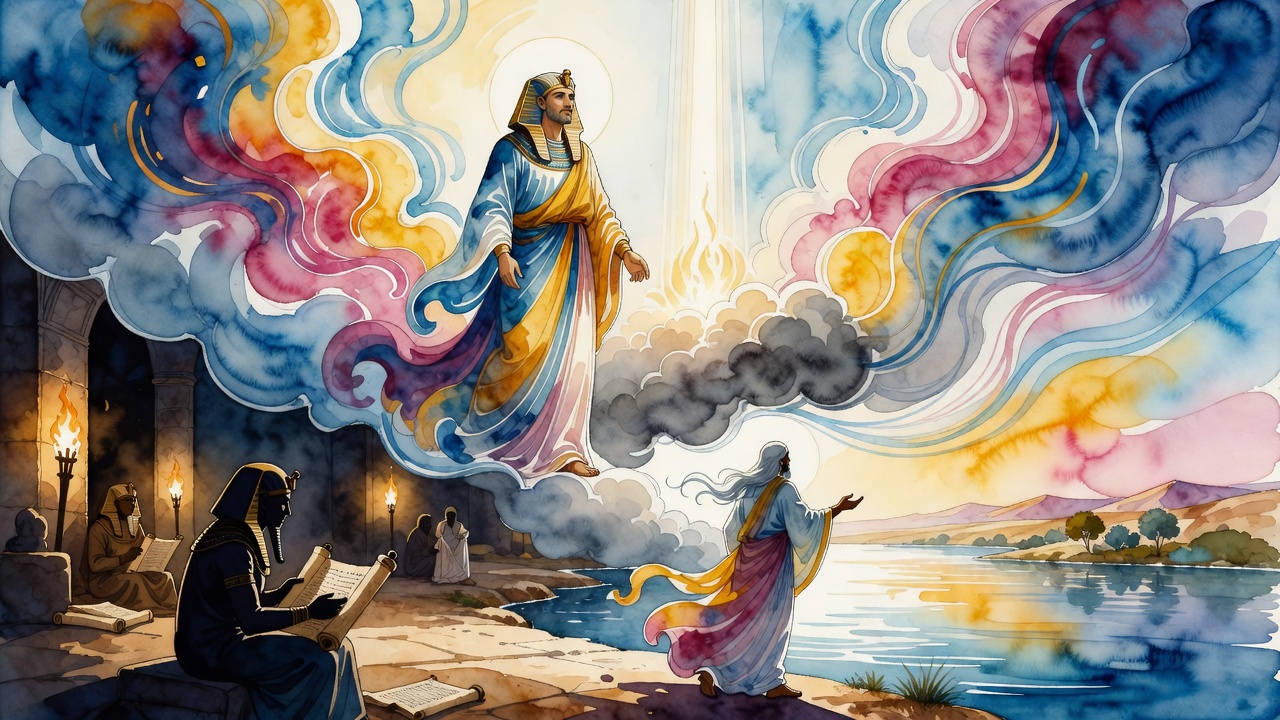
Pharaoh woke into the kind of fear kings hate most, because it had no visible enemy. He had seen, in the dream, an old man standing before him with a balance. On one side of the balance, Egypt's elders and nobles and great men were piled together, every person of consequence in the kingdom. On the other side, a single kid, a young animal, tender and small with no army and no throne. The small side sank. The empire rose helplessly into the air.
Dreams do not issue decrees. Men do. That is why Balaam matters here.
The Dream Needed an Interpreter
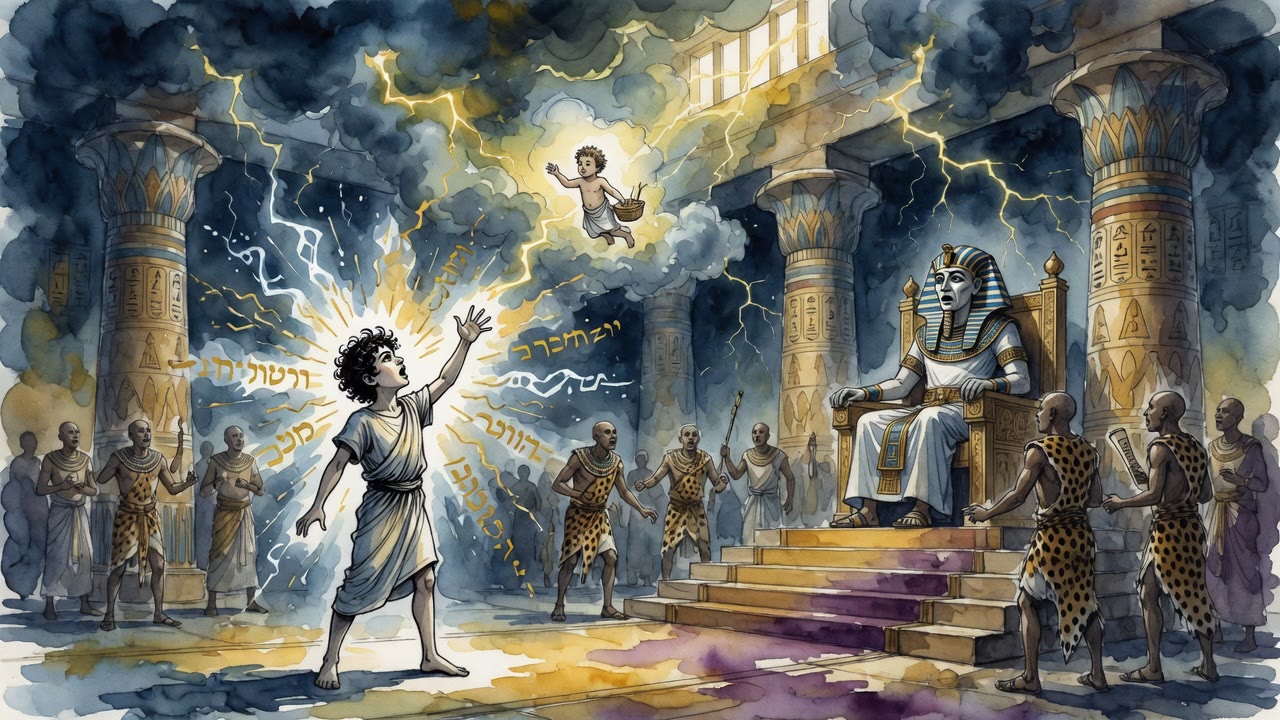
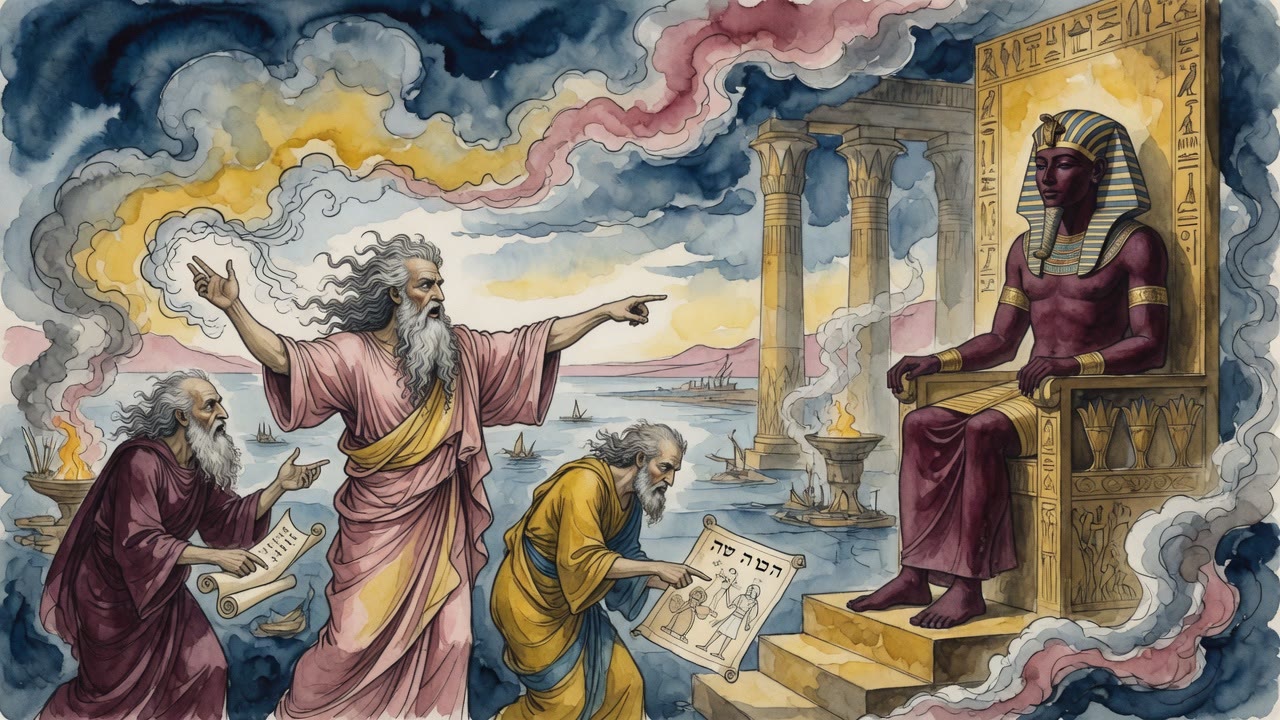
Pharaoh summoned his wise men. Balaam son of Beor, who had come to Egypt as a refugee and risen there through the quality of his counsel, examined the dream and gave it a target. A son will be born to Israel, he said, who will destroy all of Egypt and lead the Israelites out with a mighty hand. The lamb is not a lamb. It is a child not yet born to parents not yet named in a generation not yet arrived.
The second dream ran on the same logic. An old man with a balance again. This time, Egypt's entire territory was loaded into one pan: the cities, the fields, the Nile, the papyrus marshes, every geographic feature of the kingdom. Into the other pan went a single lamb. The lamb's side descended. Egypt was lifted. The empire outweighed by the thing it could hold in two hands.
Balaam read the second dream the same way he had read the first. The child was coming. The only question was policy.
The Interpreter Becomes the Architect
The tradition is precise about Balaam's role: he did not merely interpret the dreams. He proposed the response. He was the one who translated Pharaoh's formless fear of a vision into a specific administrative action against a specific population. Before Balaam spoke, Pharaoh had a nightmare. After Balaam spoke, Pharaoh had a plan.
The plan was to cast every male child born to the Hebrews into the Nile. If the child who would destroy Egypt had not yet been born, then preventing his birth was the simplest solution to the problem. And if he had already been born and was among the Israelite infants currently living, then drowning all of them would catch him in the net. The mathematics of tyranny: if one among ten thousand is dangerous, eliminate ten thousand.
Balaam had been the one who told Pharaoh the specific population to target. He had made the anxiety legible by giving it an address. He had done the thing that transforms a king's fear from something private and incapacitating into something actionable and official. This is what interpreters of enemies' dreams are for, in the tradition's understanding: they are the mechanism by which a vague danger becomes a decree, and a decree becomes the suffering of actual people.
The Other Voice in the Room
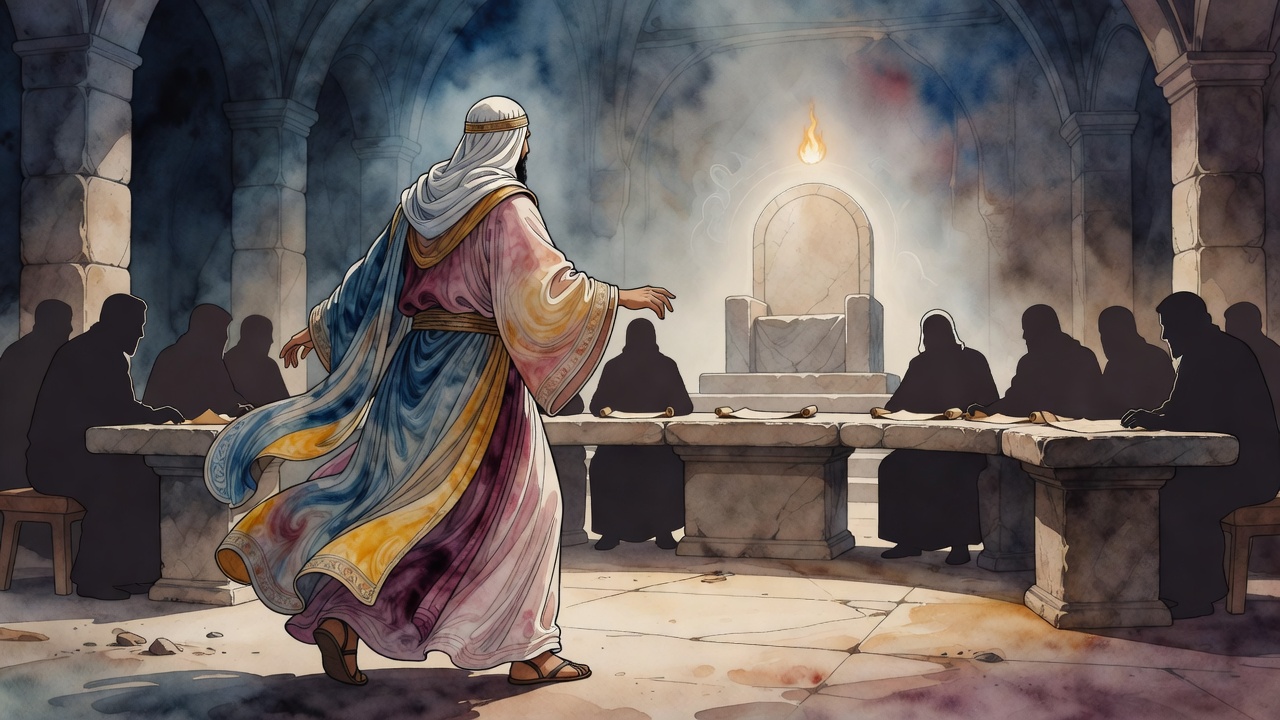
Jethro the Midianite was also present in Pharaoh's court. He was one of the three advisors whose responses to the question of what to do about Israel would determine each man's future. Jethro said: leave them alone. The God who has protected this family for four generations is not a force that responds well to decrees against infants. He gave his reasons and they were good reasons, grounded in the same historical pattern that Reuel would later cite to Balak: every person who had tried to harm this family had been answered for it, and the scale of the answer had in every case exceeded the scale of the harm.
No one listened to Jethro. The tradition preserves his departure from Egypt as a consequence of having spoken: he was banished, or he fled, because a counselor who tells a frightened king to do nothing is not a counselor a frightened king wants nearby. He made his way eventually to Midian, where he would become a priest of his people and the father of the woman Moses would marry in the desert. His counsel at Pharaoh's court had been rejected. The consequences of that rejection would eventually reach him at a well in Midian, in the form of a fugitive who had killed an Egyptian overseer and was looking for water.
← All myths