Pharaoh Heard Every Plague Coming Before It Arrived
Moses warned Pharaoh before each plague. Ten warnings, ten refusals. Jubilees says the plagues were not punishment alone but a debt paid to Abraham.
Table of Contents
 Click for full size
The Warning Before the Plague
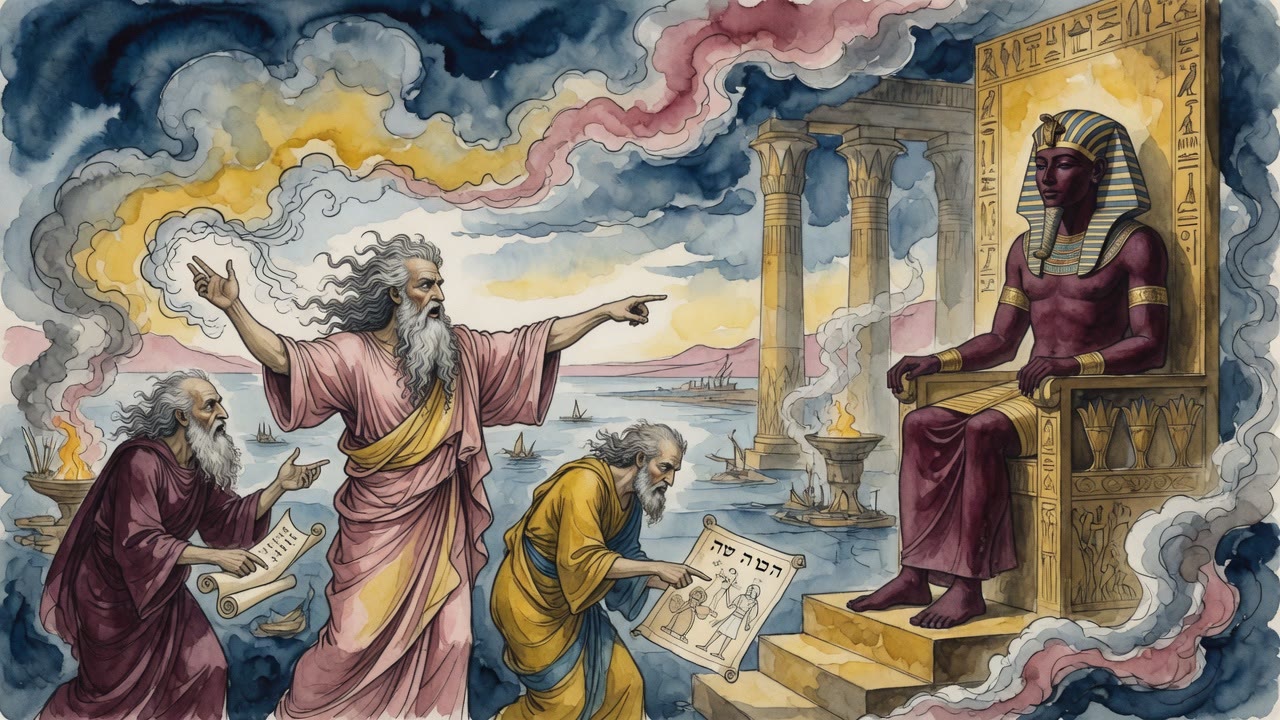
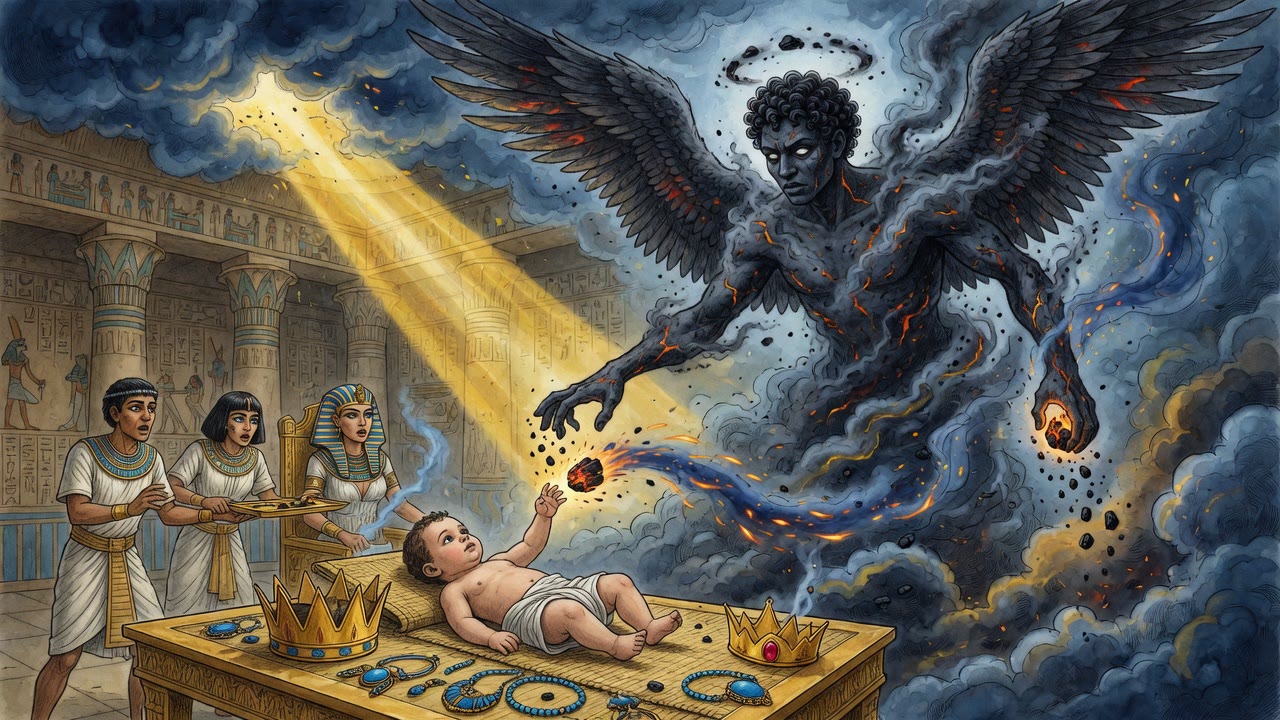
Moses came to Pharaoh's house before each of the ten plagues and told him what was coming. Not once, not twice: ten times. The frog plague was announced before the frogs arrived. The darkness was declared before the darkness fell. The death of the firstborn was spoken aloud to Pharaoh in his own palace before it happened. Every time, Pharaoh heard the words. Every time, the plague arrived exactly as described. Every time, Pharaoh refused.
This is not the story of a man who did not know. This is the story of a man who knew and would not move.
The Plagues as a Debt Owed to Abraham
The Book of Jubilees frames what happened in Egypt not as a series of escalating punishments but as the fulfillment of a specific promise. Centuries before Moses was born, before any Israelite had set foot in Egypt, God had spoken to Abraham in a dream and told him plainly: your descendants will be strangers in a land that is not theirs, and they will be enslaved and afflicted for four hundred years. And I will judge that nation which they serve. That word judgment sits in the Jubilees account like a weight placed on a scale before the famine begins.
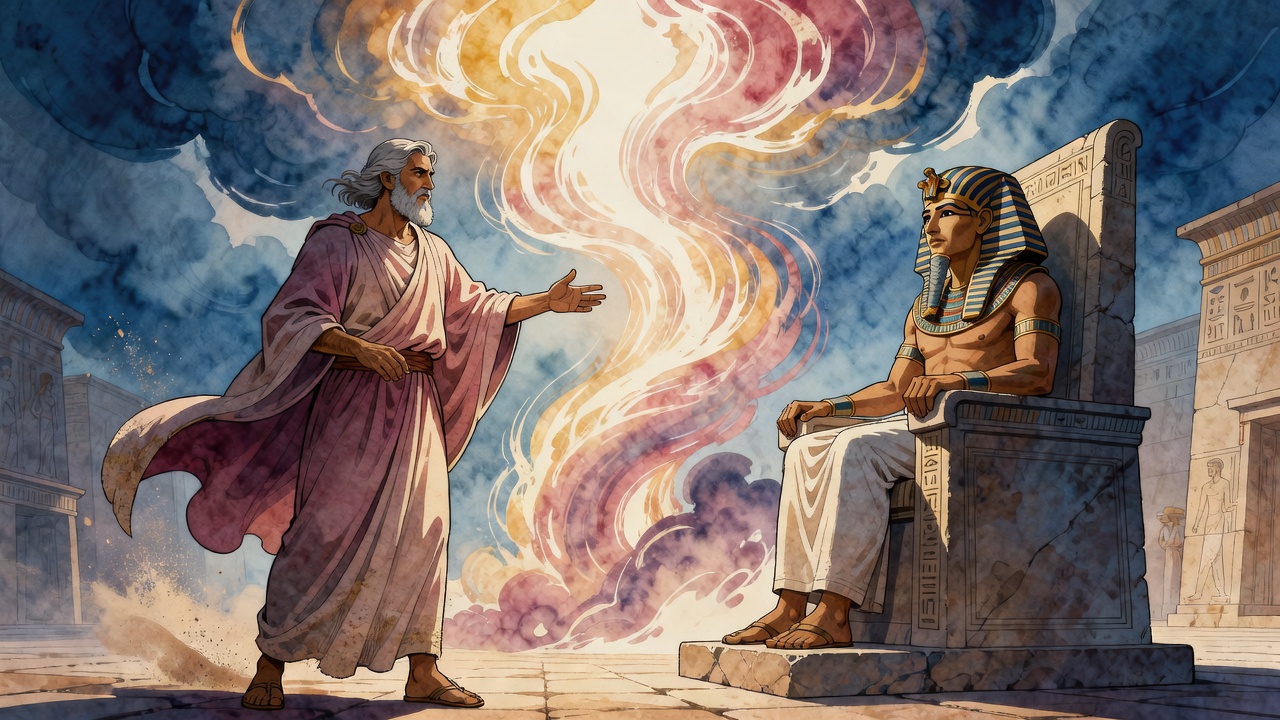
When Moses stood before Pharaoh and declared what the Lord was about to do, he was not issuing fresh warnings from a God improvising in the moment. He was executing a sentence that had been written into the covenant with Abraham before any of the participants were born. The angel who dictated Jubilees to Moses on Sinai speaks to him in the second person: everything was sent through your hand, that you should declare these things before they were done. The plagues were the covenant keeping its word.
Ten Judgments on the Land
Ten great and terrible judgments came on the land of Egypt, the Jubilees text says, that you might execute vengeance on it for Israel. Vengeance. The word is precise and it points backward to a specific debt. Abraham had been promised descendants and land and blessing, and he had also been promised this: that the nation which enslaved his children would be judged. Egypt collected the debt by enslaving Israel. The plagues were the repayment schedule, delivered in ten installments, each one announced in advance so that Pharaoh could not say he had not been warned.
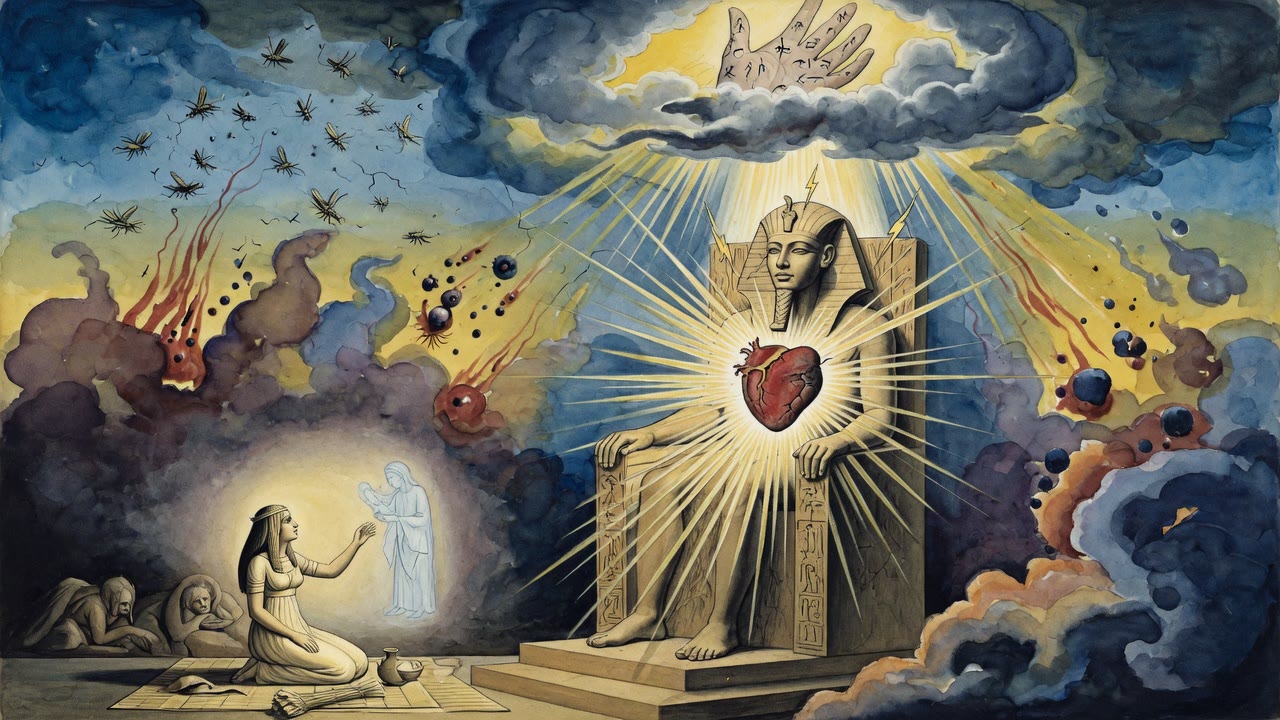
But Pharaoh could also not move. Jubilees does not explain this as irrationality. It explains it as the completion of a pattern that had been running since before Egypt and Israel existed as entities. The hardening of Pharaoh's heart, which troubles readers of Exodus who want to preserve the king's free will, is handled in Jubilees as part of the same covenant logic: the judgment was coming. The mechanism of the judgment was Pharaoh's refusal. Both were necessary for the debt to be fully paid.
Moses Among His Own People
And Moses, who stood in the middle of all of this and delivered the warnings ten times to a king who heard them ten times and refused ten times: he was not a passive instrument. The Jubilees account addresses him directly because it was dictated to him on Sinai, and it says: you spoke with the king of Egypt before all his servants and before his people. It names the setting. The servants heard. The people heard. Moses stood in the most powerful court in the world and declared what was coming.
The plagues came anyway, not because Moses failed, but because the covenant required them. After the last plague, after the night of the firstborn, Pharaoh sent Israel out. The four hundred years were over. The debt was paid.
← All myths