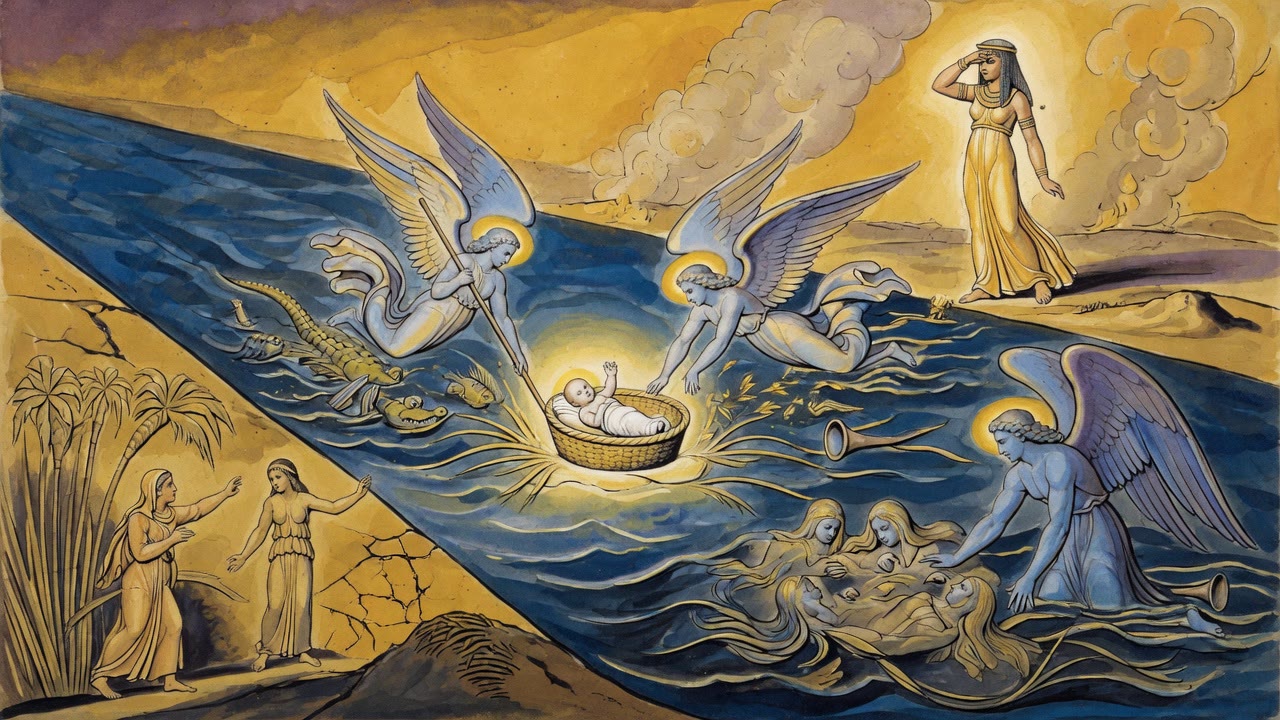
Pharaoh Played God Twice and Lost Both Times
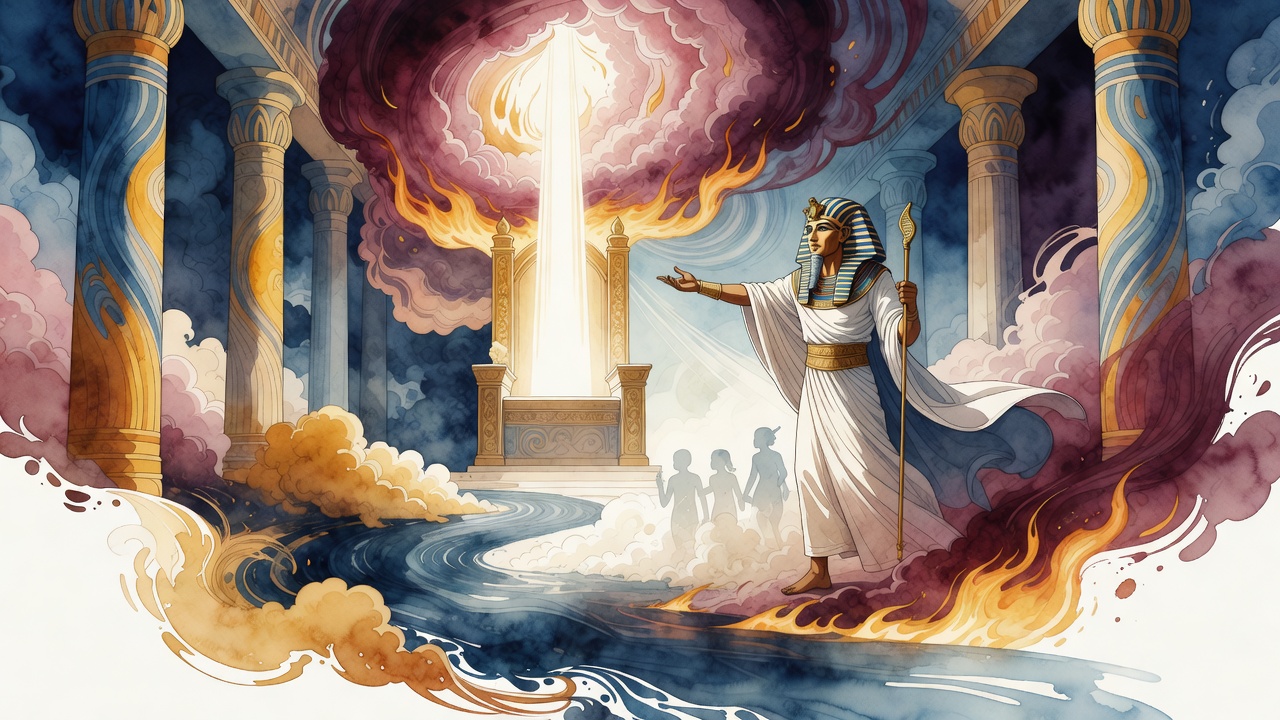
Before the court woke, Pharaoh walked to the Nile alone. A god, he told Egypt, does not need a bathroom at dawn.
Table of Contents
Every morning before his court assembled, Pharaoh slipped out alone to the Nile. He had to. The claim he had made to his subjects was that he was a god, and gods do not have the bodily needs that men have. So he dealt with the evidence in secret, at the river, before anyone who served him could watch. The most powerful man in Egypt arranged his mornings around hiding the fact that he was a man.
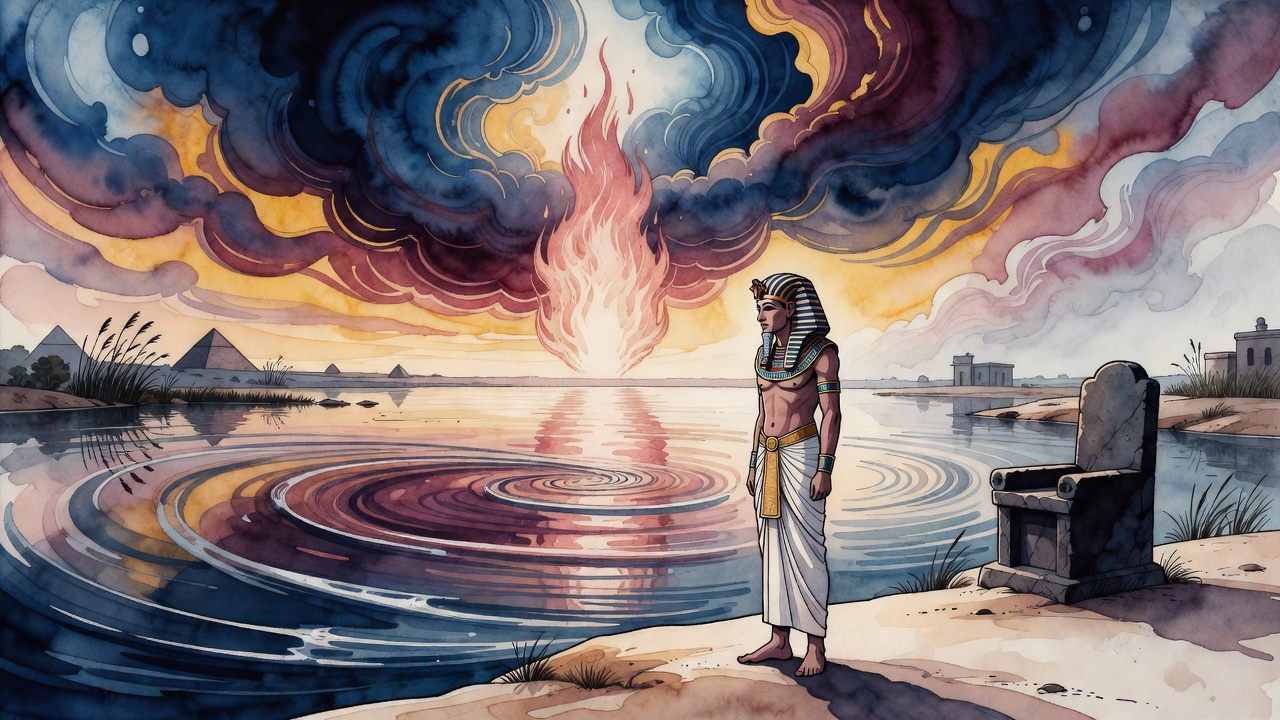 Click for full size
Moses found him there one morning. The confrontation was not about the plagues yet. It was about the claim itself. Moses asked the question directly. "Is there a god who has human needs?"
Pharaoh broke. "He was no god," he said. He had never been a god. He was a man who had used his subjects' willingness to believe, and he had done it so long that the lie had become the house he ruled from. The Nile trips were the only place the house showed its cracks.
The Child Who Took the Crown
Years earlier, before that confession, Pharaoh had already lost the image once, in public, at a banquet, with the whole court watching.
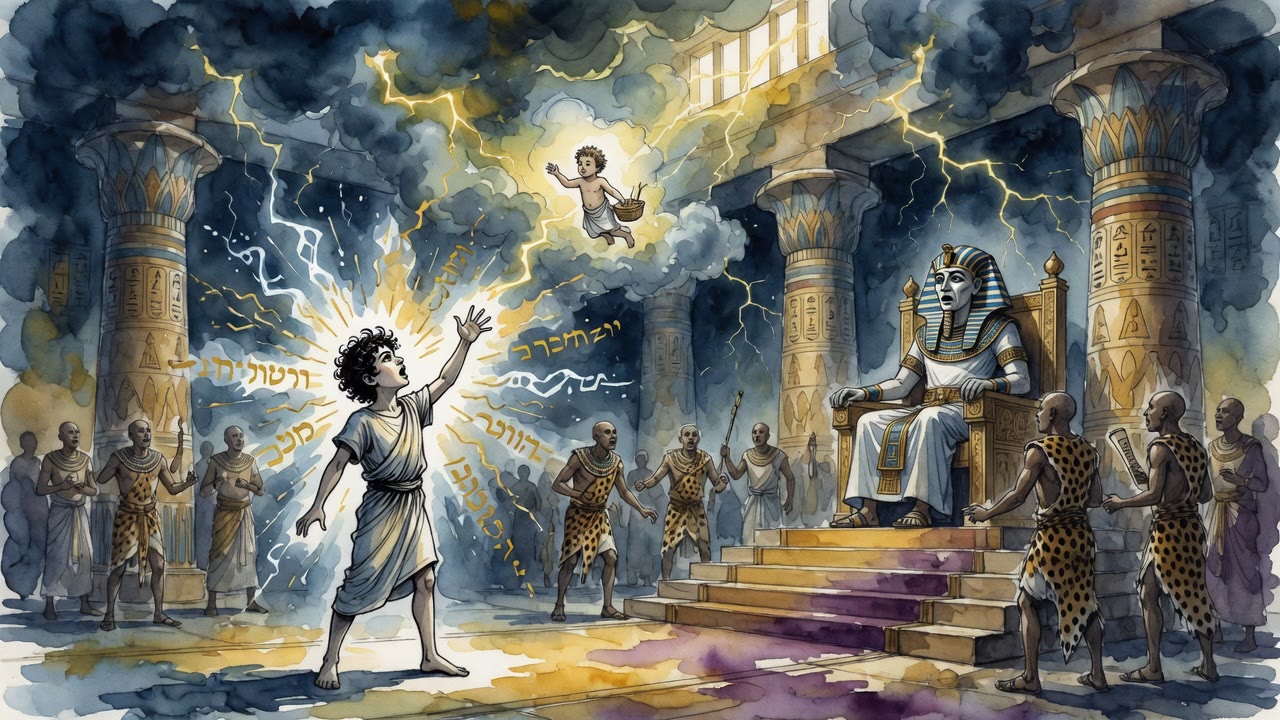
Moses was three. He sat in Bithiah's lap at Pharaoh's left. Queen Alparanith sat at the right. Balaam son of Beor sat at table with his two sons, and the princes of the realm in their ranks. The child reached out, took the crown off Pharaoh's head, and set it on his own.
The hall went silent. Every person present was calculating the same thing. A dream had already said a Hebrew boy would take the kingdom. The child in the room had just acted it out in miniature, in front of the entire court, with no sign that he knew what he was doing.
Pharaoh turned to the princes. "What say you on this matter? What is to be done to this Hebrew boy on account of this act?"
Balaam Asked for Blood
Balaam did not hesitate. Remember the dream, he told the king. This is a child from the Hebrew children, and the spirit of God is in him. Do not imagine he did this without knowledge. With wisdom he has chosen the kingdom of Egypt for himself.
Then he ran the family history like an indictment. Abraham had deceived Nimrod and Abimelech. Isaac had done the same in Gerar. Jacob had taken a birthright and a blessing. Joseph had come up from prison and bought Egyptians for slaves. Now this boy had risen in their stead. If it please the king, spill his blood on the ground, lest he grow up and take the government from your hand, and the hope of Egypt perish after he has reigned.
Pharaoh sent for the judges and the wise men of Egypt. An angel of the Lord came among them, looking like one of their own.
The Coal That Saved His Life
The angel spoke as a counselor. Send for an onyx stone and a coal of fire. Place them before the child. If he stretches his hand to the onyx, he did this with wisdom, and we must slay him. If he stretches his hand to the coal, he did it without knowledge, and he shall live.
The king liked the test. They set the boy before the two objects. Moses reached for the onyx. He knew the bright thing. The angel took his hand and set it on the coal instead. The coal went out in his palm. He lifted it and put it in his mouth the way a three-year-old puts everything in his mouth, and it burned part of his lips and part of his tongue.
He became heavy in mouth and heavy in tongue. The court saw the burn and decided the grab had been a child's grab. They refrained from slaying him. Moses stayed in Pharaoh's house, growing up in purple among the king's children.
He Grew Up in the House He Would Empty
Bithiah counted him as a son. The household of Pharaoh honored him. The men of Egypt were afraid of him. Daily he went out to Goshen and saw his brothers in shortness of breath and hard labor. They told him the injunctions Pharaoh had put on them before his birth. They told him what Balaam had counselled against him in the banquet hall, to slay him when he had taken the crown.
Moses's anger kindled against Balaam. He sought to kill him. Balaam was afraid, and he and his two sons rose up and fled Egypt for Cush.
Moses went back into the house of the man who had sat as a god at dawn and as a king at table. He bowed and asked a small request. Give the children of Israel in Goshen one day to rest from their labor. Pharaoh granted it. For six days they would work. On the seventh they would rest, as the king and Moses son of Bithiah had commanded.
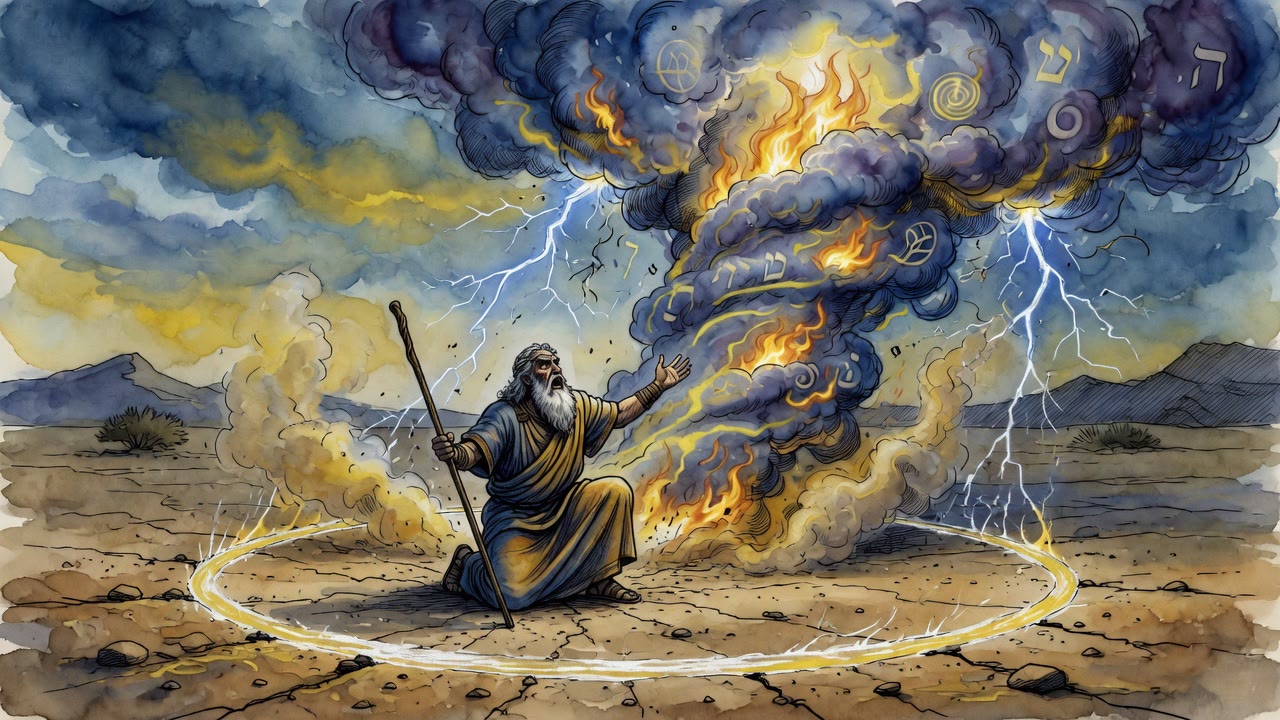
The man who had hidden his body at the Nile now shared a proclamation with the boy who had worn his crown for a breath. The burn in Moses's mouth would still be there forty years later, at a bush that burned and was not consumed, when he told God he was slow of speech and slow of tongue (Exodus 4:10). The first time Pharaoh played god, a child took the gold off his head. The second time, the same child lived in his house and began to empty it. He had played god twice. He lost both times.
← All myths