Aaron's Staff Became a Serpent Before Pharaoh, the Serpent of the Nile
Every morning Pharaoh stood at the riverbank and said the Nile was his, that he had made it. Aaron's snake ate the magicians' snakes, then went back to wood.
Table of Contents
 Click for full size
The Great Serpent in His Rivers
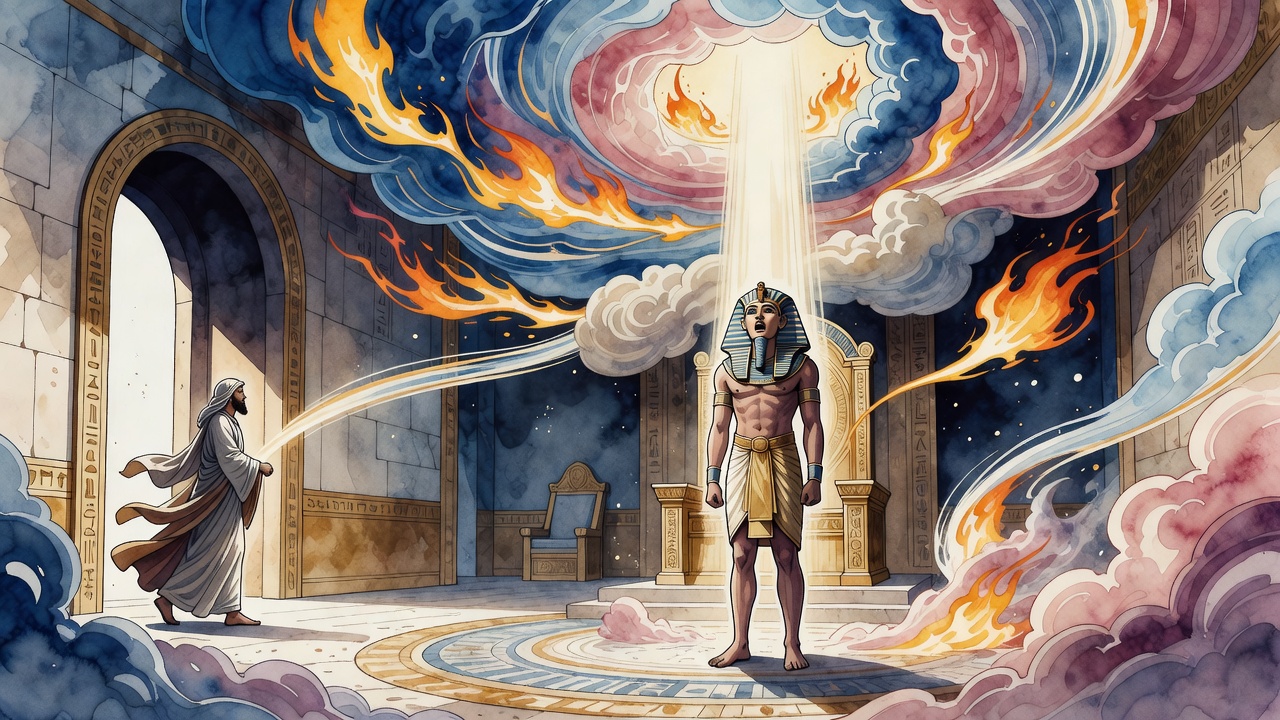
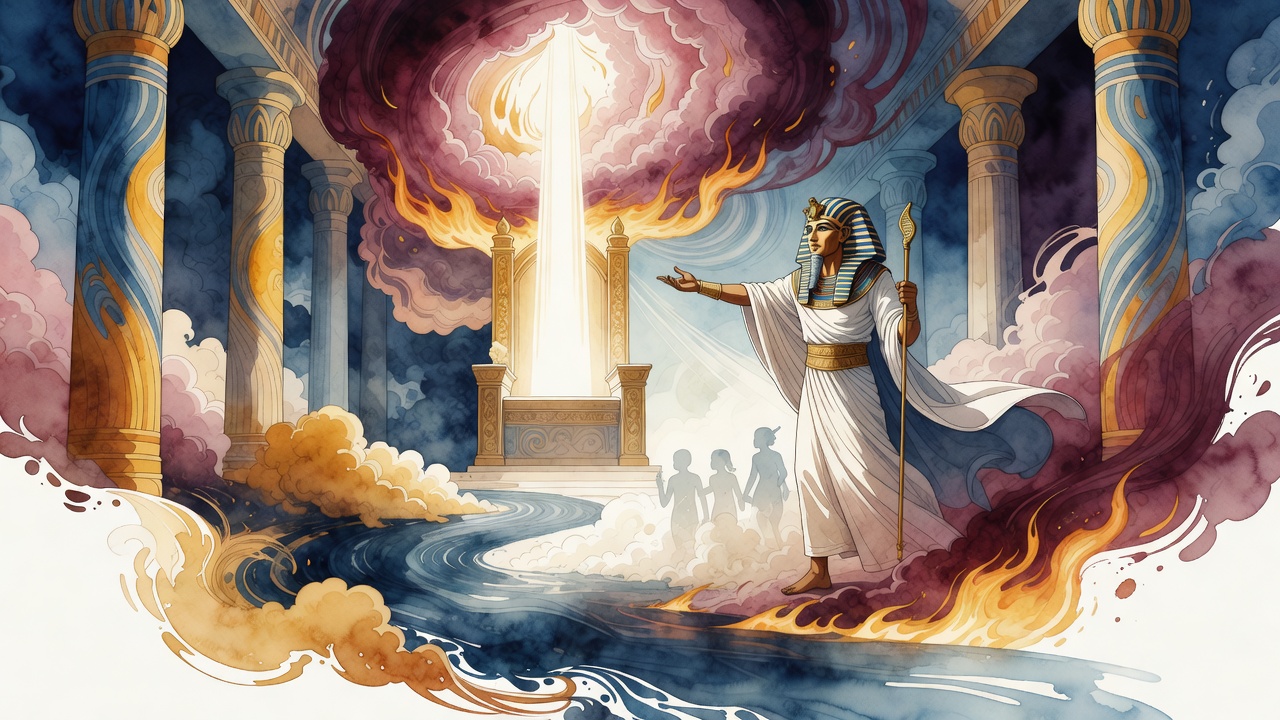
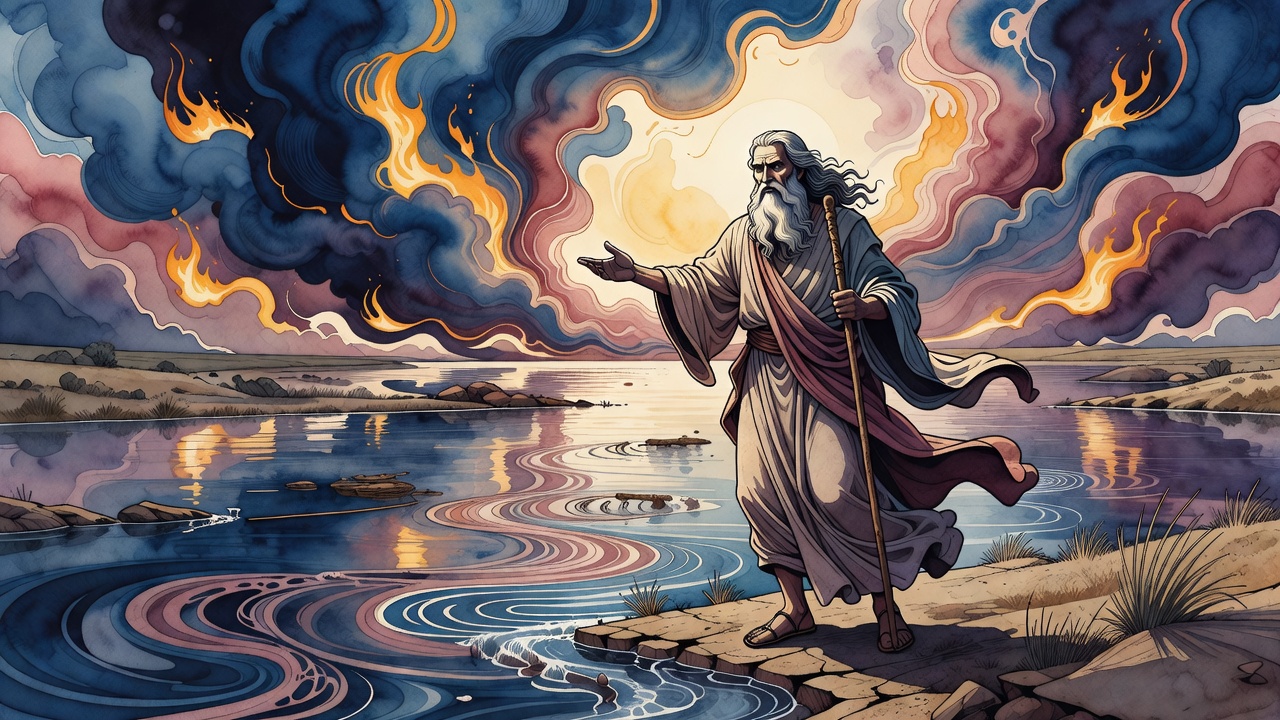
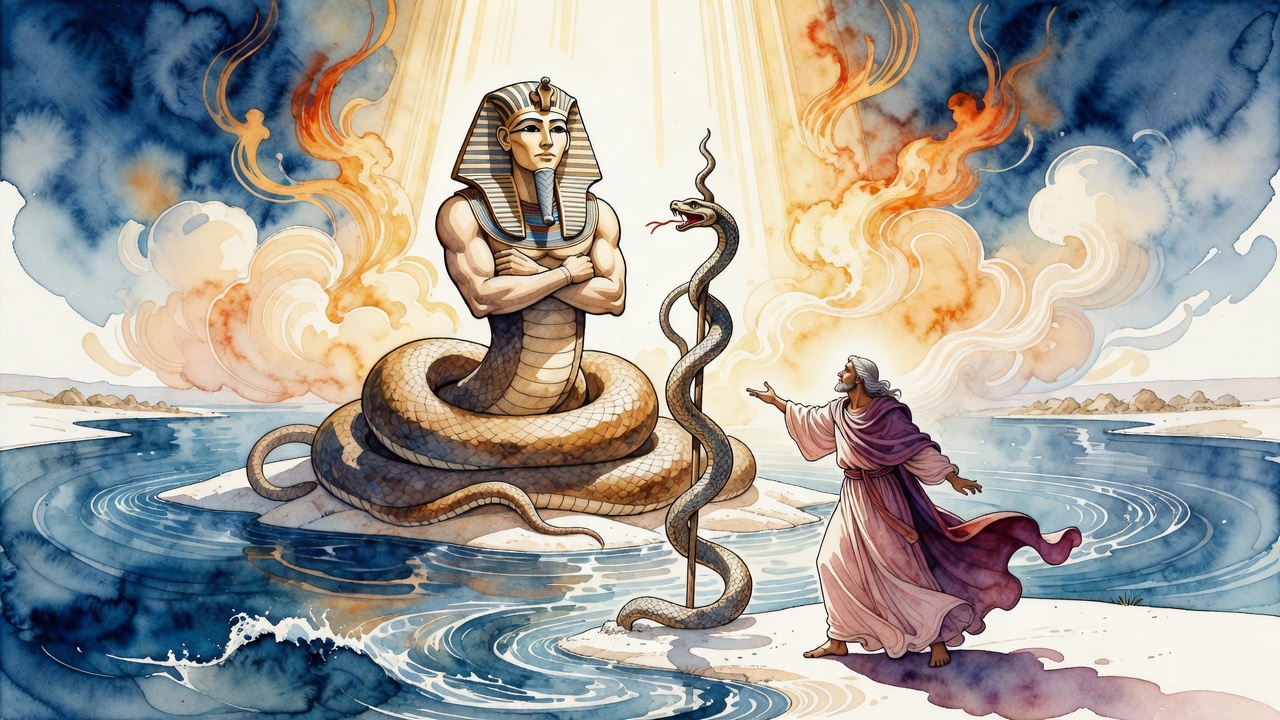
Pharaoh stood at the bank of the Nile each morning and said: the river is mine and I made it. Ezekiel recorded this claim in chapter 29 as the defining statement of Pharaoh's theology: the river belonged to him because he was its source. He did not need a creator. He was the thing that gave Egypt life.
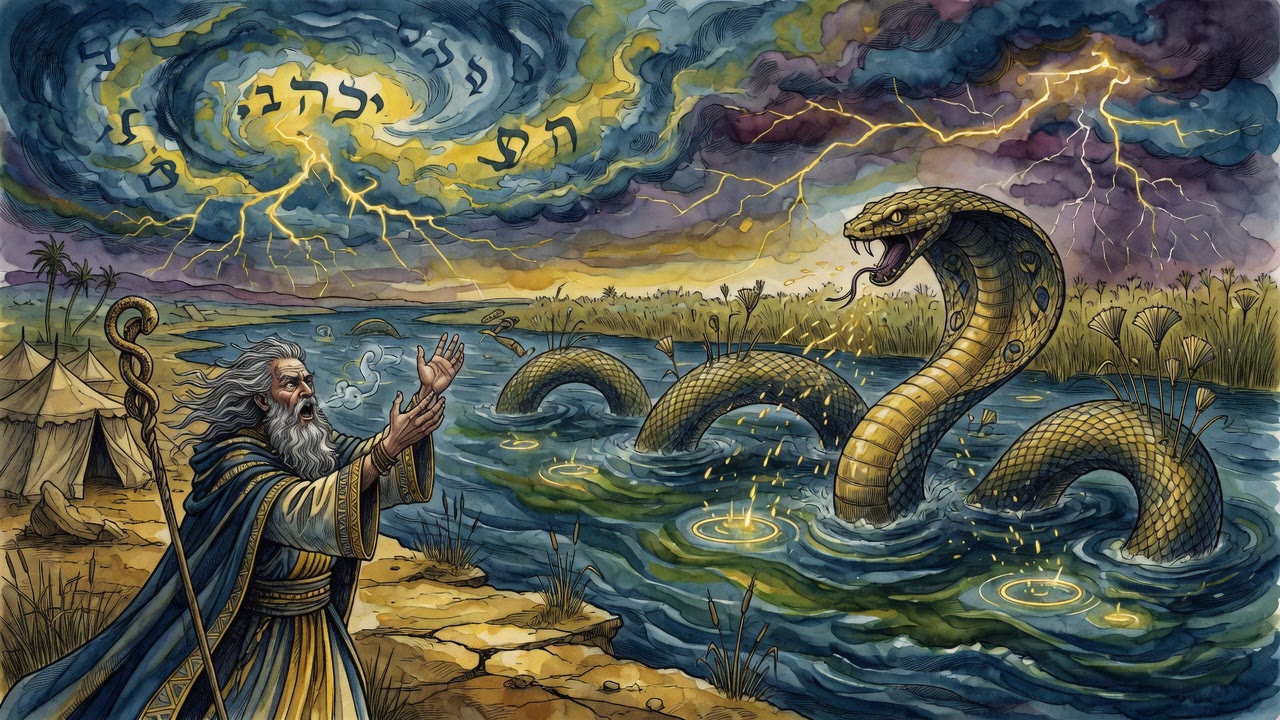
Ezekiel called him the great serpent stretched through his rivers, lying in the currents with his scales catching the light. The image is not flattering but it is not simple mockery either. The serpent in the Nile is powerful, self-satisfied, coiled through every waterway that sustains the country. He is not pretending to own the river. He has made himself the river's body.
Egypt the System, Pharaoh the Claim
The Mekhilta, the third-century midrash on Exodus, makes a distinction that matters for understanding what happened during the plagues. Jethro's blessing after the Exodus thanks God for delivering Israel from the hand of Egypt and from the hand of Pharaoh. Two hands, two deliverances. Egypt is the system: the brick quotas, the taskmasters, the decrees, the social machinery that ground people into raw labor. Pharaoh is the claim that made the system sacred. He is the man who said the Nile is mine and I made it, the man whose personal theology transformed oppression into cosmic order.
A slave can be crushed by both simultaneously. The labor regime presses from one direction and the religious authority of the man who designed the regime presses from another. Both hands had to be defeated for the deliverance to be complete.
The Staff and the Serpent in the Palace
Aaron threw his staff before Pharaoh. It became a serpent. Pharaoh's magicians threw their staffs and they became serpents too. Then Aaron's serpent swallowed all of theirs.
Shemot Rabbah makes the image physical and precise. Pharaoh had threatened Moses. He had said things that sounded like permanent barriers. The staff absorbed those threats. Aaron's serpent ate the magicians' serpents and then Aaron picked it back up and it was a staff again, which is to say: the threats had dried into wood. What Pharaoh had put forward as power had been consumed and the instrument that consumed it returned to being what it was before the confrontation, a piece of wood in a shepherd's hand.
The Staff Before Moses Was Born
The tradition preserved in Shemot Rabbah gave the staff a history that ran back to the beginning. Inscribed with God's name and with the plagues that would be called by its motion, the staff had passed from Adam through the patriarchs, had rested with Jethro in Midian until Moses arrived, and had been waiting in Jethro's garden for the man who could lift it. When Pharaoh demanded a sign and Aaron threw the staff, the sign he received was already old. The argument about who owned the Nile had been planned before Egypt existed.
← All myths