God Promised Wonders But Asked Israel to Walk
Moses told the people to stand firm and watch. God was telling Moses something else: stop crying out to Me and get them moving toward the water.
Table of Contents
 Click for full size
The Land Was Named Before Israel Could Picture It
Israel was making bricks in Egypt, still under the taskmaster's count, still sleeping in whatever shelter a slave community assembles, when God began describing the destination. A good and expansive land, flowing with milk and honey, the land of the Canaanite and the Hittite and the Amorite and the Perizzite and the Hivite and the Jebusite. Six nations were named, each one a wall between Israel and the promise. The detail was not designed to discourage. It was designed to make the promise concrete. You can only move toward what you can picture, and a slave who has never lived anywhere but Egypt needed the map before the march could begin. Shemot Rabbah hears God's descent to deliver Israel not as an improvisation in response to unbearable suffering but as covenant memory arriving on schedule. God had told Jacob: I will go down with you to Egypt, and I will also bring you up. The outcry that reached heaven was real. But the promise had preceded the outcry by generations.
God Promised Wonders Egypt Would Not Survive
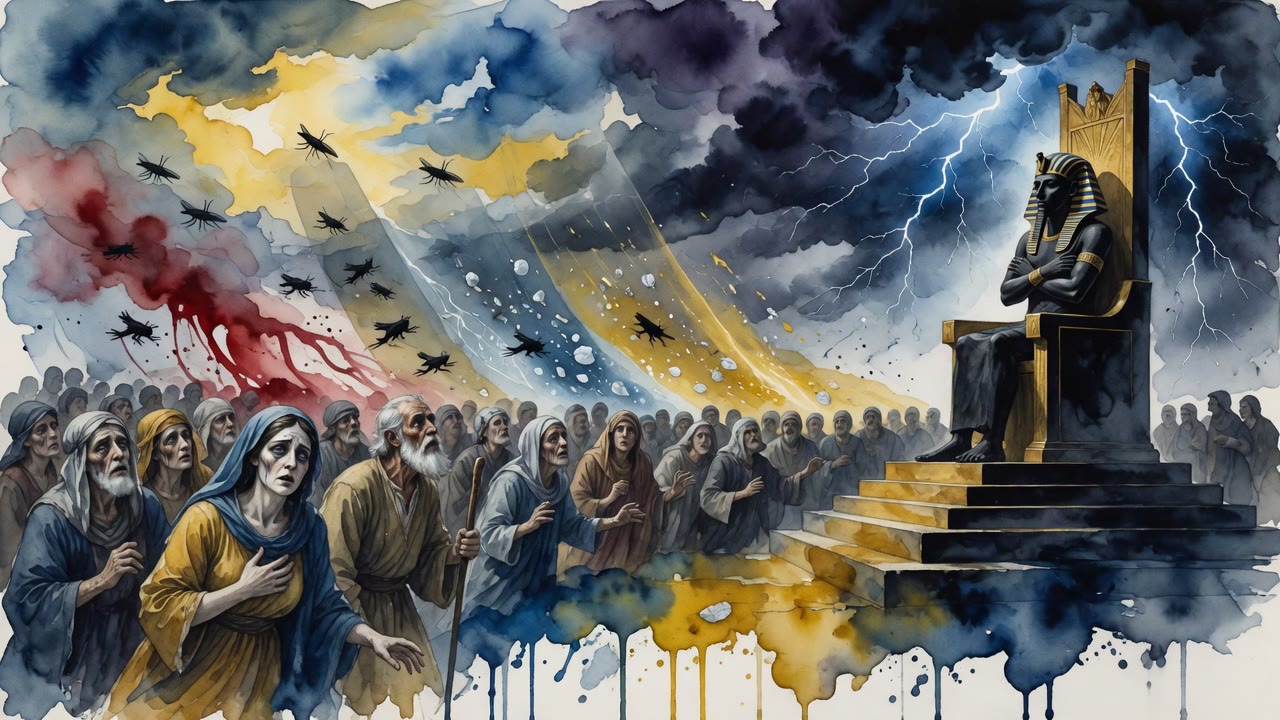
Before any plague had fallen, God told Moses what the end would look like. He would stretch out His hand and strike Egypt with all His wonders. Then Pharaoh would send Israel out. Not release out of mercy. Not negotiate out of reason. Send out, because the cost of keeping them would finally exceed the cost of freeing them. The Midrash turns those wonders into a structure that no single account can fully hold. Ten plagues, but behind the ten there are layers: three by Aaron's hand, three by Moses's hand, three from heaven without a human intermediary, and one, the death of the firstborn, by God Himself with no instrument at all. Each layer adds severity. Each layer adds precision. Egypt was not destroyed carelessly or randomly. It was struck according to a sequence that matched its crimes and measured its refusals, each plague calibrated to the specific way Pharaoh had refused the one before.
Israel Stood Trapped Between Two Walls of Death
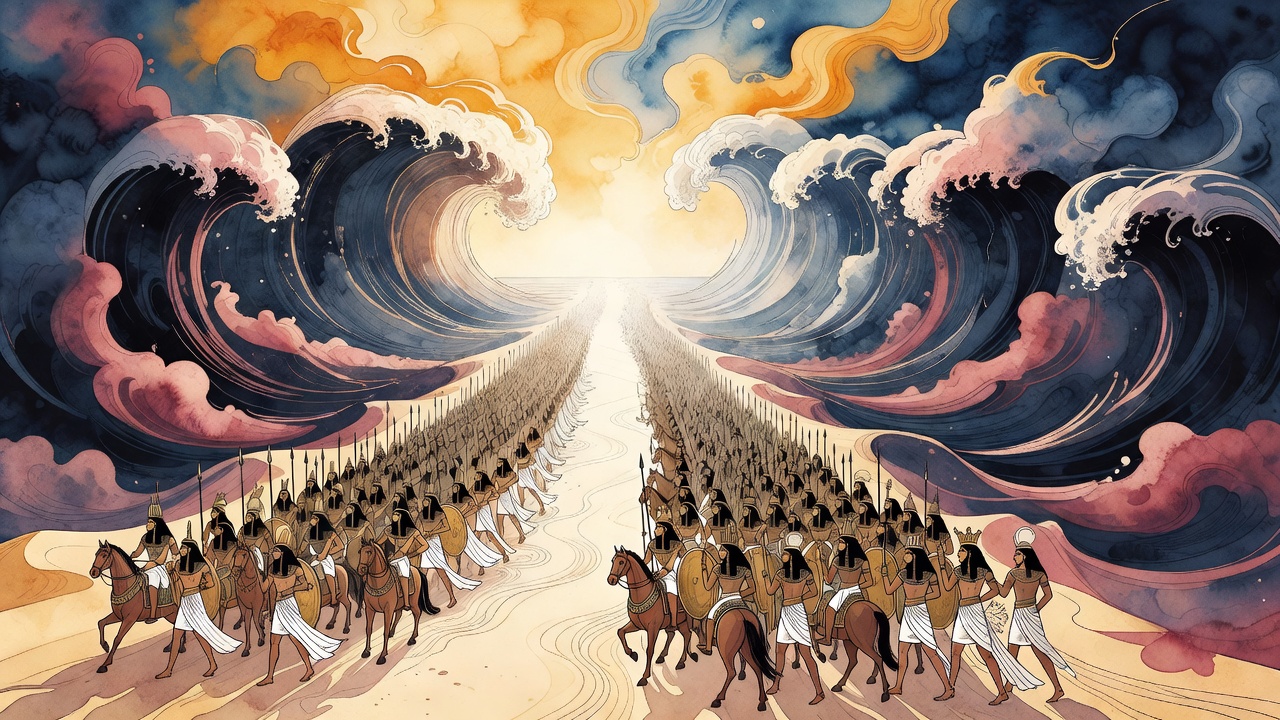
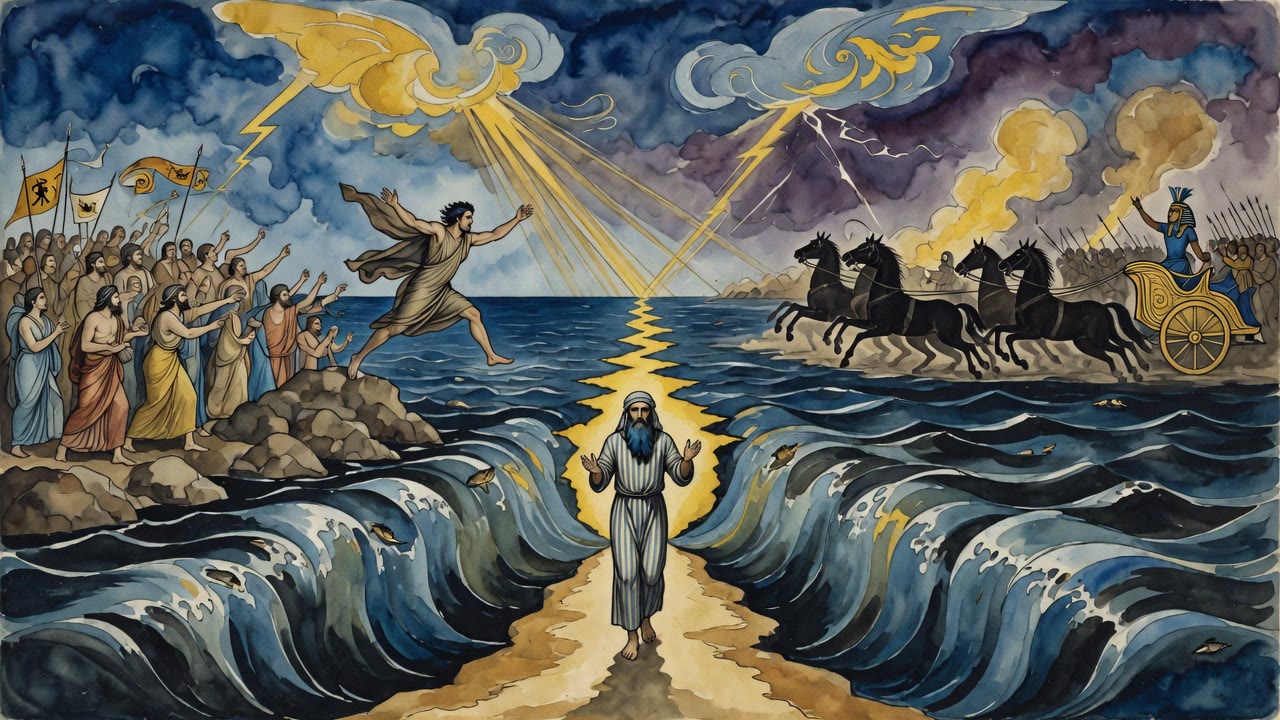
The sea was in front of them. Pharaoh's chariots were behind them. The desert was on either side. Israel cried out and then said to Moses what people say when fear has made everything visible except escape: was it because there were no graves in Egypt that you brought us here to die in the wilderness? Moses told them: do not be afraid. Stand firm and see the salvation of the Lord. What he did not tell them was that God was simultaneously telling him: why are you crying out to Me? Tell the children of Israel to move forward. The rescue required the impossible step before the road appeared. Salvation was not going to arrive while Israel was standing still. It was going to appear when Israel moved toward the water, and the water itself had already been told, at the moment of creation, that this day was coming. The sea would not part until someone stepped into it.
The Plagues Carried Layers No Counting Exhausted
The Midrash on the plagues never agrees on the final number. At the sea, the rabbis argued over multiples. If each plague in Egypt contained four phenomena, at the sea each plague contained five. Some said the plagues in Egypt contained four divine acts each, making forty in total. Some said at the sea the number reached two hundred. The argument is not about arithmetic. It is about a principle: God's action against Egypt was not a single event with a clean edge. It was a sustained declaration, spoken in signs and wonders, that the world had an Author and that Author's patience had limits. Every plague that followed Pharaoh's hardened heart was a re-announcement of the same fact in a new register. Egypt kept refusing to hear, and God kept speaking louder.
God Showed Moses Love Through the Law
After Egypt was crossed and the sea was crossed and the water from the rock was drunk and the manna had accumulated its lessons, there was still a hunger in Moses that the plagues and the miracles had not fed. He had seen God's back but not His face. He had heard the Name but not understood its full weight. He wanted to know the divine ways. At some point in the wilderness, Shemot Rabbah finds the moment in a verse from Exodus, God showed Moses the depth of love available to a prophet who had accepted the law's demands. The commandments were not a burden laid on top of freedom. They were the form that freedom took when it stopped being merely the absence of Egypt and started being the presence of covenant. Moses had carried the law down the mountain twice. The second time the tablets were cut by human hands, as if God were asking Moses to participate in his own instruction. Love was shown through the act of making law together.
← All myths