The Sages Who Counted the Blows at the Sea
Ten plagues struck Egypt. Then the rabbis did the arithmetic on the sea and the number kept climbing, fifty, two hundred, two hundred and fifty.
Table of Contents
 Click for full size
The Number Nobody Asked About
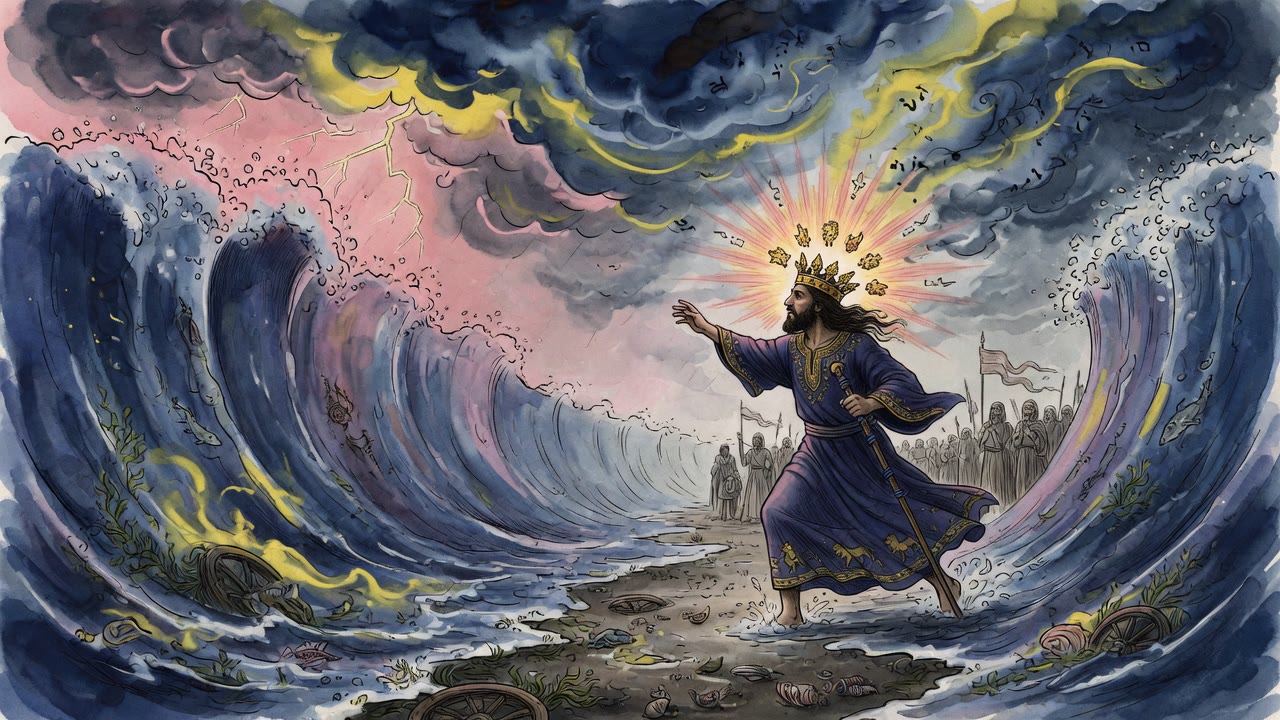
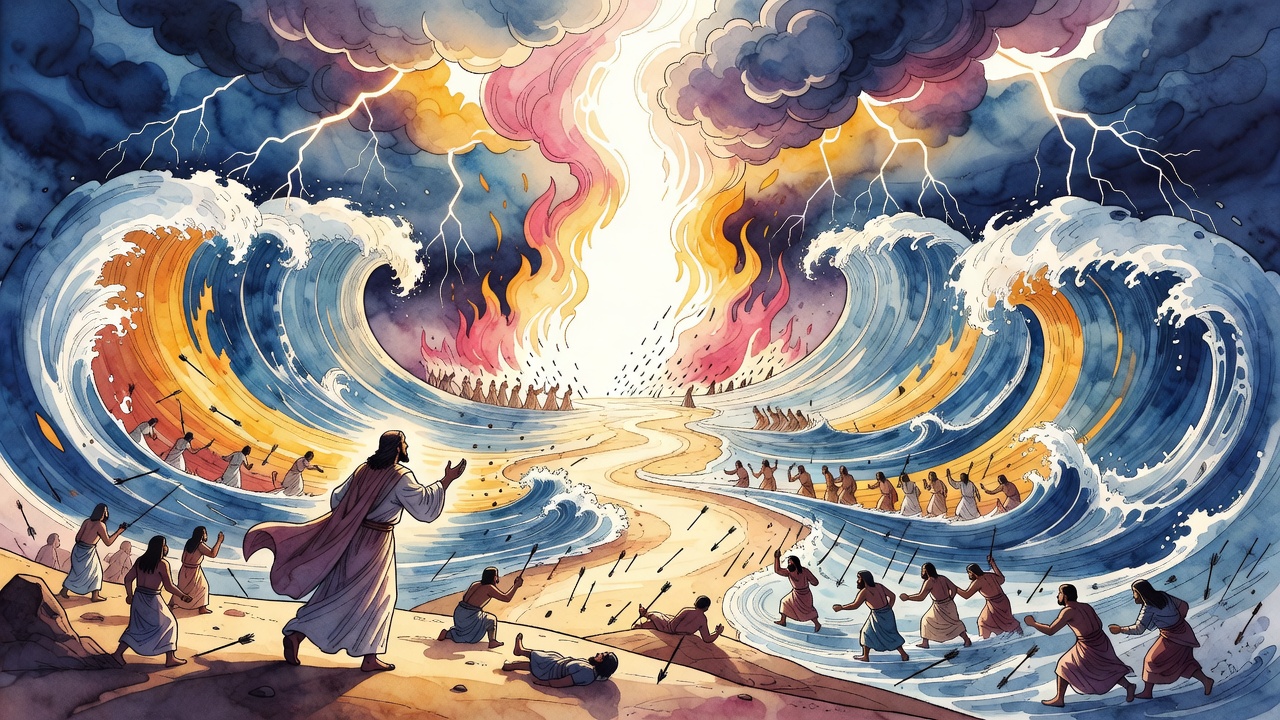
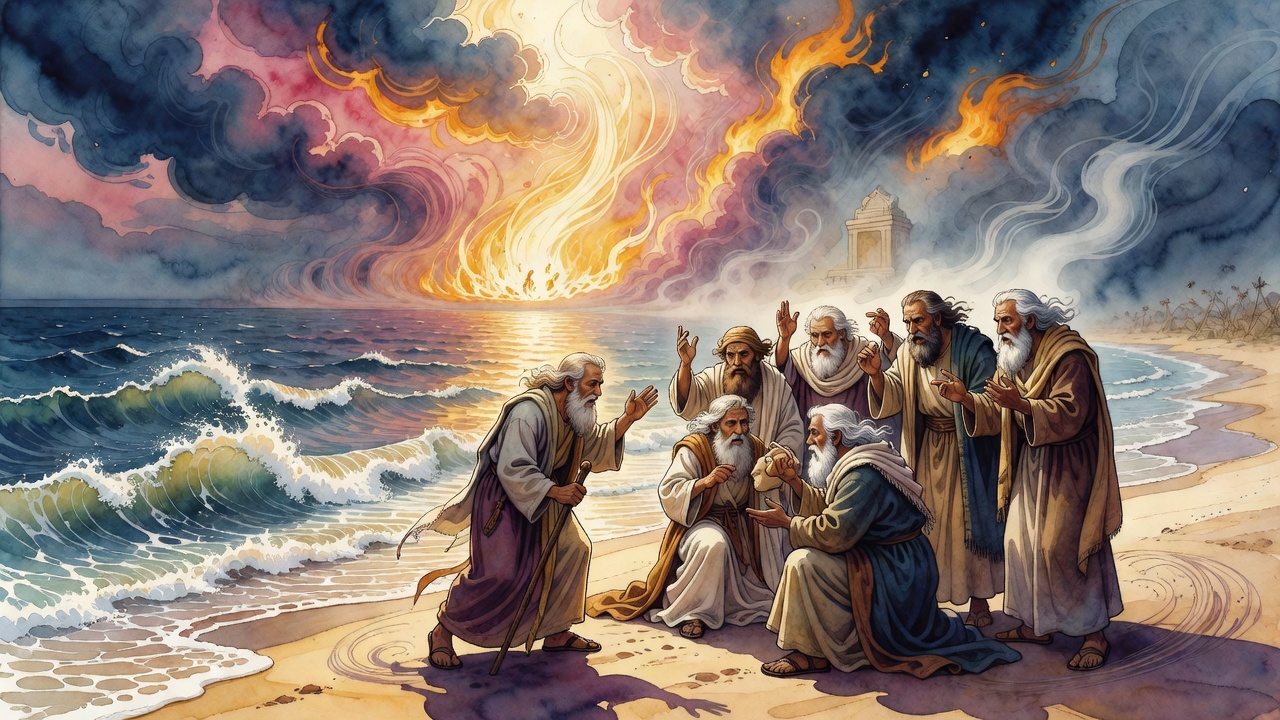
Everyone learns the number ten. Ten plagues, blood through firstborn, and then the sea closes over the army. The sages of the Mekhilta deRabbi Yishmael, the tannaitic commentary on Exodus compiled around the third century CE, looked at that tidy number and refused to accept it as the full account. They sat with the text the way an accountant sits with a ledger that does not balance, and what they found turned the splitting of the sea from an epilogue into the main event.
The man who lit the fuse was Rabbi Yosei Haglili. His question sounds almost technical until you feel its weight. How many plagues, he asked, actually struck the Egyptians at the water? Not in Egypt. At the sea. The Torah gives no count for the drowning. So Rabbi Yosei went hunting for it in the body-part language the Torah had already used.
The Finger and the Hand
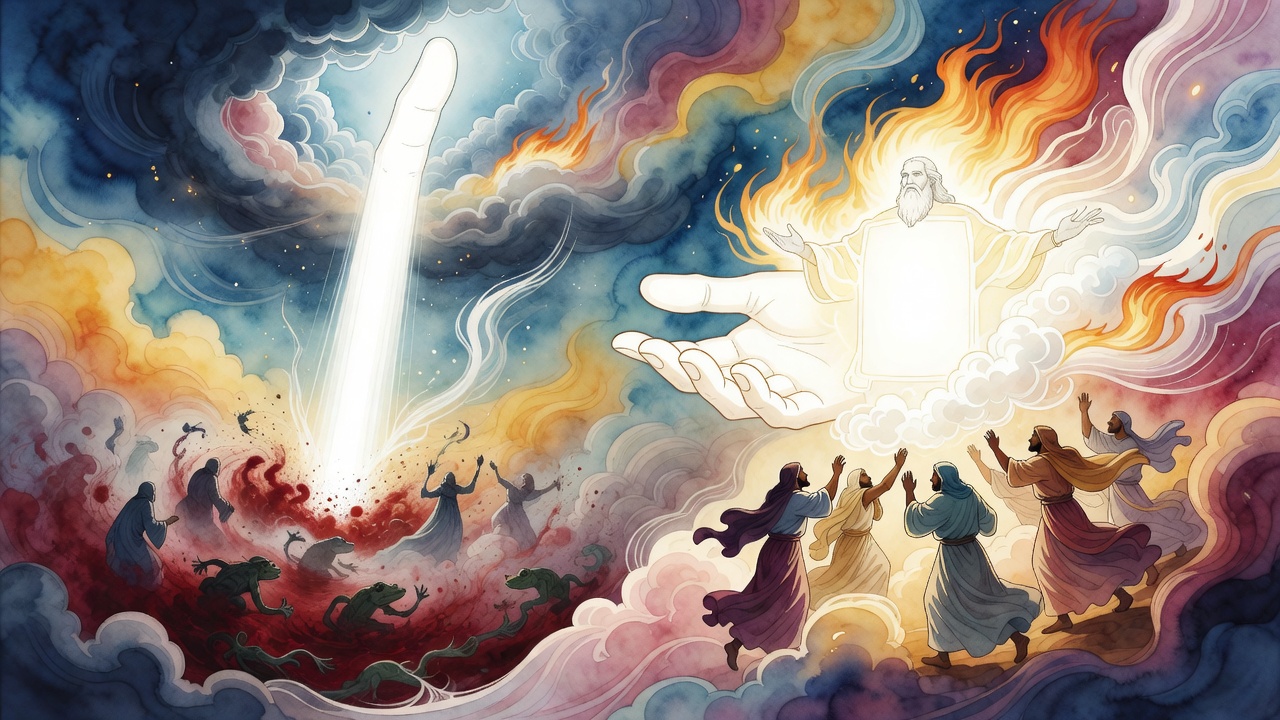
Back in Egypt, when the magicians could not replicate the plague of lice and broke ranks and told Pharaoh, it is the finger of God (Exodus 8:15), they were naming the instrument. One finger. That single finger, Rabbi Yosei reasoned, had delivered all ten plagues. One finger, ten plagues.
At the sea, the Torah uses a different body part. It says Israel saw the great hand of God against Egypt (Exodus 14:31). A hand has five fingers. If one finger equals ten plagues, then five fingers equal fifty. Rabbi Yosei's conclusion: the Egyptians who drowned in the sea suffered fifty plagues. Five times what fell on Egypt.
The logic is airtight on its own terms. But it was only the first bid in an auction.
The Multiplication Rabbi Eliezer Brought
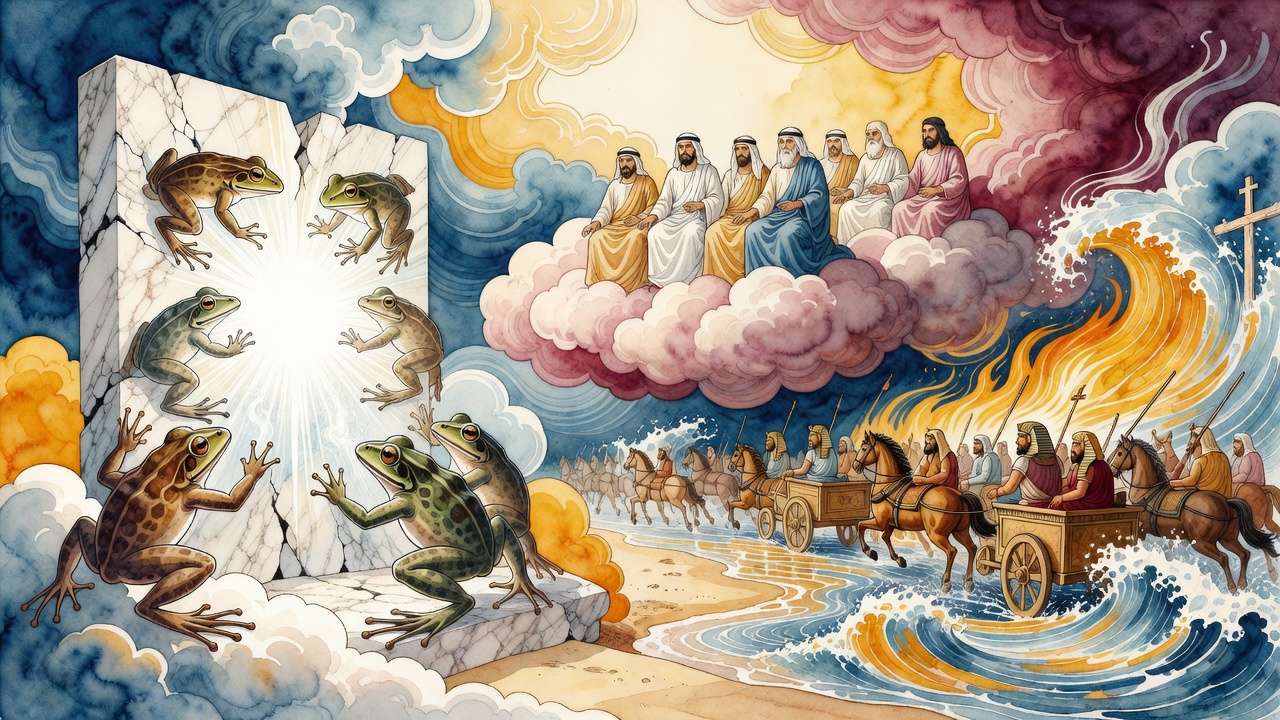
Rabbi Eliezer read the same passage and brought a different piece of evidence. Each plague in Egypt, he pointed out, actually consisted of four distinct sub-plagues. He derived this from a verse in Psalms 78, which describes God sending against Egypt a delegation of evil angels, and the Hebrew word for the delegation, mishleichat, carries a numerical weight in its syllables. Four categories of evil: fury, indignation, trouble, and a delegation of evil messengers. Four elements per plague, ten plagues in Egypt: that is forty sub-plagues in Egypt. At the sea, where the hand struck instead of the finger, the multiplier is five. Forty times five equals two hundred.
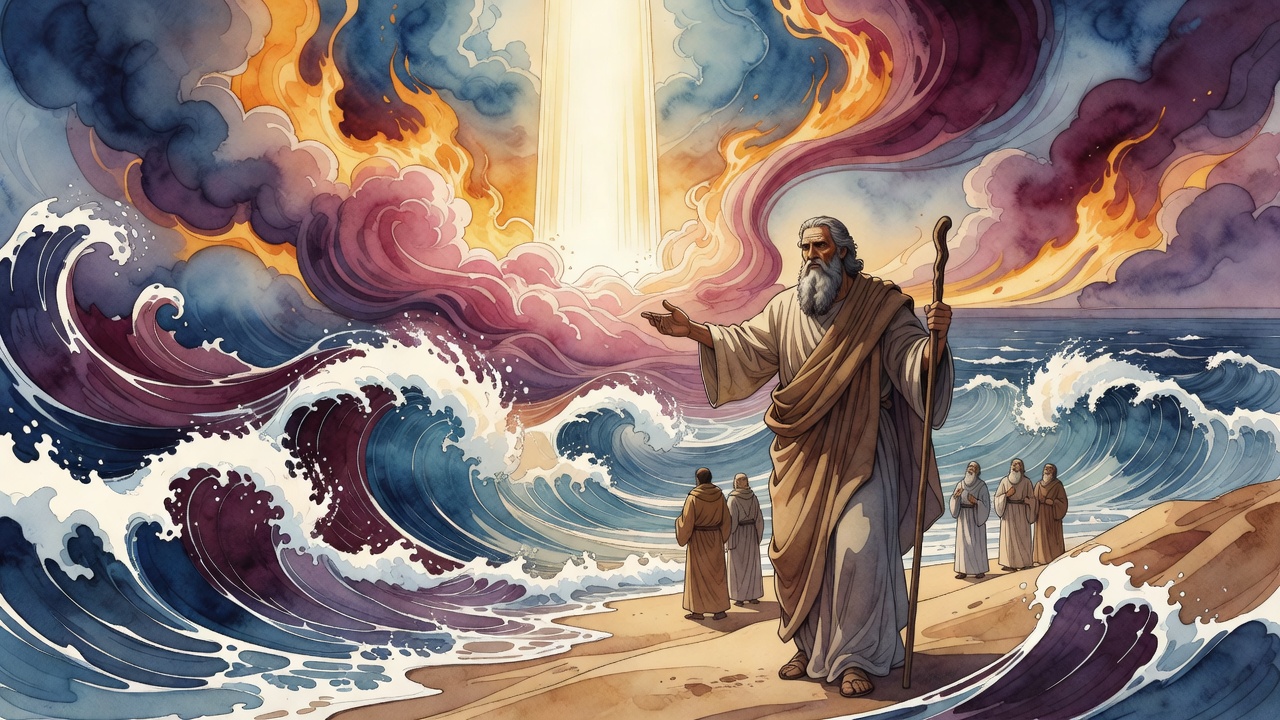
Israel stood on the far shore and looked back at what had just happened to the army that had enslaved their grandparents, and what they saw, by Rabbi Eliezer's count, was the effect of two hundred divine blows.
Rabbi Akiva's Final Bid
Then Rabbi Akiva spoke. He accepted Rabbi Eliezer's four elements but added a fifth. He read the same psalm and found not four but five distinct forces described in God's delegation against Egypt: fury, indignation, trouble, a delegation of evil messengers, and a fifth, the path of His anger. Five per plague, ten plagues: fifty in Egypt. Five times that at the sea: two hundred and fifty.
Two hundred and fifty plagues at the sea. That is the top of the auction. Rabbi Akiva's number is the one the Passover Haggadah accepted and built into the structure of the seder night, which is why to this day, when Jews pour out drops of wine at the Seder for each plague, the count the tradition honors is not merely ten but a multiplied reckoning of what it cost to break Pharaoh's grip on the world.
Why the Counting Matters
The exercise looks like mathematics, but its purpose is devotional. The sages were not trying to calculate God's power as a quantity. They were trying to prevent ingratitude by making the scale of what happened at the sea impossible to compress back into a simple story. Ten is a number people hear and file away. Two hundred and fifty is a number that stays in the body, because it forces you to imagine each blow separately.
Each plague in Egypt had been a lesson in what the God of Israel could do and what Pharaoh could not match. Each blow at the sea was a further demonstration of the same gap. And the progression from Egypt to sea, from ten to fifty to two hundred to two hundred and fifty depending on how carefully you multiply, was the sages' way of saying: you have not yet finished understanding what happened at the water. You have not counted everything. Sit down and count again.
← All myths