The Idolatry That Crossed the Red Sea With Israel
Most people think the Red Sea left Egypt behind. A second-century rabbi says Israel carried something through the water Moses had to strip away.
Table of Contents
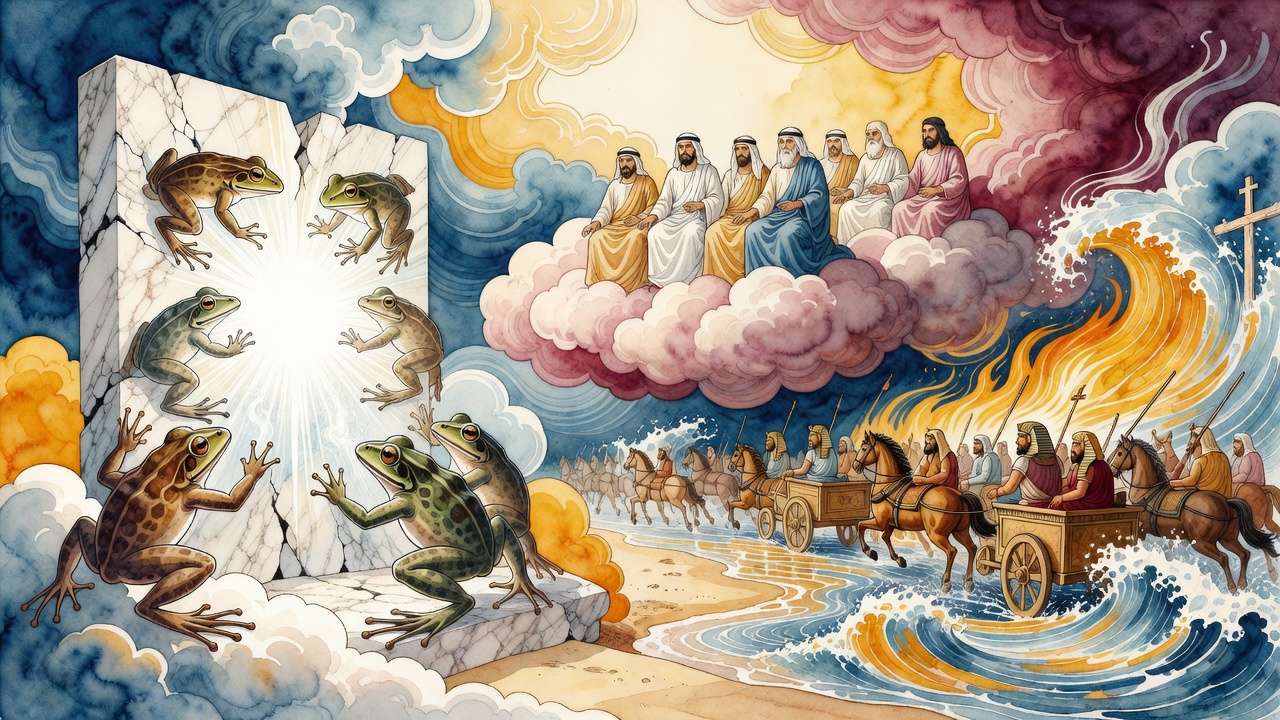
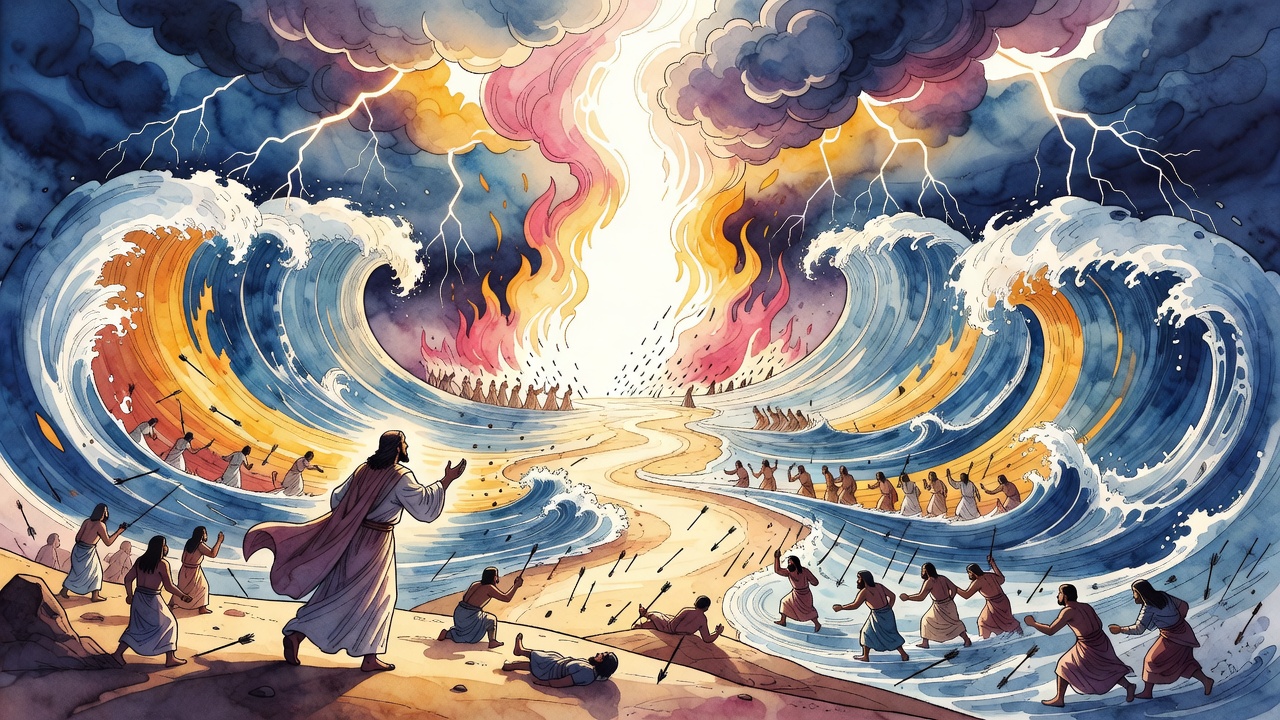
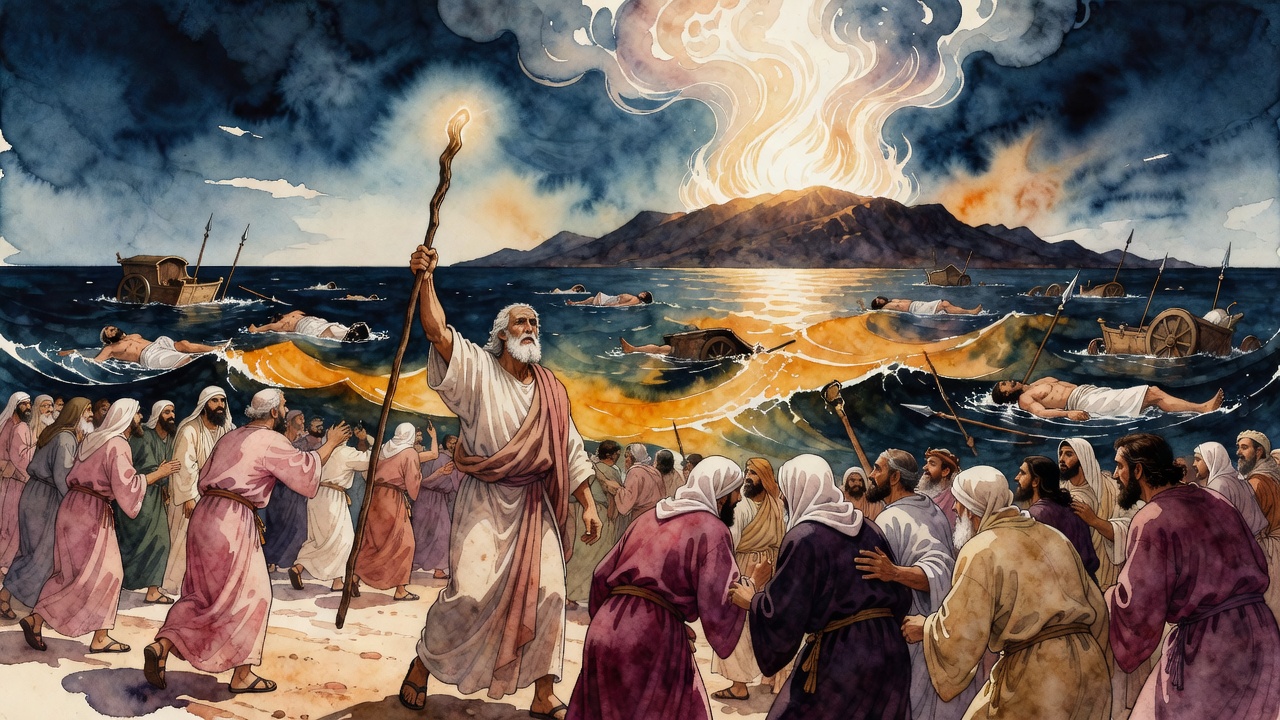
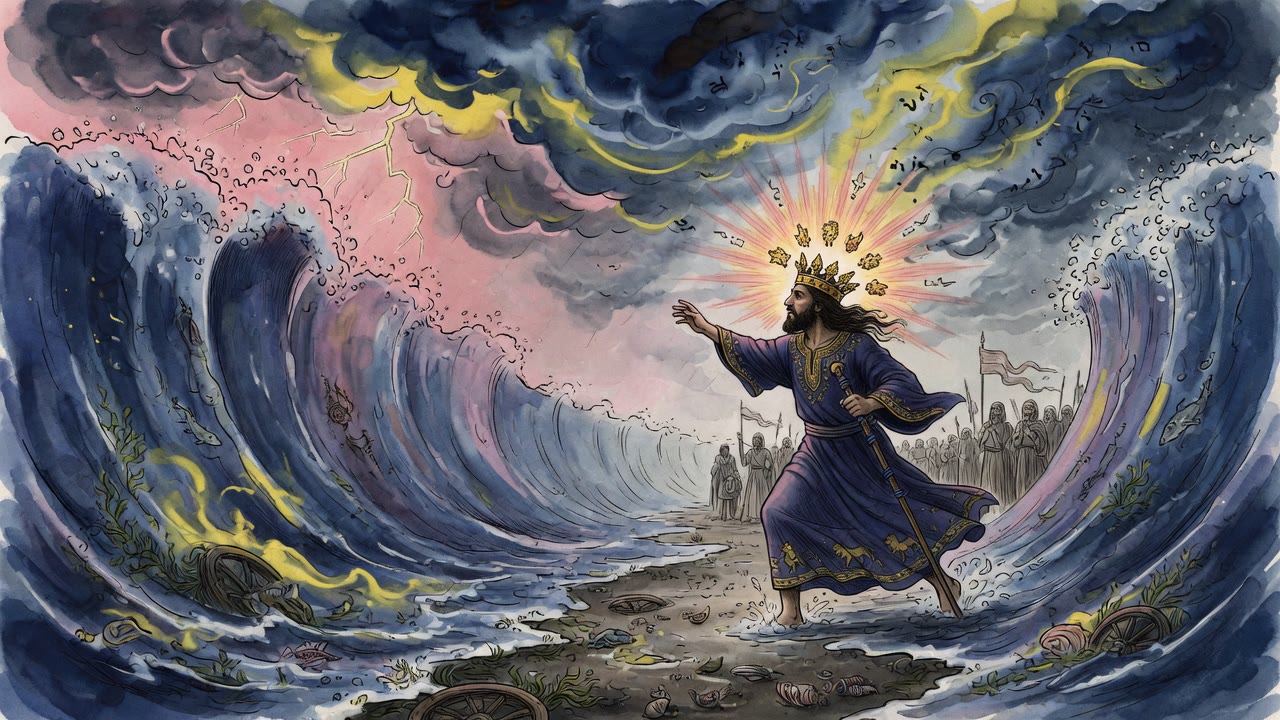
The waters closed over Pharaoh. The new nation walked out the other side. Every trace of Egypt was left behind in the surf.
 Click for full size
That is the version most readers carry of the Exodus. A second-century rabbi named Yehudah ben Ilai wanted it corrected.
The Verb That Means to Strip Something Away
The Mekhilta DeRabbi Yishmael, the tannaitic midrash on Exodus compiled in second-century Palestine from the school of Rabbi Ishmael, preserved Rabbi Yehudah's uncomfortable reading of a single verb. The Torah says, in Exodus 15:22, that Moses removed Israel from the Red Sea. The Hebrew verb used is vayasa. It can mean to cause someone to travel. But it can also be read as to strip something away from someone. Rabbi Yehudah reads it the second way.
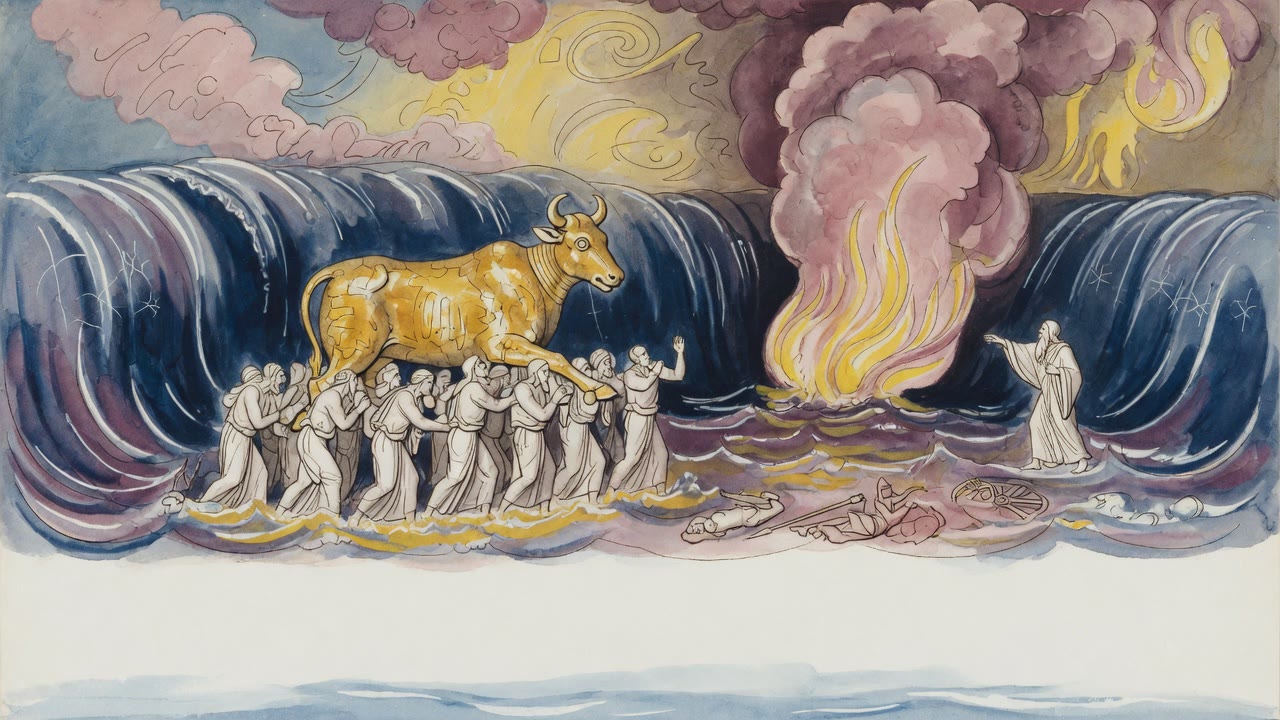
Moses removed something from Israel at the Red Sea. Not Israel from the sea. Something from Israel. And what he removed was the idolatry they had hauled across the water.
Not left behind. Not drowned with the Egyptian army. Carried across by the same people who had just watched the waters part.
After the Song
The claim is almost too much on first reading. These are the people who had just sung the Song of the Sea. The same mouths that shouted Mi khamokha ba'elim, Hashem, who is like You among the divine powers, Lord (Exodus 15:11), were carrying little idols tucked under their cloaks on the far shore. The singing was genuine. The clinging was also genuine. Both things were happening in the same people at the same moment.
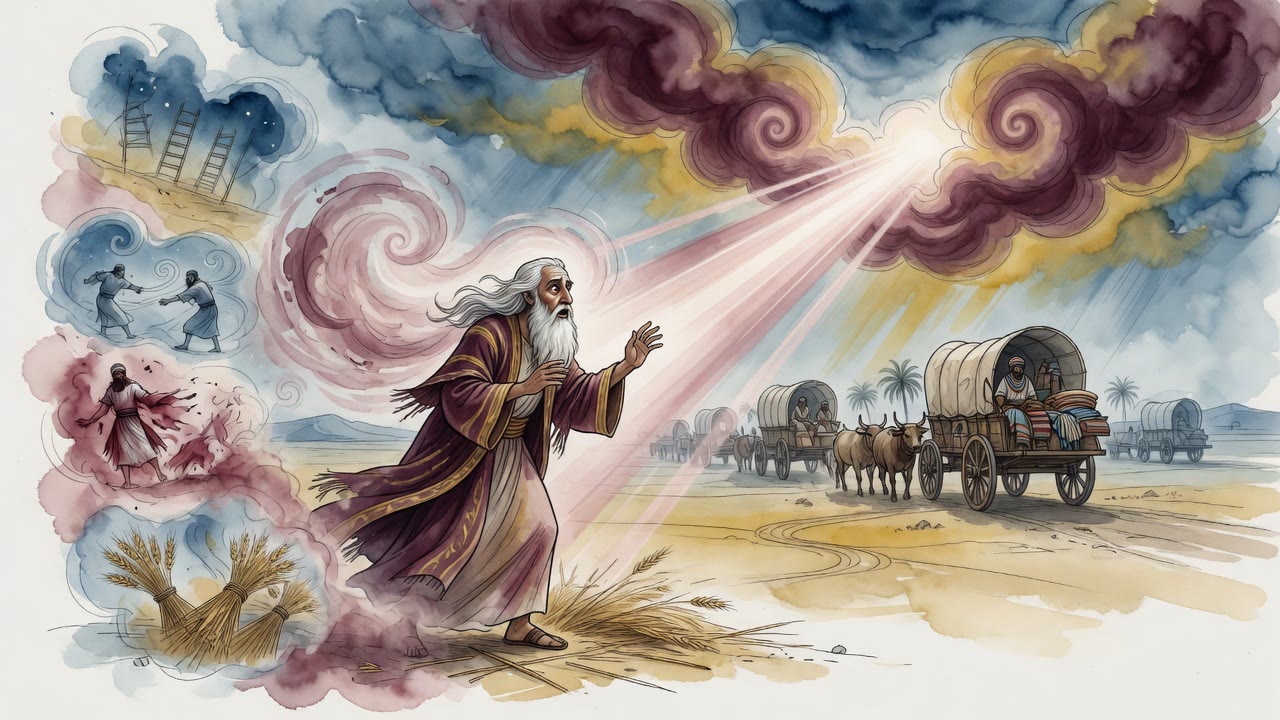
The prophet Zechariah provides the confirmation Rabbi Yehudah uses (Zechariah 10:11): And tzarah passed through the Red Sea. The word tzarah means affliction or trouble. Rabbi Yehudah reads it as referring to the distress of idolatry, the spiritual condition that had been Israel's companion through all the years of Egypt. Zechariah, writing centuries after the Exodus, confirms that the thing which passed through the sea was still being carried. It did not stay in Egypt. It went with the people because people carry what has shaped them, even through miracles.
The Power of Sihon and Og
The Legends of the Jews, Louis Ginzberg's synthesis of rabbinic tradition, offers a parallel that clarifies what was carried through the water. The battles Israel fought against Sihon and Og, the kings of the Amorites on the far side of the Jordan, loomed so large in the rabbinic imagination that some sages equated them with the triumph at the Red Sea. David composed songs of gratitude for those specific victories, retroactively acknowledging what had happened generations before his birth. The battles mattered because what Israel carried out of Egypt, the idolatry it had not fully shed at the sea, had shaped the character of the peoples it now had to fight.
The crossing did not cure. It created a condition under which the cure was possible. Moses stripped the idolatry on the far shore, but he did not perform a full removal. The pull of what had been formed in Egypt across four hundred years did not dissolve in seawater. It followed the people into the desert, into the golden calf disaster, into the repeated complaints and reversals of the wilderness generation. Rabbi Yehudah is not making an accusation. He is making an observation about how formation works and how long it takes to undo.
What the Crossing Actually Proved
The miracle was real. The walls of water were real. The drowning of Pharaoh's cavalry was real. Rabbi Yehudah does not dispute any of it. What he disputes is the idea that a miracle automatically produces transformation. Israel saw the most spectacular act of divine intervention in their collective history, sang about it the morning after, and was still carrying Egyptian religious habits in their hands when they started walking into the desert. The miracle had changed their geography. It had not yet changed their interiority.
That is the work Moses was beginning when he used the verb the Mekhilta noticed. He was not simply moving people from one place to another. He was removing something from them, an extraction that would take the whole forty years of the wilderness to complete, and would not be fully accomplished even then. The Torah knows this. The prophet Ezekiel knew it. Zechariah knew it. Rabbi Yehudah is simply unwilling to let the moment of the crossing be read as a clean break when it was not.
← All myths