Jacob Forced the Oath and the Oath Became the Rod That Broke Egypt
Jacob made Joseph swear by Abraham's covenant before he died. Centuries later, that oath was already burning inside the staff that struck Egypt ten times.
Table of Contents
 Click for full size
A Dying Man Refuses a Promise
Jacob was dying in Egypt, surrounded by the finest that the most powerful kingdom on earth could provide, and he was terrified. Not of death. Of the wrong burial. He called Joseph, the son he had mourned for twenty-two years and then recovered, the son who now ran Egypt's food supply, and made one request. Take me home to Canaan. Bury me with my fathers.
Joseph said yes. Jacob told him to swear.
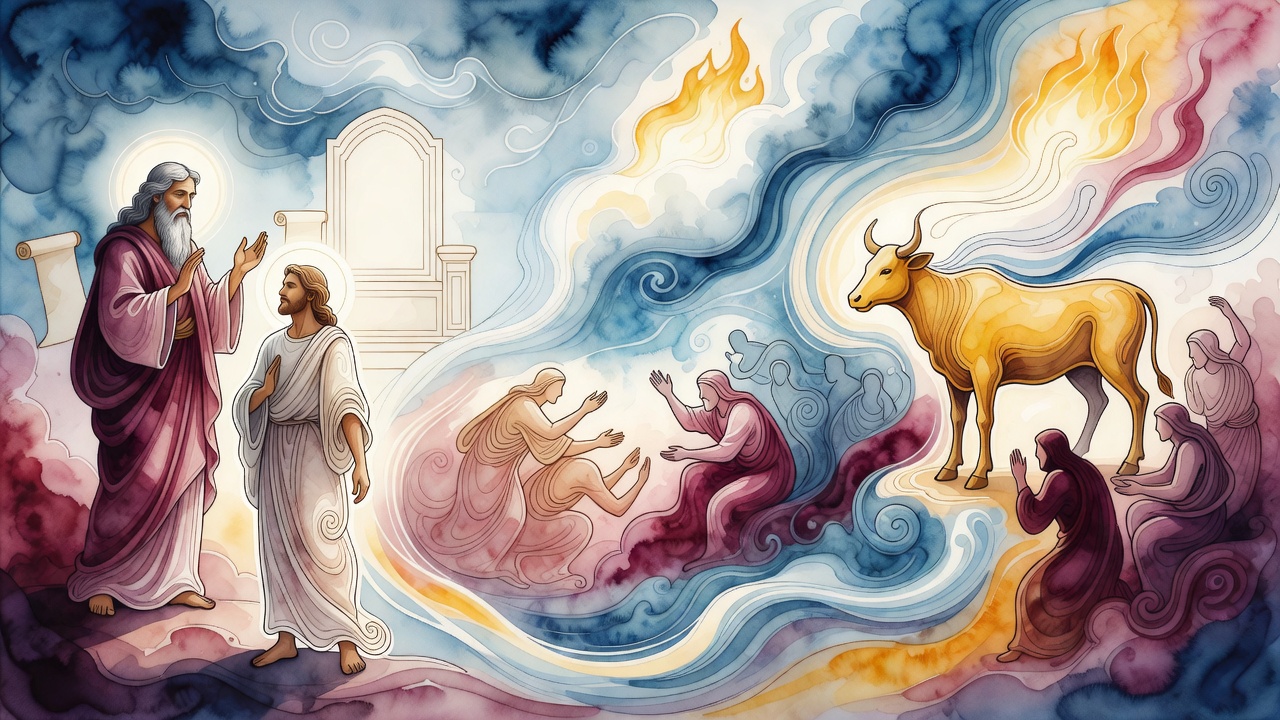
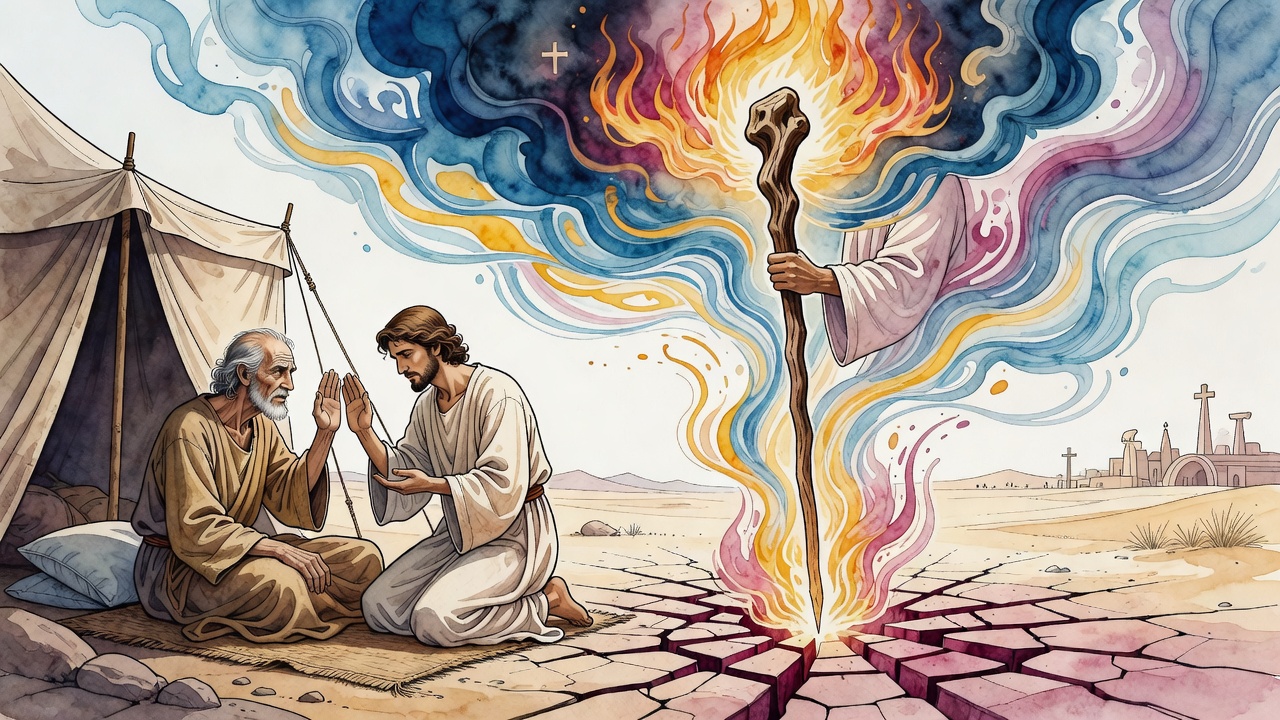
Joseph was insulted. He was vizier of Egypt, the second most powerful man in the known world. His word was not the word of a slave to be guaranteed with an oath. Jacob held his ground. Place your hand under my thigh and swear by the covenant of Abraham. The same gesture Eliezer had made when Abraham sent him to find a wife for Isaac. The most binding oath the patriarchs knew, sworn on the sign of circumcision, on the covenant itself.
Joseph swore. Then Jacob bowed his head toward the top of the bed and gave thanks to God for what the oath meant. Not thanks for the burial promise. Thanks because the same covenant sealed in the body of Abraham was still the most powerful thing in the world, capable of holding the word of the vizier of Egypt to its mark.
The Rod Already Burning in Jethro's Garden
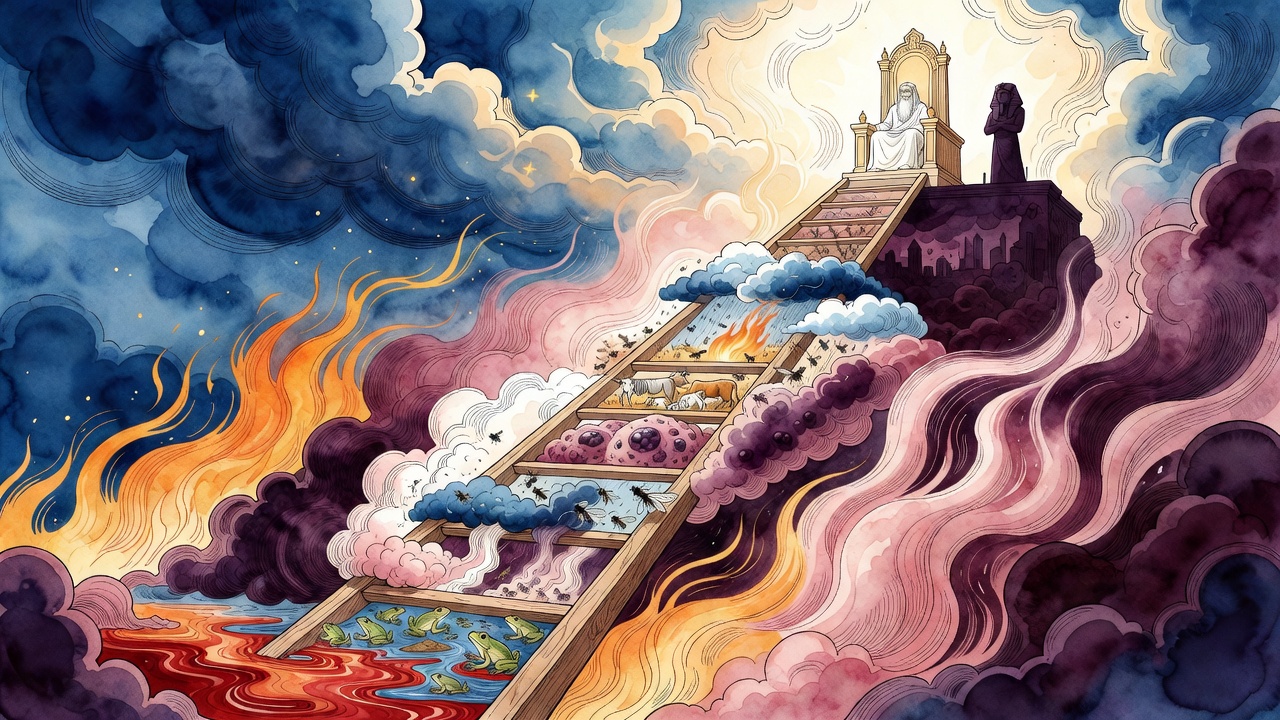
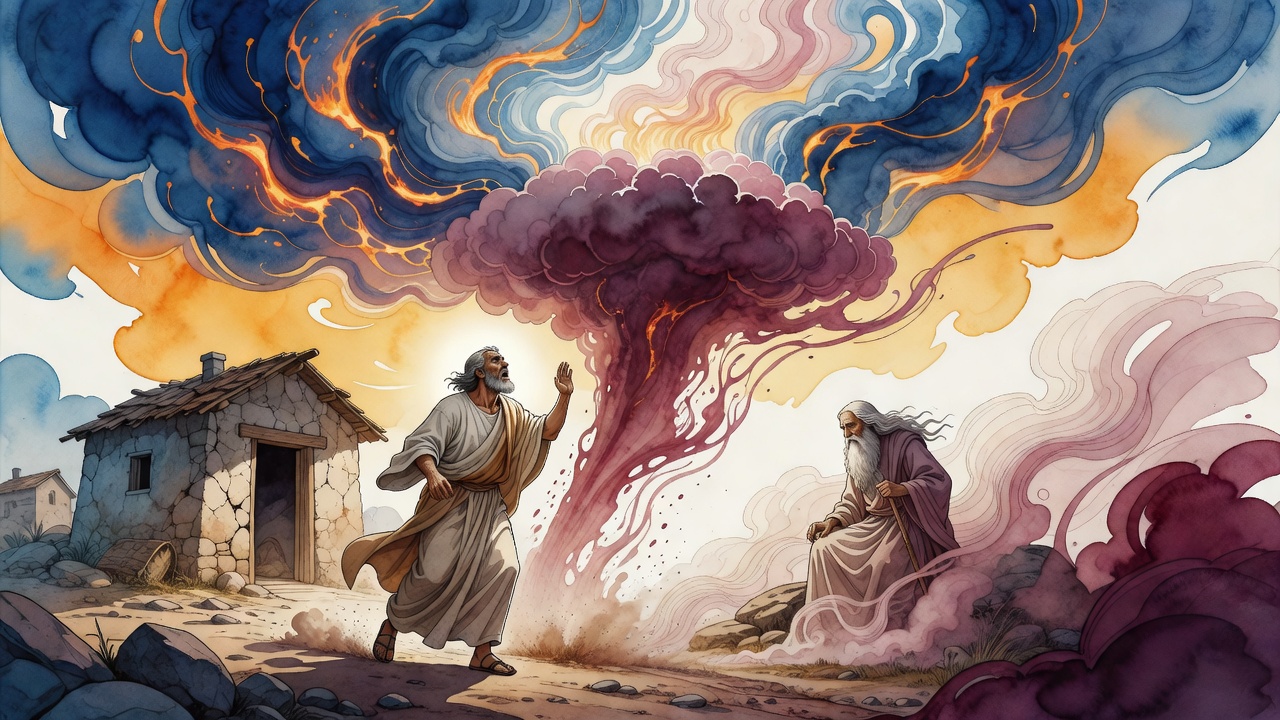
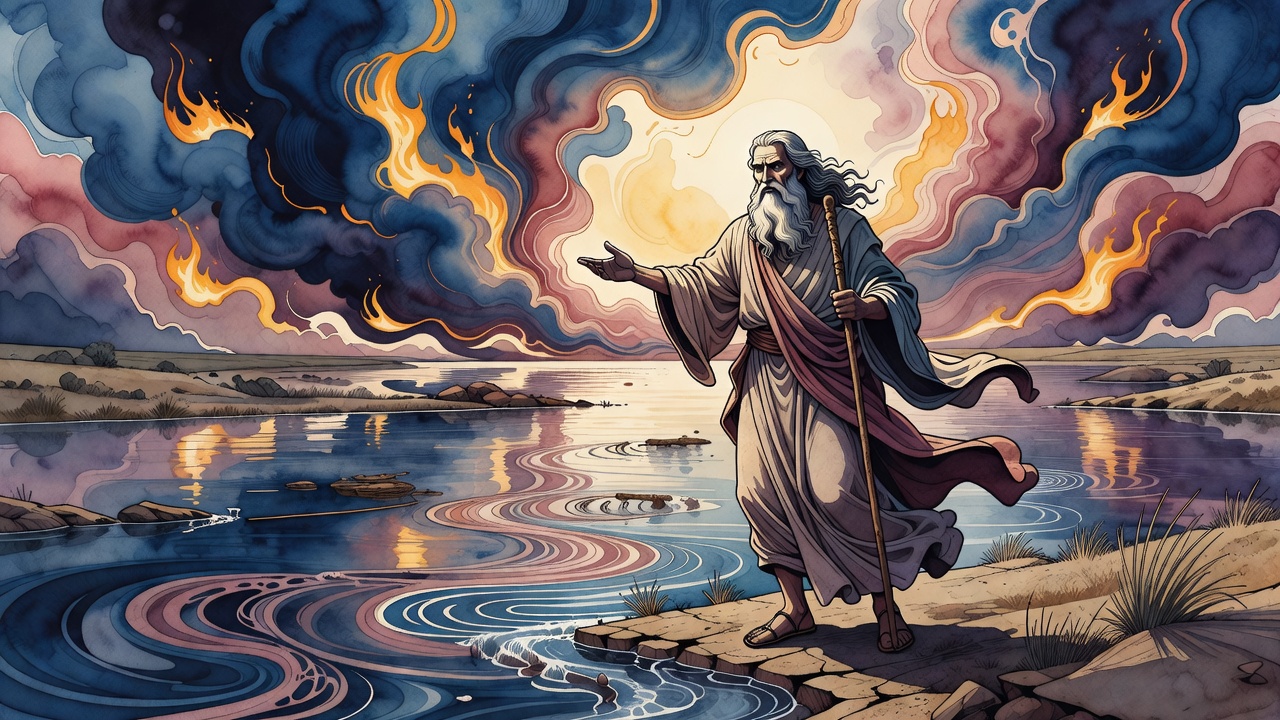
In Midian, years before Moses was born, Jethro had a rod in his garden that no one could pull from the earth. It had been planted there since the days of creation, inscribed with the name of God and with the ten plagues that would come to Egypt, and every man who had tried to pull it out and take it for himself had failed.
Moses walked into the garden and pulled it out with one hand.
The rabbis read the rod as the physical object in which the long machine of redemption had been stored since the beginning. The names of the plagues were already on it. The power to split the sea was already inside it. Zipporah's father, who had inherited it across many hands from Adam and Noah and Abraham and down to Joseph and then to Egypt, had brought it to Midian without knowing he was keeping it in trust for the man who would need it.
Why Ten Plagues and Not More or Fewer
The number was not arbitrary. Egypt had enslaved Israel and made their lives bitter with hard service. The ten plagues answered, one for one, the ten ways Israel had been broken in bondage. The rabbis counted the specific cruelties: the bricks without straw, the beatings, the drowning of the infant boys, the forced labor in the field, the forced labor in construction, the watching of children die. Each plague was a precise reversal of a specific Egyptian crime, delivered in kind.
But the number also connected back to something older. God had created the world with ten utterances. He had offered ten trials to Abraham. Now He was undoing Egypt with ten acts of power. The number ten ran through the structure of divine action the way load-bearing beams run through a building. You could not see them from the outside, but the whole thing stood on them.
Zipporah and the Covenant She Saved
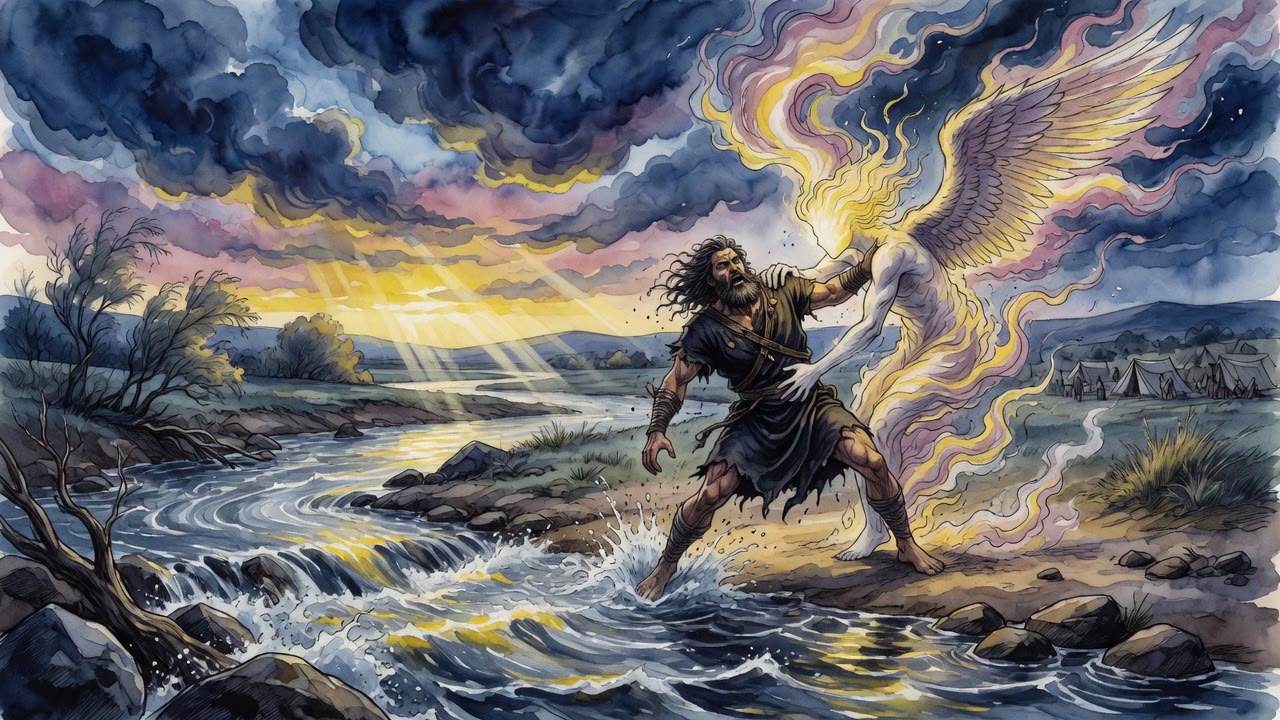
On the road back to Egypt, with the commission from the burning bush burning inside him, Moses nearly died. God came to kill him at the inn because he had not yet circumcised his son. Zipporah took a flint and did it herself, throwing the foreskin at Moses's feet, and the threat withdrew.
The rabbis saw this as the covenant defending itself. Jacob had made Joseph swear by the sign of circumcision. Moses's own son was uncircumcised, which meant Moses was carrying the rod of the covenant while the covenant was unpaid in his own household. Zipporah, who had not been raised in the covenant, acted faster than Moses to preserve it. The rod that would break Egypt depended on the woman from Midian to keep the account current.
← All myths