Joseph Refused the Gold and Moses Absolved God's Vow After the Calf
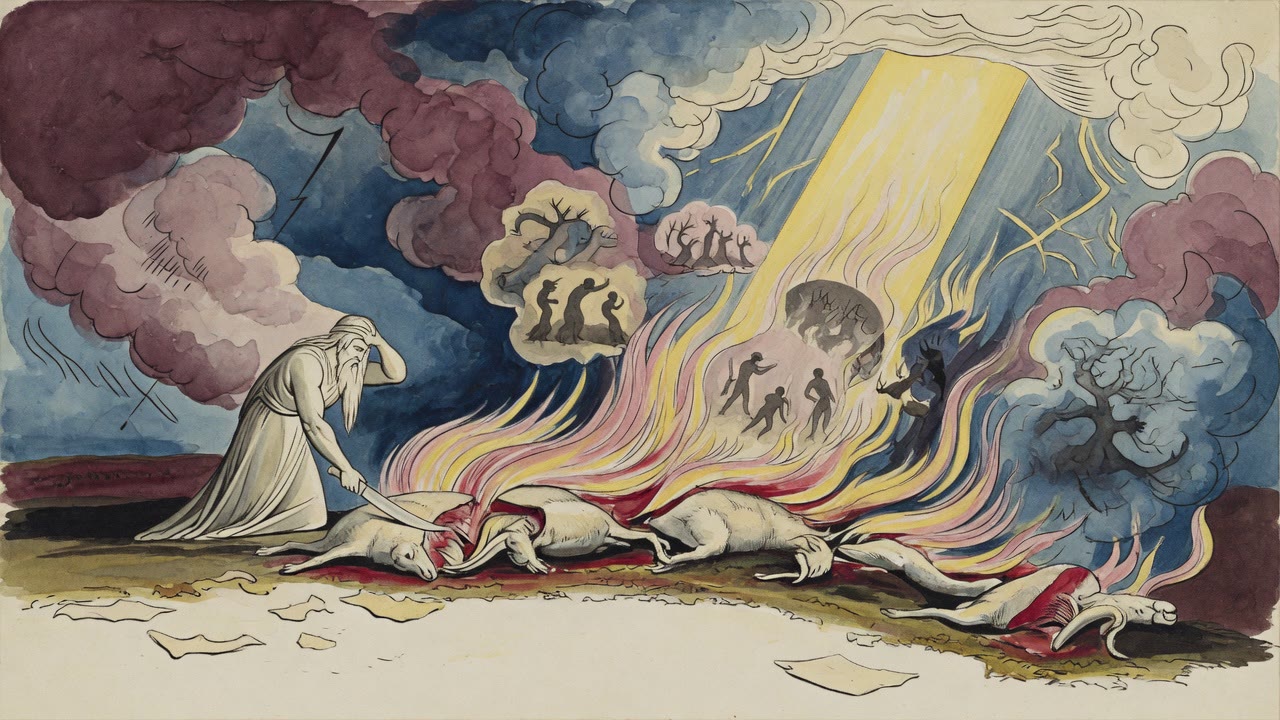
Princesses on the rooftops threw bracelets down to make Joseph look up. He kept his eyes on the road. His family later threw their gold into a fire.
Table of Contents
 Click for full size
The Daughters of Princes Threw Gold Down at Him
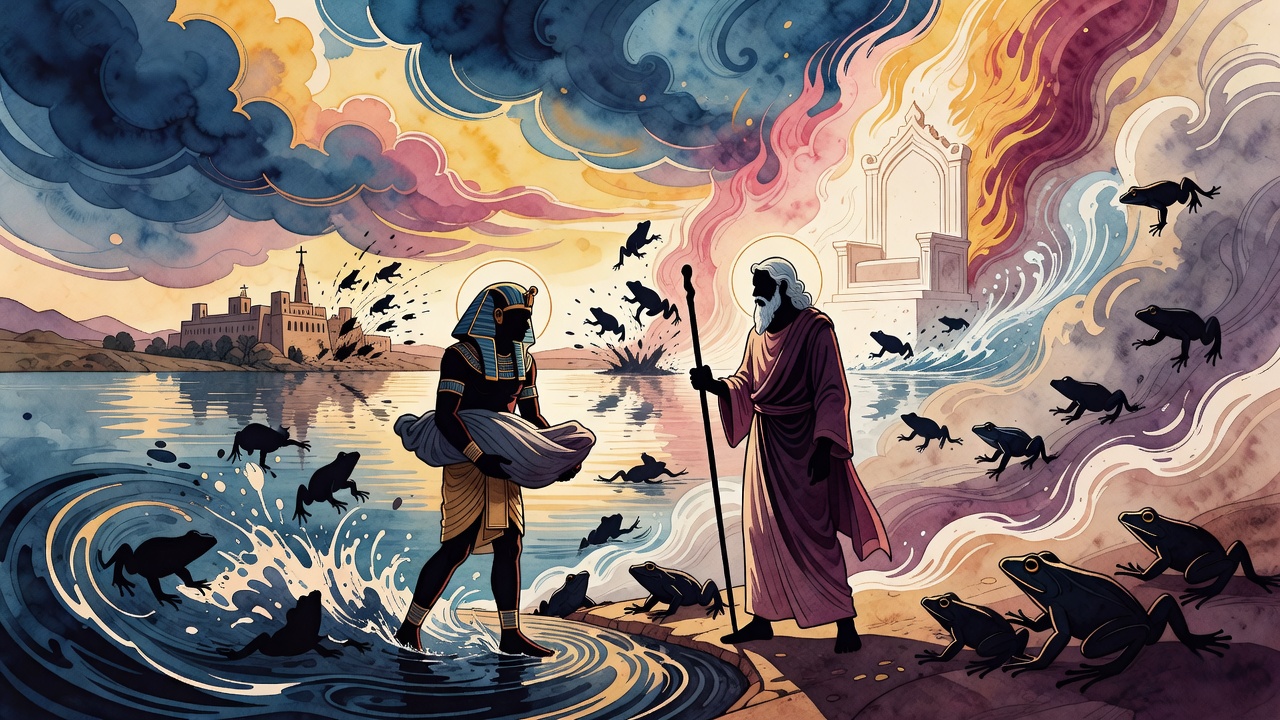
They climbed onto the flat roofs when the viceroy's chariot came through, the daughters of Egypt's great houses, and they threw jewellery into the street. Bracelets. Neck chains. Good gold, thrown at a man's feet for one reason, which was to make him look up and find out who had thrown it.
Joseph kept his eyes on the road ahead of the horses. Every time. The Aramaic paraphrase of Jacob's deathbed blessing says he would not lift his eyes toward a single one of them, and gives the reason in his own voice: he did not want to stand guilty on the great day of judgment.
Old Jacob, dying, blessed that son for none of the things a father usually praises. Not the dreams. Not the granaries. Not the twenty years of power. He blessed him for a refusal. You were strong against the pull of sin, he said, and you beat every magician and wise man in Egypt without a weapon, and when they went to Pharaoh with lies about you, you put your hope in God and outlasted them. So take the blessing my fathers gave me. And because of what your eyes would not do, you are the father of two tribes instead of one.
The Cure at Marah Was as Bitter as the Water
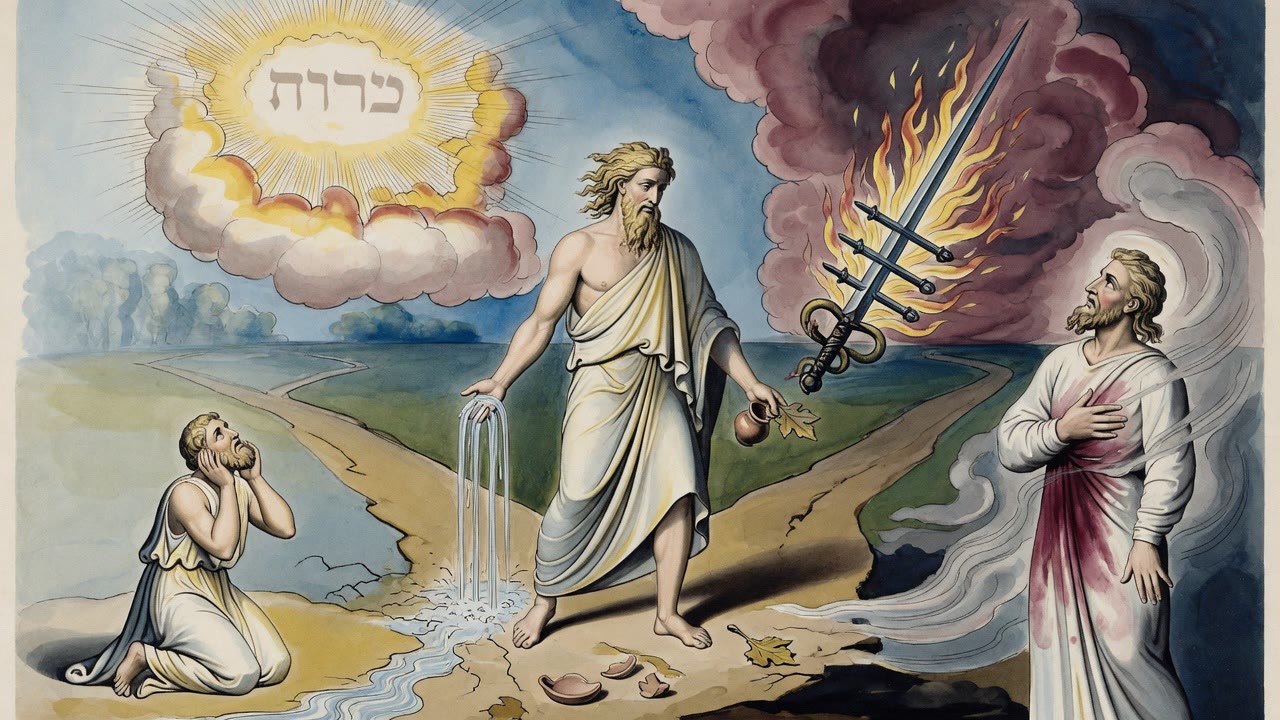
Three days past the sea, the people were licking dry lips and saying things they would regret. Moses did not make a speech out of the prayer. He asked God to overlook what frightened men had shouted, and to give them something to drink, and he kept it short, and the answer came back at the same speed.
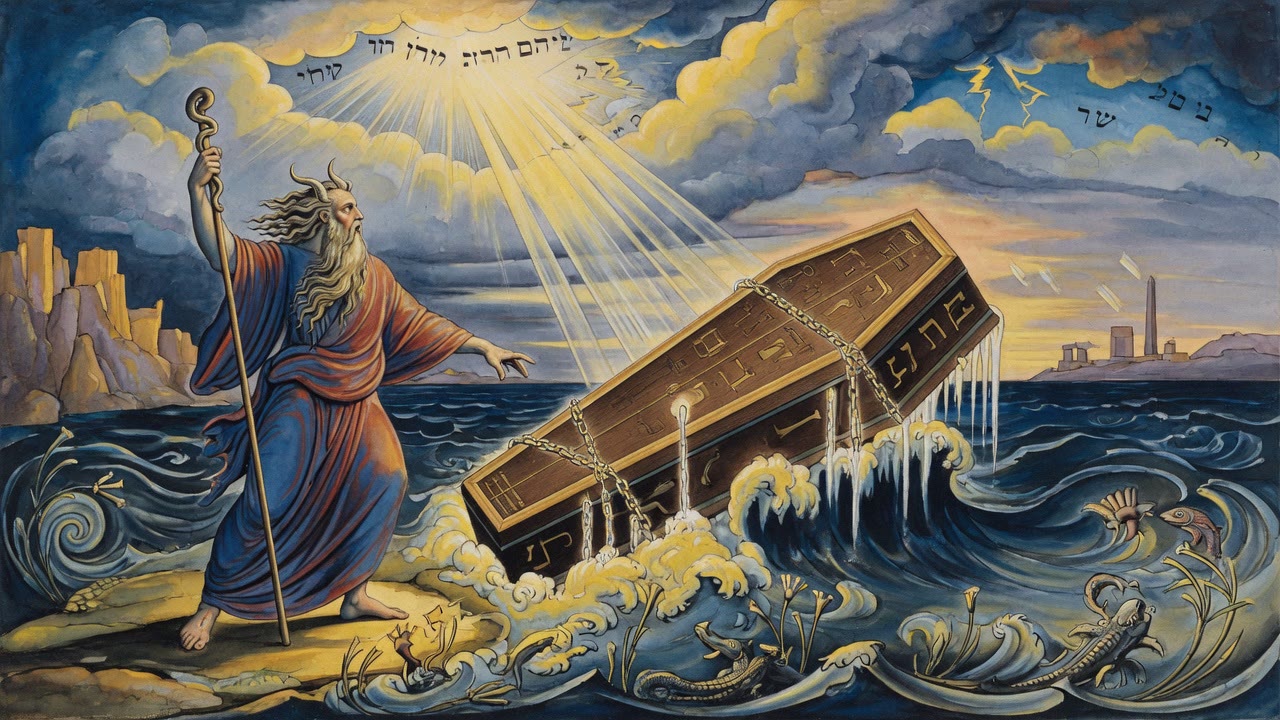
Take a piece of a laurel tree. Write the great Name on the wood. Put it in the water.
A man sweetens a bitter thing by adding something sweet to it. God sweetened the pool at Marah by throwing in a branch as bitter as the pool. The people drank, and then they came back to Moses and said they had sinned in complaining about water. God kept them standing there and handed them the Sabbath, the marriage laws, and the civil code on the spot, and told them that if the diseases of Egypt ever came near them, He would be their physician.
God Blamed Moses for the Crowd He Had Let In
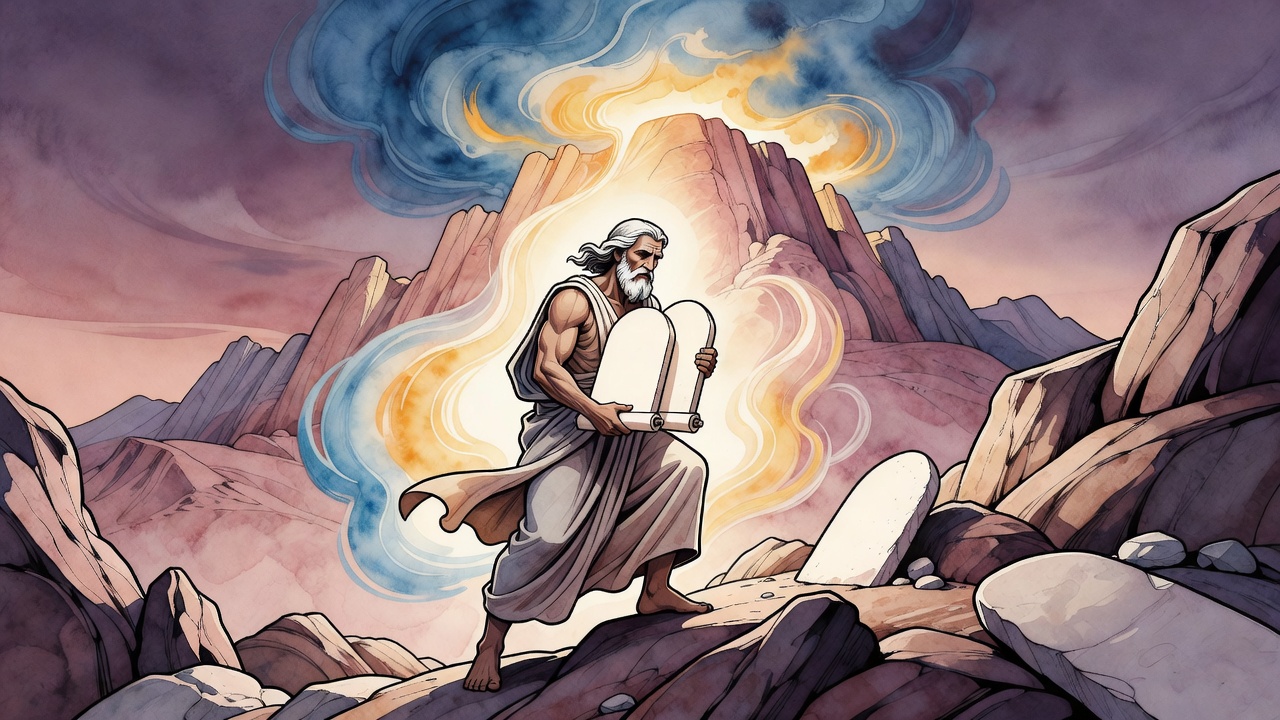
The calf came later, and the argument on the mountain went badly for Moses before it went well.
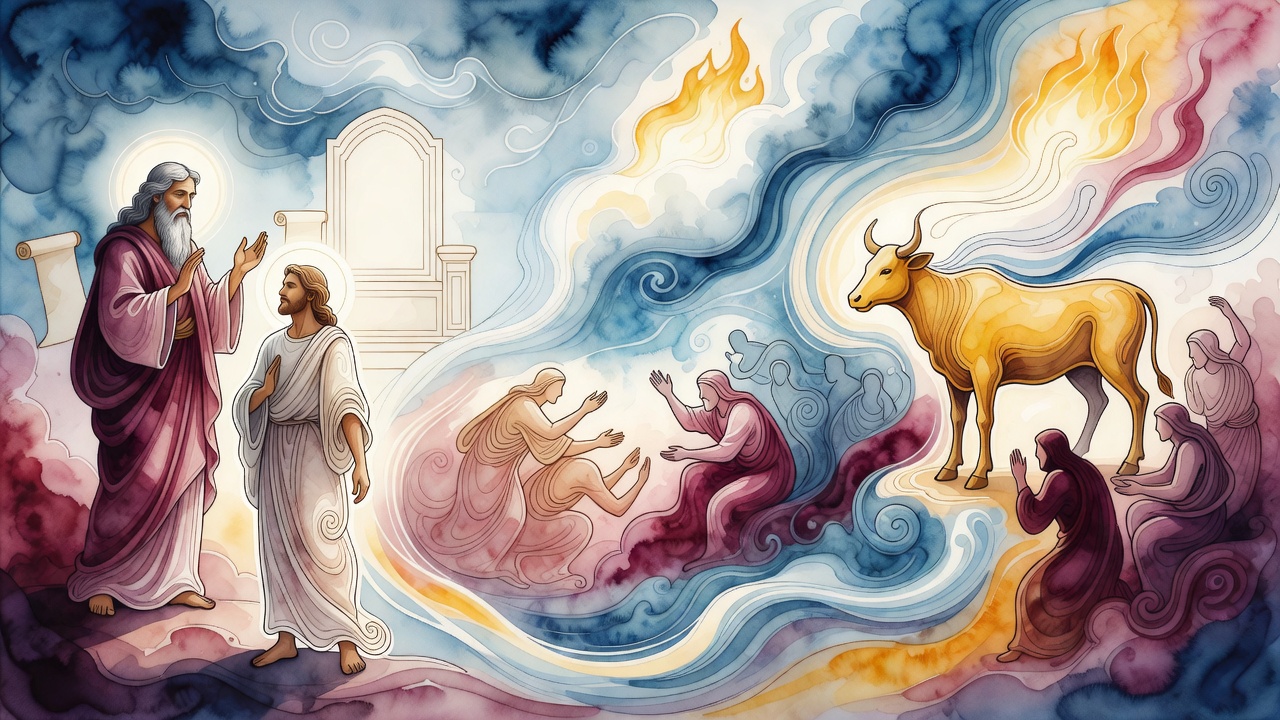
I told you in Egypt to bring the people out, God said. I did not tell you to bring the mixed multitude with them. You stood there and talked Me into it, all mercy and modesty, and I gave in knowing exactly how it would end. Your people made that calf. Yours.
Moses ran out of things to say and got ready to stop asking. Then God spoke gently, because He had never meant to destroy them and only wanted to hear the man argue. Even in Egypt I could see what they would do afterward, He said. You saw Sinai coming. I saw Sinai and the calf both.
Moses took that as an opening and pushed. Lord of the world, they have set up a rival to You. The calf will summon the stars and the moon while You bring up the sun. You send the dew and he sends the wind. You send the rain and he calls the plants out of the ground.
You are as confused as they are, God said. The thing is nothing at all.
Moses had him. Then why is the Almighty angry with His people over a nothing?
Moses Wrapped His Robe and Sat Down as a Court
God fell back on the oath. I have sworn that whoever sacrifices to any god but the Lord is to be destroyed, and once a word leaves My mouth I do not take it back.
You gave us a law for that, Moses said. A learned man can release a person from a vow. And any judge who wants his rulings honored has to live under the rulings he issues. You wrote the law of release. Now put Yourself under it and let me release You.
He did not wait for permission. Moses pulled his cloak around him the way a judge robes, sat himself down, and convened a court of one on the mountain with God standing before it. He told God what a petitioner says. Say that You regret the harm You intended for Your people.
God said it.
Then Moses gave the ruling out loud, the formula any village court would use. You are released from Your oath and from Your vow.
A King Counts His Sheep After the Wolves
Moses came down the second time with light coming off his face, and the people were not comforted by it.
We were brought low over what we did, they said. You tell us we are forgiven. You were brought low with us, and now we can see You raised up again, and we are still down here.
He went straight back up with it. When You humbled them You humbled me. If I am lifted, lift them.
So count them, God said. Let the world see how close to Me they are. Moses asked why Israel and no one else, out of all the nations. Because the others are not Mine, God said, and a man values most the property he paid the most for.
Moses had one objection left. You promised Abraham his children would be like the stars. Am I to stand in the sand and number the stars? So God gave him a shortcut, the letters of the tribal names added up, and the sum came out at six hundred thousand less the three thousand the plague had taken after the calf.
That was the reason for the counting. A king hears that wolves have been in among his flock. He does not go out and look at the wolves. He sends word to the shepherds to count the sheep, so he knows what it cost him.
← All myths