5 min read

Samael Blocked Moses From Prayer for Egypt

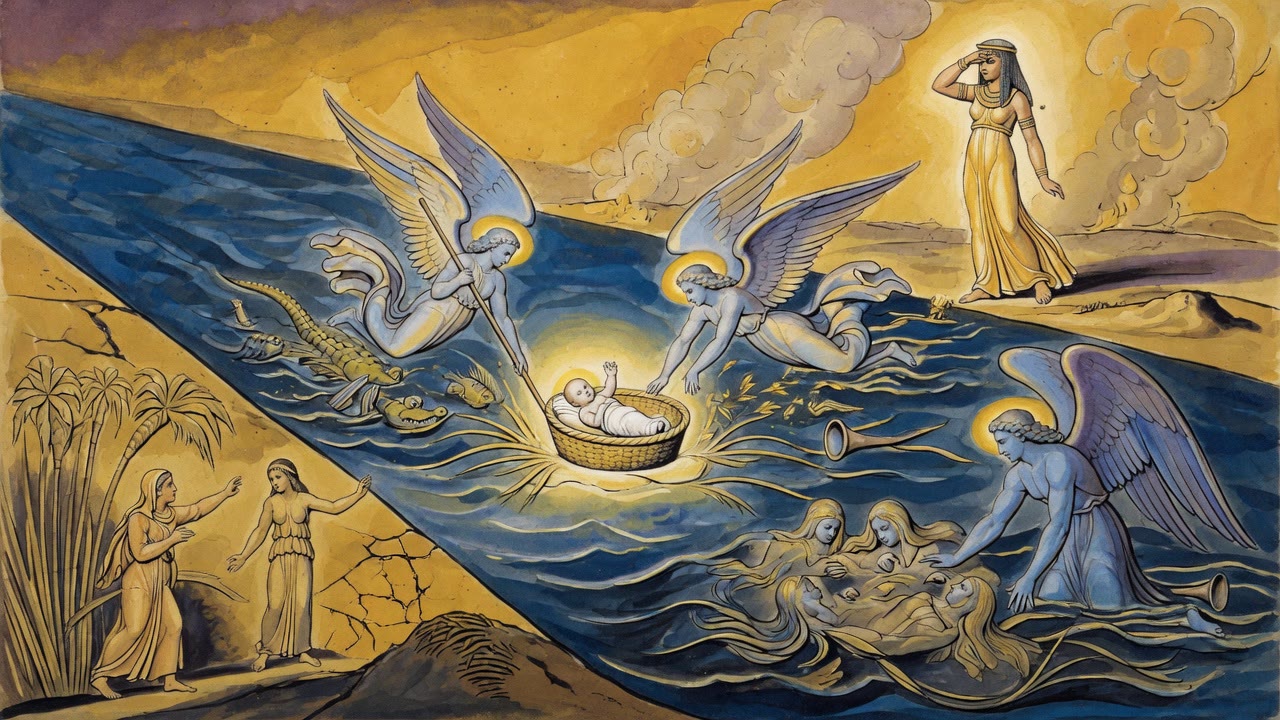
Egyptian parents hid firstborn sons in Hebrew homes, but the decree found them. Years later, Samael stood between Moses and prayer.

Curated by Arthur · Told by Maggid ·
Table of Contents
  1. Children Crossed the Threshold
  2. Peace Was Whispered Before Sleep
  3. The Decree Found the Firstborn
  4. Samael Stopped Caleb's Mouth
  5. The Multitude Could Not Open the Gate

The Egyptian parents did not laugh at Moses that night.
\n

They had heard enough. The Nile had turned. The fields had broken. Darkness had sat over Egypt like a sealed room. When Moses warned that the firstborn would die, some parents believed him. Belief came late, but terror moves quickly. They took their sons by the hand and led them to Hebrew doors.

\n

Children Crossed the Threshold

\n

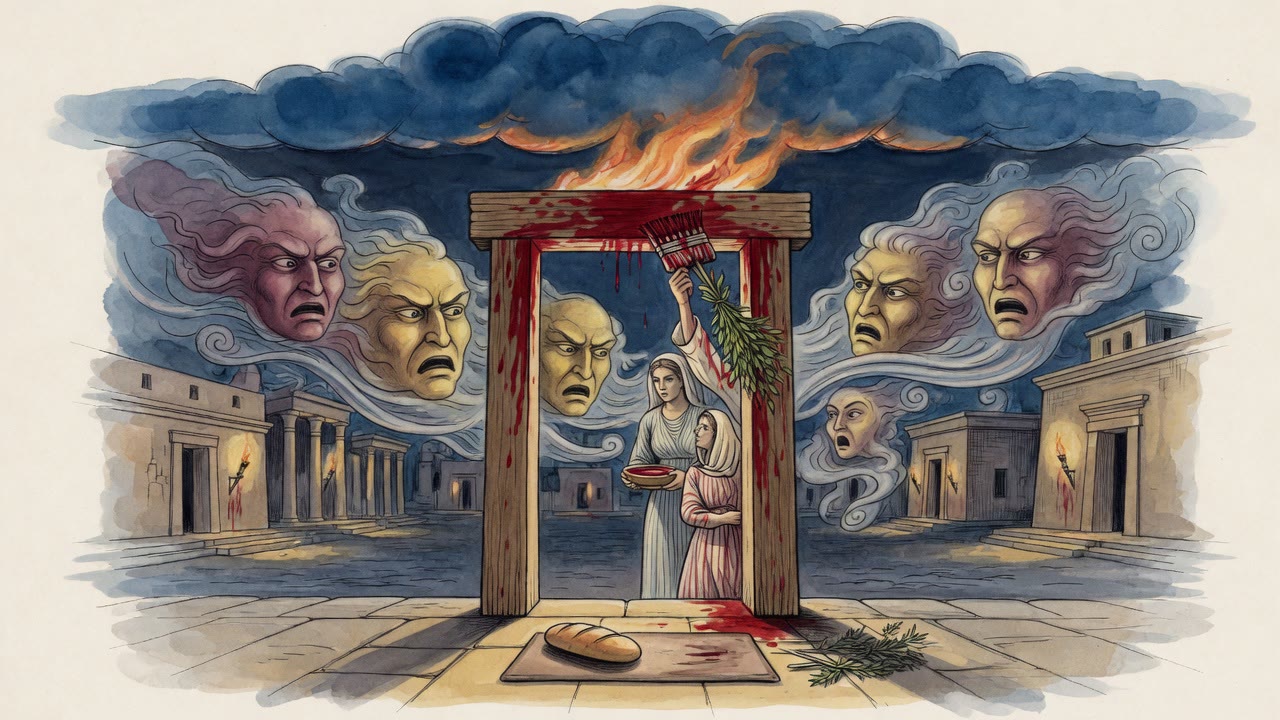
Those houses had belonged to slaves. Now Egyptian fathers and mothers stood outside them with the one child they could not lose. Their plan was simple and desperate. If death passed over the houses of Israel, let the firstborn of Egypt sleep inside one of those houses. Let the roof count. Let the doorway count. Let proximity to the protected people bend the decree.

\n

Inside, the Hebrew household made room. A mat on the floor. A corner near the wall. A child who had grown up on the other side of power lay down beside children whose parents had made bricks for Pharaoh. The night pressed close against every door.

\n

Peace Was Whispered Before Sleep

\n

Israel did not sleep as if nothing moved outside. They prayed before lying down. They asked the Lord their God to let them rest in peace, to remove Ha-Satan, the Accuser, from before them and behind them, and to guard their going out and coming in for life and peace.

\n

That prayer was not a charm against God. It was a plea for shelter inside God's own judgment. Ha-Satan does not stand as another power against Heaven. The Accuser works in the court, at the edge of danger, wherever a decree opens a place for blood. Israel asked to be guarded on both sides because the night had teeth on both sides.

\n

The Decree Found the Firstborn

\n

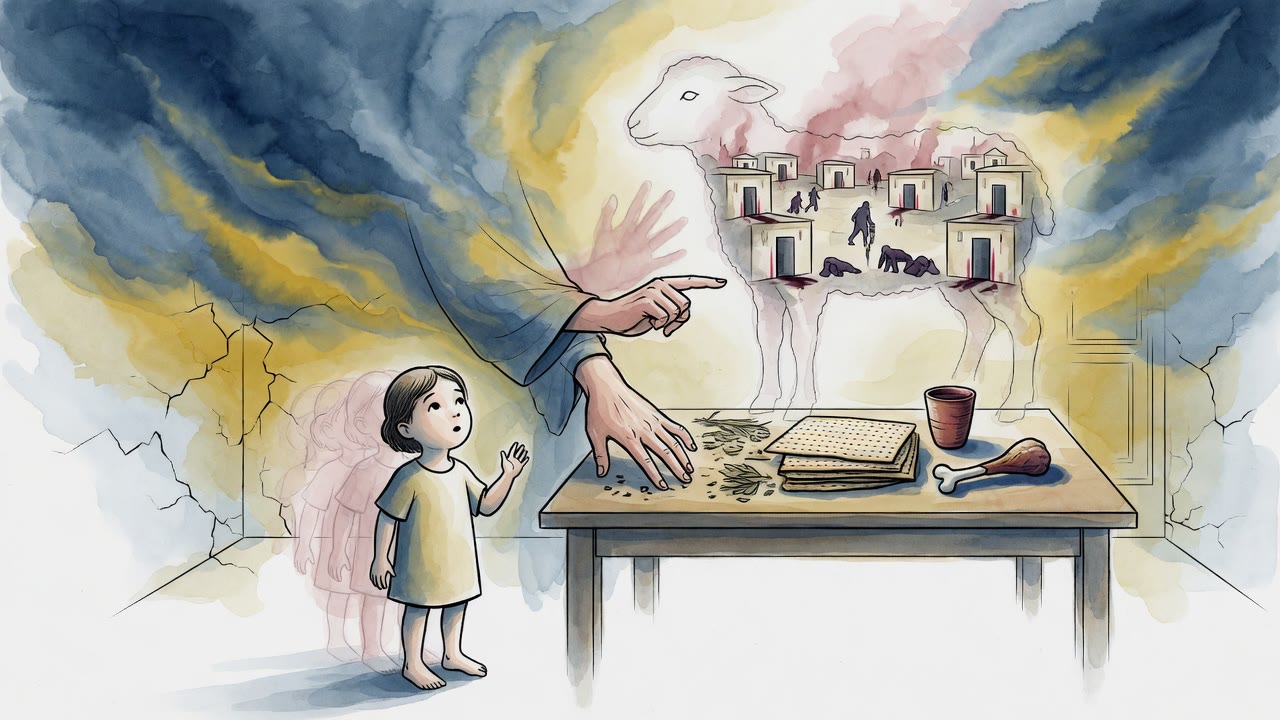
Morning came with the terrible quiet that follows a cry too large to continue. Israelites rose from sleep and found Egyptian children dead beside them.

\n

The houses had been spared, but the fugitives had not. A Hebrew roof did not rewrite the sentence. A borrowed mat did not make an Egyptian firstborn into an Israelite child. The parents had trusted the right warning and chosen the wrong refuge. Their sons had crossed the threshold alive. They did not cross back.

\n

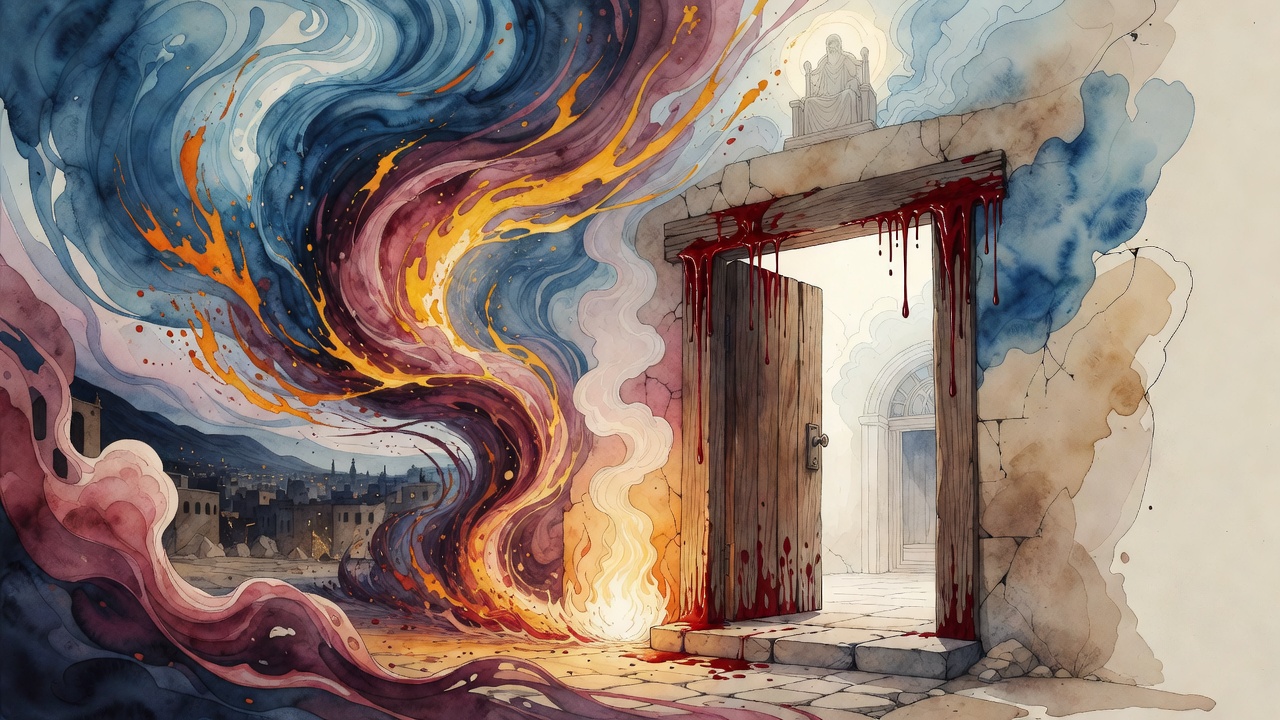
Outside, Egypt broke open in mourning. Inside, Israel had to step around bodies that had been entrusted to them. Freedom did not arrive clean. It came with blood at the door, shoes ready for flight, and dead children lying beside the living.

\n

Samael Stopped Caleb's Mouth

\n

Years later, Moses stood near the land he had carried in his mouth for forty years. He had spoken it to slaves. He had promised it in wilderness dust. He had buried a generation on the way to it. Now the hills of the Land of Israel were close enough to ache, and the decree against him still stood.

\n

He turned first to Caleb. Caleb knew how to stand against a crowd. Caleb had seen the land when the other spies melted Israel's courage. If one man's prayer could force a crack in the sentence, Moses could trust Caleb to speak.

\n

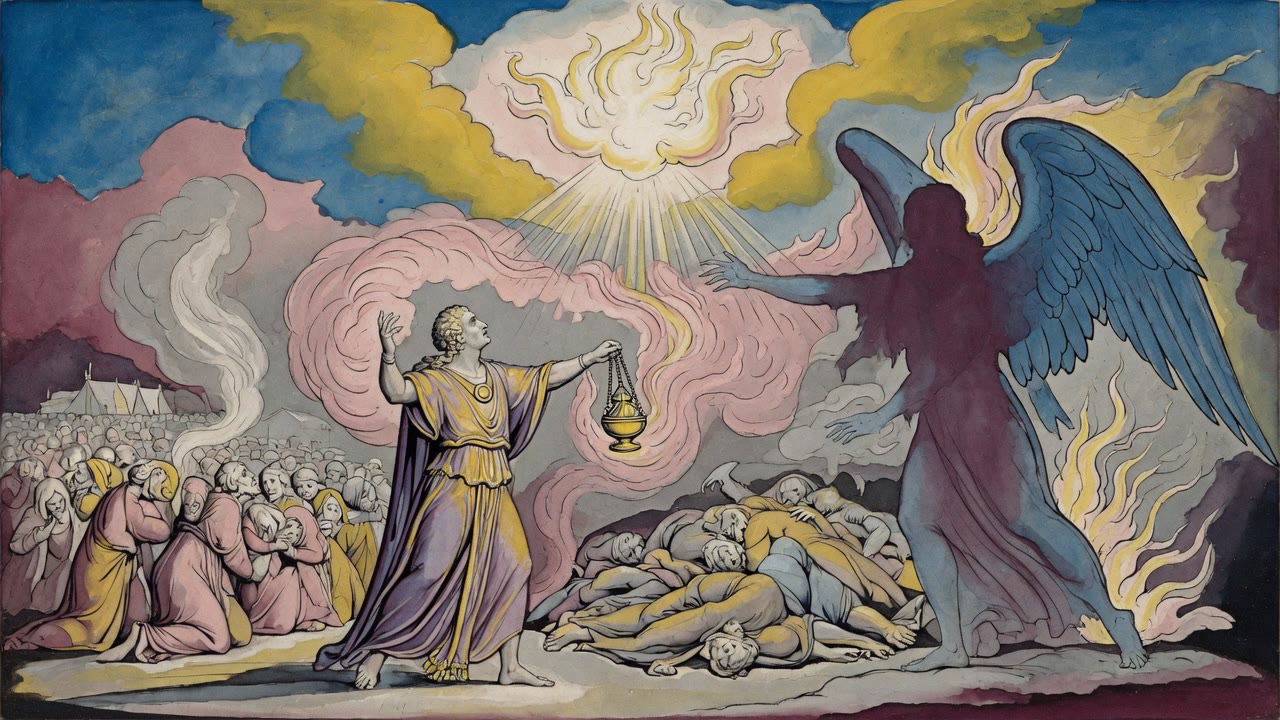
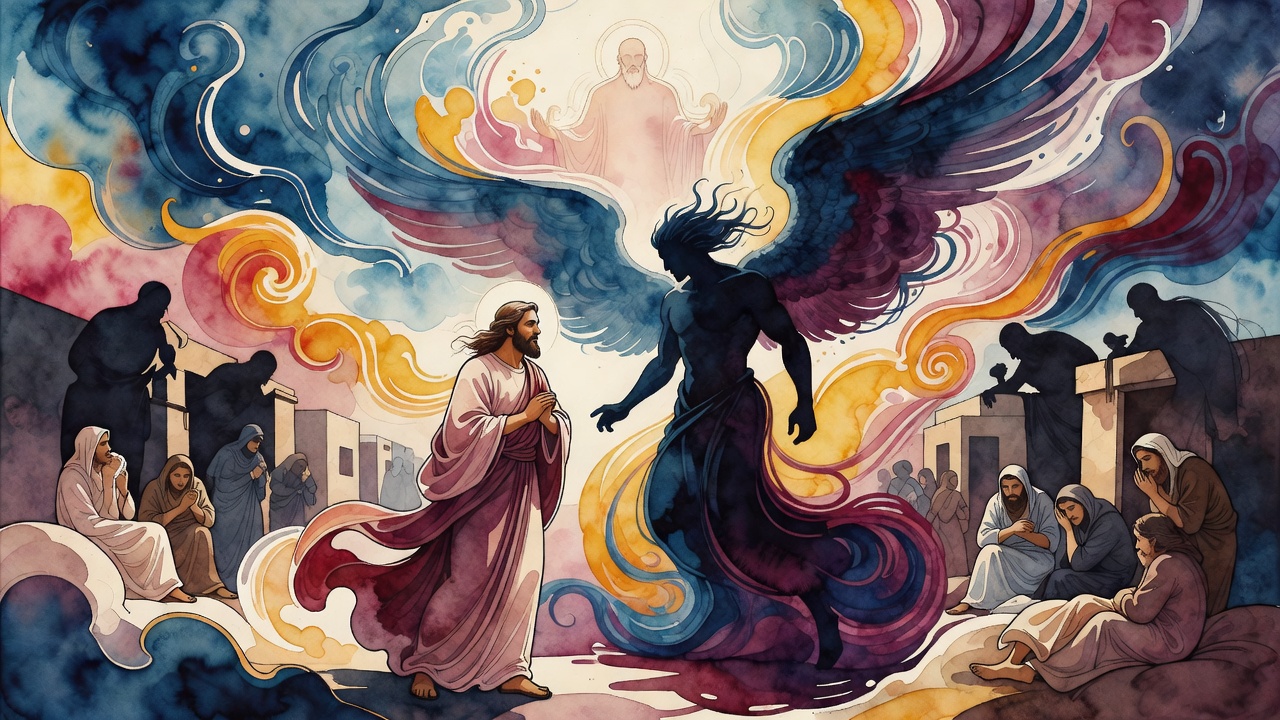
Samael moved first. The angel of death blocked Caleb from prayer. The mouth that might have pleaded stayed shut. Moses had faced Pharaoh, sea, hunger, thirst, rebellion, and the wrath of Heaven. Now the obstacle was silence in the throat of an ally.

\n

The Multitude Could Not Open the Gate

\n

Moses went wider. He turned to the seventy elders and the leaders of the people. Then to every man in Israel. He reminded them of the wrath that once burned against their fathers and how he had stood in the breach until God relinquished destruction and forgave them. He asked them to go to the sanctuary and plead for him.

\n

He knew the strength of many voices. \"God never rejects the prayer of the multitude,\" he said. The people owed him breath for breath. He had prayed them out of annihilation. Now he asked them to pray him across a border.

\n

But the gate held. Samael had already shown where the battle would be fought: not with sword or plague, but at the mouth of prayer. In Egypt, the Accuser moved through a night of firstborn death while Israel begged for peace before sleep. At the edge of the land, Samael closed Caleb's prayer before it began. Moses remained outside, with the land near enough to see and too sealed to enter.

\n

← All myths

From the tradition

Sources

2 sources

The texts this telling draws on, in full. Open a card to read inline, or expand it for a wider, quieter read.

Legends of the Jews 4:333Legends of the Jews

Legends of the Jews turns to Signs and Wonders of Moses of Egyptians.

The Torah tells us of the plague that finally broke Pharaoh's stubborn will. But the Legends of the Jews, that incredible compilation of rabbinic stories and lore gathered by Louis Ginzberg, gives us a glimpse into the heart-wrenching choices some Egyptians made.

Being an Egyptian parent, hearing the warnings of Moses, seeing the devastation of the previous plagues. You might have started to believe, just a little, that maybe, just maybe, Moses spoke the truth. The Legends tell us that some Egyptians did believe. So what did they do?

Desperate to save their firstborn, they sent them to their Hebrew neighbors, hoping that God would spare any house sheltering a child of Israel. It’s an act of incredible faith, born of unimaginable fear. Placing your child, the most precious thing in your life, into the hands of those you’ve enslaved, trusting in the power of a God you don’t fully understand.

But here’s the truly devastating part. The Legends continue: in the morning, when the Israelites awoke, they found the corpses of these Egyptian children beside them.

Can you imagine the horror? The shock? The grief?

According to the Legends, this wasn't just some random occurrence. It was the work of Satan himself, causing "frightful bloodshed among the Egyptians." It adds a whole other layer to the story. This wasn’t just about divine justice; it was a cosmic battle between good and evil. A terrifying night.

And what were the Israelites doing while all this was unfolding?

The Legends tell us they were praying. Praying for peace, for protection. The prayer they recited before sleep that night, "Cause us, O Lord our God, to lie down in peace, remove Satan from before us and from behind us, and guard our going out and our coming in unto life and unto peace," speaks volumes. It’s a prayer for divine protection, a plea against the chaos and violence swirling around them. It’s a prayer for shalom, for wholeness, in the face of utter devastation.

It makes you wonder: what price freedom? The Exodus is a story of liberation, of the triumph of good over evil. But as we learn from the Legends, it’s also a story steeped in tragedy, a reminder that even in moments of great triumph, there can be profound loss and suffering. It's a reminder to pray for shalom in a world that so desperately needs it.

Full source
Legends of the Jews 6:149Legends of the Jews

Remember how Moses desperately wanted to lead the Israelites into the Promised Land? We've talked about that burning desire before. But Samael (the angel of death), that ever-present adversary, was determined to stop him.

The story goes that Moses, nearing the end of his life, pulled out all the stops. He first turned to Caleb for help. Caleb, a righteous man, surely his prayers would have some weight. But according to Legends of the Jews, Samael intervened, blocking Caleb from even uttering a prayer.

What do you do when even your best ally is thwarted? Moses didn’t give up. He then went to the seventy elders, the leaders of the people. He implored them, he begged them to pray. He even reached out to every single Israelite man.

Can you hear the desperation in his voice?

"Remember the wrath," he urged them, "which the Lord nursed against your fathers! It was I who brought it to pass that God relinquished His plan to destroy Israel, and forgave Israel their sins!" He’s reminding them of his past service, of the times he stood between them and divine wrath.

He continued, "Now, I pray ye, betake yourselves to the sanctuary of God and exhort His pity for me, that He may permit me to enter into the land of Israel, for 'God never rejects the prayer of the multitude.'"

Moses knew the power of collective prayer. He understood that a chorus of voices, united in purpose, could move mountains. Or in this case, sway the divine will. The idea that "God never rejects the prayer of the multitude" is powerful. It speaks to the strength of community, the idea that together, we can achieve what we cannot alone.

But did it work? Did the collective prayer of the Israelites break through Samael's interference? That, my friends, is a story for another time.

But for now, consider this: What battles are you facing where you might need to call upon the collective strength of your community? Where might a chorus of voices make all the difference? It's a powerful idea to contemplate.

Full source