5 min read

Egypt's Grain Dreams Burned Under Fiery Hail

Joseph once saved Egypt by reading dreams of grain. Generations later, fiery hail burned through the same land and left wheat standing.

Curated by Arthur · Told by Maggid ·
Table of Contents
  1. The Dream Filled the Storehouses
  2. Fire Entered the Ice
  3. The Field Became a Trap
  4. The Trees Fell Like Cut Wood
  5. A Liar Claimed Another Birthplace

Egypt did not always refuse a Hebrew voice.

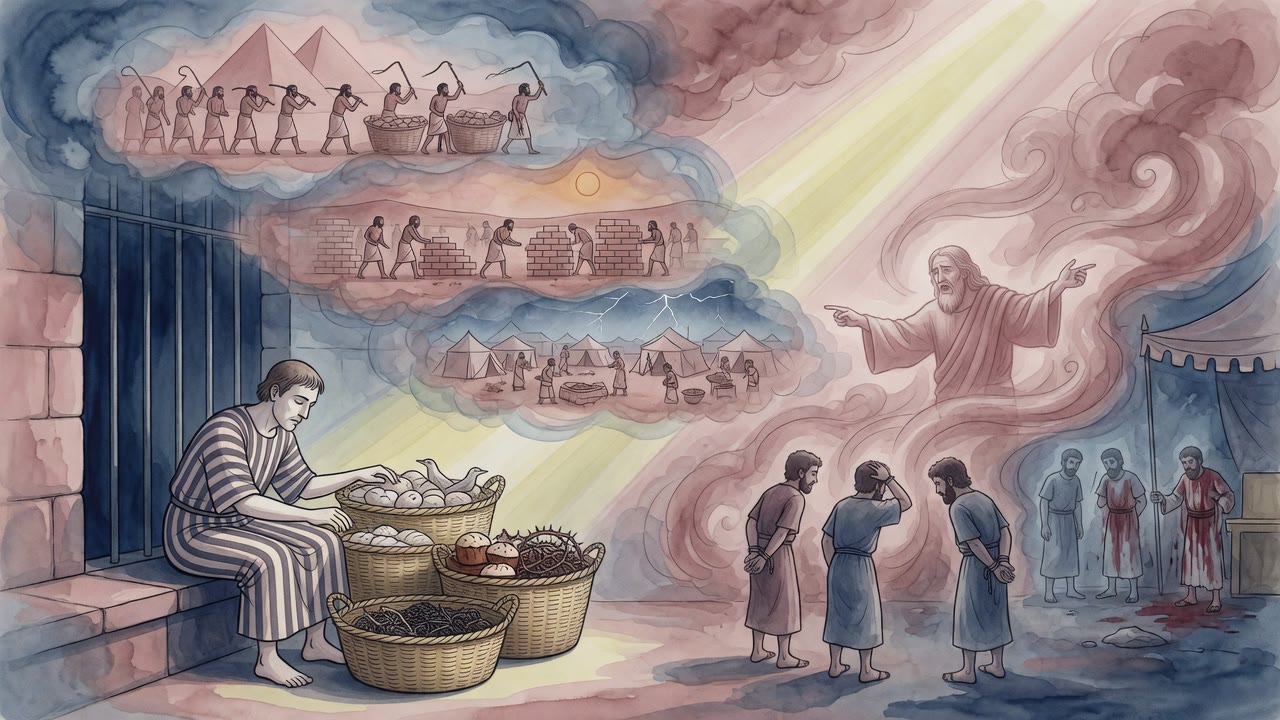
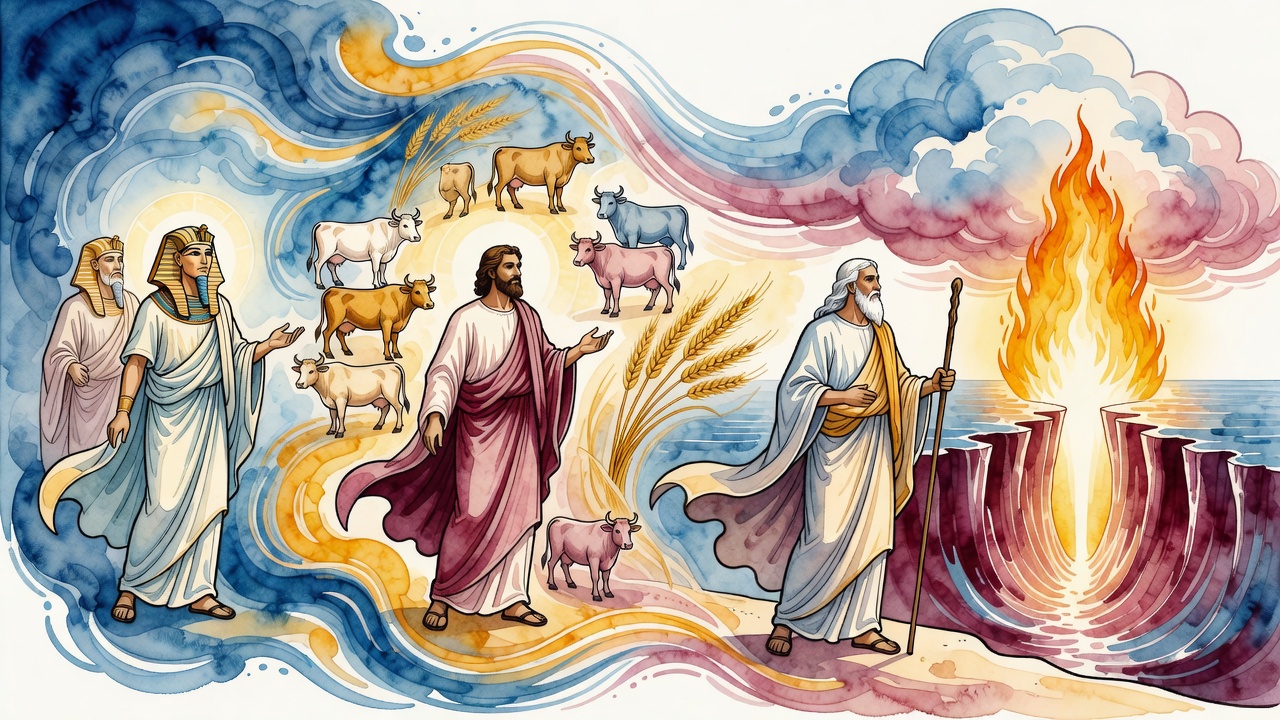
Joseph stood before Pharaoh with prison still clinging to him. The king had dreamed of cows and grain, fatness swallowed by hunger, plenty devoured by emptiness. Joseph listened, then named the years before they arrived. Seven years would fill the land. Seven more would strip it bare. The palace heard him, and Egypt moved.

The Dream Filled the Storehouses

Granaries opened their mouths across the country. Wagons rolled in from fields shining under good sun. Scribes counted. Overseers sealed bins. Grain rose in heaps so high that ordinary counting began to fail. Egypt survived because one Hebrew knew how to read a dream before famine learned its own name.

The same fields that fed Pharaoh's empire became a net for Joseph's brothers. Hunger pushed them down from Canaan. Fear bent their backs before the man they had sold. The storehouses did more than preserve Egypt. They pulled Jacob's house into the place where Israel would grow numerous, then bitter, then enslaved.

Fire Entered the Ice

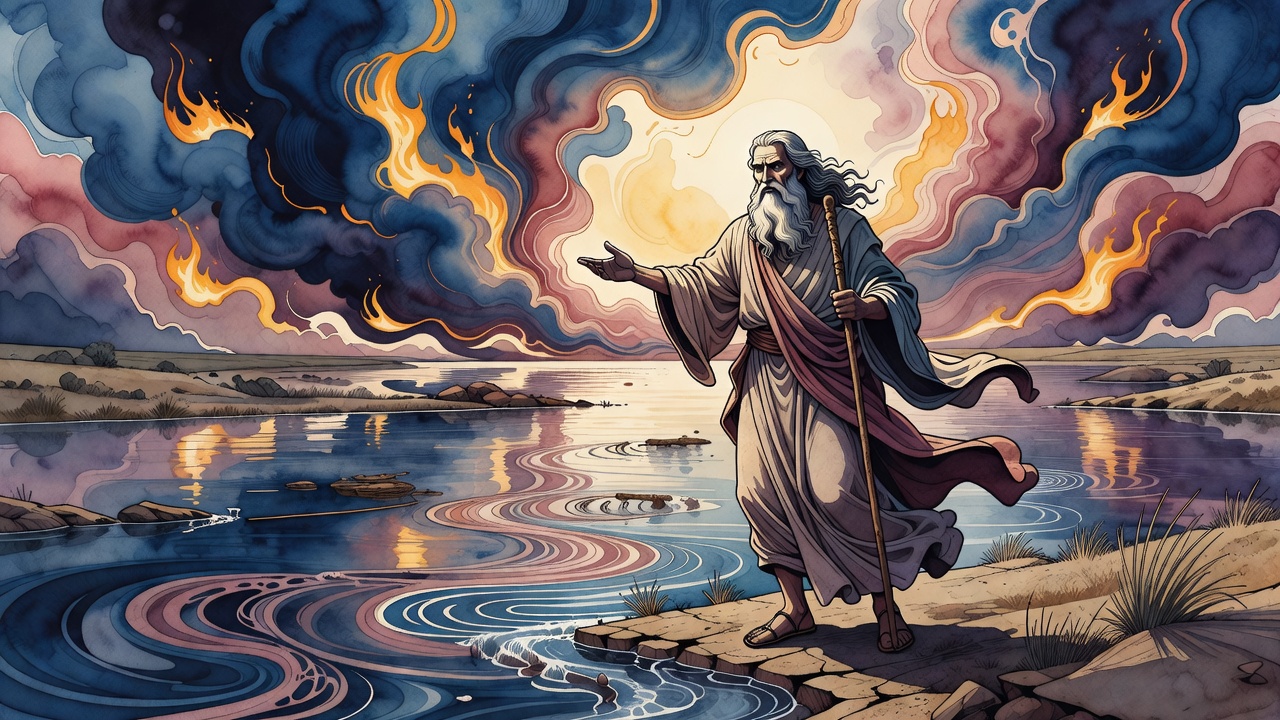
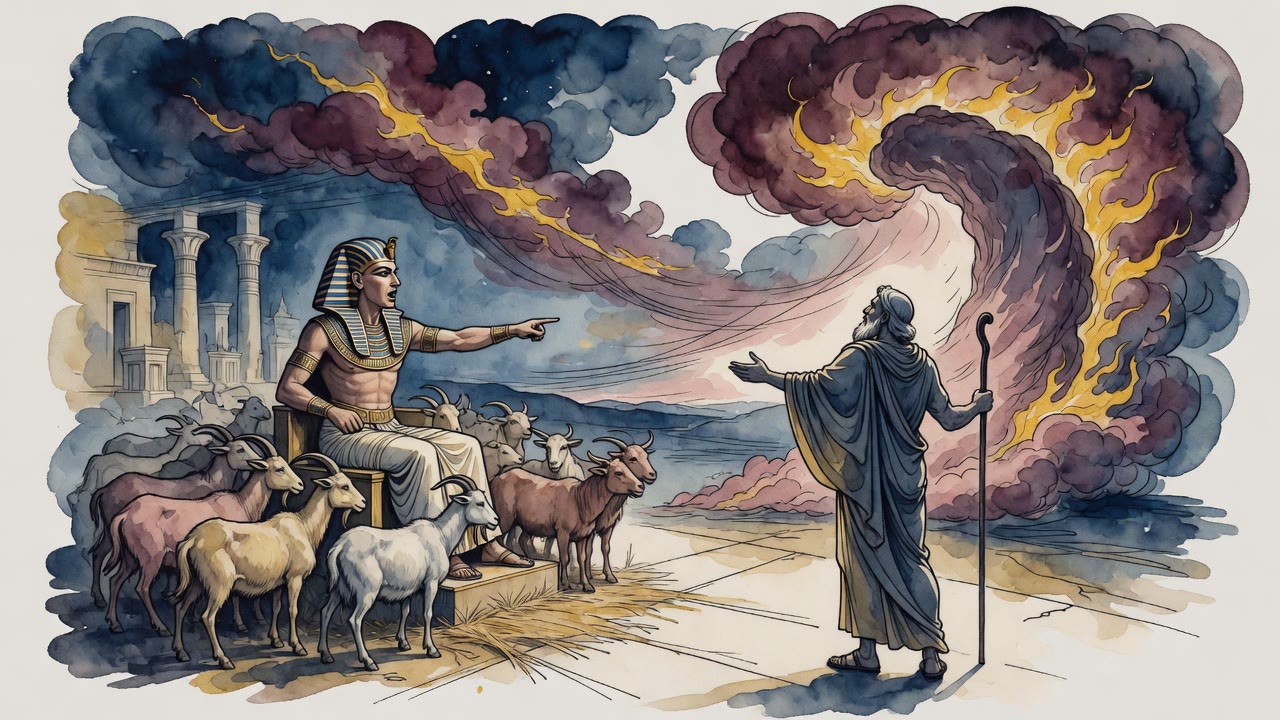
Generations later, another Hebrew voice stood in Pharaoh's court. This time Egypt did not build granaries. It hardened itself. Moses warned of hail such as Egypt had never known, and the sky answered with a thing that should not exist.

Fire lived inside ice.

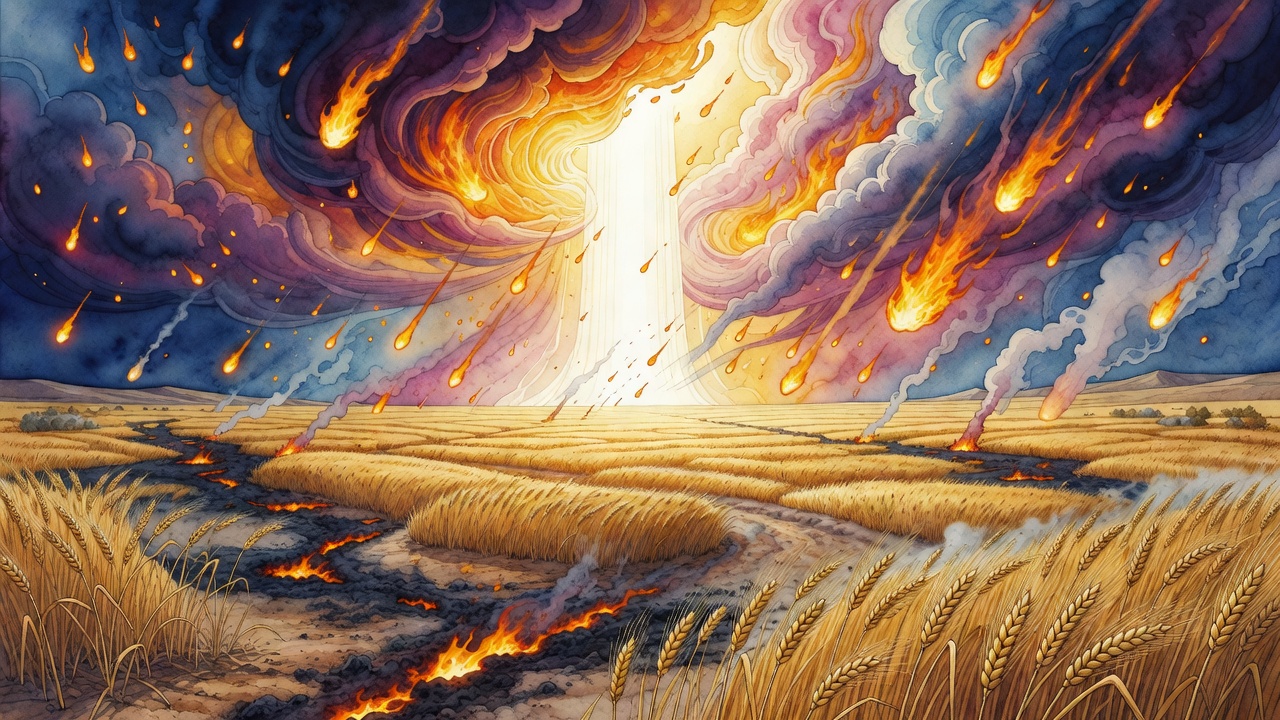
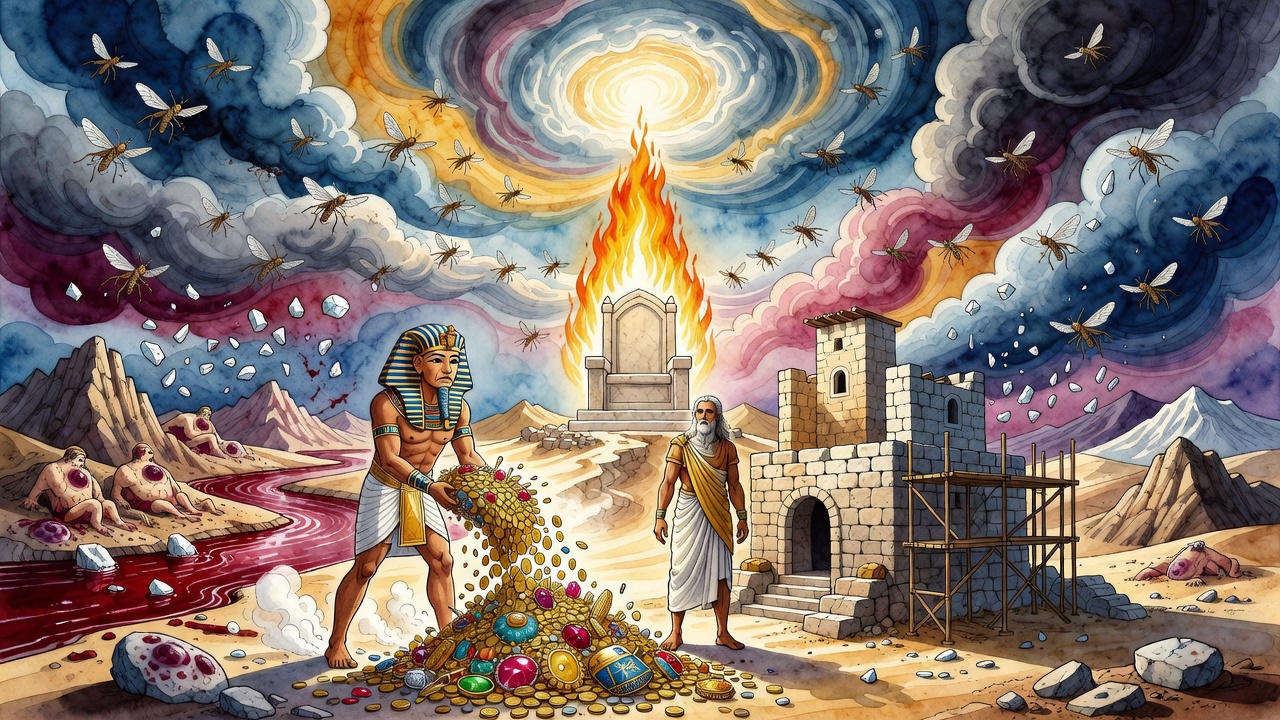
Water usually smothers flame. Flame usually consumes what holds it. In that storm, they made peace for judgment. Each hailstone carried fire as a wick burns inside oil, bright and hidden until impact. The stone fell cold from heaven, struck flesh, and opened into heat. The field became a furnace made of frozen stones.

The Field Became a Trap

Men ran for shelter. Animals bellowed in the open. Some bodies were crushed by hail. Others were seared by the fire inside it. For those caught under the storm, there was no safe side of the stone. Cold broke bone. Heat ate flesh. One blow carried both punishments.

The hail did not finish when it landed. It piled itself into walls across the land. Carcasses lay where they fell because the living could not move them. When Egyptians managed to cut meat from dead animals and carry it home, the road turned against them too. Birds of prey dropped from above, tore the salvaged flesh from their hands, and vanished with it.

The Trees Fell Like Cut Wood

The vegetation suffered worse than man and beast. Hail hammered the trees like an axe swung from heaven. Branches split. Trunks cracked. Fields that once bowed under Joseph's grain now lay open, splintered, and smoking.

Still, not every stalk died. Wheat and spelt remained. Their survival was not common mercy or ordinary weather. The storm had orders. It struck what it was sent to strike and left what it was told to leave. Egypt had once lived because grain was gathered before famine. Now Egypt watched grain stand after fire and ice had passed through the field.

The spared stalks made the storm more frightening, not less. Blind ruin destroys everything. Commanded ruin chooses, and Egypt had to walk past the proof still rooted in the mud.

A Liar Claimed Another Birthplace

Long after the hail melted and the ashes sank into soil, a man named Apion tried to seize the Exodus with his mouth. He was born in Oasis, in Egypt, but claimed Alexandria as though a better birthplace could wash him clean. He mocked the departure from Egypt and twisted it into a cheap invention. He wanted the shame to land on Israel, not on the land that had watched its gods fail.

He even used kinship like a weapon. If Egyptians claimed relation to Jews, it could sound like praise, or it could drag Israel into Egypt's own disgrace. Apion chose the uglier use. He offered the Alexandrians an insult dressed as gratitude, smearing Jews and Egyptians in the same breath.

His lie had the same shape as Pharaoh's refusal. Both wanted Egypt without judgment. Both wanted power without memory. One ruler closed his ears while hail gathered in the clouds. One writer closed his past and called it history. The stones fell only once, but the field kept answering. Grain, fire, ice, and a liar's borrowed birthplace all stood in the same witness box.


← All myths

From the tradition

Sources

3 sources

The texts this telling draws on, in full. Open a card to read inline, or expand it for a wider, quieter read.

Legends of the Jews 4:311Legends of the Jews

They're opposites. Always battling it out. But in one of the most dramatic stories in the Torah, the Exodus from Egypt, we see them working together in a truly terrifying way.

I'm talking about the plague of hail.

The Torah tells us about the devastating hail that fell upon Egypt (Exodus 9:18-26), but the Legends of the Jews, that amazing collection of rabbinic stories compiled by Louis Ginzberg, really brings the event to life. It paints a picture far more vivid than you might imagine.

Here's the thing: this wasn't just any hail. According to the legend, it was hail infused with fire! The Zohar, that foundational text of Jewish mysticism, tells us that fire rested inside the hailstones, like a burning wick floating in oil. The water couldn't extinguish the flame, and that, my friends, is a miracle in itself.

Can you imagine the horror? The Egyptians were caught between freezing ice and searing flames. Whether struck by the hail or the fire, their flesh was burned. The bodies of those killed by the hail were even consumed by the fire, according to Ginzberg's retelling.

It was utter devastation.

And it didn’t stop there. The hailstones piled up like a wall, making it impossible to clear away the dead animals. Imagine trying to salvage what you could, only to have birds of prey swoop down and snatch it away! Midrash Rabbah, a collection of rabbinic interpretations of the Torah, adds this gruesome detail.

But the vegetation… oh, the vegetation suffered even more. The hail came down like an axe, shattering the trees. A complete and utter destruction. It makes you wonder, doesn't it, about the sheer power being unleashed?

There was, however, one small mercy. The wheat and the spelt were spared. That they weren't crushed, Ginzberg tells us, was nothing short of a miracle. A tiny spark of hope amidst the overwhelming destruction.

So, what are we to make of this? Is it just a fantastical story meant to scare us? Or is there something deeper here? Perhaps it's a reminder that even in the midst of chaos and destruction, there's always the possibility of redemption. A little bit of wheat spared, a little bit of hope remaining. Maybe that's the real miracle.

Full source
Against Apion 3:1Against Apion

Apion was an Egyptian, and he spun a wild yarn about the Jews' exodus from Egypt. Josephus calls it a "novel account," which is a polite way of saying it was complete fiction. But here's the thing: why should we be surprised by Apion's lies about our ancestors when he's perfectly happy to lie about himself?

In Josephus, Apion was actually born in Oasis, Egypt. Yet, he apparently "pretends to be, as a man may say, the top man of all the Egyptians." He tries to claim Alexandria as his birthplace! He's so eager to distance himself from his real origins that he's willing to disown his family and his true home. Now, why would he do that?

Josephus suggests Apion is trying to escape the perceived "pravity of his family" by falsely claiming to be from Alexandria. He hates and reproaches Egyptians, and in doing so, reveals his own insecurities. After all, people usually brag about their homeland. They value the identity it gives them and call out those who falsely claim it.

So, why would the Egyptians claim to be related to the Jews in the first place? Josephus offers two possibilities. Maybe they see it as a point of pride, wanting to share in our perceived glory. Or, perhaps more darkly, they want to drag us down to their level, making us partakers of their own shame.

But Apion, our fabulist, seems to have another agenda. He throws around this "originally Egyptian" insult, Josephus says, as a way to get back at the Alexandrians. They granted him citizenship, and now he repays them with slander, knowing full well how much they dislike their Jewish fellow citizens. In the process, he smears all Egyptians, but he seems not to care.

Josephus’s assessment of Apion is pretty blunt: "he is no better than an impudent liar." A strong statement, and one that reminds us that even in ancient times, people were wrestling with issues of identity, truth, and prejudice. It makes you wonder, doesn't it? How much of what we think we know about history is based on truth, and how much is spun from the agendas of people like Apion? And, more importantly, how can we learn to tell the difference?

Full source
Midrash Tanchuma Buber, Vaera 19:3Midrash Tanchuma Buber, Vaera

"Stretch out your hand," etc., [that there may be hail in all the land of Egypt] (Exodus 9:22). Why did He strike them with hail? Because the Egyptians thought that the Israelites would be their vinedressers. David said, "He killed their vines with hail, and their sycamores with hanamal" (Psalms 78:47).

And how did it come down? Rabbi Pinhas and Rabbi Yehudah the Levite son of Rabbi Shalom, one of them said: it came down like this chalazon (snail), cutting down the trees, "He killed their vines with hail," etc. And one said: it came down like this hanamal, "and their sycamores with hanamal."

It is written, "but the wheat and the spelt were not struck" (Exodus 9:32), rather, it came down upon each and every thing according to its strength: upon the beast according to its strength, and upon the grass according to its strength, and upon man according to its strength.

What is written above on the matter? "But for this purpose I have raised you up," etc. (ibid. 9:16), to recount My wonders I have raised you up, in that I did not put you to death in the first plagues, "in order to show you My power, and in order that My name be recounted throughout all the earth" (ibid.).

Full source