God Destroyed the Crops in the Fields Where Israel Had Labored
Israel had planted Egypt's orchards for years. Moses scratched a line on the palace wall. When the sun hit it, the hail came.
Table of Contents
 Click for full size
Israel Farmed Soil That Was Not Theirs
It was not only bricks. The Egyptians drove Israel into the fields and made them farm soil that fed someone else's table. They pruned vines. They kept gardens. They coaxed orchards in the Delta until the branches bent with fruit they would never eat. Season after season the storehouses filled, and the overseers sent them back to the pits.
God watched the accounting build. The backs that had bent over Egyptian earth would see that earth broken in the same places they had worked it.
Moses Scratched a Mark on Pharaoh's Wall
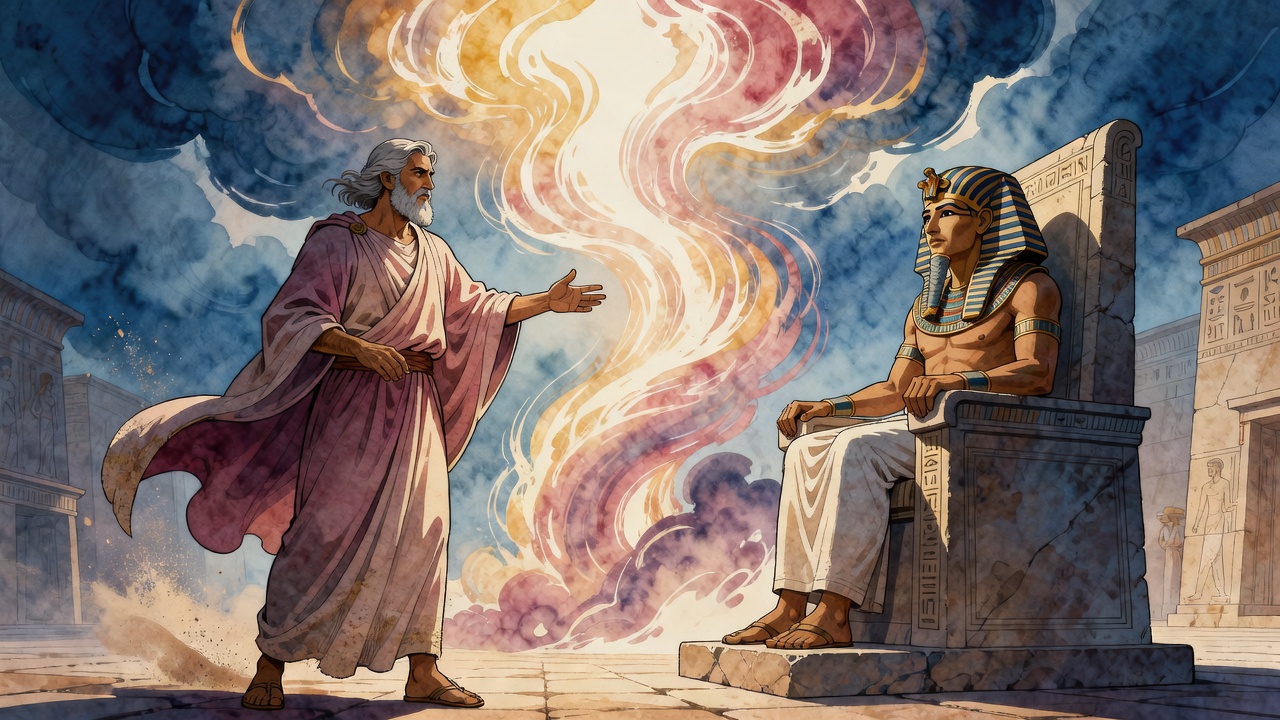
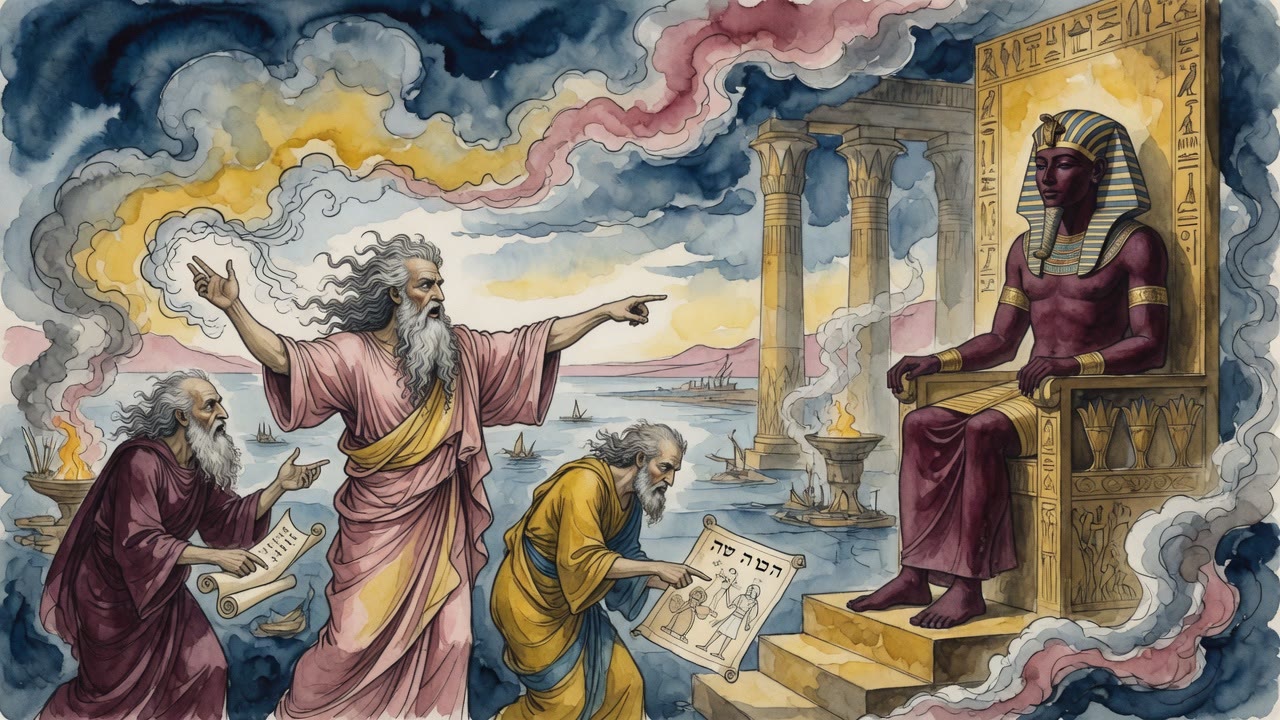
Moses walked to the palace wall with a tool in his hand. He scratched a line in the plaster, high enough that a standing man had to lift his face to see it, and he told Pharaoh the time in a sentence that had no poetry in it.
"When the sun reaches here tomorrow," he said, "the hail will fall."
Some of Pharaoh's servants believed him. They pulled livestock under roofs and shut the doors. One of them was Job. He feared the word and brought his animals inside. Others left oxen and horses in the open, because a mark on a wall did not look like a storm, and a slave's brother did not look like a prophet. Those animals were still in the fields when the light crawled up to Moses' scratch.
Hail Came Down With Fire Inside It
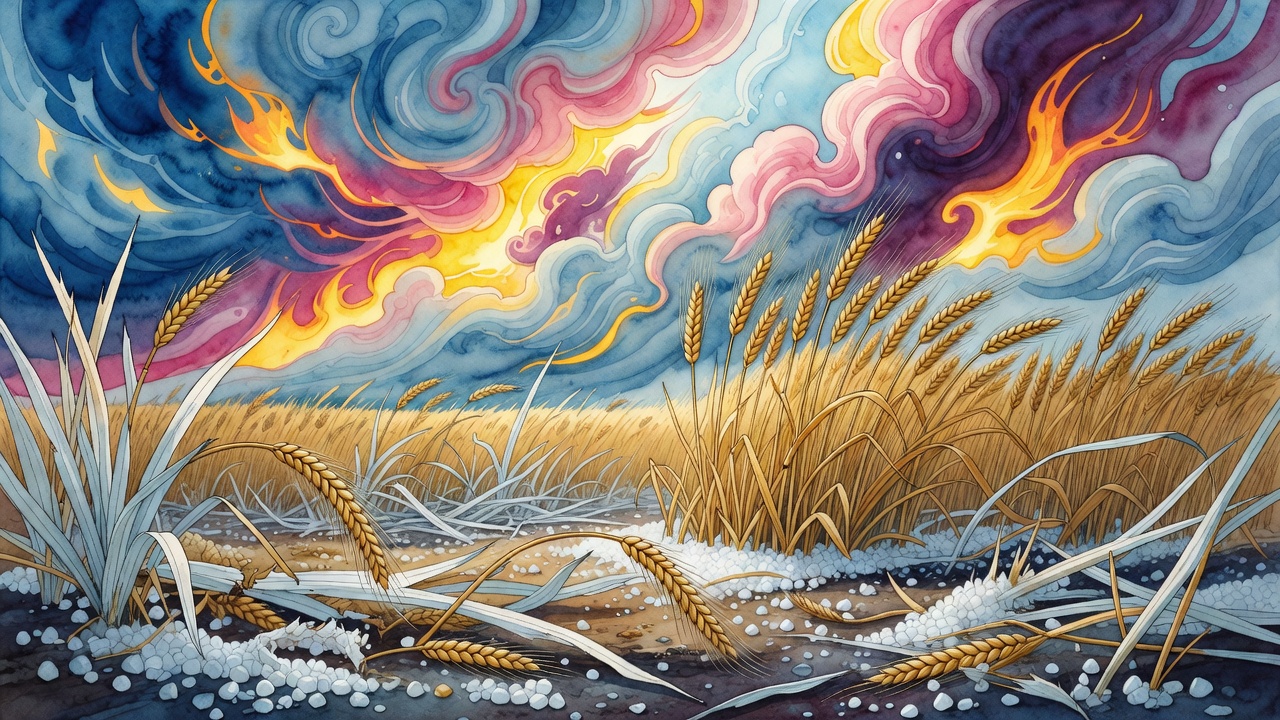
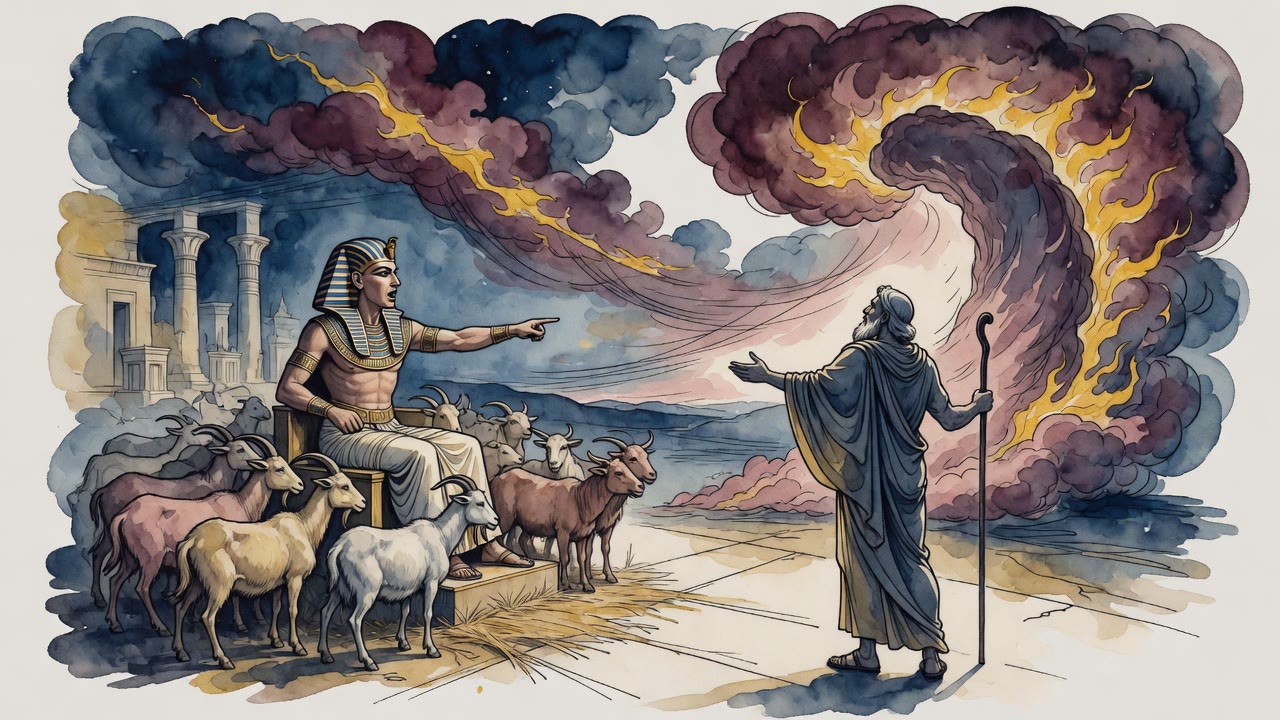
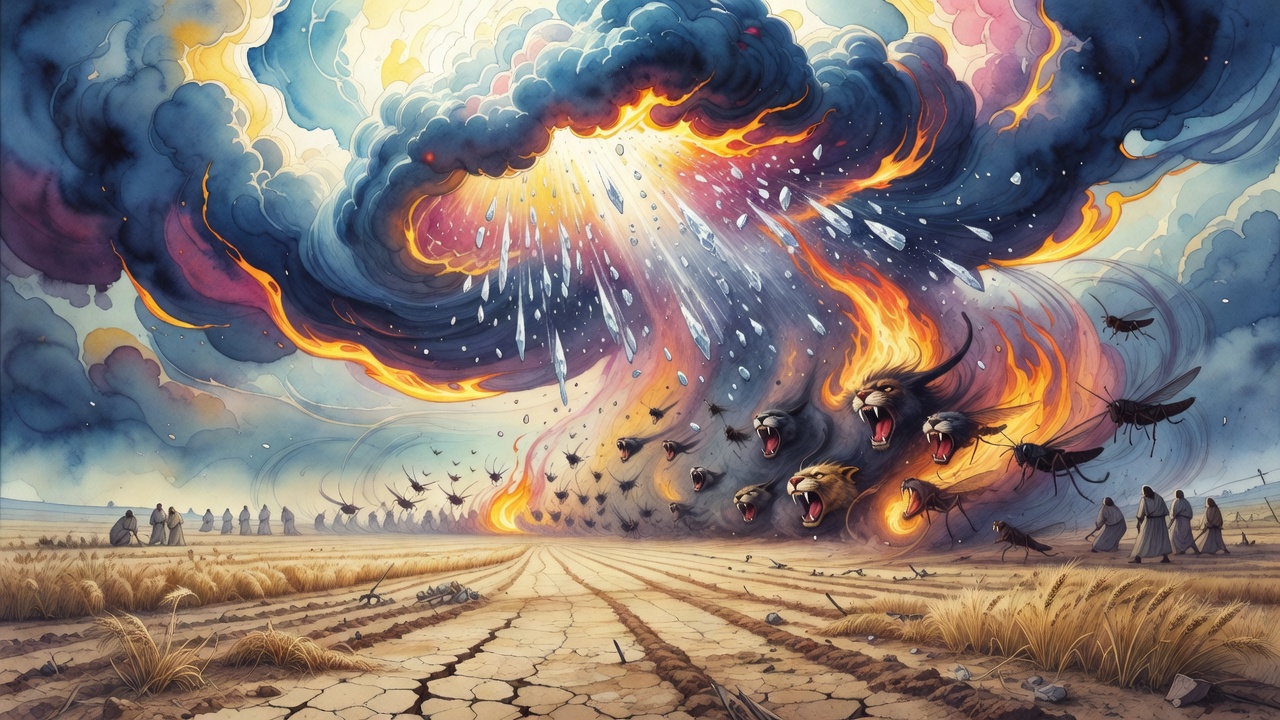
God reached from the earth up into heaven and opened what had been shut. Heaven was for God. Earth was for human hands. He put His hand across that old line the way He would later put it across Sinai, and hail came down. Ice held fire. Fire burned inside ice. The two did not cancel. They traveled together and hit the orchards first.
Trees Israelite hands had pruned for years split in the time it takes a storm to cross a field. Branches stripped. Trunks opened. Grain went flat into mud. Vineyards that had been forced labor became wreckage with the same shape as the rows. Moses had already stretched his hand toward the sky. The hail found the height he had marked and did not overshoot it. What fell had been measured.
The warning had been a mercy. The ones who ignored it died with their cattle in the open.
Egypt Salted the Locusts and Stored Them
What the hail left standing, the locusts ate. They came on an east wind, a dark that moved with legs, and they stripped bark and leaf and the last green the ice had missed. Egypt looked at the swarm and did a hungry piece of arithmetic. Locusts can be food. Locusts can be salted.
They filled barrels. They packed the insects down with salt the way a house packs meat for a lean month. Rabbi Yochanan kept the picture: hands working fast, lids going on, a plague turned into stores. They thought they had outlasted the damage and made a pantry of it.
God spoke to that joy the way a person speaks to a thief caught with the goods. "Wicked ones, are you rejoicing over the plague that I brought upon you?"
A West Wind Took Even the Barrels
A west wind rose, heavier than the east one. It did not only lift the locusts still on the stalks. It took the salted ones. Barrels opened. Lids flew. The insects that had been packed for later were pulled out of the salt and driven to the Sea of Reeds in a mass dense enough to see from the shore. Not one locust remained, not in a field, not in a pot.
Pharaoh watched the last of them go and made the wrong sentence out of it. A real plague, he told himself, would have left corpses. A wind that cleans even the barrels is a trick. He hardened his heart on that reading and did not let Israel go.
The fields where they had been forced to farm lay empty. The orchards were wood. The granaries had nothing to take in. God had destroyed the crops in the exact dirt Egypt had used them for.
← All myths