The Pharaoh Who Came After Joseph Remembered Nothing
Joseph saved Egypt and Israel lived there in peace until a new Pharaoh rose who chose not to remember. The drowning decree came before the whips.
Table of Contents
 Click for full size
What the Council Wanted
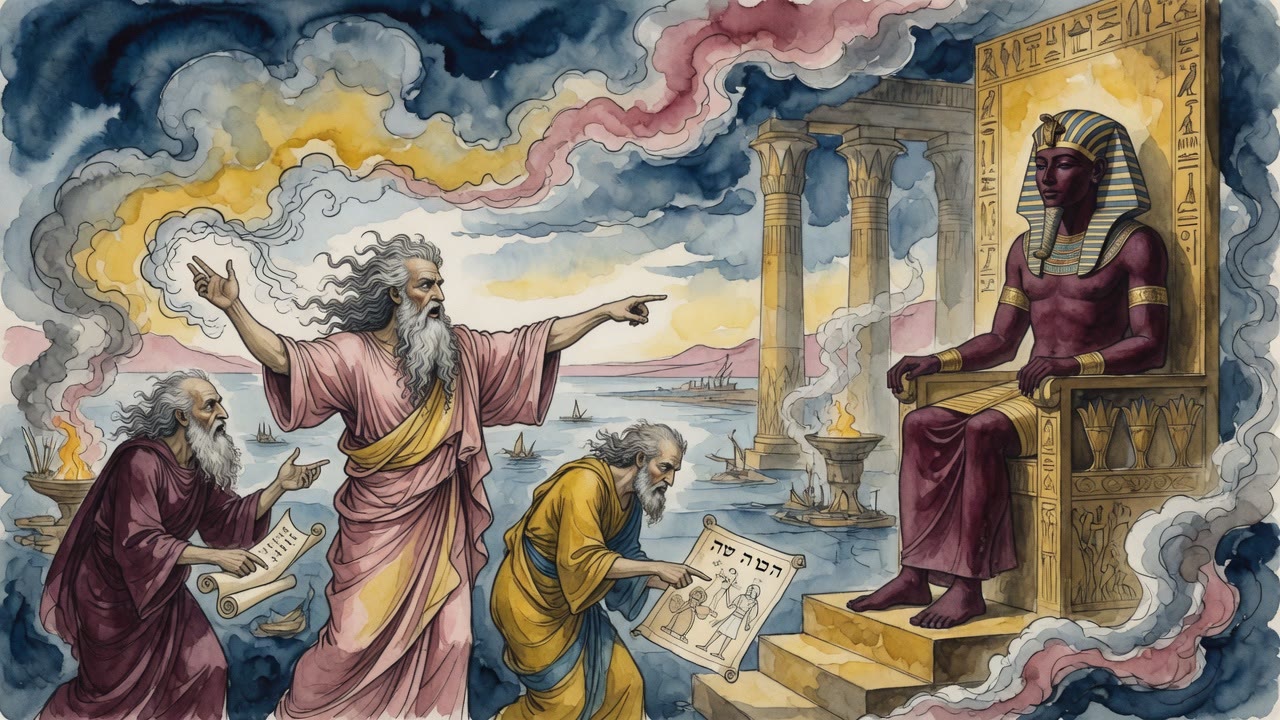
The numbers were the thing his advisors kept coming back to. Israel had grown until they filled the theaters and packed the circuses, until an Egyptian at the races found himself sitting shoulder to shoulder with them, and the first order to come out of that was an order about distance: let the Hebrews keep to themselves. It was not enough for the men around the throne. "Let us scheme against this nation," they said.
Pharaoh said no. He said it in front of all of them, and he gave a reason nobody in that room wanted written down. "Until now we have lived off what is theirs. Were it not for Joseph, not one of us would have a hand to lift."
He was right, and being right in that room was the mistake.
Three Months Off the Throne
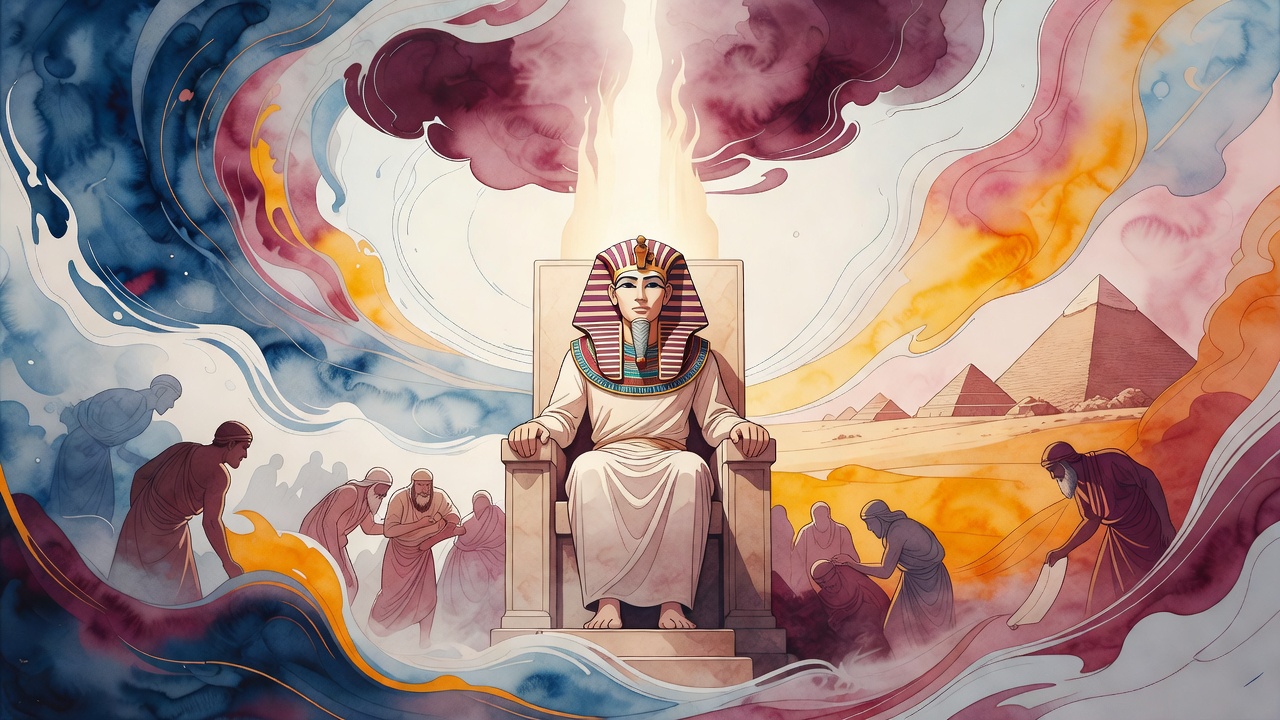
They took him down. Not a knife in the dark and not an exile, because they wanted this man and only wanted him different, so they dragged him off the seat and kept him off it and left the seat empty where the court could see it. A day of that is a story for the palace. Three months of it is another thing entirely. He was still Pharaoh in every way except the one that counted, and every morning the seat was still empty, and every morning the same men came and asked him the same question.
Somewhere in the third month he heard his own voice answer it. "Whatever you say, I will obey." Nothing had been proved to him in the meantime. No one had brought him a document about Joseph or a census of the Hebrews or a report of a plot. He had simply been kept standing long enough, and the sentence came out of him, and there was no getting it back into the mouth it had come from.
Then he arose, a new king over Egypt. Same face, same hands, new in one respect only, which was what he was now willing to forget.
The Seven Months of the River
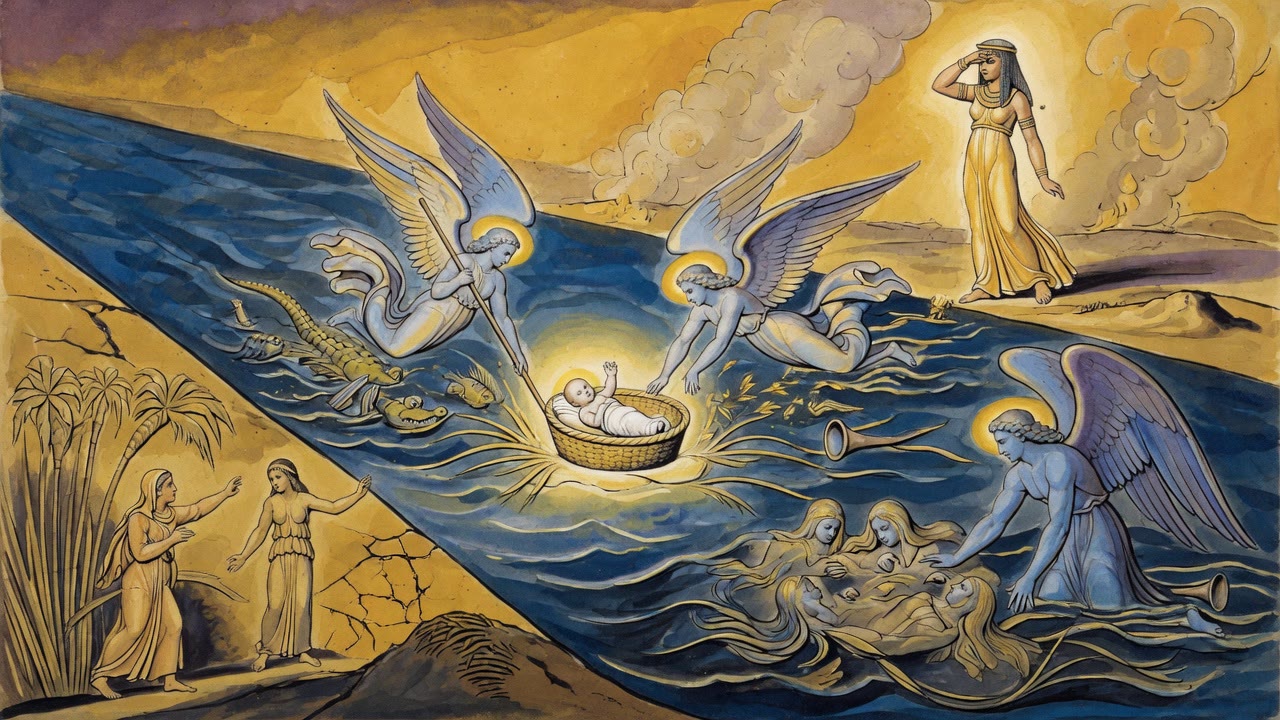
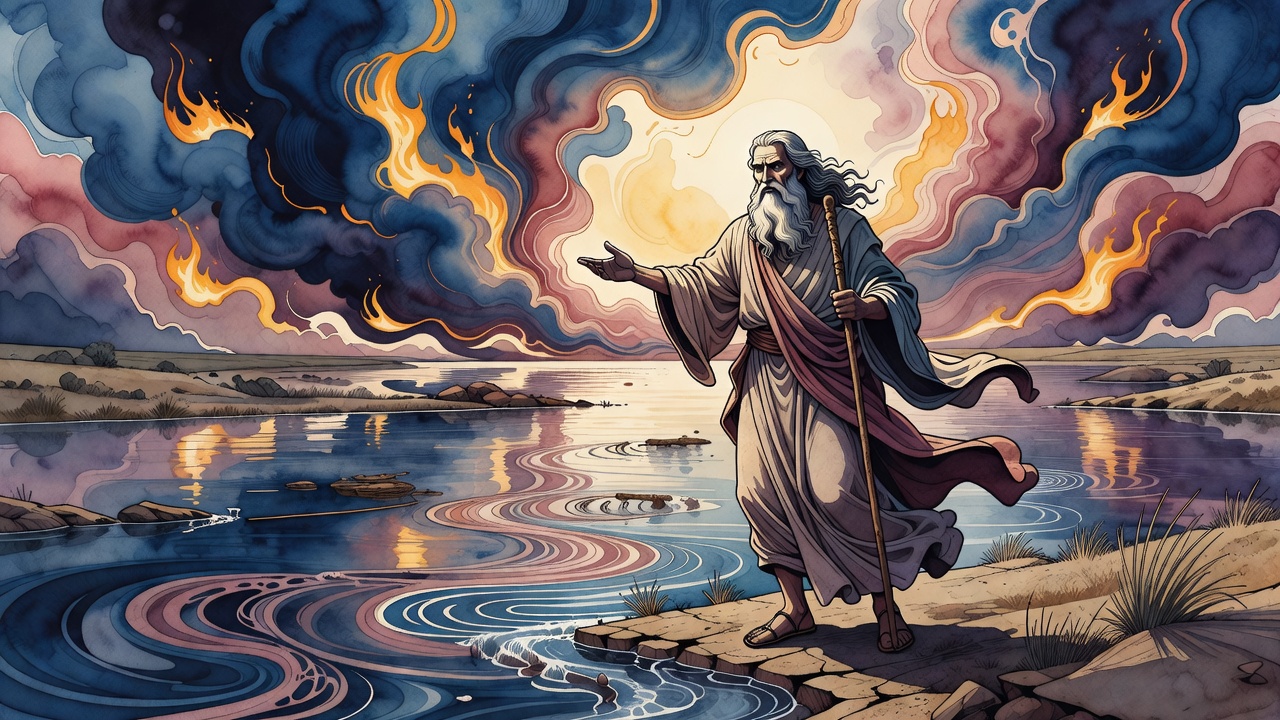
The first decree of the new reign was not the brick pits. It was the water. Every male child born to the Hebrews was to be thrown into the river, and the order ran seven months without a break before the month Moses was born in. Seven months is long enough to become a system, so the soldiers learned which streets to walk and at what hour, and the women learned to give birth without making a sound.
Seven Days in the Reeds
Yocheved kept her son three months in a house that anybody could walk into at any hour. When she could not keep him quiet any longer she built him a box, not a great ship like Noah's, only a basket about the length of her forearm, and she sealed it with pitch and asphalt so the river could not get in, and she set it down among the reeds at the edge of the water.
He was there seven days. She came at night and fed him and went back before the light. Miriam took the daylight hours, standing far enough off that nobody would wonder why a girl was standing there, keeping the birds off her brother. That was the whole arrangement: a mother in the dark and a girl in the sun, and between them a child in a basket in a river that was killing every boy like him.
What Came Up Out of the Brick Pits
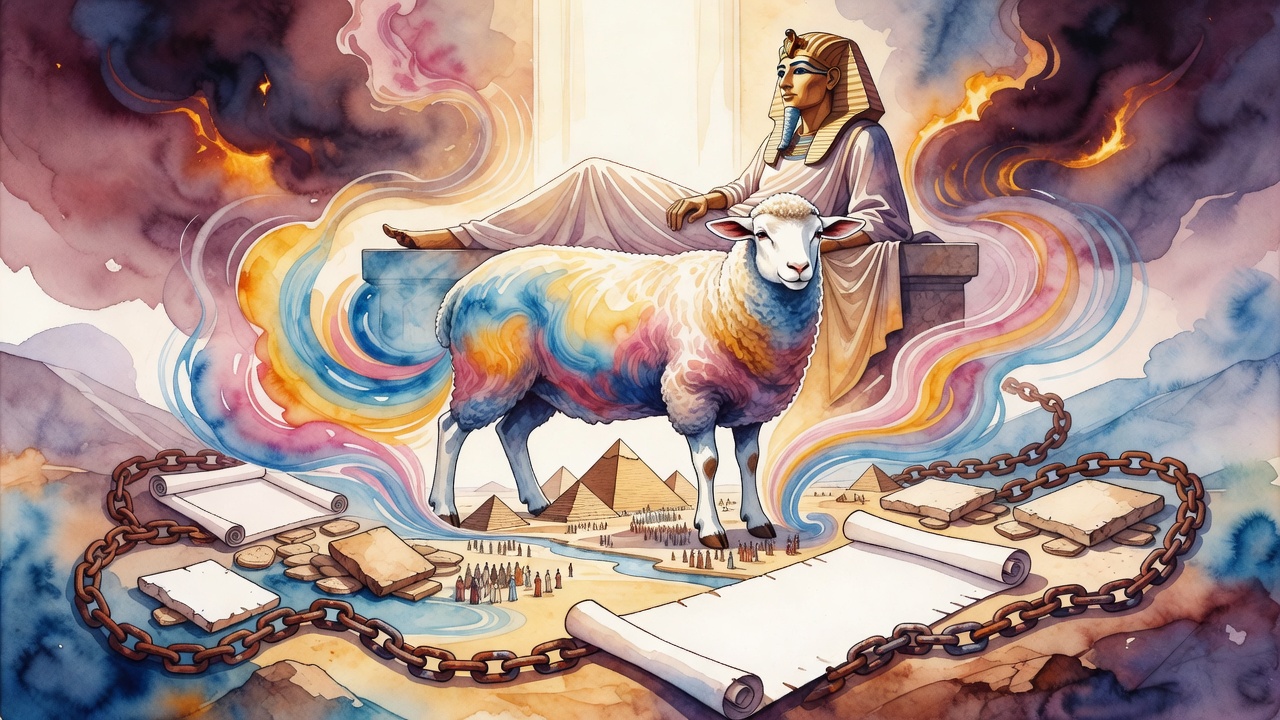
The groaning went up out of the pits, and God saw the burden and the heavy work and settled on bringing them out. It was not a reward. They were empty of good deeds by then, ground down and half Egyptian in their habits, and He already knew about the calf they would build at the mountain out of the gold He was going to give them. He came for them anyway, for two reasons that had nothing to do with what they had earned. He remembered the covenant He had cut with Abraham, Isaac, and Jacob. And He took the promise they made down in the pits, that once they were out they would do whatever He said, which they swore before they had heard one word of what He was going to ask.
Tomorrow He Will Say It About God
A man who throws a stone at the statue of a duke is not put to death over the statue. He is put to death because the king knows what that hand will reach for next, now that it has learned a face can be broken with nothing coming of it.
Pharaoh had said he did not know Joseph. Years afterward a shepherd came back out of Midian and stood in that same hall and asked, in the name of the God of the Hebrews, to have the people let go, and Pharaoh looked at him and gave the answer he had been rehearsing since the month they put him back on his throne. "I do not know the LORD."
← All myths