How Pharaoh Trapped Israel With Kindness
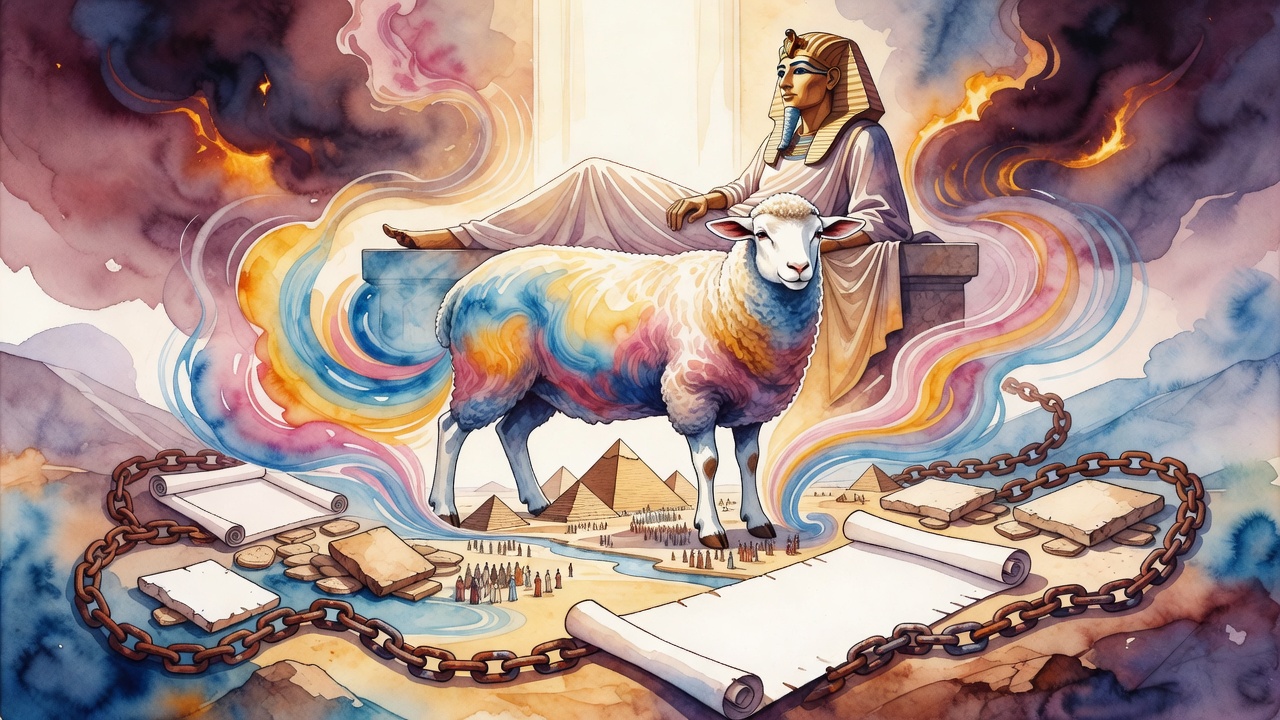
Pharaoh did not enslave Israel with chains. He did it with wages, flattery, and a shovel pressed into the hands of a willing king.
Table of Contents
 Click for full size
The King Who Picked Up a Shovel First
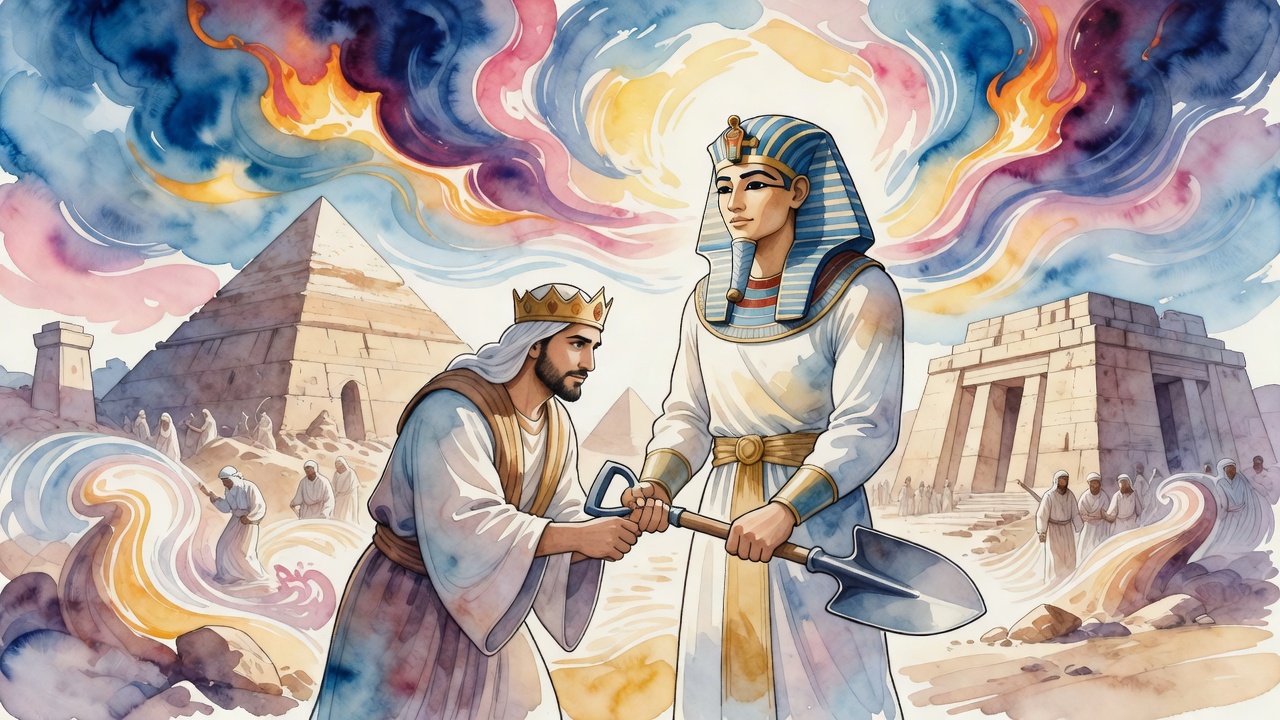
Pharaoh stood before his court and framed the problem as shared sacrifice. Egypt needed fortifications. The cities of Pithom and Raamses needed to be built. Everyone would contribute. The Israelites would be paid fair wages. And to prove he meant it, the king himself picked up a shovel and began to work alongside them on the first day.
When a king lifts a shovel, everyone around him lifts a shovel. When Pharaoh worked beside the Israelites on the first morning, the men of Israel worked harder than anyone. They were guests in this land who had just been honored by their host's personal participation. They were proud of the honor and they showed that pride in how much brick they moved. The output on the first day was extraordinary.
Pharaoh counted the bricks.
The Trap and the Record Book
On the second morning, Pharaoh was not in the field. His overseers were, with the count from the day before written down and waiting. The number from the first day, when every man had worked at his absolute limit to honor the king's presence, became the daily quota. Not a reasonable estimate of sustainable output. The record of what a group of men had produced when they were performing for a king who was digging beside them.
The quota was impossible to meet under ordinary conditions, and the overseers had been given permission not to provide straw. The Israelites would have to gather the raw material themselves and still deliver the same number of bricks by nightfall. When they fell short, there were beatings. The generosity of the first day had produced the data for every punishment that followed.
This was not an accident. The tradition preserves the mechanics of the trap because the mechanics are instructive. Violence at the beginning would have created resistance at the beginning. A people who are beaten before they have reason to trust their captor will organize to escape. Pharaoh had studied the problem more carefully than that. He waited until the Israelites had invested themselves in the project, had staked their pride and their labor on it, had become accustomed to thinking of themselves as contributors to something important, and only then showed them what the investment had been worth.
The Brick-Press Around His Neck
The tradition records another detail about how Pharaoh maintained the system once it was established. He wore a brick mold around his own neck. Not as a decoration: as a signal. Whenever the pace of work slowed, whenever an Israelite paused or faltered, Pharaoh would be visible somewhere in the vicinity with the tool of their labor hanging from his own body, wordlessly implying that any man who stopped was stopping work that the king himself had been willing to take on. The shame of refusing to match the king's example was its own kind of compulsion.
A chain around the wrist can be cut. The shame of appearing weaker than the man who owns you is harder to address with physical force.
The Four Decrees
After the labor was established and the quotas had been made permanent through the ledger entry of that first extraordinary day, Pharaoh moved toward the harder measures. His advisors had been divided on the question of the Israelites for years. He had made them work. He had set their output as their prison. But the Israelite population continued to grow. Every new child was another laborer for the future but also another body that could eventually take up a weapon.
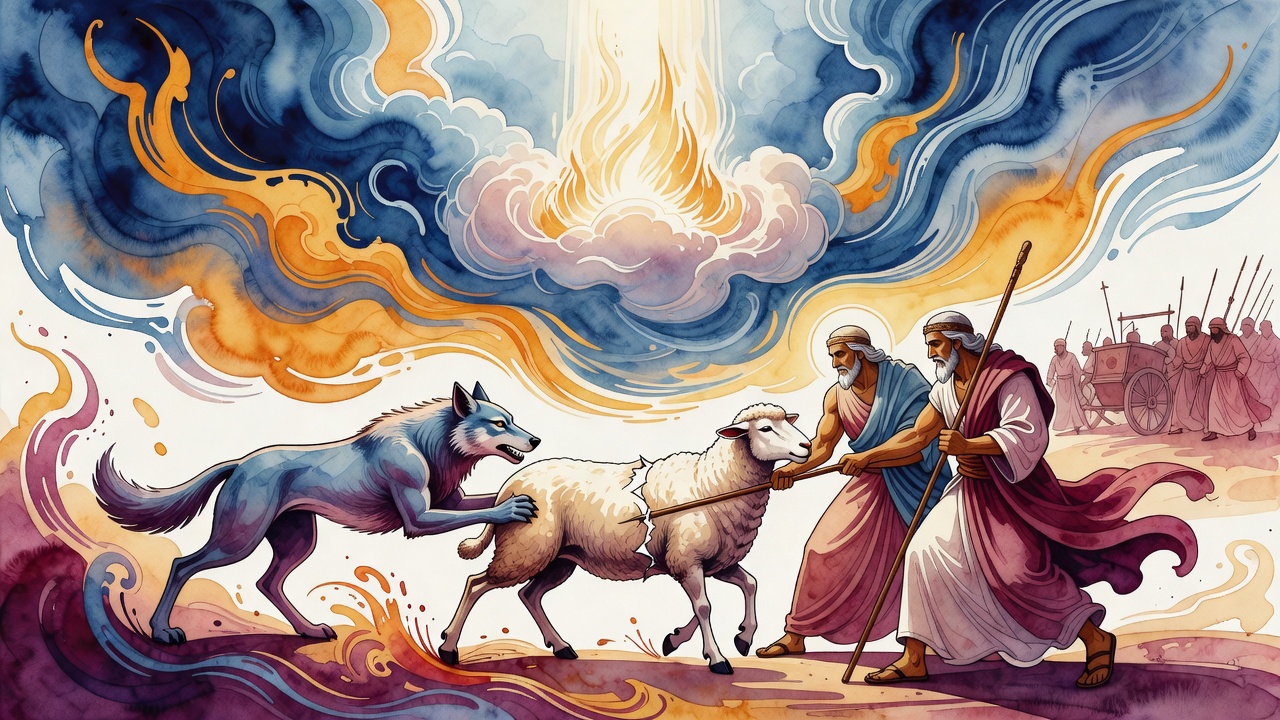
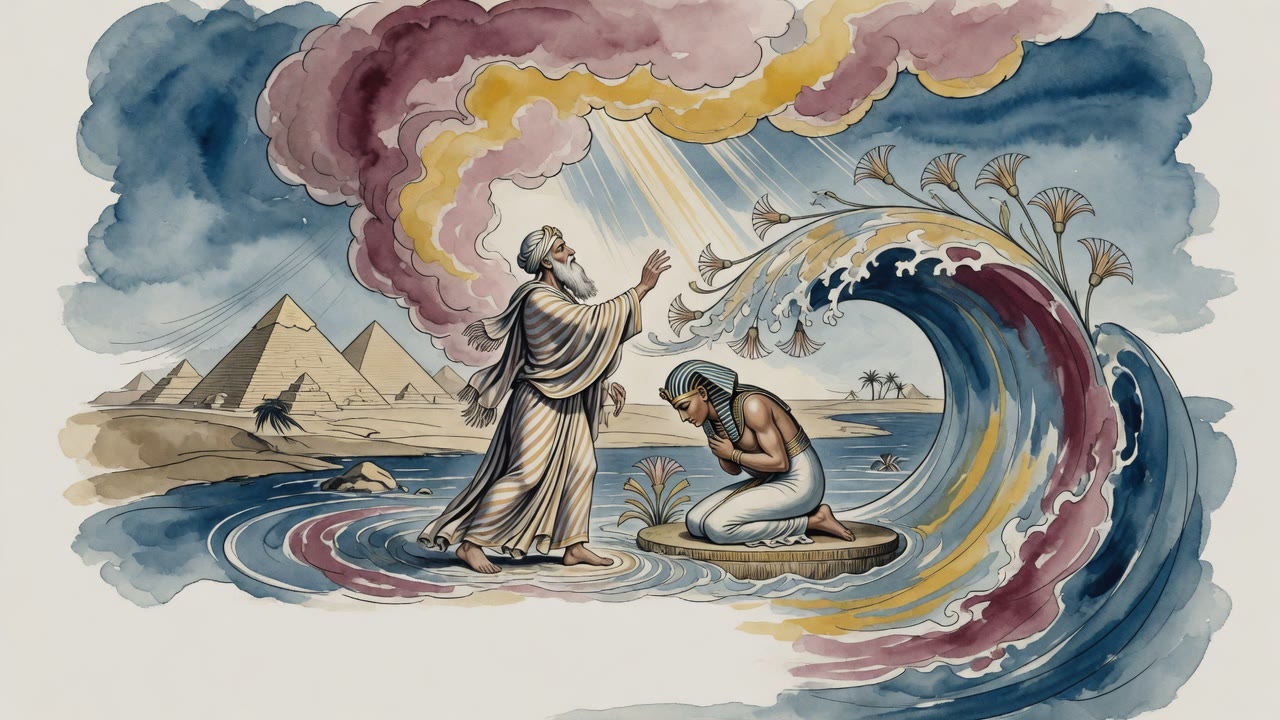
The decrees came in order. The first told the midwives to kill the male children at birth. The midwives, who feared God more than they feared Pharaoh, reported that Israelite women gave birth too quickly for a midwife to arrive in time, and the decree failed in its application. The second decree went around the midwives entirely and addressed the general population: every son born to the Hebrews was to be thrown into the Nile. The third and fourth decrees extended and sharpened what the second had started.
By the time these decrees were in force, the kindness of the first morning was too far back for most men to remember it clearly. The shovel in Pharaoh's hands had done its work. The brick count had done its work. The shame of the brick mold around the neck had done its work. And now the Israelites were so deep inside the system that the system itself had become the frame through which they understood their lives.
← All myths