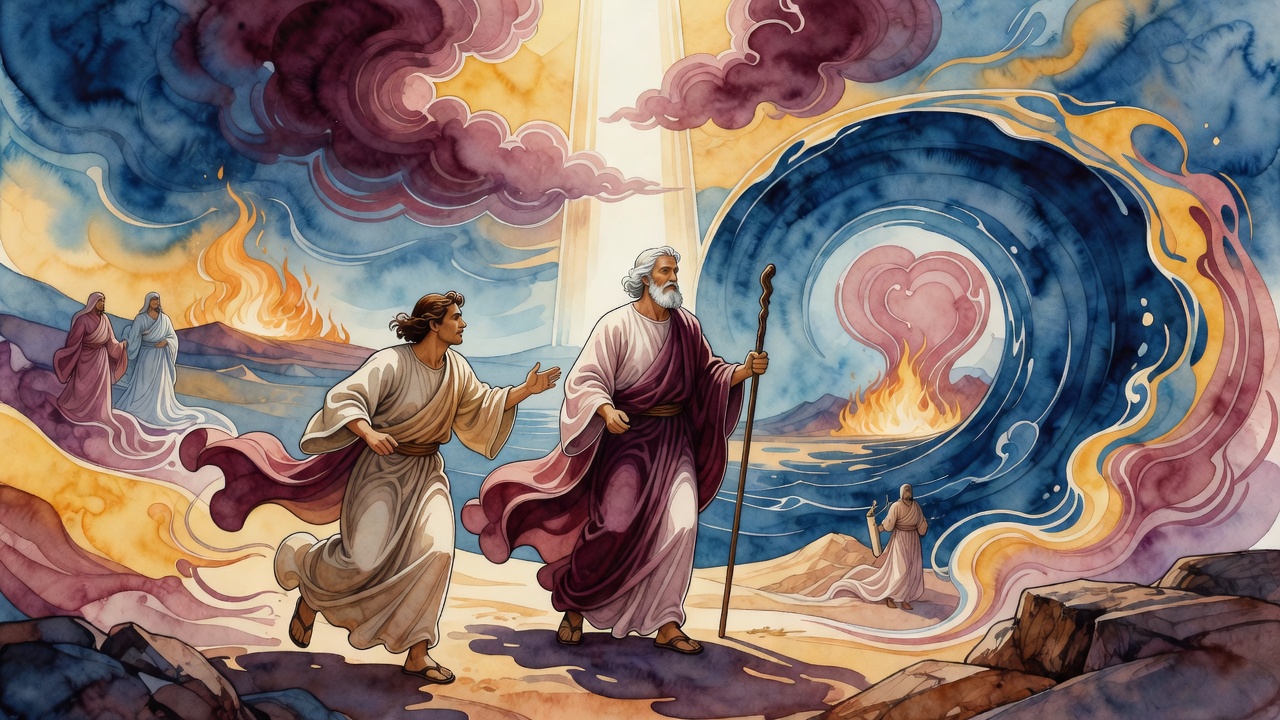
Jethro Brings Burnt Offerings and Aaron Eats Bread at the Feast
A Midianite priest laid whole beasts on the fire. Aaron sat with the elders, and Moses would not take a place at his own table.
Table of Contents
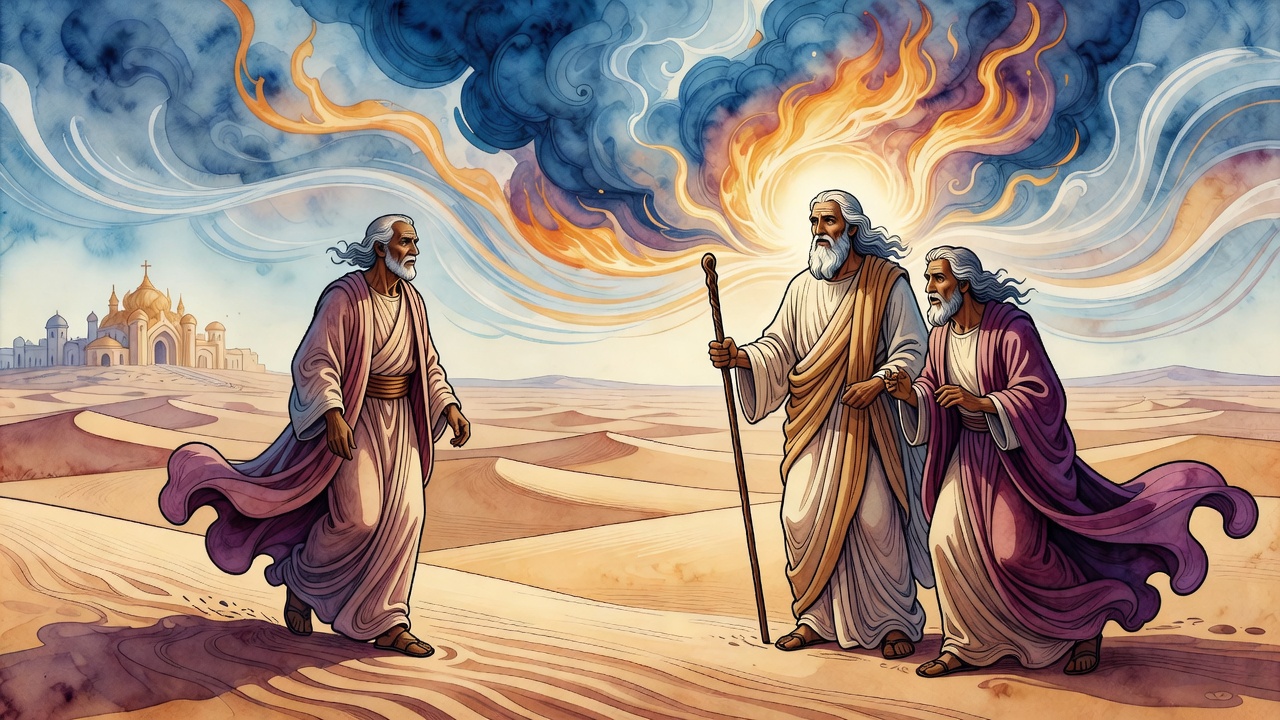
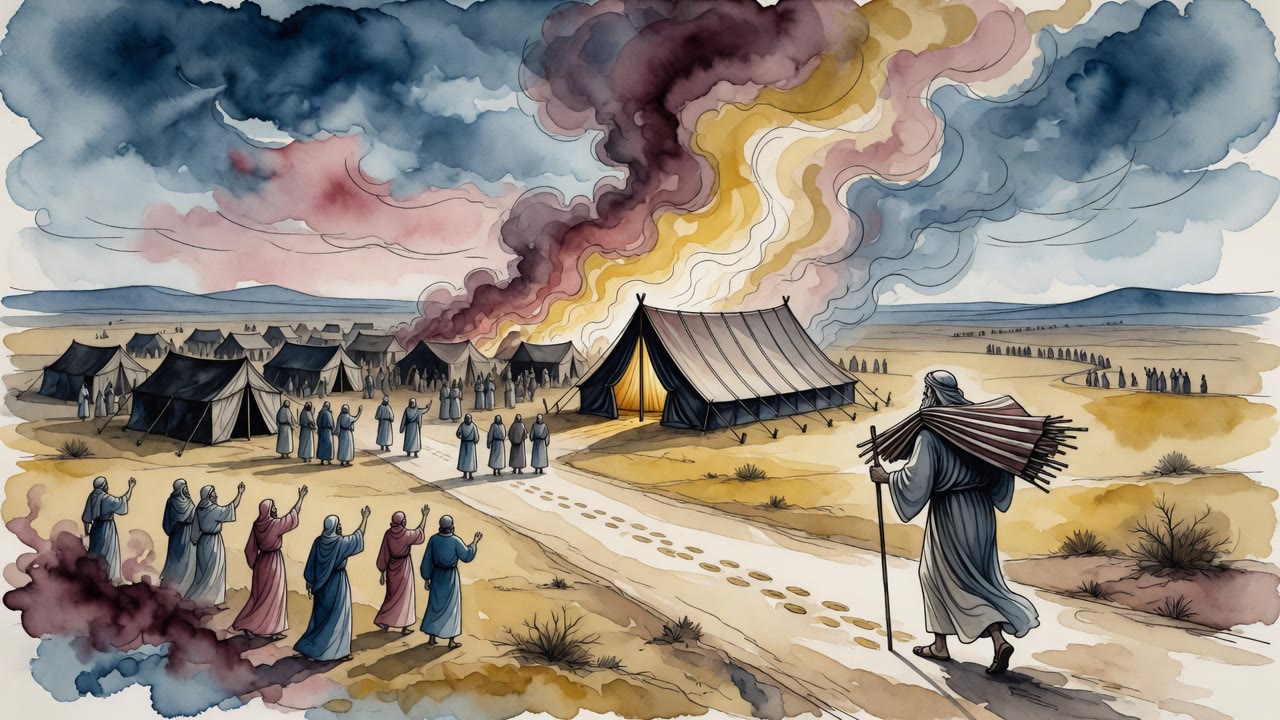
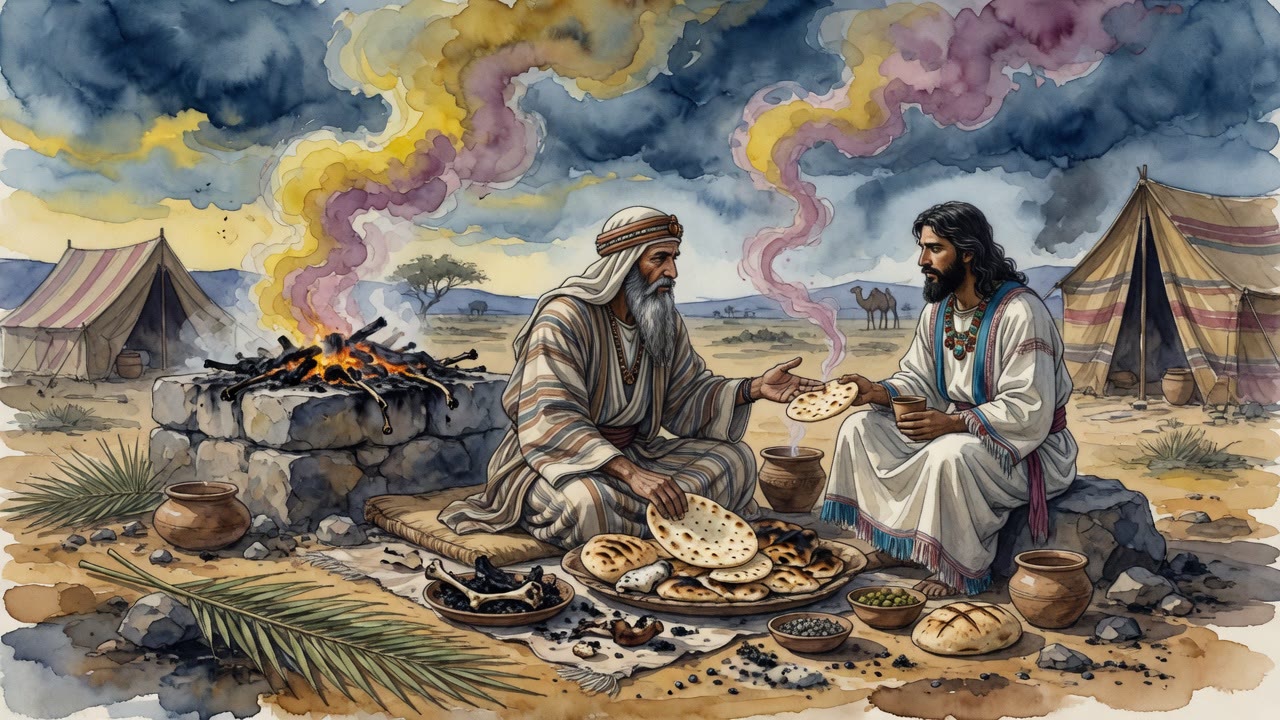
The fat caught and the flame jumped, and for a moment the whole camp smelled of it: roasting meat, woodsmoke, the salt of cooking fires laid out across the sand. Jethro stood over the altar with his sleeves pushed back and his hands dark to the wrist. He was an old man, a priest of Midian. He had buried no small number of animals on no small number of altars in his life. Those altars had not been this one.
 Click for full size
He had come out of the desert days before, leading Moses's wife and two small boys to a man who now belonged to a whole nation instead of one tent. He had heard the story at the campfire, all of it, the sea standing up like walls and the water folding back over the chariots. An old priest does not weep easily. He had wept.
The Priest Who Used to Feed Other Fires
Now he was paying it back the only way his hands knew. He took the first beast and gave it whole to the flame, holding nothing back, letting the fire have all of it until there was nothing left but heat and a column of smoke leaning into the wind. An olah (עוֹלָה), a rising-offering, the kind that climbs entirely upward and leaves the giver with empty hands.
His wrists still knew other work. Slaughter. Burnt fat. Drink poured for powers that had never split a sea. He did this now because something in him had turned, and a gift this large asked for everything.
Then he took the second kind. This one he did not surrender to the fire. He set its meat aside on the cloths, the portions divided, steaming in the cold morning air. A shelamim (שְׁלָמִים), a peace-offering, the kind whose flesh is shared, the kind that becomes a meal. The first offering was for God alone. The second was for the table.
Aaron and the Elders Come to Eat
They came across the camp toward the smoke. Not just the family. Aaron came, the brother, and behind him the elders of Israel, the gray heads of every tribe, men who had been slaves a few weeks before and now walked free across sand. They came to eat bread with the father-in-law of Moses, and they came before the Lord, which meant the cloths on the ground were not an ordinary table.
An Israelite and a Midianite at one meal. The brother of the people's leader and a priest who had wandered in from the east. A few weeks earlier such a thing would have meant two strangers eating. Here it meant the whole leadership of Israel had walked out to a convert's fire and sat down, in the open, where everyone could see who they honored.
The seating list had a hole in it. Moses had gone out to meet his father-in-law when the old man first arrived. Now Aaron and all the elders sat down, and no one said where Moses had gone.
Moses Stands and Serves
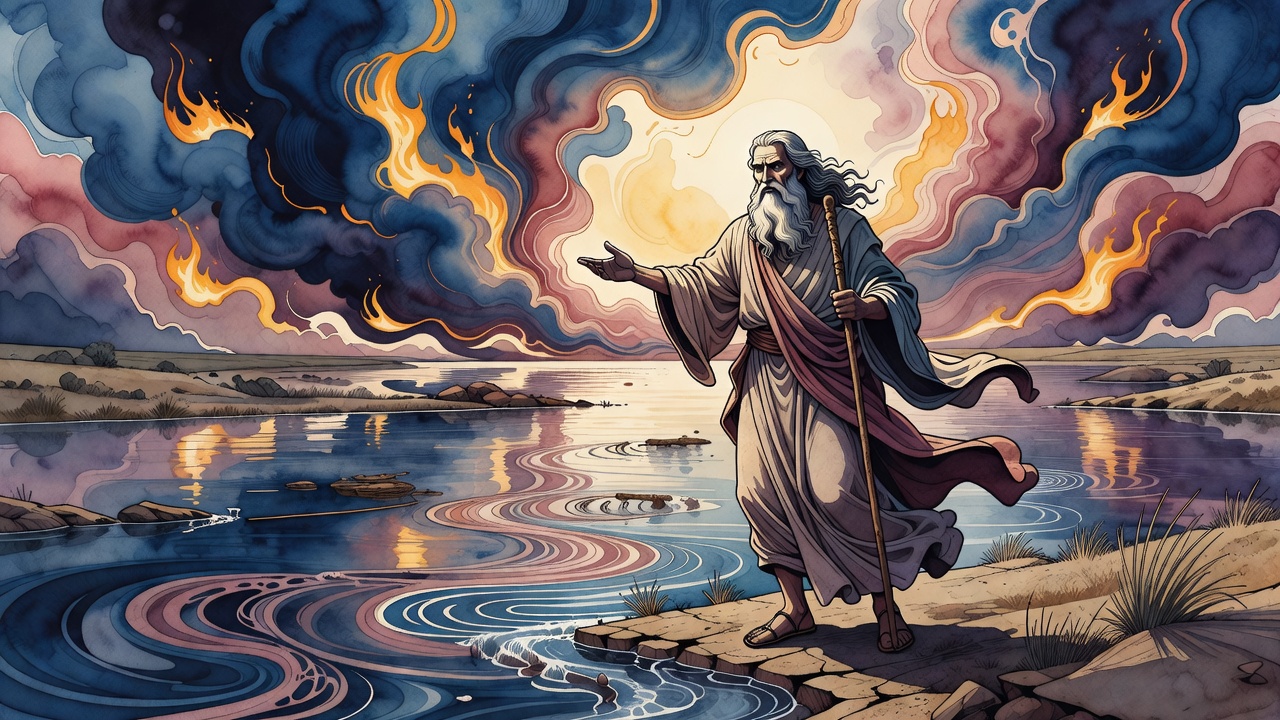
He had not gone anywhere. Moses did not sit. The man who had stood before the king of Egypt and watched a sea split at the lift of his arm now stood at the side of the table and served. He waited on his father-in-law and on his brother and on the elders, carrying, pouring, bending to set the bread down. He ministered before them the way a younger man waits on his elders, and he did not seem to think it strange.
The elders saw it. The Midianite priest saw it. The most powerful man among them had made himself the smallest at his own feast. They ate before God because they ate before Moses, and Moses was on his feet with bread in his hands.
The Songs Rise After the Meat
They sat down according to their tribes. They ate. They drank. They were merry. When the eating slowed, the singing began. It started low, somewhere among the families, and spread until the whole camp had it. Hymns of thanksgiving, voices raised to the One who made all things, the Giver of life, the source of a freedom none of them had earned and all of them had received. They had been told for generations that they were property. They sang now like men who had just learned they were not.
Aaron and Jethro with their relatives sang first to God. Then the praise bent, gently, toward the man with the bread in his hands. They gave their thanks to Moses too, for the courage of him, for the danger he had walked them through and out the other side. And it was the old Midianite, of all of them, who rose to speak of it most. Jethro lifted his voice and praised the leadership of his son-in-law in glorious words, the priest from the east honoring the man who had carried a people across the water, and eulogizing Israel while he did it.
By the time the fires burned low, the shape of the day had reversed every claim in it. The man trained at other altars had brought both kinds of offering with his own hands. The outsider had been seated at the heart of Israel's leadership. The greatest among them had stood and served. The first feast of a free people honored God above all, and then, without shame, honored the man and the stranger who had made the feast possible.
At dawn Moses sat down. The people stood before him from morning to evening with their disputes, and he judged them until the light went. The man who would not take a place at the feast took the hardest place the next day, and the camp that had sung over bread came to him with its quarrels while the smoke of Jethro's offerings was still in the air.
← All myths