77 texts · Page 1 of 2
The ancient wisdom tradition certainly thinks so, and it points us toward something, or rather, someone, very special. Who is this "she" that promises so much joy, so much fulfillm...
That moment of doubt, when faith feels… fragile. But what does our tradition teach us about those times? Ben Sira, a book of wisdom literature from around the 2nd century BCE, offe...
Ben Sira knew the feeling. He tells us, "For many are the conceits of the sons of men; And the imaginations of thoughts that make them to err." It's a powerful image, isn't it? The...
Ben Sira, that ancient sage, was all over these social complexities. He offers us some seriously practical, if a little sharp, advice in his wisdom text. "Not with all men should o...
It offers a surprisingly direct and honest assessment of the self-destructive tendencies we all wrestle with. "Happy is the man whose soul hath not reproached him; And whose expect...
Jewish tradition speaks of just such a thing, personified as the ultimate companion: Wisdom. The Book of Ben Sira, a treasure trove of practical and ethical teachings written in He...
But sometimes, the simplest wisdom is the most profound. And that brings us to a line from the Book of Ben Sira – a book of wisdom literature that, while not part of the standard H...
Ben Sira, that wise sage of ancient times, had some pretty strong feelings about that. He wrote, in a fragment that's both fascinating and a little bit broken, "So whoso hath wealt...
It offers guidance for practically every aspect of life. And chapter 32 gives us some timely advice on how to conduct ourselves at a banquet. "That thou mayest rejoice in their hon...
We get a fascinating, if slightly scandalous, glimpse in the Book of Jubilees. Jubilees, for those unfamiliar, is an ancient Jewish text that retells the stories of Genesis and Exo...
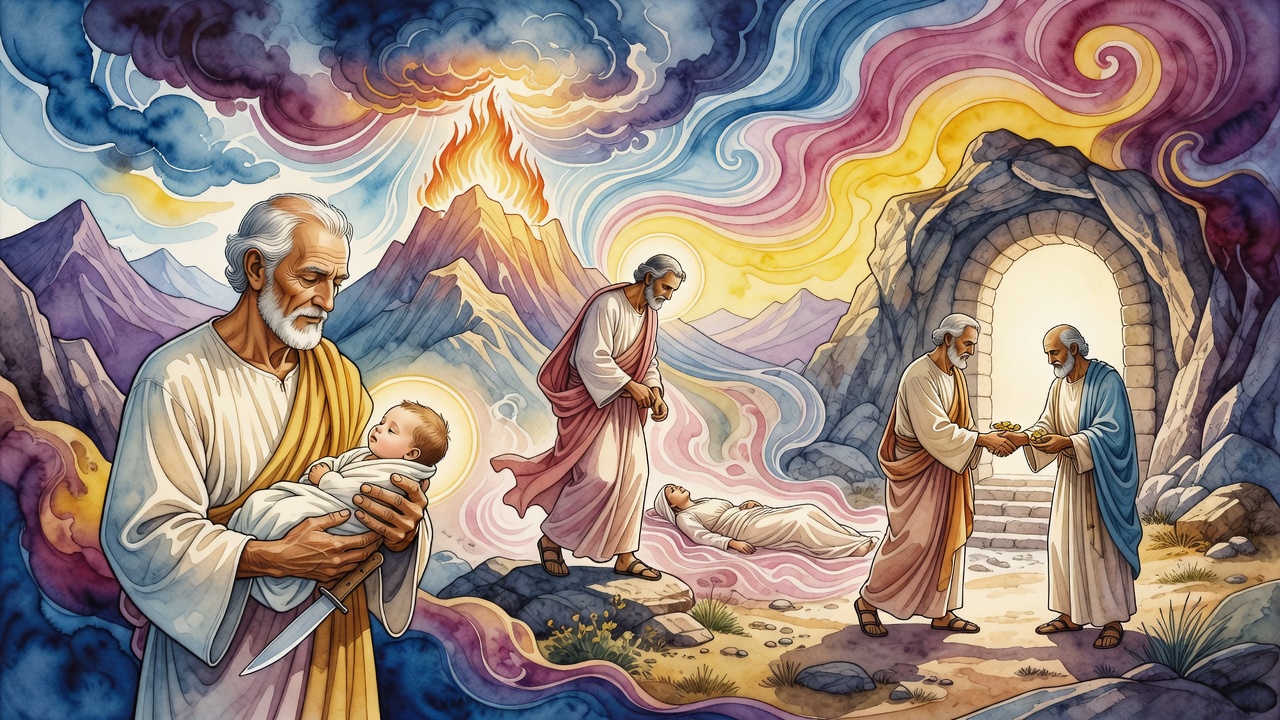
The Book of Jubilees gives us a glimpse into one of those moments – a moment of profound blessing and recognition. We're talking about Abraham. Imagine him, standing at a crossroad...
We've journeyed with her, seen her bravery in the face of incredible danger. Now, imagine the scene after she's done the unthinkable – beheaded the tyrannical Holofernes. The enemy...
Sometimes, they spring from the most unexpected places – a victory, a chance encounter, a shared feast. Let me tell you a story that hints at just such an origin. Imagine this: You...
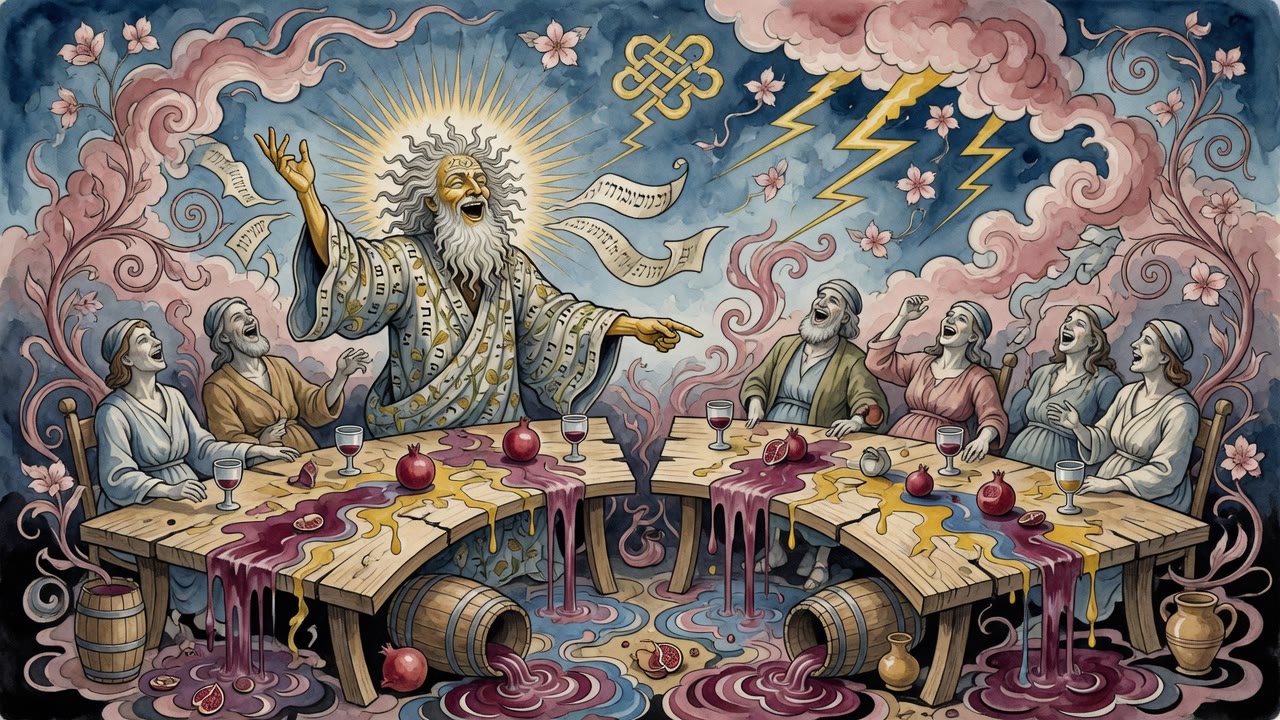
Let me tell you about Jonathan and Simon, two brothers from the Maccabee family, and a wedding that went horribly, horribly wrong. Now, we all know weddings are supposed to be joyo...
The story of the Maccabees, as told in the Second Book of Maccabees, wrestles with that feeling—that plea for divine mercy even when we know we've messed up. Chapter 10 opens with ...
It’s a question that might seem simple, even trivial. But in the grand tapestry of Jewish legend, even the proliferation of grass becomes a moment of profound theological significa...
Overwhelming. Now, imagine that sibling returns not just as family, but as a leader, a figure of immense importance. How would you react? That's the scene we find ourselves in as A...
Jewish tradition paints a vivid picture of the Garden of Eden, and right at its heart stands something truly special: the Etz Chayim, the Tree of Life. It's not alone, of course. N...
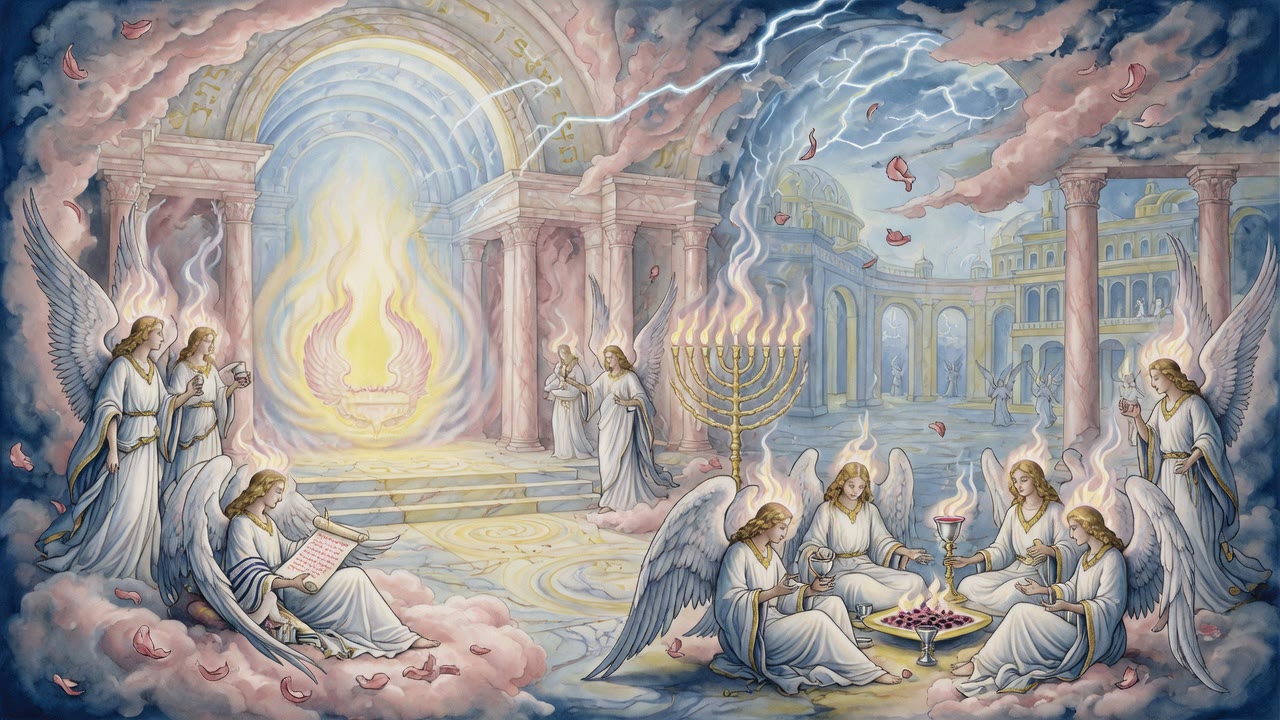
Even the most powerful beings in the heavenly realms experience a similar ebb and flow, at least according to the ancient text, Heikhalot (the heavenly palaces) Rabbati. This text,...
It speaks of a mystical connection, a cosmic dance of sorts, where divine energies intertwine and amplify one another. The text describes how these energies "join with one another....
It's all about ascents and descents, ebbs and flows, a cosmic dance of creation. The Kalach Pitchei Chokhmah, a Kabbalistic text, delves into these fascinating cycles. It proposes ...
It turns out, this ancient Jewish text might just have something to say about that very human experience. We're diving into a fascinating concept from the Kalach Pitchei Chokhmah (...
The Tanya's twenty-sixth chapter opens with one of its most practical teachings: you cannot fight the evil inclination if you are depressed. Spiritual warfare requires joy. Rabbi S...
What should you do when unwanted thoughts invade your mind—not during prayer, but during ordinary life? The Tanya's twenty-seventh chapter offers counterintuitive advice: be happy ...
Intrusive thoughts during prayer are not a sign that your prayer is worthless. They are a sign that your prayer is working. Chapter twenty-eight of the Tanya addresses one of the m...
Sometimes the heart turns to stone. You try to pray and feel nothing. You try to study and the words slide off your mind like water off rock. You know intellectually that God is gr...
Chapter thirty of the Tanya instructs: "Be humble of spirit before every person" (Avot 4:10)—and it means every person, including the worst person you can imagine. How is this poss...
Chapter thirty-one of the Tanya addresses a danger built into its own system. The previous chapters instructed the reader to crush the ego, to contemplate one's spiritual wretchedn...
Rabbi Nachman of Breslov taught that the Torah is not just a text to study. It is a key that unlocks every prayer and opens every closed door. When a person engages deeply with Tor...
Rabbi Nachman of Breslov taught that prayer is the essential weapon of the Messiah. Not a sword. Not an army. Prayer. The teaching begins with a striking image from the Zohar: the ...
Listening to a wicked singer is spiritually dangerous. Listening to a righteous singer can transform your soul. Rabbi Nachman of Breslov explains why, and the answer involves the s...
Rabbi Nachman of Breslov taught that in the future, all suffering will be revealed as good. Not philosophically. Experientially. You will bless God for your pain the same way you b...
"The entire world was created only for my sake" (Sanhedrin 37a). Rabbi Nachman of Breslov takes this teaching at face value: if the world exists for you, then you are responsible f...
Rabbi Yossi raised a deceptively simple question about the Passover laws that reveals how carefully the rabbis read every word of the Torah. The commandment says, "Seven days shall...
The Mekhilta, the tannaitic midrash on Exodus, examines a soaring promise from the prophet Isaiah: "Then you will rejoice in the Lord, and I will 'ride' you on the heights of the e...
When the Torah says that Yithro "rejoiced over all the good" that God had done for Israel (Exodus 18:9), the rabbis asked a natural question: which specific good was Yithro rejoici...
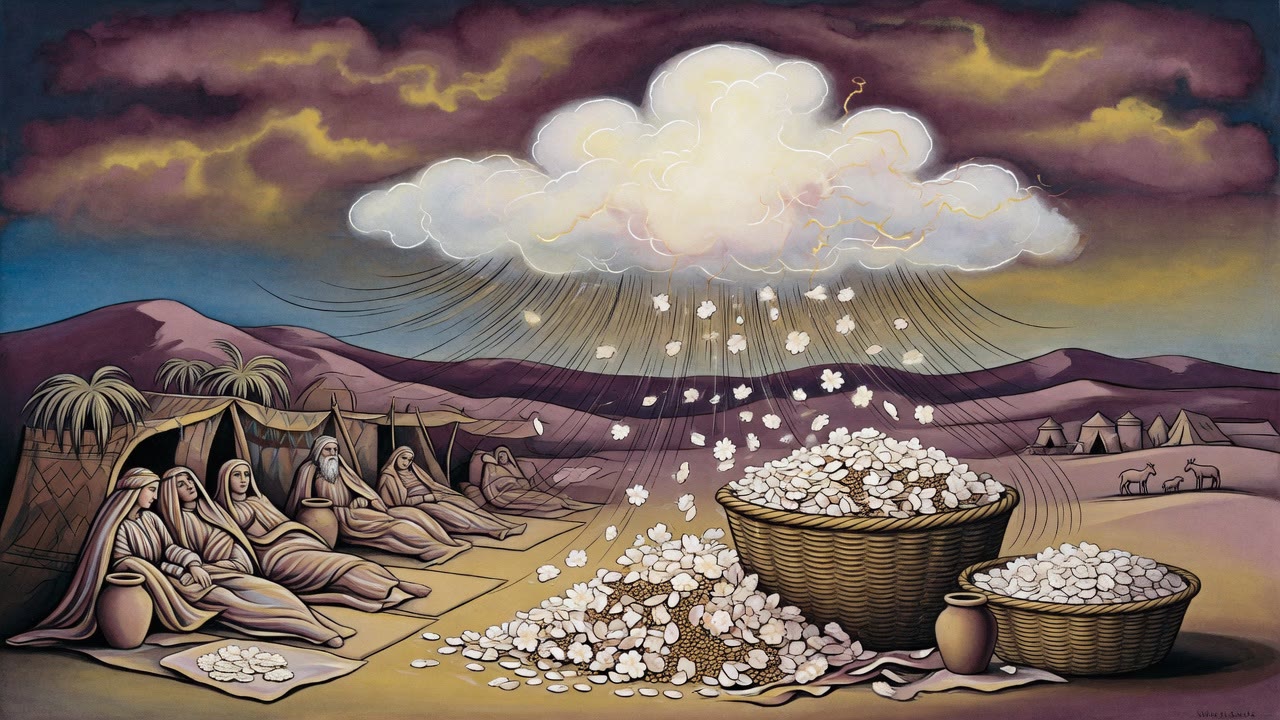
R. Elazar Hamodai offered a different explanation for what made Yithro rejoice. It was not the manna, he argued, but the miraculous well — the portable spring of water that travele...
The Mekhilta makes a claim that strikes against every human instinct: a person should rejoice in suffering more than in prosperity. The reasoning is startling in its logic. Even if...
The Torah commands that three times a year, "all your males shall be seen" before God. The Mekhilta systematically identifies who is excluded from this obligation through a series ...
We find this incredible scene in the Book of Job (38:1, 38:4-7): God speaks from a whirlwind, a tempest, and essentially asks Job, "Where were you when I laid the earth's foundatio...
Psalm 19 isn't just a pretty poem; it's a meditation on the beauty and clarity hidden within God's commandments. And Midrash Tehillim, a fascinating collection of rabbinic interpre...
Forget the awkward toasts and questionable dance moves. Let's talk about Adam's wedding. According to Pirkei DeRabbi Eliezer, a fascinating early medieval text filled with legends ...
We often think about the legal agreements, the ketubah, and the ceremony itself. But what about the party? The celebration? The text we're looking at is from Pirkei DeRabbi Eliezer...
Sounds simple enough. Go forth and be happy! But our tradition rarely leaves things at face value. It invites us to ask: what kind of rejoicing are we talking about here? What does...
That's the kind of task our sages grappled with constantly. And it brings us to a fascinating little passage in Sifrei Devarim 106, a commentary on the Book of Deuteronomy. It all ...
Specifically, we're looking at verse 14:26, which talks about what to do with the tithe money – the ma'aser sheni – when you bring it to Jerusalem. The verse says, "And you shall g...
It might sound mundane, but trust me, even the smallest details can open up a window into how our ancestors thought about holiness, resources, and community. We’re diving into a pa...
It’s not always as straightforward as you might think. to a fascinating corner of Jewish law found in Sifrei Devarim, a collection of legal interpretations on the book of Deuterono...