Solomon's Table Never Ran Dry and the Abundance Was the Warning
Every day ten oxen, a hundred sheep, and a bird from Barbary carrying itself to the kitchen. The world came to Solomon unbidden. Then it stopped coming.
Table of Contents
 Click for full size
The Bird From Barbary
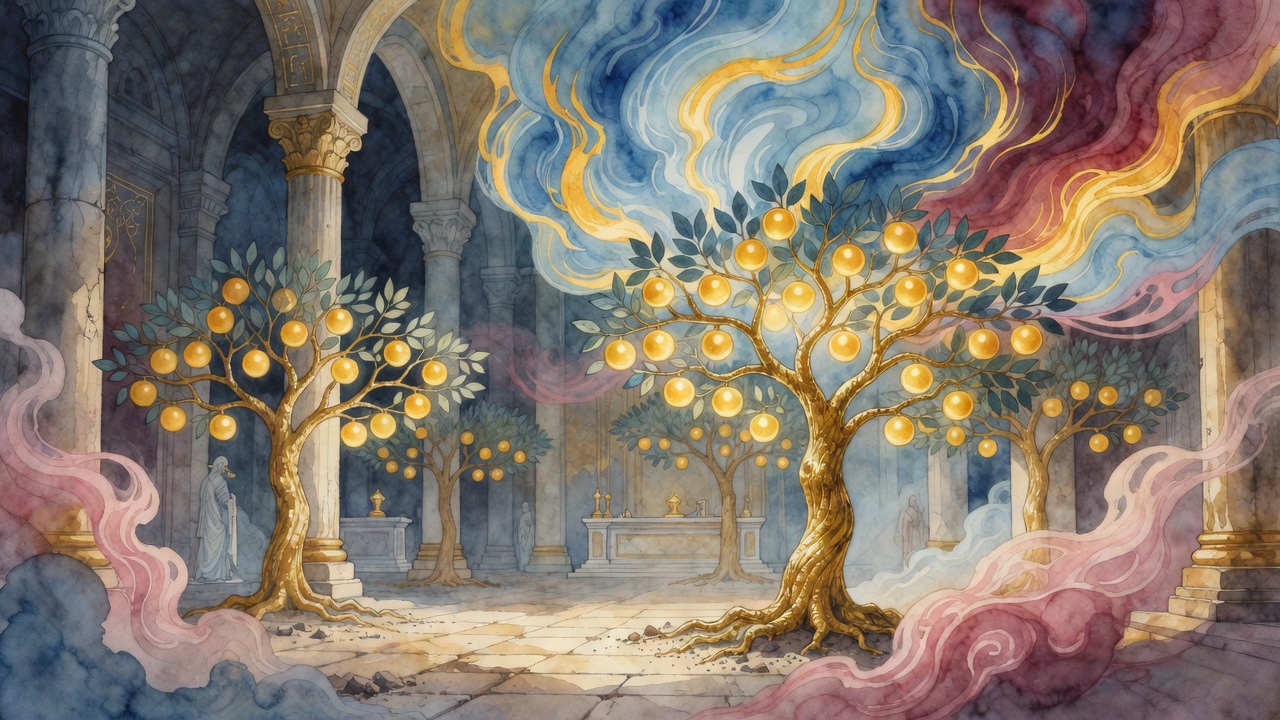
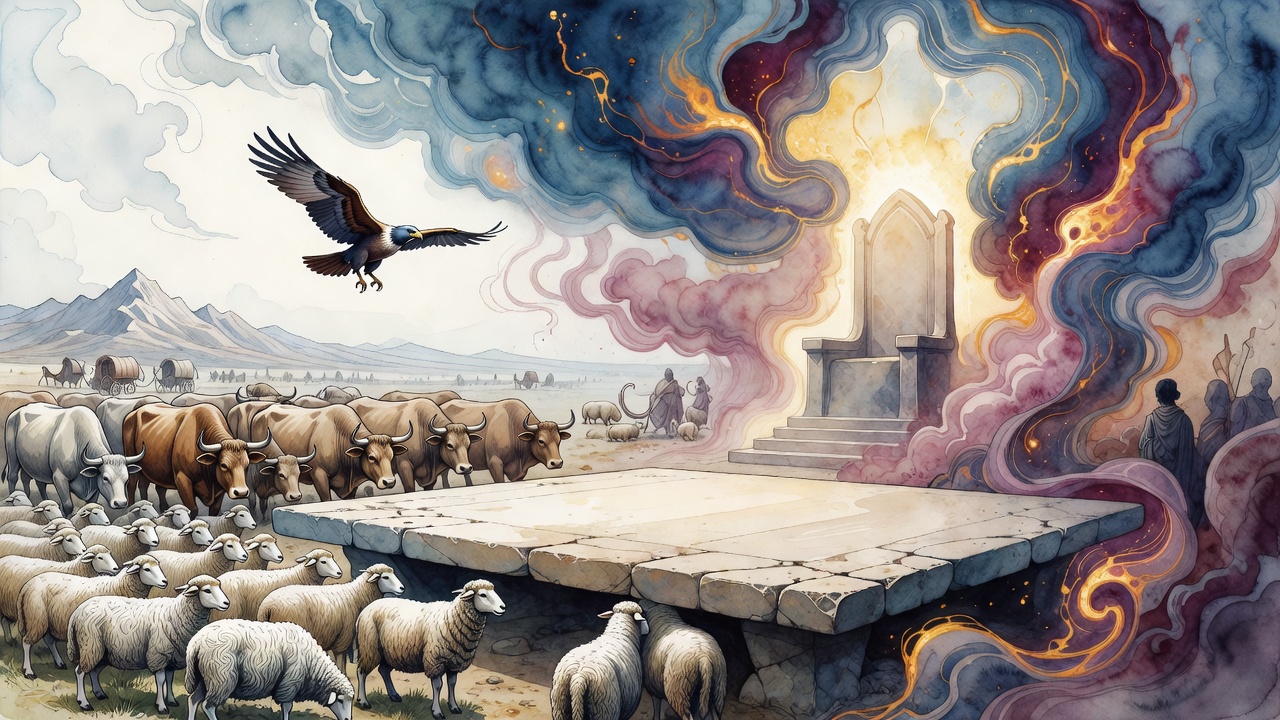
Every single day, a bird arrived from Barbary. From the distant western edge of the known world, one bird flew to Solomon's kitchen. No hunting required. The world provided itself to the king. This is the detail the Legends of the Jews preserves alongside the quantities: thirty measures of fine flour, sixty measures of meal, ten fat oxen, twenty pasture-fed cattle, a hundred sheep, and then the game: stags, gazelles, roebucks, fatted poultry. Every day. No exception for shortage. No seasonal variation. The table held the same abundance on the worst day of winter as on the best day of harvest.
This was not a feast. It was a demonstration. The quantities signal something beyond feeding people. When the center of the world is righteous, the tradition teaches, the periphery comes toward it of its own accord. The bird from Barbary did not need to be caught or lured or purchased. It came because Solomon was who Solomon was, because the king who sat at the center of that abundance had been placed there by God and the arrangement of the world recognized it.
What the Names Promised
Solomon was born Jedidiah: Beloved of God. The name came from the prophet Nathan, delivered to David as a divine declaration. He was renamed Solomon from shalom, peace, because peace was what his reign was for. He was called Ben because he would build. Jakeh because his rule stretched across the whole world. Each name was a promise and each promise was a responsibility, and the table was the evidence that the promise was being kept. The daily feast was not self-indulgence. It was the visible form of the divine blessing operating at full capacity.
The Torah's prohibition was specific. Do not multiply horses, do not multiply wives, do not multiply silver and gold. The prohibition was not about poverty or asceticism. It was about the difference between abundance as a sign and abundance as an addiction. As long as the table was a demonstration of divine blessing, the bird from Barbary would keep coming. When the table became an end in itself, the gift began to sour.
The Wedding Feast That Overshadowed the Temple
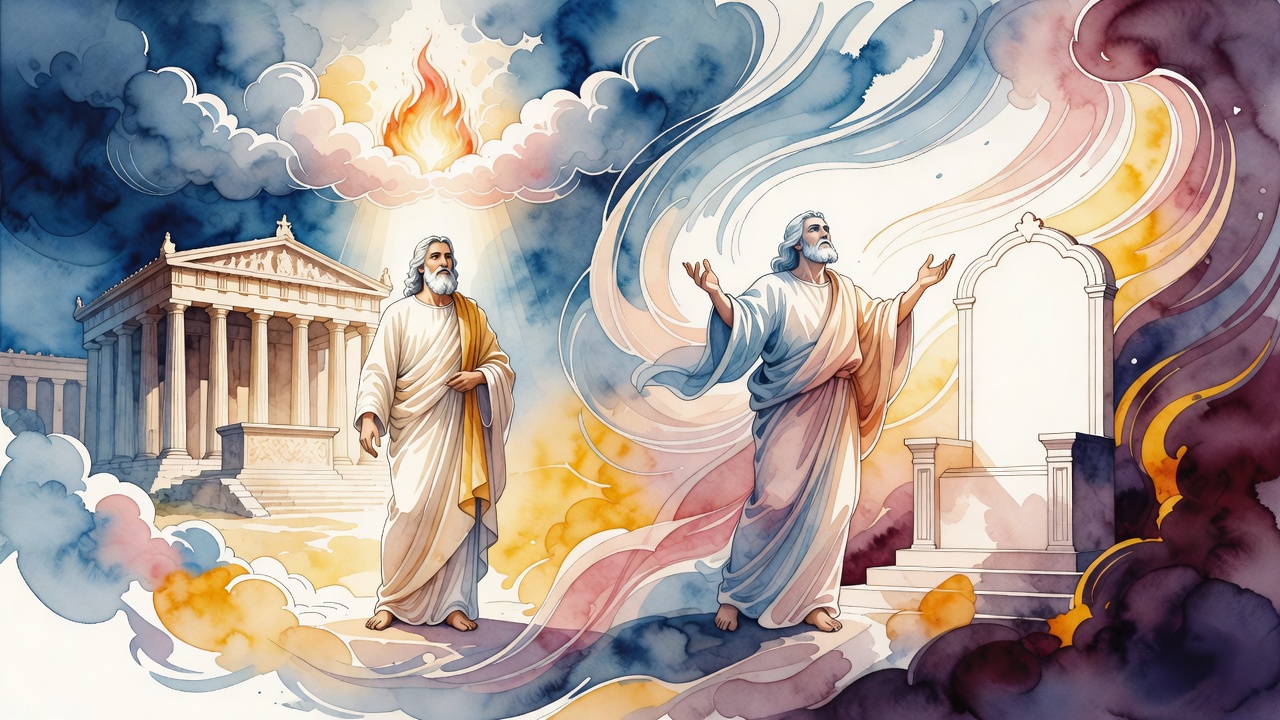
The tradition preserves a detail that made the rabbis uncomfortable. On the day Solomon dedicated the Temple, the completion of everything he had been born to build, the cloud of glory filling the Holy of Holies, the sacred fire coming down from heaven to consume the offerings on the altar, the whole congregation prostrate before the presence of God, Solomon also celebrated his wedding to Pharaoh's daughter. The wedding feast went on alongside the dedication. The joy of the marriage competed with the joy of the Temple in the same day.
God said nothing on that day. But the tradition noted the day and noted what it signaled. The king who could have turned his entire attention to the moment when God's presence descended into the house he had built instead divided that attention. The wedding was real. The joy was real. And the division was real too, the first small movement of the center away from where it needed to hold.
When the World Stopped Coming to the Center
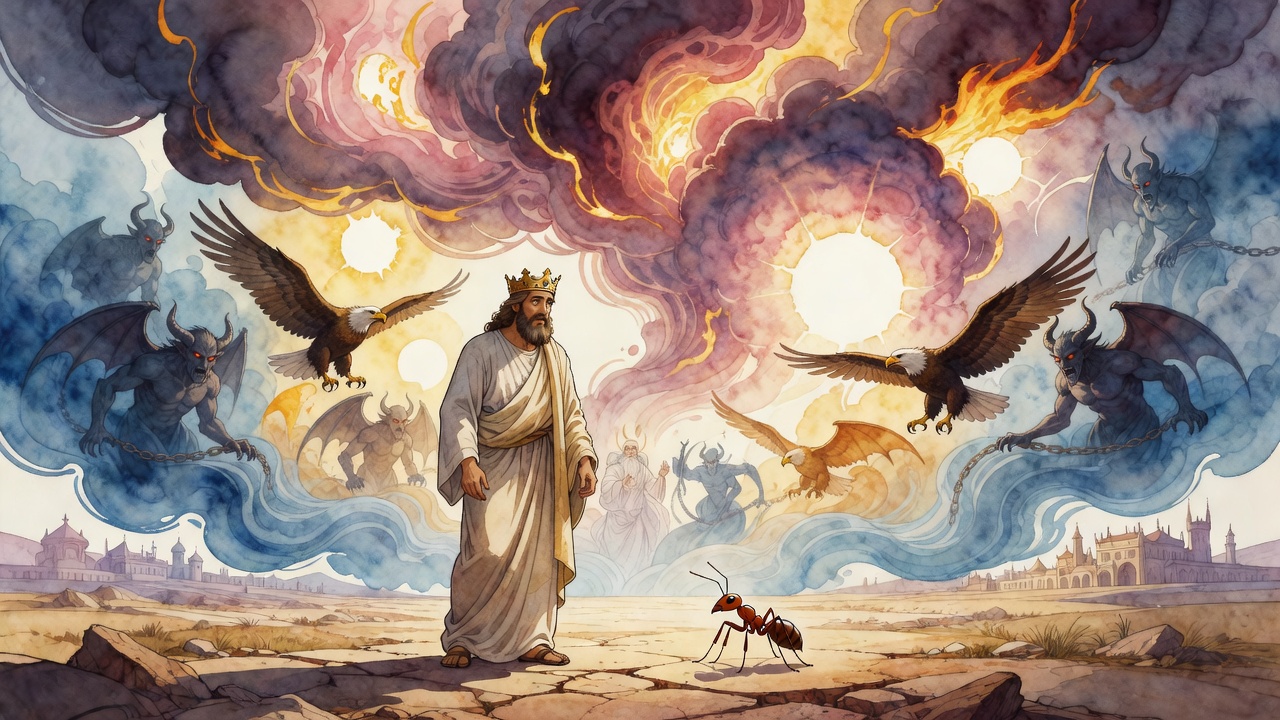
The bird from Barbary kept coming as long as the center held. The Legends of the Jews does not specify the day it stopped. It records the endpoint: Ashmodai, king of the demons who had built the Temple under Solomon's command, returned when Solomon was weakened and seized the ring that gave Solomon his power and threw it into the sea. Solomon was cast out of Jerusalem. He wandered for three years with nothing. He told people he was the king. They laughed. He worked for his meals. The bird from Barbary did not follow him into the wilderness.
He found the ring again, in the belly of a fish, and returned to Jerusalem. But the table he returned to was not the table that had demonstrated divine blessing. It was just a table. The abundance was still possible, but the world no longer came to it of its own accord. The king had to organize the supply, manage the markets, direct the twelve officers across the land who provided for the royal household each month. The demonstration had become administration. Something essential had been lost in the wandering, or before the wandering, in the multiplication of what the law had warned him not to multiply.
← All myths