170 myths · Page 1 of 6
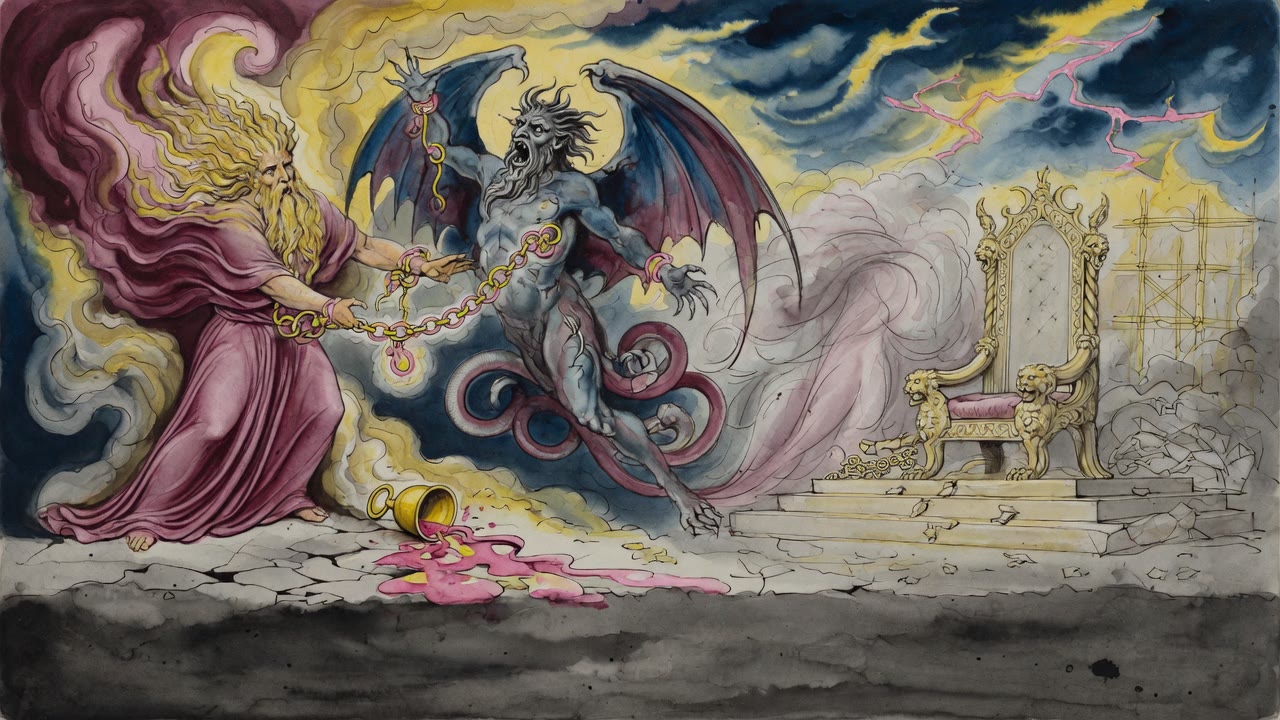
Solomon needed a demon to build the Temple. He caught the king of demons with wine, used him, then kept him chained. The demon got his revenge.
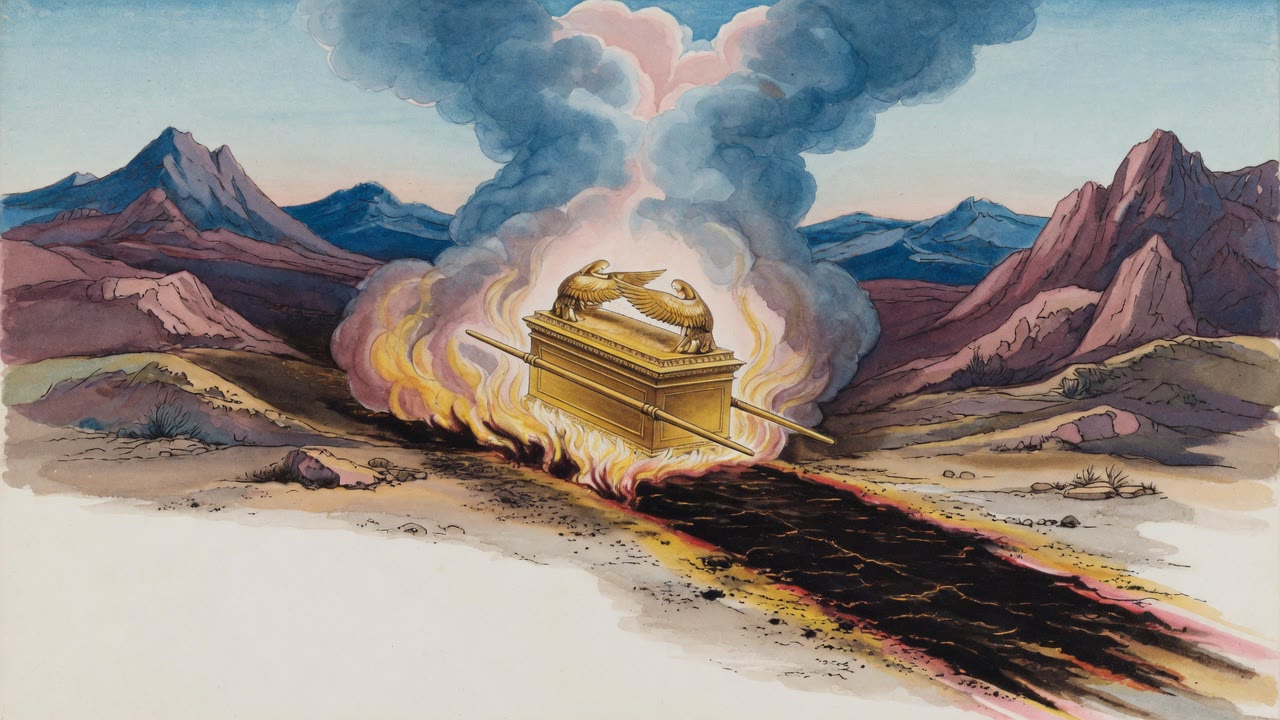
The Ark traveled three days ahead of the camp and burned the snakes out of the road. The gold cherubim on its lid had the faces of boys.
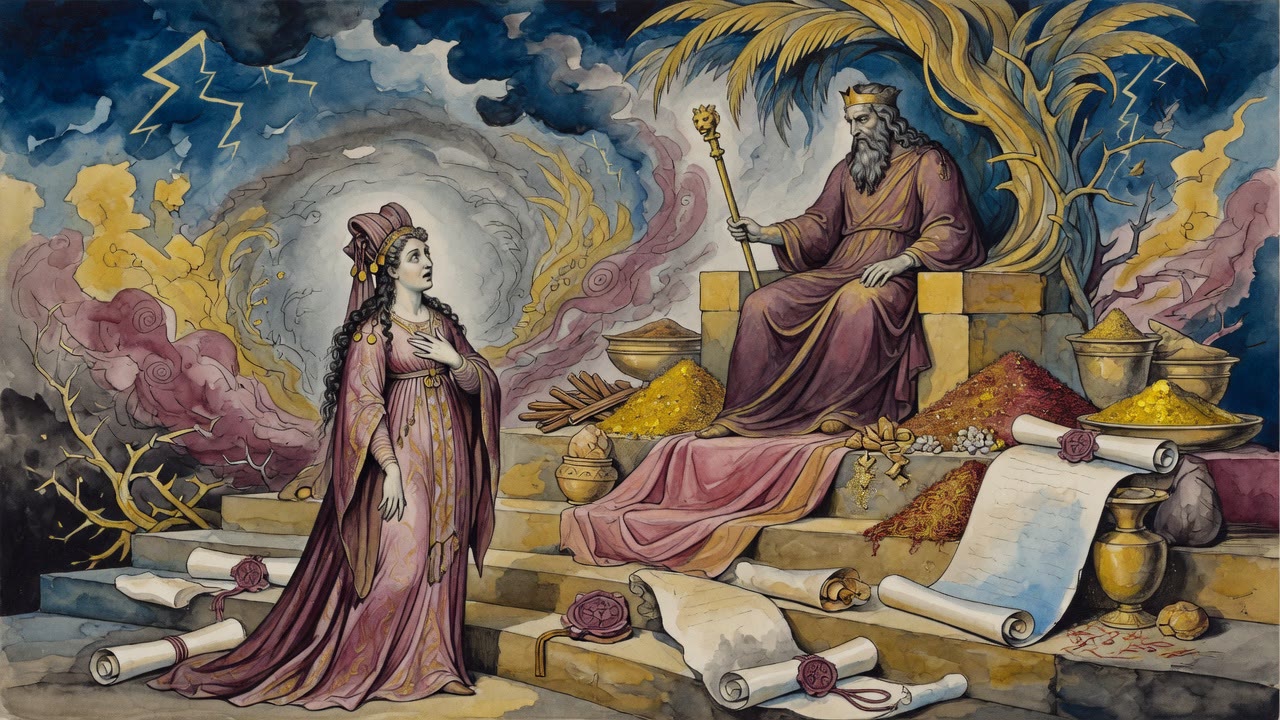
A queen who ruled a land Solomon had never seen crossed the known world with riddles, gold, and spices to find out whether the reports were exaggerated.
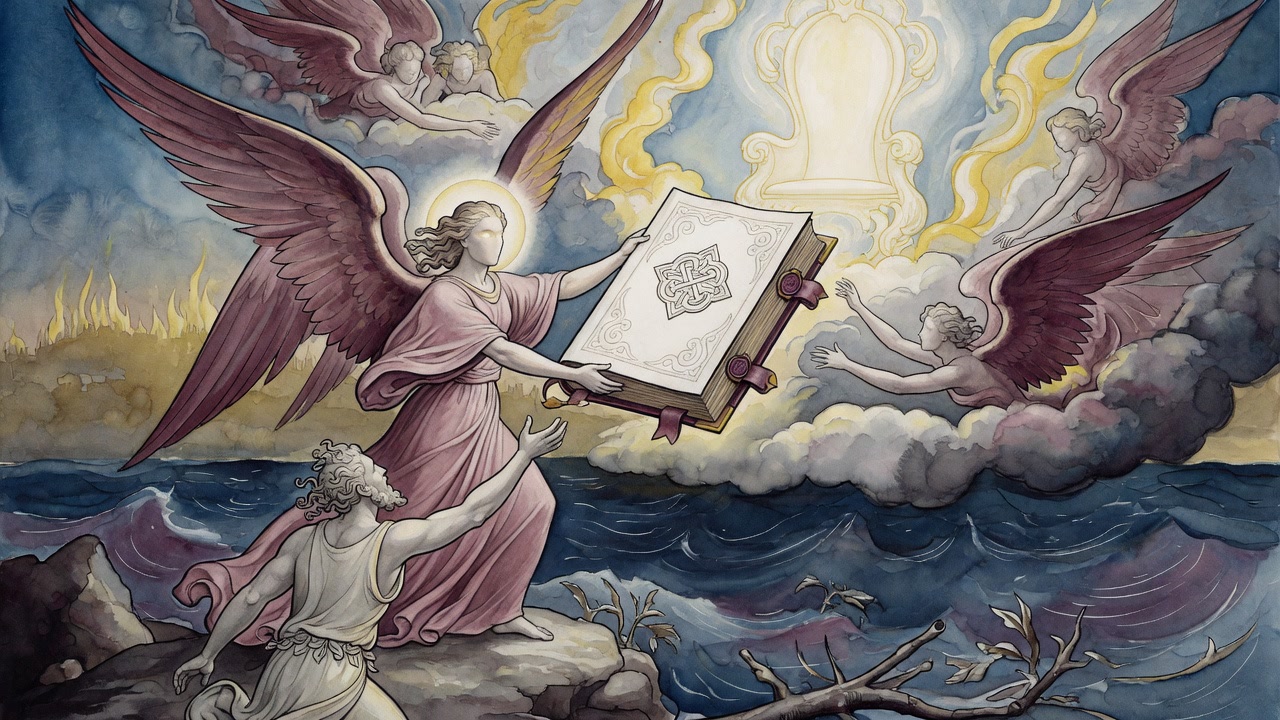
After Eden, an angel came to Adam with a book containing every secret of the world. The angels stole it. God returned it from the sea.
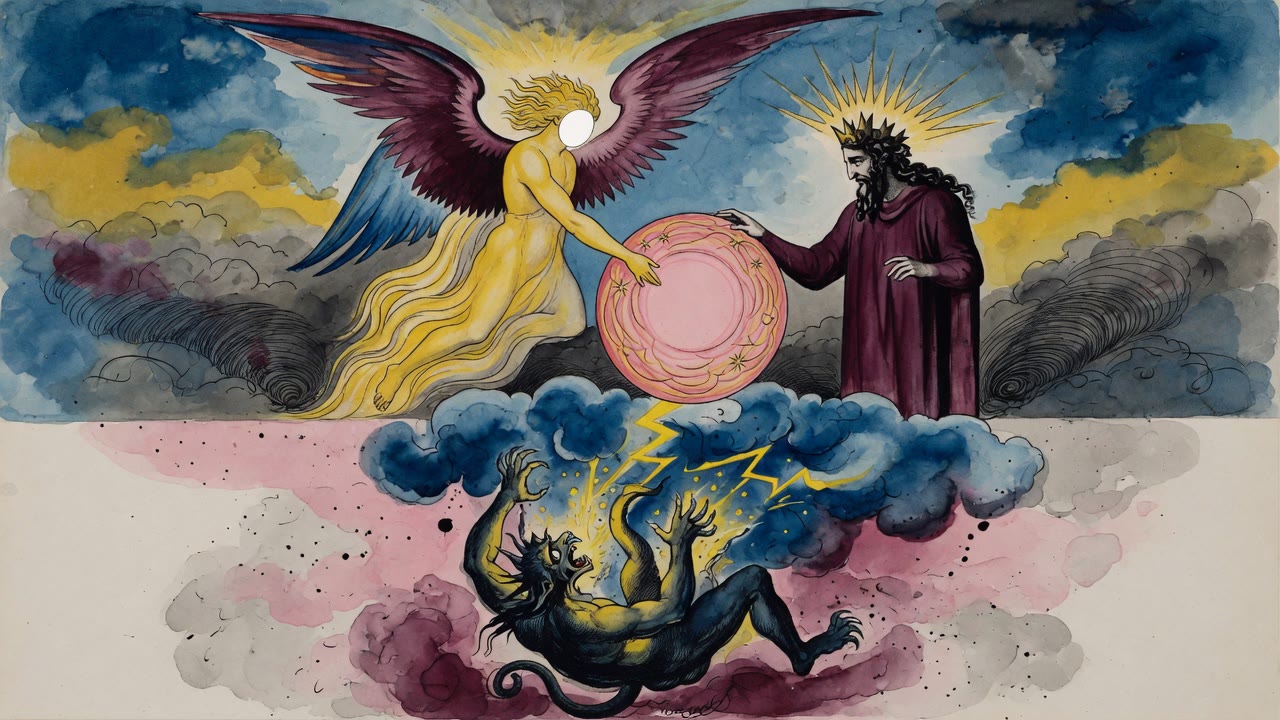
A demon was draining life from a child on Solomon's building crew. Solomon prayed and Michael arrived with a ring that bound every demon on earth.
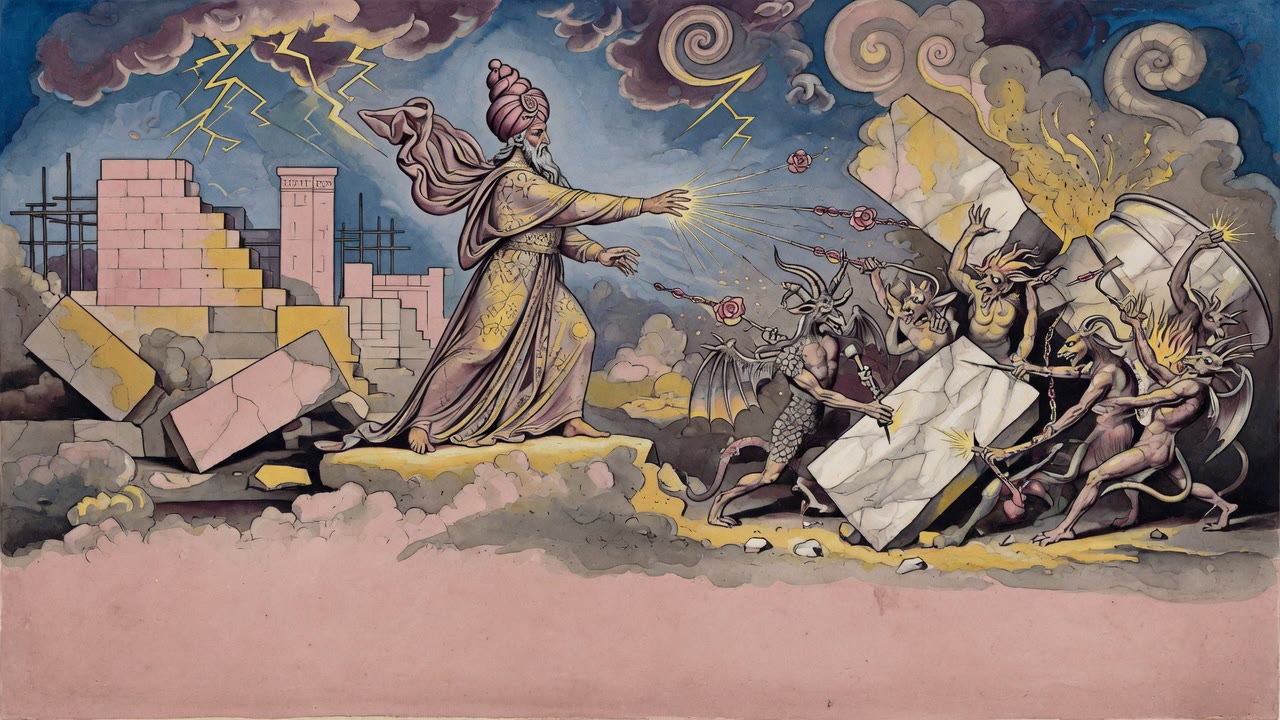
The boy on the Temple site wasted toward morning. Michael put a ring on the king's finger. A prince of demons came down off the air and knelt.
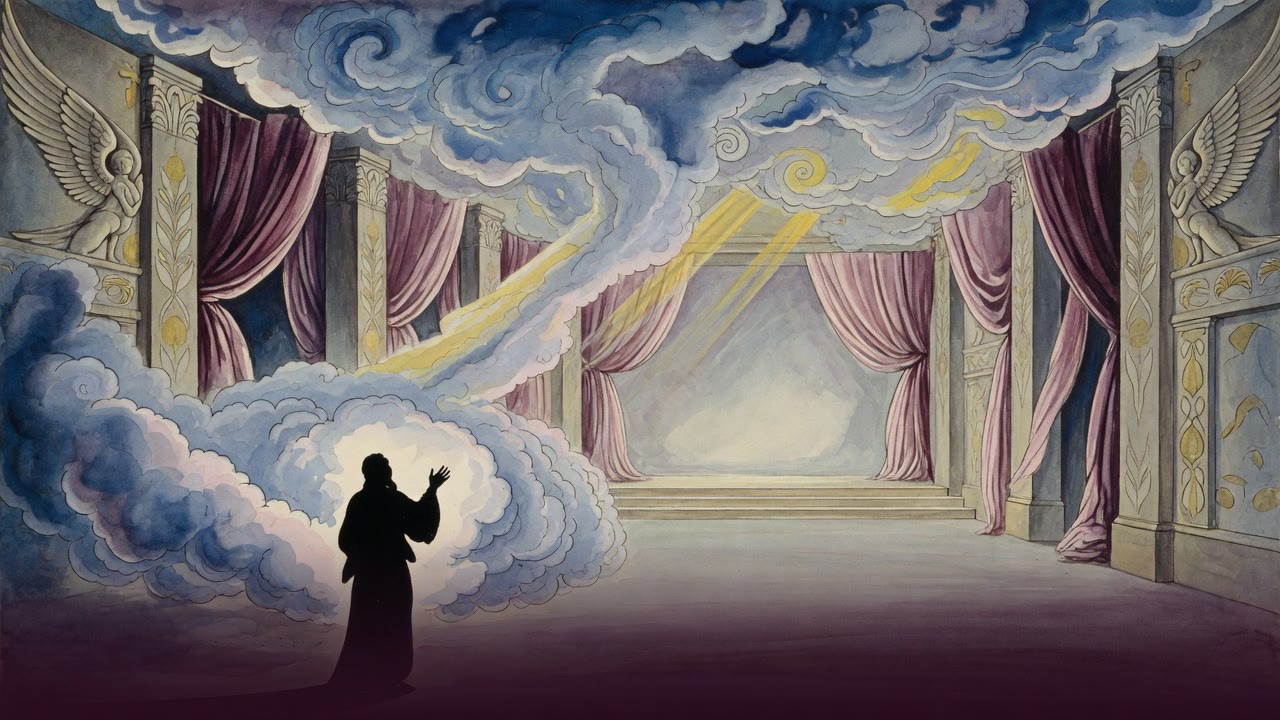
A portable tent in the desert held a sanctuary twice as large as the one Solomon built in Jerusalem. The rabbis argued about why for a thousand years.
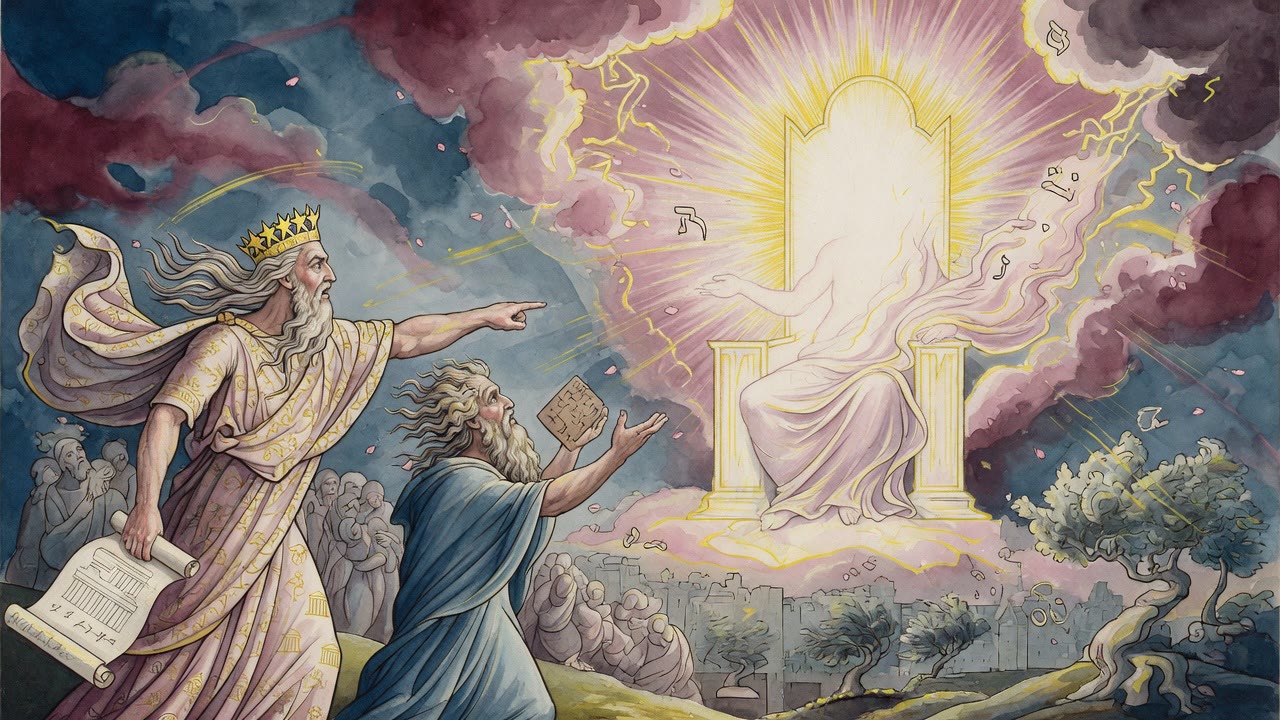
Solomon built the Temple and knew its prayer would one day be needed. Daniel stood in exile and tested whether that prayer still worked. Both were right.
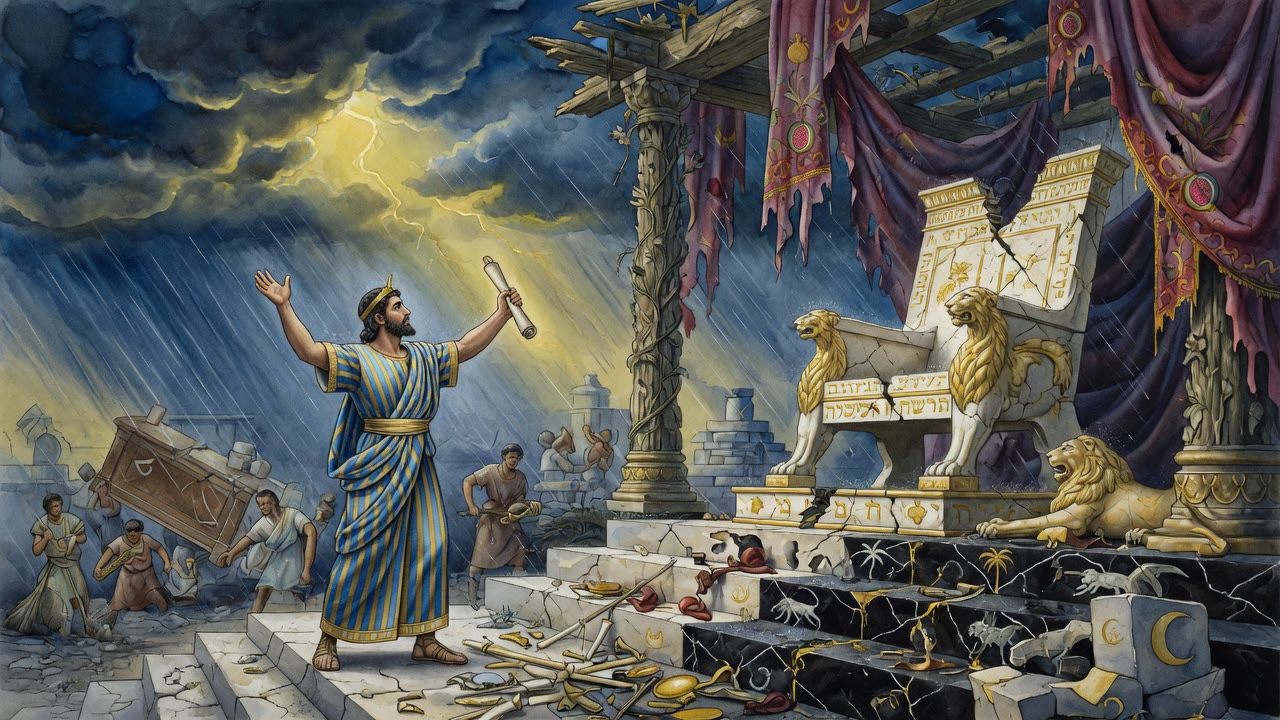
Josiah was eight when they crowned him. He sent men into every house in Judah to search the walls for hidden idols, and he burned the bones of Baal's priests.
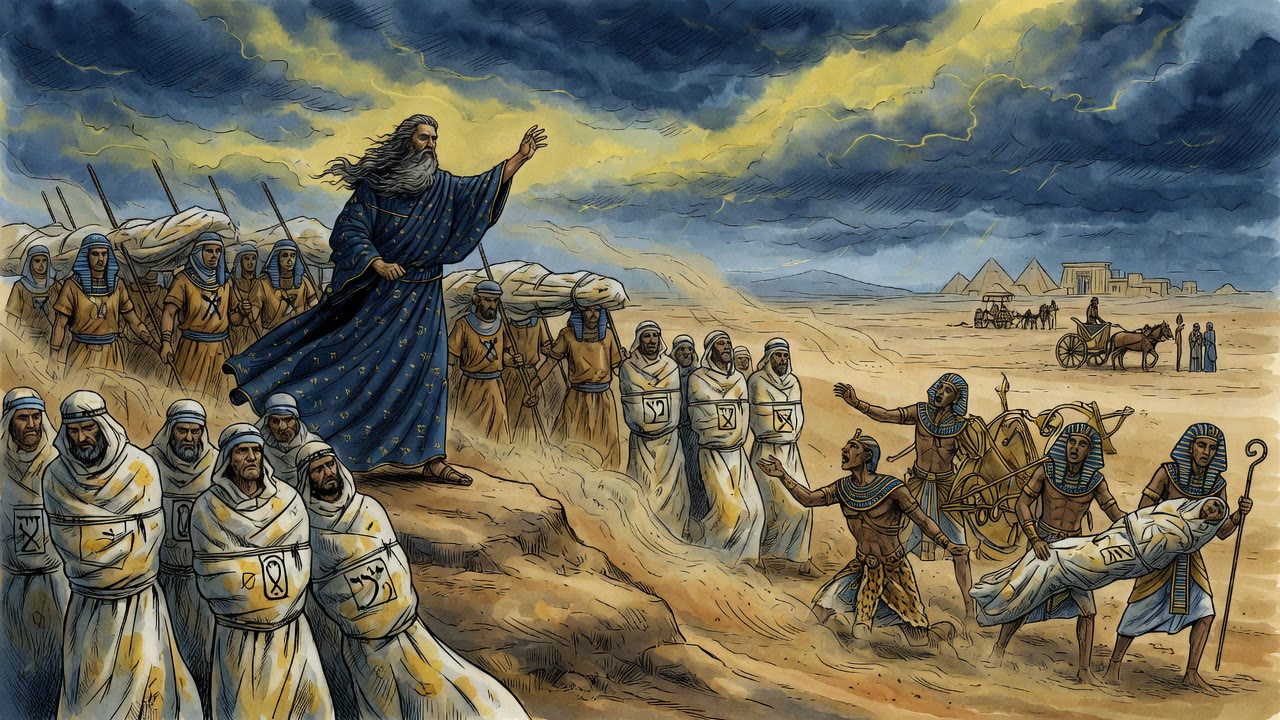
The men reached Jerusalem with their tools still rolled. Solomon did not set them to work. He handed each one a folded sheet of burial linen.
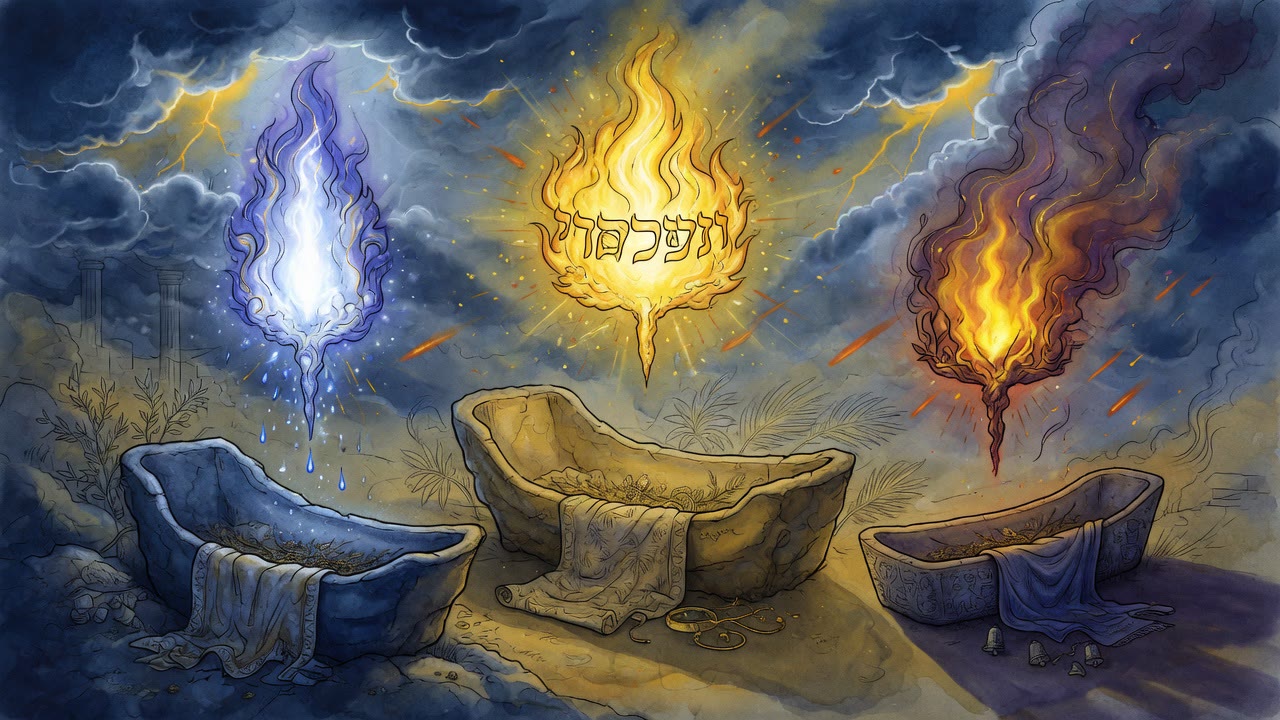
God spoke the names of Isaac, Solomon, and Josiah into the air before any of the three had been conceived, and each name held.
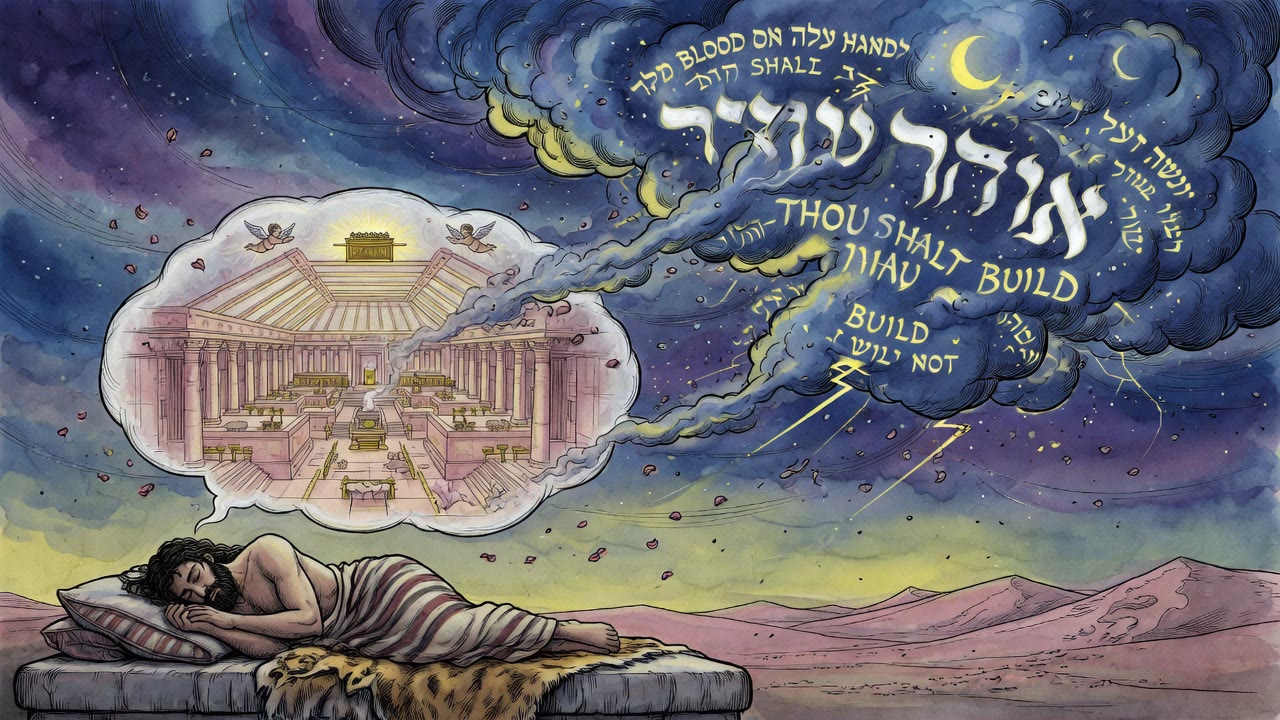
Nathan told him to do whatever was in his heart. God woke the prophet that night and sent him back with the opposite answer.
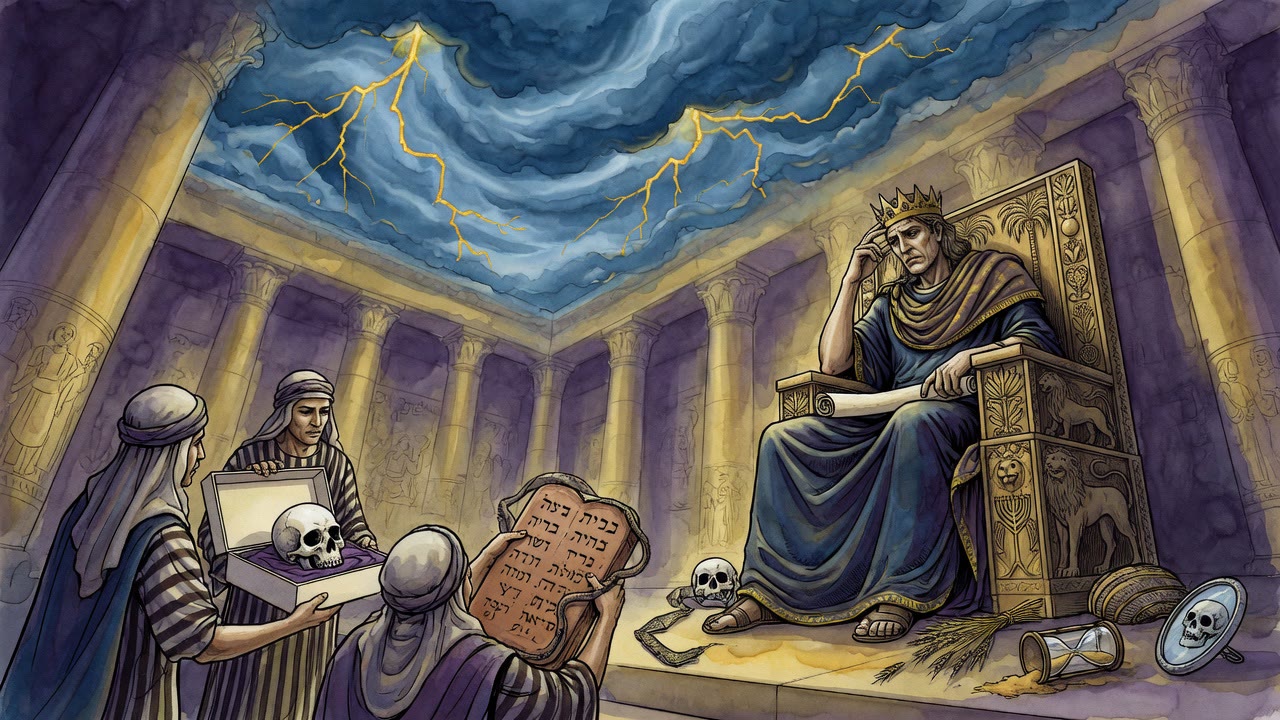
The first herald waited at the lowest step. Before Solomon's sandal landed, the man opened the king's law and spoke it into the air.
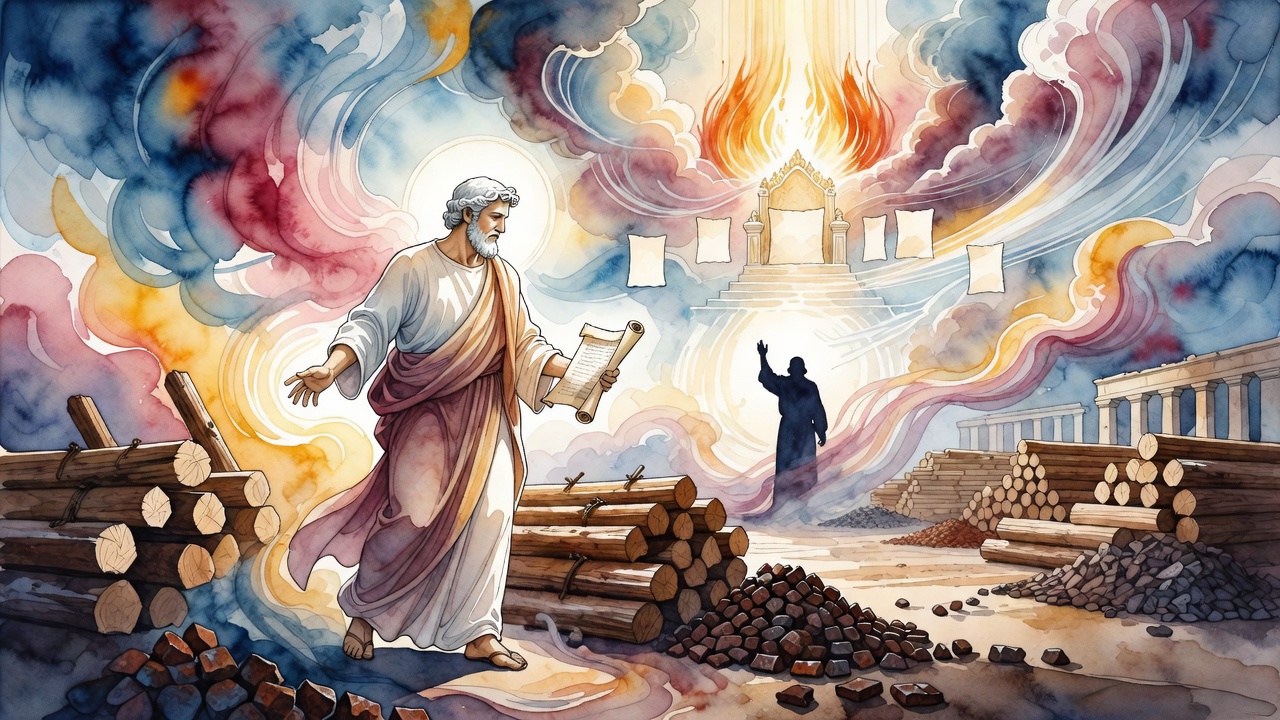
Cedar from Lebanon filled the palace yard. Nathan came back the next morning and would not look at it. If David built the house, it could not fall.
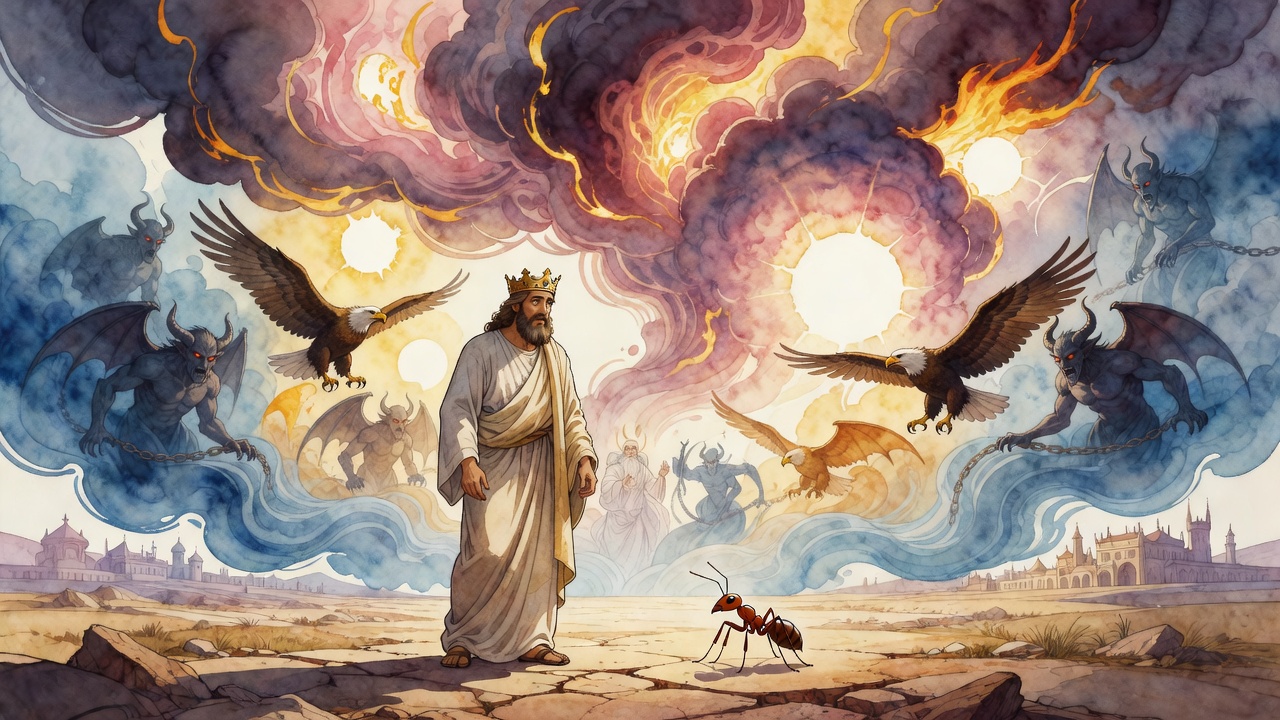
Solomon closed his fist around a live ant and asked who in the world was greater. She answered that God had led the king to her hand.
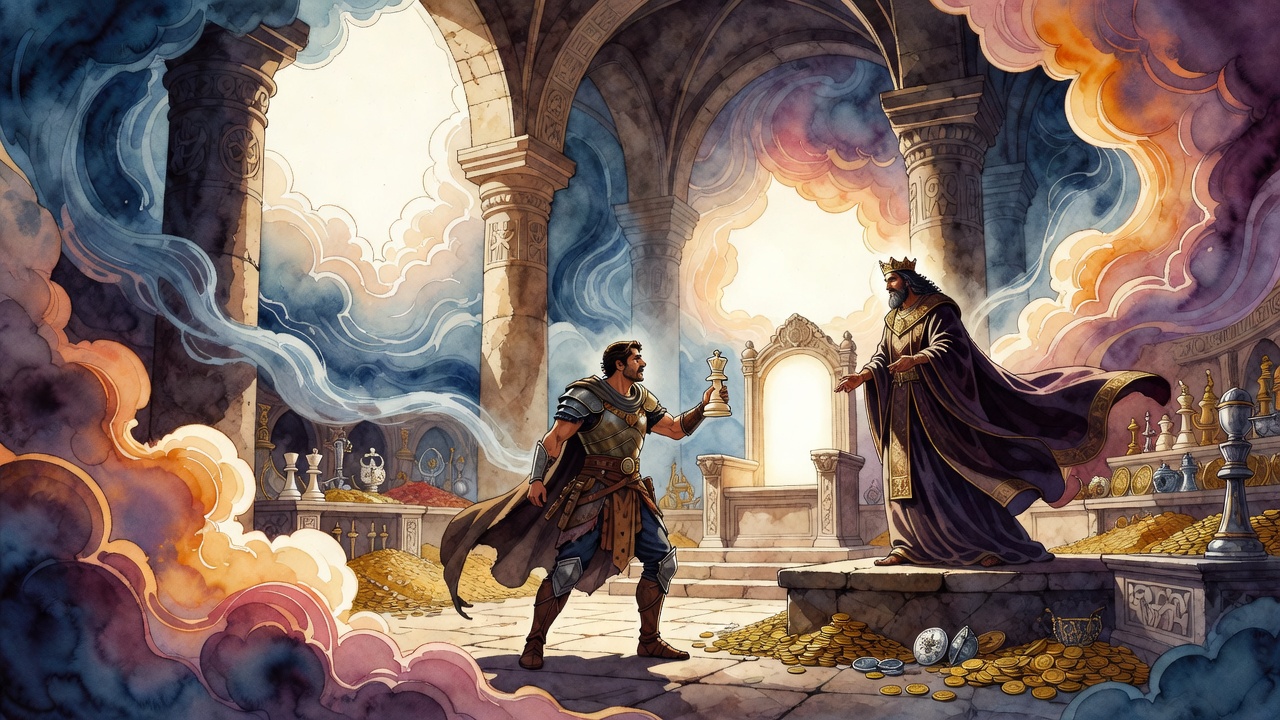
Benaiah stole one chess piece and won. Solomon answered with a treasury trap that made the general confess in front of the court.
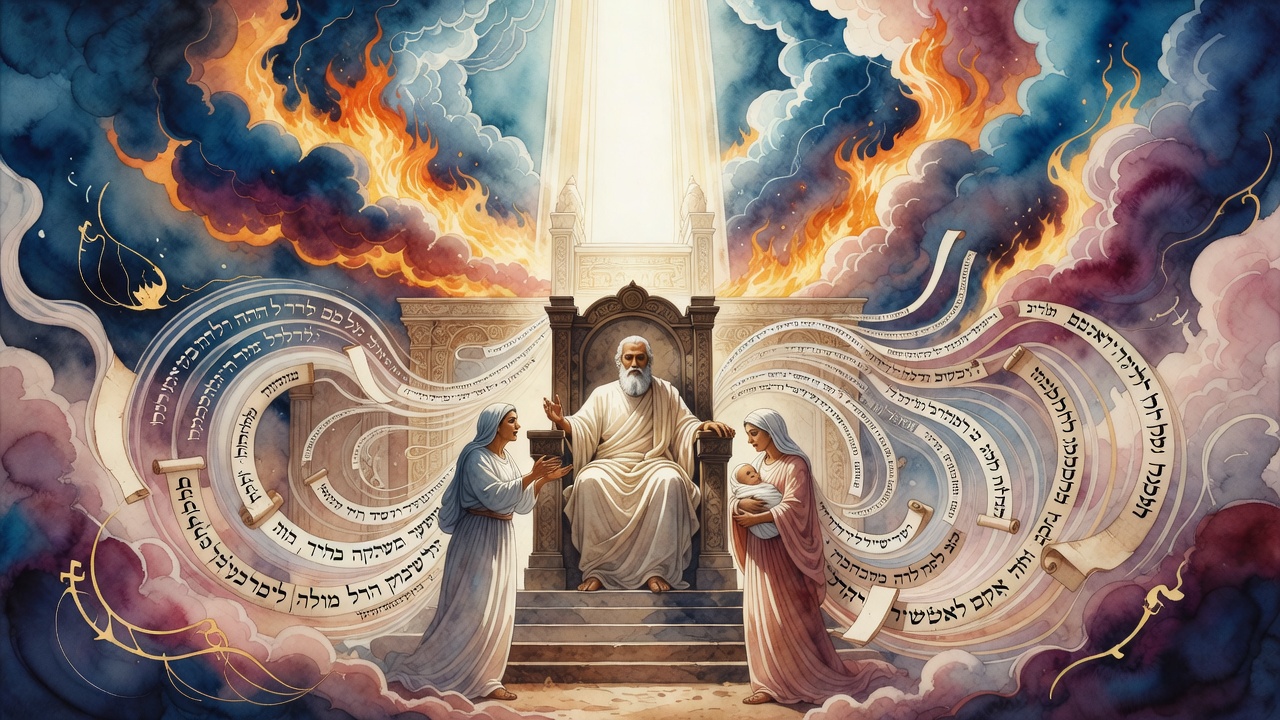
Two women stood over one living child. The boy-king asked for a sword. His counselors said woe to the land that had a youth on the throne.
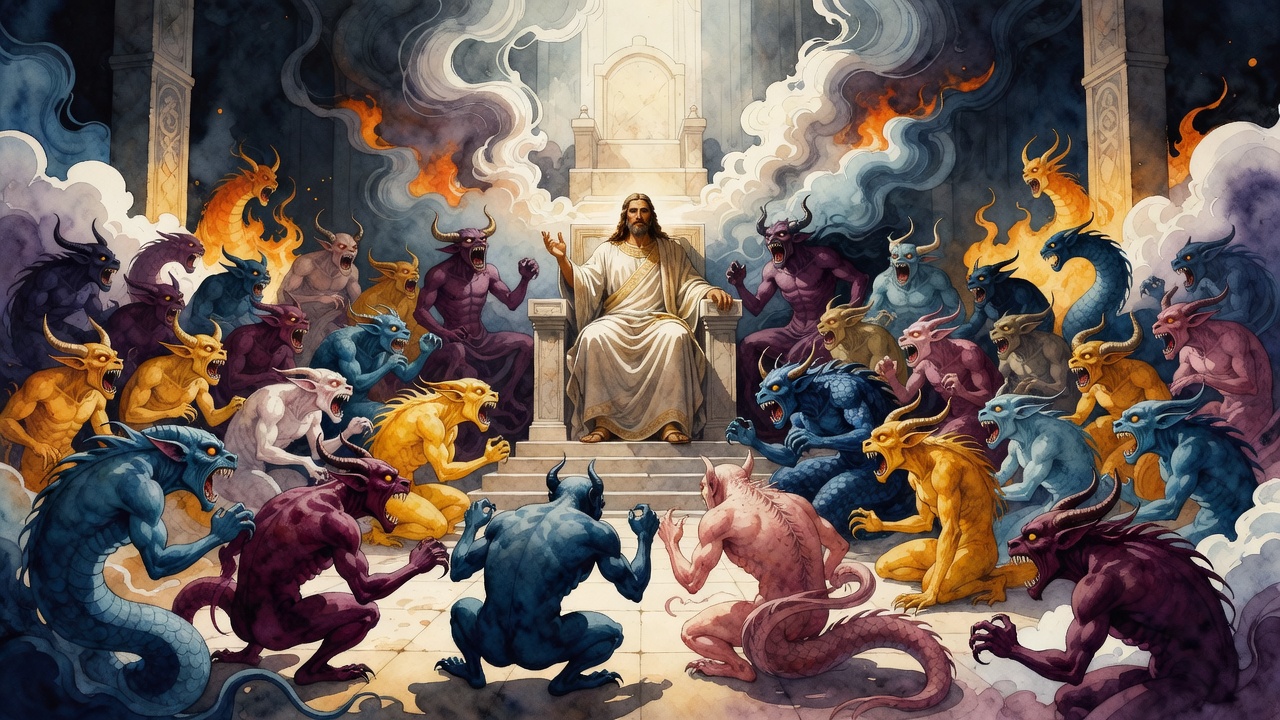
A ring dragged them in one at a time. Ornias strangled men in their sleep. A headless spirit ate heads. Each said which angel could stop it.
The rabbis compared Abraham to a vessel struck by a potter. Ten times the tests hit him hard, and still his faith rang true.
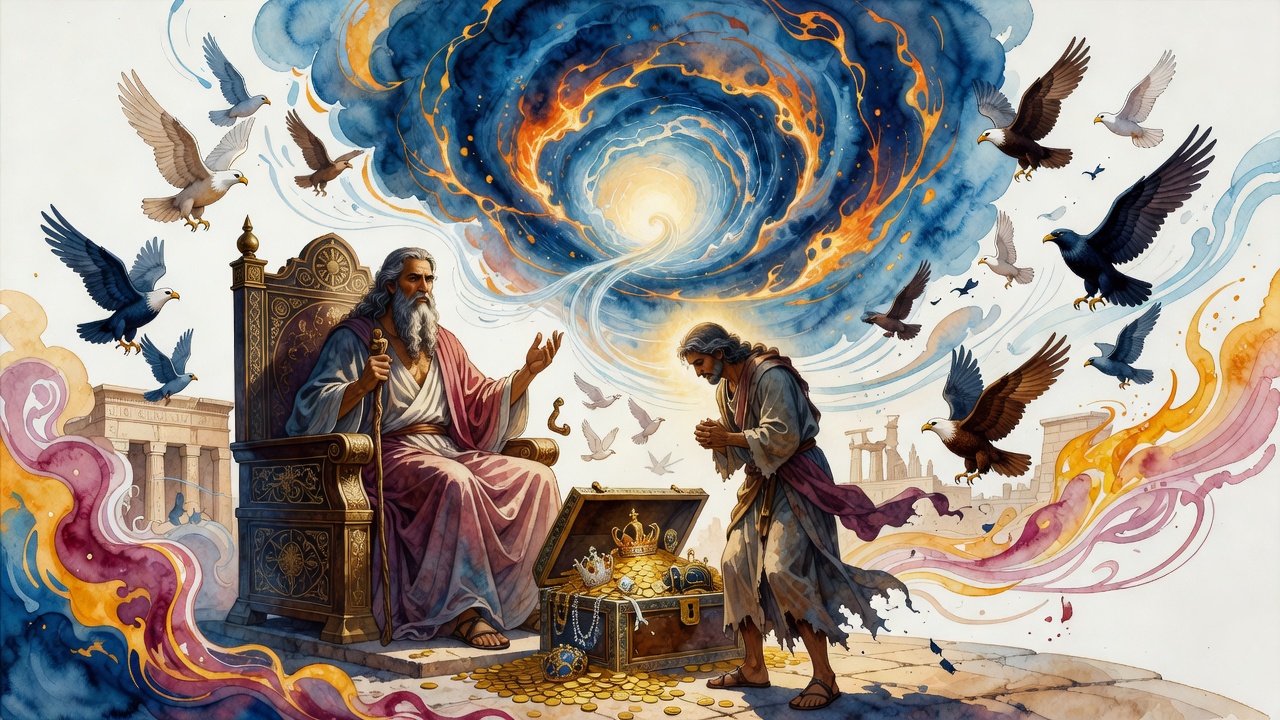
The visitor refused gold. He wanted to hear what the birds said. Solomon taught him, and told him that repeating one word would kill him.
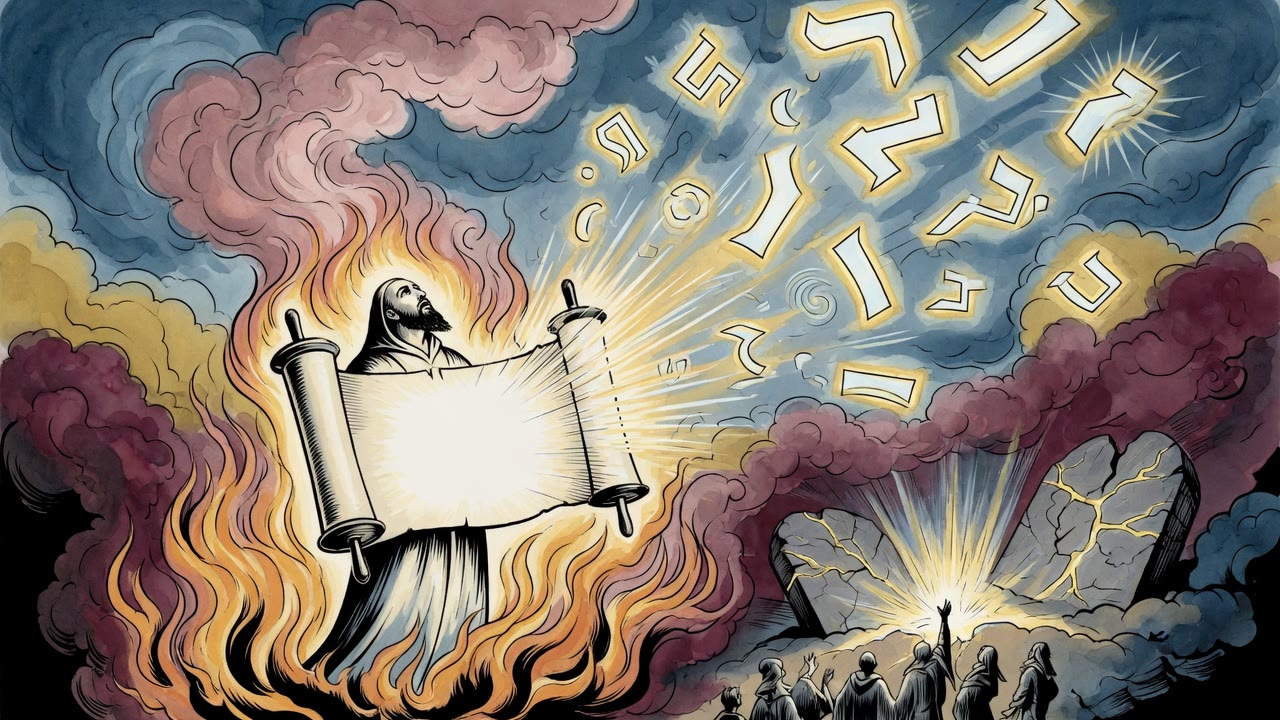
Her priests told her to refuse the king unless he honored their gods. Solomon said no for a long time. Then she made the request small.
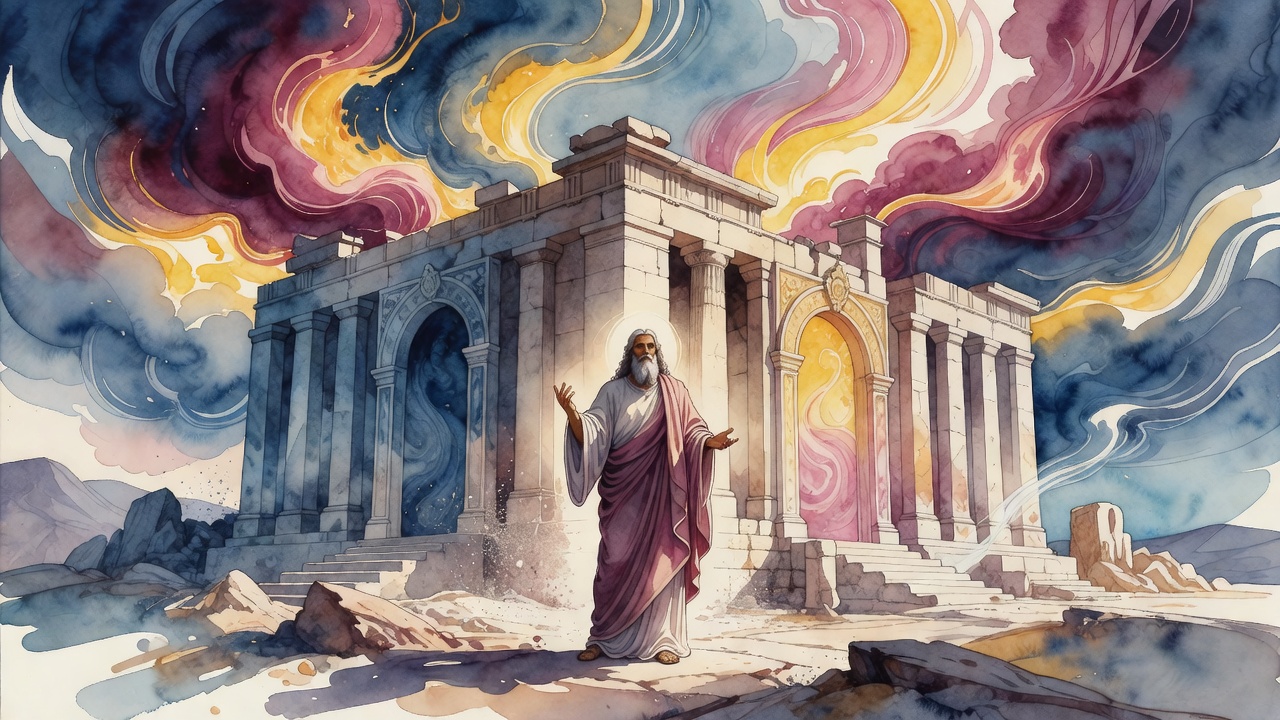
Solomon's masons fitted the stones so close that no one could find a tool mark. The house went up in silence, and then he dreamed of it burning.
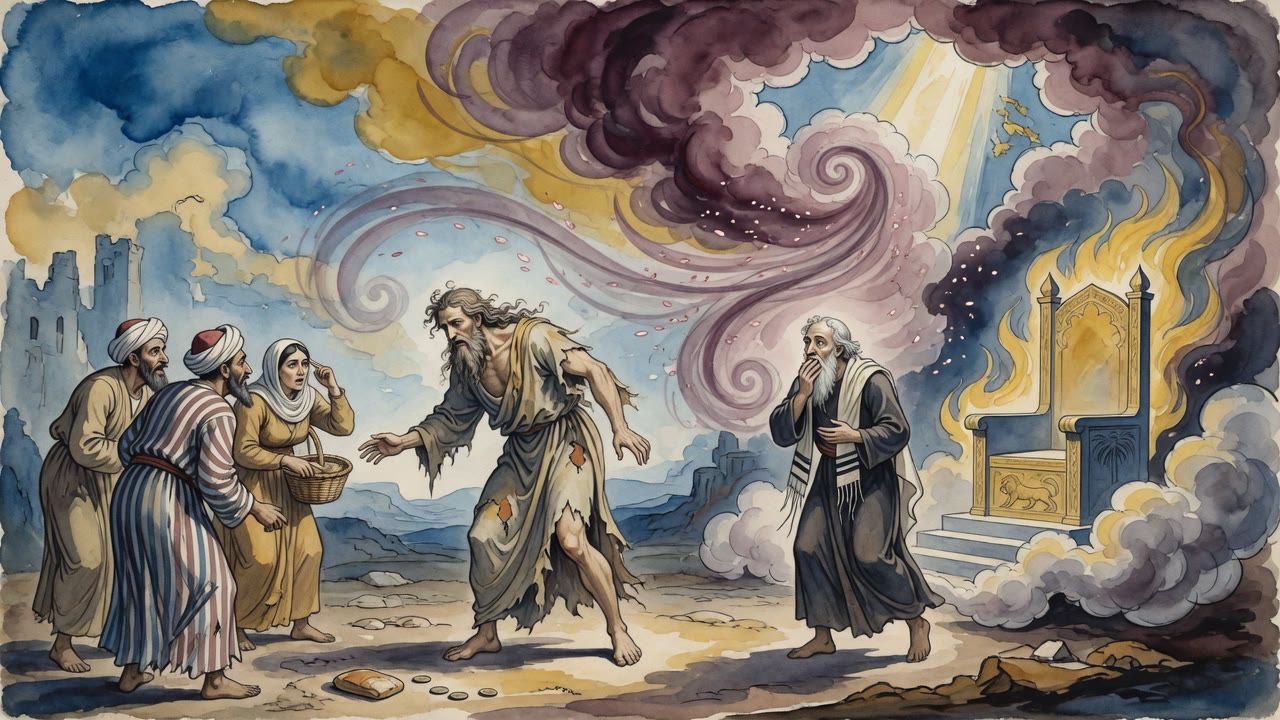
He held out his hand in a market that did not know him. The worst day was not the blank stares. It was the face that went pale.
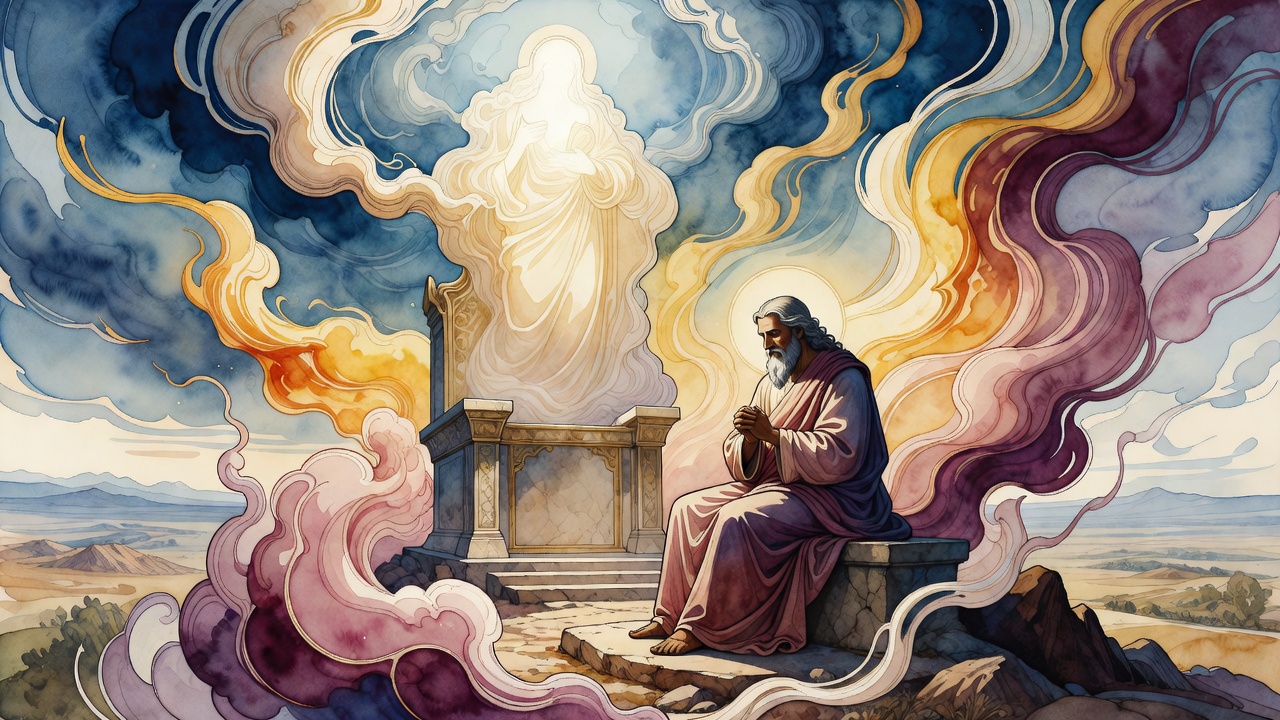
A voice at Gibeon said ask. Solomon named a listening heart. Two women came at dawn with one living child and no witness.
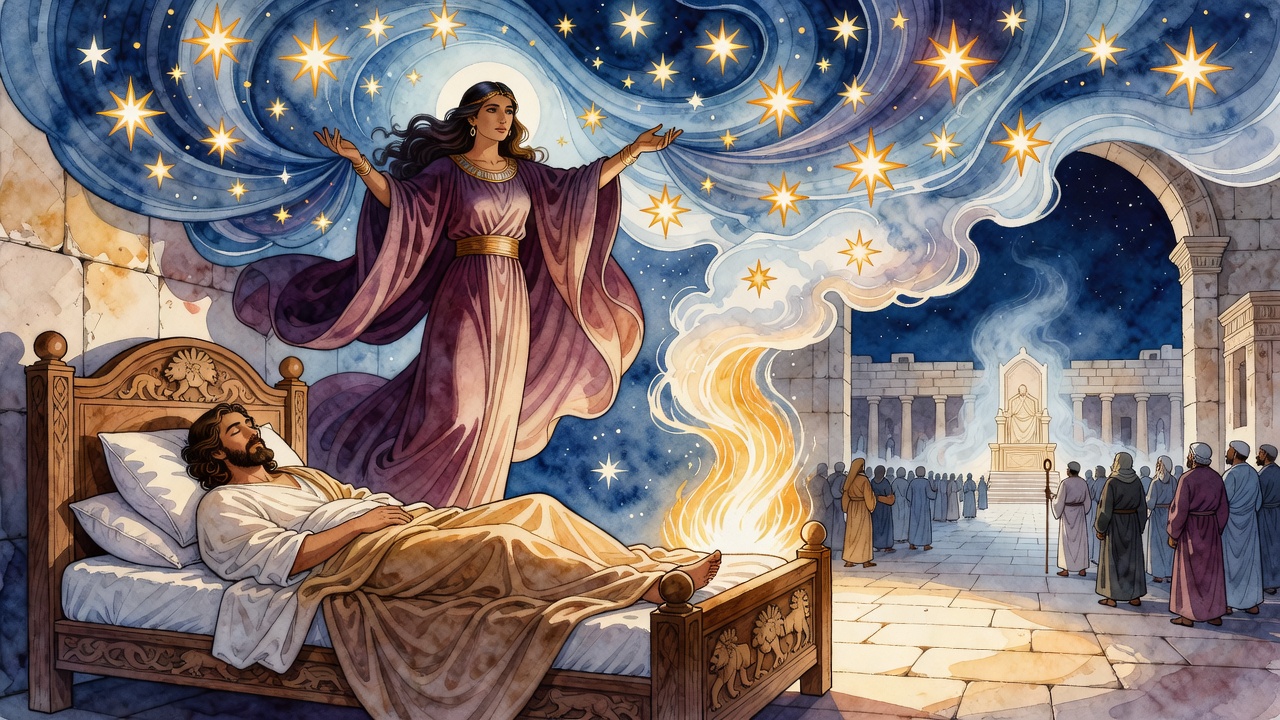
The morning lamb stood ready. Priests kept the fire. Israel waited in the court while the king slept under a sky someone had sewn.
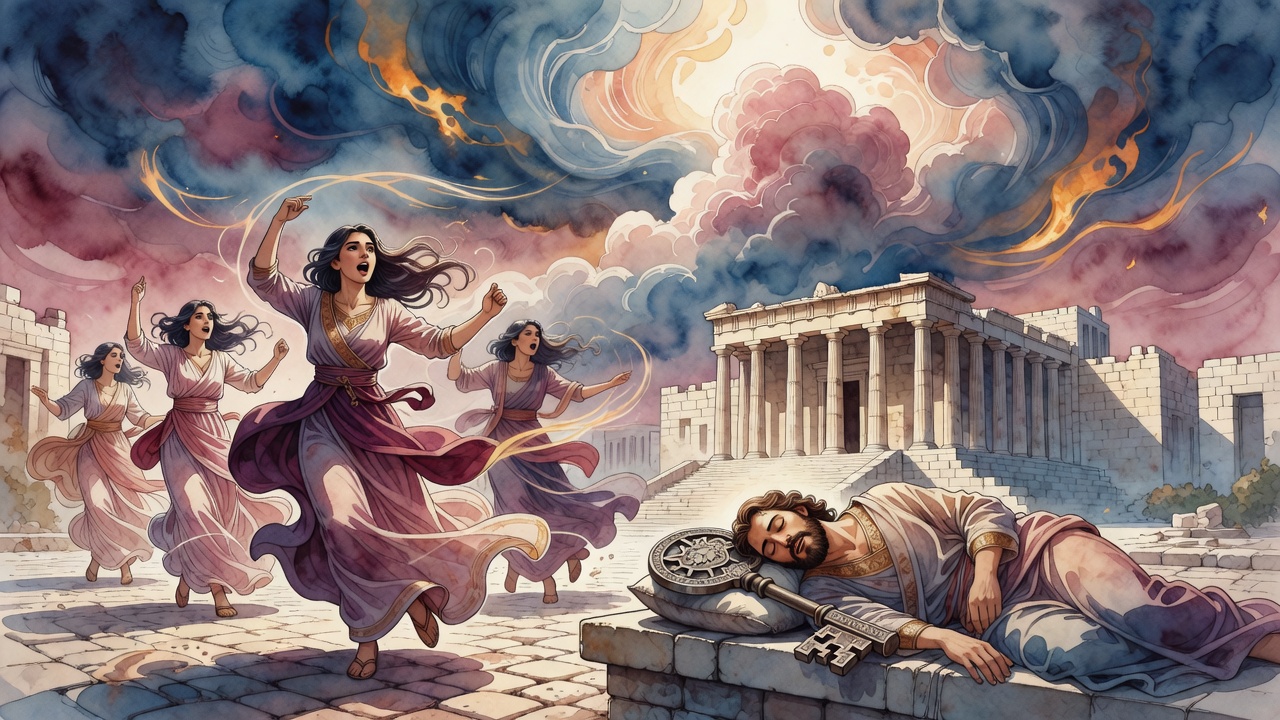
On the night Solomon dedicated the Temple, his new wife danced eighty dances in the streets while he slept with the Temple keys beneath his head.
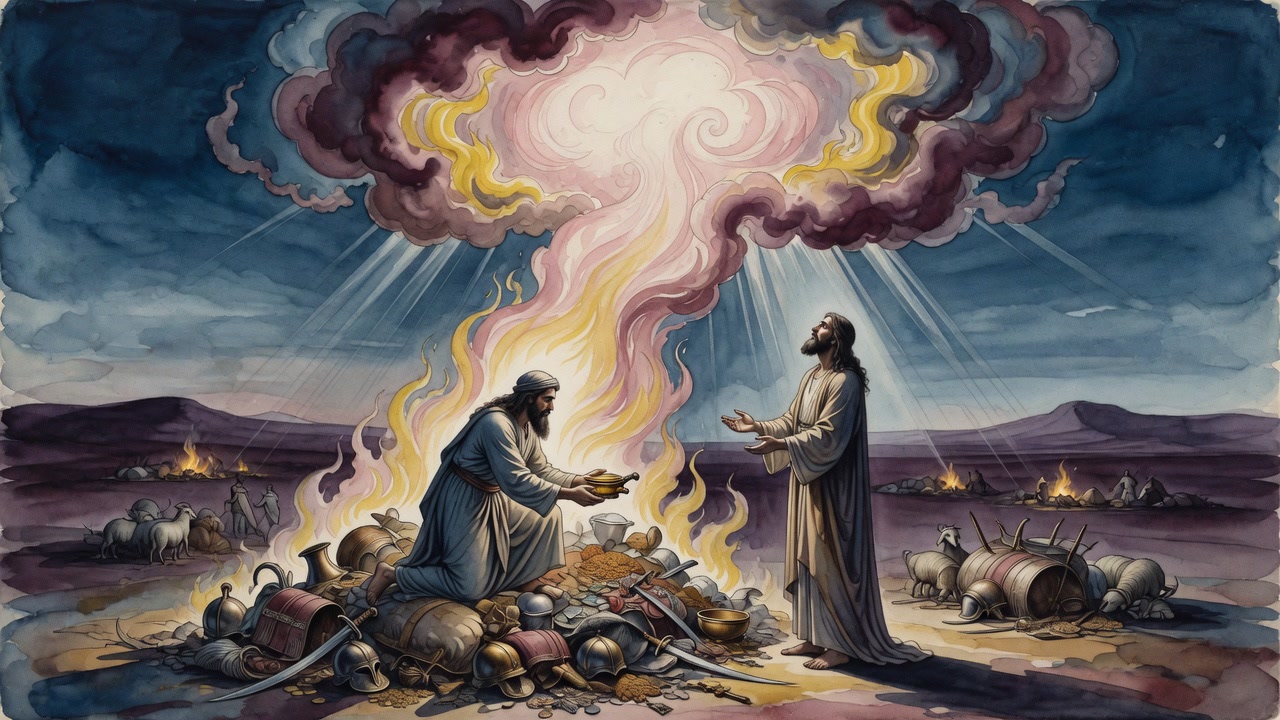
Adam held the sapphire to his eyes and a flame inside it became letters. Noah later sealed that same book in gold and carried it through the rain.
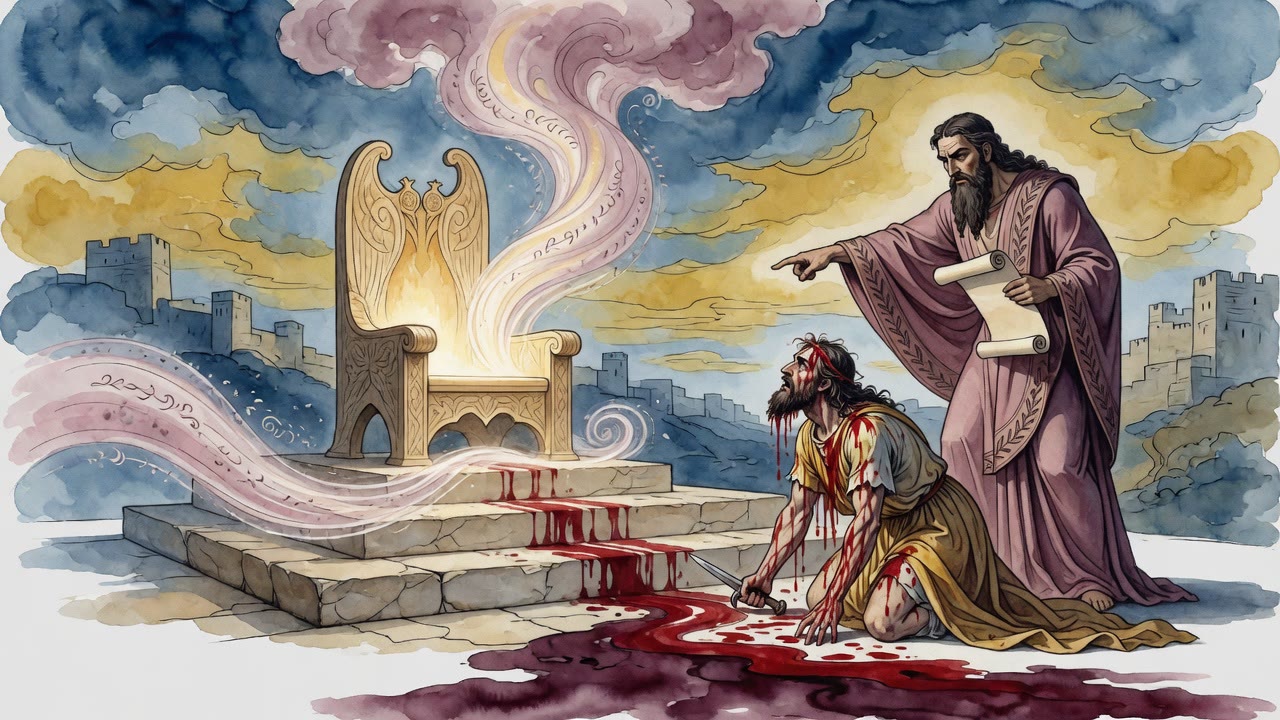
The old king could not raise the sword. Joab still walked the court. David put the blood on a son who had never marched with that general.
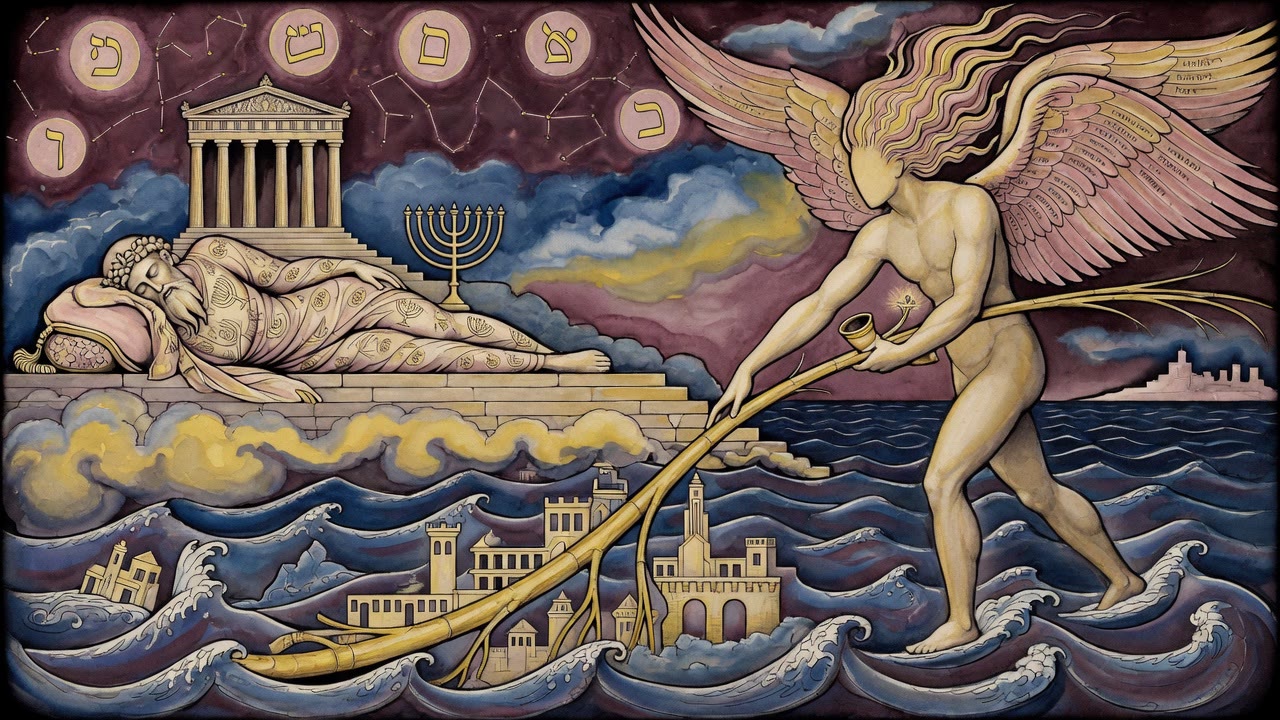
Pharaoh's daughter hung jewels over the bed until they looked like stars. Solomon lay back. The morning offering waited in the court.
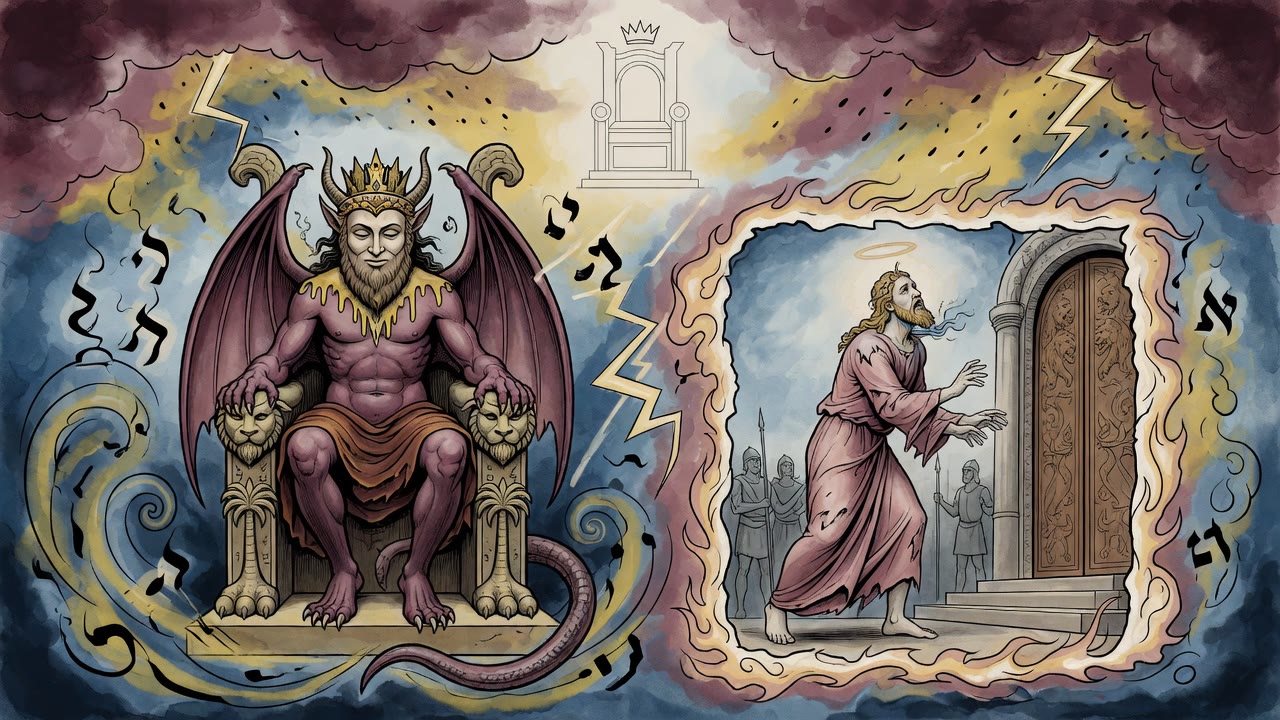
The beggar said he was king. They set a bowl of grits before him. In Jerusalem a man with hidden feet still sat on Solomon's throne.
