Korah Grabbed the Temple Gates When They Sank Into Gehinnom
Korah looked into the future and saw Samuel and twenty-four Temple singers coming out of his own line. He decided God would never let their father die.
Table of Contents
 Click for full size
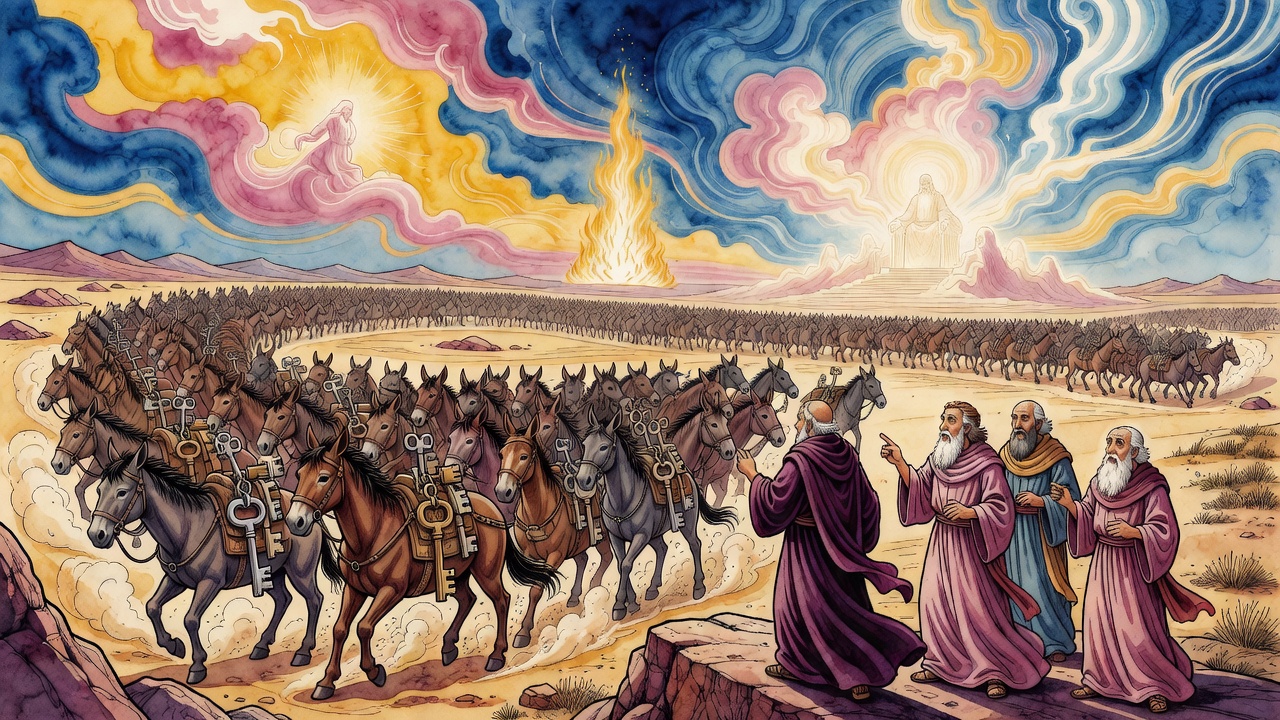
Three Hundred White Mules for the Keys
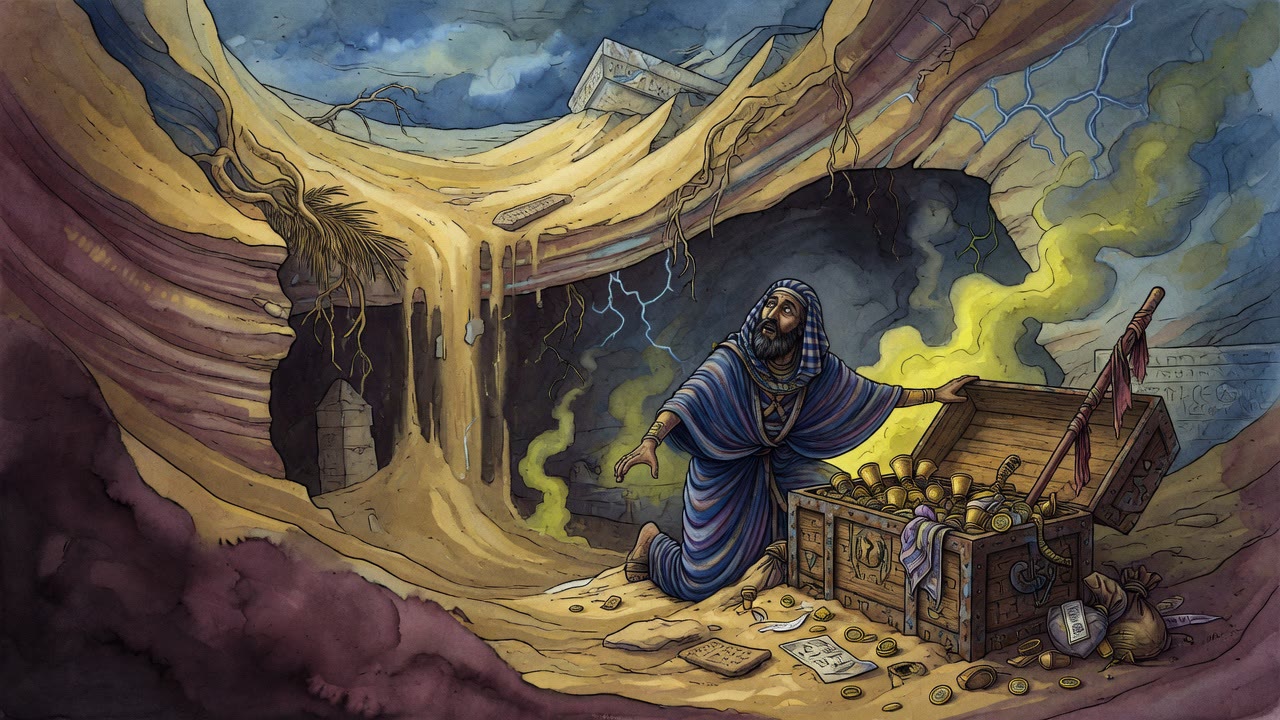
During the lean years Joseph sold grain to a starving world and took in more money than any treasury had ever held. He put up three buildings, each a hundred cubits long and a hundred wide and a hundred high, packed them with silver, and handed the lot to Pharaoh. He would not keep back five shekels of it for his own children.
Generations later Korah found one of the three.
After that he needed three hundred white mules for nothing but carrying the keys to his own storehouses. He walked out of Egypt the richest private man in the nation and pitched his tent in the wilderness with a fortune he could not spend on anything, because the food came down free every morning and there was nobody to sell to.
The Cousin Who Got the Job
Kohath had four sons. Amram first, then Izhar, then Hebron, then Uzziel.
Amram's boys had taken everything. Aaron was high priest. Moses ran the nation. Korah was the son of Izhar, second in the line, and when the post of prince over the Kohathites came open Moses handed it to Elizaphan, who was the son of Uzziel, the youngest of the four.
Korah said it out loud to anyone who would listen. Amram was the firstborn and his sons took the privileges of a firstborn, fine. But Izhar came next. The right belonged to him and it went to the child of the last brother.
"Therefore I will stir up a rebellion against Moses," he said, "and overthrow every institution he founded."
What He Saw When He Looked Ahead
Korah was not a fool, and that was the trouble. He was far too clever to believe God would stand by with folded arms while a rebellion against Moses succeeded. Something had to be underwriting him, and he thought he knew what it was, because he could see forward.
He looked down his own line and found Samuel standing in it, a man who would weigh as much as Moses and Aaron together. He looked further and found twenty-four of his descendants with the spirit of God on them, composing psalms and singing them inside the Temple.
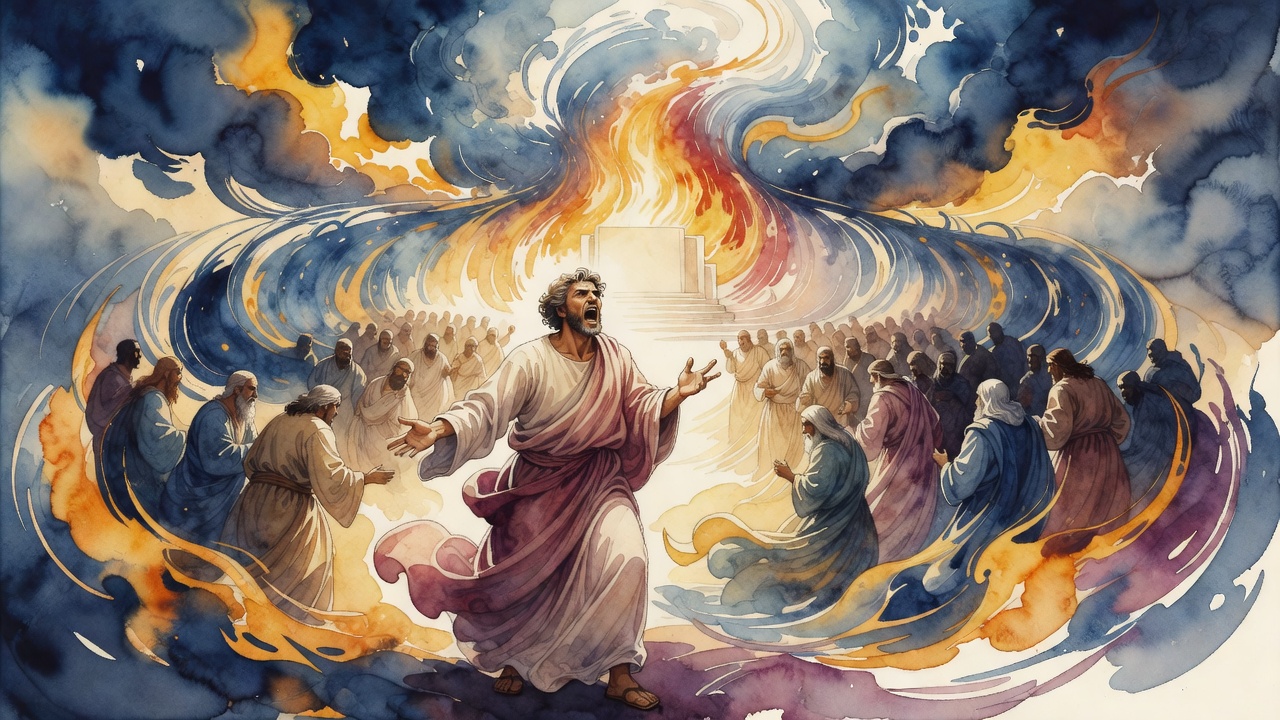
A man whose family tree grows that does not get swallowed. God would not destroy the father of Samuel. Korah walked into the assembly the next morning with the future in his pocket.
His eye had not looked sharply enough. What he had seen was true and what he concluded from it was wrong by one generation. The singers and the prophet were coming through his sons, and they were coming because his sons would turn around at the last second and repent of exactly the rebellion he was about to start. The future he was leaning on was the reward for abandoning him.
The Voice Under the Ground
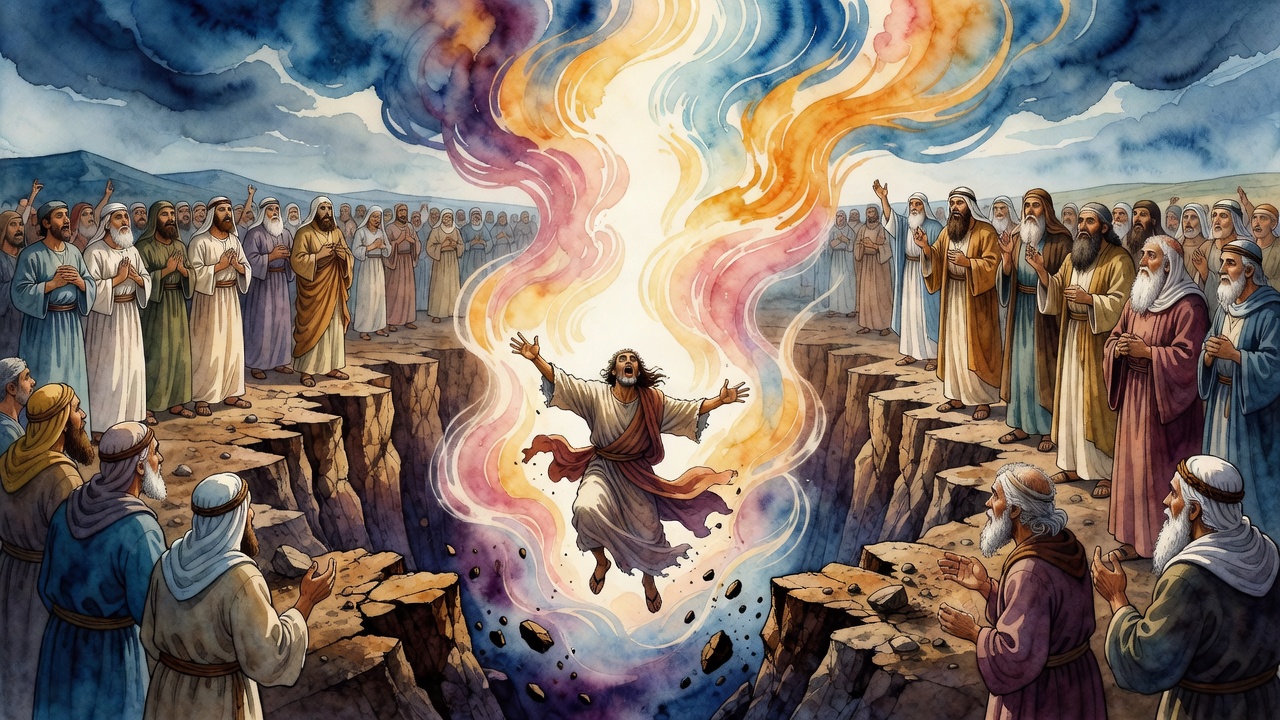
The earth opened and took him down alive with everything he owned, and closed.
His sons looked up. There is a line in Proverbs that the path of life runs upward for the wise, and the ones who look up are the ones who come out. Korah's sons looked up and were spared. Their father did not look up, and he went down.
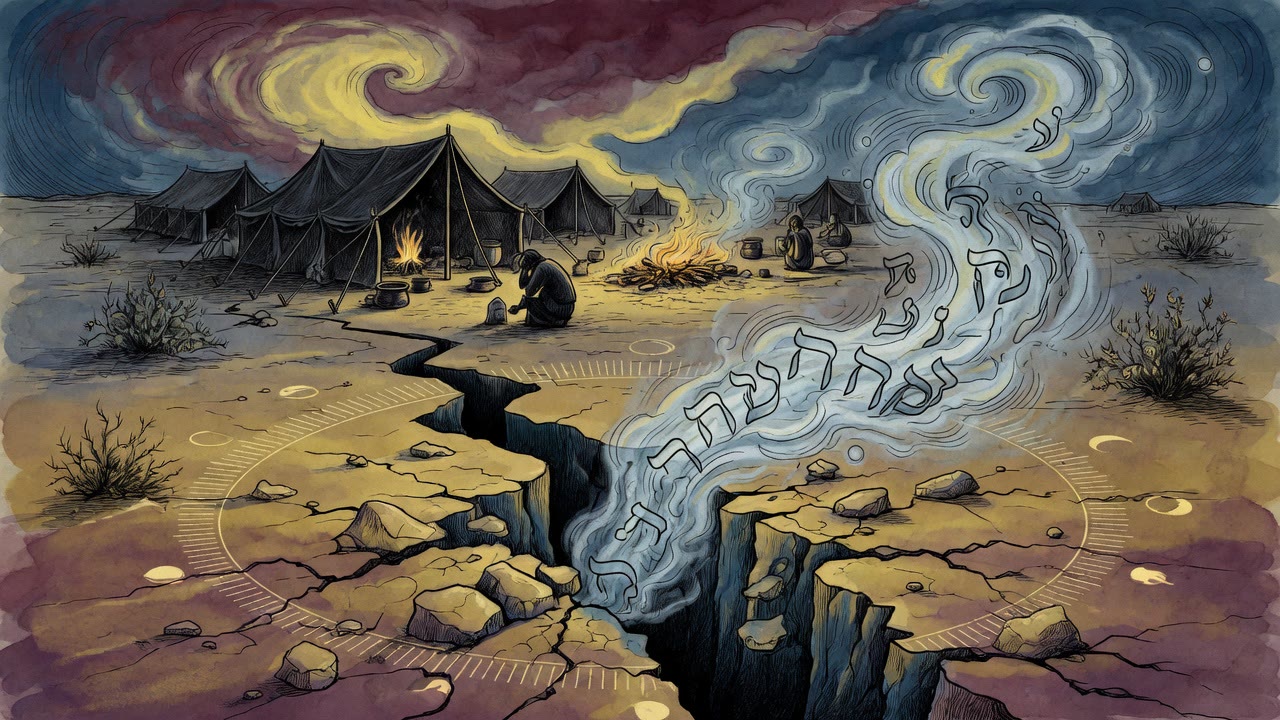
The ground was not the end of the sentence. Korah and his company burn in Gehinnom, the place where the wicked are punished, and once every thirty days Gehinnom (the realm of judgment after death) heaves them back up near the surface, to the exact patch of dirt where they went in. Put your ear to that ground on the right day and you can hear them from underneath. They are not screaming and they are not cursing anyone. They are saying the same sentence over and over.
Moses is truth, and his Torah is truth, and we are liars.
The Gates That Sank Down to Them
For a long stretch of that they believed nothing would ever change. Then Hannah, standing in the sanctuary at Shiloh, said a line that had nothing to do with them and everything to do with them. The Lord brings down to Sheol, and the Lord brings up.
They did not trust it. They had heard promises before, and they were the ones who had been made an example of.
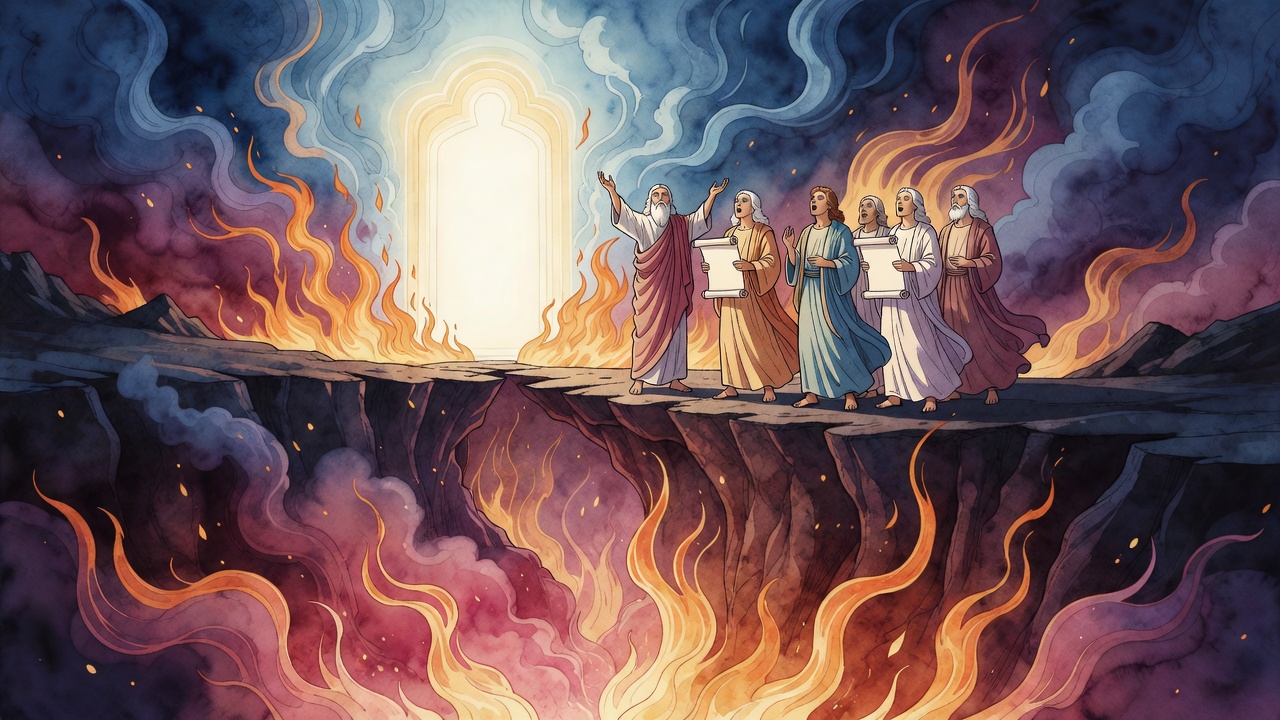
Then the Temple came down. Jerusalem burned, and the gates of the house went into the earth, and they kept going, down past the roots and the water until they reached the place where Korah was. He saw the doorposts of God's house come through the wall of his own punishment.
He got his hands on them and would not let go. "If these gates ever go back up," he said, "we go up through them."
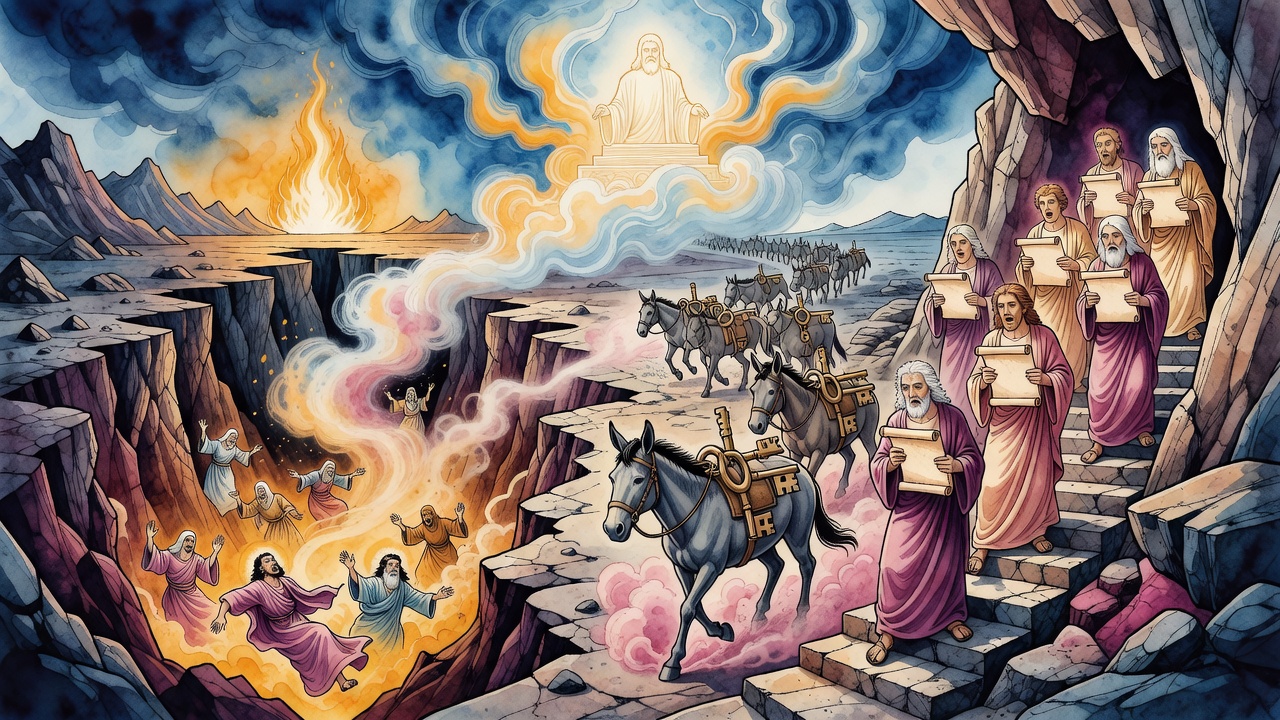
God gave him the job. Korah and his whole company were appointed keepers of the sunken gates, and they stand watch over them down there and will keep standing watch until the day the gates rise and take them out. The punishment ends at the resurrection. For all of it, they were never handed over to be lost forever.
The richest man in Israel ended up on guard duty at a burned building, holding a door with both hands and waiting for it to move.
← All myths