22 myths
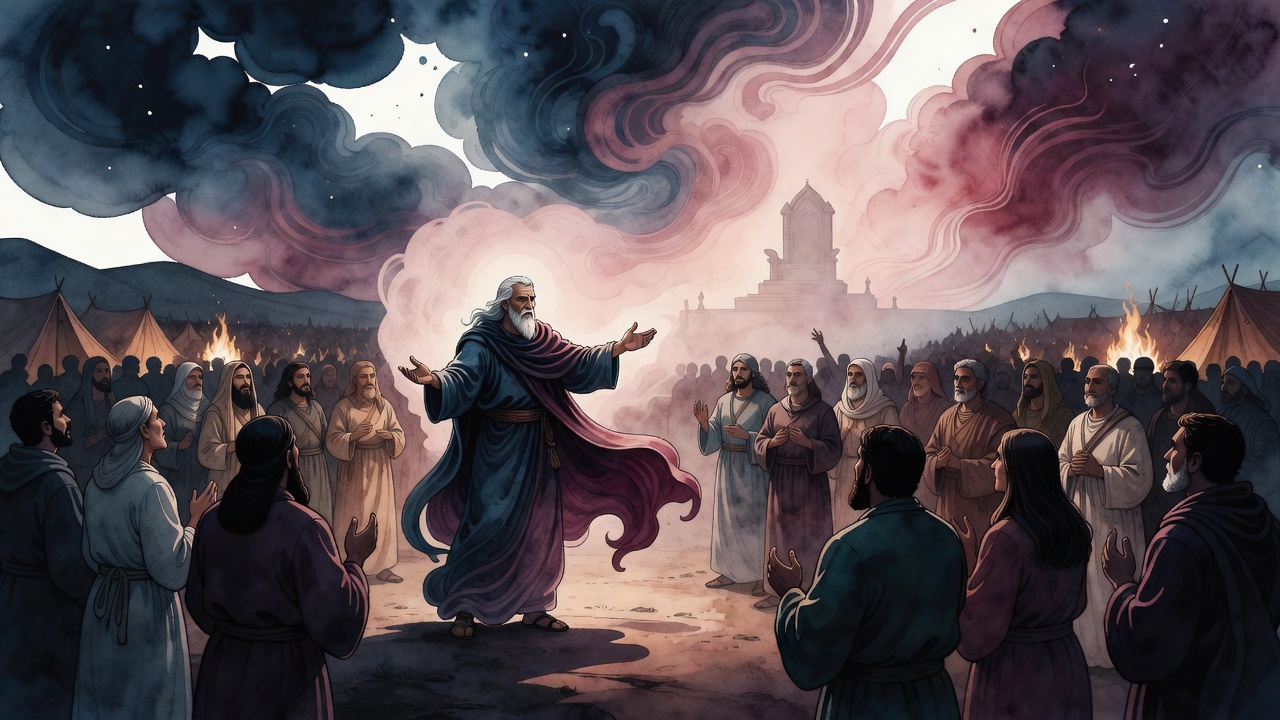
Moses had given him until morning to think. Korah used the dark on tent flaps, and dawn brought a whole camp to the incense test instead.
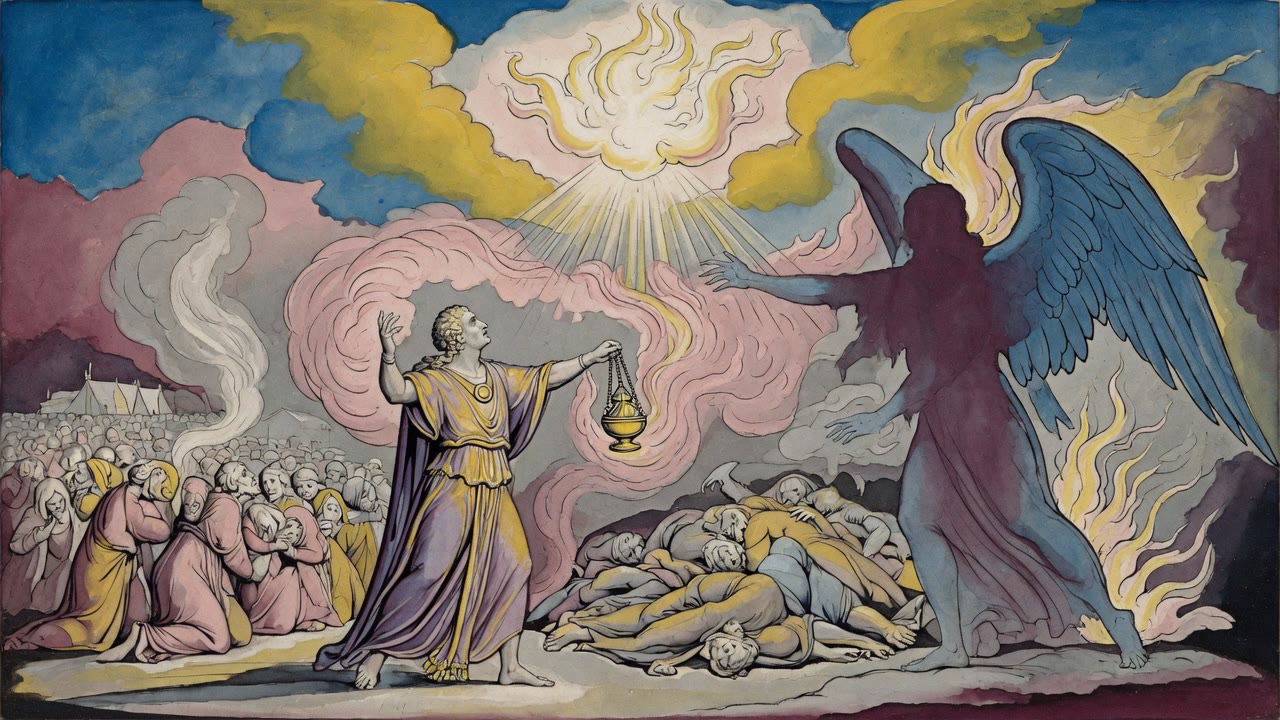
Korah was already under the ground. By morning Israel blamed Moses, and Aaron ran into the plague with altar fire and incense.
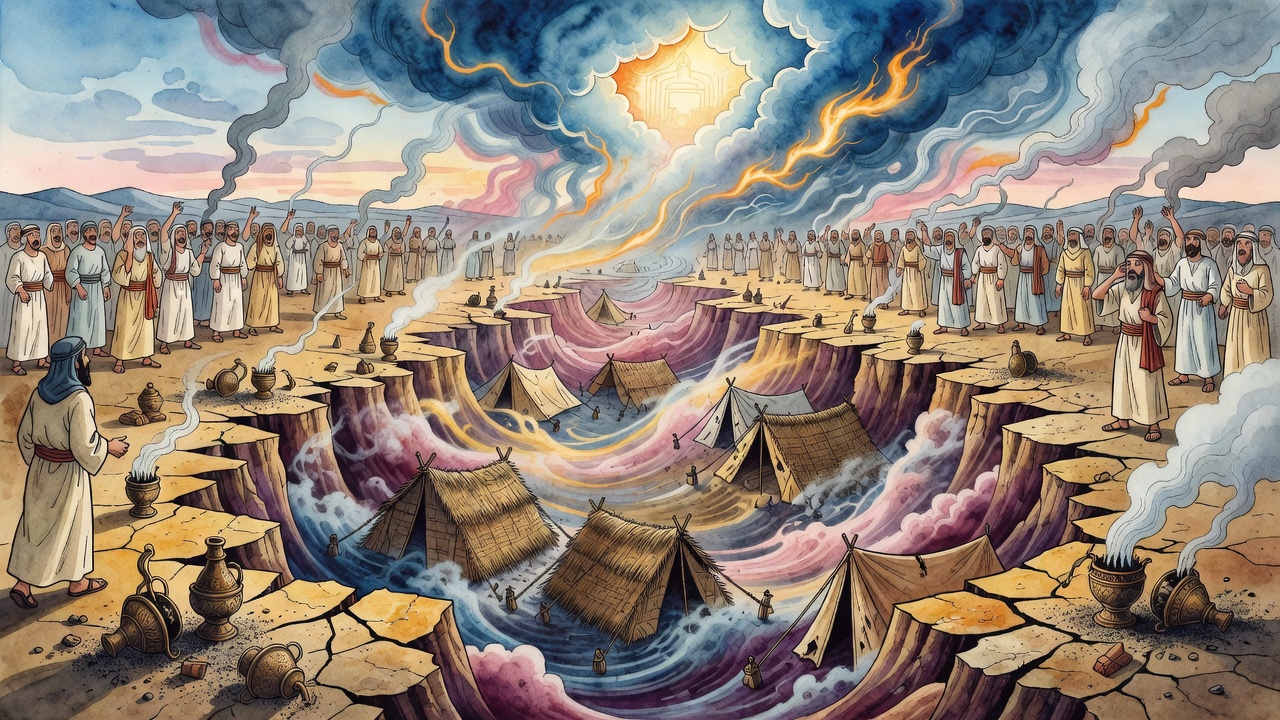
Korah still wore Pharaoh's keys when he came for the altar. Moses gave them the night. By dawn, nobody wanted the priesthood less.
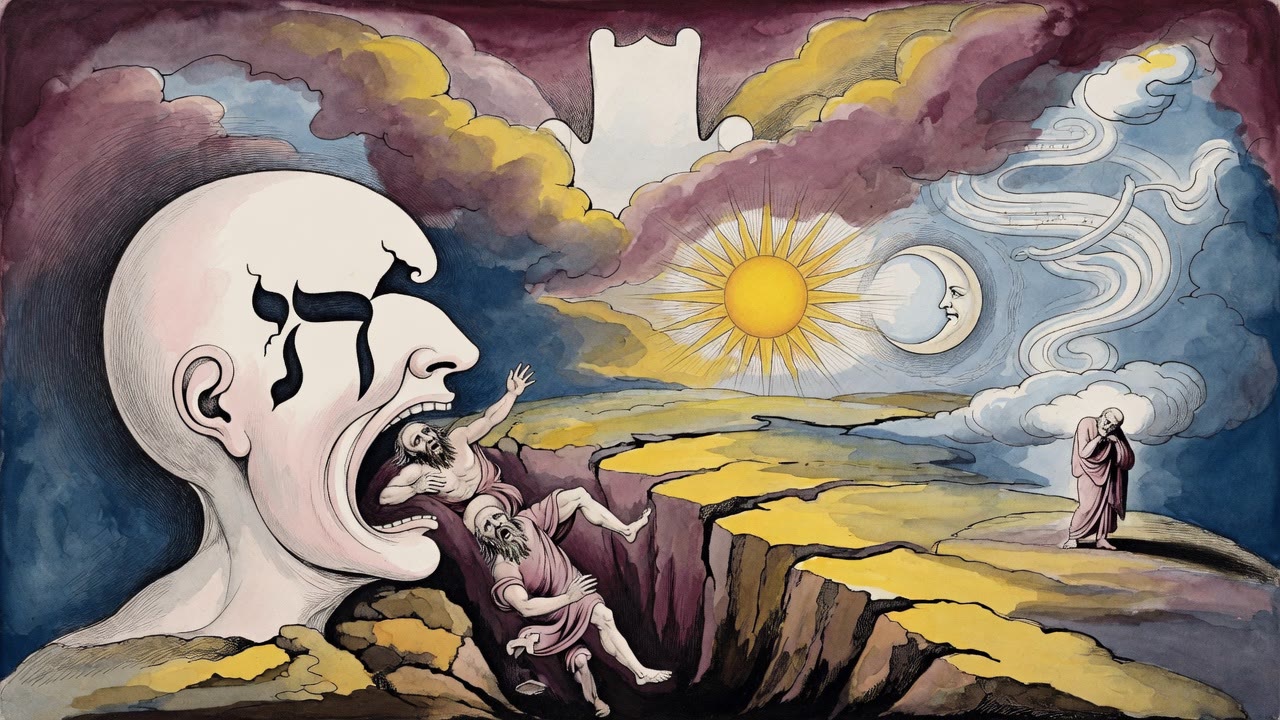
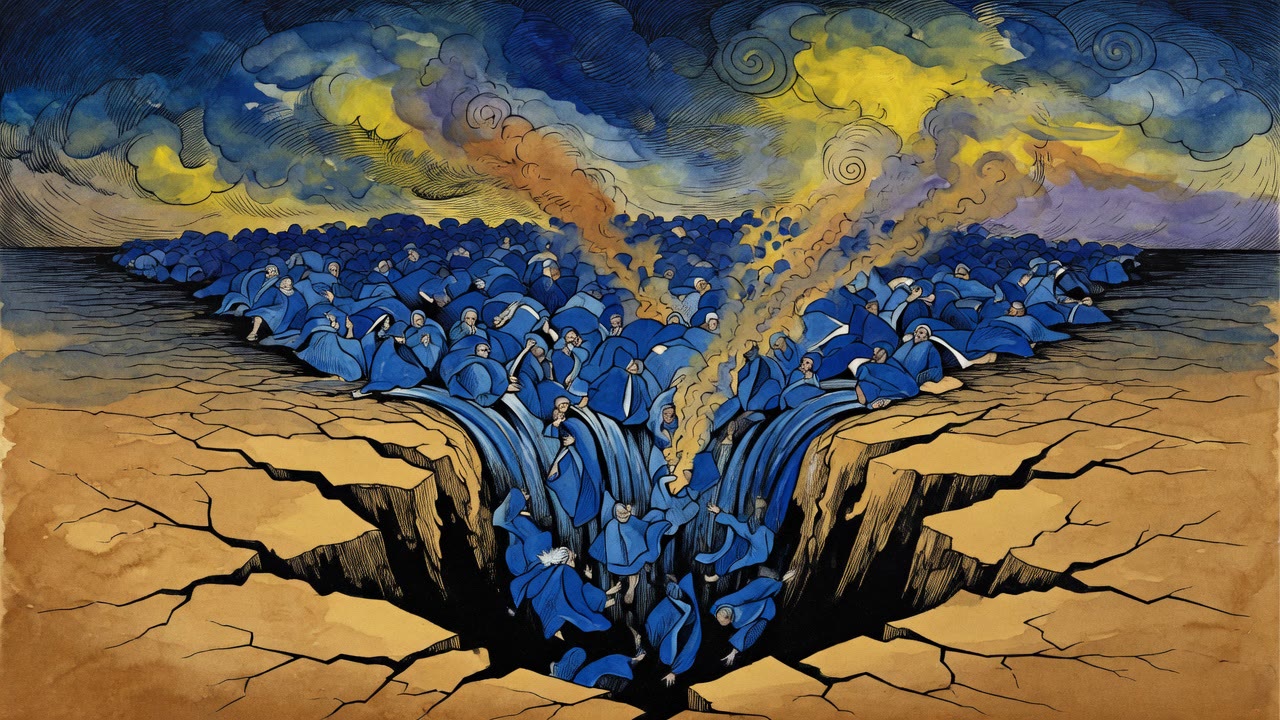
Dathan and Abiram would not leave their tent doorways. They stood there and slandered Moses, so Moses asked God for a mouth in the ground, and got one.
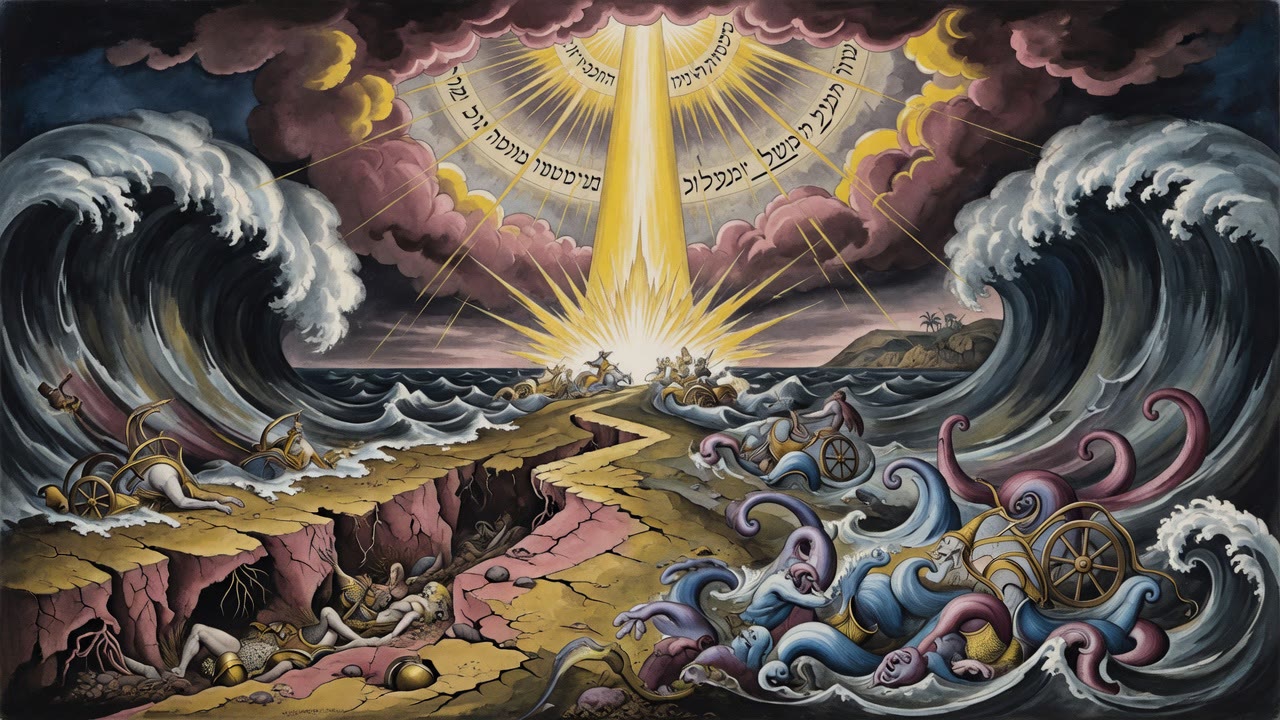
Korah counted Kohath's four sons on his fingers in the tent. The youngest brother's child held the staff. His own hands were empty.
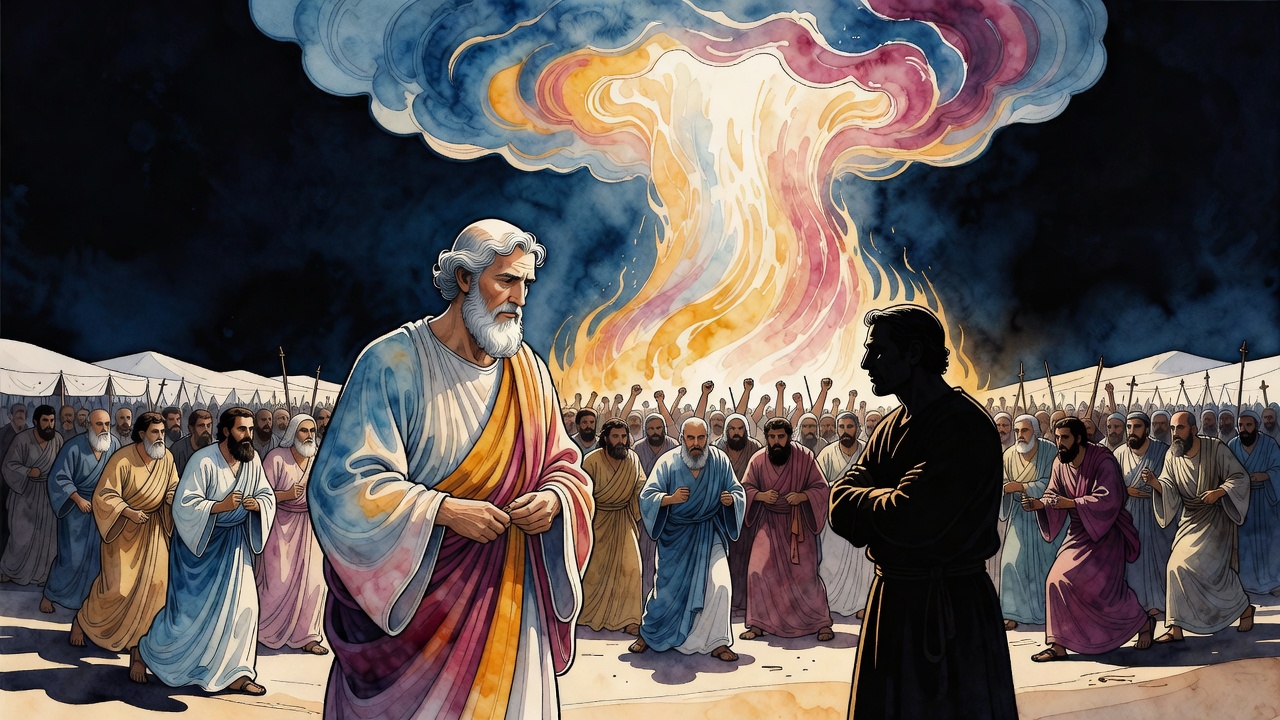
Two hundred fifty men want the altar by nightfall. Moses buys them until morning, hoping sleep will unmake a rebellion.
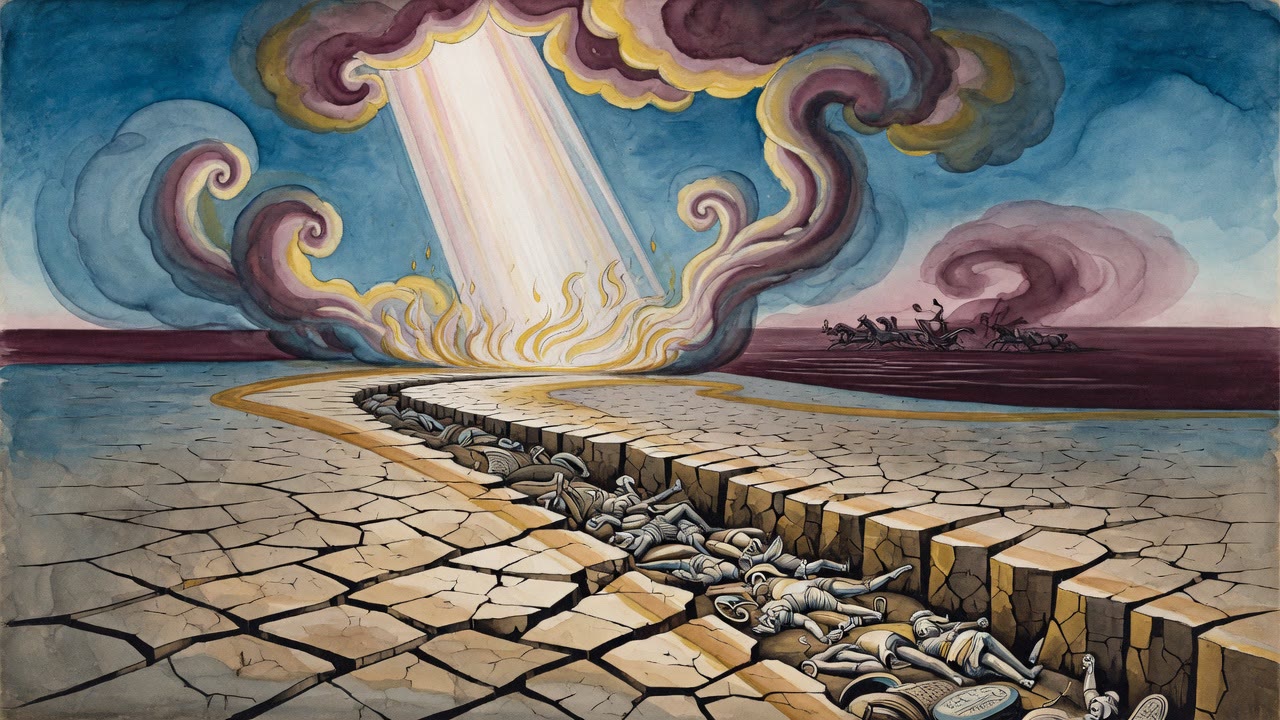
Korah came at Moses through the family gate. When the ground finally tilted it took his tents, his flocks, and a needle he had lent out.
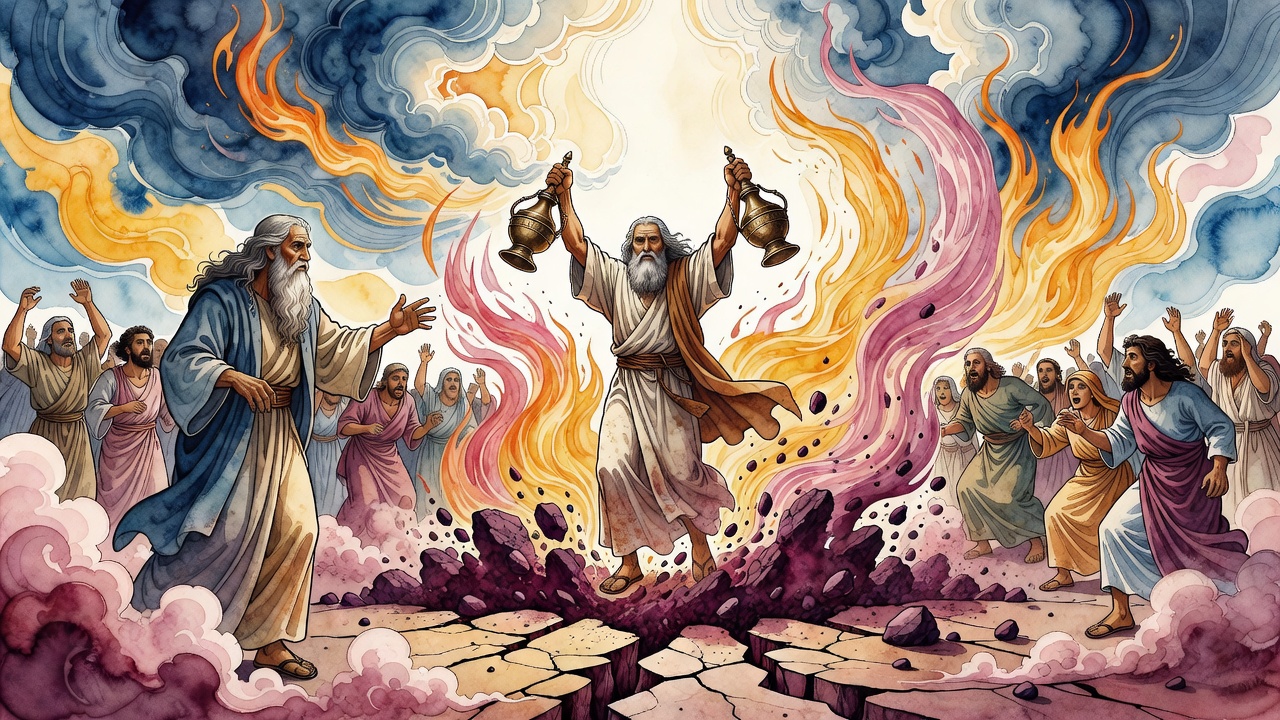
Moses pleaded like a brother. Take heed, he said. Do not stake your souls on a contest you cannot win. They would not hear him.
The looms ran for days and the wool came off the color of the sky just before dark. Korah ran the cloth through his fingers. He knew what one thread was worth.
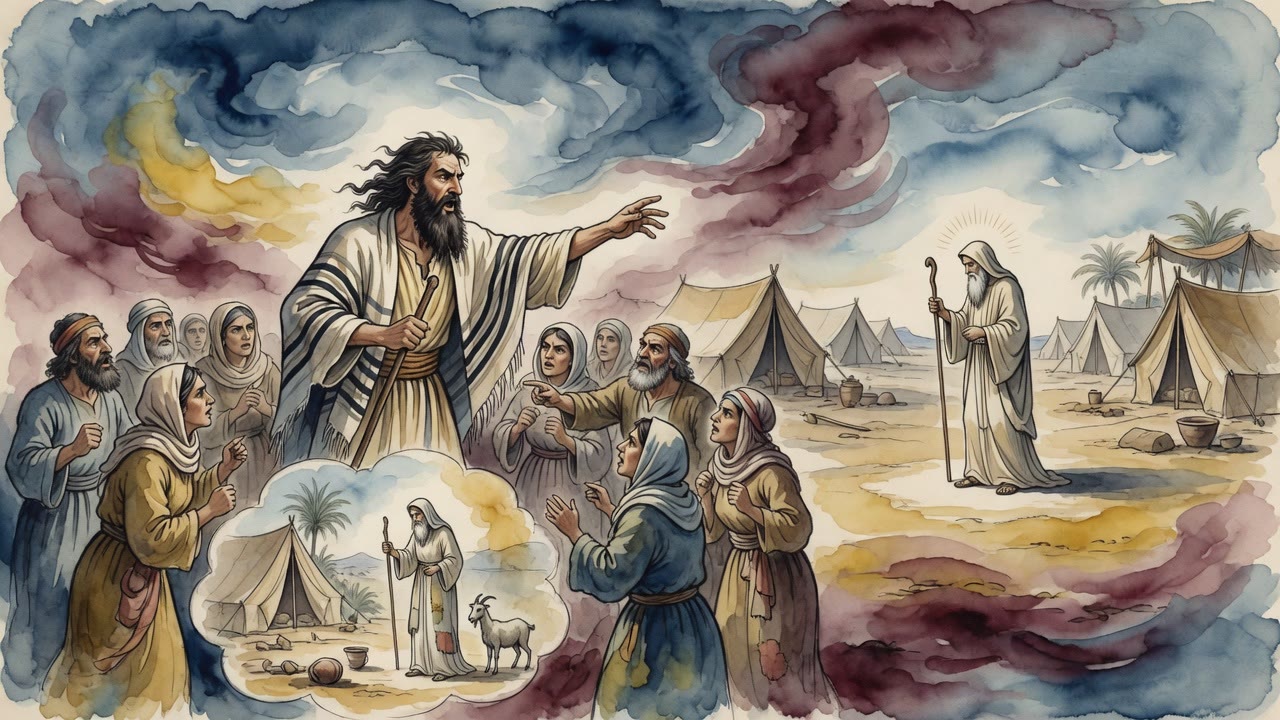
Korah did not start his rebellion with a speech. He started it with a story about a poor widow that made every listener hate Moses on the spot.
He dropped his voice so the camp would lean in. He told them about a widow and two daughters. The laws were real. The woman was not.
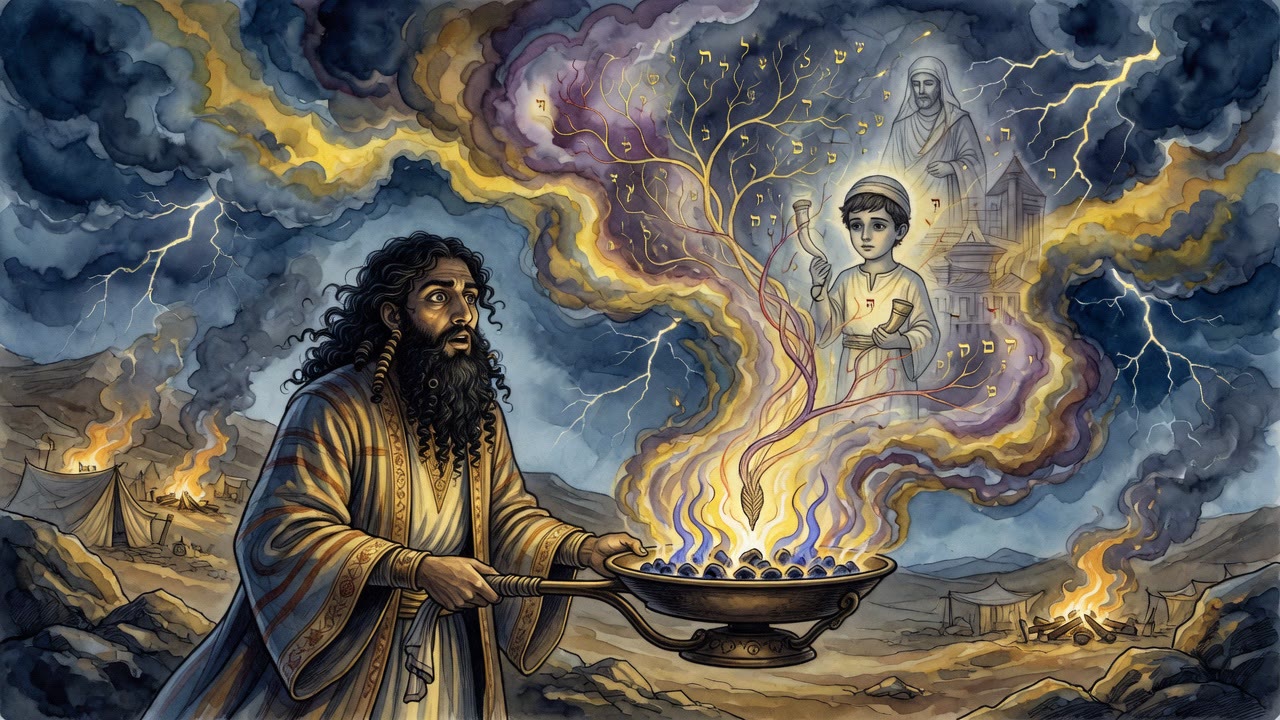
Korah saw Samuel shining in his bloodline and read the vision as permission. He reached for the fire-pan, and the fire reached back.
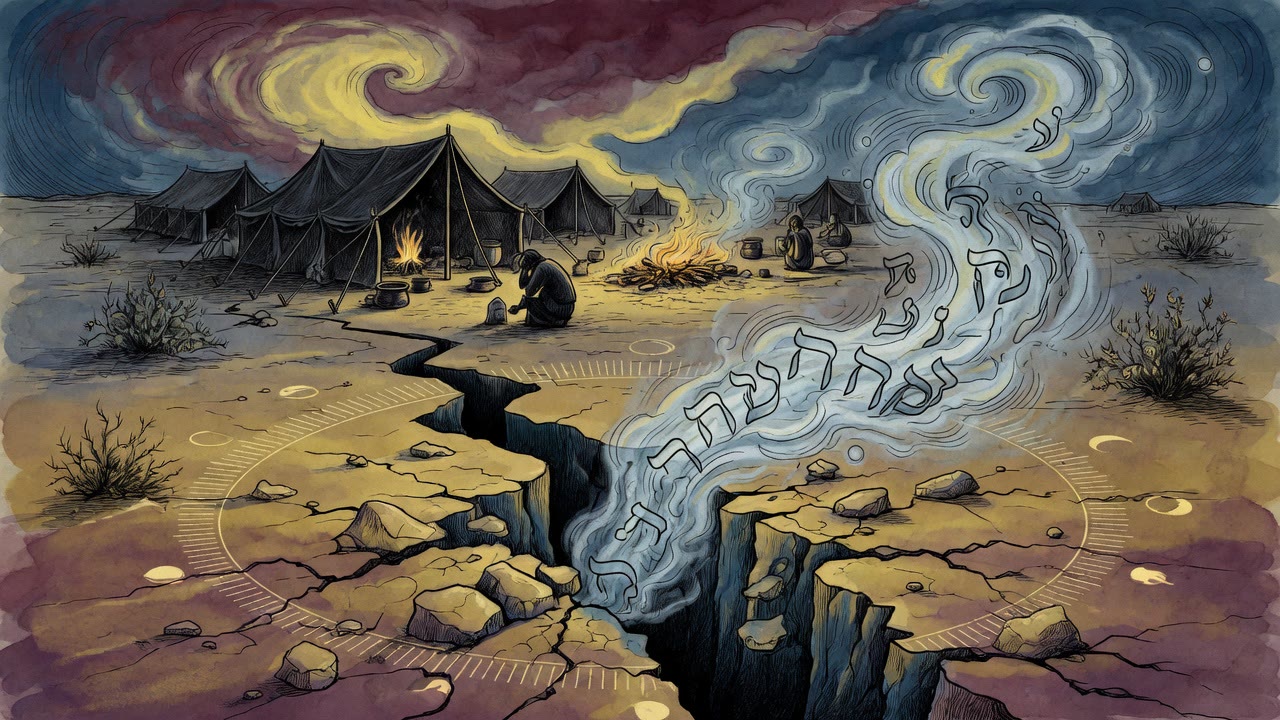
A Bedouin led Rabbah to two smoking cracks in the desert. Wet wool on a spear came up scorched. From below, Korah was still talking.
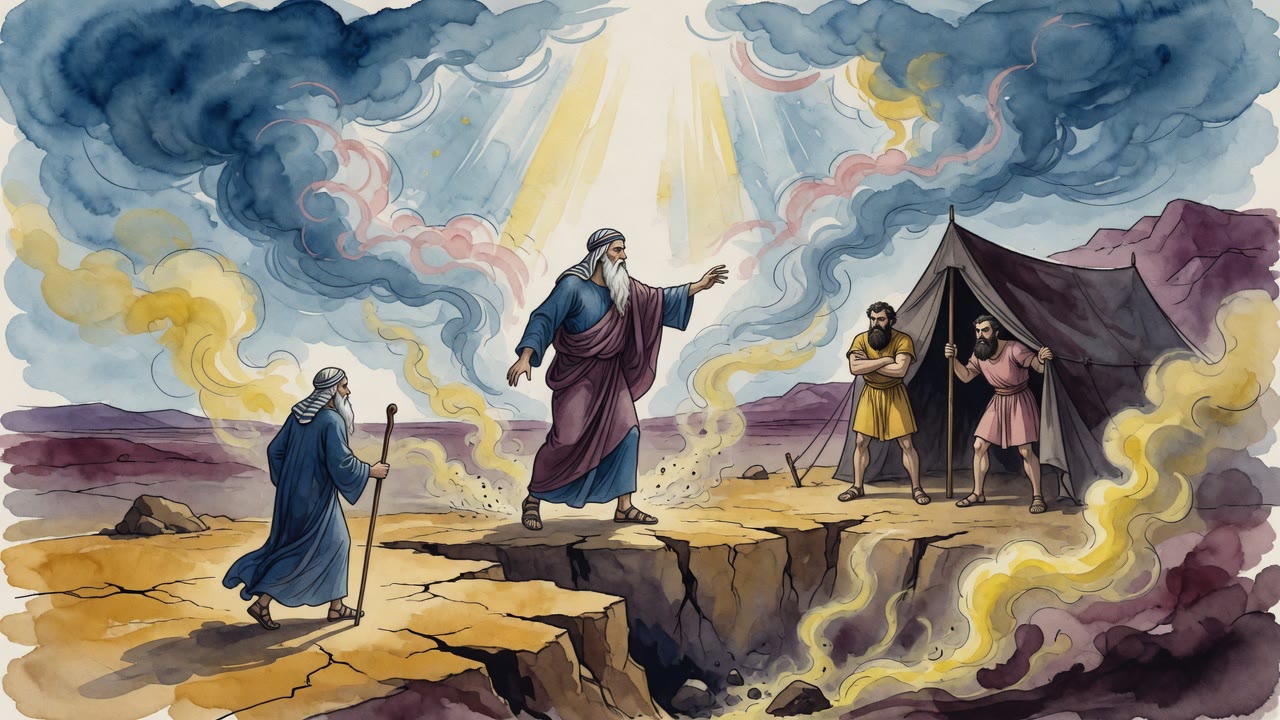
The tent flap did not move. Moses waited outside, then told the crowd to step back from the ground that was about to open.
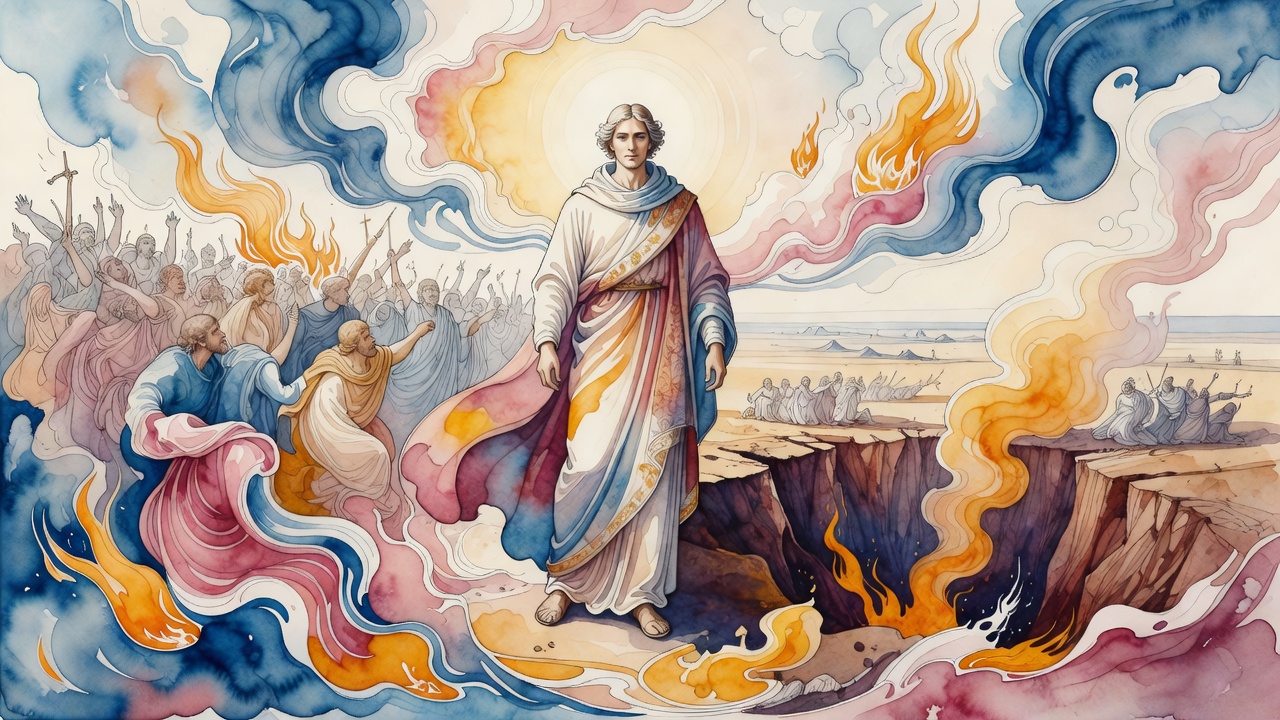
Aaron's priesthood was bracketed by two catastrophes, the Golden Calf and Korah's rebellion. Both threatened him. Both failed to destroy him.
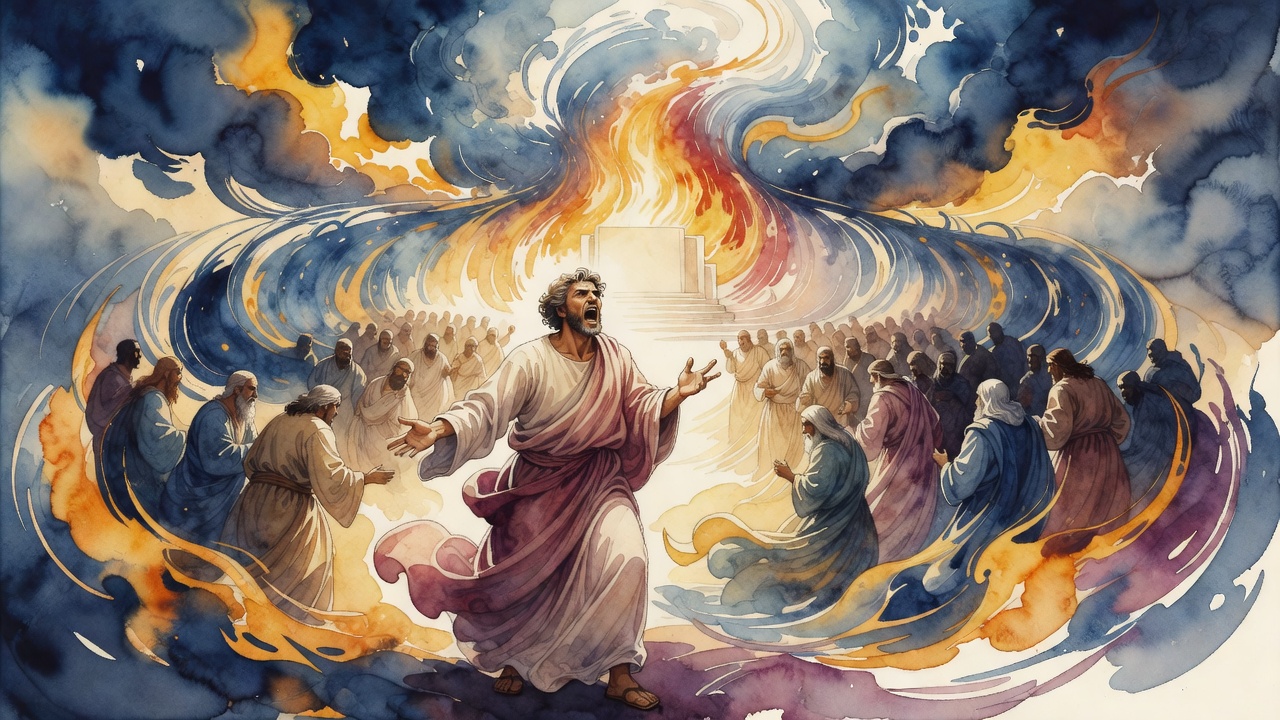
Korah recruited followers with a story about a widow and her one field. Moses took the first fruits, then the tithe, then the wool off her two sheep.
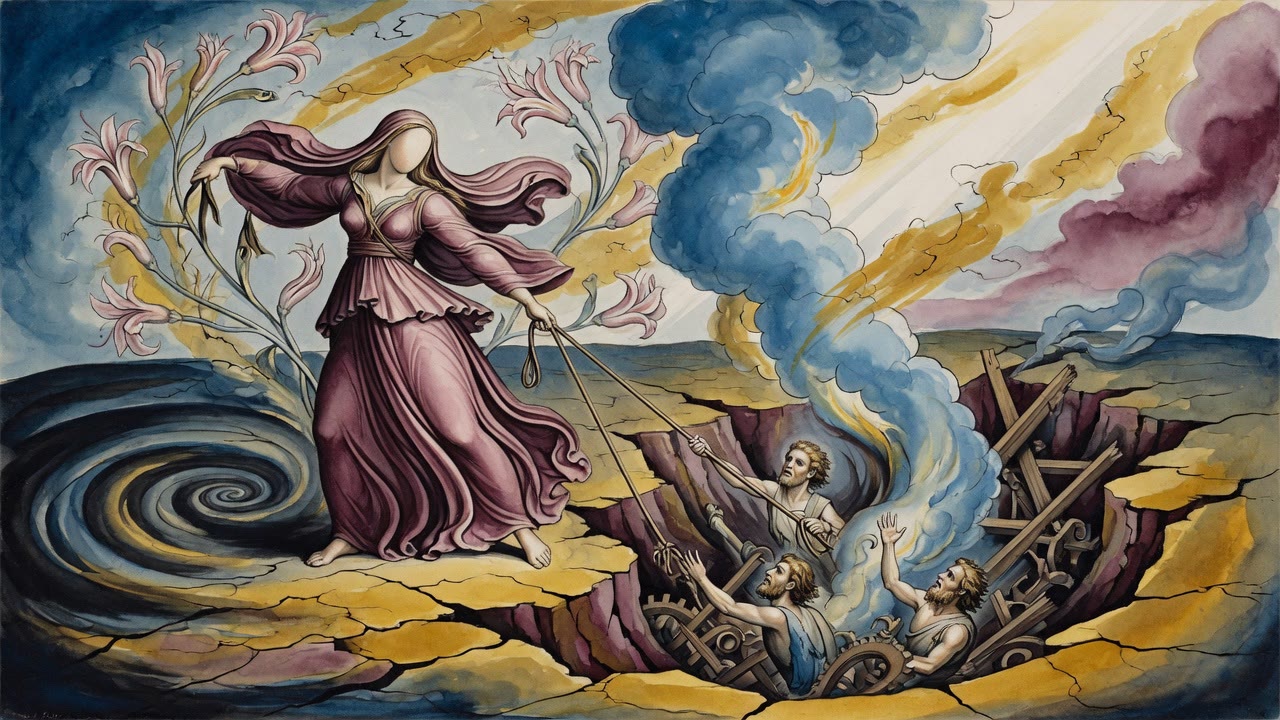
The earth opened under Korah. His three sons sat on a pillar in the fire and sang. A noblewoman in Rome would not let three men die.
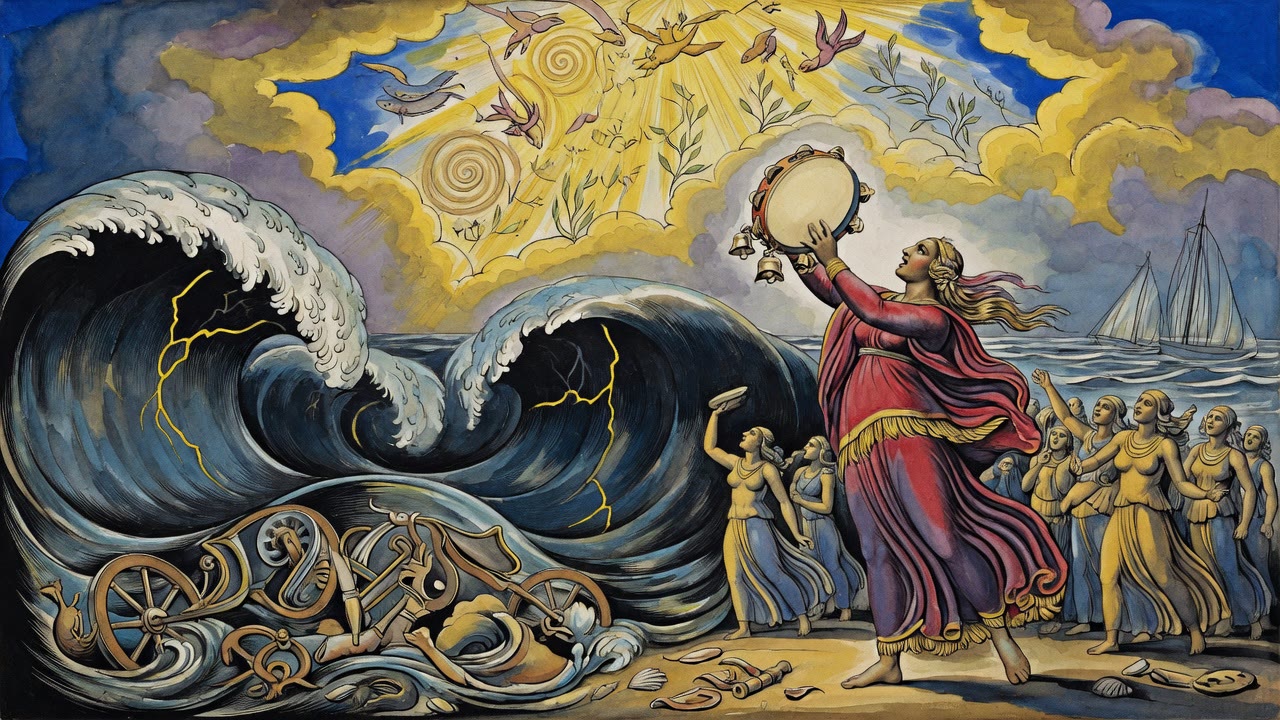
The earth opened under Korah while the censer was still in his hand. His three sons could not speak. A pillar rose under them in the fire.
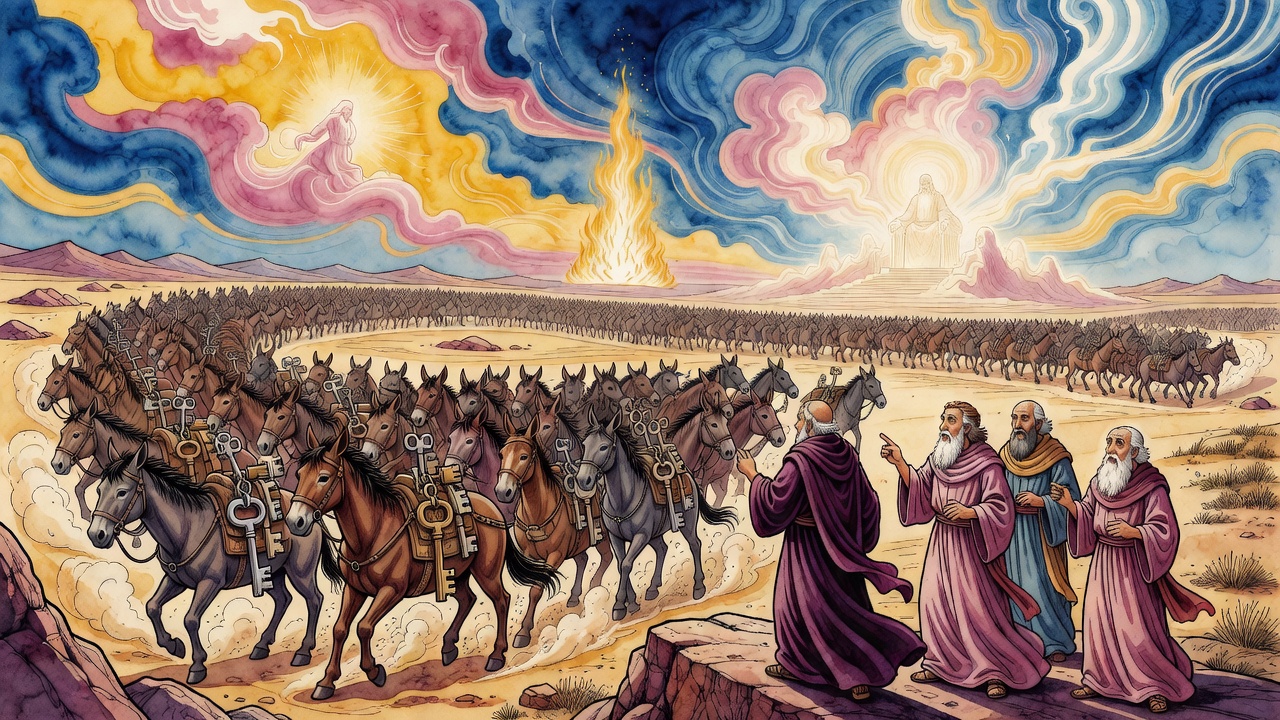
Three hundred white mules carried only the keys to his vaults. Korah came home shaved from the Levite rite, and his wife named it disgrace.
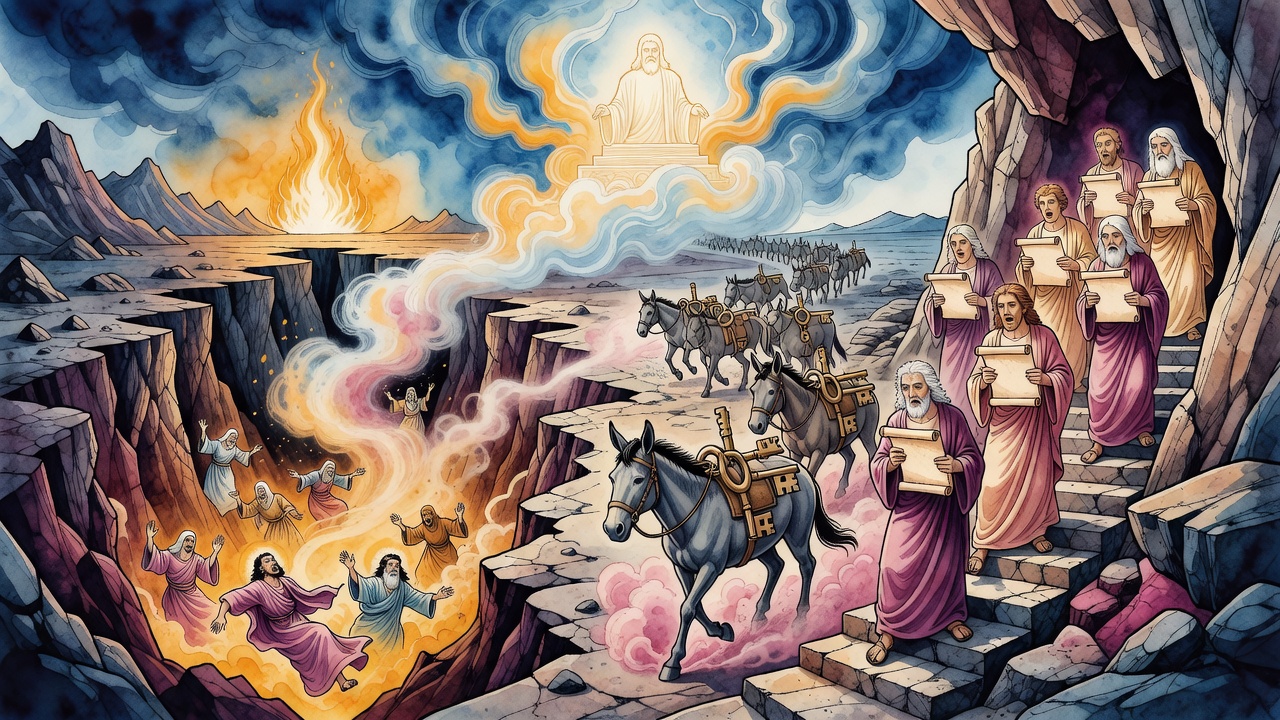
Korah looked into the future and saw Samuel and twenty-four Temple singers coming out of his own line. He decided God would never let their father die.
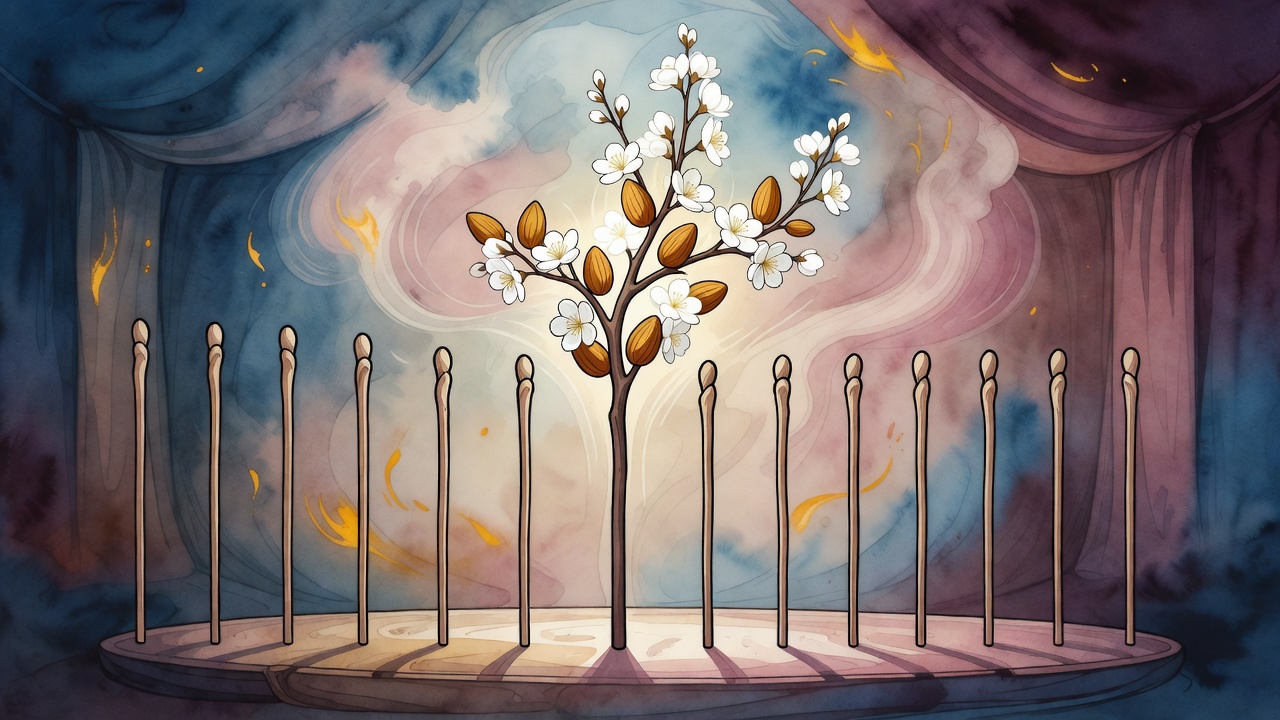
Twelve dry staves lay before the Ark until morning. One of them held blossoms, buds, and ripe almonds on the same wood.
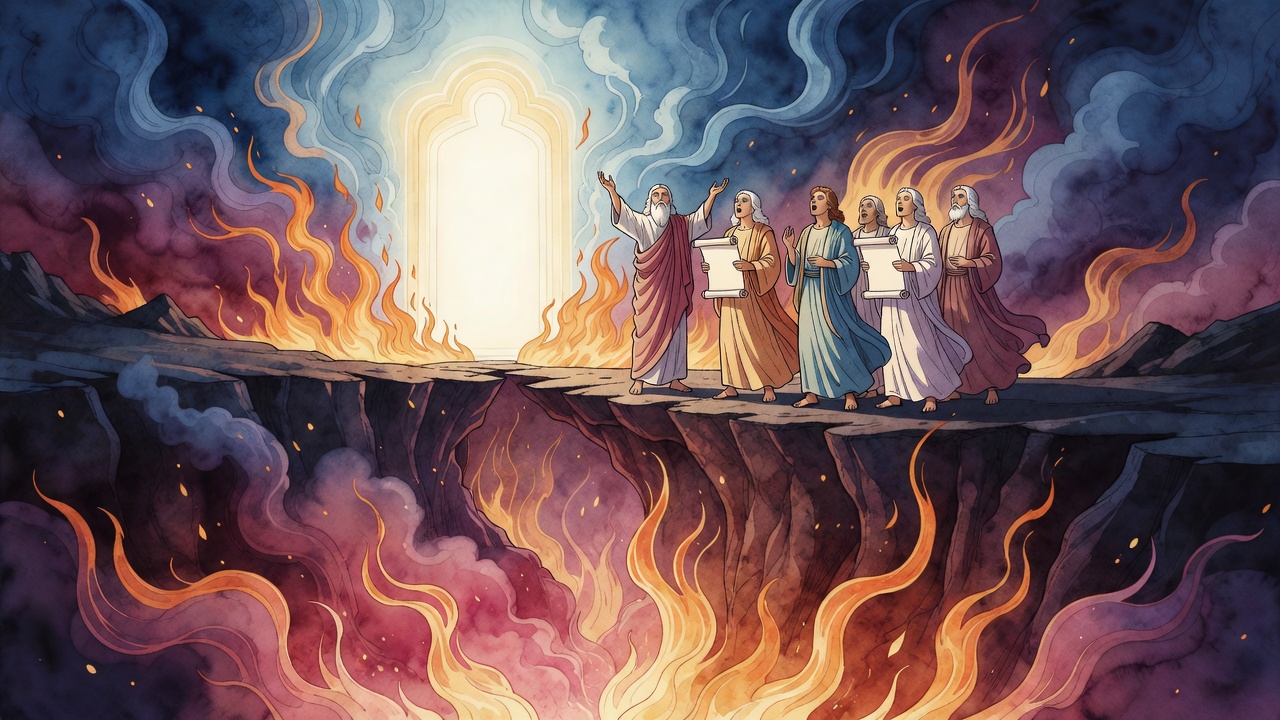
The earth opened beneath their father and they were left suspended on a ledge inside Gehinnom (afterlife of judgment), and from there they composed the psalms.
