Korah's Sons Sang from a Ledge Between Earth and Fire
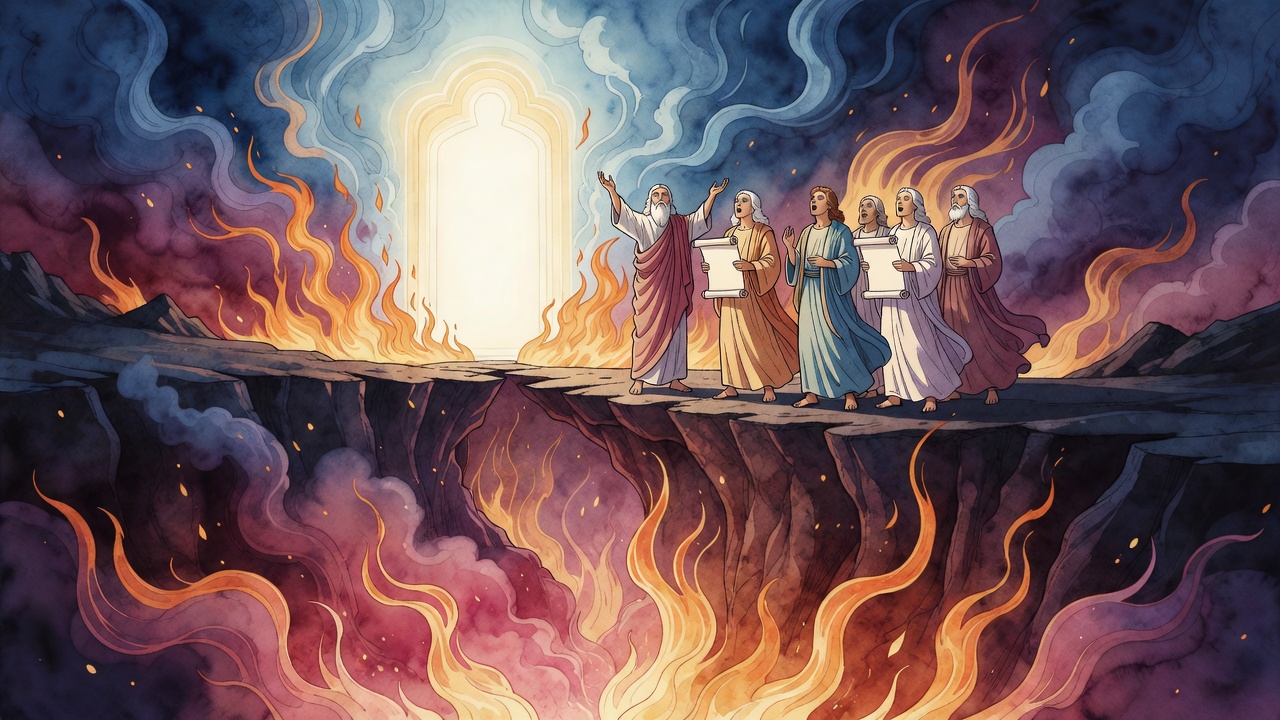
The earth opened beneath their father and they were left suspended on a ledge inside Gehinnom (afterlife of judgment), and from there they composed the psalms.
Table of Contents
 Click for full size
The Ground That Opened
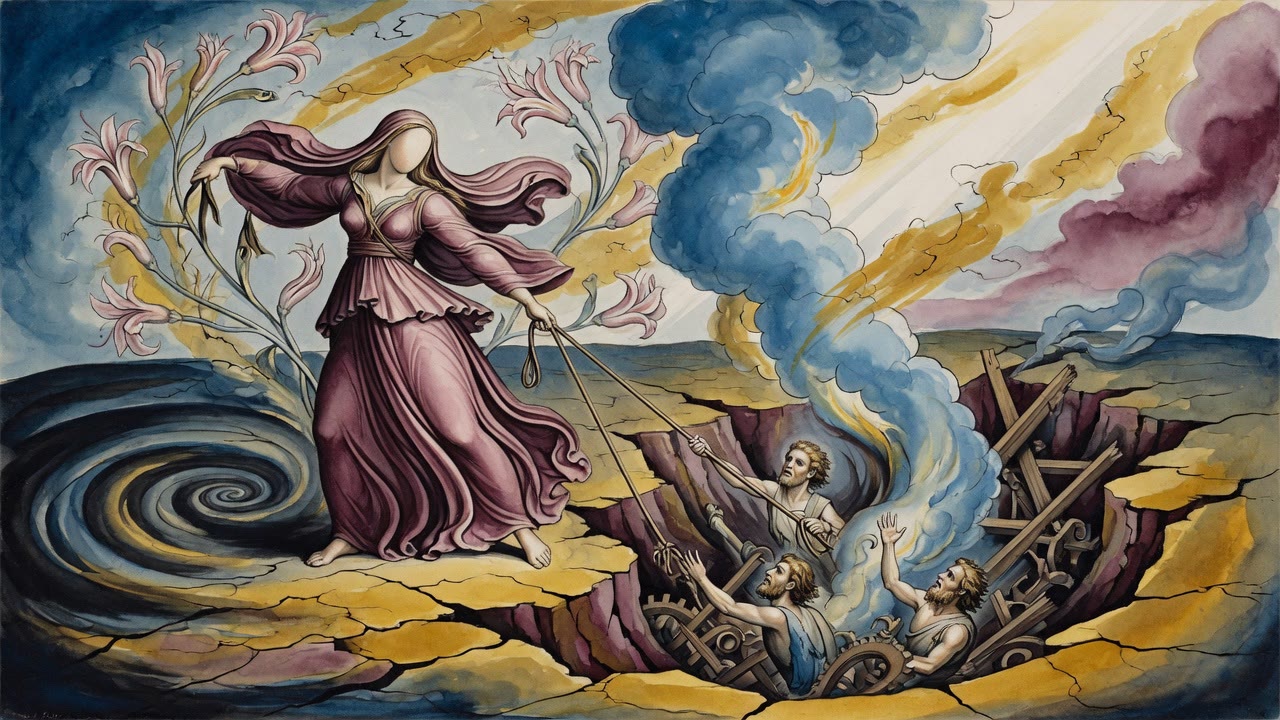
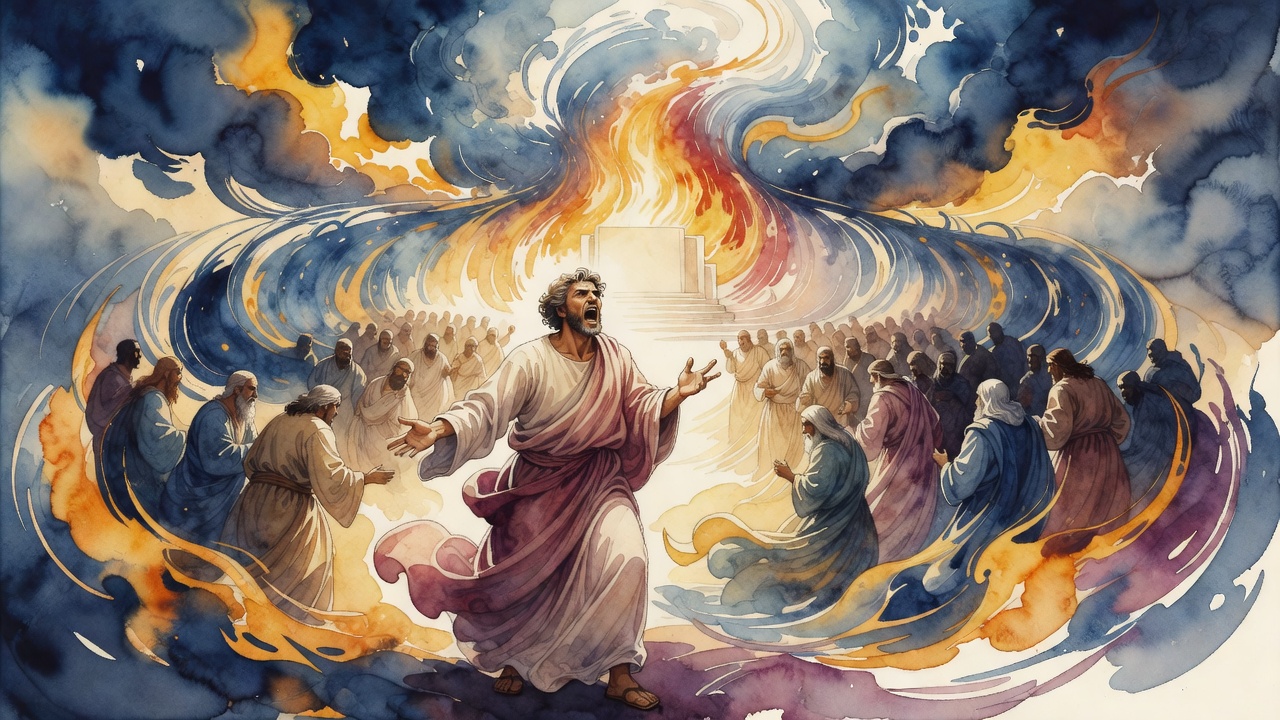
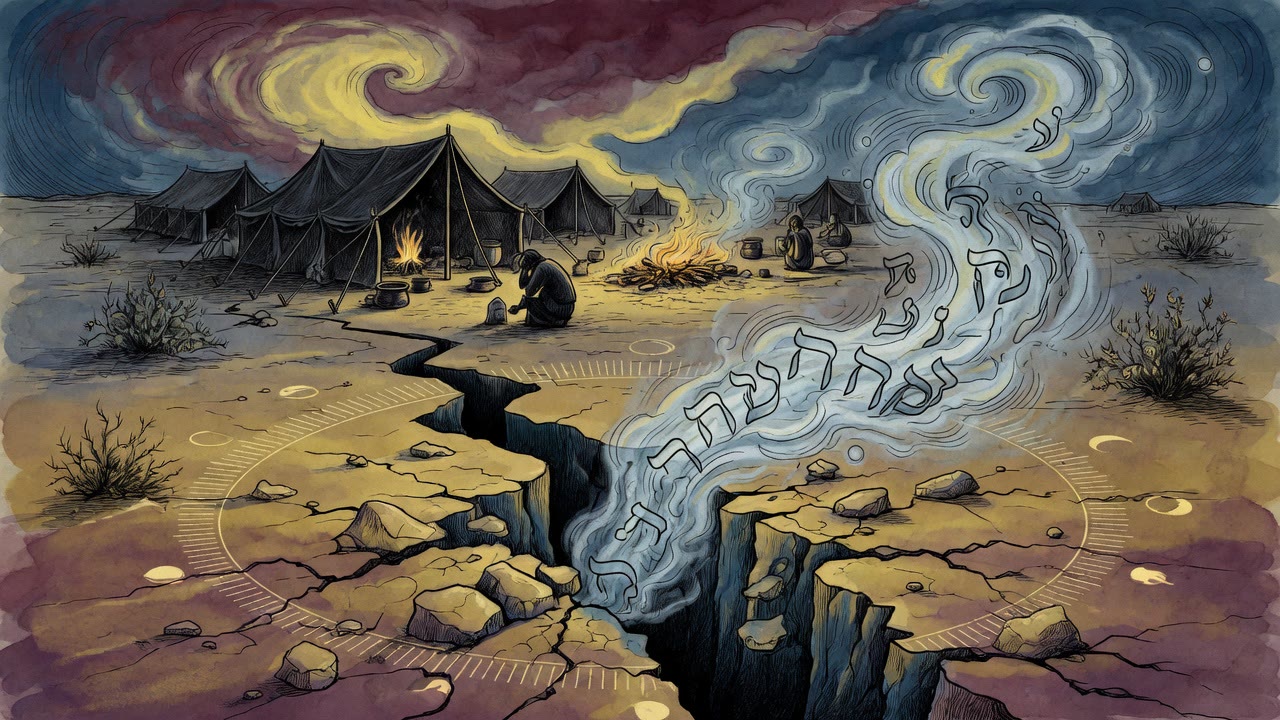
The sons of Korah were standing close enough to see their father's face when the earth split. The rebellion had reached its crisis: the incense-bearers holding their censers, Moses and Aaron on one side, Korah and his supporters on the other, and the congregation watching to see which party would be consumed. Then the ground opened under Korah's household, and the people, their tents, and everything belonging to them dropped alive into the hole and the earth closed over them.
The sons were not in the hole. They had already moved. They could not have moved far, could not have formed the words of a prayer, could not have announced their separation from their father's cause in any formal way. The earth was already moving. What happened happened in the space between one breath and the next.
What Repentance Looks Like in a Split Second
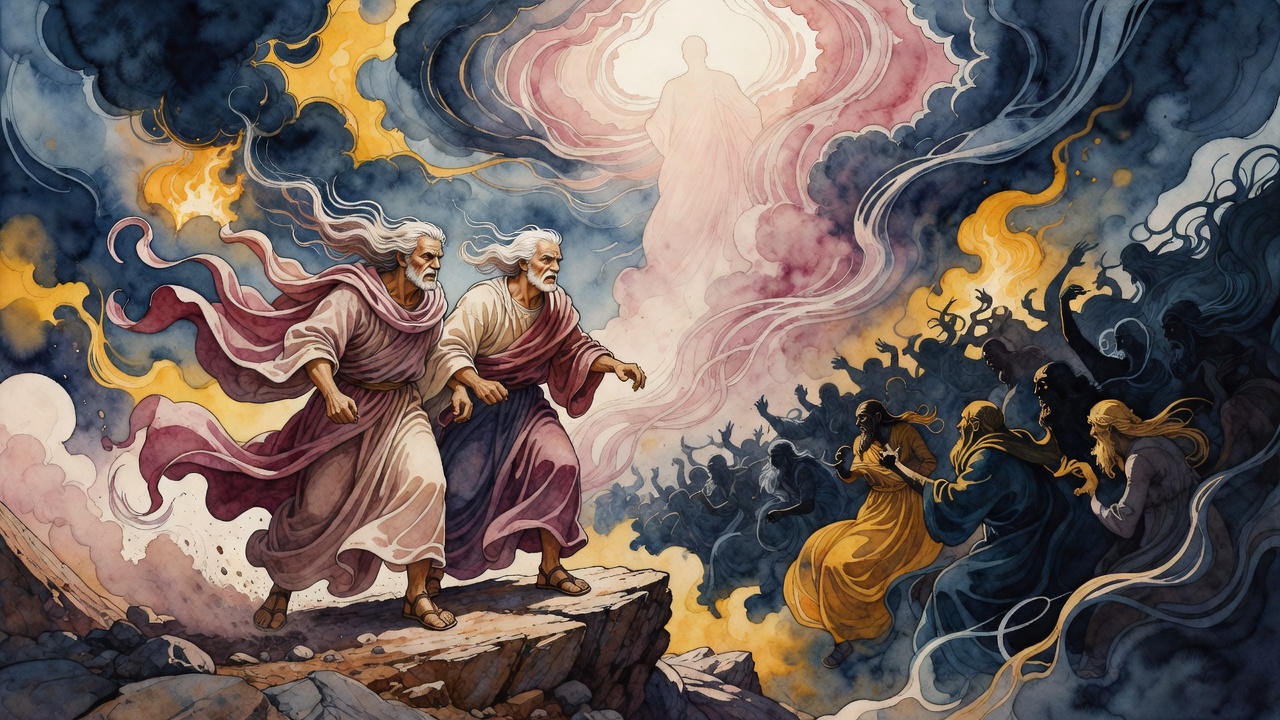
Midrash Tehillim, drawing on the broader tradition preserved in Ginzberg's collected legends, says the sons' hearts repented before the ground split all the way. One heart turned, then another, then a third, and the three hearts became one in the turning. God heard the motion before the mouths could shape the words. The midrash is precise about this: they could not speak. The moment was too immediate. What saved them was not the language of repentance but the fact of it, the bare movement of a self pulling away from a course it has decided not to follow.
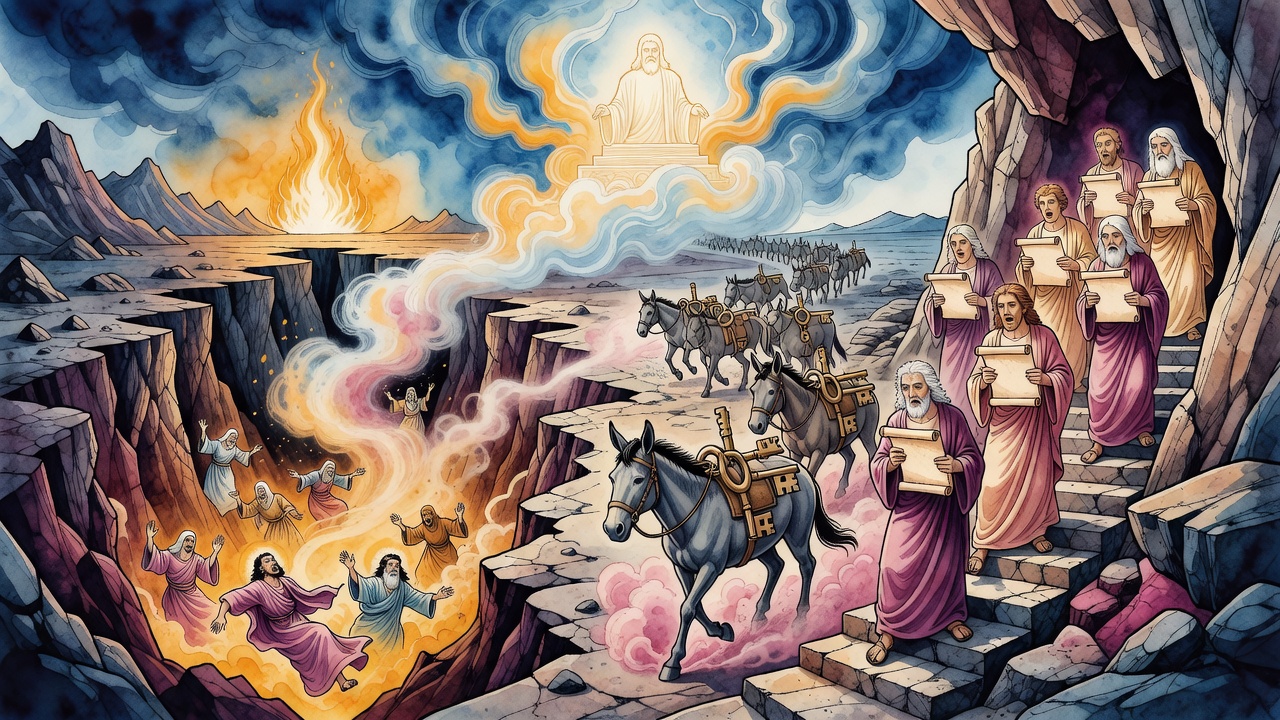
They were saved onto a ledge inside Gehinnom (the fiery place of punishment after death). Not out of Gehinnom. Not safely above it. On a ledge within it, where they could hear the sounds below and feel the heat from the fire and look up at the hole the earth had closed over their family. From that position, according to the tradition, they sang.
The Psalms of the Suspended
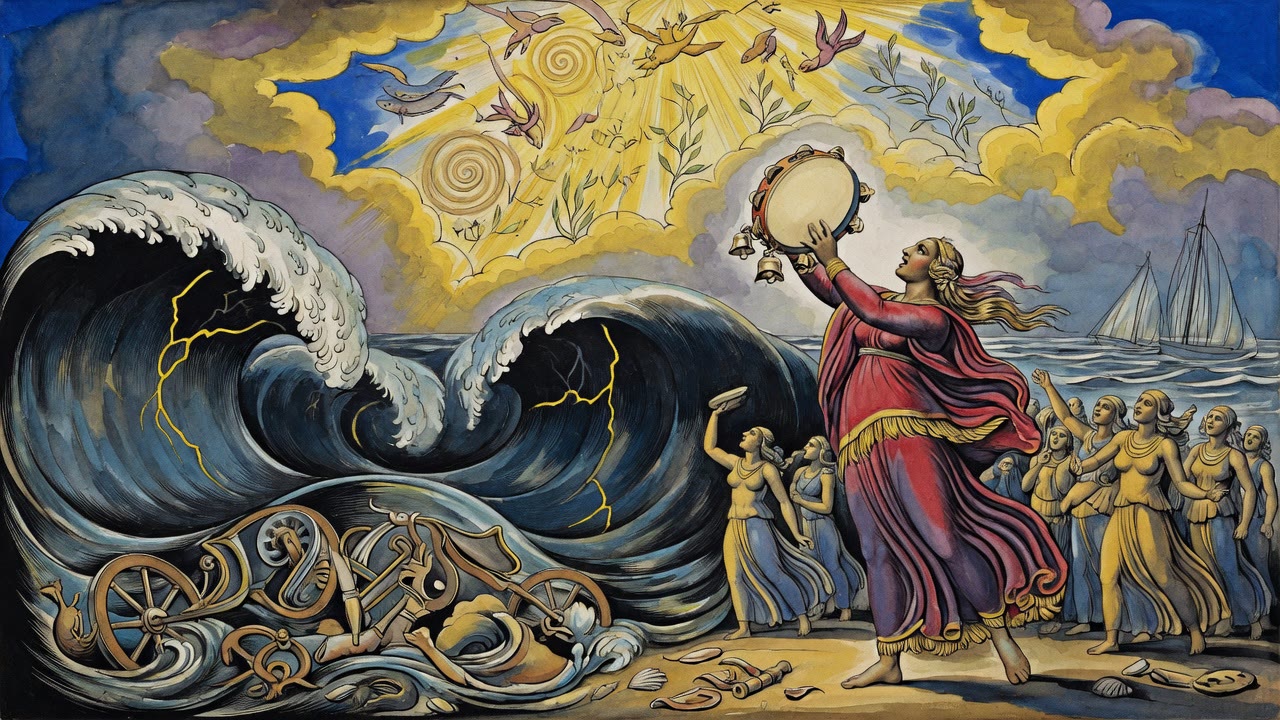
Eleven psalms carry the heading to the sons of Korah. Among them is Psalm 46: God is our refuge and strength, a very present help in trouble. Therefore we will not fear though the earth gives way, though the mountains be moved into the heart of the sea. The sons of Korah wrote that psalm. They wrote it while the earth had given way beneath them and they were sitting on a ledge above the consequences.
The mountains moved into the sea is not a figure of speech for people who felt the ground open. It is a statement of the thing they were inside, followed immediately by the insistence that they would not fear. The midrash does not read Psalm 46 as a confident declaration made from safety. It reads it as a declaration made from the least safe position imaginable, by people whose inheritance of catastrophe was still visible below them.
Abraham's Legacy and the Long Chain
The tradition surrounding the sons of Korah places their faith in a longer chain. Abraham's trust, tested on the mountain with his son and held even when the command made no sense, established a precedent. Jacob, who wrestled at the ford of the Jabbok and held on through the night until blessing came, added to it. The sons of Korah, clinging to a ledge in Gehinnom (the realm of judgment after death) while their father sank past them, were the heirs of that accumulated stubbornness. Faith, in the rabbinic imagination, does not skip generations. It is passed through the ones who held when holding looked pointless.
The death of Korah is treated in the tradition not as an erasure of his line but as the beginning of a new story for the line. The sons carry the name of a man the earth swallowed, and they compose psalms that say the earth will shake and we will not fear. That is not denial. That is people who were inside the shaking and survived it insisting on what they learned while they were there.
← All myths